Category Archives: Shortwave Radio

Shortwave Radio Audio Archive: A treasure trove of radio history and nostalgia

One of the most amazing things about hosting and curating a massive collection of shortwave radio recordings is listening to each recording as they’re published on the site.

I created the Shortwave Radio Audio Archive (SRAA) in 2012 as a dedicated space to post and share off-air recordings with the world. Listening to SRAA recordings and subscribing to the podcast is 100% free, and entirely void of any advertising. The fact is, I pay for this site out of my own pocket, although some of your generous coffee fund and Patreon gifts are used to reinforce the archive’s longevity and future.

Not only does the SRAA serve as a historical record of radio–and even as audio samples for musicians–it’s also for radio listeners like us to enjoy.  We have over 3000 podcast and RSS subscribers. We invite you to subscribe as well as to contribute content in the form of your own radio recordings!

Great content, great contributors

Speaking of recordings, check out a sampling of our latest offerings from our amazing contributors:

Note that you can subscribe to the Shortwave Radio Audio Archive as a podcast via iTunes or by using the following RSS feed: http://shortwavearchive.com/archive?format=rss You can also listen via TuneIn.

Of course, one of the best ways to listen to recordings and read all of the recording notes is by visiting the SRAA website.


Do you enjoy the SWLing Post?

Please consider supporting us via Patreon or our Coffee Fund!

Your support makes articles like this one possible. Thank you!

Radio West catalog at American Radio History

Many thanks to SWLing Post contributor, Zack Schindler, who writes:

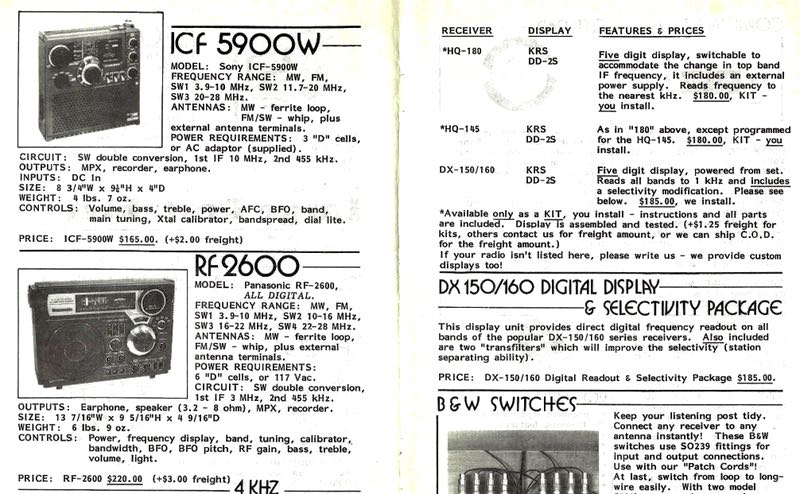
Oh this brings back memories. I bought a lot of stuff from Radio West. Here is their catalog from 1983. Had them install a Collins mechanical filter in my Kenwood R-1000.

Click here to download Radio West Catalog 5 (PDF).

Thanks for sharing this bit of retail nostalgia, Zack!  This download is one of thousands available at the excellent American Radio History website.

Any other patrons of Radio West?  Please comment!

Robert’s Series: “The Care and Feeding of Electronic Equipment”

SWLing Post contributor, Robert Gulley (K4PKM–formerly AK3Q) recently posted two excellent articles on his website about the “care and feeding” of electronic equipment.  Here’s the description from Robert’s blog, All Things Radio:

Just a quick note to let you know there are two new articles published in the Reviews and How-Tos section dealing with simple checks and preventative care of electronic equipment. Over the years I have learned some important lessons for keeping computers and radios working properly, with the goal of having as little downtime as possible. The two articles were originally published in The Spectrum Monitor June and August issues, respectively. (If you have not subscribed to this magazine, you really should check it out – it is in my opinion the best radio magazine on the market today, and not just because they occasionally publish my articles!)

Here’s a quick link to the review page:

Reviews and How-Tos

And while you are there, check out some of the other reviews I have posted! Cheers, Robert K4PKM

Your articles are always amazing, Robert.  Thanks for sharing!

KPH Article on TechCrunch and Bay Area Backroads

Cypress tree avenue towards KPH. Photo by Frank Schulenburg via Wikimedia Commons

Many thanks to SWLing Post contributor, Dan Van Hoy, who writes:

“The Last Radio Station,” an article about maritime radio station, KPH, is up on TechCrunch ( https://techcrunch.com/2020/01/18/the-last-radio-station/ ).

KPH is silent on maritime frequencies, but through the hard work of volunteers continues operation 24/7 with a 3-30MHz KiwiSDR receiver (http://198.40.45.23:8073/) and various activities throughout the year. Full information on all things KPH can be found the excellent Maritime Radio Historical Society Website (http://www.radiomarine.org/).

Finally an excellent “Bay Area Backroads” episode about KPH is available on Youtube:

Can you copy the CW message at the end of the show?

Please comment if you can copy the CW message!

Thanks to much for sharing this, Dan!

DRM30 on a Smartphone: KTWR Shows Us The Way

Image via the KTWR Blog

Many thanks to SWLing Post contributor, Dan Van Hoy, who writes:

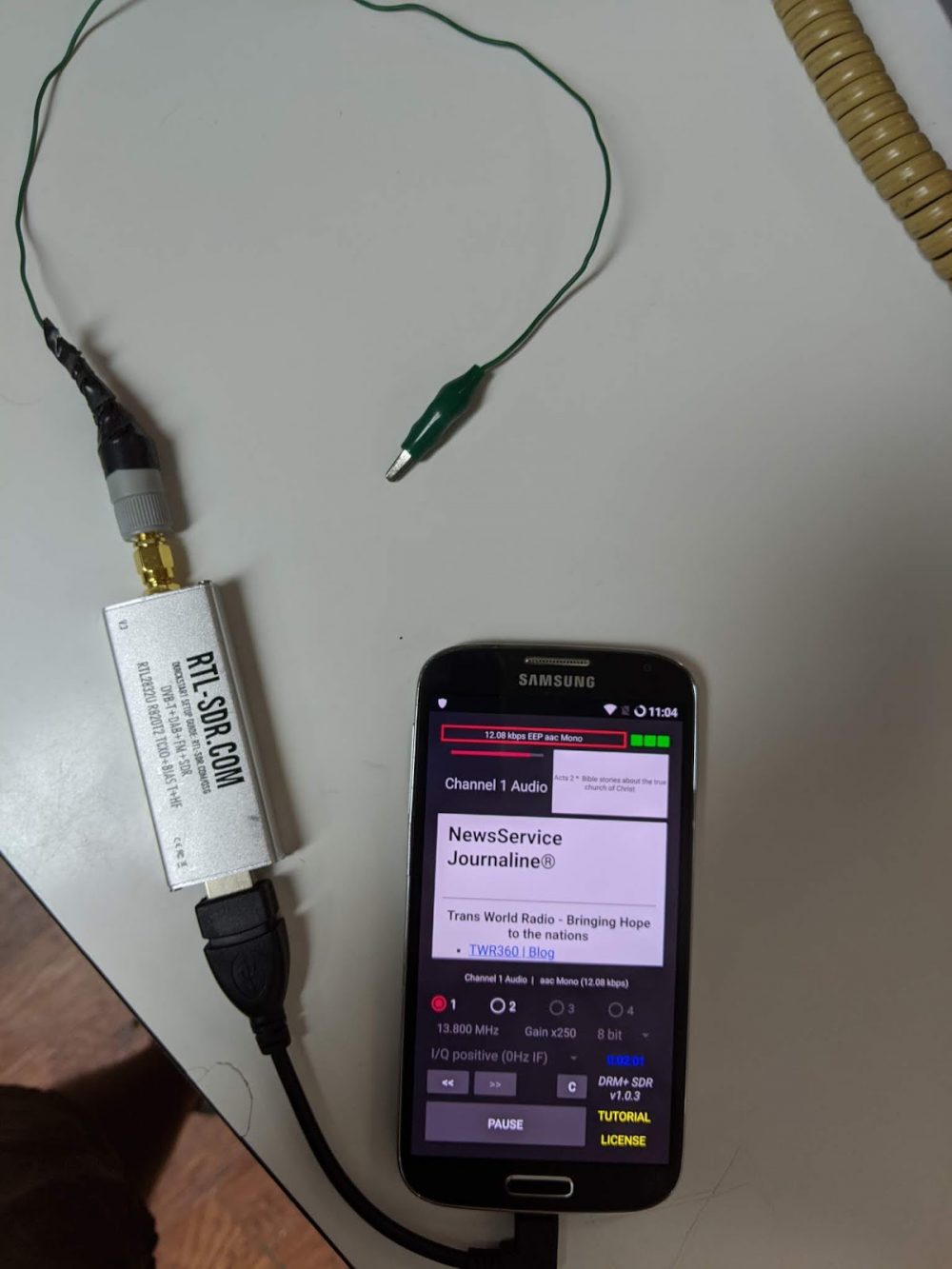
[Regarding the reception of DRM via smart phone,] I happened to find this KTWR Guam post about decoding DRM30 with a smart phone, app, and an RTL-SDR:

Convert Smart Phone to DRM 30 HF receiver!

We are pleased to report successful use of an SDR Dongle used to directly receive and Decode DRM 30 over HF today.

The SDR Dongle is an RTLSDR v3 type connected to an android smartphone using an OTG cable (phone or tablet must be OTG capable).

The Software used:
1. Android driver (free)
2. DRM+SDR Android App ($4.99)

The Frequency of the HF broadcast is directly assigned within the DRM+ SDR app with two settings
1. Frequency in Hertz
2. RF Gain (0-512)

Demonstration video showing Clean DRM decode of AAC Audio and Journaline data along with live metadata.  (our signal was very strong, so only a short wire used for Antenna, DX’rs will need an appropriate Antenna)

Now anyone with a smartphone and a $20 SDR can receive DRM 30 HF broadcasts…

Click here to read this post on the KTWR blog.

2020 Radio Prague QSL Cards

Many thanks to SWLing Post contributor, David Iurescia (LW4DAF), who writes:

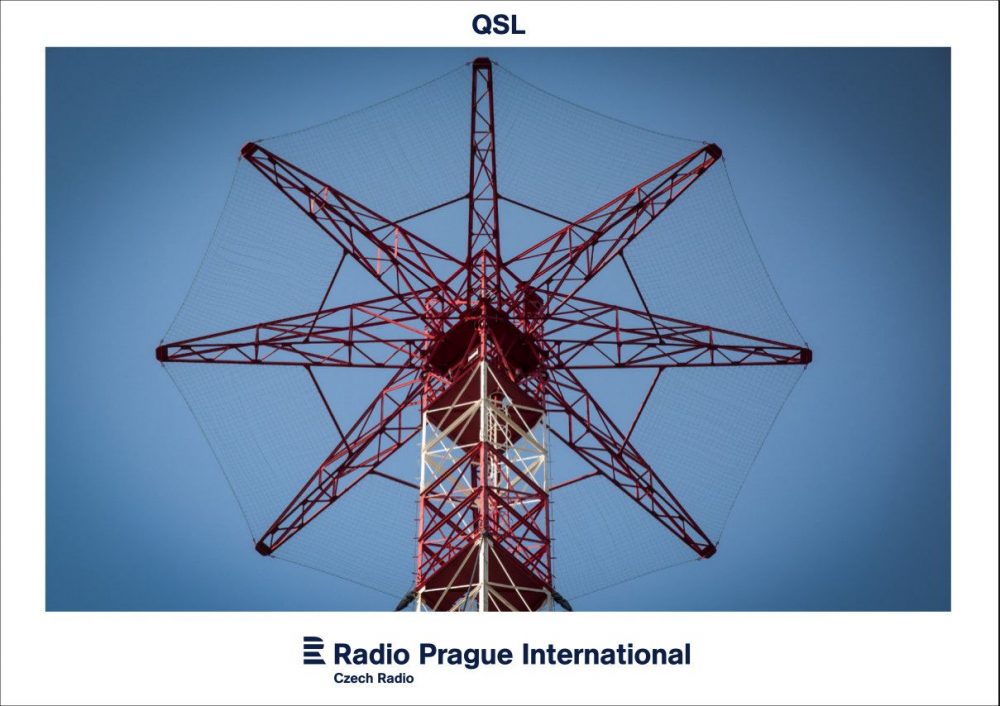
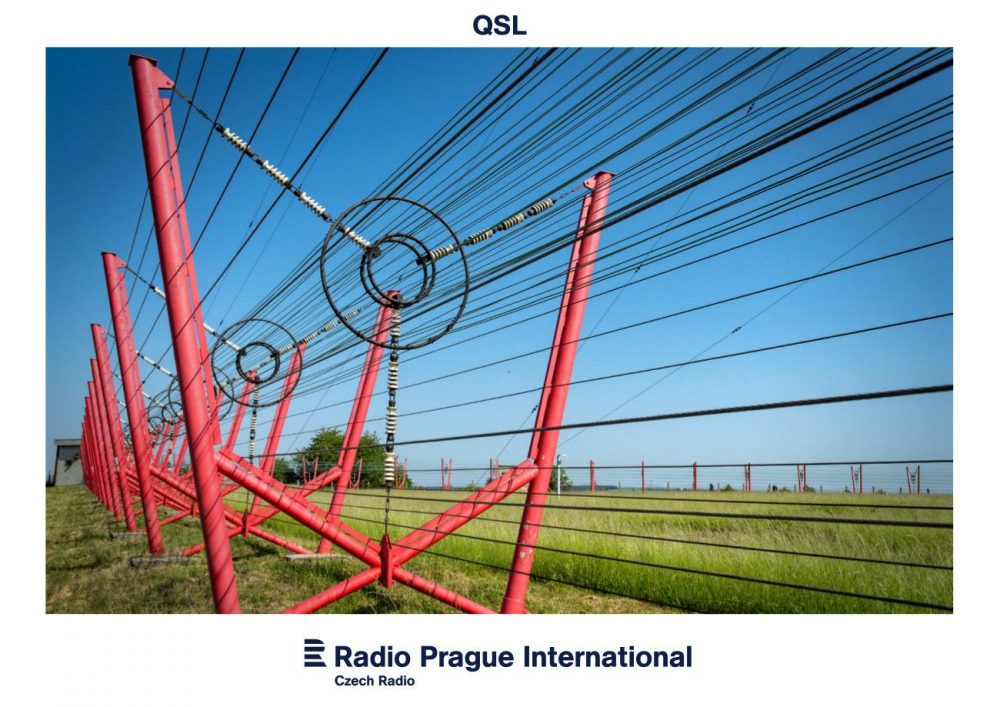
“These are the new 2020 QSL Cards from Radio Prague International.
The theme of this year is “Transmitters” (Antennas):”

(Source: Radio Prague)

The three letters – QSL – constitute one of the codes originally developed in the days of the telegraph. All codes consisted of three letters beginning with “Q”. Later some of these “Q” codes were adopted by radio-telegraphists and radio listeners. QSL means “contact confirmed” or “reception confirmed”.

The expression “QSL card” or just “QSL” gradually came to be used among radio-amateurs and then more broadly as radio began to develop as a mass medium. Radio stations were keen to know how well and how far away their programmes could be heard and began to send their listeners “QSL cards” in return for reception reports. The card would include letters making up the “call sign” of the station – the system still used in the United States – or the broadcasting company’s logo or some other illustration. The card would also include a text stating the frequency and the transmitter output power, and a confirmation of when the listener heard the station.

Domestic broadcasters do not tend to use QSL cards these days, but their popularity remains among radio stations broadcasting internationally. They are still keen to know how well they can be heard in the parts of the world to which they broadcast. In the era of shortwave broadcasts Radio Prague sent out QSL cards for reception reports received. After curtailing our shortwave transmissions as of February 1, 2011 we will continue issuing QSL cards for reception via the Internet.

Here you can look through our current and past series of QSL cards:

Click here to view all of the new QSL cards from Radio Prague.

Ham CAP and VOA Prop: Fixing SSN look-up files

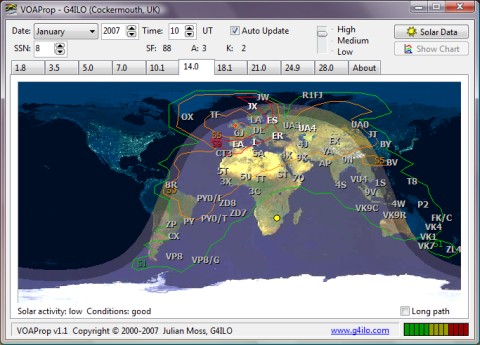
VOA Prop

Many thanks to SWLing Post contributor, Paul Evans, who notes:

Users of these two propagation prediction programs will find that they don’t work beyond Dec 2019 because the SSN look-up files didn’t go any further.

I noticed this 2-3 years ago and added to the end of the files required. I entered guesses for solar activity values, but with auto mode turned on they will fetch current values. At least this will get you started again. Or my guesses might be right!! 🙂

For Ham CAP use: http://w4.vp9kf.com/SSN.dat

For VOAProp use: http://w4.vp9kf.com/ssndata.txt

Download them and swap them into the directory where the application is located.

Thanks or the help, Paul!