Category Archives: Shortwave Radio

Radio Waves: Tribute to Gene Pell, Dangerous AM Demonstration, White House Criticism of VOA, and Essex Online Classes Break Records

Radio Waves:  Stories Making Waves in the World of Radio
Because I keep my ear to the waves, as well as receive many tips from others who do the same, I find myself privy to radio-related stories that might interest SWLing Post readers.  To that end: Welcome to the SWLing Post’s Radio Waves, a collection of links to interesting stories making waves in the world of radio. Enjoy!

Many thanks to SWLing Post contributors Troy Riedel, Dennis Dura, and Dan Robinson for the following tips:


Ernest Eugene “Gene” Pell 1937-2020 (Radio Free Europe)

As noted in this obituary published by his hometown newspaper, The Paducah Sun, Ernest Eugene “Gene” Pell, 83, died quietly on April 7, 2020, at his home near Syria, after a 3-year battle with cancer. Pell served as President and Chief Executive Officer of Radio Free Europe/Radio Liberty (RFE/RL) from 1985-1993, leading the Radios during the peaceful revolutions that occurred in Eastern Europe and the Soviet Union from 1989-1992.

In Tribute to Gene Pell

In 1989, we who were privileged to serve in the management of RFE/RL as Gene Pell’s colleagues watched the awesome professionalism of RFE/RL’s broadcasters as peaceful revolution swept from the Baltics to the Balkans, and the Radios helped each country share with others the power – even the slogans – of peaceful protest, and the wisdom of restraint by police and armed forces.

Romania was a tragic exception. Ceaucescu’s regime was doomed by RFE’s broadcast of a recording of the shooting of civilians protesting in Timisoara. As Ceaucescu fled Bucharest, and violence by unknown combatants erupted, Gene ordered a million watts of shortwave power from our transmitter stations across Europe diverted to the Romanian service. Before long, Romanian army commanders seeking to restore calm established phone contact with the service in Munich.

In the immediate aftermath of the liberation of Eastern Europe, and the 1991 collapse of the Soviet Union, Gene saw the need and found the resources to open bureaus across the region and begin on-the-ground reporting by talented local journalists – and local rebroadcasting of RFE/RL programming.

And he persuaded the U.S. government to allow RFE/RL for the first time to broadcast to the former Yugoslavia, during the Bosnian War, with a new, multi-ethnic service led by Nenad Pejic*.

On Gene’s watch, Lennart Meri, Foreign Minister of a newly free Estonia, nominated RFE/RL for the Nobel Peace Prize.

Gene’s leadership was crucial as another struggle soon ensued, this time in Washington, as efforts arose to save the federal government money by shrinking or closing the Radios, on the premise that if Europe was free, why did we need Radio Free Europe (and Liberty)? Support from new democratic leaders across the region, notably from Lech Walesa and Vaclav Havel, helped convince a Presidential Commission addressing this question that the Radios’ mission should not end but evolve, as it has.

The views of these freedom leaders were decisive in keeping RFE/RL on the air and positioned to win the enormous multi-media audience it enjoys today. Gene Pell’s vision is alive for future generations.

Two of my closest colleagues, Ross Johnson and Kevin Klose, join me, as I am sure many others would, in saluting Gene for his contribution to a freer world.

— Robert Gillette […]

A Dangerous Demonstration of the Power of Radio (Hackaday)

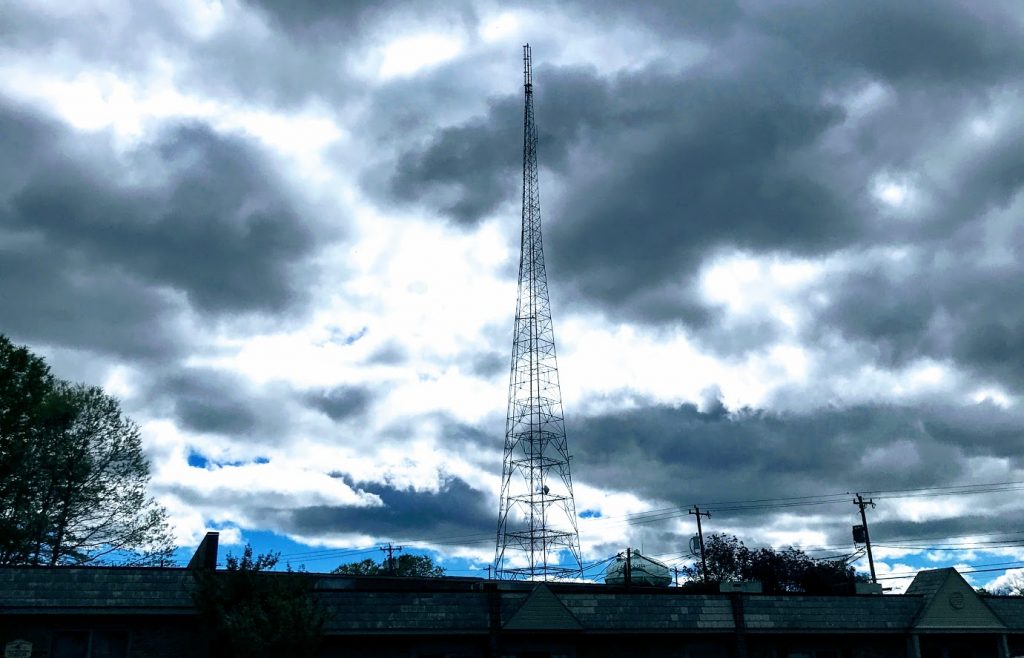
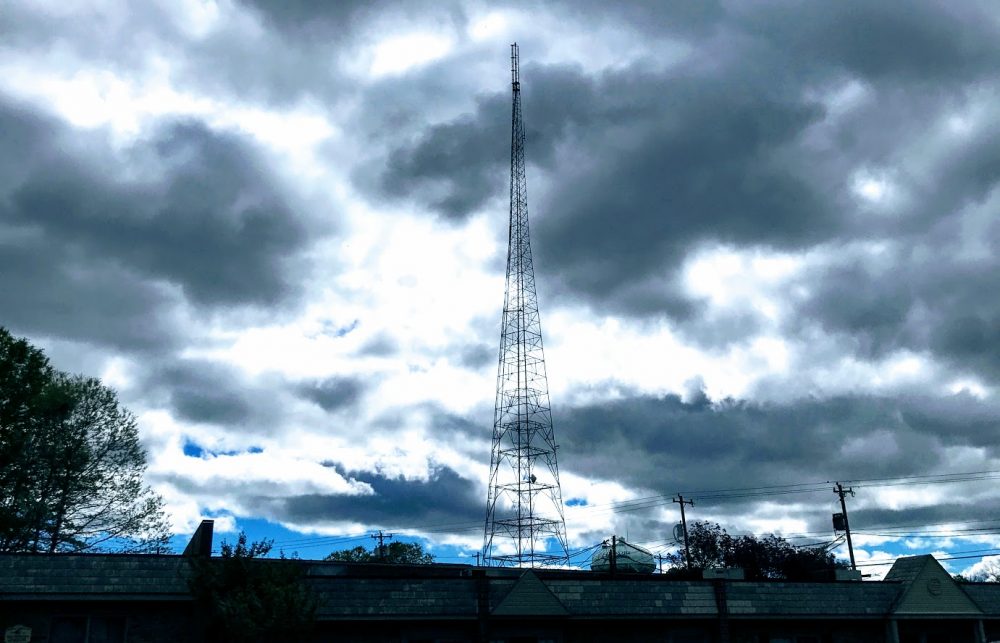
Terrestrial radio may be a dying medium, but there are still plenty of listeners out there. What would a commute to or from work be without a check of “Traffic on the Eights” to see if you need to alter your route, or an update of the scores from yesterday’s games? Getting that signal out to as many listeners as possible takes a lot of power, and this dangerous yet fascinating demo shows just how much power there is on some radio towers.[…]

White House Criticism of VOA, Unprecedented in its 78 year History (Public Diplomacy Council)

The Voice of America is the nation’s largest publicly-funded international broadcaster, reaching 280,000,000 multimedia users in 47 languages each week, many of whom access it daily for honest, balanced and accurate world news.

To most senior VOA officials, past and present, including this writer, an unsigned White House blog on April 9, 1600 Daily, omitted or misstated vital information about the scale and original date of the coronavirus outbreak in mainland China. That blog asserts in a bold headline: “Voice of America spends your money to speak for authoritarian regimes.”

But that attack was just the beginning.

President Trump went even further at his daily news briefing on April 15, largely devoted to the coronavirus. “If you heard what’s coming out of the Voice of America, it’s disgusting”. The President then assailed Congress for failing to take up his nomination of conservative Michael Pack as chief executive of all five U.S. funded multimedia organizations, the U.S.Agency for Global Media, until recently known as the U.S. Broadcasting Board of Governors.

The USAGM is the oversight body of five overseas multimedia U.S.-funded networks: VOA, Radio Free Europe/Radio Liberty, Radio Free Asia, the Middle East Broadcasting Network in Arabic, and Radio/TV Marti in Spanish to Cuba. Research in approximately 100 countries indicates that collectively, the five networks reach 350,000,000 people abroad every week.[…]

Essex Ham Foundation Online Training breaks all records (Southgate ARC)

The Coronavirus outbreak and the RSGB’s introduction of online exams that can be taken at home have led to a surge in demand for free online amateur radio training courses such as that run by Essex Ham

Volunteers from Essex Ham run a completely free online training course for the UK amateur radio Foundation exam.

A record breaking 260 people enrolled on the course that started April 5 with a further 164 waiting to start the next course.

In response to the demand Essex Ham are running an additional course, open to anyone in the UK, starting on April 19.

You can find out more about online training and register to join a course at
https://www.essexham.co.uk/train/foundation-online/

Essex Ham
https://www.essexham.co.uk/
https://twitter.com/EssexHam


Do you enjoy the SWLing Post?

Please consider supporting us via Patreon or our Coffee Fund!

Your support makes articles like this one possible. Thank you!

Radio Emma Toc World Service to start monthly shortwave broadcasts

Many thanks to SWLing Post contributor, Jim Salmon, who writes:

With some extra time on my hands at the moment I’ve been able to forward one of my projects & start producing a monthly programme – ‘Radio Emma Toc World Service’. This is tied in with my website – www.emmatoc.com – & is to raise awareness of the UK’s first licenced radio service in 1922 – 2MT – & also to celebrate our hobby of radio listening & transmitting today!

I am pleased to say I have relays coming up on WRMI & Unique Radio Australia, & am looking at further relays in Europe. I will let you know times & frequencies when finalised. In the meantime, the first programme can be heard on the website – just click on the World Service link. Also – if any stations wish to relay this programme I am happy for this – just get in touch with me via the website.

Excellent news, Jim! Readers, check out Radio Emma Toc online and read all about the project and history of 2MT. For your convenience, I’ve embedded the first broadcast below, but also check out the Emma Toc World Service page for more information and links!

Radio Waves: Libre Space Foundation Reviews SDRs, ARRL VEC Statement, Pandemic Pastime, and Former CEO of RadioShack Now C-19 ER doctor

Radio Waves:  Stories Making Waves in the World of Radio

Because I keep my ear to the waves, as well as receive many tips from others who do the same, I find myself privy to radio-related stories that might interest SWLing Post readers.  To that end: Welcome to the SWLing Post’s Radio Waves, a collection of links to interesting stories making waves in the world of radio. Enjoy!

Many thanks to SWLing Post contributors Ron, Paul, Marco Zennaro, and Richard Langley for the following tips:


The Libre Space Foundation reviews software defined radios (Hackaday)

If you want to go to the next level with software defined radio (SDR), there are a lot of choices. The RTL-SDR dongles are fine, but if you get serious you’ll probably want something else. How do you choose? Well, your friends at the European Space Agency Libre Space Foundation have published a paper comparing many common options. True, they are mostly looking at how the receivers work with CubeSats, but it is still a good comparison.

The devices they examine are:

  • RTS-SDR v3
  • Airspy Mini
  • SDRPlay RSPduo
  • LimeSDR Mini
  • BladeRF 2.0 Micro
  • Ettus USRP B210
  • Pluto SDR

They looked at several bands of interest, but not the HF bands — not surprising considering that some of the devices can’t even operate on HF. They did examine VHF, UHF, L band, S band, and C band performance. Some of the SDRs have transmit capabilities, and for those devices, they tested the transmit function as well as receive.

The review isn’t just subjective. They calculate noise figures and dynamic range, along with other technical parameters. They also include GNURadio flowgraphs for their test setups, which would be a great place to start if you wanted to do these kinds of measurements yourself.[…]

ARRL VEC Issues Statement on Video-Supervised Online Exam Sessions (ARRL News)

Very few ARRL Volunteer Examiner teams have successfully conducted in-person exam sessions (following social distancing guidelines) and video-supervised exam sessions using fillable PDF exams and documents. So far, we have found that both types of sessions take volunteer teams two to three times longer to conduct and accommodate fewer candidates than sessions conducted prior to the COVID-19 pandemic. So far, the video sessions have included only one examinee per session.

We ask the community to be patient with our volunteer teams as they navigate uncharted territory. Please remember with the introduction of significant new processes such as these, that there should be proof of concept, establishment of protocols and procedures, and beta testing before expanding to a larger audience. Video-supervised exam sessions require a different skillset than in-person exam administration. Not all teams will be equipped to deliver video exams right away.

The ARRL Volunteer Examiner Coordinator (VEC) has been investigating options for an online examination system.

Fillable PDFs are cumbersome within a video-supervised exam session process. We recognize that online testing would represent a large-scale solution for our thousands of VEs and would make session procedures easier for our teams, but this will not happen overnight.

The ARRL VEC will continue to adapt and respond to the evolving crisis as we search for viable and easy-to-use online examination system solutions and conduct exam sessions in innovative ways.[…]

Pandemic Pastime – Shortwave Radio (KFGO)

Ever since I was a little kid, I was fascinated that at night you could listen to radio stations from all over the country. My little Heathkit radio, which I built myself, could pick up stations in Minneapolis, Chicago, St. Louis, Denver, Little Rock, Pittsburgh to name a few. West coast stations were rare because it was tough getting a signal over the Rocky Mountains.

Then there was shortwave radio. A buddy of mine had one and he showed me a list of all the countries he was picking up. England, France, Germany, Latin American countries, numerous stations on the shortwave bands in America. Even Radio Havana coming out of Cuba. Anything from religion to hard edge rock and roll. He also noted he picked up Radio Free Europe and the Voice of America.

Well years later I would stop by my local Radio Shack and decided it was my turn to take up this hobby of monitoring shortwave radio. This particular radio also had a built in cassette player so you could record your found stations as well. It was really interesting to hear the news from other countries and get their take on what was happening in America.

One of the first frequencies I tuned in was WWV a shortwave radio station out of Fort Collins Colorado, that broadcasts the time via the atomic clock. The seconds tick off until the top of the hour when you hear a voice announce the time, followed by a tone that hits the top of the minute exactly on the nose. Great way to set the clock.

Now I know you can probably find all these shortwave stations on the internet, but what fun is that right?

With the covid-19 pandemic, this is a little something different than binge watching television, or building that 10th jigsaw puzzle or cleaning out that closet again and again.

Have a chair on the patio, a glass of your favorite beverage, extend the antenna, and start turning up and down the dial and see what you can find. I had a little notebook that I kept track of my searches. Don’t have it now though…lost it.

I’ll start a new one.

Stay safe everyone![…]

Former CEO of RadioShack now an ER doctor (National Post)

‘I am just one of those people who was very fortunate, where things worked out, and where I could do not just do one thing I really enjoyed in life, but two’

Brian Levy loved science as a kid. He had a microscope, read up on stuff in the encyclopedia and messed around with home experiment kits. During his high school years, he took every science credit possible. By his own admission, he was a “geek,” one with an equally strong passion, alongside science, for electronics.

Levy knew how to operate a shortwave radio. Weekend teenage heaven, in his mind, was hanging around the local RadioShack store, a warehouse of gizmos where he scored his first part-time job in 1974, earning US$1.40 an hour at a shop in downtown Atlanta. He was 15, which, alas, was too young to be working for the company, according to the folks at corporate headquarters in Texas, who fired him upon receiving his paperwork.

The dismissal didn’t sit well with Levy.

“I actually called the vice president of human resources in Texas,” he says. The executive was impressed by the moxie of the kid. On the day he turned 16, Levy was hired back.

[…]Levy did not foresee the premature end to his business career. When it came, rather than being crestfallen, he felt liberated, and free to pursue an “itch” that he had always felt the need to scratch. So he applied to medical school at McMaster University in Hamilton, ON. (Levy came to Canada in the first place after relocating RadioShack HQ north of the border as CEO. He is now a dual citizen, although his soft, buttery accent betrays his roots in the American south.)[…]


Do you enjoy the SWLing Post?

Please consider supporting us via Patreon or our Coffee Fund!

Your support makes articles like this one possible. Thank you!
Video: Antonio’s Kenwood R-2000 Modifications

Many thanks to SWLing Post contributor, Dan Robinson, who shares the following:

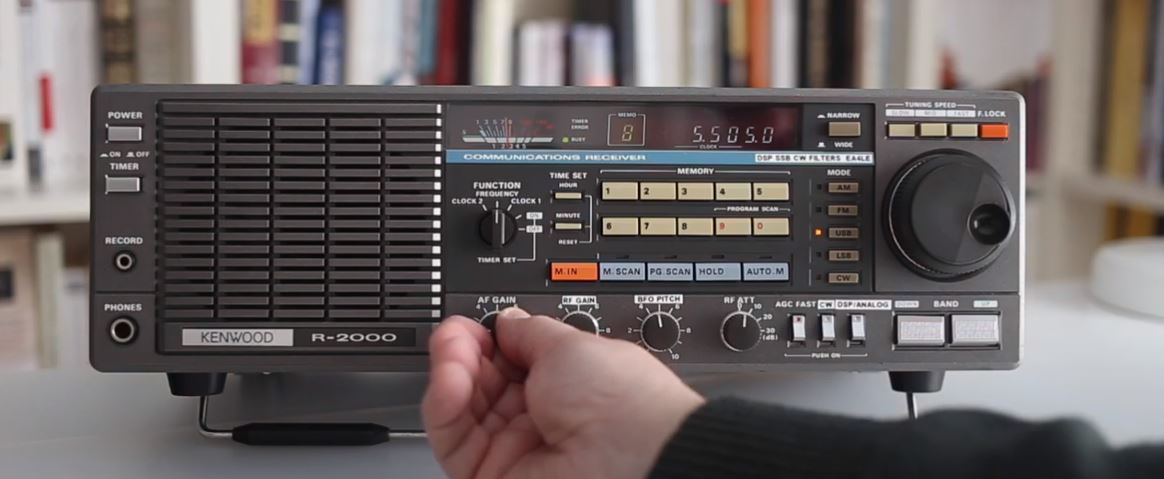
Antonio Fernandez, who is in Spain, posted this on the Extreme page. Very interesting R-2000 mods:

Major modifications are adjustable RF GAIN (using the former TONE control), BFO Pitch control (former AM Squelch, FM Squelch is retained) and DSP Audio filtering for SSB and CW. Internal DSP module is SOTABEAMS Laserbeam Filter Module. The former DIMMER and NB push switches are used for switching on (bypassing) the DSP module and bandwidth (CW, SSB) selection.

Click here to view on YouTube.

Those are brilliant modifications on a classic receiver!  Thank you for sharing, Dan!

Check out more videos from Antonio Fernandez on his YouTube channel.

Hack a broken VGA cable to make a binocular ferrite cores for your NCPL antenna

Many thanks to Oscar (EA3IBC) who shares this simple hack.

I’ve gotten quite a few emails from Post readers telling me that the only thing holding them back from building a NCPL antenna is the BN-73-302 binocular ferrite core needed for the 1:1 Balun. While so much of the world is sheltering at home due to Covid-19, it’s less convenient to purchase one just for this purpose.

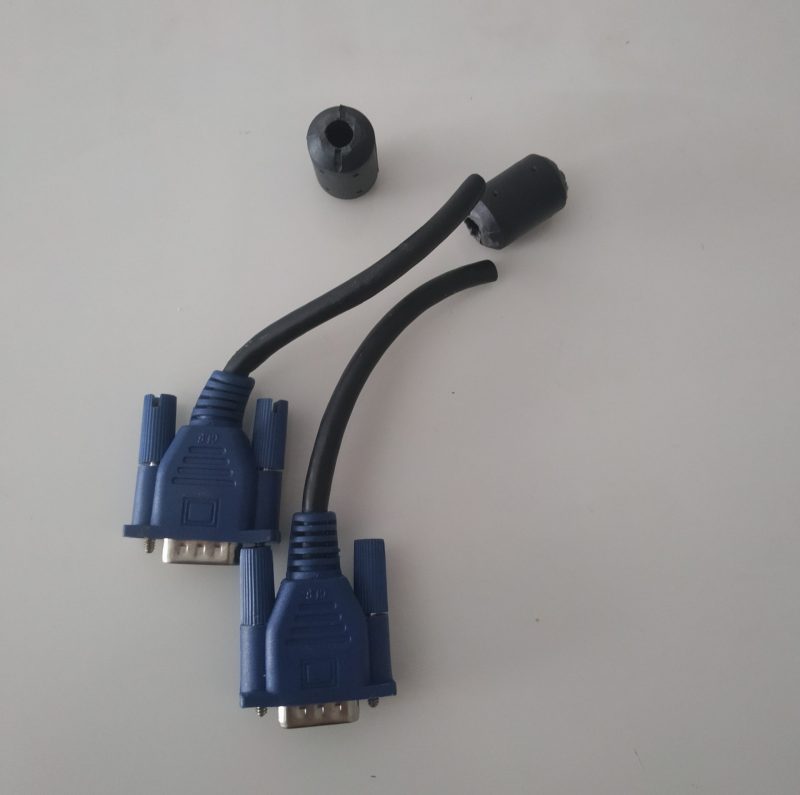
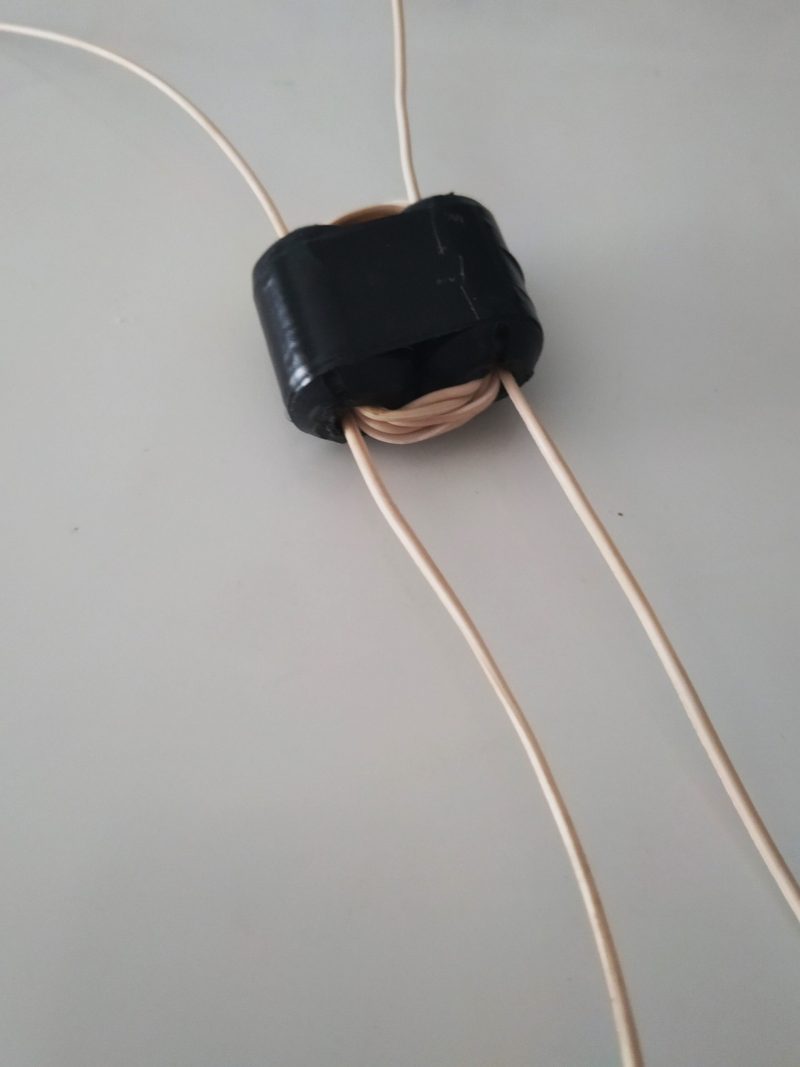
But almost everyone has an old VGA or USB cable with ferrite cores they can cannibalize for this  very purpose. Oscar shared this super-simple hack on Twitter:

1. Cut the cable and remove the ferrite cores

2. Tape the two cores together

3. And wind four turns on both sides

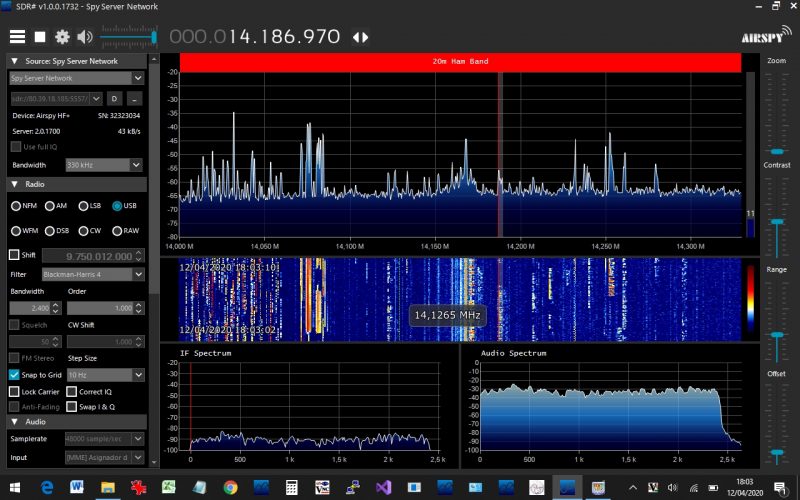
Admittedly, this 1:1 balun might not have the same properties as the BN-73-302 from our tutorial, but it seems to be working for Oscar. Check out this screenshot he shared from SDR# while hooked up to his NCPL antenna:

Thanks again!

Readers, you can follow Oscar on Twitter by clicking here.

DRM featured on BBC Digital Planet

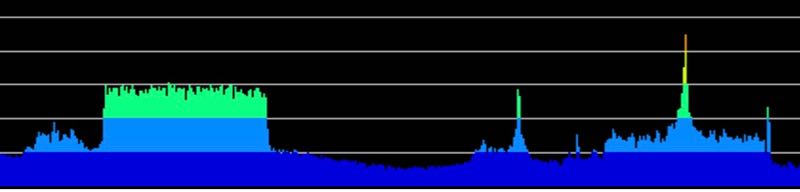
DRM broadcast (left) as seen via a KiwiSDR spectrum display.

Many thanks to SWLing Post contributor, Ed, who writes:

The April 14, 2020 edition of the BBC World Service program ‘Digital Planet’ includes a story about the status of Digital Radio Mondiale (DRM) broadcasts on shortwave. The segment had no breaking news, but SWLing Post readers might enjoy hearing an updated explanation on BBC of how DRM works on shortwave and other bands, where it’s being used, and what unique services it can offer. The segment includes a clip of digital audio played over shortwave and an interview with Ruxandra Obreja, Chair of the DRM Consortium and DRM Association.

The segment was followed by a casual conversation between BBC producer Gareth Mitchell M7GJM and interviewer Bill Thompson about SWLing and Amateur Radio–which was great to hear discussed on BBC World Service!

The entire segment and followup discussion begins at 21:17 and ends at 31:49 minutes into the mp3 recording found at this BBC URL:

Thank you for the tip, Ed! Digital Planet is a fantastic technology show–check out more episodes on their website.

The meager “benefits” of Covid-19 from an SWL’s perspective

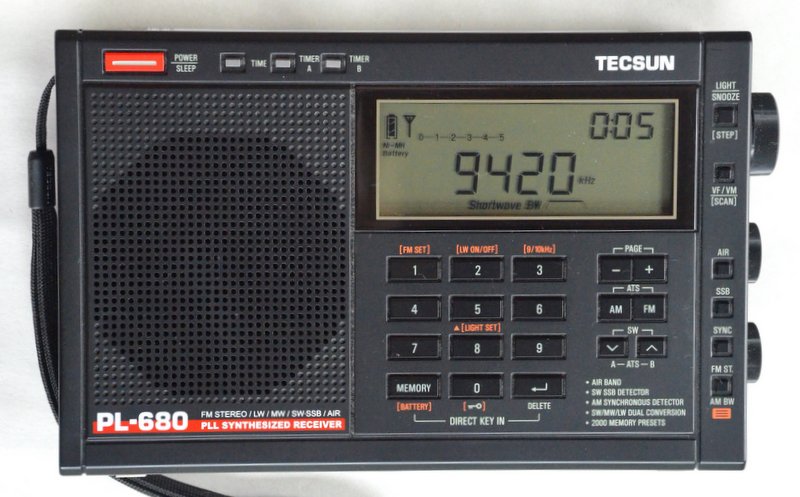
The Tecsun PL-680

Many thanks to SWLing Post contributor, Richard Langley, who shares the following note:

One of the benefits of the Covid-19 pandemic, as if there are any real benefits of a pandemic, is serendipitous programming on SW. I speak in particular of the ERT Proto Programma now airing on the Voice of Greece. As noted today (14 April), here in NB, on 9420 kHz tuning in around 19:50 UTC or so, there was classical opera being broadcast and after the news at 20:00 UTC, we were treated to “Musical Choices by Elena Maraka,” which is an eclectic music program of jazz and blues (funk, etc.). Nice. By the way, in a couple of hours, Proto Programma joins the Second Program (Deftero Programma).

Thank you, Richard, for sharing this note. Just one more reason 9420 kHz is a preset on all of my digital receivers.

And, you’re right: there are no real benefits of a pandemic. Still, it is fascinating from a listener’s perspective to hear how it changes the content of our shortwave landscape.