Category Archives: Shortwave Radio

Jack had a technical question…Eton gave him a detailed reply

Many thanks to SWLing Post contributor, Jack Kratoville, who writes:

I was once big into Grundig; I owned the YB-400PE, 550, Traveller II, Mini, finally settling on the G5 as one of my favorite radios. I looked at the G3 and probably got a bad one – sold it on eBay. When the G2 “Reporter” went on sale, $35 closeout at RS, I grabbed it. The worst radio I ever owned, so bad I returned it. A radio that had sold for $150, down to $35, and I still wanted my money back. I moved on to Tecsun and C Crane.

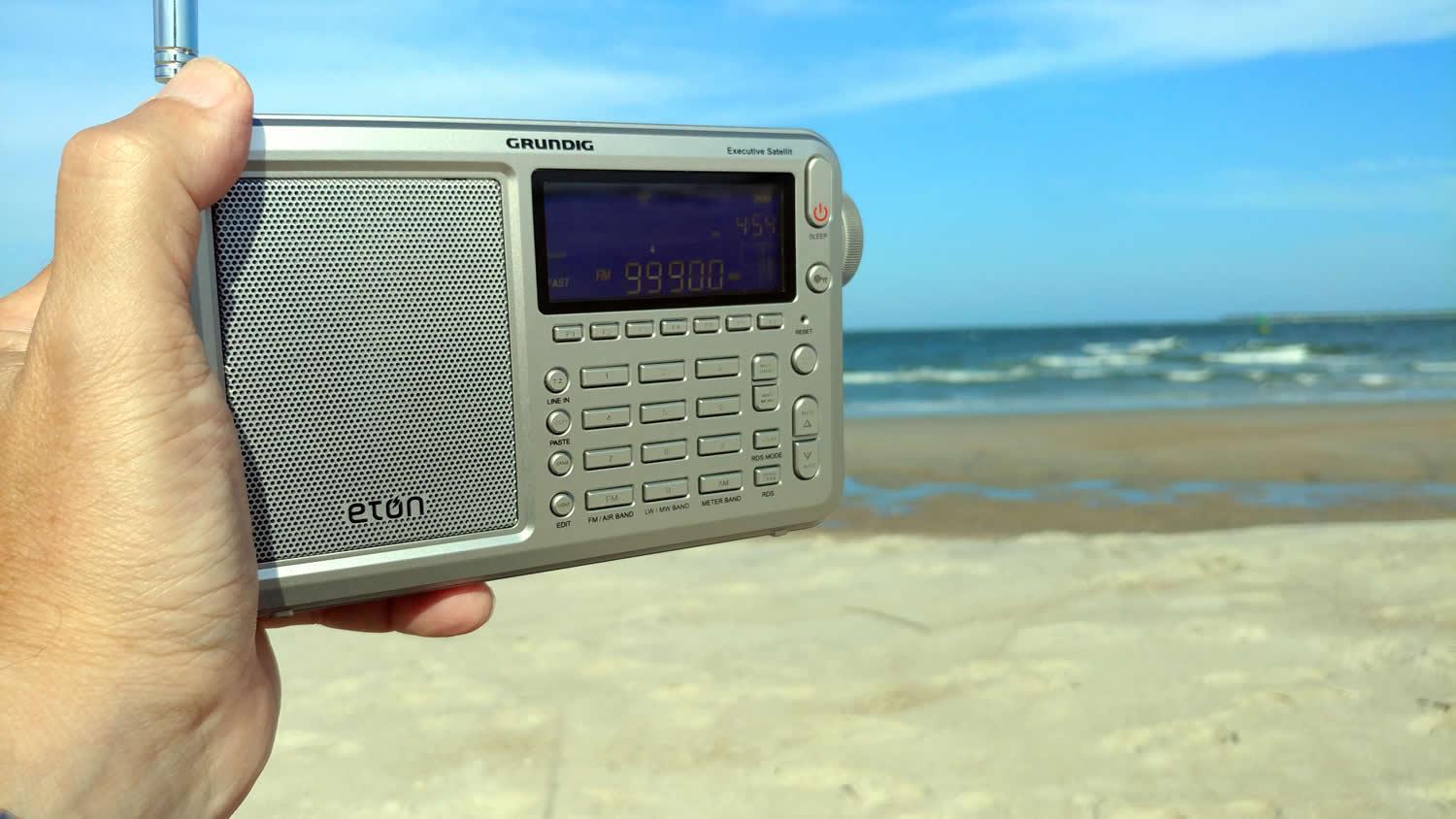
Recently, a friend in eastern NC had the Executive Satellit (silver) and had no use for it. I took it to the backyard, then to Atlantic Beach and was very impressed. This receiver was hitting all the right user buttons for me. I was reminded of what the G3 should have been, a decent upgrade to the G5. Aside from solid performance on all bands, the Executive Satellit provides better dial info (no big fan of orange display that goes poof when off), analog volume, decent speaker (second only to the Digitech AR1780) Sync & SSB, plus very quick scanning. And… a Line In/Out! I’m thinking here’s most likely the last of the Grundig (and Satellit) lineage and they finally hit a home run!

Well here’s where I’m reminded of how weird radios from Eton can be. I like bringing along my mp3 player for when I’m bored of band scanning. I have a JBL Flip 4, but now here was a single unit that could cover all the bases for me on a quick trip. I activated the Line In, plugged in my Sansa Sport and knew right away one of the stereo channels was missing. I looked up the manual and it said the Line In was 3.5mm stereo. I called Eton. Unfortunately, the service department (I remember Walter, who knew more about those radios than most) no longer exists. The woman I spoke to tried to explain there was only the mono speaker and after as simple an explanation I could manage, she said she would get back to me.

In a few days, she did and said, after consulting a colleague, I was right. The jack is stereo, but only produces the right channel. I wrote back saying “I felt this was a serious design flaw and why in the world would anyone design a radio like this?” I figured that was the end of our email exchange, but then I received the following:

———-

Jack,

My colleague tells me that the reason the implementation was done this way is that the internal speaker amplifier, which is also shared as the output driver for the headphones is set up as a stereo-in / stereo out configuration. This works well for the line input to headphone output scenario as both L & R channels are separated within their respective connectors. Since this internal speaker amplifier’s outputs are shared between the mono internal speaker and the stereo line output jack the summation of the signal for that mono speaker would result in the summation for the line output jack as well. While this would be OK, a L + R mix for the internal speaker it would cause the user to also have a L + R mix for the line output for both line input and radio applications. In order to maintain the stereo line output for the radio signals we cannot sum the two channels together at the output of the amplifier. The only way to fix this would be to add a summing op-amp on the line input side or summing speaker amplifier on the output side, neither of which were chosen by the designer due to board space, power consumption and cost consequences. A more simple “dirty” way to sum the input would be to buy a short 1/8″ female to 1/8″ male cable, cut that cable open in the center and then short the L & R signals together and place it in-line between the source device and the analog line input on the Satellit. This is not ideal but would work to crudely mix both L & R input signals together.

We apologize that we do not have a more elegant solution for this product.

Regards,

Eton

————–

Wow! I thanked her graciously for a full and detailed answer.

So now I attempt quick fixes like stereo to mono to stereo adapters and it overloads the input. I can turn down the source, but I lose a lot of volume. (And trying to compensate with the radio’s volume is not a viable solution.) I’m also not one to open up this unit with soldering gun at the ready.

Therefore, to those with far greater knowledge, understanding and electronically more inclined – is there a way to create a cord that would give me L+R at proper line-in volume/level? (Rerecording over 5,000 songs to mono would be a real pain.)

Thanks in- advance for any suggestions – and kudos to Eton for providing above and beyond standard customer service.

Thank you for sharing your Eton customer support experience, Jack. That was indeed a thorough and sincere reply!  I’m hoping someone in the community here can help you with ideas for a patch cable/adapter.

If you can help Jack, please comment!
Jim’s Vintage DX Audio Clips

Many thanks to SWLing Post contributor, Jim (W4OXB), who writes:

I have been involved in SWLing and ham radio since the middle 1960s. Mostly listening before I got my ham ticket in 1969. My current call is W4OXB.

I used to record dx catches on mediumwave and shortwave that I put in my logbook. About 20 years ago, I transferred my recordings from reel-to-reel to digital format.

My goal is to share the old recordings with other radio enthusiasts and the easiest way I’ve found to do that is YouTube. So, I have been working on this for a few weeks.

Click here to check out W4OXB’s Vintage DX Audio Clips

Excellent, Jim! You’ve got some great recordings in your list already. Thanks for sharing and, Post readers, note that Jim also plans to share some of his recordings with the Shortwave Radio Audio Archive. We really appreciate the support, Jim!

eBay: Julian spots an excellent condition Sony ICF-7600A complete with box

Many thanks to SWLing Post contributor, Julian Stargardt, who writes:

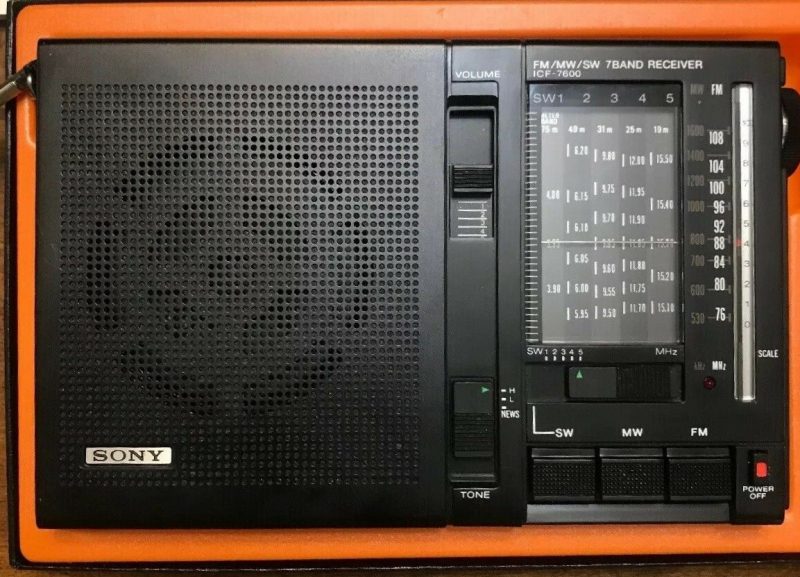
I was just browsing through eBay when I stumbled on this listing that may interest some SWLing readers: An excellent condition SONY ICF-7600A.

The listing is for a Sony ICF 7600 [with box and accessories] – the original ICF 7600, a very different beast from the still in production ICF 7600GR.

Must be over 40 years old and looks like it’s just left the shop.

Click here to view on eBay (partner link supports the SWLing Post).

Thanks for the tip, Julian. For someone seeking a complete ICF-7600A in great shape, this would be a good choice. The price is a bit steep compared to other 7600A’s on the market, but few come with a box, earpiece, and packing. I notice that the seller is accepting offers (that’s the route I’d go!). The ICF-7600A is a cool analog portable and one I’ve thought about acquiring at some point.

Video: Comparing SDR power consumption

Many thanks to SWLing Post contributor, Ivan Cholakov, who writes:

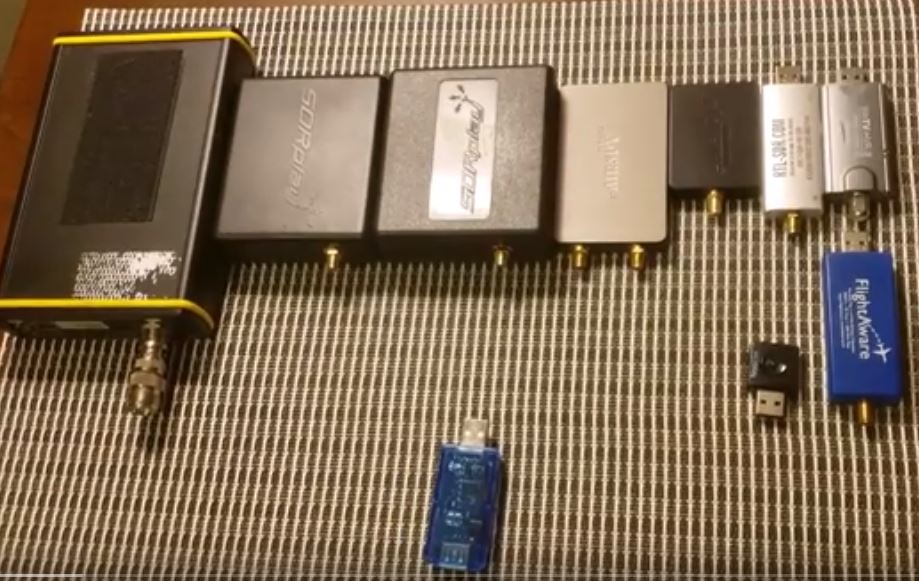
If you are interested, here’s a video where the power consumption of nine different SDRs was compared:

Click here to view on YouTube.

Fascinating!  I’ve always been curious about SDR power consumption because many of my SDRs are rarely turned off. Thank you for sharing, Ivan!

Marty needs advice as he builds a passive magnetic loop antenna

Many thanks to SWLing Post contributor, Marty Kraft, who asked that I share the following question with our community:

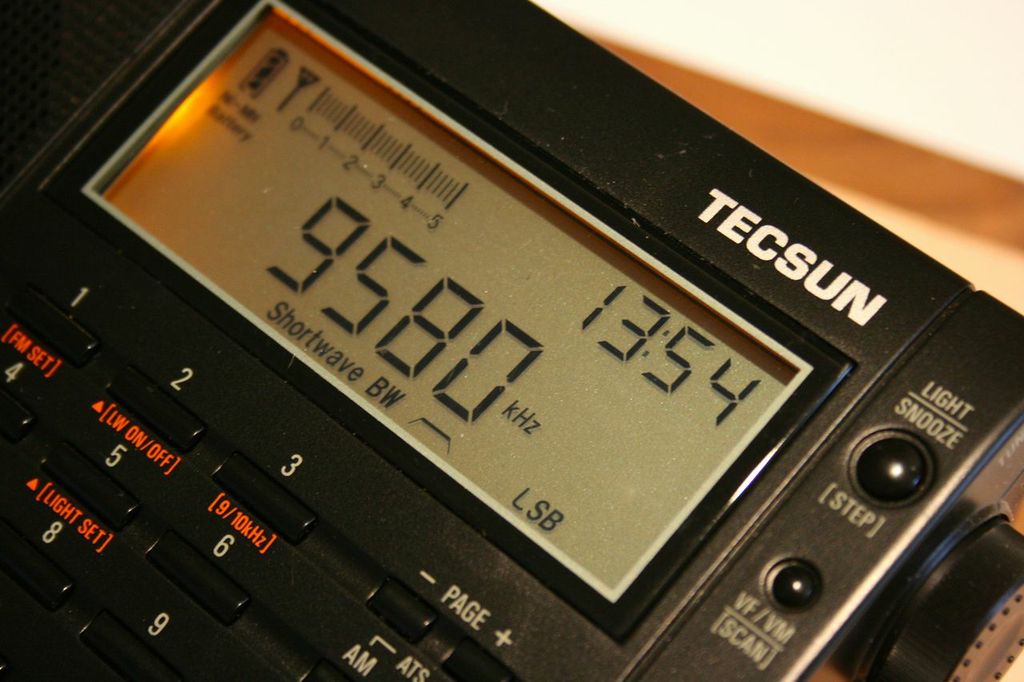
I’m still working on a receive-only passive hula loop magnetic antenna for my Tecsun PL-660.

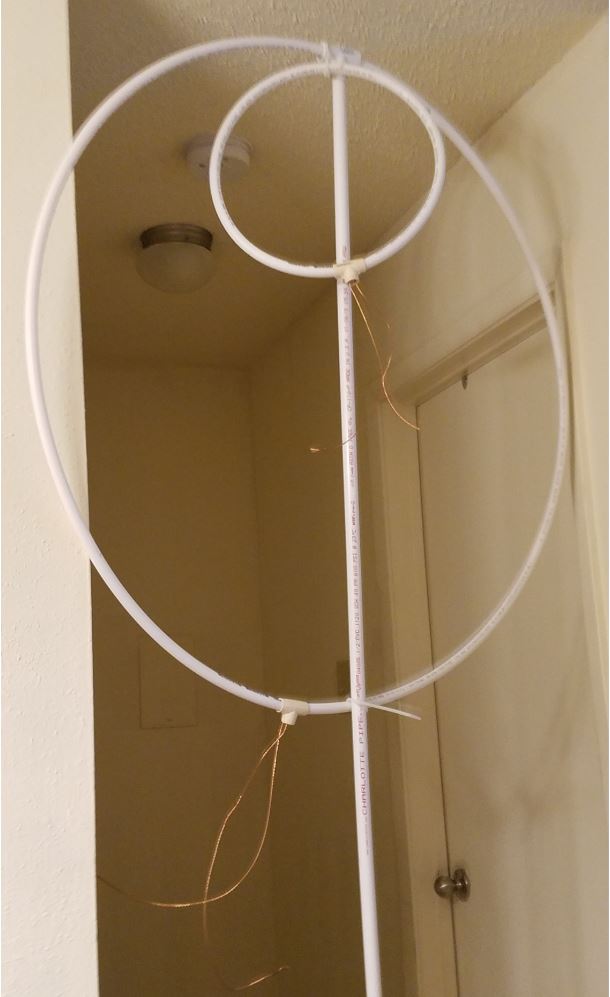
After viewing thousands of YouTube videos (LOL), I built the PVC-pipe structure [you can see in the photo below].

But I need some tech help to finish…

The antenna is 90 inches tall; large loop diameter is 40 inches; and small loop diameter is 17 inches. The wiring is 14 gauge braided.

I plan to put the antenna outside on the porch. Then I’ll run coax from the small loop to the receiver inside and use a 365 pF air variable capacitor to tune the large loop.

My first question is, what’s the best coax to use for the 10-ft run from the small loop to the radio inside? Second, will that 365 pF cap tune the entire 3-30 MHz range?

It’s hot here in Louisiana, so I’d really like to tune the capacitor from inside my apartment, also using coax to connect the cap to the large loop. Will that work? Or does the cap have to connect directly to the large loop?

Any other tips or suggestions? Thanks for the help!

Post Readers: If you have any helpful advice for Marty, please comment!

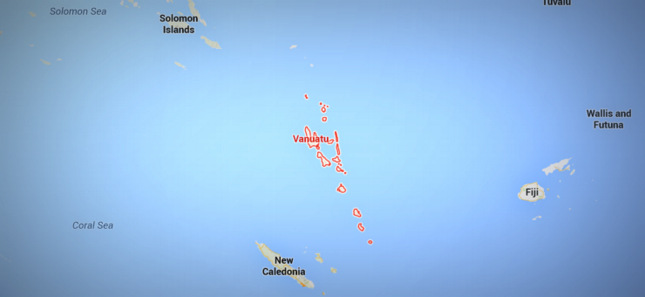
Radio Vanuatu: New shortwave and mediumwave service through infrastructure upgrade

(Source: Vanuatu Broadcasting & Television Corporation via Peter Marks)

RADIO VANUATU CAPITAL DEVELOPMENT WORK BEGINS

With the support of the Government of Vanuatu, the Vanuatu Broadcasting & Television
Corporation (VBTC) has begun work this month on a 942 million vatu (US$8.1m)
infrastructure upgrade to improve radio and free-to-air television service throughout
Vanuatu.

The first phase involves the design, installation and commissioning of a new shortwave (HF)
and medium wave (MF) service for Radio Vanuatu, the country’s public radio service. Costing
for phase one will be in excess of 242 million vatu (US$2.2m) and is funded by the
Government of Vanuatu. Following the improvements to shortwave and medium wave
services, VBTC will also undertake technical work to strengthen the coverage and reliability
of its FM services.

A 10kw MF Nautel transmitter imported out of Canada and a 10kw HF transmitter
manufactured by Hanjin Electronics of South Korea will be installed at VBTC’s major public
service transmission site at Emten Lagoon on Efate. Both transmitters will be commissioned
before the end of 2019.

The second phase, beginning early 2020, will reopen Radio Vanuatu’s medium wave radio
transmission facilities at St Michelle in Luganville on the island of Santo. This will provide AM
service to provinces in the top half of Vanuatu at a cost in excess of 300 million vatu
(US$2.5m).

The third phase will expand the national television free-to-air service, Television Blong
Vanuatu, along with a new digital television service. This final phase will cost an estimated
400 million vatu (US$3.5m).

Prime Minister Charlot Salwai Tabimasmas launched the capital development upgrade at a
special function attended by cabinet ministers, senior members of the public service,
members of the diplomatic corps and members of Vanuatu’s business and non-profit
communities on Friday September 20 in Port Vila before he departed the country to attend
the UN General Assembly in New York.

In his address, the Prime Ministerspoke atlength about the importance to Vanuatu of having
a strong national public radio and television broadcasting service and announced assistance
from Vanuatu’s development partners to help achieve this objective.

The Government of Australia funded the scoping study for the radio upgrade project and is
providing funding support to implement the strategic reform programme of VBTC which the
Prime Minister said is making good progress.

“I’m also happy to announce that the New Zealand Government is keen to support the
second stage of the Radio Vanuatu technical infrastructure upgrade while China is
considering my request to support the upgrade of Television Blong Vanuatu’s technical
infrastructure.”

Meanwhile Kordia New Zealand Limited has been awarded the contract to project manage,
design, install and commission the new radio transmission facilities beginning with the
facilities at Emten Lagoon outside Port Vila.

VBTC Chief Executive Officer, Francis Herman said that “Kordia has extensive experience in
the broadcasting and telecommunications industry in the Pacific, and recently completed a
major project in Samoa for State-owned Radio 2AP funded by the Australian Government”.
“We’ve worked hard with Kordia and a number of other technical experts to investigate the
most efficient and sustainable transmission solution for Vanuatu taking into account the
inclement weather, and the need to keep operating costs affordable.”

The shortwave service, which will be commissioned before the end of this year, will provide
national radio coverage to the 82 islands spread spanning 1,300 kilometres between the
most northern and southern islands.

“Our role as Vanuatu’s national broadcasting service is centered on helping create an
informed public opinion so our people can contribute more effectively to national
development”, Herman added.

“VBTC has struggled to remain relevant over the past decade because its technical
infrastructure was obsolete and badly neglected making it challenging for us to provide an
efficient, reliable, and responsive national radio and television service.”

Alongside the infrastructure upgrade, is an extensive programme to strengthen the technical
capacity of Vanuatu’s broadcast technicians along with a long-term maintenance regime to
expand the life of the equipment.

September 23, 2019

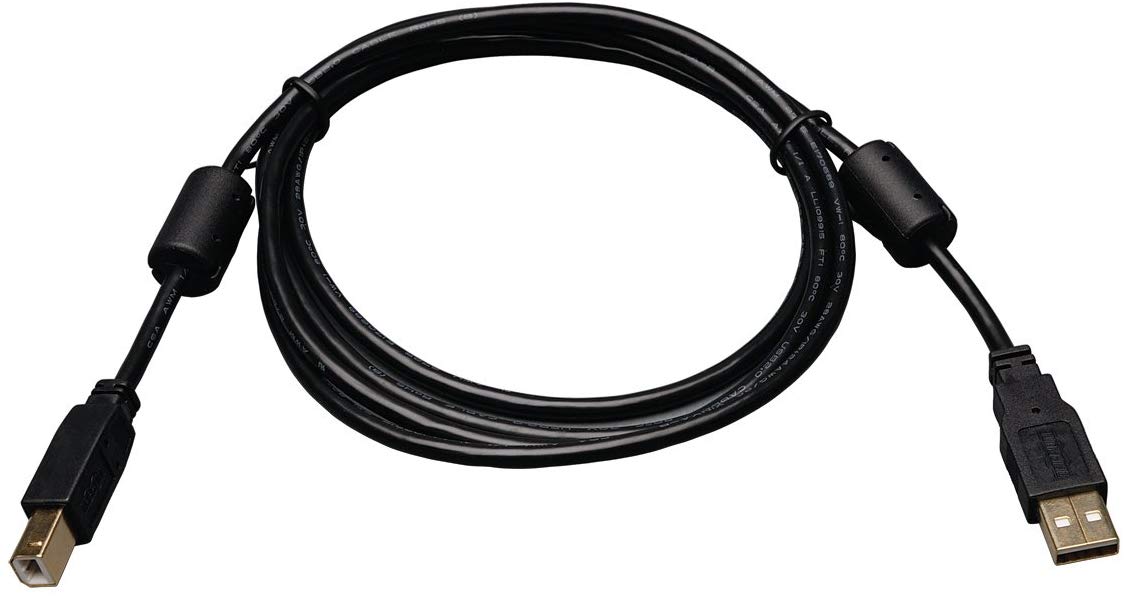
Tripp Lite dual ferrite USB cables

I found this tip from Lorne Waters on the SDRplay Facebook page:

I was having a lot of trouble with local noise and not getting really good signal spikes. Well I took a chance after reading many articles on using better USB cables. The picture below is what I purchased from amazon. It’s a USB with dual ferrite cores mounted at each end. Well this did wonders for me. It’s like less than 10 bucks. Well worth it. Try it for yourself. Using with SDRplay RSP1a.

Click here to view on Amazon.com (affiliate link supports the SWLing Post).

Lorne has a good point. All of my SDR USB cables have at least one in-line ferrite choke. Cables with dual chokes like the Tripp Lite are pretty rare. Note that this USB cable fits SDRs (like SDRplay models) with a USB-B port. I’ve had a difficult time in the past finding dual ferrite choke USB-A to Mini or Micro USB ports. In those cases, I often employ these inexpensive snap-on ferrite chokes.