Many thanks to SWLing Post contributor, Dan Amoroso (W3DI – WPE3DNC) for scans of his QSLs from WWVH in Kekaha, HI:
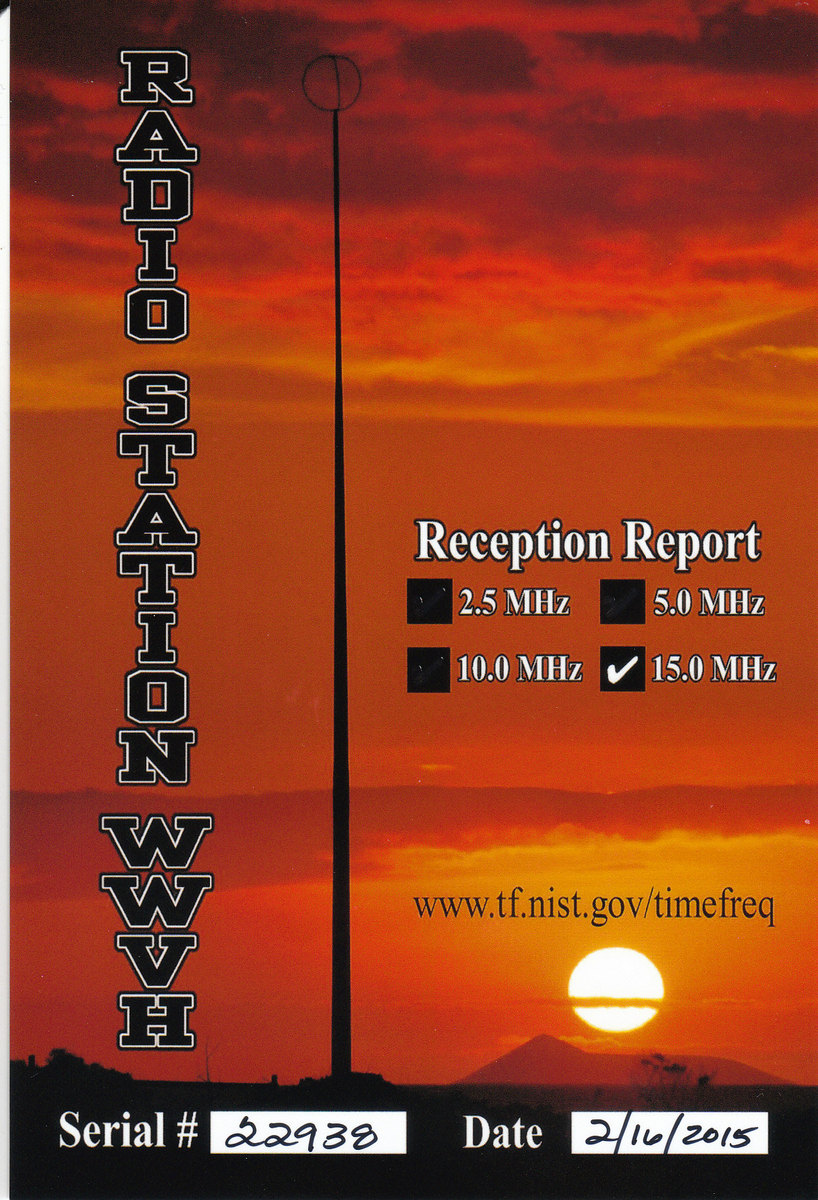
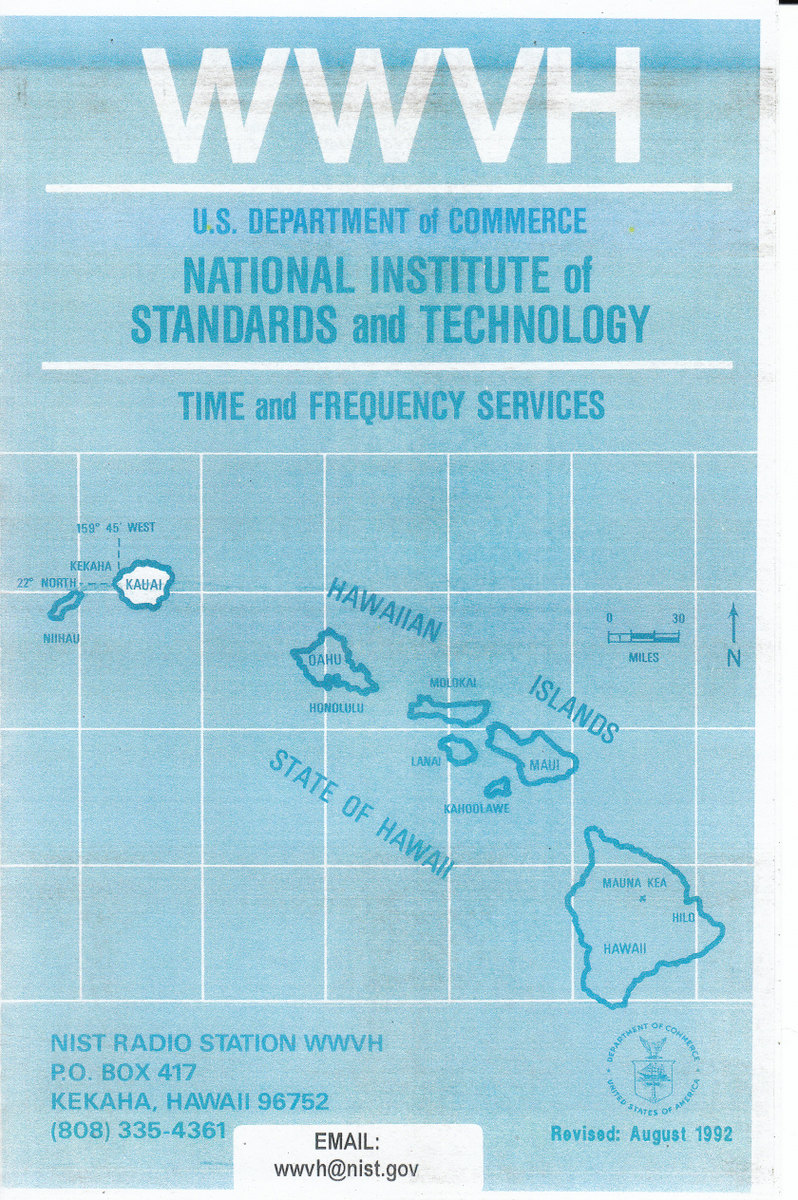
Many thanks to SWLing Post contributor, Dan Amoroso (W3DI – WPE3DNC) for scans of his QSLs from WWVH in Kekaha, HI:
 Many thanks to Any Sennitt who shares a link to this article by Telegraph journalist, Colin Freeman.
(Source: The Telegraph via Andy Sennitt)
Along with the glaciers of the Arctic and the sand dunes of the Sahara, northern Somalia is one of the loneliest, most godforsaken places I’ve ever visited as a foreign correspondent. You can wander its Arizona-like landscape for days without seeing another soul, and when I was held hostage there in 2008, I could see why so many British troops posted to Somalia after the Second World War committed suicide through loneliness.
That I did not succumb to the same urge is thanks to many factors – one being the good cheer of the photographer held captive alongside me, another being the Telegraph’s heroic efforts in securing our release.
But during the six weeks we spent held at gunpoint in a cave, one thing that stemmed the despair was the tiny, battery-operated radio that our kidnappers sometimes lent us. On the short wave channel we could get a faint BBC World Service signal, and while it was often fuzzy as it bounced round the cave’s walls, it was better than yet another game on our chess set made from cigarette foil.
So I’m pleased to hear that this lifeline is now being extended to inmates of another, much larger prison – the 25 million citizens of North Korea, who are denied access to any outside media by their leader, Kim Jong-un. As the Telegraph disclosed on Thursday, the World Service is to plan a new North Korea channel, giving the country’s brain-washed citizens a much-needed alternative to the relentless propaganda of the world’s last Stalinist regime.
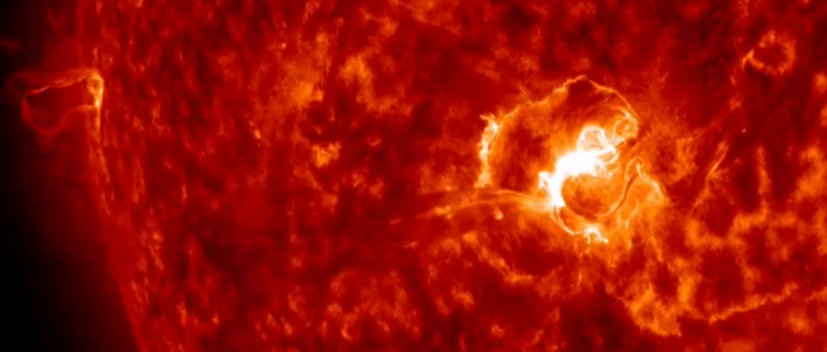
(Image source: Screen capture from NASA video)
(Source: Discovery News)
The sun has erupted with its first X-class solar flare of 2015, a not-so-subtle reminder that it can still muster the energy required to generate the most powerful class of solar explosion.
The magnetic eruption occurred yesterday (Wednesday) at 12:22 p.m. ET (16:22 UT), lighting up a huge area in the lower solar corona (the sun’s magnetically dominated ‘atmosphere’). Shortly after the huge eruption, that measured X2 on the scale of flare energy, Spaceweather.com reports a radio blackout was detected over large swathes of the globe, including much of the Americas.
“The X-flare scrambled the ionosphere thoroughly so that no decametric radio signals were supported in my part of the world,” said amateur radio astronomer Thomas Ashcraft. “The ionosphere started to reform after about fifteen minutes when stations began to reappear. (The stuff visible during the blackout was my own observatory electricity. Nothing exterior.)”
Based in New Mexico, Ashcraft reports that the blackout was most obvious in the frequency range of 15 MHz to 26 MHz.
Good news? There may be some HF band openings in the wake of this flare. We shall see.
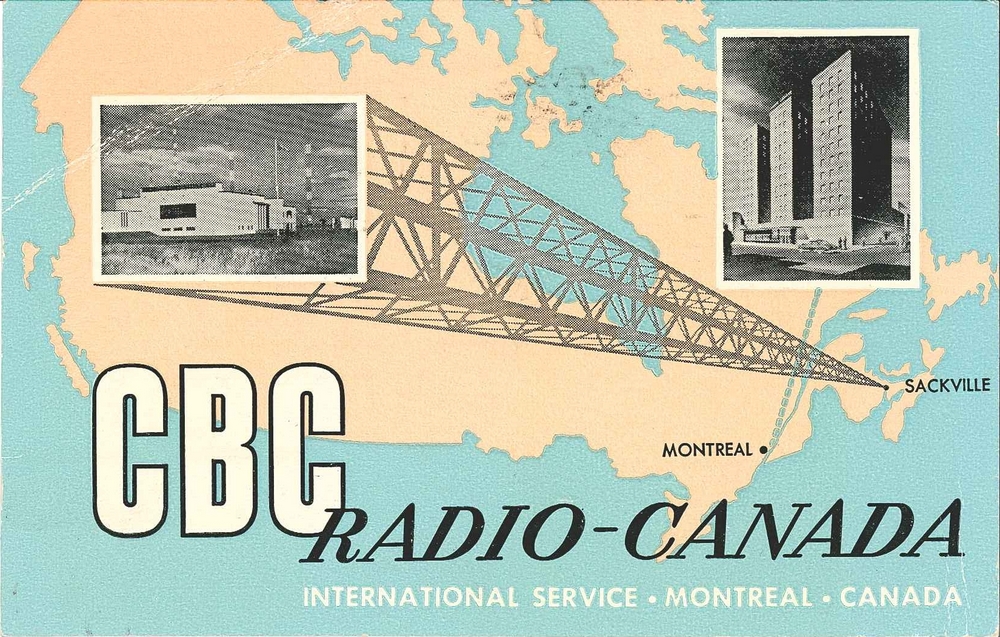
Many thanks to SWLing Post and SRAA contributor, Richard Langley, who writes:
“[C]oncerning the RCI anniversary, attached are scans of a QSL card from the CBC International Service for reception on 20 April 1964 when I was in high school. That was on the Knight-Kit Span Master regenerative receiver I had built the previous Christmas.”
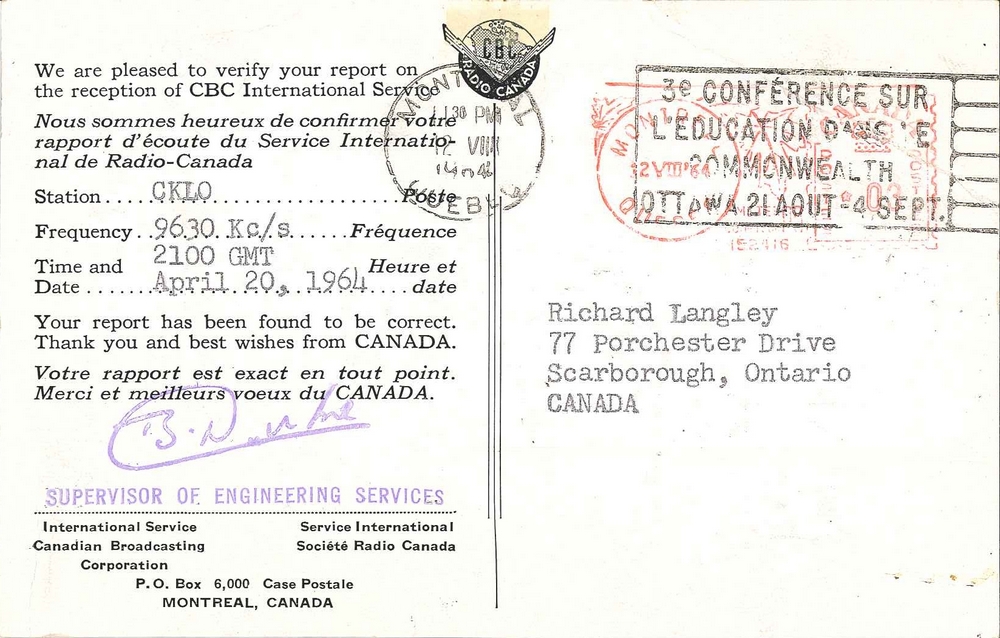
“About 50 years later (in 2012, actually), I did an interview with RCI’s Victor Nerenberg on GPS and the ionosphere, which appeared on the RCI program “The Link.”
It’s still on their website:
http://www.rcinet.ca/english/archives/program/the-link/ home/date/27-01-2012/
(about 15 minutes in)
and
http://www.rcinet.ca/english/archives/program/the-link/ archives/episode/09-10_2012- 01-30-the-link-friday-january- 27-2012/ The RCI site also is featuring some information related to the 70th anniversary:
www.rcinet.ca/rci70-en/And, lastly, there’s also some interesting stuff in the CBC’s Digital Archives under
http://www.cbc.ca/archives/categories/arts-entertainment/ media/radio-canada- international-canadas-voice- to-the-world/broadcasting-to- the-world.html
There was also an episode of the CBC Rewind archives program on RCI:
http://www.cbc.ca/player/Radio/Rewind/2011/ID/ 2167995222/
Many thanks, Richard! I wish I understood the ionosphere as well as you do–that was a fascinating interview. Thanks for sharing your knowledge.
Gorgeous QSL card, by the way!
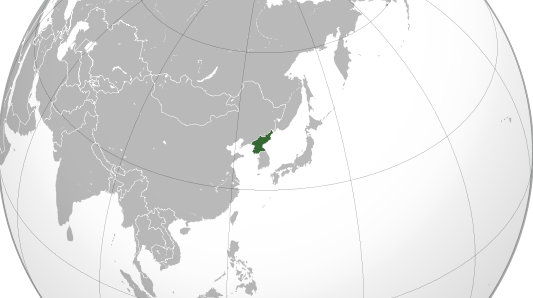 Many thanks to SWLing Post reader, Richard Cuff, for sharing this news from The Telegraph:
“The BBC is planning a new North Korea service to give the totalitarian state’s 25 million people an alternative to Kim Jong-un’s propaganda.
In a move that could plunge the corporation into confrontation with the North Korean dictator, the World Service is examining how to set up a special news channel that will get around Pyongyang’s ban on foreign media broadcasts.
The plan has echoes of Western broadcasts into the Soviet Union and Warsaw Pact countries during the Cold War, when the BBC, Radio Free Europe and Voice of America all broadcasted to listeners behind the Iron Curtain.
However, it is likely to spark fury from Pyongyang’s volatile leadership, and could lead to the British embassy in Pyongyang being targeted for protests or being shut down altogether.
It could also put Britain in the firing line for North Korean-led cyberattacks, such as the one that targeted Sony Pictures last year over its film “The Interview”, which lampooned Kim Jong-un.”[…]
 Many thanks to SWLing Post reader, Merkouris, who writes:
I’ve just thought that the shortwave schedule of ERT Open, published on the 28th of February, might be of interest to you and the readers of the SWLing Post.
Here is the link in Greek and below is the translation in English [by time, region, frequency, and program]:
0000-1500 UTC, Europe/North America, 9420 kHz, ERA Athens
1500-2400 UTC, Europe/North America, 9415 kHz, ERA Athens
1100-0450 UTC, Europe/Central America, 9935 kHz, ERA Athens
0500-1050 UTC, Central & South Africa, 11645 kHz, ERA Athens
0000-0550 UTC, Russia/Japan, 15630 kHz, ERA Athens
0600-1850 UTC, Europe/Central America, 15630 kHz, ERA Athens
1900-2350 UTC, Middle East – Australia, 15650 kHz, ERA Athens
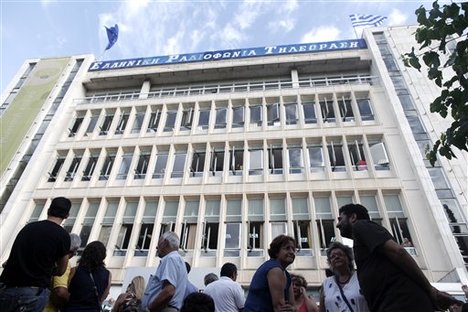
(Photo source: AP / Petros Giannakouris)
Merkouris also included links to the following reports from Greek and English language news sources.
(Source: ANAmpa.gr)
ANA – MPA — A draft bill to reestablish defunct public broadcaster ERT was released to public consultation on Monday afternoon, under the title “Regulations on issues of the state radio and television agency, Hellenic Radio and Television SA, and amendment of article 48 of Law 2190-1920.”
The consultation period will end at 10:00 a.m. on Thursday.
[…]It also said it was reinstating all the ERT staff who had permanent contracts by June 11, 2013 and said a fee of 3 euros would be introduced for ERT on PPC bills and the present name of the public broadcaster (“NERIT S.A.”) be replaced by ERT S.A.
This is an interesting development for the Greek public broadcaster. Of course, even if the bill passes, it is unknown how this could affect shortwave radio relays. I must say that I’m impressed that ERT Open has been broadcasting on shortwave a good 1.5 years after they should have been closed down. (Personally, I hope they never go off the air as I love ERT Open’s weekend music programs!)
Again, many thanks Merkouris for sharing this schedule and breaking news. Please keep us informed!
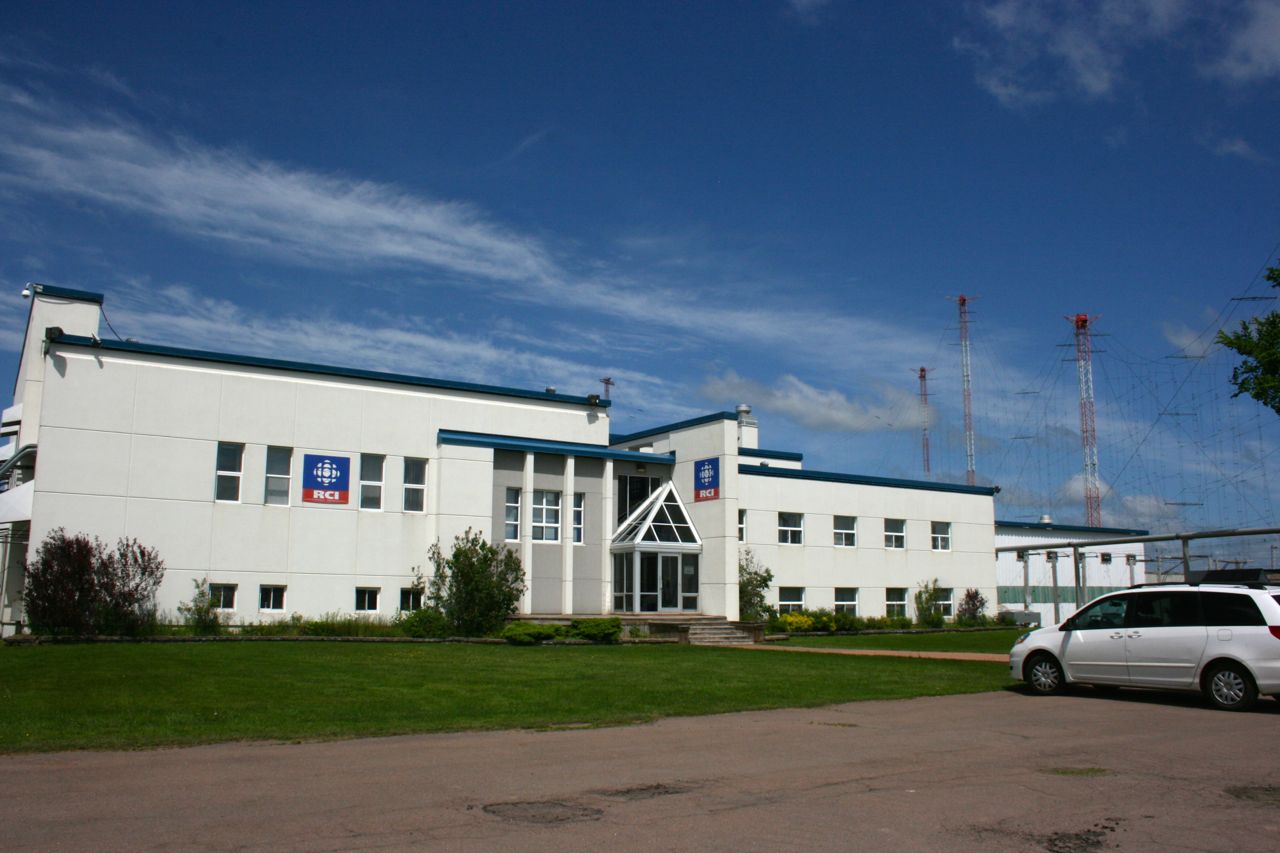
The transmitter building of Radio Canada International, Sackville, NB.
I spent the summer of 2012 in an off-grid cabin on the eastern coast of Prince Edward Island, Canada. That summer, I listened as two of my favorite shortwave broadcasters left the air within weeks of each other: Radio Netherlands Worldwide and Radio Canada International.
I was able to not only listen to the final broadcasts of Radio Netherlands, but also record them. I wrote a post about that memorable experience.
Ironically, though I was only a geographic stone’s-throw from the RCI Sackville transmitter site, I struggled to hear any Sackville signals as my location was too close for skywave propagation and a little too far for ground wave. Though I paid a visit to the transmitter site only two days prior, I was unable to hear or record RCI’s final broadcast.
Unlike RNW’s final broadcasts, RCI’s ended without fanfare and quite abruptly. This week, I heard a recording of that final RCI broadcast for the first time. My friend, Rajdeep Das, recorded it on June 24, 2012 in Kolkata, India. Rajdeep has kindly shared his recording with the Shortwave Radio Audio Archive and here on the SWLing Post.
This is a short 10 minute recording, beginning at 1550 UTC, June 24, 2012 on 11,675 kHz. Listeners will note that the broadcast ends abruptly during the mailbag program–obviously the Sackville transmitters were turned off prematurely.
Click here to download the recording as an MP3, or simply listen via the embedded player below:
While we’re talking about RCI, I would also like to thank @LeedsRadio, @UKDXer and Al Holt for sharing the following brilliant QSLs and pennant:
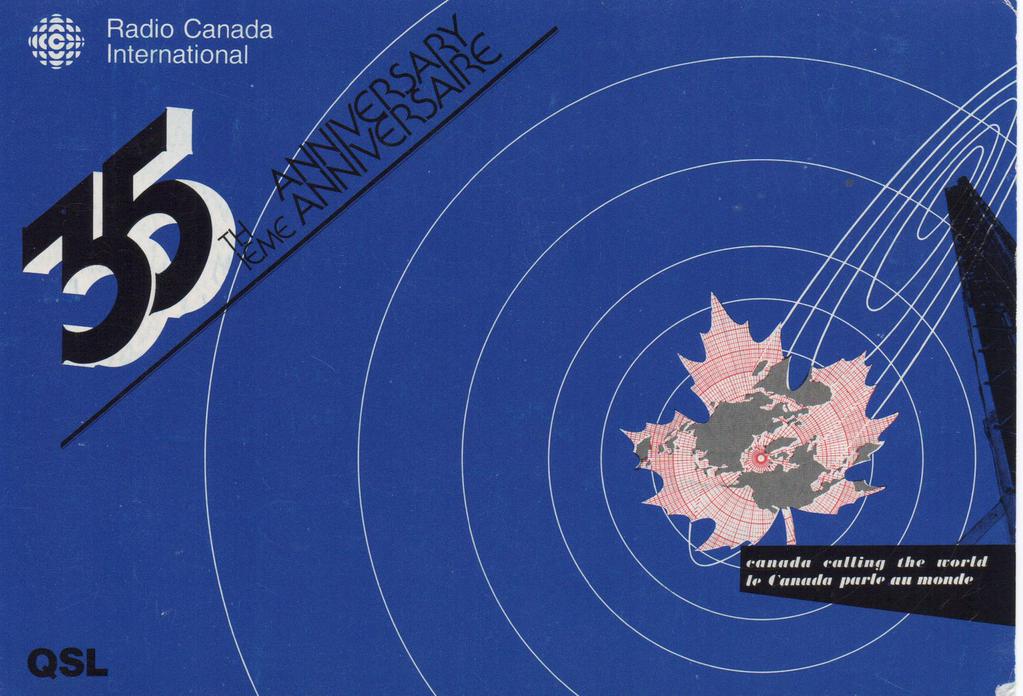
Source: @UKDXer via Twitter

Source: @LeedsRadio via Twitter
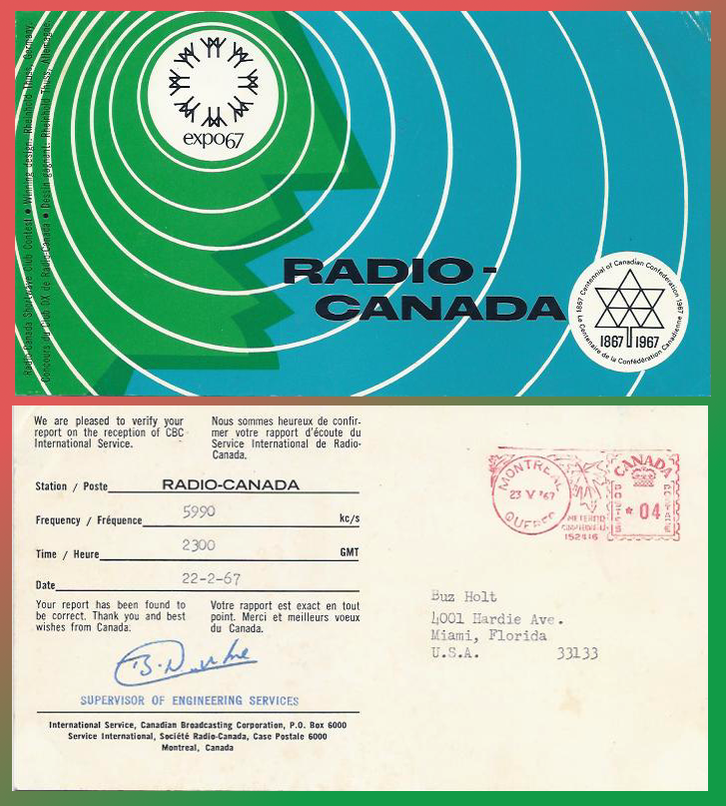
Source: @grovekid2 (Al Holt) via Twitter
Thanks for the stroll down memory lane!
SWLing Post readers should note that Rajdeep Das has a DX blog you should visit. I’ve added Rajdeep’s site to our blog roll. Thanks again, Rajdeep!