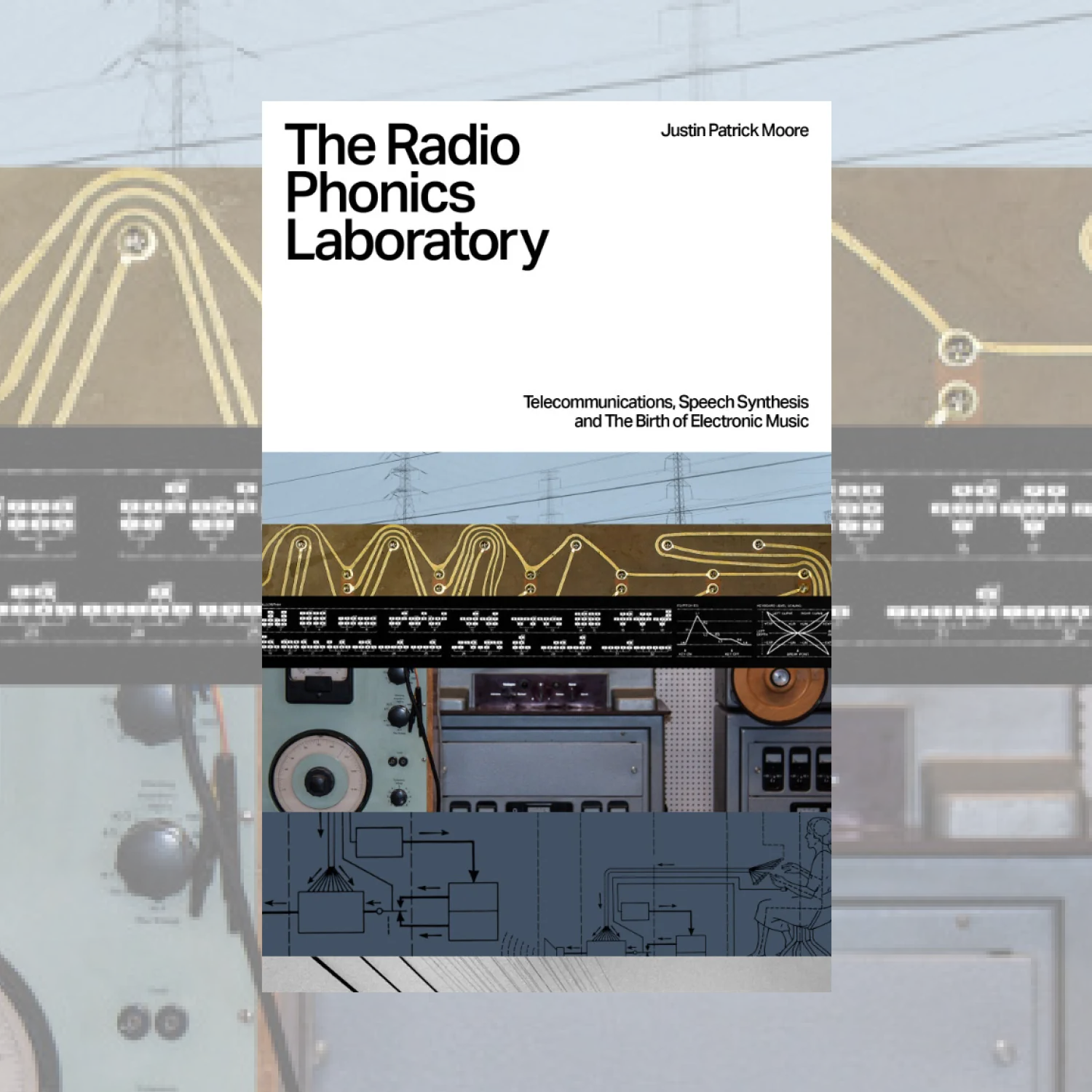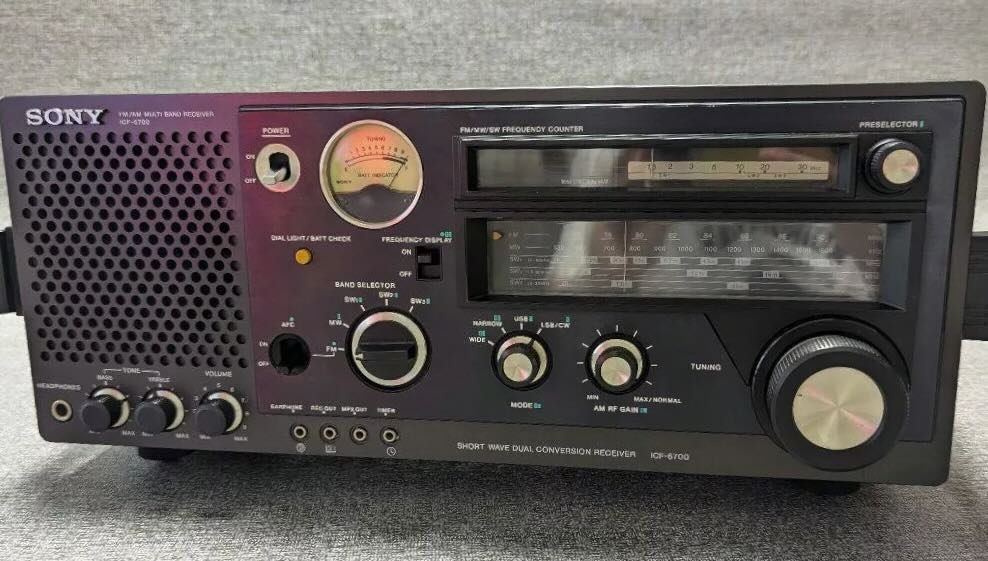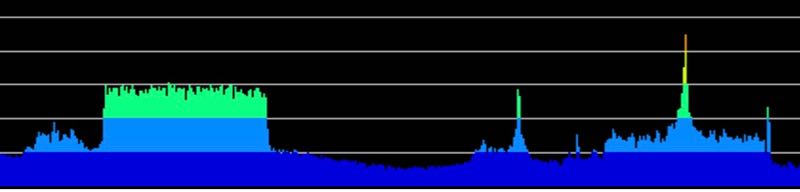
Many thanks to SWLing Post contributor, Tracy Wood, who writes:
Photos of former VOA Delano. All the towers are gone now… How sad.
Note that the smoke is from all of those California fires.
Many thanks to SWLing Post contributor, Bill Tilford, who shares the following update:
1. From the Isle of Music, July 2024
On July 13, 2024, we will feature music from the winning album in the Tradicional Variado category (“Danzoneando: En vivo desde Matanzas” by Orquesta Failde) of Cubadisco 2024
Times & Frequencies are:
1700-1800 UTC 9670 kHz with beam E-F towards South Asia
1900-2000 UTC 3955 & 6070 kHz (omnidirectional for Europe and beyond)
2300-2400 UTC 3955 kHz (omnidirectional for Europe and beyond)
All transmissions from Channel 292, Rohrbach, Germany
2. Uncle Bill’s Melting Pot, July 20, 2024
On July 20, 2024, we will feature various multiethnic music that blends musical styles from different cultures
Times & Frequencies (note new schedule) are:
1700-1800 UTC 9670 kHz with beam E-F towards South Asia
1900-2000 UTC 3955 & 6070 kHz (omnidirectional for Europe and beyond)
2300-2400 UTC 3955 kHz (omnidirectional for Europe and beyond)
All transmissions from Channel 292, Rohrbach, Germany
For both programs, even if you are listening on a remote websdr rather than a radio, we will still acknowledge reception reports with an eQSL IF:
1. The entire program is listened to and reported
2. which web SDR is clearly specified (that will be mentioned on the eQSL)
Shorter reports will be acknowledged with a brief note of thanks.
Hi it’s FastRadioBurst 23 from Imaginary Stations here letting you know of a couple of our summertime end of pier entertainment specials this coming week.
On Sunday 7th July 2024 at 0900/1300 hrs UTC on 6160 kHz and then at 2000 UTC on 6160 kHz and 3975 kHz we’ll be bringing you COOL 2. Expect entertainment of the summer vacation kind over the seaside pier PA, there’ll be songs about of sea and surfing, towels saved on sunloungers and even holiday tips about dodging the deck chair attendant by pretending you’re fast asleep. We’ll be checking the weather forecast a week beforehand and will be crossing our fingers that the sun will shine come broadcast time. So roll out the beach blanket, blow up that beach ball and get yourself comfy and tune into COOL 2.
Then via WRMI on Wednesday 10th July 2024 at 0200 UTC on 9395 kHz we’ll be bringing you our debut show of COOL which was broadcast to Europe last week. Tune in and enjoy the summer of shortwave vibes.
We now have a Patreon page for our regular listeners here. Monthly memberships are available for exclusive audio and zines.
For more information on all our shows, please send to [email protected] and check out our old shows at our Mixcloud page here.
Many thanks to SWLing Post contributor, Tracy Wood, who writes:
I accidentally ran across this Brazilian government press agency release … In Spanish, then I found an English version.
Somewhat dated as the floods were back in May.
Thank you, Tracy. This article didn’t come to our attention in May, so we appreciate the link!
Many thanks to SWLing Post contributor, André, who writes:
I have been following the SWLing Post for many years and really enjoy it. Like many DXers, I have a YouTube channel where I share my catches.
But I have something a bit different, that your readers might find interesting. It is an interview with a producer and presenter at an Ethiopian clandestine SW station, Voice of Fano.
I think it is interesting to hear from someone who is directly involved in a clandestine station, during a time of conflict, about their station. How they make programmes, the listeners, why they started the station, why shortwave, are they being jammed and more.
The station transmits from Issoudun, twice a week only, 15215 kHz. It can be heard on Wednesdays and Saturdays, 17:00 to 18:15 UTC. The WRTH listing has not been updated yet, they used to broadcast for 30 minutes only, but have increased this to 75 minutes. They have been transmitting for just over five months.
Kind regards,
André
Johannesburg, South Africa
By Jock Elliott, KB2GOM
Size matters . . . especially when it comes to antennas. In general, the more aluminum or wire you can get up in the air (presuming, of course, that it is properly designed), the more signal you are going to pull in. A radio friend has a 560-foot loop erected on his property, and its performance is, well, impressive.
I’ve had my share of high-performance antennas over the years, and I enjoyed them.
Lately, however, I have yearned for simplicity. So when I encountered the phrase “Ultralight DXing” a couple of years ago, it had a kind of magic allure to it.
At first, I was intrigued: “What the heck is that?” I wondered. After poking around on the internet, I discovered that at the heart of ultralight DXing was the notion of having a whole lot of fun trying to hear distant radio stations (usually on the medium wave band) with tiny, shirt-pocket-sized radios.
Gary DeBock got the whole ultralight DXing thing rolling in 2007. He already had deep experience in DXing, having worked 144 countries as a ham radio operator with a 1-2 watt transmitter he had built. That was his apprenticeship in radio propagation. Then in 2007, he wondered if it would be possible, using his skill and knowledge of propagation, to hear Japanese and Korean broadcasters from his home in Washington State using – wait for it – a cheap pocket radio: a Sony Walkman SRS 59. At 1 am on an autumn night, he put propagation and operating skill to work and heard a couple of medium-wave stations from Japan and one from Korea.
In November 2007, he posted his results on the internet and got a lot pushback, the upshot of which was: “How could you possibly do this?”
To which he replied (in essence), “Try it and see for yourself.”
Some people did try for themselves, some with notable success. For example, one DXer from Canada logged 300 stations in 30 days. The idea caught fire, and ultralight DXing was born, concentrating on medium wave stations because there are lots of them to DX. (Ultralight DXers have their own forum, which can be found here: https://ultralightdx.groups.io/g/main )
In the intervening years, ultralight DXers have experimented with exotic antennas and achieved some astonishing results, but for me, the soul of ultralight DXing is simplicity: a tiny radio, a pair of headphones, and a comfortable place to sit.
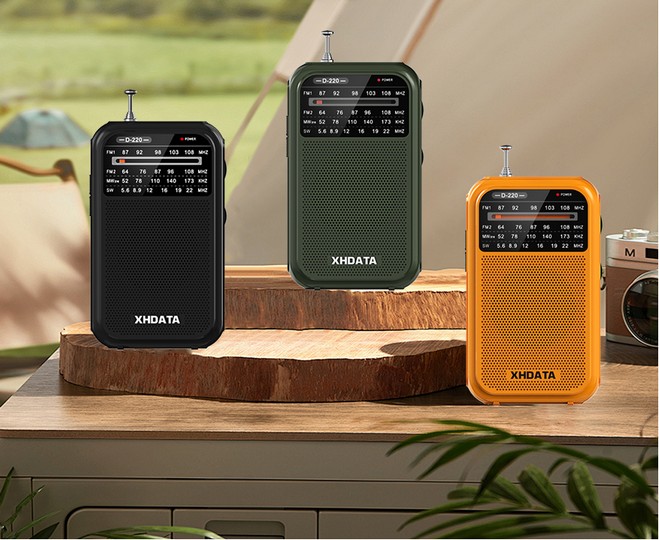
In 2021, DeBock published an “Ultralight Radio Shootout,” and when I encountered it online, I saved it (I’m a bit of a pack rat with interesting files). Earlier this year, I was rummaging through my computer when I rediscovered the Shootout and found that DeBock thought very highly of the XHDATA D-808.
Now, here’s the weird part: strictly speaking, the XHDATA D-808 is not an ultralight radio. A radio must be no bigger than 20 cubic inches to be considered an “official” ultralight radio. The D-808 is actually around 27 cubic inches.
Curious, I contacted the XHDATA folks, asking if they would like to send me one for review, which they did, without charge.
The D-808 measures just under 6 inches wide, 3.5 inches high, and 1.25 inches deep and weighs about a half a pound. It receives: FM: 87.5 – 108 (64-108) MHz, LW: 150 – 450 kHz, MW: 522 – 1620 kHz (9k Step) 520 – 1710 kHz (10k step), SW: 1711 – 29999 kHz (including single sideband), and AIR: 118 – 137 MHz. It is powered by an 18650 battery that can be recharged by a USB cable.
Others have written extensively about the D-808, but my overall verdict is that it is indeed, a neat little radio for listening in general. Because it has a larger internal ferrite rod “loopstick” antenna, it can do a better job of pulling in faint medium wave stations than some of the “official” ultralights with smaller internal antennas. In addition, the D-808 has a longer telescoping antenna that makes it easier to hear faint shortwave stations.
On the face of the D-808 are 24 buttons that control various functions, and they pretty much “work as advertised.” There is, however, one small issue that some users may find confusing. Just below the orange power button is a circular button marked SSB. Push it, and it engages single-sideband mode and can be used on medium wave as well as shortwave signals. Below that button, in tiny orange letters is an indication: USB/LSB. It refers to the INFO button below, NOT to the SSB button above. If you press the SSB button, hoping to switch between upper sideband and lower sideband, it will not work, and you will think the radio is broken (I spent several minutes searching the manual, trying find out what was wrong). When SSB is engaged, press the button marked INFO between to switch between sidebands, got it?
Playing around with the D-808 on a rainy Saturday morning, I found that it is a “hot” receiver – for its size – on medium wave, shortwave, and FM. Using the UP and DOWN buttons to search for stations, and I found that it would, indeed, find interesting stuff to hear that I could not hear so readily on “official” ultralight radios with smaller antennas. It’s a small, fun radio that virtually begs me to find a comfy chair, clap on the headphones, and tune around to see what’s out there.
Having said that, if this were a trip to Santa’s lap, there are a couple of things I would change about the D-808. The first is the soft muting that occurs between tuning steps, which is accompanied by a mechanical “clunk, clunk, clunk” at each step in both the main and fine tuning knobs. It’s like driving down a highway with expansion cracks or tar strips every 20 feet . . . it’s annoying. My personal preference is for smooth, continuous tuning, and, even when a radio has jumps between tuning steps, it is possible to deliver a smooth, “clunkless” tuning experience such as in the CCrane EP-PRO or the Tecsun PL-880. You can, however, get around the clunking by directly entering the frequency you want using the keypad (be sure to press the FREQ button first) or by using the UP and DOWN seek buttons to search for stations . . . the radio simply quiets itself until it find the next signal. Second, while the D-808 seems to just sip power from the 18650 battery, I prefer portable radios that are powered by AA batteries, since they are so readily available in so many places. In the grand scheme of things, that is a relatively minor consideration.
Bottom line: the D-808 packs a whole lot of fun and pleasing performance into a package that can be slipped into a jacket pocket. Even more important, it delivers the simplicity of an ultralight: a radio I can grab, kick back in an easy chair, slide on the headphones, and tune around for a bit of radio fun, and I can heartily recommend it.