Category Archives: WiFi Radio

Internet Radio and Global Time Travel

Many thanks to SWLing Post contributor, Kim Elliott, who shares this brilliant article from The Paris Review:

On The Radio, It’s Always Midnight

By Seb Emina

“Ultimately, we don’t belong in the world governed by time,” says Michael Cremo, a guest on KNWZ, a radio station in Palm Springs, California. “As beings of pure consciousness, we are essentially timeless.” It is around two thirty A.M. in Palm Springs and around eleven thirty A.M. in Paris, where I am tidying my apartment. Cremo is talking about the end-time, which he thinks could well be imminent, but his point is relevant to the experience of listening to local radio from somewhere I am not. I love listening to radio, but sometimes I don’t want to listen to a particular station, genre, or category. Sometimes I want to listen to a time of day. Which is, of course, entirely possible thanks to the rise of online streaming at the expense of older analogue broadcast methods. If I am feeling afternoony in the morning, I can leave the world that is “governed by time” and join whichever community of radio listeners—in Mumbai, Perth, or Hong Kong—is currently experiencing three P.M. The optimism of a morning show somewhere to my west offers a fresh beginning to a day that’s become lousy by midafternoon, whereas the broadcasts of early evening, burbling across the towns and cities to my east, can turn my morning shower into a kind of short-haul time machine past those hours in which I’m expected to be productive. But for the loosest and strangest of broadcast atmospheres, I am drawn most often to the dead of night, to the so-called graveyard shift. That low-budget menagerie of voices and music is concocted to serve an unlikely fellowship of insomniacs, police officers, teenagers, and bakers—and cheats like me, tuning in from afar to behold radio’s closest equivalent to the Arctic Circle.

“When you listen to radio, you are a witness of the everlasting war between idea and appearance, between time and eternity, between the human and the divine,” Herman Hesse writes.[…]

Continue reading the full article at The Paris Review.

It’s rare that I read something in the press that so directly speaks to my own personal relationship with radio.

While, of course, I still prefer listening to shortwave radio, international broadcasts are designed with a global audience in mind; in a sense, they’re timeless and gloss over our global time zones.

Internet radio streaming brings in the local and actually provides more community context. And, of course, while a country might only have one international broadcaster, it could literally have hundreds of local stations–some catering to very small communities.

I’m certainly guilty of time zone surfing with WiFi/Internet radio, I just didn’t realize others did it too! Even in the mornings (since the demise of my shortwave staple Radio Australia), I typically listen to CBC St. John’s, Newfoundland. They’ve got an excellent morning show and they’re 1.5 hours ahead of my time. When I wake at 5:00 AM, I listen to the world report and the CBC local staff are pulling out some of their best morning programs.

Then anytime between 3:00 or 6:00 PM, I’ll tune through one of a number of New Zealand or Australian stations. Because it’s morning there, the presenters seem to have a spring in their step.

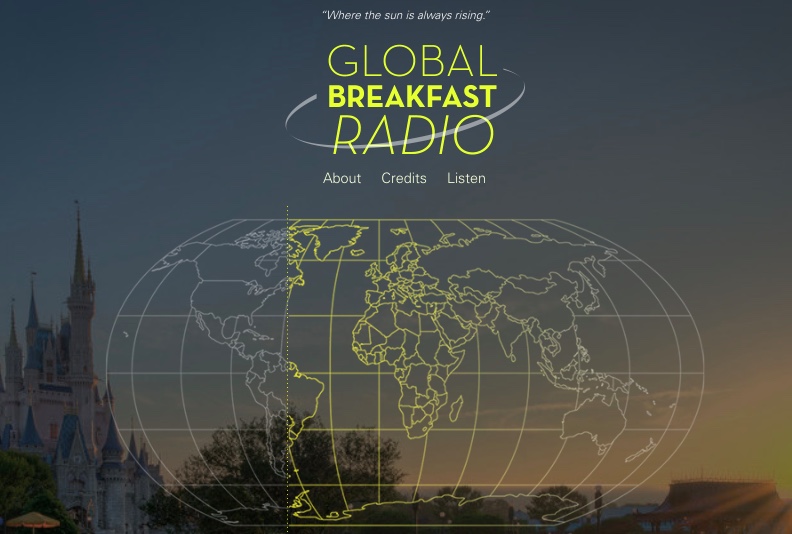
If you read the full article in The Paris Review, you’ll also note that the author Seb Emina and the artist Daniel John Jones created “a perpetual morning-radio aggregator” called Global Breakfast Radio.

You can stream Global Breakfast Radio at globalbreakfastradio.com. I highly recommend it!

Post readers: Any other time zone surfers out there?  Please comment!

Not familiar with Internet Radio? Check out the first part of our Internet Radio primer by clicking here.

New Zealand broadcaster aims to put you to sleep

Photo by Rafal Jedrzejek

(Source: The Guardian via Larry W)

Insomniacs across the world give the nod to John Watson, who has ambient music producers queueing up to feature on his channel

John Watson is the first to admit that his DJ skills put people to sleep. Luckily for him, that is the point.

For the past four years Watson, who lives in the tiny New Zealand township of Te Aroha, has been broadcasting to the world. But instead of seeking an engaged listenership, Watson wants those who tune into his station to literally fall asleep. And they do.

People from as far away as Afghanistan, Israel, Russia, Hungary, Taiwan and Puerto Rico log on to Watson’s station Sleep Radio. Someone in Prague has been listening for three days straight.

The idea of a radio station that sends listeners to sleep came to Watson after he had a heart attack 10 years ago. Following five coronary artery bypasses he began to suffer from chronic depression and insomnia.

“I never used to have trouble going to sleep but now I was lying awake watching the sun rise and feeling like a zombie,” he said.[…]

Click here to continue reading the full article at The Guardian online.

Click here to to check out Sleep Radio’s website and listen to their streaming audio.

Listen to Sleep Radio via TuneIn Radio by clicking here or via the embedded player below:

House Passes Digital Music Licensing Package

This was posted today in Radio World:

Bills head to Senate accompanied by applause from stakeholders

The House has unanimously passed the Music Modernization Act, a compromise bill that creates a framework for better compensating artists for digital plays of their music and making it easier for music rights organizations to collect those fees from distributors of streamed music like Pandora and Spotify, as they do from traditional plays on TV and radio.

The bill has been billed as the most significant change in music licensing laws in decades, and drew praise from a chorus of stakeholders. It now heads to the Senate, where it is also expected to pass.

It actually incorporates a trio of bills. The base Modernization Act creates a single licensing entity for reproduction rights for digital uses, like those of Spotify, Pandora, Google, Apple and Amazon. It also randomly assigns judges to preside over ASCAP and BMI rate-setting cases, according to the Recording Industry Association of America (RIAA).

The package also includes The CLASSICS (Compensating Legacy Artists for their Songs, Service, and Important Contributions to Society) Act which compensates artists for pre-1972 recordings, which had previously not been eligible for digital royalties.

You can read the entire article here

It should be interesting to see the impact this has on availability of songs and costs of streaming services over time.

Robert Gulley, AK3Q, is the author of this post and a regular contributor to the SWLing Post. Robert also blogs at All Things Radio.

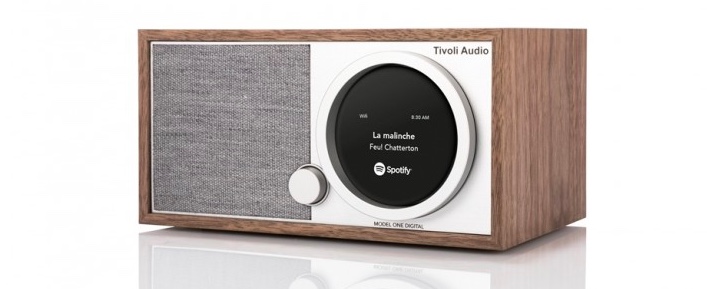
The new Tivoli Model One Digital has AM (for Australians only)

Many thanks to SWLing Post contributor, Dennis Dura, who shares the following article from The Sydney Morning Herald (my comments follow):

Australians like AM radio, but it’s just about impossible to find a good quality digital radio with AM. Lots of digitals get FM, so why no AM?

It’s because Australia is an unusual market for radios. We’re not like Asia, Europe, Japan and America where practically all radios are designed and manufactured. These places have large populations in high densities, and one population hub is seldom far from the next. The range limitations of both digital and FM are seldom an issue.

But in Australia we have digital broadcasting only in the capital cities, meaning Brisbane’s digital radio stations are 900 kilometres from the next nearest in Sydney, leaving about 800 kilometres of dead air between. Digital can’t even hold between Sydney and Canberra. FM lasts a bit longer, not much. But with good old AM you can listen to Darwin from the Nullarbor Plain when the conditions are right. Through vast tracts of Australia if you don’t have AM you don’t have radio.

So Gary Tye’s challenge when he took on distribution of the Tivoli brand was to convince people in Boston that Australians will actively seek out and buy a digital radio with AM. They took a lot of convincing.

And so the $449 Tivoli Model One Digital is now available with AM, as well as FM and digital. But only in Australia. Caravanners around this wide brown land will rejoice; there’s at last a good sounding digital radio that will work anywhere.

[…]The sound quality is, as a very honest department store salesman observed, good but not great. I remember the original as being better. The bass can become ragged down low and the definition gets a bit fuzzy at high volumes, but for filling a study, a kitchen or indeed a caravan with good music the Tivoli does an entirely respectable job. It’s not on a par with a Wave Radio but it costs half as much and sounds better than the vast bulk of radios, be they digital or analogue. And it has AM.

It also has Spotify, Tidal, Deezer and Wi-Fi to get internet radio. There’s Bluetooth and you can hook in your phone or music player with a cable to the 3.5 mm auxiliary input.

Click here to read the full article at The Sydney Morning Herald.

Thanks for the tip, Dennis!

I owned the original Tivoli Model One and loved it. I recently gave it away while thinning the herd here at SWLing Post HQ. Though it was an elegant, simple radio with excellent audio characteristics, so is my Como Audio Solo which essentially replaced the Model One.

While the Model One Digital is appealing in many respects, reviews are lukewarm at best. Customers complain about the proprietary app, the audio being too heavy on processed bass and the overall performance not matching that of its predecessor.

While the Model One Digital is a “WiFi” radio, it doesn’t seem to connect to any of the streaming radio station aggregators we radio enthusiasts rely on to tune to our favorite obscure local stations on the other side of the planet. It appears to only connect to paid music streaming services and one’s own local digital library (though please correct me if I’m wrong about this!).

Post readers: Any Tivoli Model One Digital owners out there?  I’d love to read your reviews!

Ivan reviews the Sangean WRF-28 WiFi radio

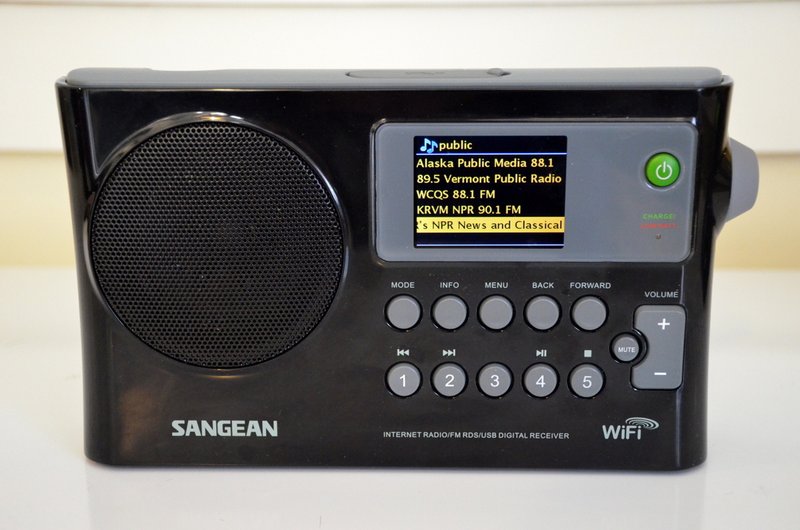
The Sangean WFR-28 WiFi Radio

Many thanks to SWLing Post contributor, Ivan (NO2CW), who writes:

Hello, I posted on YouTube my review of the Sangean WFR-28 FM and Wifi Internet radio receiver.

In particular I was able to sideload my directory of English Language broadcast stations from over 100 countries using their “Favorites” menu. It now sounds like the good old days of shortwave …almost. I can listen to the morning traffic report in Singapore, local news from Guam, afternoon talk show from Gibraltar and a nighttime DJ from Uganda – all in English.

Click here to view on YouTube.

Thank you for sharing this in-depth review, Ivan!

I’m still very pleased with the WFR-28 which I reviewed many months ago. For now, I believe the WFR-28 is the best value in WiFi radios (currently $115 on Amazon–affiliate link).

Of course, a number of personal assistant device like the Amazon Echo also stream radio via the TuneIn Radio aggregator, but since these devices rely on voice commands, some stations can be difficult to call up. I still prefer a proper WiFi radio/Internet appliance like the Sangean WFR-28 or Como Audio Solo.

Thanks again, Ivan!

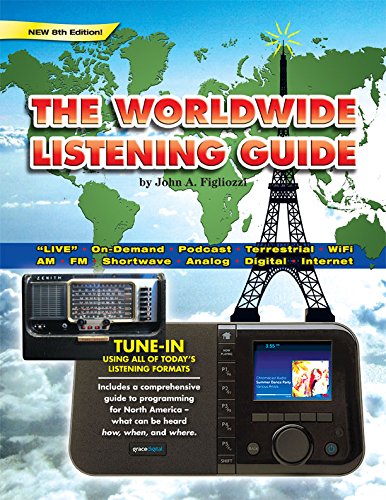
The 8th Edition of the Worldwide Listening Guide

I’m very pleased to have received the 8th edition of John Figliozzi’s Worldwide Listening Guide (WWLG), the latest, most updated version of the excellent guide I’ve often reviewed.

SWLing Post readers know that I’m a huge fan of the Word Radio TV Handbook (WRTH); it’s my go-to guide for radio frequencies and schedules.

Figliozzi’s Worldwide Listening Guide is my go-to for programming and content, not only helpful on the shortwaves, but especially handy when tracking online content.

Indeed, the WWLG is a unique guide–there’s nothing quite like it on the market. As I’ve said, you may want a copy of the WWLG in your shack, especially alongside your computer or Wi-Fi radio.

WWLG: The Content DXers Guide

Like many SWLs, I’m something of a “Content DXer:” I love chasing obscure programming––news, documentaries, music, and variety shows, anything the broadcasting world has to offer.  For this, I often turn to Wi-Fi radio.  Wi-Fi radio offers the discerning listener the ability to track down fascinating regional content from every corner of the globe––content never actually intended for an international audience.

Digging into local content via a WiFi radio isn’t nearly as challenging or fun (for me, at least) as scanning the shortwave bands in search of elusive weak signal DX or pop-up pirate radio station. Though my WiFi radio offers an easy and reliable way to “tune” to online content, the actual content discovery part is quite difficult.

Truth is, there’s so much content out there–tens of thousands of stations and shows–it’s hard to know where to start!

This is where the WWLG comes in: Figliozzi exhaustively curates more than 4,000 programs (!), indexing their airing times, stations, days of broadcast, program types, frequencies, and web addresses. Additionally, he sorts the programs by genre:  arts, culture, history, music, sports, and more. And Figliozzi also includes a well-thought-out directory of at least forty genres.   In short, this directory has helped me not just locate, but identify, programming I would never have known about otherwise.

Frankly, I’m not sure how Figliozzi manages to curate such a vast assortment of programming.  But I’m happy that he does, and especially, that he offers it for the SWL’s benefit––!

As I’ve said many time before, the WWLG  has become a permanent reference book in my shack, alongside my trusty WRTH. There’s a surprising amount of information packed into this slim, spiral-bound book…enough to keep even a seasoned content DXer happy for years.

The 8th edition of Worldwide Listening Guide can be purchased here:

The Como Audio Amico and Musica via Kickstarter

The Como Audio Amico

Many thanks to SWLing Post contributor, Tom Ally, who writes:

Saw this and wanted you to know about it since you mentioned loving his past Kickstarter [for the Solo WiFi radio].

I backed the Musica model instead of the Amico since it still has 18 days left and it had a CD player in it but thought you would like the portable Amico

https://www.kickstarter.com/projects/819585793/como-audio-amico-portable-multi-room-wifi-music-sy

Thanks for the tip, Tom!

If I didn’t already own the Como Audio Solo, I would grab the Amico. It appears to be nearly identical to the Solo–save, in a vertical orientation–and includes an internal rechargeable battery option.

Here’s a full list of its specifications and features:

  • Multi-room: play different sources in every room or sync them all together
  • Internet radio accessing 30,000+ stations
  • Spotify
  • Bluetooth with aptX
  • High performance FM Tuner 
  • DAB+ (International version only)  DAB+ upgrade and VAT is included in shipping cost
  • NFC Android Bluetooth connection
  • DLNA WIFI Music player allowing easy navigation and playback through a USB or network-shared library of music files including AAC+, MP3, WMA, WAV, and FLAC
  • High-Res inputs: 1 analog and 1 USB
  • Dual alarm clock functionality
  • Snooze function
  • Sleep Timer
  • 2 X 30 watt RMS amplifier, <1% THD
  • 3″ woofer with four layer voice coil
  • 3/4″ dome tweeter
  • Independent Remote Control
  • Universal Switching Power Supply 110-240V

I continue to be very pleased with my Como Audio Solo–it pretty much lives in my radio shack and I use it daily to catch up on my favorite news and music sources. I distribute the Solo’s audio throughout the house with my SSTRAN AMT3000 AM transmitter–admittedly, an old school version of Como’s “multi-room audio sync”–!

When I need a battery-powered portable WiFi radio these days, I read for my Sangean WFR-28–thus, the Amico would be a pretty pricey impulse purchase for me at this point!

The Como Audio Musica

I find it fascinating Como has also introduced the Musica model which includes a CD player–somewhat of a unique feature in 2017.

Here are the Musica specifications and features:

  • Multi-Room: play different sources in every room or sync them all together
  • Internet radio accessing 30,000+ stations
  • Integrated music streaming services: Spotify, Tidal, Deezer, Napster, Amazon Music* (*Available Winter 2017)
  • On-board single slot-loading CD player engineered to meet stringent car audio standards
  • Supported CD formats: CD, CD-R, CD-RW/MP3/WMA
  • Bluetooth with aptX & AAC
  • High performance FM Tuner
  • DAB+ (International version only) – DAB+ upgrade and VAT is included in shipping cost
  • NFC Android Bluetooth connection
  • DLNA WIFI Music player allowing easy navigation and playback through a USB or network-shared library of music files including AAC+, MP3, WMA, WAV, and FLAC
  • Ethernet connection
  • High-Res inputs: 2 analog, 1 optical
  • Dual alarm clock functionality
  • Snooze function
  • Sleep Timer
  • 2 X 30 watt RMS amplifier, <1% THD
  • 2 X 3″ woofer with four layer voice coil
  • 2 X 3/4″ dome tweeter
  • Independent Remote Control
  • Universal Switching Power Supply 110-240V
  • Dimensions: 405 mm W x 143 mm H x 165.5mm D (including antenna)
  • Weight: 9.3 lbs, 4.21 kg

I still have (quite literally) hundreds of CDs. While many have been converted to AAC and MP3 formats, there’s still something to be said for CD audio fidelity and enjoying a proper album format.

If you’ve been thinking about purchasing a Como Audio device, you might consider the new Amico and Musica via Como’s Kickstarter campaign.