Aircraft Communications in 1915

A French communication system for use by airplane pilots in 1915: black powder could be puffed out into a Morse code message. Image: Scientific American, September 25, 1915

A French communication system for use by airplane pilots in 1915: black powder could be puffed out into a Morse code message.
(Image: Scientific American, September 25, 1915)

Many thanks to SWLing Post reader, Robert Gulley, who notes the following on his blog:

I found this interesting post from Scientific American concerning the lack of reliable wireless communication in aircraft in 1915 – just one of those fascinating historical tidbits.

You can read the full post on Robert’s website or Scientific American.

It is fascinating to see “old school” innovations that made long distance communications possible in 1915; before wireless technology became as practical and accessible as it was even only a decade later.

Adafruit Industries: an amazing resource for electronics experimenters

Adafruit_logo (3)

SWLing Post contributor, Richard Langley, writes:

In a recent blog posting, you mentioned the use of Arduinos in the radio hobby. Those of us who have experimented with Arduinos (and Raspberry Pis, etc.) likely have come across Adafruit Industries when looking for hardware bits and pieces to use in our maker activities.

There is a great article on Limor Fried and her company in the latest issue of the IEEE news magazine “The Institute” and it’s also available on line:
http://theinstitute.ieee.org/technology-focus/technology-topic/how-diy-electronics-startup-adafruit-industries-became-a-multimillion-dollar-company

And there’s a short video up on the Web where Fried explains the company’s purpose and philosophy:
http://theinstitute.ieee.org/video/technology-focus/technology-topic/inside-adafruit-industries

Richard then added:

[Here is a] cute Adafruit video introducing the concept of (radio) frequency to kids:

Very cool!  Thanks so much, Richard, for sharing this. Adafruit looks like not only a true community player, but a comprehensive source for the electronics experimenter! My daughters love the Adafruit video; now to dig up all of the previous episodes!

I’m planning to learn more about Arduinos and my RaspberryPi this winter, so I’ll keep Adafruit bookmarked!

TASS: An Arduino-based antenna switch

TASS

Many thanks to SWLing Post reader, Stan (WA1LOU), who writes:

“Enjoy your blog. I have been reading it for years. [H]ere is something your readers might be interested in that I mentioned in my blog today:

http://www.horzepa.com/2015/09/computer-controlled-switch-system.html

Very cool! Goes to show that there are a countless number of applications for the Arduino system to be used with amateur and shortwave radio.

Click here to read Stan’s informative post, and here to order the TASS system from TAPR.

John Ackermann also produced this informative presentation/video about the system:

https://youtu.be/P-TUM2dOi4c

Craig Seager’s review of the Dansk RX4000 receiver

Dansk ReceiverMany thanks to SWLing Post reader, Rob Wagner, who writes:

Craig Seager is one of Australia’s finest SWL DXers, a longtime listener with great experience on shortwave, mediumwave and other modes. His amateur radio callsign is VK2HBT. Craig also has another special interest – old radio receivers. He has personally restored many fabulous radios to full working order and has accumulated a fine collection of his own. His knowledge of communications receivers is extensive.

The Mount Evelyn DX Report blog is delighted to welcome Craig who, over the next few months, will regularly contribute a new series called Retro Receiver Reviews – a look at some common and not so common communications receivers from the past. This series will be of interest to both amateur radio operators and shortwave listeners.

Craig’s first review has just been published, covering a radio not often seen these days – the Dansk RX4000 receiver. Check it out at:

http://medxr.blogspot.com.au/2015/09/retro-receiver-dansk-rx-4000.html

Thanks for passing this along, Rob!  That Dansk RX4000 sounds like a robust receiver, with a bullet-proof front end. A nice addition to any collection.

Dan’s China Radio International QSL card

IMG

Many thanks to SWLing Post reader, Dan Amoroso (W3DI/WPE3DNC/WPC3DNC), who shares this recent QSL from China Radio International and notes:

Hello Thomas

Attached is the most recent QSL card received within a few weeks from China Radio International.

For reception on August 22, 2015
Time = 23:50 UTC
Frequency = 7,350 kHz

Received on September 10, 2015 on a Grundig G3

IMG_0001

Jeff gives high marks to the Sangean PR-D4W

Sangean

My pal, Jeff McMahon, over at the Herculodge, has just posted a video review of the Sangean PR-D4 portable radio. In summary, he writes:

“It’s a great radio with top FM, AM, and speaker sound. It blows away my C.Crane Radio-2E. Lack of illumination, however, makes it less than ideal as a bedside clock radio.”

Wow! I’m most impressed that Jeff places the PR-D4W (which retails for $69 on Amazon) above the venerable CCRadio-2E (which retails for $169 on Amazon) in terms of AM performance.

I just checked and it appears that Universal Radio also retails the PR-D4W for $69.95.

Follow Jeff at the Herculodge and on YouTube.

Video: “The very particular world of amateur radio”

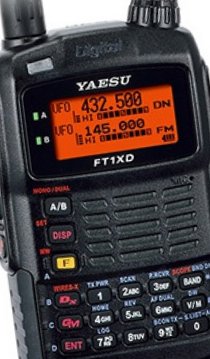
BBC-Yaesu

Many thanks to SWLing Post reader, Nick, for sharing this 2013 video produced by the BBC. Here is the description from YouTube:

“In the face of the internet, mobiles and instant messaging you might expect the hobby of amateur radio – or HAM radio as it’s also known – to be on the decline.

But in the last three years, the number of amateur radio licences has risen by over 8,000 – with 80,000 currently issued in the UK.

Using designated frequencies, amateur radio enthusiasts communicate with people over the world. Many prefer the relaxed approach of ‘rag chewing’ or chatting at length with people, who often become friends – while at the opposite end of the spectrum ‘contesters’ compete to make as many contacts as possible in a given period.

The hobby is also a public service, with Raynet (in the UK) stepping in during emergencies when regular communication networks fail. Amateur radio enthusiasts are currently contributing to relief efforts following Typhoon Haiyan in the Philippines.”