Jeffrey re-caps his Hallicrafters SX-110

The restored SX-110 sitting on the bookshelf in the shack. No one would mistake this for a new receiver, but it works just fine.

The restored SX-110 sitting on the bookshelf in the shack.

Many thanks to SWLing Post reader, Jeffrey Fritz, writes:

During the summer of 2012 you were nice enough to run an article in your blog about my reviving a 1961 Hallicrafters SX-110 General Coverage receiver. The radio has continued to perform reasonably well during the last few years. However, recently I acquired several pieces of professional test equipment. That encouraged me to delve even deeper into the restoration of my old receiver from my novice ham radio days.

Over the past week, I completely recapped the SX-110 (except, of course, for the mica and ceramic caps as they still good, and the electrolytic caps as they were replaced in 2012.)

The SX-110 isn’t a complex receiver, but there are quite a few caps, so I worked methodically and carefully. I started working from the audio amp stage and continued working back through the IF stages and the BFO to the RF stage. I recapped each stage replacing the old caps with new Orange Drop caps. Each stage was tested before I moved on to the next stage. Here’s a photo of the recapped chassis:

SX110-Underside

Here are the capacitors that were removed from the receiver. Most are the old Bumble Bee caps–called that because of the color stripes that mark their value:

SX110-NewCaps

Virtually every Bumble Bee cap tested leaky and out of tolerance.

Next, I tested every tube replacing the weak or bad ones with NOS (New Old Stock) tubes. Every pot and switch was cleaned with DeOxit and moving parts were lubricated where appropriate. Finally, I did a complete re-alignment following the instructions in the Service Manual.

As with all vintage tube gear, restorations require patience, care and a decent knowledge of electronics. It’s easy to make a fair radio–even a good radio–into a disaster if you are not careful. Also there is enough voltage and current inside of the chassis of a tube radio to toss you across the room. So care is always the order of the day as is a VARIAC to bring the radio up to AC line voltage slowly.

The receiver now sounds as good as ever–perhaps even better than ever. It has marvelous AM audio and can pick up ham and broadcast stations on all bands with nothing more than a wire in my basement. It even does a decent job on SSB–something that I don’t recall it ever bring adept at in the past.

That say that you can’t keep a good man down. Similarly an old radio, with some new parts and some TLC, can run virtually forever.

I agree with you: you can’t keep a good radio down! Repair work is certainly the commitment we make when we fall in love with these old rigs. It’s a good thing that almost all of the parts are still available and relatively affordable.

Thanks again, Jeffrey!

Jeff Murray presents: Love, Death & Shortwave

SINPO-Pictures

From my buddy, Jeff Murray (K1NSS), the Mastermind behind Dashtoons:

“Created for the North American Shortwave Association’s Winterfest 2015, this unflinching documentary recalls a time when tuning a short wave radio was something akin to enjoying a schnapps in a cool West Berlin jazz bar less than a klick from Checkpoint Charley, especially if you were eleven years old.”

https://www.youtube.com/watch?t=97&v=RkcR7_esRcE

ERT reopens under direction of Dionysis Tsaknis

(Photo source: AP / Petros Giannakouris)

(Photo source: AP / Petros Giannakouris)

SWLing Post contributor, Ayar, confirms that ERT employees did indeed returned to work yesterday after having been laid off nearly two years ago. Ayar shares this link to GreekReporter.com which has full details.

VOA to increase broadcasts to Burundi

voa logoMauno Ritola shared the following message on the WRTH Facebook page this morning:

VOA Boosts Broadcasts to Burundi as Civilians Flee Political Violence

Monday through Friday:

  • 0400-0530: 7350 kHz, 9815 kHz, 11905 kHz

  • 1600-1630: 13630 kHz, 15460 kHz, 17530 kHz

  • 1930-2000: 9470kHz, 11615 kHz, 12140 kHz

Mauno also notes that the late evening frequencies are incorrect in the following VOA news release:

(Source: VOA News)

Voice of America today began boosting broadcasts to Burundi where at least 14 people have been and killed and more than 200 injured in protests against President Pierre Nkurunziza running for a third term.

VOA has additional shortwave and FM broadcasts in Kirundi, Kinyarwanda, Kiswahili, French, and English with an expanded call-in show, more reporting from the ground, and new drive-time newscasts.

“At this critical moment for democracy in Burundi, we are stepping up to keep our audiences informed, “ says VOA Director David Ensor. “Voters deserve to know what is going on with presidential elections just one month away.”

The African Union and the United States say the Nkurunziza candidacy violates a regional peace deal that ended civil war in 2005. U.S. Secretary of State John Kerry says the president’s move “flies directly in the face of the constitution of his country.”

President Nkurunziza says he is exempt from the two-term limit because his first term was chosen by parliament.

VOA is one of the last remaining sources of news in Burundi after authorities blocked access to social media, closed Radio Publique Africane, and suspended relay transmissions for two other independently owned stations — Bonesha FM and Isanganiro.

The Committee to Protect Journalists condemns this harassment and says the Nkurunziza government is “blatantly trying to gag” coverage of its opponents.

VOA is adding reporters in Burundi and Rwanda along with additional staff in Washington D.C., where its U.S. government-funded transmissions originate.

Daily broadcasts air on 95.2 FM and 94.9 FM in Bujumbura and on 104.3 FM in Kigali.

There are new VOA shortwave broadcasts from 04:00 to 05:30 UTC and from 19:30 to 20:00 UTC on 7350 kHz, 9815 kHz, and 11905 kHz; and from 16:00 to 16:30 UTC on 13630 kHz, 15460 kHz, and 17530 kHz.

“With thousands of Burundians fleeing to neighboring Rwanda, Tanzania and the Democratic Republic of Congo, VOA is committed to providing accurate and reliable news to this critical region,” says Ensor.

In theory, ERT workers go back to work today

ERT_Digital

Many thanks to SWLing Post contributor Ayar, who writes:

According to many Greek news sources, the workers of ERT will go back to work tomorrow to restart ERT and take over from NERIT, even though there is no explicit permission from the government for them to do so!

This was a decision taken today by the ERT workers trade union “POSPERT”, who asked the workers to go back to work and start broadcasting from ERT HQ. (Here is the original decision published on their website translated from Greek by Google).

An interesting observation: The domain “ert.gr” no longer redirects the visitor to “nerit.gr“, and the servers connected to the ert.gr domains (dns1.papaki.gr, ns2.papaki.gr, ns120.papaki.gr) are now showing error and test pages from their active servers. Just this morning, they were all inactive! It seems that somebody is working on the servers to
re-establish the ERT website.

It will be interesting to see what will happen!

Indeed, it will! Let us know of any updates. I’ll tune to the ERT Open relay on 9420 this evening to see if IDs have changed. Again, many thanks for the report, Ayar!

Going to the Dayton Hamvention? Stop by our booth!

Hamvention

For the fifth year in a row at the Dayton Hamvention, fellow volunteers and I will be representing the charity Ears To Our World (ETOW).

I always enjoy meeting SWLing Post readers who stop by our booth to introduce themselves.

For the third year in a row, we will be at booth BA411 in the Ball Arena. Here’s a map for reference.

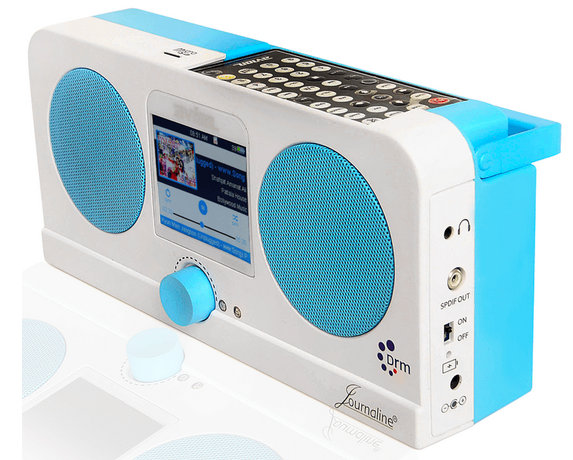
HumanaLight-FrontIf you’re not familiar with Ears To Our World and our mission to empower children and teachers in the third word through radio and other technologies, check out our website and this article from the Wall Street Journal.

Note that this year we will also give away our HumanaLight kits to those who donate $20 or more to ETOW (while supplies last). 

Look forward to meeting you in Dayton!

-Thomas (K4SWL)

A recap of the 2015 Winter SWL Fest

The following article originally appeared in the April 2015 issue of The Spectrum Monitor magazine.


DavidGoren-ShortwaveShindig

David Goren prepares musicians and voice talent as the Shortwave Shindig goes live on WRMI

Every year, I attend two great radio conventions: the Dayton Hamvention and the Winter SWL Fest. While the Dayton Hamvention draws a massive crowd of ham radio operators, vendors, and makers from across the planet–and it’s truly a fun and fantastic event–the smaller Winter SWL Fest is actually my fave of the two.

Any why is this? A re-cap of the 2015 Winter SWL Fest might provide some clues.

The Winter SWL Fest is organized and sponsored by the North American Shortwave Association (NASWA) and each year draws well over 100 radio enthusiasts to Plymouth Meeting, Pennsylvania. While it is a shortwave radio festival––with its roots firmly in the shortwave medium––it’s certainly not limited to the HF bands only; in fact, here’s a list of some of the forums from 2015, and their subject breadth is remarkable:

  • Radio on the Road 3. Janice Laws shared radio recordings and videos from her various travels across the planet, showcasing the local flavor found on the FM and AM dials.
  • The Year in Pirate Radio. George Zeller once again hosted the shortwave pirate radio forum, covering the year in pirate radio, and announcing inductees into the PIrate Radio Hall of Fame.
  • Time Travel, Teleportation, and Spectrum Hoarding for the Contemporary DXer. My good friend Mark Fahey and I co-hosted this forum. In this forum we discussed our obsession with collecting and sharing spectrum recordings, highlighting the added context spectrum playback provides that traditional broadcast recordings cannot. We brought along several terabytes of spectrum recordings from my home in North Carolina and from Mark’s home near Sydney, Australia, to share with this forum’s attendees.
  • Coast to Coast: Geographically Enhanced Mediumwave Reception. Bill Whitacre shared what he has learned from mediumwave DXpeditions to Grayland, WA, and Lubec, ME, over the past 5 years. Bill focused on the advantages of carefully-selected geographic locations for the best DX opportunities.
  • Ultralight Mediumwave DXing. Gary Donnelly hosted a forum which touted the virtues of the most simple radios and receivers and the immense fun that can be had from them. Gary discussed some amazing reception records obtained with these pocket-sized “ultralight” (and ultra cheap!) receivers.
  • Crisis Radio. Michael Pool (a.k.a., “The Radio Professor”) focused on radio as it sounds locally during crises. He shared recordings and airchecks he had captured during natural disasters, terrorist attacks, and moments of civil unrest. Through these recordings, and with the advantage of some emotional distance, attendees could form their own opinions as to how the media handled each event.
  • Radio and Today’s Teenagers. Anthony Messina (age 18) focused his forum on the way teens view radio today, taking into account the medium’s ongoing evolution. Anthony also discussed how he got interested in shortwave radio and DX’ing in the age of internet and smartphones––a remarkably fascinating (and familiar) journey.
  • Kickin’ It Old School: A Return to Regenerative Receivers. In this forum, Skip Arey proposed that a radio design, at the very roots of RF Technology, is experiencing a resurgence: regenerative receivers. He discussed the classic regen circuit and how to use it to bring a new dimension to shortwave listening.
  • The View from Europe. Finn DXer Risto Vahakainu, who travels to the Winter SWL Fest with a contingent of Finnish DXers, reported on the state of the radio hobby in Europe and specifically in Finland. He focused upon the impact of SDRs and also described remote DX sites one can rent for one’s own DXpedition in northern Finland.
  • “UFOs, Gliders and Planes, Oh My!” Tom Swisher––noted member of the SWL Fest so-called “scanner scum”––covered the wide array of frequencies that can be monitored with “your trusty old scanner” after local law enforcement goes digital.
  • Monitoring Dusty War Zones and Tropical Paradises: On Being a Broadcast Anthropologist. Mark Fahey––who travelled from Australia to attend the Winter SWL Fest for the second year in a row––presented a tour of his monitoring station (i.e., his house). We saw how Mark combines several satellite, internet, and SDR feeds from across the globe to create a custom video and audio listening post with feeds. Mark, who is also an avid traveler, shared some of his highly original, out-of-the-box ways of collecting rare radio DX.
  • The Keeping of Time. In this forum, Mark Phillips discussed the importance of accurate time-keeping as our hobby moves toward the digital realm. Mark explained the difference between time sources, why they are different, and why accurate time is so important.
  • Recognizing Digital HF Signals: Eyes and Ears. TSM contributor Michael Chace-Ortiz taught that simply with one’s eyes and ears, it’s possible to identify a number of the digital modes and anomalies on our HF bands. Mike gave an interactive audio-visual tour of numerous modem signals, Over-The-Horizon RADARs, ionospheric sounders, ocean sensing systems, and various other digital oddities that can be heard today.

In short: what a dynamic––and diverse––forum line-up!

Of course, for the second year in a row, David Goren’s annual Shortwave Shindig was broadcast live from the Fest via WRMI. It was great fun receiving live reports from listeners across the globe.

I’m sure some twenty-eight years ago when the first SWL Fest was held, forum topics all centered around the shortwave radio hobby fairly exclusively. But today, how we define radio has changed, and the shortwave radio is no longer the only way to glean accessible content from across the globe. Most of the SWL Fest attendees and hosts, however, maintain and cultivate the spirit of DXing: finding innumerable paths into an ocean of diverse broadcasting. I was happy to be a part of the shortwave radio-related forums that centered on the use of software-defined radios, no doubt a revolutionary game-changer in our listening hobby, and a technology I actively explore (see my review of the TitanSDR next month).

While the 2015 line-up was diverse and drew on the expertise of some of the most noted enthusiasts in our field, this experience is actually what I’ve come to expect from the SWL Fest. So many amazing projects, including a Sundance award-winning film (!), have played a part in making the Fest what it is today.

I encourage you to keep tabs on the Winter SWL Fest and make plans to attend in 2016. Details will be posted on the Winter SWL Fest website: https://swling.com/blog. One thing is for sure: if the crazy winter weather conditions this year didn’t stop me from driving several hundred miles through snow and ice to the Fest, nothing is going to stop me next year! Hope to see you there.

Slideshow

This slideshow requires JavaScript.

(Note: SWLing Post email subscribers may not be able to see the embedded slideshow above. Please visit this post online.)
—————————–

A parting note

Martin-Peck-2

Martin Peck with the New Westchester Symphony Orchestra (Photo credit: Stephy Kollarackal)

As you may imagine, since the SWL Fest has been ongoing for many years, strong bonds have formed among Fest attendees––indeed, the group has become like an extended family. This year, we learned during the annual Saturday night banquet that we had just lost one of our Fest family, one Martin Peck, following a battle with esophageal cancer. Marty, as we all knew him, was an incredibly kind fellow, well-loved and warmly regarded at the Fest. He was not only an avid SWL, but a talented musician, and a member of the New Westchester Symphony Orchestra. Marty could play some of the most obscure interval signals on demand with practically any wind instrument. He found a welcome home at David Goren’s Shortwave Shindig.

Marty, pal, we’re going to miss you.