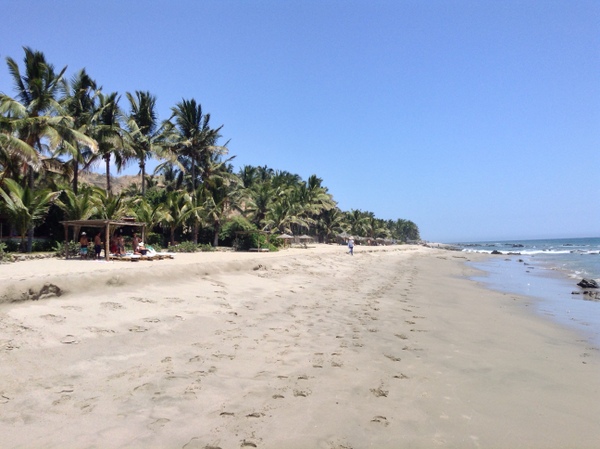
Pack your bags! We’re going on a trip!
Shortwave listeners are interesting, creative people who do interesting, creative work: they’re scientists, veterans, corporate employees, students, retirees, volunteers, politicians, musicians, inventors, entrepreneurs, engineers, humanitarians, reporters, artists, researchers, sailors, pilots, pirates…and most seem to be travelers. But to say the least, they’re very diverse. The joy of the SWLing Post, for me, is the fascinating readers here and the great variety of questions and comments I receive from you.
On this blog, I often write about selecting the “right” radio for home, boating, preparedness, off-grid living, and of course travel–but sometimes I like to go through the mental exercise of imagining a scenario a little more extreme.
Indeed, I occasionally receive such “extreme” questions from our readers, questions that push the limits of the hobby, demanding highly specific needs in a radio. And, I readily admit, I thoroughly enjoy these questions! They give me a chance–and good excuse, really–to be imaginative and innovative, to push beyond mere practical or monetary constraints to consider unique environments, weather conditions, durability needs, power requirements, and/or resource availability…great fun.
If you enjoy this kind of brain game, too, check out our virtual challenge that follows:
Should you agree to take it on, you’ll need to complete it within two weeks. Why the time constraint? Let’s imagine that your flight leaves May 15th, and you’ll need to make sure you’ve received, tested, and packed all of your supplies by that date.
[By the way, this scenario is based on an actual reader question.]
Here’s your challenge…

Location: Edinburgh of the Seven Seas, Tristan Da Cunha, South Atlantic Ocean

Tristan da Cunha on 6 February 2013, as seen from the International Space Station (Source: Wikipedia)
Accommodation: A rented room in a native Tristanian family home
Electricity: Mains power via the grid, but you’ll have to expect extended power outages if there is a generator failure
Internet: The island has (slow speed) public Internet, but you will not have access at your accommodation
Your budget: $200 US–which must cover all of your radio requirements (radio, antenna, batteries, and all accessories)
Scenario: You’re on an assignment, being sent to one of the world’s most remote inhabited islands–Tristan Da Cunha, in the South Atlantic (see this overview of the island from Wikipedia)–to undertake research for one year. You’ll fly into South Africa, where you’ll board a cargo vessel for the one-week journey to the island. The maximum amount of luggage allowed by your airline is one carry-on and two check-in bags, both of no more than 60 kg (132 lbs), total.
Once on the island, you will not leave until a ship picks you up 365 days later.

Edinburgh of the Seven Seas, Tristan da Cunha, South Atlantic Ocean (Source: michael clarke stuff)
Tristan Da Cunha has less than 300 total inhabitants, so while there are basic shops and accommodations, these are very limited. Once there, ordering a new radio or accessories will not be an option. Getting your rig fixed by an island electronics repair shop will be possible, to some extent (we’ll assume you don’t possess those repair skills yourself). Batteries are locally available, but very expensive…
You’ll be staying in a small, thick-walled stone cottage with a family and will have your own room, with a window. The family will allow you to string a wire antenna outside, but there are no trees, only heath and shrubs. Additionally, winds are strong and rainfall substantial; sunshine can be quite limited.
We’ll assume you’re starting from scratch, that you have neither radio nor any accessories. You’re allowing yourself a maximum of $200 US for all of your radio gear. Your goal is to have the best shortwave listening set-up possible for your budget and for this situation. Since your radio must be packed in your luggage, you can’t afford the space nor the weight of a large tabletop radio.
Obviously, the more you understand the island and its limitations, the better choices you’ll make for your gear.
Limitations:
- You’re limited to a (virtual) budget of $200 US to procure your supplies; ideally, this includes shipping costs
- You can select used gear, but must base your choices on reality (i.e., actually find item(s) online and document the price and time of availability). If you “shop” eBay, make sure you’re using the final price, not the current or opening bid. If you do locate something used on eBay, QTH.com, QRZ.com or at Universal Radio, for example, include the link! (Just to add to the fun.)
- Your main objective is to listen to international broadcasters, and do a little DXing, of course. FM sensitivity will not be a factor (of course, I’m joking here!) Whether or not the radio has SSB mode is up to you.
- We’ll assume that you’re bringing a laptop computer with you.
- Remember, you’ll be stuck with this radio for one full year! So choose something you’ll love to operate, and don’t forget your vital accessories.
Note: The limitations of this exercise are simply to level the playing field for everyone as well as to make the challenge a little tougher (and thus more fun!). Of course, they’re open to interpretation, but do try to honor the spirit of the game.
Up to the challenge? You’ve got two weeks–!
 To participate, just comment on this post with your suggested set-up, any links, and a brief explanation for your choices.
You’re also welcome to email me directly with your response.
We’ll select some of the most interesting and relevant responses and post them in two weeks, on Friday, May 9, 2014.
Have fun! We can’t wait to read the responses…!

 Last month, I was interviewed by NK News regarding the possibility of using inexpensive SDR dongles