Listener Post: Chris Dandrea

Analog Radio DialChris Dandrea’s radio story is the latest in our series called Listener Posts, where I will place all of your personal radio histories. If you would like to add your story to the mix, simply send your story by email!

In the meantime, many thanks to Chris for sharing his personal radio history:


Chris Dandrea

Chris' 1938 Motorola (Photo: Chris Dandrea)

Chris’ 1938 Motorola (Photo: Chris Dandrea)

How did I get interested in radio? I don’t know how young I was but I must have been about 7 or 8 when my dad gave me an old tube type GE clock radio for my room. I can remember turning it on and watching the tubes glow and listening for the audio to come out of the radio after the tubes warmed up. I was so fascinated by the glowing tubes that I took the chassis out of the radio housing and put it on my window sill next to my bed so I could listen to the radio and watch the glowing tubes. Looking back on this I now know how dangerous this was.

I was just a kid what did I know after all it was cool looking at those glowing tubes. I can remember tuning up and down the AM band in search of some old time radio shows. I would also tune in to some new time radio like the CBS Radio Mystery Theater. Mind you this would come on a local station just after the 11 o’clock news, so getting up the next morning was very difficult. I can remember my mom yelling for me to get up so I could catch the school bus. I could not help myself I was addicted to radio and radio dramas.

cbs_radio_mystery_theaterI would tape the CBSRMT on a little shoe box tape recorder that I had next to the radio. The tapes I used where of the highest quality that Kmart had to offer to a kid with a buck a week allowance. I remember using C60 tapes and trying to get the first two acts to fit on side one so I could flip the tape over and get act 3 on side 2. If I could just stay awake long enough to get the tape flipped over and hit record! I would stay awake long enough most of the time. I would also use Velveeta cheese boxes for tape storage. I think you could get 8 in a box with out tape cases. I wonder if any other kids did this?

I remember that my dad was kind of a radio nut as well. He had several radios, nothing expensive or exotic but he liked radios. He had this 1938 Motorola floor model [see photo above] that he picked up from someone that was moving. He and a friend replaced some tubes and caps and got it playing. I remember tuning up an down the SW bands and listening to all kinds of things on that radio. I was so amazed by how far away the stations came from and all the different music and sounds that played on that old radio. I guess I got the radio bug from my dad.

I am now the owner of that 1938 Motorola radio. It’s too bad that my kids have no interest in radio at all. You know Its funny, you are either a radio person or you are not a radio person. You know what I’m talking about if you have ever tried to explain why you like radio and you get that blank look with glazed over eyes.

Radio is just magic and if you don’t get that you never will.


Chris, you may hear me repeating your final quote in future posts! I couldn’t agree with you more.

Click here to read our growing collection of Listener Posts, and consider submitting your own!

Though it’s not quite the same radio experience Chris had in his youth, if you would like to hear recordings of CBS Radio Mystery theater, use the embedded player below, courtesy of Archive.org. Enjoy:

Shortwave Radio Recordings: Marion’s Attic

Marion Webster (Source: Marion's Attic)

Marion Webster (Source: Marion’s Attic)

If you’ve never heard Marion’s Attic on WBCQ, you don’t know what you’ve been missing–especially if you love early music recordings. Marion’s Attic describes the show as:

“[A] unique radio program, broadcasted on WBCQ, The Planet, [7.49] MHz (Shortwave Radio) every Sunday at 5 PM Eastern time. Hosted by Marion Webster & Kristina, and with occasional special guests.”

“Marion’s Attic is an eclectic radio program which plays original cylinder and disc records from the late 1890’s to the mid 1930’s. Having a library containing thousands of standard size cylinder records, dozens of 5 inch Concert Cylinders and an unknown amount of 78’s allows us to share unusual and forgotten music that you cannot hear anywhere else. What makes this special radio program unique is I play original records on the original phonographs when possible; many of which are over 100 years old. The theme varies from week to week; a show may feature popular songs from the early 1900’s one week, wild dance music from the roaring 20’s the next week.”

Marion’s Attic has been on WBCQ since September 21st, 1999 and is certainly one of their most popular shows. It’s quirky and authentic. I love it.

(Source: edisonphonology.com)

(Source: edisonphonology.com)

Mary tells us that each episode is recorded in her attic using simple recording equipment and original phonographs including:

  • 1898 Edison Home phonograph for brown wax cylinders
  • 1900 Columbia Graphophone AG for Concert Cylinders
  • 1908 Edison Standard Model D phonograph for 2 & 4 minute wax cylinders
  • 1913 Edison Amberola V phonograph for Blue Amberol cylinders
  • 1923 Edison London Upright phonograph for Diamond Discs
  • 1965 Gerrard electronic turntable for 78 rpm records

Yesterday afternoon, at 16:59 EST (21:59 UTC), I tuned to Marion’s Attic on 7,490 kHz and started recording. You’ll hear about one minute of WBCQ’s interval signal and station ID, then straight into Marion’s Attic. Click here to download the show as an MP3 or simply listen via the embedded player below:

If you missed Marion’s Attic yesterday, you can catch it again tonight on WBCQ–check out the full broadcast schedule below:

  • Sundays:  7,490 kHz, 05:00PM – 06:00PM ET (22:00 – 23:00 UTC)
  • Mondays: 5,110 kHz, 09:00PM – 10:00PM ET (02:00 – 03:00 UTC)

WBCQ is easily heard in North, Central and South America–also in Europe.

Marion and Kristina often give shout outs to their listeners. You can contact them at [email protected] or:

Marion’s Attic
P.O. Box 583
Coventry, CT 06238

Many thanks to Marion and Kristina for sharing your wonderful collection of early music recordings!  I’d also like to thank SWLing Post reader, Mike, who is a big fan of Marion’s Attic and unknowingly gave me a nudge to mention their show here.

Listener Post: John Mosman

Analog Radio DialJohn Mosman’s radio story is the latest in a new series called Listener Posts, where I will place all of your personal radio histories. If you would like to add your story to the mix, simply send your story by email!

In the meantime, many thanks to John for sharing his personal radio history:


John Mosman

My first QSL was from Radio Havana Cuba in 1962. I never was and not now a technical person around radios. The mysterious signals that came from all over the world just drew me in, all the different languages, music and the cold war rhetoric was simply fascinating.

National NC-60 (Source: DXing.com)

National NC-60 (Source: DXing.com)

My first receiver was a National NC-60 which with a simple wire antenna out to a tree worked very well. In those days the international broadcast bands were crowded and full of exotic stations.

Popular Electronics gave me a SWL call signs and mine is WPE9GIZ. I do not have the certificate anymore but the call sign is burnt into my memory.

As the years went on I upgraded receivers, first a Drake SW-4A then a Yaesu FRG-7 (Frog 7). To the Frog was added a digital frequency readout. I remember the controversy over Radio America and if the transmitter was actually located on Swan Island. The QSL card sure indicates it was.

The Yaesu FRG-7 "Frog 7"

The Yaesu FRG-7 “Frog 7”

Over the years I owned a Kenwood R-2000 and an ICOM 71A. For several years now I have a ICOM R75 which does not get much use. As is the case for many, the house is full electronic noise from computers and cable boxes. Not being technical enough I am not sure how to stop it or erect an antenna in our small yard that would reduce the interference.

I wince each time I learn of another SW broadcaster leaving the air and many third world country stations going to FM. However I still have all the QSL cards, all the great memories and you know, the National NC-60, now refurbished, is still in the “shack”.


Many thanks, John, for sharing your story! It makes me happy to know your National NC-60 has been refurbished.  We need to keep our antique radios in good working order. Those vacuum tubes will keep your radio room warm on cold nights!

Regarding the electronic noise your R75 hears in the house, you might consider investing in a mag loop antenna like those in the Wellbrook product line. It’s pricey, but certainly works to eliminate QRM.

Click here to read our growing collection of Listener Posts.

BBC Radio 4 Documentary: The World’s First Radio Station

The concert room of Telefon Hírmondó (1901) Source: Wikimedia Commons

The concert room of Telefon Hírmondó (1901) Source: Wikimedia Commons

We’ve mentioned this 19th century broadcasting technology before; the “telephone newspaper.” If, like me, you found the technology fascinating, you’ll certainly love this BBC Radio 4 documentary The World’s First Radio Station.

Here is the description from BBC Radio 4:

We often think of the scheduled broadcasting of news, information and entertainment as having begun in the 1920s. But we’re wrong. It was in 1893 in Budapest that Theodore Puskas opened his Telefon Hirmondo or ‘Telephone Newspaper’.

Subscribers to this telephone service could enjoy a daily timetable of foreign, national and local news, sport, weather, fashion, stock market reports, language lessons, music, theatre and much more. It was delivered by a team of journalists, copy-writers, editors, announcers and engineers which would be familiar to any radio station today. To our ears, Telefon Hirmondo would have sounded uncannily modern. For example, there would be live relays of church services, theatre productions, concerts and opera performances and reports direct from parliament and sports events.

Laurie Taylor travels to Budapest to uncover this extraordinary story of ‘radio before radio’. He visits a special exhibition at the city’s postal museum and takes a look inside Hungarian State Opera, whose performances were broadcast live via Telefon Hirmondo from the 1890s.

Laurie explores the lengths to which Telefon Hirmondo went to market its product, hooking in not just domestic subscribers but hotels, restaurants, clubs, dental surgeries and barber shops. He also delves into the telephone’s early history to explain the confusion on both sides of the Atlantic over what the device was best used for.

How did Hungary come to lead the world in broadcasting, rather than the USA, Britain or France? The genius of Theodore Puskas is a large part of the explanation. Among the contributors, we hear from his descendant, Barbara Fally-Puskas.

Producer: Andrew Green
An Andrew Green production for BBC Radio 4.

Note that the documentary, produced by Andrew Green, will only be available online until Friday November 15, 2013. Click here to listen on the Radio 4 website.

Greek police use tear gas to empty former broadcaster ERT’s offices

(Photo source: AP / Petros Giannakouris)

(Photo source: AP / Petros Giannakouris)

It looks like the staff protest, which has occupied ERT headquarters since June 11, has finally come to an end.

I’m not sure how/if this will have an effect on the Voice of Greece, but I will be listening for them on 9,420 kHz tonight.

(Source: BBC)

Greek riot police have cleared the headquarters of the former state broadcaster ERT, using tear gas to gain entry and arresting several people.

Police formed a cordon round the building in Athens, before going from room to room to evacuate protesters.

Former employees have occupied the building since the government closed ERT and sacked its 2,600 staff in June.

Greece’s conservative-led coalition said the state broadcaster cost too much to run in an economic crisis.

[…]The BBC’s Mark Lowen, in Athens, says the question is whether the ERT debacle again fuels social unrest here – and how much stomach the Greeks still have for a fight.[…]

Continue reading…

WRMI purchases WYFR transmission site and plans move to Okeechobee

Radio Miami International

Radio Miami International

Several of you wrote to share this great news from Jeff White at WRMI; many thanks to Michael, Pete, Bob and Keith for the tip:

(Source: Jeff White)

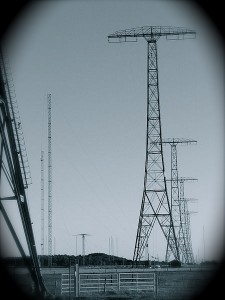
Legendary shortwave station WYFR in Okeechobee, Florida, which ceased transmissions on June 30, 2013, will resume broadcasting in December as a result of an agreement between Family Stations, Inc, and Radio Miami International, Inc.

According to the agreement, Family Radio will sell the WYFR facility to Radio Miami International. Family Radio programming for the Caribbean and South America will return to shortwave via the Okeechobee site, and Radio Miami’s programming currently aired on WRMI in Miami will switch over to the Okeechobee facility. The station will also carry programs for other international broadcasters, including Pan American Broadcasting’s Radio Africa network. A target date of December 1, 2013 has been set for the resumption of broadcasts. The current WRMI transmission site in Miami will be closed, and the WRMI call letters will be transferred to Okeechobee.

“We are very grateful to Family Radio for entrusting us with this magnificent station,” said Jeff White, WRMI General Manager. “WYFR is an important part of the heritage of shortwave broadcasting, and we are very happy that it will continue to serve shortwave listeners around the world.” The station first went on the air from Okeechobee in 1977, although the origins of the station and its predecessors go back to 1927. WYFR/WRMI is the largest shortwave station in the United States in number of transmitters and antennas. The facility is comprised of 13 transmitters — twelve 100-kilowatt and one 50-kilowatt — and 23 antennas beamed to all of the Americas, Europe and Africa.

White, who is also Secretary-Treasurer of the National Association of Shortwave Broadcasters (NASB), said that “many people made this transition a reality, not the least of whom was our former Secretary-Treasurer and current board member, Dan Elyea, who had been the WYFR Station Manager from the time it was built in the late 1970’s until his recent retirement. Dan presented us to Family Radio Vice President Tom Evans. Tom and the Family Radio Board have given us their confidence, and we will do our best to keep this station going for many years to come.”

(From Jeff White, WRMI, Nov 5 2013)

Review of the CommRadio CR-1 software defined radio

The following review of the CommRadio CR-1 was first published in the August 2013 issue of Monitoring Times magazine.

CommRadio CR-1

The CommRadio CR-1 software defined radio

The CommRadio CR-1 software defined radio

By and large, new products on our radio receiver market these days tend to be SDRs or software-defined radios.  And it’s a good thing:  by reinterpreting radio digitally, it helps ensure that radio will have a place in this century.  Moreover, I’m a big fan of SDRs, as they typically offer a lot of performance for the price. In fact, my main receiver these days is the WinRadio Excalibur SDR. It’s the receiver I use for the bulk of my radio recordings as well as for band scanning.

SDRs often look like a small box with power button, antenna connections, usually computer connections, and, well, that’s about it.  Many refer to the SDR as a “little black box.” SDRs don’t require a display; rather, they rely on your PC for this and all other functions.

When I first heard that CommRadio was introducing a new SDR, designed and built in the USA, I expected a similar product, in the form of a small black box.  Instead, I encountered a display, tuning knob, volume control, and several front panel buttons; in essence, a small stand-alone self-contained battery-operated SDR tabletop receiver! Needless to say, this was unexpected.

First impressions

IMG_2941

(Click to enlarge)

When I saw the CR-1 for the first time in person, I was simply amazed by its construction. Being a fan of modest, simple designs, the CR-1 is all that––and, for lack of a better word, “cute.”

But don’t be fooled by the “cute:”  the CR-1 is a very solid product, and a tough one. The case is made of 20 gauge steel, the front panel from machined aluminium, and the tuning knob from black anodized aluminum. Four substantial resin feet lift the CR-1 a full inch, making the height of the controls comfortably accessible, and providing excellent stability while tuning or pressing buttons on the front face.

The OLED display is small–only measuring 1.5” wide by ¾” high–but the resolution is extremely crisp and easy to read, even at a distance or outdoors. All of the relevant information–frequency, filter width, mode, “S” meter–is accommodated by the modest display.

But what about actual operation?  Fortunately, I met Don Moore, president of CommRadio, at the 2013 Dayton Hamvention; he kindly arranged to provide a CR-1 for review.

IMG_2947

(Click to enlarge)

The CommRadio CR-1, I’m happy to report, is a pleasure to operate. I was able to intuit all of the receiver functions without consulting the owner’s manual even once, a major plus.

To turn on the radio, you simply push the volume control knob, the OLED screen displays a “welcome” message, and you’re in business! The CR-1 also defaults to the last used frequency, mode, and filter settings, which is convenient.

There is no numeric keypad for direct frequency entry, only a tuning knob and buttons which allow you to move through the bands. To compensate for a lack of keypad, the CR-1 has a few unique features:

  • The tuning knob is adaptive to your tuning speed––the faster you tune the encoder, the more it will increase its tuning steps.
  • Tuning to a specific frequency is easy: simply push the tuning knob once to highlight the frequency cursor, then rotate the encoder to reposition the cursor, and press again to lock the position. You can also use the right/left arrow keys to reposition the frequency cursor.
  • By setting the automatic tuning mode, the CR-1 will automatically change the mode and tuning steps to coincide with standard band plans.
  • You can set the CR-1 to change bands according to the Amateur Radio or Shortwave Broadcast meter band plans.
IMG_2942

(Click to enlarge)

The  tuning knob, while not large, is appropriately sized for the front panel of the receiver. Though not noticeably weighted, a good thing for a small tuning knob, it’s accurate, responsive, comfortable to use for long periods of time, and the finger dimple is perfectly sized for operational ease.

Switching modes is simply a matter of pressing the dedicated MODE button on the front panel of the CR-1, then cycling through options with the right/left arrow keys.

Filters

The CommRadio CR-1 has a good selection of filters which appear to be well-chosen for the appropriate modes. They are as follows:

  • CW: 500 Hz, 1.0, 1.8, & 2.6 kHz
  • SSB: 1.8 & 2.6 kHz
  • AM: 5, 7.5, 15 & 25 kHz
  • Non-Broadcast FM 15 & 25 kHz
  • FM Broadcast 200 kHz

The DSP filters have typical sharp skirts; I’ve heard no noticeable ringing in CW. Of course, it would have been a nice touch if the filters were variable, still, the existing filters widths are quite effective.

Audio

CommRadio-CR-1Internal

(Click to enlarge)

The CommRadio CR-1 has a bottom-mounted internal 2.5” diameter commercial grade mylar cone speaker; I find that the downward reflecting speaker with a 1” clearance under the radio make for pleasant audio fidelity. Audio out of the speaker is not as robust as I would like, as it lacks bass response, but the audio produced is clear and crisp.  I imagine it would produce intelligible audio even in a noisy environment.

The CR-1 also has a port for an external speaker and an internal amplifier that will deliver 0.8 watts into an 8 ohm speaker.

A separate headphone jack is conveniently located on the left side of the CR-1’s front panel. It delivers about 40 mW into 16 ohms–more than enough for the various headphones I’ve tested it with. Audio fidelity is excellent, though I have noticed a faint white noise in my review unit––a detectable high-pitched hiss via my CR-1-connected headphones.  It seems to be present at the same low volume even when the volume control is turned down completely; I suspect it may be some noise in the headphone amplifier. The noise does not interfere with listening at all, but audiophiles will certainly notice it. Note: I have reported this to Don Moore, who believes a future firmware revision to the headphone gain chain will fix this.

Performance

IMG_2944

Small form factor, multiple antenna connectors, easy grounding and flexible power options (6-18 VDC via standard or USB inputs) make the CR-1 a perfect travel companion.

Shortwave

The CR-1 is an excellent shortwave receiver. How do I know? I know because I pitted it against every HF receiver and transceiver I have on hand (which amounts to quite a few) and it held its own with regards to sensitivity and selectivity. It ran fairly neck-and-neck with my Alinco DX-R8, which is a remarkably good receiver. I imagine it would hold its own against the Icom R75 as well, although it lacks many of the R75’s features. Yet it’s priced well below a new R75.

While the CR-1’s automatic gain control (AGC) copes with weaker signals and selective fading, I would still like to see among its features selectable USB/LSB sync detection. This is a tool I often use to eliminate an encroaching signal on a sideband. I suppose it’s possible that this could be included in a future firmware revision. My Alinco DX-R8 also lacks sync detection, however, so in fairness I can’t say this feature should be expected at this price point.

IMG_2951

The CommRadio CR-1 (right) is quite portable, comparing in size with the Grundig G3 (left).

Mediumwave/Longwave

The CR-1 could receive all of my local AM stations with ease, but weaker stations were more problematic. This could have been a limitation of my large horizontal delta loop antenna; based on the receiver specs, I imagine this would improve greatly with a proper MW antenna. But it’s worth noting that I was using the HF/MW BNC connector on the back, not the higher impedance port for long wire antennas, which might have produced different results.

On longwave, meanwhile, I found I could copy many of our local airport beacons.

VHF/UHF

IMG_2949As a bonus, the CR-1 provides wideband continuous coverage from 64 – 225 MHz and 438-468 MHZ, covering the FM broadcast band, Aircraft, Marine, Amateur Radio/Public Service, and GMRS/FRS services.

While I did not spend a great deal of time exploring these portions of the VHF/UHF spectrum, I did find that the CR-1 easily tuned in all my local FM broadcast stations, my local airport tower frequency, and a few amateur repeaters. The squelch control works very well. Note that the CR-1 has a separate UHF/VHF BNC connector on the back panel.  In this review, I simply used a telescopic whip with elbow joint to tune through the band––it’s a great portable accessory.

Summary

I took the following review notes of the CommRadio CR-1 from the moment I first turned it on.

Pros

  • Wide RX coverage (LW, MW, SW, FM BC/VHF/UHF)
  • Good shortwave sensitivity
  • Tuning ease (see con)
  • Multiple standard antenna connections (VHF/UHF, HF, HF/MW)
  • Simple, intuitive operation; barely requires a manual
  • Selectable tuning modes (Amateur/Shortwave) adapt modes/steps to band plan
  • Well-chosen filter widths, no ringing (see con)
  • Small form factor; compact, sturdy design, perfect for travel
  • Built-in battery option, with excellent life (as much as 8-10 hours)
  • Separate headphone jack (front) and external speaker jack (rear)
  • Flexible power source (USB or 6-18 VDC)
  • Future updates will include IQ out
  • Durable, tough chassis, secure ports, gold-plated circuit board pads

Cons

  • No sync detector
  • Bandwidth not variable (see pro)
  • No direct frequency entry (see pro)
  • No noise blanker
  • Very slight white noise hiss can be heard over headphones (slated to be fixed with the firmware update)

IMG_2945Conclusion

The CR-1 puts me in mind of a smaller, updated, and more functional Lowe or Palstar receiver; it has a basic, simple design, yet all of the important features you would expect from a receiver in this class. Moreover, it has the distinct advantage of being an SDR; firmware updates can address customer requests, and functionality added––and tweaked––as needed.

While medium wave performance is fairly average, shortwave sensitivity and selectivity are very good, indeed. The CR-1 copes well with both blowtorch stations and weak signal DX. Though my WinRadio Excalibur has a slightly lower noise floor, the CR-1 holds its own at half the cost.

The CommRadio CR-1 might just be the perfect radio for DXers who like to travel.  I travel fairly frequently, and I like to travel light. You’ll never see me check in luggage at an airport; my carry-on bag (with radio, of course) is sized to fit in the most restrictive of overhead compartments, like those in many turbo-prop commuter planes.  And the CR-1 fits perfectly in my small carry-on.  Though I leave them attached, the feet can be removed, thus reducing its size even further.  I don’t even worry about extra protection for it, since it’s built like a little tank!

Best yet, since the CR-1 was designed by an aircraft avionics manufacturer, the built-in battery contains less than 1gm of lithium, therefore is well within the limits regulations currently impose. What’s more, should your battery deplete, the CR-1 can be powered by a standard USB connection.

CommRadio_CR-1_FrontIn short, the CommRadio CR-1 is a fun little radio and in my opinion well worth its ?$500 price. Moreover, functionality may further improve; for example, May 2013 firmware updates included a built-in, functional CW reader and international frequency steps. CommRadio is planning an update later this summer which will produce IQ-out via the headphone jack, and on a date to be determined, we may even see IQ from the USB port. If these are added, the CR-1 will connect to your sound card or USB port, and external SDR application functionality will further expand.

The CR-1 has a lot of features––and a lot of potential––in a small, sturdy form, always a good formula for a successful radio. And because of this, even though I currently have a number of portable receivers and transceivers, I will add the CR-1 to my radio collection.


Update: I now own a CommRadio CR-1 and have used it many times while travelling. What I love about the CR-1 is that it gives me tabletop receiver performance in a small, sturdy form factor and can literally operate for hours on a fully-charged internal battery. I have also completed a couple of firmware updates, which are multi-step, though still rather simple. CommRadio has been adding functionality and tweaking performance on the CR-1 since its release, which is most encouraging.


You can purchase a new CommRadio CR-1 directly from CommRadio or Universal Radio.

Update (15 November 2013): Please note that since this review was first published, CommRadio has become a sponsor of the SWLing Post. We thank them for their support!