Annual InfoAge Radio Electronics Auction, April 27th 2013

If you live near Wall, New Jersey and love antique radios, this is the auction for you. Proceeds benefit InfoAge, the Radio Technology Museum and National Broadcasters Hall of Fame. View the auction catalog by clicking here, full auction details below:

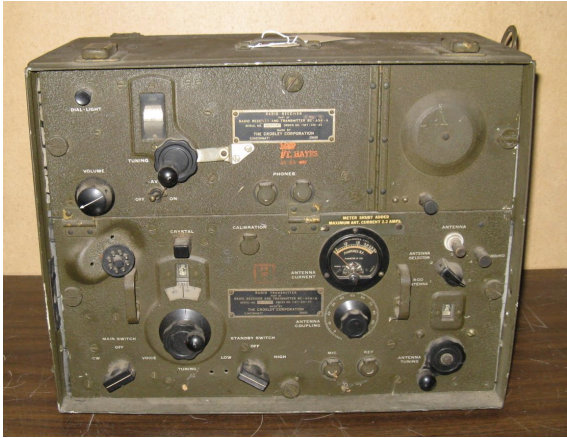
This beautiful BC-654-A is just one of the antique radios up for auction.

This beautiful BC-654-A is just one of the many antique radios on the auction block.

(Source: NJARC Press Release)

ANNUAL INFOAGE RADIO ELECTRONICS AUCTION

Saturday April 27, 2013

InfoAge Science History Learning Center and Museum
2201 Marconi Road
Wall, New Jersey 07719

Huge Radio/Electronics Auction Conducted By The
New Jersey Antique Radio Club and The Radio Technology Museum

All day sale of vintage radios, electronic test equipment, ham gear, audio equipment, marine radios, military electronics and 1000s of vacuum tubes along with related parts & documentation. Large variety of tubes in box lots, groups or singles; many interesting types. Better tubes are pretested.  300 + lots, including many large box lots. Something here for every radio/electronics collector.

Auction Begins at 10:00 AM on Saturday
Viewing is from 8:00 AM to 10:00 AM Day of Sale

Sale of artifacts and donations excess to the centers needs. Proceeds to benefit InfoAge, Radio Technology Museum and National Broadcasters Hall of Fame.

Auction is indoors with ample seating. Noted radio auctioneer Richard Estes will be wielding the auction gavel. Complete auction catalog available two weeks prior to sale. Terms are cash or good check, sorry, we cannot take credit cards. 5% buyers premium is charged.

Directions: http://www.infoage.org/visit#directions
Up-to-date Information: http://www.ar88.net/auction.html
Auction Contact: [email protected] or 908-757-9741

Thanks for the tip, Rich!

Harold’s JA7HJ tower was not your average tower

The following post was copied from my ham radio blog, QRPer.com. I thought that SWLing Post readers would enjoy this article about Harold Johnson (W4ZCB) as well:
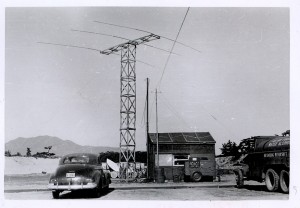
Harold's JA7HJ tower (Click to enlarge)

Harold’s 30′ JA7HJ tower (Click to enlarge)

I meet some very interesting people in radio circles.  My friend Harold Johnson (W4ZCB) is undoubtedly one of them.

Last year at my local ham radio/DXer club meeting, members were asked to bring photos of shacks and rigs, and describe our evolution as ham radio operators. In the series of photos that arrived at the following meeting, one in particular stood out: Harold Johnson’s radio tower in post-war Japan.

Johnson’s tower stood almost thirty feet tall and supported a 20 meter Yagi which you can see in the above photo.  Johnson, who at the time operated under the callsign JA7HJ, also had a little ham shack built. The shack materials–including the tower, Johnson recalls–cost him “three bottles of Scotch for the army quartermaster…I paid the Japanese builder $15 or $20 for the complete  enchilada.” This tower was built entirely of wood: the vertical members were 2′ x 4’s, the slats were 1′ x 3’s.

Of course, the tower didn’t have a mechanical rotor; instead, Johnson climbed inside the tower, lifted the wooden boom, rotated it manually, and placed it back on the uprights.

When asked how he powered his station, Johnson pointed to the wheeled generator in front of the radio shack in the photo. “The generator was called a B6B–it produced 24, 120, 240, and 480 volts, and was rated 10 kW.” When I asked how he managed to procure the generator, he replied that he “borrowed it from the flight line, which was about 300 feet away.”
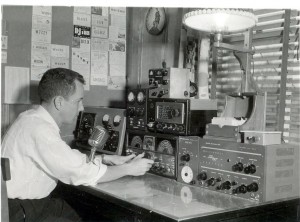
Johnson's Nashville, TN shack, circa 1955/56. (Click to enlarge)

Johnson’s Nashville, TN shack, circa 1955/56. (Click to enlarge)

I always enjoy hearing personal histories in radio and I didn’t doubt for a moment that Harold Johnson’s would be intriguing, so I asked if he’d tell us how his interest in radio began. So, here’s Johnson’s story in his own words:

As a preteen, (and poor as a church mouse during our previous
Depression), I would visit my aunt and uncle in the summer, likely due to the fact that they were farmers and had food to eat. They owned an old Philco radio that had shortwave bands and I was intrigued with the phone amateurs on the 80 and 20 meter bands. Often, I could hear both sides of the conversation, after I found out that they were on various different frequencies, being crystal controlled back then! My…How times have changed.

In high school, I found another afficianado, and can recall melting “Woods metal” in boiling water and floating a piece of Galena on it until it returned to a solid and [thus] made my own crystal set. WWII had started by then, and I would listen to the ground-to-air communications between ships in Lake Michigan and pilots taking off and landing on them. Great DX, perhaps 10 miles away.

In 1943, I had graduated from high school and joined the US Army Air Corps. Went through training and was still in training (…to be a pilot until they counted airplanes and pilots and decided they had enough of each […so instead] turned me into a B-29 gunner). The war was over whilst [I was] still in training and I “retired” in November 1945. Went home and found my high school sweetheart, married, went back to school to finish my education and started the Johnson family. Still married, and
to the same girl. What a sweetheart to have put up with me all these years. [No kidding, Harold!]

Went back in the US Air Force in 1949, this time became a pilot, and just in time to go to Korea for a year. However, during training, had to learn the Morse and if you learned to 13 WPM, you had a free hour and didn’t have to attend class. That overcame my obstacle to amateur radio, and I took the exams in 1950 and became W9PJO. Our rules at that time were that you had to hold a “class B” ticket for a year before you could take the “class A” exams. That year I spent in Korea and Japan and managed to obtain my first foreign call, JA7HJ.
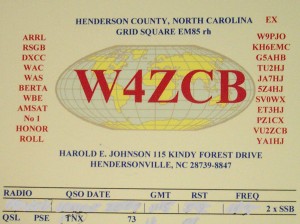
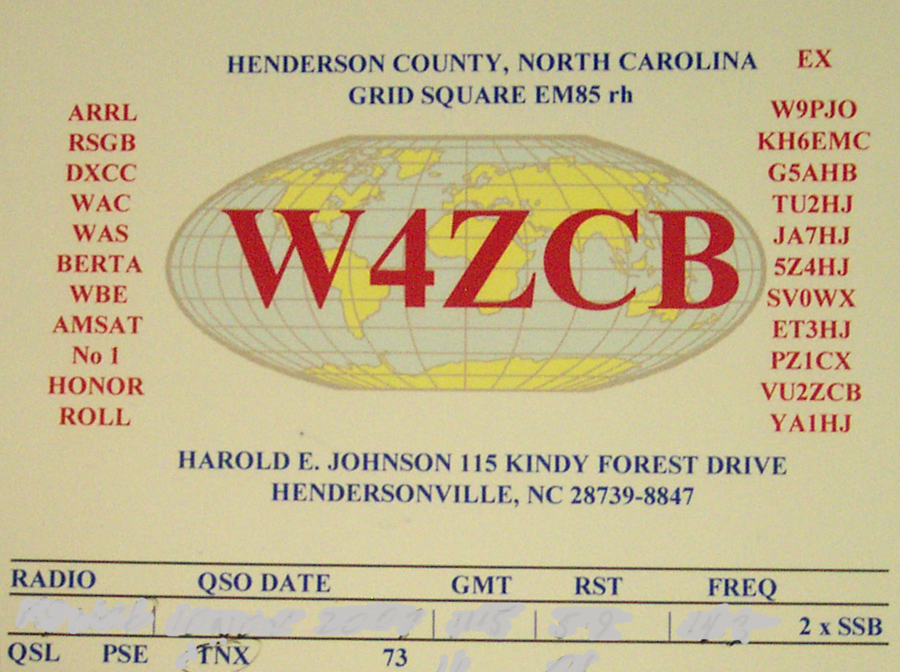
W4ZCBqslReturning home to wife and by that time two children, I took the class A exams and became W4ZCB. I decided that I enjoyed flying, (at least most of the time), and decided to make it a career. The ensuing years, I was always on and in the air, and usually spent the winters in Alaska and the summers in the Canal Zone, anything to practice how to be miserable. Lebanon in 1958, Vietnam in 1968 and by 1969 decided that I should start doing something else before my luck ran out.

During my last 4 years of service I flew an Army four star around the world four times. Fortunately he was Ted Conway, W4EII, and we mutually enjoyed operating under a couple dozen different call signs from a lot of exotic (and several not so exotic) places. Had G5AHB back when the 5 was reserved for foreign nationals. We were good friends after we both retired (on the same day; I always liked to say that he couldn’t stand to serve without me) until his death in 1990.

I started a small company manufacturing electronic test equipment for public utilities; spent the next 20 years doing that (and enjoying a much more stable life with family and radio.) Managed to work all the countries (entities these days) there are, win a few contests from a contest station I built and operated for 10 years. (80, 40, and 20 in the front room, 15 in one bedroom and since 160 and 10 were seldom open at the same time, they shared the other bedroom. To change bands, you just changed chairs. Five big towers and Yagis, a VERY  high maintenance hobby in the lightning prone state of Florida. (Let’s not mention hurricanes!)

Retired again to the beautiful mountains of North Carolina in 1986. A much more modest station these days, but active on all the HF bands. I really enjoy building homebrew radios and maintaining daily schedules with friends worldwide. Can be found daily on 21.203 with G3XJP and often joined by other builders of the magnificent PicaStar transceiver designed by him. Sixty-three years a ham, still enjoying it. It’s guided my careers and interests. What a wonderful hobby!
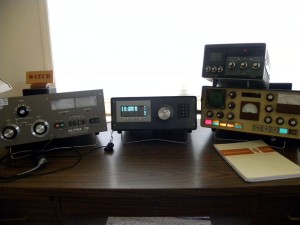
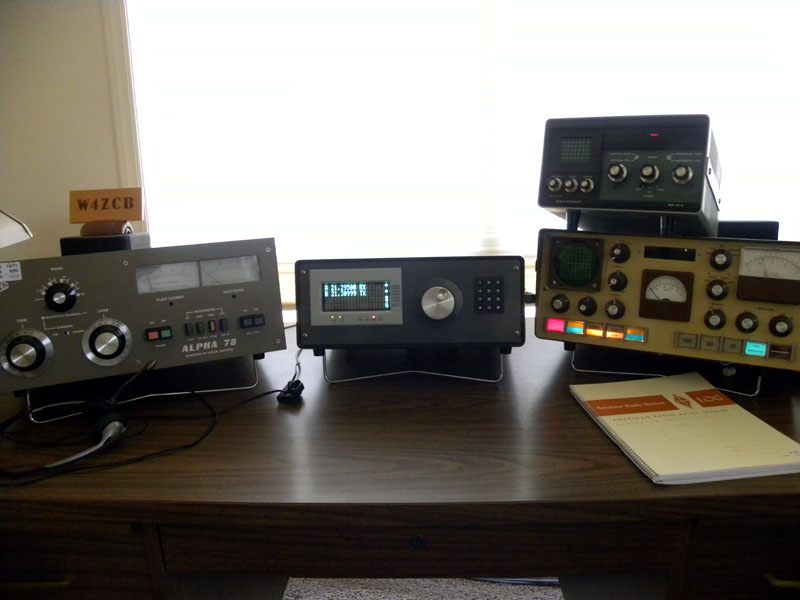
W4ZCB's shack today is based around his home brew SDR transceiver, the PicaStar. (Click to enlarge)

W4ZCB’s shack today is based around his home brew SDR transceiver, the PicaStar. (Click to enlarge)

Over the past few years, I’ve gotten to know Harold Johnson; I must say, he has to be one of the very few hams I know who knows the inner workings of tube/valve radios as well as he does the highest tech radios on the market, a rare talent indeed. If you’re trying to learn a bit more about the BC-348 series of radios and trying to diagnose a problem with it, Johnson’s your guy. If you’re trying to build an SDR from scratch, he’s also your guy.  And clearly, if you want to hear a fascinating account of a life influenced by radio, this is most definitely your guy.

Thanks, Harold, for letting me share your story!

Check out Harold Johnson’s website by clicking here.

Is Amazon.com selling used, defective Grundig G3’s?

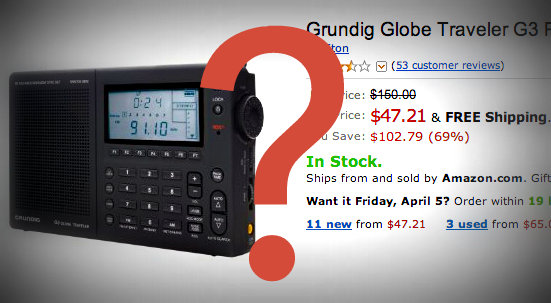
Amazon GrundigG3-001After posting the Grundig G3 deal from Amazon.com last week, many of you sent a message saying that you had snatched one up at that excellent price. However, readers Gary and Dave will be sending theirs back.  Here are their comments:

From Gary:

I received my $52 Grundig G3 today. Unfortunately, it appears to have been a re-sold defective unit. The whip antenna is bent, MW AM sensitivity is far worse than my Sony 7600GR, there is lots of internal noise on MW AM, and sync locks only on the strongest stations (and 1 kHz low).

From Dave:

Well, when I got to it it was up to $59 but that’s still a great deal so I snagged one.  It arrived today.  I suspect like Gary (above) that it was a returned unit.  Lots of scuffs and signs of use.  So… I’ve sent it back to Amazon asking for a replacement.  We’ll see what shows up.  I see now that it’s selling for $96.    I would hate to think that Amazon would be selling off returned stuff at a discount and yet presenting it as new.

Gary and Dave, I certainly hope that Amazon replaces your G3s with new-in-box units; I expect they will. These G3s were certainly advertised as new and sold by Amazon.com (not anther vendor). Let us know if you get a proper replacement.

Any one else experience the same problem from this Amazon sale? Please comment.

[Update: Also check out this thread on the Herculodge. Thanks, Gary.]

Shortwave Radio Recordings: Radio Australia Jazz Notes

This episode of Jazz Notes starts with a piece by the Australian band,  The Catholics. (Photo: Bugle Records)

This episode of Jazz Notes starts with a piece by the Australian jazz band, The Catholics. (Photo: Bugle Records)

For your listening pleasure: thirty minutes of Radio Australia’s Jazz Notes.

This broadcast was recorded today at 13:30 UTC on 9,580 kHz.  As on most mornings, the signal out of Shepparton, Australia, was very strong; the audio fidelity was, in consequence, very impressive for a transmission emanating from some 9,800 miles away.

You can download this recording of Jazz Notes by clicking here, or simply listen via the embedded player below:

Spectres of Shortwave: RCI Sackville documentary seeks support

1-IMG_2274Last year, we mentioned that a documentary film featuring the RCI Sackville transmitter site was in the works. Fortunately, artist/film maker Amanda Dawn Christie, is on track for production of Spectres of Shortwave. Though the film has already received $70,000 in cash funding and $17,500 in services, they need an additional $10,000 to cover incidentals, so they’ve launched an indiegogo campaign.

Consider helping them along the way with even a modest contribution by visiting their indiegogo campaign page.

Heritage Foundation: BBG is cutting “the most cost-effective part of its organization”

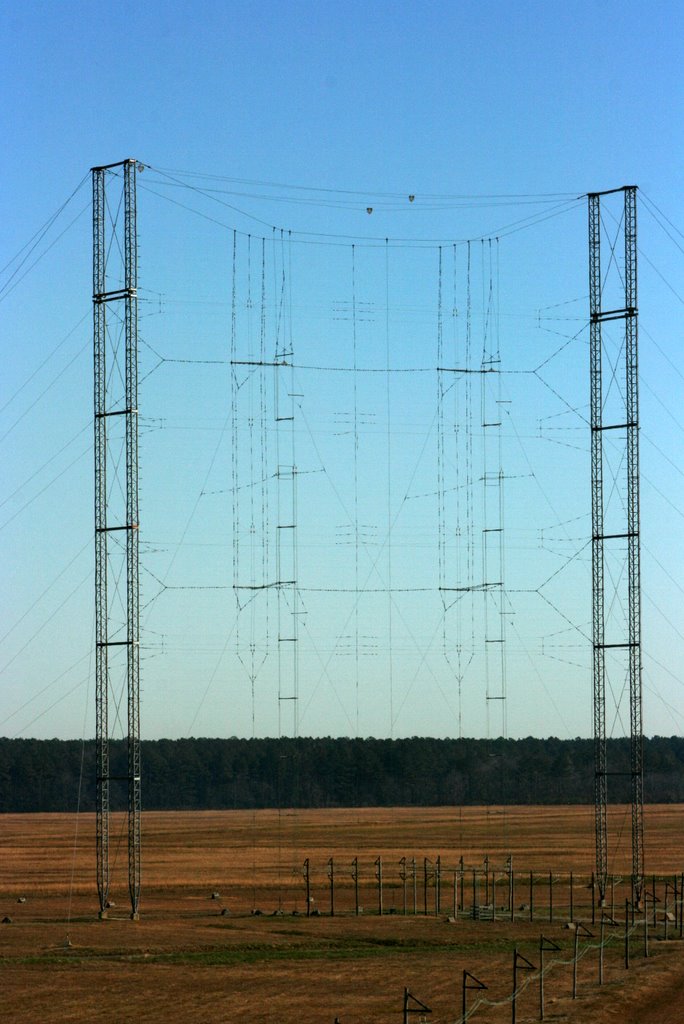
One of the 19 curtain antennas on the campus of the Edward R. Murrow Transmitting Site (Click to enlarge)

One of the 19 curtain antennas on the campus of the Edward R. Murrow Transmitting Site (Click to enlarge)

For those of you not familiar, note that the The Heritage Foundation is a US conservative think tank based in Washington, D.C. whose mission is to “formulate and promote conservative public policies based on the principles of free enterprise, limited government, individual freedom, traditional American values, and a strong national defense.”

(Source: Heritage Foundation)

The Broadcasting Board of Governors (BBG) recently informed its workforce about sequestration cuts to Voice of America’s (VOA) shortwave and medium-wave broadcasting. Ironically, the Board is cutting the most cost-effective part of its organization: radio.

It would be more rational to cut the bloated management and administration of the International Broadcasting Bureau, which accounts for over 36 percent of the 2013 BBG budget request. Television broadcasting would also be a good place to look for savings, being far more expensive to produce and highly variable in terms of ratings.

Last year, however, the BBG declared in its “Strategic Plan” that radio is a “legacy medium,” a hold over from the past compared to television and the Internet. Now a golden opportunity has presented itself for the BBG staff. Thus, under the guise of complying with sequestration, the board has moved ahead with plans to cut radio, plans that have been fought by Members of Congress and heavily criticized by supporters of U.S. public diplomacy for several years.

One vocal critic was former Secretary of State Hillary Clinton, no less. During her Benghazi testimony in January, Clinton had harsh words for the BBG. Clinton bemoaned the fact that the U.S. government has “abandoned broadcasting to the Middle East,” and stated that the BBG, which is responsible, is “a defunct agency.” While this is hardly true in terms of budget, it is in terms of leadership.

Under sequestration, the BBG must cut $37.2 million out of its total budget of $720 million. The announced cuts in shortwave and medium-wave broadcasting are a drop in the bucket, a mere $5.3 million. While efficiencies should certainly be part of the budget picture, decimating the agency’s core mission—broadcasting—should not. Moreover, management has made it clear that these cuts are permanent and not reversible.

[…]It means deep cuts in broadcasting in Cantonese to China, Dari and Pashto to Afghanistan, English to Africa and Asia, Khmer to Cambodia, and English-learning programs around the world. It further means elimination of medium-wave and shortwave broadcasting in Albanian, Georgian, Persian, and Spanish, as well as in English to Afghanistan and in English to the Middle East.

The document notes that national FM and television affiliates will continue to carry VOA broadcasting. The catch is that local affiliates are subject to the whims of the host countries, with all the vulnerabilities and complications that entails.[…]

Read the full article on the Heritage Foundation website.

Ragnar’s review of the RFspace NetSDR

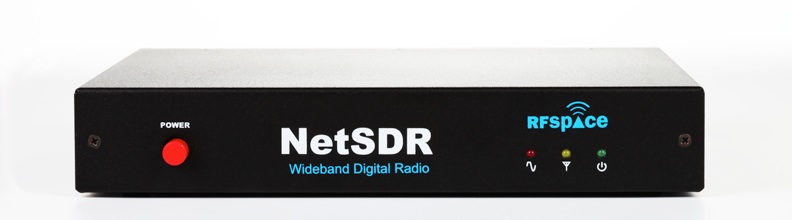
The RFspace NetSDR wideband receiver

The RFspace NetSDR wideband receiver

A few weeks ago, I posted a link to Universal Radio’s used receiver page which featured a used RFspace NetSDR. Ragnar Daneskjold (of Pirates Week fame) jumped on the deal. Ragnar had been contemplating an SDR purchase for some time, and the NetSDR fit the bill.

Now that Ragnar has had some time to play with the NetSDR, he posted some of his impressions which began with this statement:

A few weeks ago I purchased a Net SDR from RF Space. I have to say that I love it. Its just a black box that resides in my basement but it has revitalized shortwave listening for me.

Ragnar evaluates the NetSDR using three different SDR applications: CuteSDR, sdrDX and SDR-Radio.

Click here to read his full post which also includes instructions on how to listen to his Internet-connected NetSDR.

Thanks for sharing your thoughts on the NetSDR, Ragnar!