Shortwave listening and everything radio including reviews, broadcasting, ham radio, field operation, DXing, maker kits, travel, emergency gear, events, and more
Man thanks to SWLing Post contributor, Jim Salmon (2E0RMI), for sharing the following:
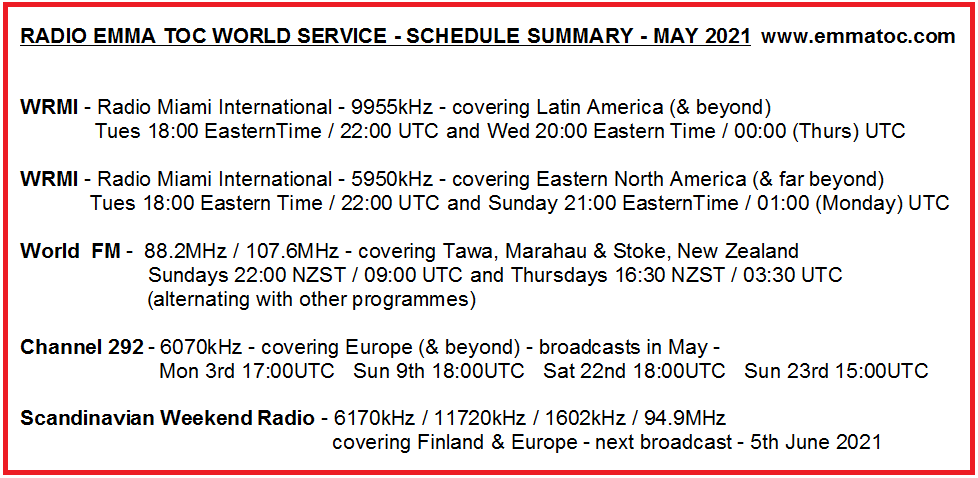
RADIO EMMA TOC WORLD SERVICE – SCHEDULE SUMMARY – MAY 2021 www.emmatoc.com
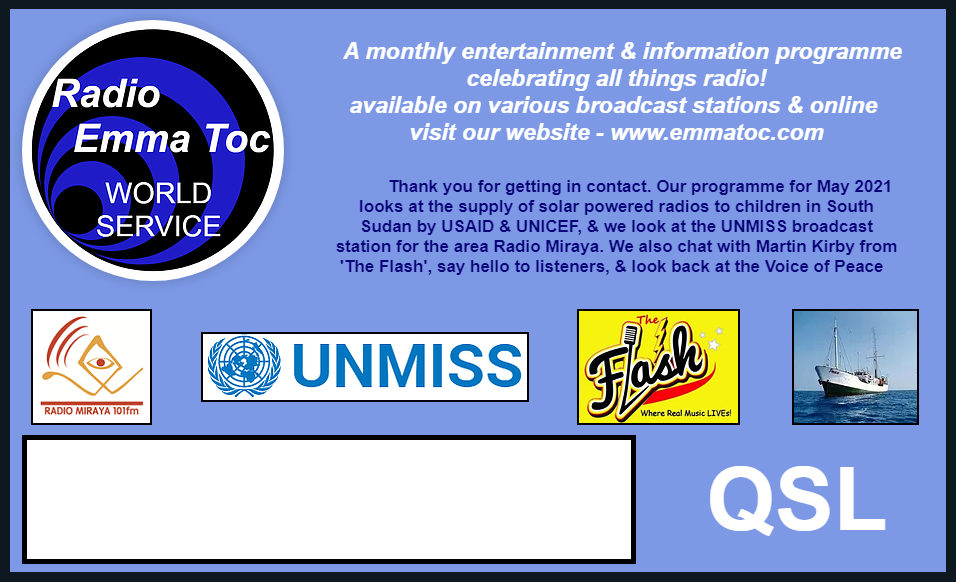
Programme Contents – Solar powered radios in South Sudan & Radio Miraya / interview with Martin Kirby from ‘The Flash’ / hellos to listeners / the Voice of Peace
Ways to listen… Radio Emma Toc World Service – programme no. 13 – May 2021
You can listen online – www.emmatoc.com – visit the ‘World Service’ page.
You can listen to our shortwave or MW or FM broadcasts via our relay partners as follows:
Happy listening! If you are outside the transmitter coverage areas, why not listen via the broadcasters’ online services. Website details for the above stations are listed on our own website www.emmatoc.org/worldserviceindex
If you don’t have access to receivers & aerials you can try using an online SDR receiver – ve3sun.com/KiwiSDR – experience the enjoyment of tuning around shortwave from worldwide locations online.
We are happy to issue eQSLs for reception reports sent to – [email protected] – & will gladly include for online reports. If using an online SDR, please give us the SDR location.
If any stations wish to relay our programme a download link is available on our website. Please advise us of times & dates so we can publicise in our schedule.
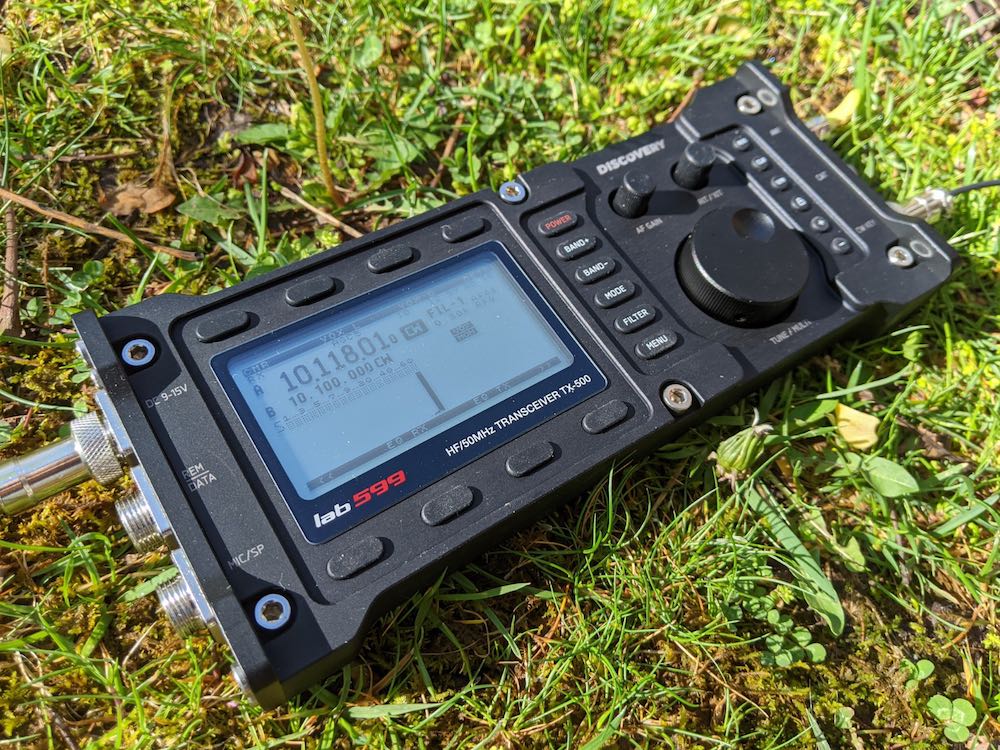
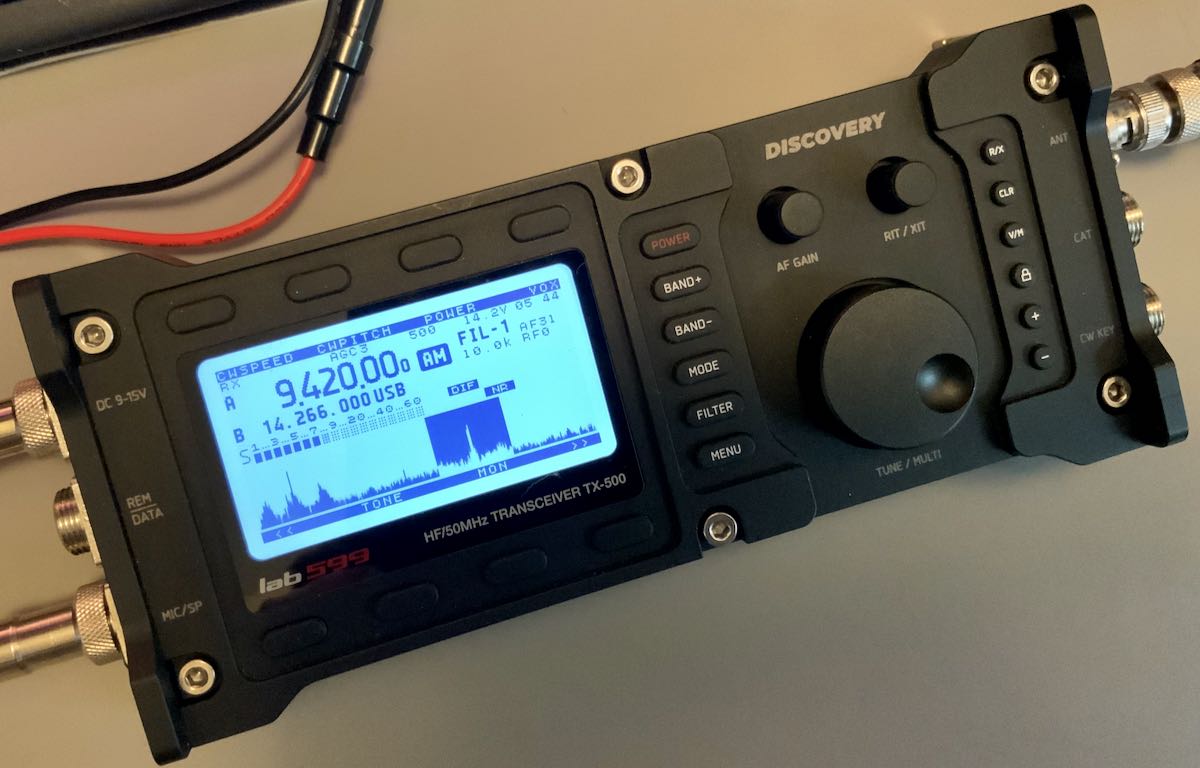
Last year, I was lucky enough to obtain a lab599 Discovery TX-500 QRP transceiver to review for The Spectrum Monitor and the SWLing Post.
I could only keep the TX-500 for a one week evaluation period because it was one of only two or three pre-production units in the US–one was being evaluated for FCC approval.
Often, when a reviewer is sent a loaner unit, if we really like it we can purchase it from the manufacturer for roughly market price. The TX-500 was so rare, though, this simply wasn’t an option. Had it been, I would have purchased it. I liked the radio that much.
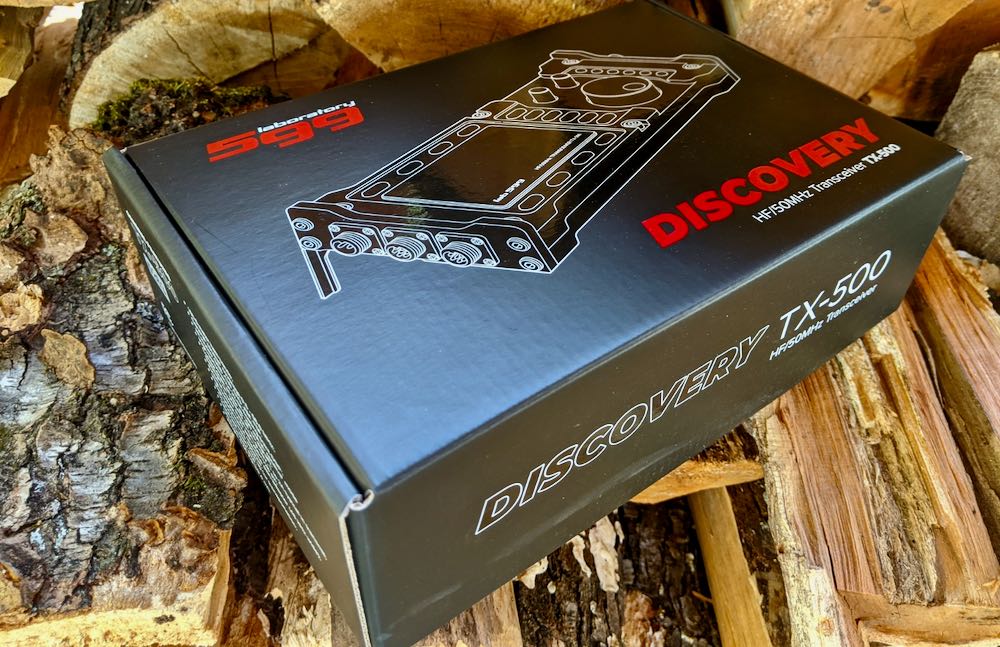
This week, I took delivery of a new TX-500 sent directly to me by the manufacturer in Russia. (You’d better believe I’m not sending this one back! I’ve already given it a name!)
I will say this: if you’re a ham radio operator that likes SWLing, the TX-500 is a very capable broadcast receiver. Since I took delivery, I’ve had some pretty long listening sessions with the TX-500 on mediumwave and shortwave. The AM filter width is adjustable and can be quite wide if you want full fidelity. You must use an external speaker or headphones with the TX-500: this portable transceiver is sealed so that it’s weatherproof. The supplied speaker/mic works in a pinch, but I much prefer headphones or one of my amplified speakers.
QRPer.com: the other blog
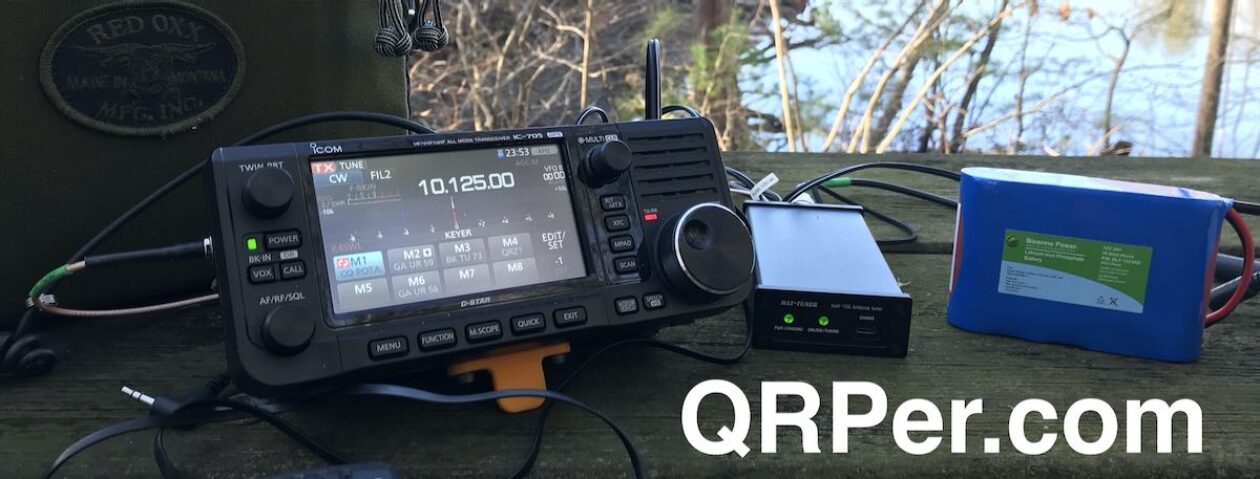
I realize that many readers here on the SWLing Post aren’t aware that I actually have another blog dedicated to ham radio in the field: QRPer.com.
QRPer and the SWLing Post were actually born around the same time in 2008, but over the years I put much more effort and energy in the SWLing Post as I felt there needed to be better resources, articles, and information out there about radio listening. The SWLing Post has grown to a community of 8,000-9,000 daily readers and I couldn’t be more proud. There are days it really feels like a big, international family of kindred spirits. I’ve learned so much from this community.
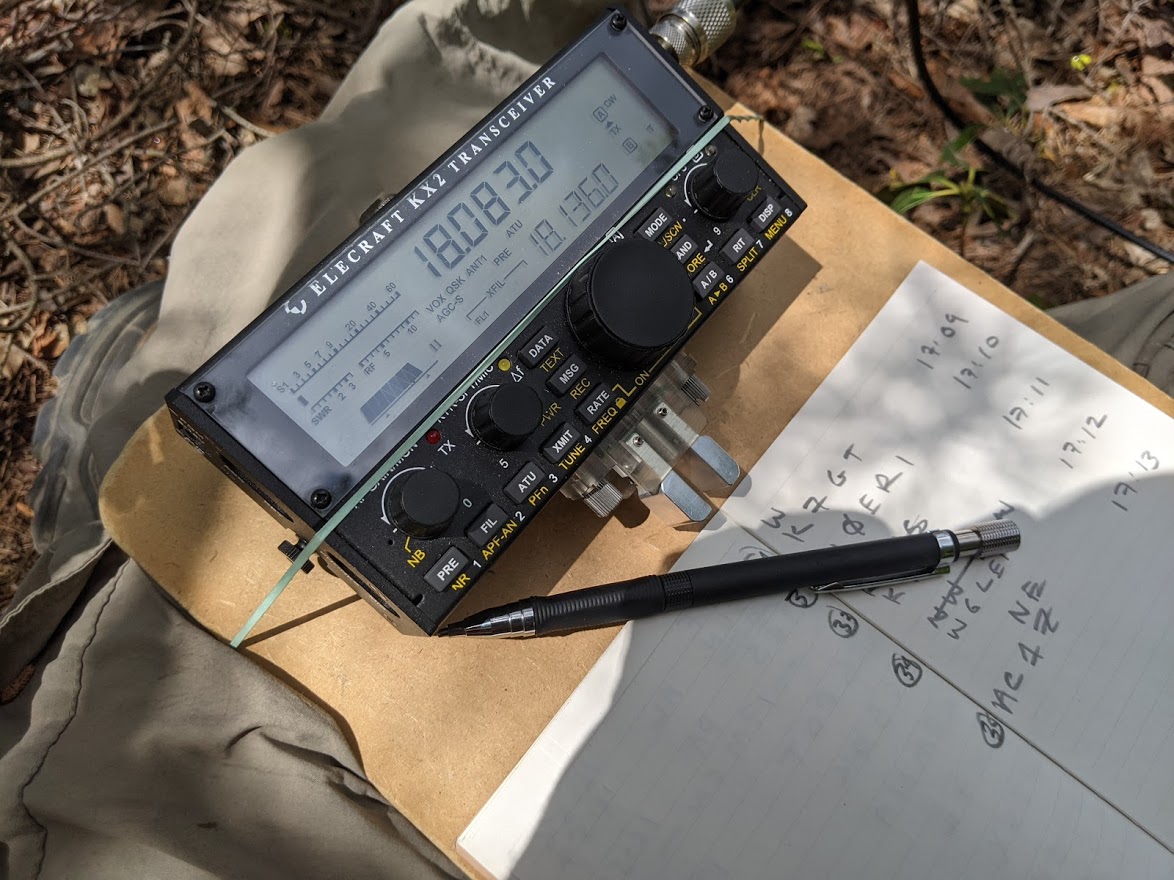
QRPer is devoted to low-power amateur radio operation in the field. It has a completely different feel than the SWLing Post as most articles are field reports from my Summits On The Air (SOTA) and Parks On The Air (POTA) activations. I post at least one field report each week and typically test a different pairing of a transceiver and antenna. Many of my activations these days are using CW (Morse Code). After completing my first CW activation last year, I truly fell in love with this earliest of radio modes.
I get that there are many here at the Post that don’t really care for ham radio or QRP operation and that’s perfectly fine. I mention QRPer because I’ve been getting notes from readers who are just realizing that there’s a common connection between the SWLing Post and QRPer: me!
I’m horrible at cross-promoting my work, so there you go.
Not a YouTuber, but I have a YouTube channel
While I’m at it: last year, I also started making real-time, real-life, unedited YouTube videos of many of my QRP field activations. I made some of the first ones at the request of readers who wanted to know what it was like to actually perform field activations.
I’m a fellow who has very little free time and the thought of editing videos, frankly, makes me break out in a cold sweat. I simply don’t have the time. Plus, I don’t really have the personality of a successful YouTuber. I am what I am.
I posted my first unedited videos expecting negative comments. The total opposite happened.
While I never expect my YouTube channel to appeal to anyone beyond a very niche audience, I have gotten some very encouraging comments from subscribers who appreciate (virtually) sitting with me on the park bench or on a 3,000 meter summit and copying the CW and SSB contacts that roll in. I see these videos as supplements to my field reports on QRPer.com. In fact, if you want to see the Discovery TX-500 (mentioned above) in action, you’ll want to read my field reports on QRPer.com and watch the activation videos.
If you’re looking for a proper cure for insomnia, here’s a link to my YouTube channel. Consider subscribing if I haven’t scared you away already. 🙂 Indeed, as I publish this post, I see that I’m almost at the 3,000 subscriber mark. What?
Oh, speaking of YouTube and the TX-500, I made a video shortly after receiving it via DHL. I call it an “unboxing” video but really it’s an excuse to talk about why I’ve missed the TX-500.
By the way: I don’t monetize my YouTube channel, so there are a total of ZERO ads. I’m able to support my radio and blogging life via the backing of my amazing readers and sponsors. Thank you so very much!
Many thanks to SWLing Post contributor, Pete Madtone, who shares the following:
They say you better listen to the voice of reason
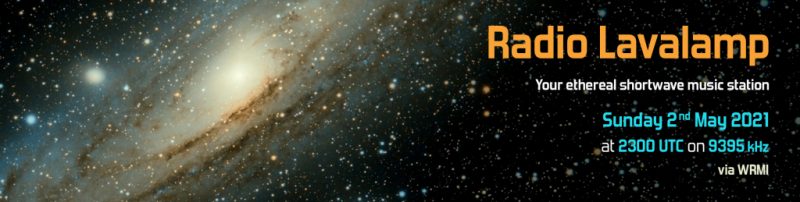
[…]Radio Lavalamp will be taking to the shortwaves very soon, as in this Sunday 2nd May 2021 at 2300 UTC (Midnight UK time) on 9395 kHz via WRMI. The show features some chilled tunes and also a mix from One Deck Pete called “The Purple Nucleus of Creation 004” with tracks from Floating Points, London Symphony Orchestra and Pharoah Sanders, Betelgeize ft. Ilya Chistyakov, Tranquility Bass and Hrair. Turn on and tune in.
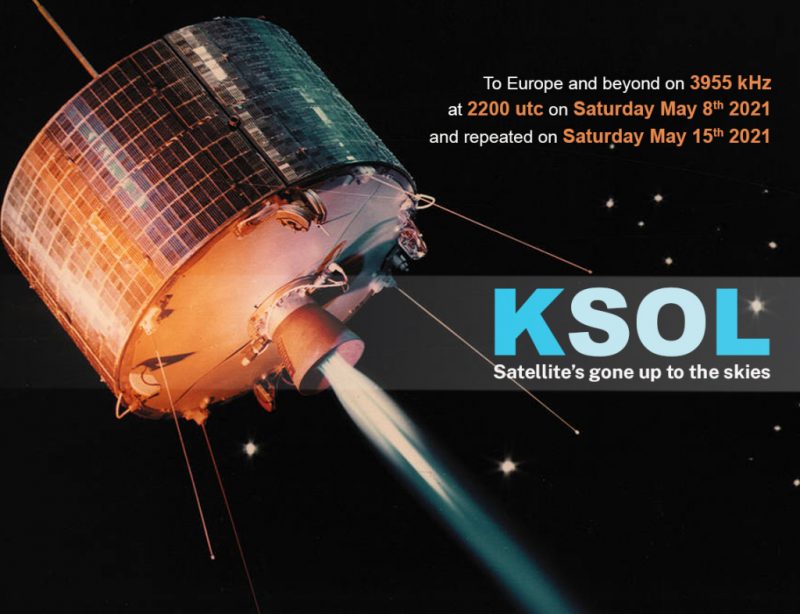
And on the weekend after (and the one after that) KSOL is back in orbit in a “Satellite of Love” mode. It’ll be broadcast out of Germany via Channel 292 at 2200 UTC (11pm UK time) on 3955 kHz on Saturday the 8th and 15th May 2021.
And in keeping with the radio theme here’s a song about CW (Morse Code) by the great Ivor Cutler that was heard on BBC Radio 4’s Great Lives programme this afternoon.
Many thanks to SWLing Post contributor, Peter, who asks:
Two of the tabletop shortwave receivers recommended in the past are listed as discontinued by retailers. Do you have any current recommendations?
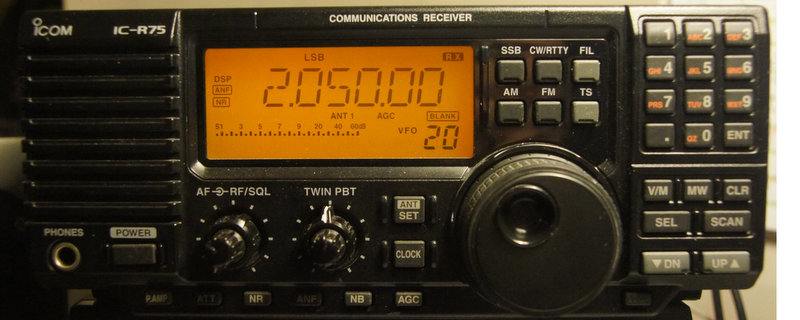
Great question, Peter. I’m guessing that you’re looking for a new tabletop communications receiver and I also assume you may be referring to the CommRadio CR-1a and the Alinco DX-R8T. Both of these have been discontinued by the manufacturer.
Fewer options than in the past
To my knowledge, there are very few dedicated, stand-alone tabletop shortwave receivers currently on the market.
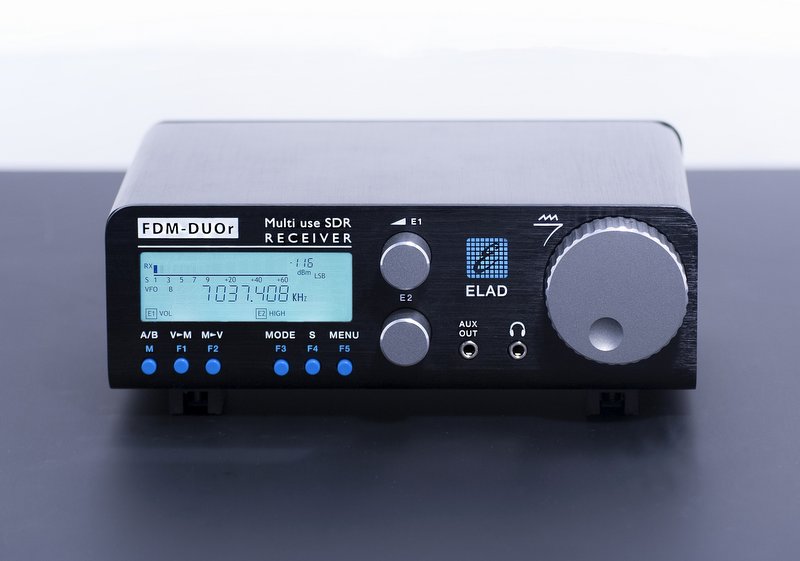
The ELAD FDM-DUOr
One notable exception is the ELAD FDM-DUOr which is essentially a tabletop, stand-alone SDR. It is an excellent performer and I believe still available from ELAD for about $900 US. The FDM-DUOr is currently the best option I know of under $1,000 US.
There are still a handful of dedicated communications receivers on the market, but they tend to be wideband receivers and carry a heavier price tag than legacy HF-only receivers.
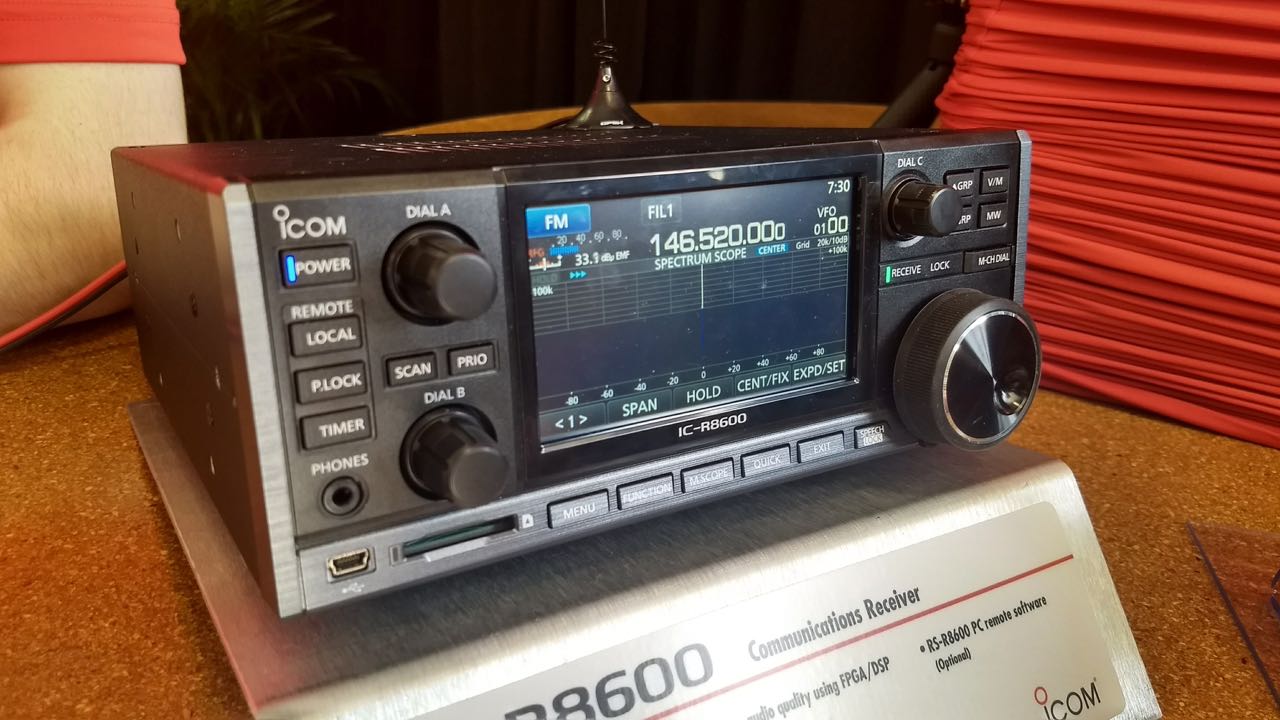
The new Icom IC-8600 at the 2017 Hamvention
One example is the Icom IC-R8600. It’s a great HF radio–click here to read the review–but it retails for around $2,200 US.
In my opinion, two innovations pushed dedicated tabletop receivers off the market:
The proliferation of high-performance, affordable software defined radios like the AirSpy HF+ Discovery and SDRplay RSPdx. Both of these models retail for less than $200 US new and offer superb performance when coupled with even a modest PC, laptop, or tablet. In addition, those seeking benchmark SDR receiver hardware and performance will invest in higher-priced models like the new ELAD FDM-S3. Click here to read Part 1 of our SDR primer.
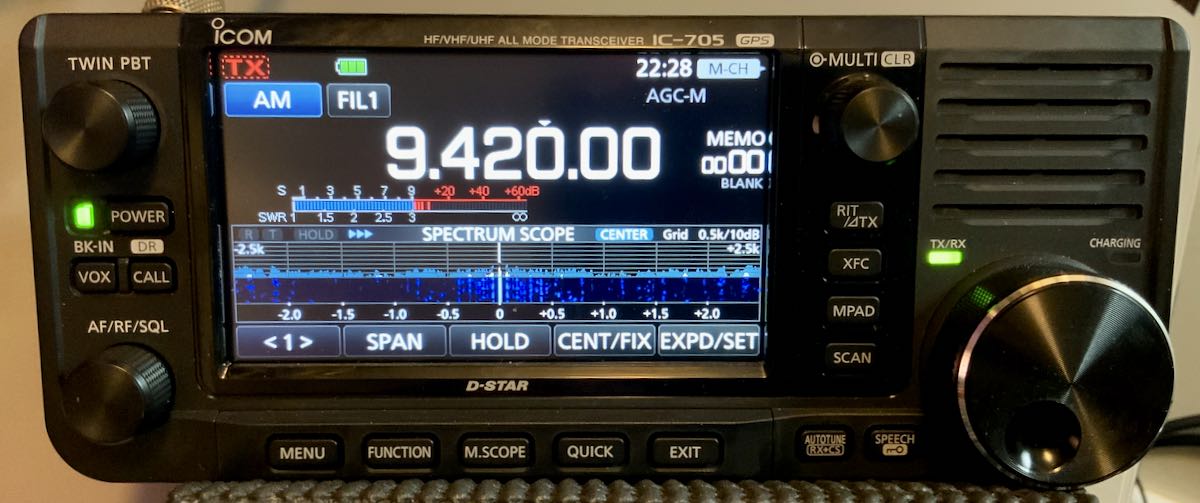
General coverage ham radio transceivers now provide performance that’s on par or even better than legacy tabletop receivers. Many shortwave listeners now purchase transceivers and simply disable the transmit function so that they don’t accidentally inject RF power into the antenna. Transceivers lack some broadcast listener features like synchronous detection, but their single sideband performance often compensates for this, in my opinion. Some current (sub $1,000 US) favorites among SWLs include the Icom IC-7300, and the Yaesu FT-891. I’m also a huge fan of the new Icom IC-705 portable transceiver, although its price point is closer to $1,300 US. Click here to read more about general coverage transceivers.
If SDRs and general coverage transceiver lack appeal, keep in mind that there are a multitude of legacy communications receivers on the used market.
I should add here that one Ohio-based manufacturer, Palstar, has mentioned that they plan to produce the Palstar R30B tabletop shortwave receiver which would be the latest iteration of their R30 series. This announcement has been out there for some time, though, and I’m not sure when or if the R30B will ever come to fruition.
More options?
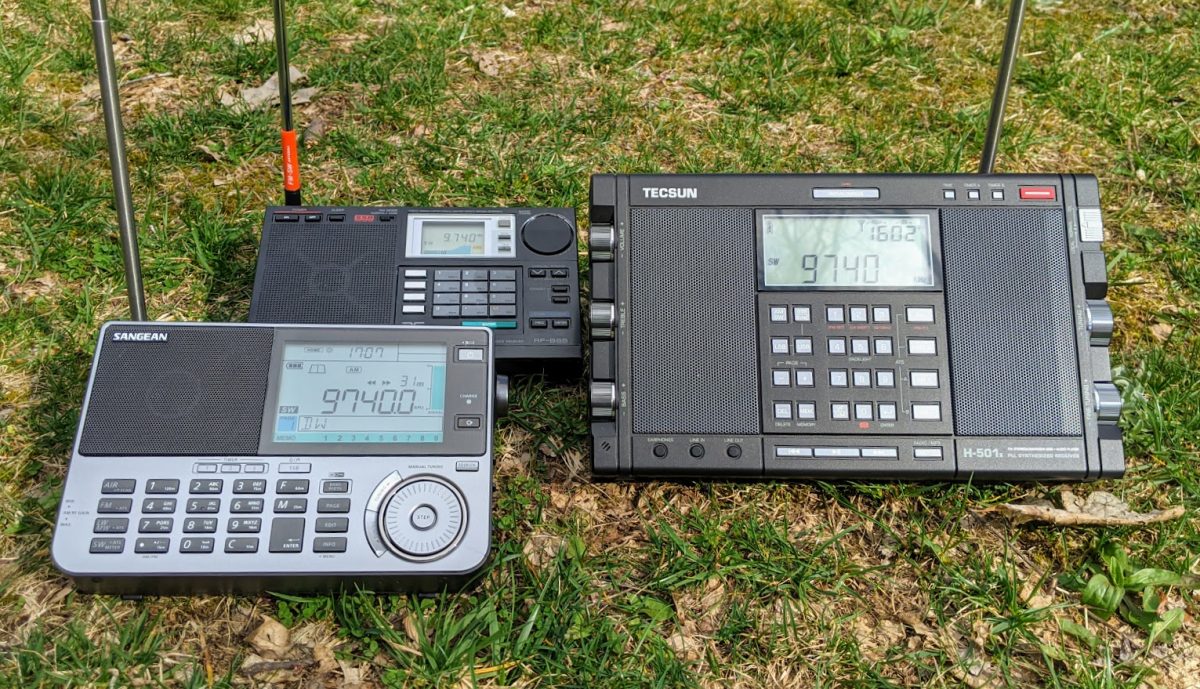
To keep the scope of the original question in check, I’m leaving out a number of other viable options like larger portable radios (the Sangean ATS-909X2 and/or the Tecsun H-501 for example) and other inexpensive DSP receivers on eBay like those based on the Si4732 chipset.
Have I missed something? Please comment if you know of other tabletop communications receivers currently on the market. Also, if you use a general coverage transceiver for SWLing, please share which make/model you like in the comments section! Click here to comment.
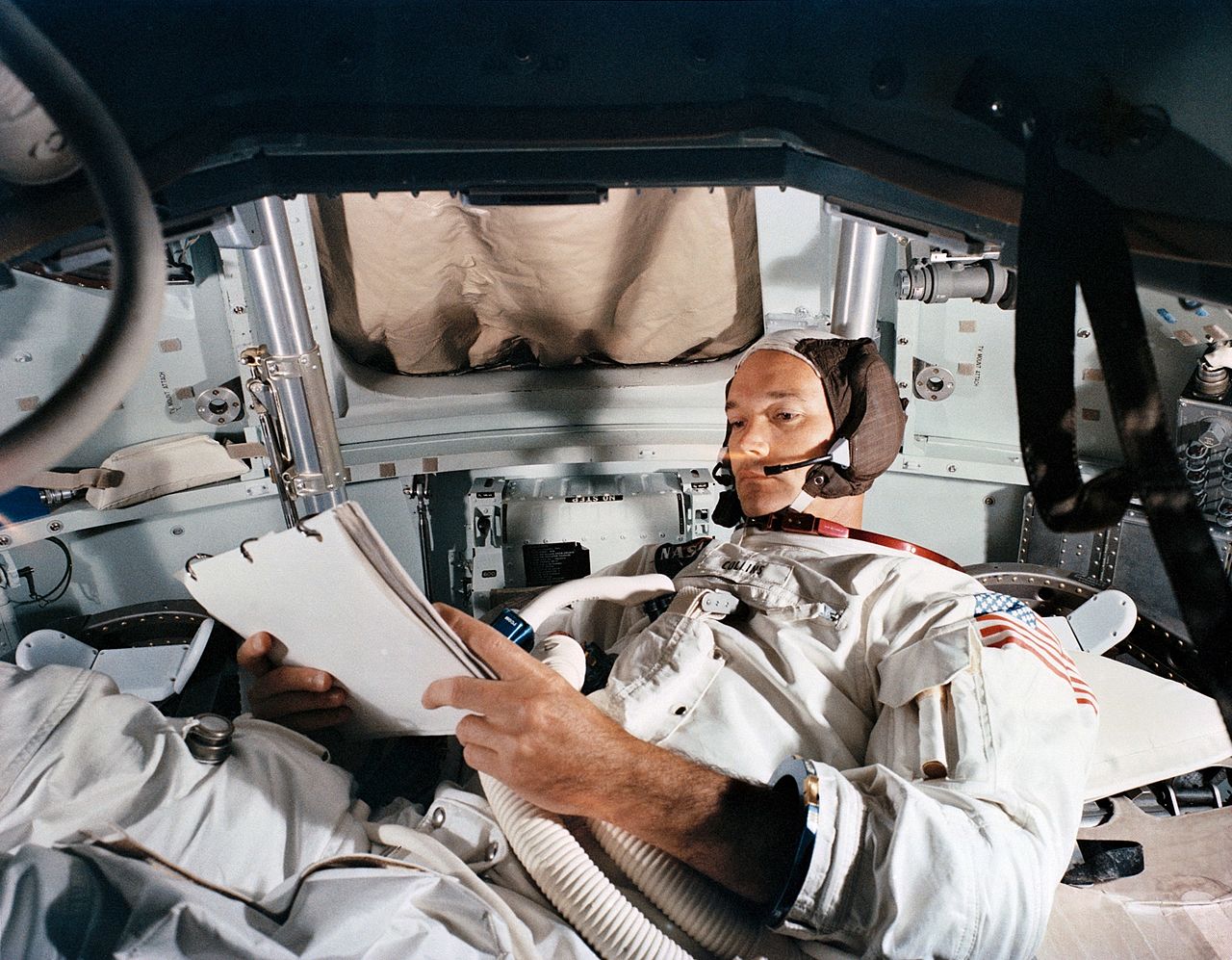
Today we learned that Michael Collins, the American astronaut who flew the Apollo 11 command module Columbia around the moon, has passed away at the age of 90. For those of us who’ve always looked to the sky and dreamed of exploring our amazing universe, Michael Collins was a hero.
As a little shortwave radio tribute, I thought I’d share a few recordings from the Shortwave Radio Audio Archive:
Many thanks to SRAA contributor, Tom Gavaras, for sharing the following recording and notes:
Voice of America studio quality recording of shortwave coverage of Apollo 11. Starts with newscast on the status of Soviet Luna 2 orbiter that was also sent to the moon, Egyptian-Israel conflict at the Suez Canal, Organization of American States call for a cease fire between El Salvador and Honduras, entire cabinet in South Vietnam resigns, American air attacks against the Viet Cong, etc. Followed by latest updates on Apollo 11 (lunar module is on the moon), international reaction to landing on the moon, etc.
Many thanks to SRAA contributor, Tom Laskoski, who shares the following recording and notes:
I thought this might be an appropriate file to upload considering we are about to mark the 50th anniversary of Apollo 11. I recorded this program thirty years ago on July 20, 1989, the 20th anniversary of the Apollo 11 moon landing. Omnibus takes a look back at the historic Apollo mission and how and why it happened. Another SWRAA program on Apollo 11 from VOA can be found at https://shortwavearchive.com/archive/voice-of-america-july-20-1979?rq=apollo
Many thanks to SRAA contributor, Tom Laskowski, who shares this recording of the Voice of America from July 20, 1979 at 0500 UTC on the 31 meter band. Tom notes:
The first 4:30 is from a VOA newscast that aired before the main part of the program. The main recording was presented on the 10th anniversary of the Apollo 11 moon landing. I enjoy listening to this every year on the landing anniversary.
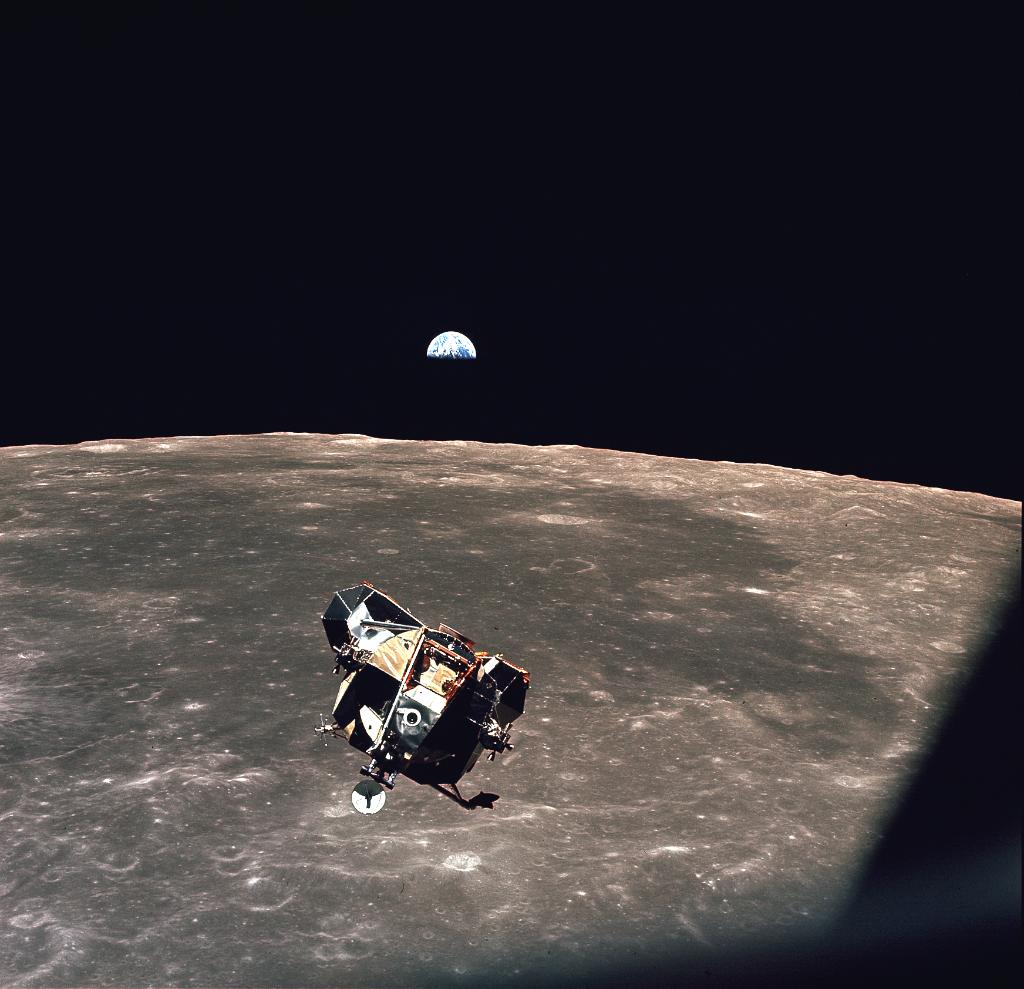
“About the flight itself, the thing I remember most is the view of planet Earth … bright, beautiful, serene, and fragile.”
Radio Waves: Stories Making Waves in the World of Radio
Because I keep my ear to the waves, as well as receive many tips from others who do the same, I find myself privy to radio-related stories that might interest SWLing Post readers. To that end: Welcome to the SWLing Post’sRadio Waves, a collection of links to interesting stories making waves in the world of radio. Enjoy!
Many thanks to SWLing Post contributors Paul L, Pete Eaton, David Iurescia, and Troy Riedel for the following tips:
The PIRATE Act was signed into law more than a year ago, but the rules governing increased fines for unlicensed broadcasting are about to go into effect on April 26. The Act is intended to give the FCC additional tools for tamping down pirate radio activity in hot beds like Boston and Brooklyn, NY, but there are reasons to be skeptical.
Brooklyn-based writer, post-production mixer and field recordist David Goren joins to help us tease out the real-world implications. Goren is also the creator of the Brooklyn Pirate Radio Sound Map and has been monitoring and recording unlicensed radio activity in the borough for decades.
Also joining the show is Dr. Christopher Terry from the University of Minnesota. A professor of media law, he helps illuminate some of the legal and bureaucratic elements that complicate the Commission’s efforts. He also catches us up on the latest development in the battle over media ownership rules, with the Supreme Court issuing a narrow unanimous ruling in favor of the FCC’s most recent changes, but not quite addressing the decades-long gridlock in that policy area.
The disappearance of Malaysia Airlines flight MH370 after an unexplained course change sent it flying south over the Indian Ocean in March 2014 still holds the mystery of the wreck’s final location. There have been a variety of efforts to narrow down a possible search area over the years, and now we have news of a further angle from an unexpected source. It’s possible that the aircraft’s path could show up in radio scatter detectable as anomalously long-distance contacts using the amateur radio WSPR protocol.
WSPR is a low-power amateur radio mode designed to probe and record the radio propagation capabilities of the atmosphere. Transmit beacons and receiving stations run continuously, and all contacts however fleeting are recorded to an online database. This can be mined by researchers with an interest in the atmosphere, but in this case it might also provide clues to the missing airliner’s flightpath. By searching for anomalously long-distance WSPR contacts whose path crosses the expected position of MH370 it’s possible to spot moments when the aircraft formed a reflector for the radio waves.[…]
His provocative “Radio Unnameable,” long a staple of the New York station WBAI, offered a home on the FM dial to everyone from Abbie Hoffman to Tiny Tim.
Bob Fass, who for more than 50 years hosted an anarchic and influential radio show on New York’s countercultural FM station WBAI that mixed political conversation, avant-garde music, serendipitous encounters and outright agitation, died on Saturday in Monroe, N.C., where he lived in recent years. He was 87.
His wife, Lynnie Tofte, said he had been hospitalized with Covid 19 earlier in the month, but he died of congestive heart failure.
The Dicastery for Communication marks the 30th International Marconi Day with a celebration at Vatican Radio’s historic broadcast station outside Rome.
International Marconi Day is held every year on the Saturday closest to the birthday of the inventor of the radio, Guglielmo Marconi, on 25 April 1874.
This year’s commemoration fell a day earlier, and saw dozens of radio stations exchange messages, including Vatican Radio, which Marconi himself helped found in 1931.
The 30th iteration of Marconi Day was celebrated at Vatican Radio’s broadcast center at Santa Maria di Galeria, outside Rome.
Day for those who love radio
According to Dr. Paolo Ruffini, the Prefect of the Dicastery for Communication, it was “a day spent in a family spirit” for those who love the Radio and the man who invented it.
He noted that the broadcast station forms both the center and periphery of Vatican Radio, since it is the place where radio waves are emitted which carry the Gospel and the words of the Popes throughout the world.
Marconi’s favorite Radio
The 30th Marconi Day falls within the 90th anniversary year of the founding of Vatican Radio.
The great Italian inventor’s daughter, Princess Elettra Marconi, who was present for the celebration, recalled that the station was her father’s favorite, though he had founded several others.[…]
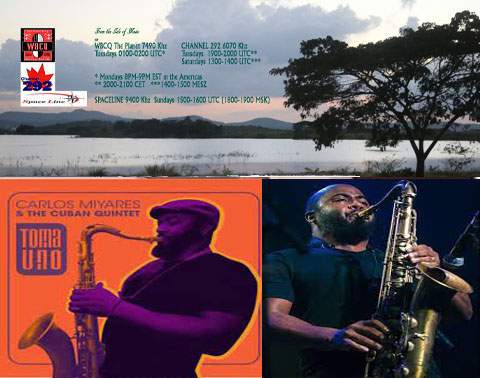
From the Isle of Music, May 2-8:
This week, Carlos Miyares helps us present his excellent new Cuban jazz album Toma Uno, nominated for a Cubadisco this year.
The broadcasts take place:
1. For Eastern Europe but audible well beyond the target area in most of the Eastern Hemisphere (including parts of East Asia and Oceania) with 100Kw, Sunday 1500-1600 UTC on SpaceLine, 9400 KHz, from Sofia, Bulgaria (1800-1900 MSK)
2. For the Americas and parts of Europe, Tuesday 0000-0100 UTC on WBCQ, 7490 kHz from Monticello, ME, USA (Monday 8-9PM EDT in the US).
3 & 4. For Europe and sometimes beyond, Tuesday 1900-2000 UTC and Saturday 1200-1300 UTC on Channel 292, 6070 kHz from Rohrbach, Germany.
Our Facebook page is https://www.facebook.com/fromtheisleofmusic/
Our V-Kontakte page is https://vk.com/fromtheisleofmusic
Our Patreon page is https://www.patreon.com/tilford
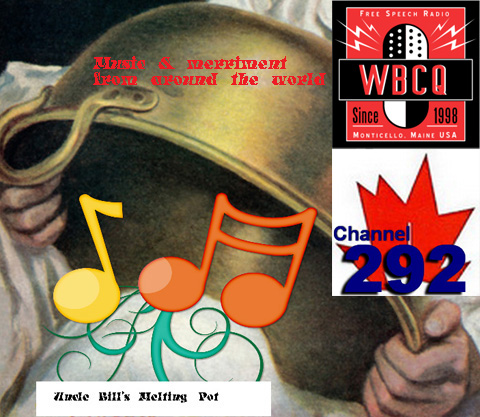
Uncle Bill’s Melting Pot, May 2-8:
In episode 215, special guest Sauli Heikkilä takes us through the wonderful world of Tuvan and Mongolian throat singing with recordings, explanations and demonstrations.
The transmissions take place:
1.Sunday 2200-2300 (NEW UTC) (6:00PM -7:00PM EDT) on WBCQ The Planet 7490 kHz from the US to the Americas and parts of Europe
2. Tuesday 2000-2100 UTC on Channel 292, 6070 kHz from Rohrbach, Germany for Europe.
3. Saturday 0800-0900 UTC on Channel 292, 9670 kHz from Rohrbach, Germany for Europe with a directional booster aimed eastward.
Our Facebook page is https://www.facebook.com/UncleBillsMeltingPot/
Our V-Kontakte page is https://vk.com/fromtheisleofmusic
Our Patreon page is https://www.patreon.com/tilford
Please support this website by adding us to your whitelist in your ad blocker. Ads are what helps us bring you premium content! Thank you!