Shortwave listening and everything radio including reviews, broadcasting, ham radio, field operation, DXing, maker kits, travel, emergency gear, events, and more
Many thanks to SWLing Post contributor, DanH, who writes:
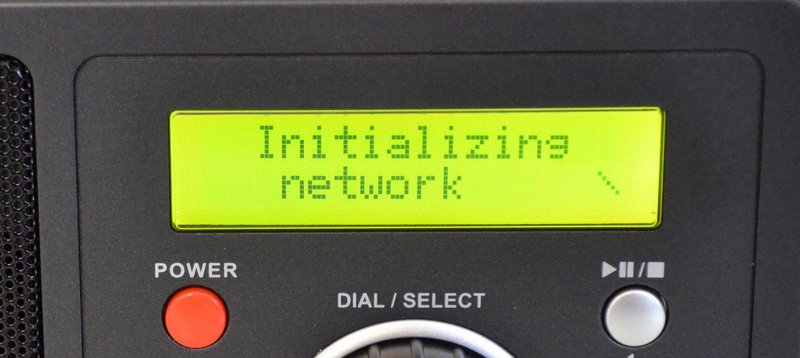
I recorded and edited clips from two Voice of Korea SW broadcasts in English at different times earlier today (UTC). The radio clock in this video is fairly accurate and is set to UTC. The VOK announcer reads a list of VOK English language broadcast times and frequencies near the end of the video. Happy listening! Propagation conditions aren’t that bad.
Thank you for sharing this, Dan. I’m travelling at the moment but will certainly listen via one of my favorite WebSDRs. I’m hoping some listeners will submit recordings to the shortwave archive!
I’ve copied the times and frequencies below for reference:
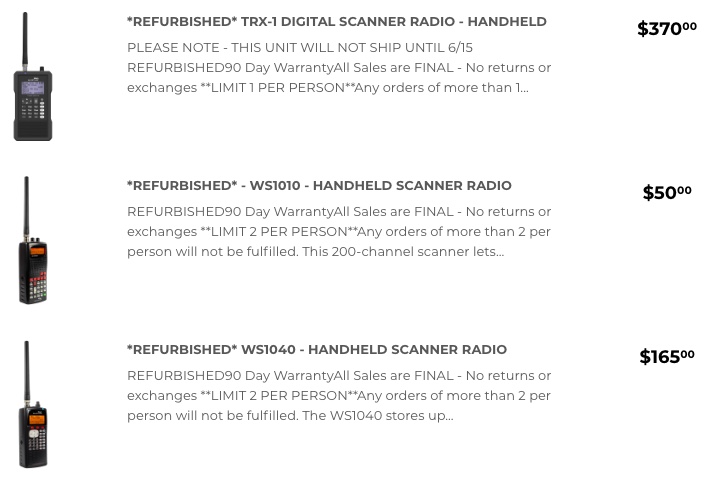
Many thanks to SWLing Post contributor, Dan Srebnick (K2DLS), who notes that Whistler currently has a selection of refurbished scanners on sale with a manufacturer’s warranty including the new TRX-1 handheld:
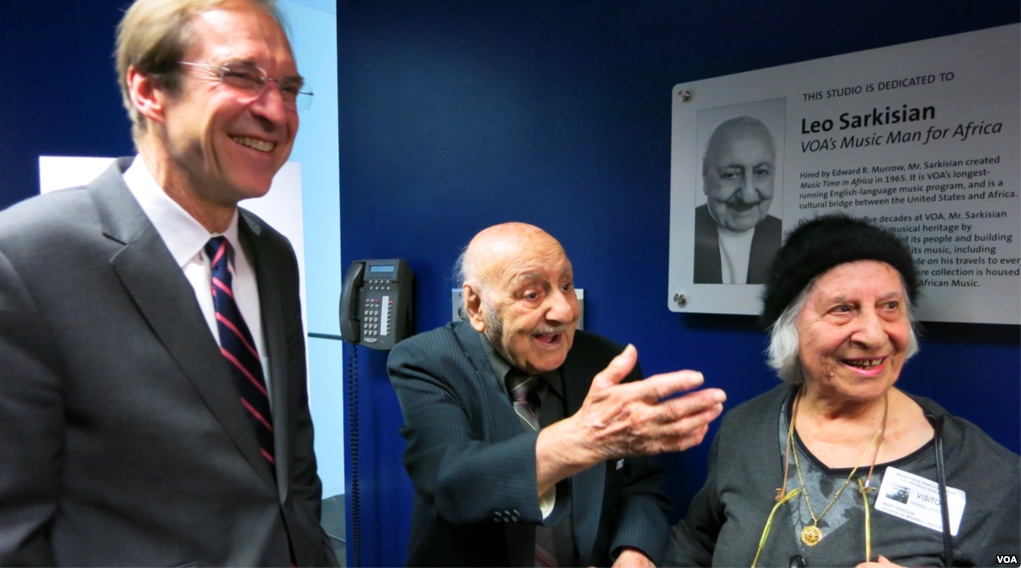
FILE – Leo Sarkisian, center, his wife, Mary, and VOA Director David Ensor smile during a celebration that followed the renaming of VOA Studio 23 in Sarkisian’s honor, Jan. 29, 2014. (Source: VOA News)
In February 2013, Leo Sarkisian and his sweet wife, Mary, invited me to their home and studio in Maryland and I recorded what turned into a 3+ hour audio interview.
Sitting with him, time seemed to disappear as I was absorbed by stories about his travels and experiences. He was so kind and gracious–he even insisted that I walk away with one of his amazing drawings which I’ve since framed for my office.
Leo passed away on June 8, 2018 at the age of 97. Rest in peace, Leo.
Leo Sarkisian, the creator and longtime producer of The Voice of America’s “Music Time in Africa,” has died. He was 97.
Known by his fans as the “Music Man of Africa,” Sarkisian spent a half-century traveling Africa, listening to local musicians and capturing their performances. Those recordings became the basis of VOA’s longest-running English program.
“Leo always left you feeling like you were special. He didn’t treat anyone less or greater based on their social standing or age or anything, it seemed. He was a true gentleman and optimist and lover of the beautiful things in life,” said Heather Maxwell, an ethnomusicologist who succeeded Sarkisian as the host of “Music Time in Africa.”
Meeting Murrow
Sarkisian arrived in Africa as a soldier in the U.S. Army. In 1961, a fateful encounter changed the course of his life. Edward R. Murrow, newly minted as the director of the U.S. Information Agency, came to Sarkisian’s apartment in Conakry, Guinea, and asked if he’d like to join The Voice of America. Four years later, he went on the air with “Music Time in Africa.”
He spent the next 47 years traveling the continent with his wife, Mary, whom he married in 1949. Together, they met thousands of local musicians and gave their art a global stage.
Sarkisian’s travels put him at the vanguard of African music. Maxwell said a favorite recording from Sarkisian’s collection was of Nigerian musician Fela Kuti, before he developed the Afrobeat style that would become his world-famous trademark.
Sarkisian was himself a musician and artist. He sketched performers, audience members and dignitaries. Some of his illustrations can be found in “Leo Sarkisian’s Faces of Africa,” a collection of portraits of people he met in his travels.
But his greatest legacy will perhaps be the original collection of about 10,000 recordings that he curated, representing every African country. In 2014, the University of Michigan acquired the collection from VOA on long-term loan. Their work involves digitizing the collection and preserving it for generations to come.
When asked what African music meant to him, Sarkisian said, “It’s been my entire life. It’s from my childhood right up to today, and maybe into the future. I’ll still be doing my art, and I’ll be dancing with my music. What else? It is passion.”
Sarkisian’s parents emigrated to the U.S. from Turkey in the early 1900s, according to The Washington Post. Born in 1921, Sarkisian studied art and drew maps for the Army, the Post reported.
Sarkisian lived by Murrow’s “last three feet” motto, Maxwell said. That meant the most important part of communication, even across international borders, came from a personal, human connection.
“We still care about Africa,” Sarkisian said in 2012. “We care about them. We love the African culture. And in turn, of course, we have their love, also. And that is the satisfaction of our work.”
Leo and Mary Sarkisian, after spending most of their lives living in Africa, settled in Boston. Leo Sarkisian died June 8 and will be buried in North Andover, Massachusetts, with full military honors.
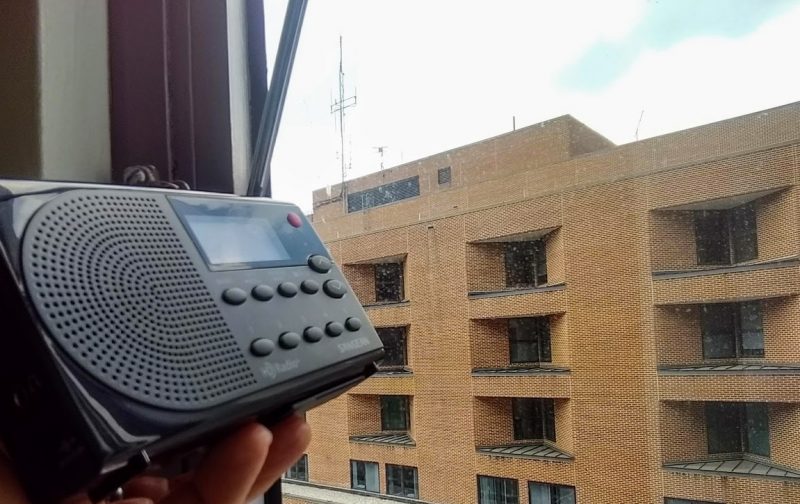
For the past week, I’ve been away from home spending time with my mother at the hospital while she recovers from a surgery. I’ve got a number of reviews and evaluations in the pipeline, but thankfully no shortwave or HF radios on the table this week (although the ELAD FDM-S3 and CommRadio CTX-10 are just around the corner). Listening to shortwave (or even mediumwave) in a hospital room can be an exercise in futility–there are just too many devices emitting noise and the buildings are built like bunkers with incredibly thick walls to attenuate signals.
I’ve had the little Sangean HDR-14 with me, however, and have been very pleased with its ability to snag FM stations both analog and digital. I’ve also had fun discovering a surprisingly diverse FM landscape in this metro area. I haven’t snagged an AM HD station yet, but my hope is one evening I might DX one (fingers crossed and not holding my breath).
The Sangean HDR-14 (left) and CC Skywave SSB (right)
At the end of most days, I’ve been able to catch a little shortwave action with my CC Skywave SSB (pre-production) portable at the guest house where I’m staying. The evenings have been surprisingly peaceful here with only the occasional popup thunderstorm to insert a little QRN in my listening sessions.
Review of Australian Broadcasting Services in the Asia Pacific – Terms of Reference
The Government is undertaking a review of Australian media services in the Asia Pacific, including the role of shortwave radio. The review is being conducted jointly by the Department of Communications and the Arts and the Department of Foreign Affairs and Trade.
Purpose
The objective of the review is to assess the reach of Australia’s media in the Asia Pacific region, including examining whether shortwave radio technology should be used.
Scope
The review will analyse the:
coverage and access of existing Australian media services in the Asia Pacific region; and
use and value of Australian shortwave technology in the Asia Pacific region.The review will cover:
all media distribution platforms (i.e. television, radio and online);
commercial, community and publicly funded services; and
different types of technologies such as analogue, digital and satellite radio and television services and online services.
Have your say
Interested stakeholders in Australia and overseas are encouraged to contribute to this review. Submissions on any aspect of the review should be uploaded to the review website by 3 August 2018.
Timeframe
The review is expected to report to the Government in 2018.
Background
In September 2017 the Government agreed to conduct a review of Asia Pacific Broadcasting Services as follows:
“The Department of Communications and the Arts and the Department of Foreign Affairs and Trade will conduct a review into the reach of Australian broadcasting services in the Asia Pacific region, including examining whether shortwave radio technology should be used. The review will include public consultation and the report of the review will be made public.”
Consultation Period:
June 04, 2018 09:00 AEST to August 03, 2018 17:00 AEST
The Australian Broadcasting Corporation ceased shortwave broadcasting in the Asia-Pacific region in January 2017 ahead of a transition to FM transmission.
The review is assessing the reach of Australia’s media in the Asia-Pacific region, including examining whether shortwave radio technology should be used.
All media distribution platforms – television, radio and online – are being examined including commercial, community and publicly funded services.
The review is also looking at different types of technologies such as analogue, digital and satellite radio and television services and online services.
Last month, we posted a link to an article that explained why traders might use shortwave radio for high-speed, faster-than-optical-fiber communications. The article by Bob Van Valzah originally appeared on the blog, Sniper in Mahwah & Friends where they’ve just posted part two in the series:
I have previously claimed that trading over shortwave radio is real and presented the story of the first evidence I found of it. It was pleasantly surprising to see the story picked up by IEEE Spectrum, Hacker News, Hackaday, and others. But since I hadn’t anticipated such a diverse audience, I didn’t provide details needed to understand shortwave trading in context so a lot of questions were raised. I’ll provide some background here, answer the questions, and also document two other shortwave trading sites I’ve found around Chicago. Traders can skip ahead while I fill in the broader audience.
Why is there a latency race? Isn’t it just a waste of money?
Electronic trading technologist just take the latency race for granted, but it’s important to think about why it exists and what it means to the average person. When you want to fill your car with gasoline, you have the choice of going to the nearby gas station and accepting their price or perhaps comparing prices at stations a little farther away. We would all spend a lot more time comparison shopping if we didn’t have pretty good confidence that the prices at our local stations were competitive. But what keeps those prices competitive?
The analogy between your local gas station and electronic markets is admittedly imperfect, but I think it is helpful in understanding why latency matters and how you benefit. Nobody can buy a tanker of gasoline in New York and immediately sell it in Chicago. The laws of physics prevent us from economically moving such a heavy load over a long distance quickly. But a share of Apple stock weighs nothing. The Chicago price and the New York price can be compared and changed in an instant. Well, about 4 milliseconds is how long it takes for an updated price to make the trip. Prices can make about 250 one-way trips in a single second.
So when buying or selling Apple shares, you don’t have to shop around for the best price. Electronic trading companies have an incentive to build the fastest networks linking financial centers so that prices can move quickly between them. Buyers and sellers benefit because their local market has electronic traders who know the best prices on other markets and will be happy to do a local deal at the best global price (it’s market making). It doesn’t take a rocket surgeon to see the business opportunity in this type of trading, so high-speed traders have to be efficient because they’re competing against each other. The latency race has to happen for each market to have the best price. Competition between electronic traders limits their spend to the benefits that come with better pricing.
Why does radio help win the latency race?
Traders use radio because it can move prices faster than optical fiber.
I won’t bore you with the physics, but I will remind you of this elementary school experiment where a pencil appears to bend in a glass of water. This happens because light moves more quickly through air than it does through water. In the same way, radio waves move more quickly through air than light can move through an optical fiber. In trading parlance, radio is lower latency than fiber over a given distance.
But radio is also faster because it almost always covers a shorter distance. Fiber paths tend to follow roads and property lines that may not go exactly in the desired direction. Radio towers may be inconvenient, but they give the advantage that the signal can take the shortest-possible path allowed by physics, not the kinky path dictated by rights of way.[…]
Many thanks to SWLing Post contributor, William Lee, who shares the following article from Radioinfo.com.au:
Radio Tomorrow with James Cridland
We believe that the days when all media will be distributed over the internet are not too far away.”
Those are the words of the BBC’s Chief Technology and Product Officer, the very nice Matthew Postgate, who made a long speech which the BBC has reproduced on its press site. Digital TV Europe excitedly reported it as the BBC predicting an all-IP future.
I tweeted this last week, and it was retweeted heavily, with a lot of radio people posting “I told you so!” and “I’ve been saying this for ages!”; and a few online radio companies jumped to self-promote themselves as part of the all-IP future.
Calm down, everyone.
First, as a former senior manager at the BBC, I’d start with the seemingly trite statement that whenever you hear “we” coming from a BBC manager in a speech, what they really mean is, firstly, “my department”, and secondly, in most cases, they also mean “television”. Indeed, there is no mention of radio in the section of Matthew’s speech which talks about an all-IP future.