Shortwave listening and everything radio including reviews, broadcasting, ham radio, field operation, DXing, maker kits, travel, emergency gear, events, and more
Canada’s public broadcaster, the CBC, is 80 years old
Modelled somewhat on the BBC, the Canadian Broadcasting Corporation came into being on November 2, 1936.
Surprisingly many of the issues that led to the creation of the CBC, are still around today.
In 1936, there were 74 radio stations across the country; three were CBC stations and four more were leased. All however were dwarfed by signals sweeping across the border into Canada from more powerful US stations. Concerns of US domination of Canadian airspace, is still a concern 80 years later.
The BBC’s first British television service launched 80 years ago today, on 2 November 1936. To mark the occasion our colleages at BBC History have launched a new website celebrating the landmark anniversary combining archive material from the early days of television.
The site is packed full of video and audio footage telling the story of television including its invention, the opening night at Alexandra Palace in 1936, TV closure during the war and its resurrection in 1946, as well as TV’s milestone moments such the Olympics and the Coronations of 1937 and 1953. We’ve selected some choice clips below to whet your appetite[…]
Unfortunately due to various geo restrictions the one hour long programme from BBC4 last night is not viewable on iPlayer (catch up TV) outside the UK, sorry about that.
Fantastic! Thank you Kris. I’ve really enjoyed viewing the archived footage on the BBC Blog.
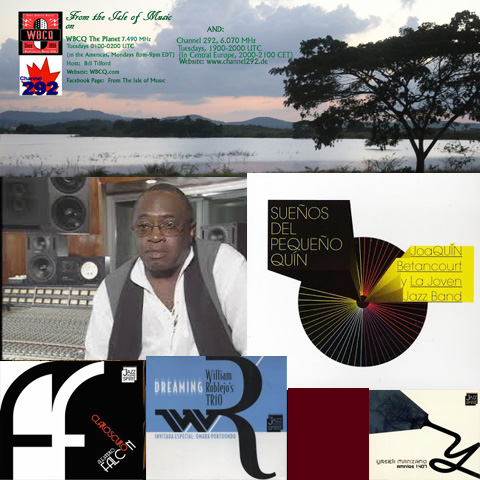
For the B16 season, our transmission on WBCQ moves to 0100-0200 UTC Tuesdays (which means 8-9pm EST Mondays in the Americas). On Channel 292, we stay at 1900-2000 UTC Tuesdays, which will now be 2000-2100 CET.
Next week:
JoJazz is the most important competition for young Jazz musicians in Cuba. This week, we will dedicate our entire program to it.
Our November 8 (November 7 in the Americas on WBCQ) program offers music from past JoJazz competitors and an interview with the Joaquin Betancourt, who directs and produces projects involving many of them.
NOTE OUR SCHEDULE FOR THE B-16 SEASON:
Two options for listening on shortwave:
WBCQ, 7490 KHz, Tuesdays 0100-0200 UTC
(8pm-9pm EDT Mondays in the Americas)
Channel 292, 6070 KHz, Tuesdays 1900-2000 UTC
(2000-2100 CET) (NOTE TIME CHANGE)
See the NOTES section of our Facebook page for more information
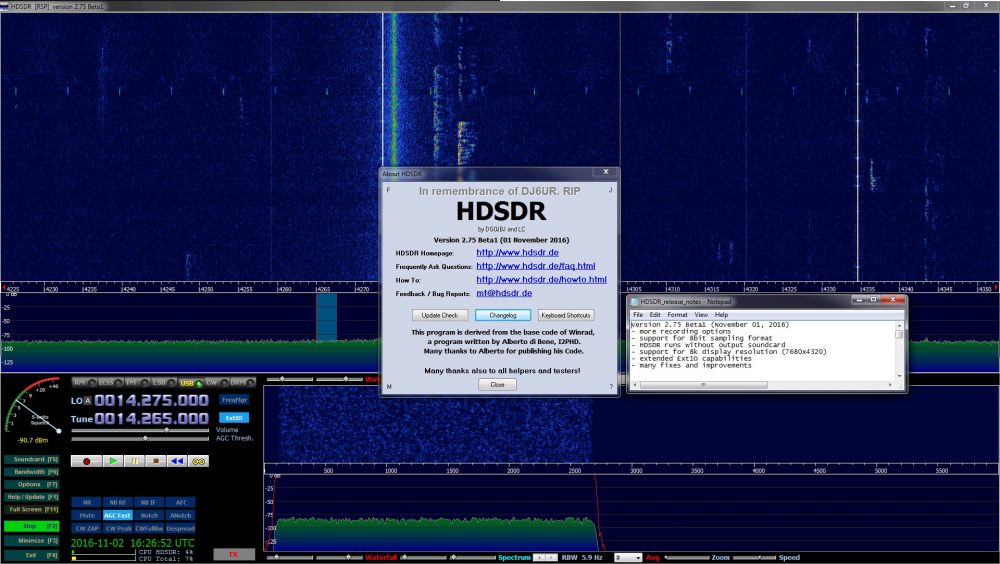
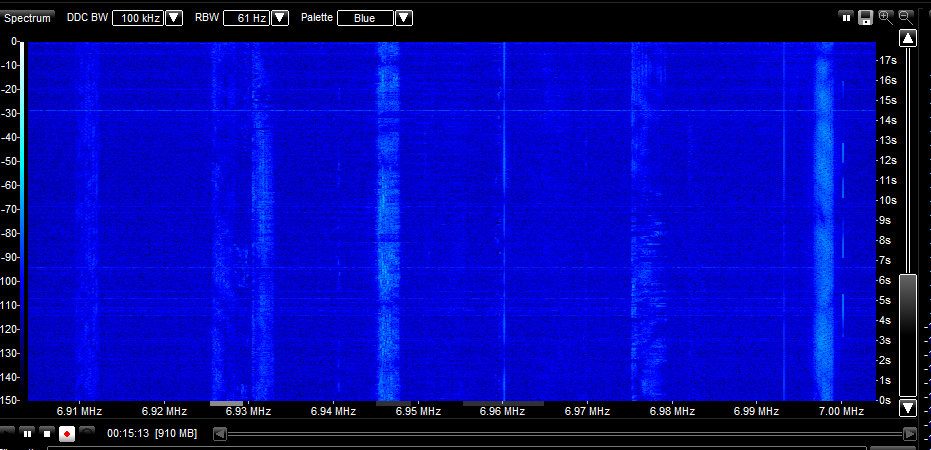
I had hoped this Halloween weekend would bring out a lot of shortwave pirates and it surely did! At one point Monday evening, I noted no less than five pirate radio stations broadcasting simultaneously between 6910 – 7000 kHz. You can see the four SSB and one AM signal in the spectrum display above.
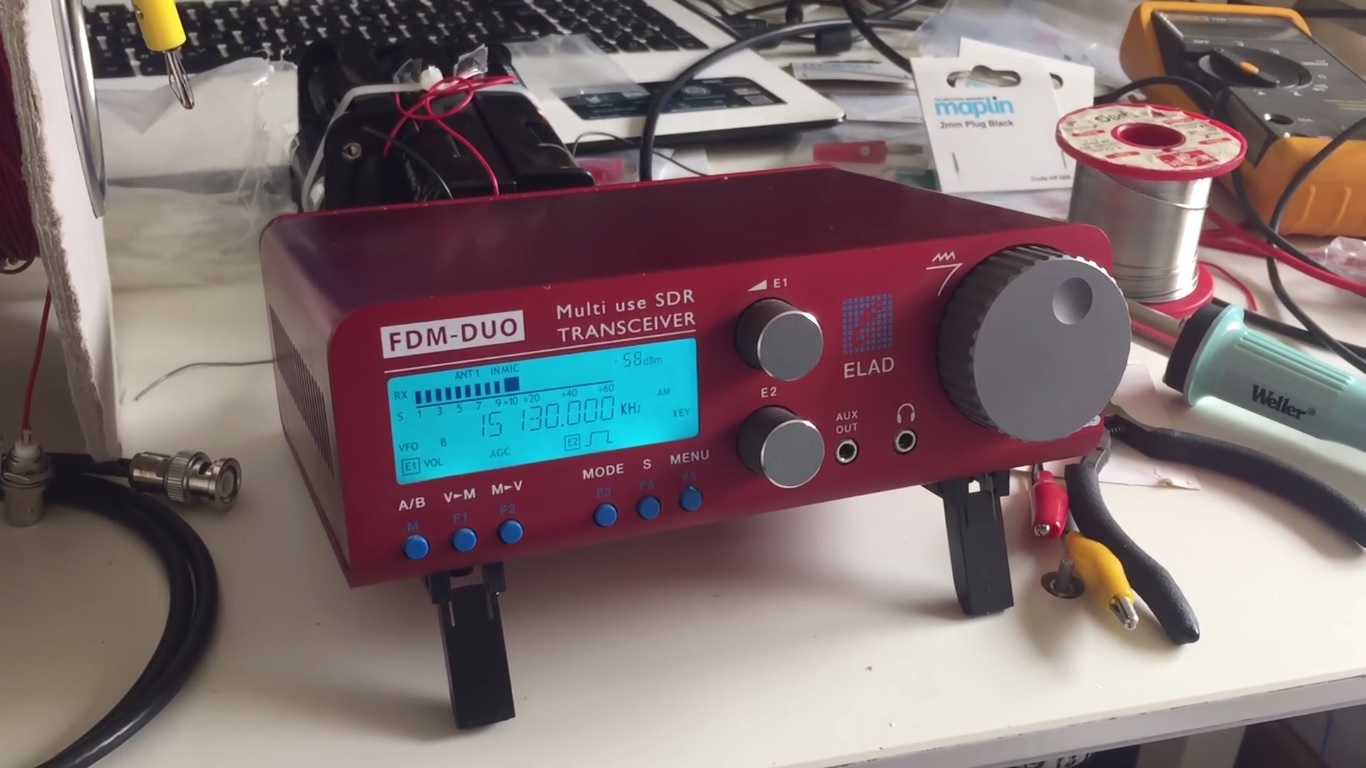
Hi there, further to my previous post regarding the initial testing of the Medium Wave Circle-design 200 metre Beverage antenna at the woods in Oxford, UK, I am pleased to share further reception videos for both the medium wave and shortwave bands. For medium wave, I operated the FDM DUO via a laptop and the FDN-SW2 software, recorded the entire band at the top of the hour and retrospectiively analysed the signals. For shortwave I utillised the FDM DUO as a standalone receiver, routing the audio via the excellent Bose Soundlink Mini 2 speaker.
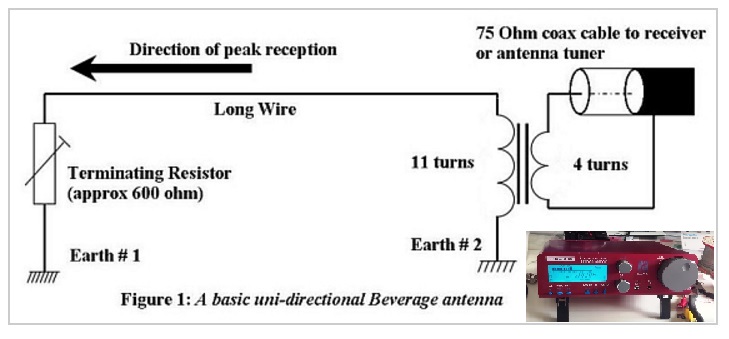
As a quick recap, the antenna was terminated at the ‘front end’ with a 650 Ohm resistor into a 1 metre-long, permanent copper earthing rod that I had previously driven into the ground, away from the route taken by the general public. The actual wire was orientated in a generally westerly direction, and thus nulling signals propagating from the east. At the receiver end, I utillised my self-built transformer, wound for a 50 Ohm input impedance (14 turns on the primary), thus making the entire set-up suitable for the Elad FDM DUO. It was quite a pain to set up, taking over an hour to deploy, however, the results were very promising. A scematic diagram follows below.
Links to the next group of reception videos follow:
The reception from VOCM St. Johns, Newfoundland & Labrador and WRCA Waltham, Massachusetts was unprecidented and another indication that the 200 metre Beverage configuration is demonstrating excellent SNR performance. Similarly, the reception of Radio Nacional Brazilia was an improvement on any signal I’d previously recorded with any receiver or antenna. Finally, the signal received from Radio Huanta 2000 – one of the more exotic stations on the Tropical Band and rarely heard in Europe – delivered discernible audio with this set-up, whereas previously I had only ever observed a carrier. All-in-all a very pleasing result, with more reception videos using this antenna set-up to follow in the coming weeks.
Right now I’m uploading SW and MW reception videos to my YouTube channel, recorded during my two week trip to Pará in Northern Brazil – it was really interesting to check out what can be heard on the radio in the middle of what is a very remote area of tropical rainforest. I hope you find the time to take a look. In the meantime, thank you for watching/ listening and I wish you all good DX.
Clint Gouveia is the author of this post and a regular contributor to the SWLing Post. Clint actively publishes videos of his shortwave radio excursions on his YouTube channel: Oxford Shortwave Log. Clint is based in Oxfordshire, England.