Tag Archives: Radio History

Don Moore’s Photo Album: Albania Part One

Many thanks to SWLing Post contributor, Don Moore–noted author, traveler, and DXer–for the latest installment of his Photo Album guest post series:

Don Moore’s Photo Album: Albania – Part One

Finding Radio Tirana

More of Don’s traveling DX stories can be found in his book Tales of a Vagabond DXer [SWLing Post affiliate link]. Don visited Albania in March 2024. 

Of all the places that I’ve been to but wouldn’t have imagined visiting forty years ago, Albania is definitely at the top of the list. Yet here I am wandering around in Tirana’s coolest and most trendy neighborhood. I walk by an Argentine steak house, several Italian trattorias, a Texas cowboy-themed hamburger restaurant, and several sports bars with huge TVs tuned to football games (or soccer if you prefer). Boutique hotels, fashionable clothing stores, and shiny office buildings complete the scene. It’s just another upscale neighborhood in the global village. And it’s in Albania.

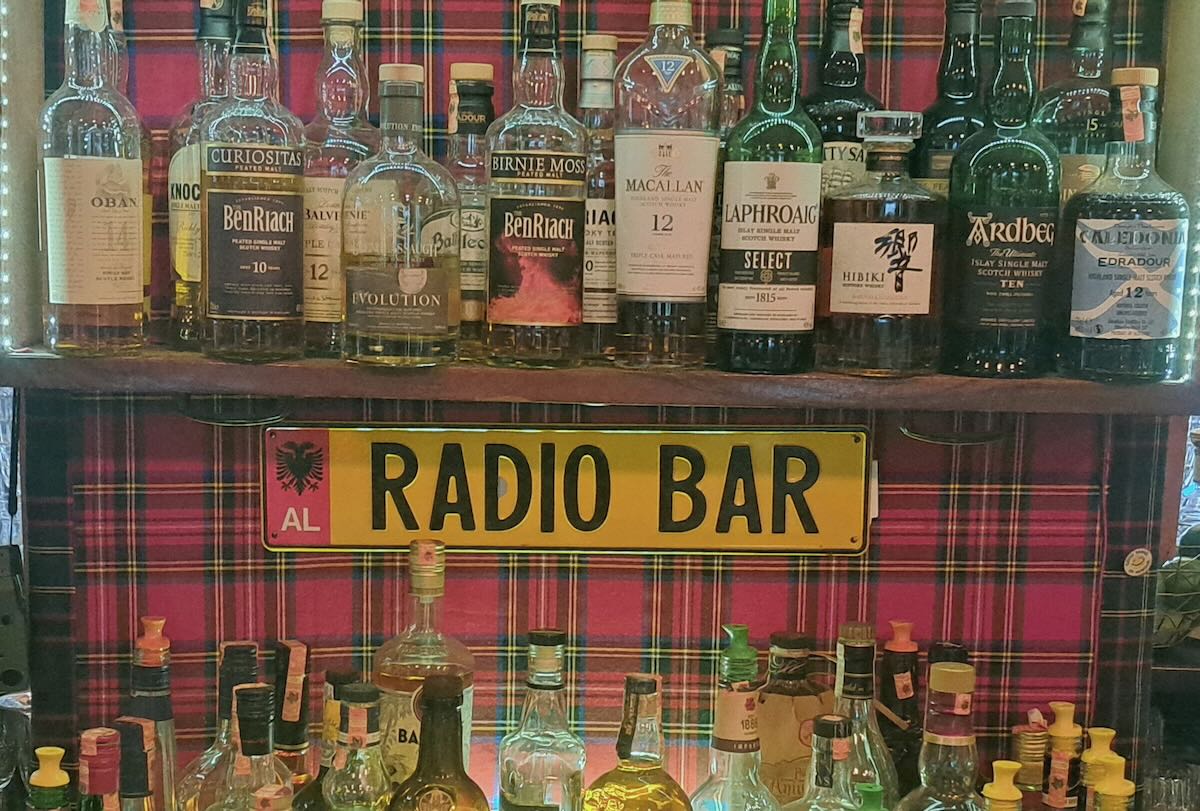
I hadn’t planned on getting an afternoon drink until the Radio Bar Tirana popped up on Google Maps. How could I not stop by a place with a name like that? The shelves behind the bar are filled with bottles of imported gin, whisky, tequila, and cognac, but I order a glass of raki, Albania’s version of the cheap firewater that every culture seems to have. It’s strong and burns my throat. No wonder Albanians have survived all that they have been through over the past six centuries. You have to be tough and resilient to drink this stuff. Or maybe it’s drinking raki that made Albanians tough and resilient.

The bar is staffed by two hipsters. I tell them about how decades ago (long before they were born) I used to listen to Radio Tirana on shortwave in the United States. They had never heard of Radio Tirana’s shortwave broadcasts and were amazed to know it was heard in the United States. I think they were also amazed that someone from outside Albania would have wanted to listen to the station during those terrible times. The bar, they explain, has nothing to do with any radio station but takes its name from the many old radios that line the walls. And it’s clear that I fit in better with the dusty wall décor than with the young bartenders or the chic patrons.

The back of the bar opens onto a large, covered patio filled with Albania’s version of smartly dressed young professionals. Late afternoon is the time to drink and to network. But the day is warm and sunny and no one wants to be inside. The main room is empty except for the bartenders and a man in the corner trying to work on his laptop despite the loud voices coming from the patio. I have the inside to myself so I wander around sipping raki, taking pictures of old radios, and remembering Radio Tirana.

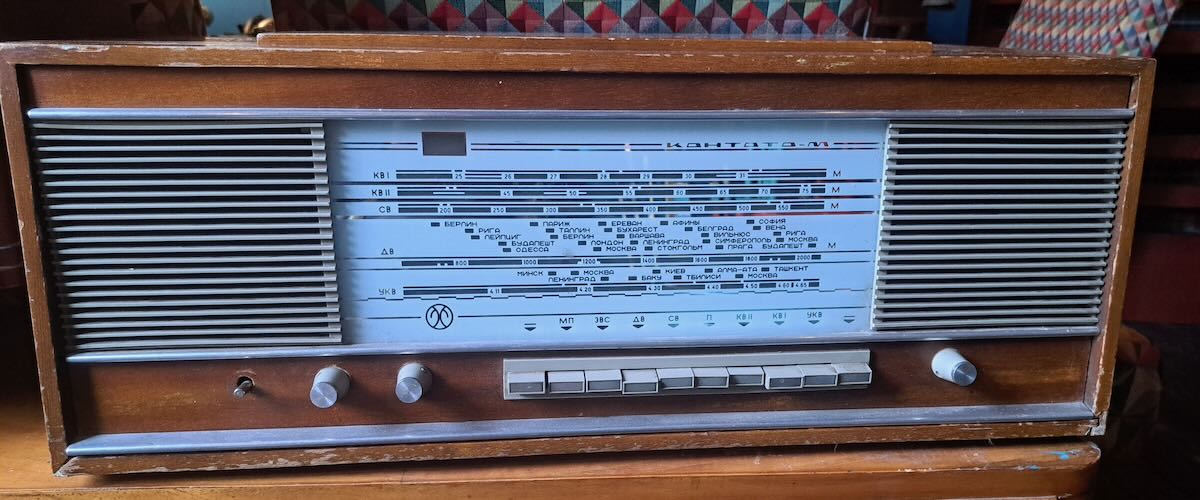
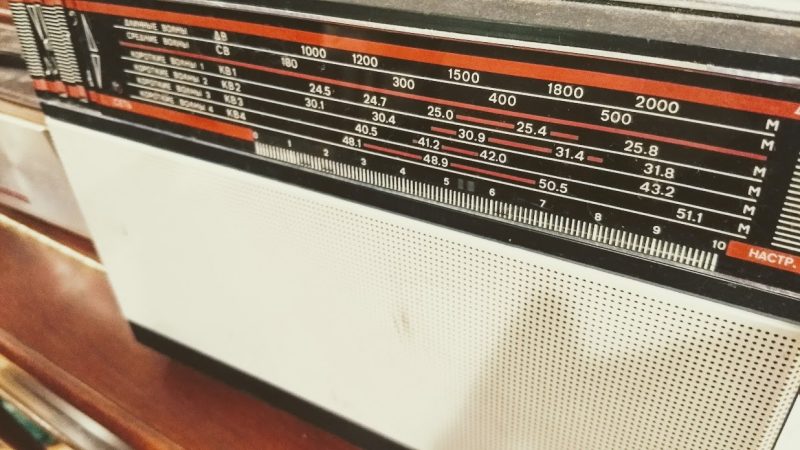
The Kantata M model radio was produced in Murom, Russia by the Murom RIP Works in the 1970s. 

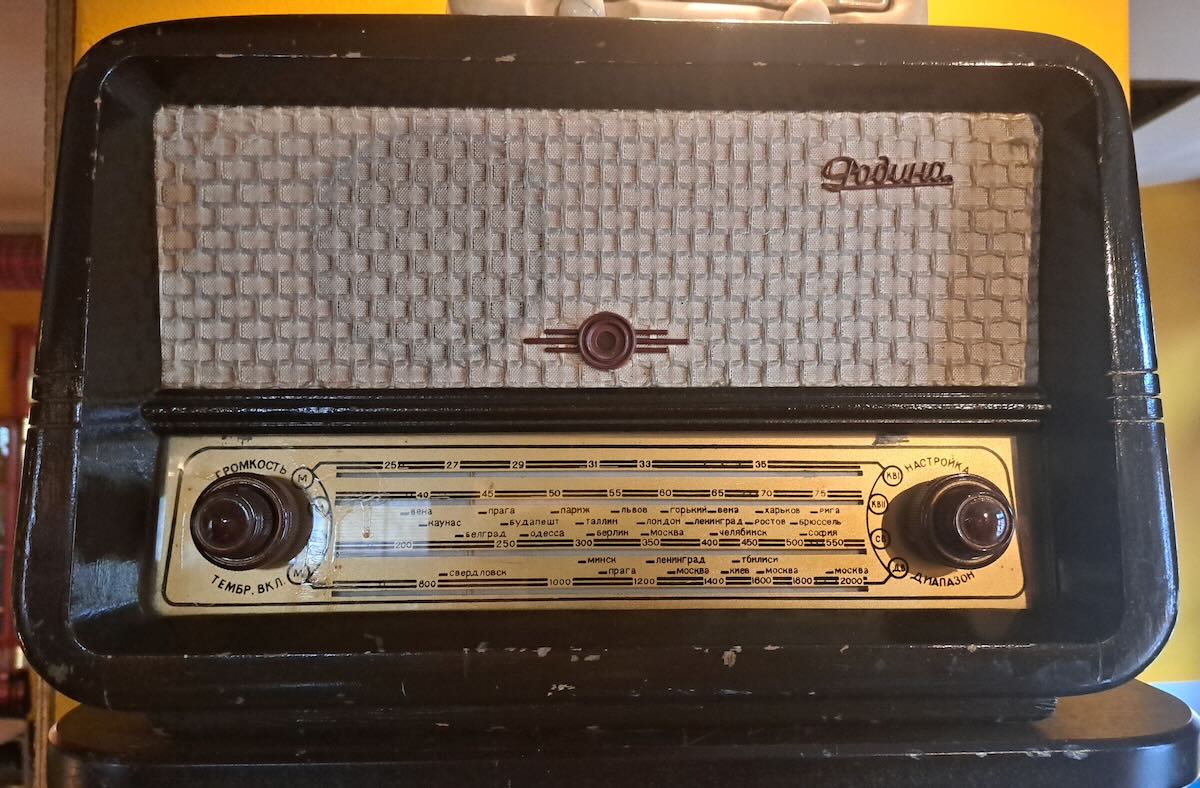
Rodina-52M receiver made in 1952 by the Voronezh Elektrosignal Radio company in Voronezh, Russia. Thank you to Anatoly Klepov and Wojtek Zaremba for their assistance in identifying these two Soviet-era receivers.

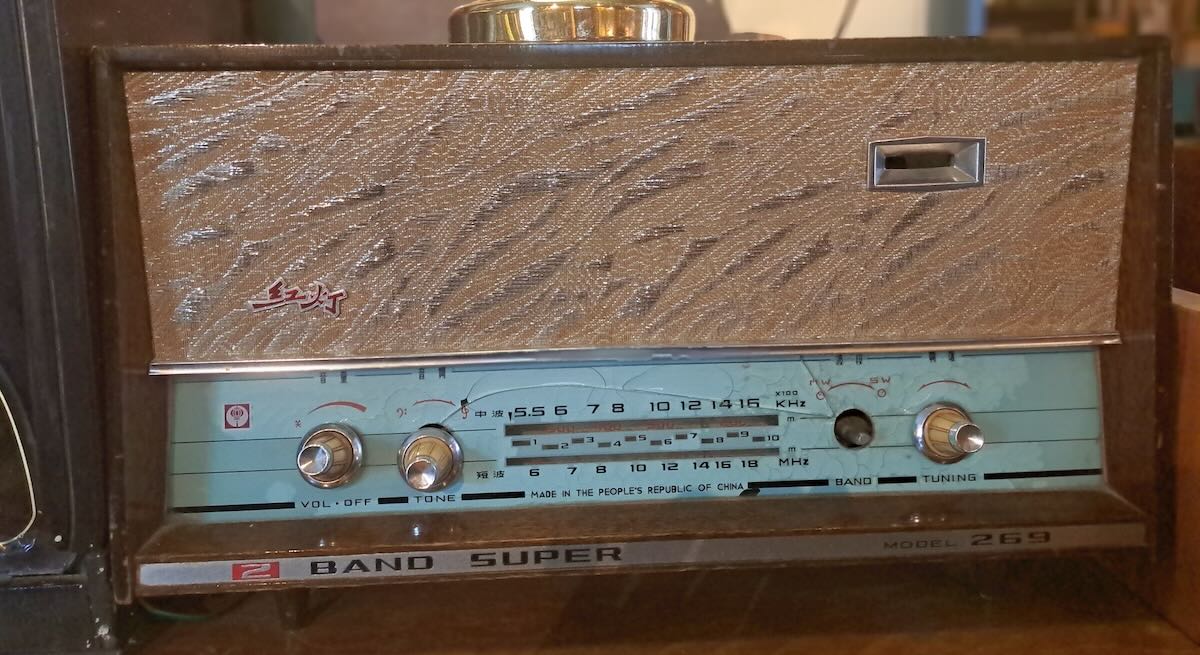
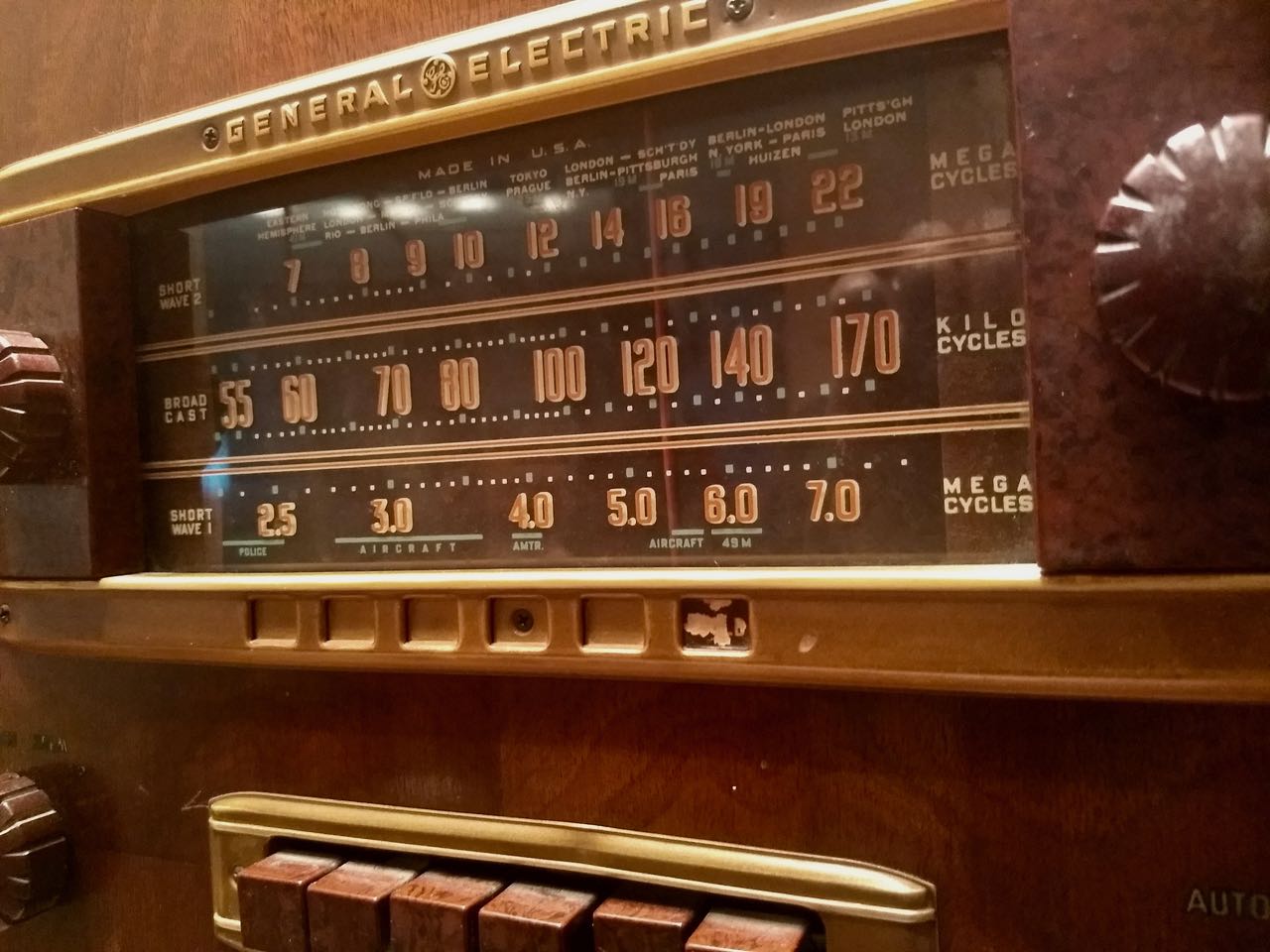
The Red Lantern Model 269 was made in Shanghai in the 1960s. It predates the General Electric Super Radio by at least fifteen years so the “2 Band Super” name was not a takeoff on the popular GE receiver.

History in a Nutshell

Yesterday, I had visited the vast National History Museum on Skanderbeg Square in the heart of Tirana. All the peoples of the Balkans had a golden age and for Albanians it was the mid-1400s. The Ottoman Empire was the strongest and most aggressive power in the region but George Skanderbeg and his successors held off the Turks for fifty years. The Turks eventually conquered Albania and much of the Balkans but the delay likely prevented them from taking even more of Europe including Italy.

The Ottomans would rule Albania for over four centuries and in that time most Albanians converted to Islam. It was the only Ottoman territory in Europe where that happened. But Albanians continued to remember Skanderbeg, the Catholic who had led the fight against the Muslim Turks, as their national hero. And they never took their Islam as seriously as most other places. That’s why they still drink alcoholic raki.

Over the centuries, the Albanians would periodically raise the double-headed eagle flag of Skanderbeg and rebel against Ottoman rule. And each time the rebellion would be brutally put down. But by the early 20th century the Ottoman Empire had been significantly weakened and Greece, Serbia, and Bulgaria had already won their freedom. In 1912 those countries went to war against the Ottomans to gain more land for themselves and as a side result Albania gained its independence. Then two years later World War I came and Albania and its neighbors were overrun by the Austro-Hungarian Empire.

When a war is over the victors usually divide the spoils and World War I was no different. Secret negotiations among the European powers included a plan to divide Albania between the new nation of Yugoslavia, Greece, and Italy. When the plans leaked out Albanians once again raised the double-headed eagle flag in defiance and this time received support from the United States. The Woodrow Wilson administration made sure that Albania would continue to exist with its pre-war borders intact.

Still, Albania’s bigger neighbors, especially Benito Mussolini’s Italy, continued to intervene in the country’s affairs. In 1928, at Mussolini’s urging, Prime Minister Ahmed Zogi declared Albania a monarchy and crowned himself as King Zog I. As the years passed King Zog came to realize that Mussolini’s plans for Albania were not friendly and he gradually distanced his government from the Italian ruler. The unmarried king also knew that his dynasty needed an heir. In April 1938, 42-year-old King Zog (a Muslim) married 23-year-old Countess Geraldine Apponyi de Nagy-Appony, a Catholic and daughter of a Hungarian nobleman and his American wife.

Meanwhile Albania was slowly entering the modern world and that included radio broadcasting. In 1937, a new radio-telephone station was installed outside of Tirana. The three-kilowatt shortwave transmitter was also used to broadcast several hours of programming per day, but it wasn’t a formal radio station. In the early 1930s several four-story Italian style villas had been built along Kont Urani Street, not far from Skanderbeg Square. In 1938, King Zog’s government confiscated one of the buildings, the Italian-Albanian Culture Center, and made it the first home of Radio Tirana. The new station was officially inaugurated by King Zog and Queen Geraldine in a live ceremony on 28 November 1938. A few months later, on 5 April 1939, the station had its first news scoop when it announced the birth of Crown Prince Leka to the world.

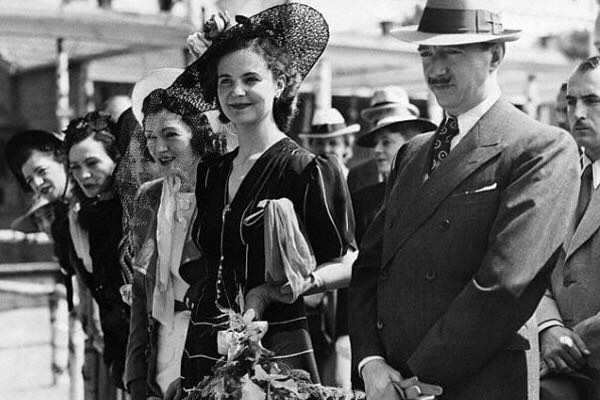
Queen Geraldine and King Zog at the 1938 inauguration of Radio Tirana.

The prince’s birth was good news for Albania, but it was a dark time in Europe. Just a few weeks earlier Adolf Hitler’s Nazi army had marched into Czechoslovakia without consequences. Not to be outdone by his German counterpart, on 7 April (two days after the prince’s birth), Mussolini invaded Albania. The Italian plans had been drawn up quickly and haphazardly and would likely have failed against a formidable opponent. But the handful of patrol boats in Albania’s navy could do nothing to stop the two battleships, six cruisers, nine destroyers, and numerous smaller ships that carried the invasion force across the Strait of Otranto. And Albania’s tiny poorly trained army was no match for the 100,000 troops that came ashore. In just a few days Albania had been overrun and King Zog and his family had fled to Greece (and eventually to England).

What happened over the next few years is a complex story. Mussolini’s goal was to turn Albania into an Italian client-state. The invaders set about to Italianize the country while also benefiting from its resources and workforce. As Radio Tirana was a key part of that process, the Italians modernized the studios, installed new antennas and transmitters throughout the country, and professionalized the programming. In order to not alienate the population, the station tried to maintain a balance between promoting Italian culture while also carrying Albanian culture and music.

Meanwhile, a resistance run by loyalists to King Zog fought back. They had some initial successes but soon the Italians quashed the movement by killing or capturing most of its leadership. They hadn’t made much effort to hide what they were doing. That should have ended the resistance but a new force, Albania’s tiny Communist Party, stepped in to fill the leadership vacuum. Unlike King Zog’s men, they already knew how to operate an underground movement. Gradually the Communists formed an effective guerilla force in Albania’s mountainous interior.

Italy’s surrender to the Allies in September 1943, should have been good news for Albania but the Nazis quickly sent in troops to take over and prevent the Allies from moving in. Their rule was more brutal than anything the Italians had done and that pushed more Albanians to join the resistance. By October 1944 the movement had grown to the point that its leaders had the confidence to launch an all-out attack on Tirana. For three weeks fighting raged back-and-forth in the city streets until on 17 November the last German troops withdrew under the cover of darkness. Tirana was once again ruled by Albanians and one of the leaders was a man named Enver Hoxha.

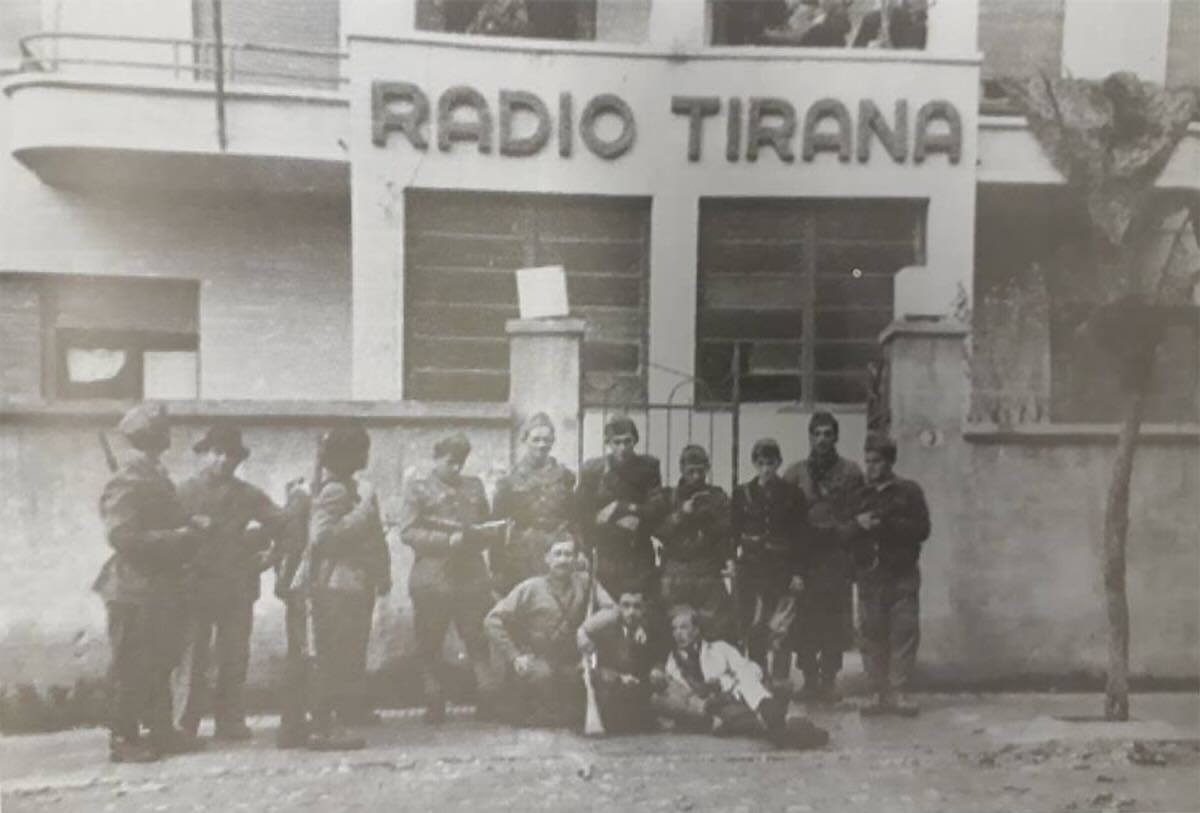
Albanian partisans in front of Radio Tirana after liberating the city. Tirana was the only European capital freed by its own partisan forces without any help from Allied armies.

Enver’s Place

My glass of raki is empty and I have all the pictures I want. I hand a generous tip to one of the bartenders. He was kind enough to move some bottles so I could get a clear picture of the “Radio Bar” sign. I continue up the street in the direction I had been heading and a block later come to my next destination, the house where Enver Hoxha lived while he ruled Albania.

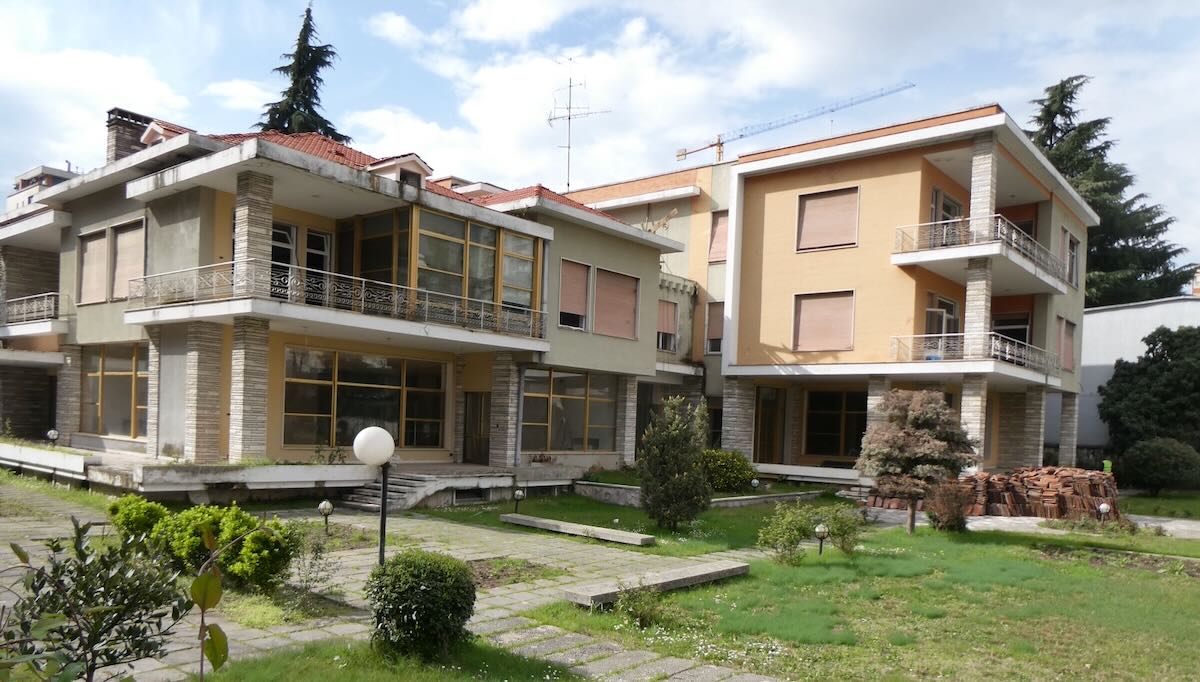
The house doesn’t look at all like the sort of place a national ruler would live, let alone one who ruled with a deadly iron fist. It’s more like the kind of Frank Lloyd Wright inspired house that might be found in an upscale American suburb. Next door is the Abraham Lincoln Center, a school that teaches American English to Albanians. It’s a good thing, I think, that Enver Hoxha is dead. Enver hated the United States and he would never have been happy with these neighbors.

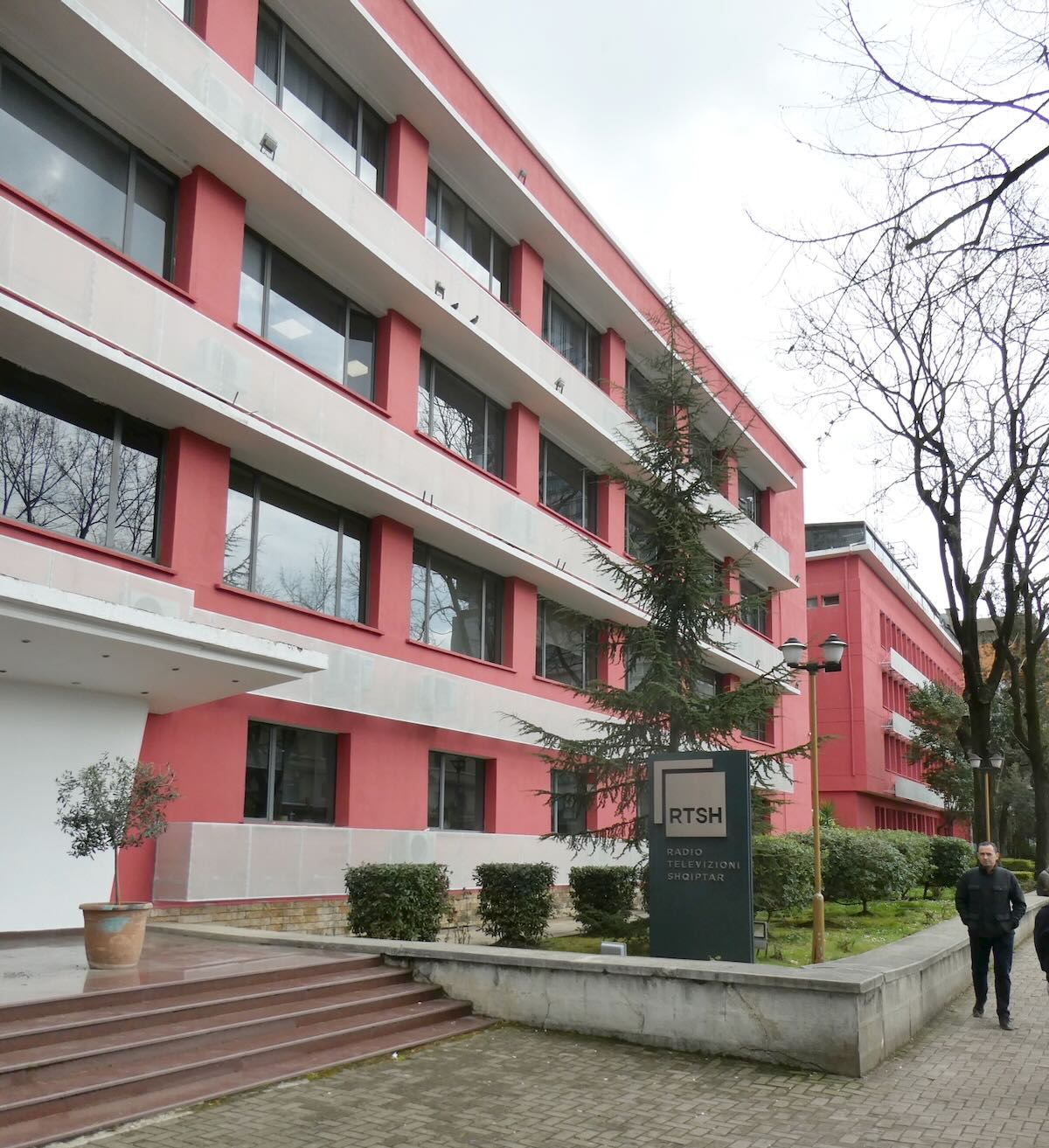
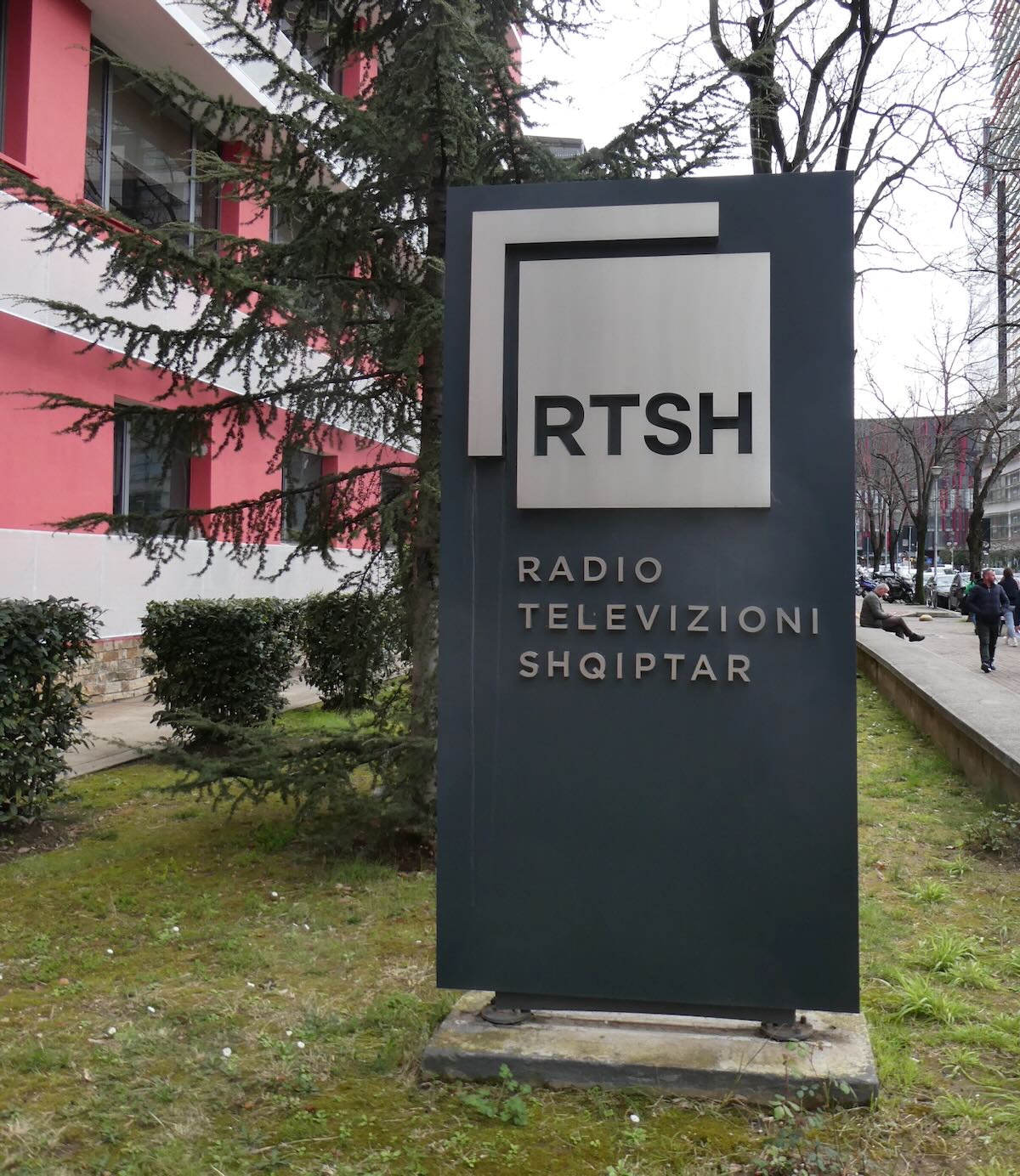
Unfortunately, the house is not open for tours so all I can do is stand outside and take pictures. As I look at the house I think back again to Radio Tirana. I hadn’t planned to visit any radio stations on this trip but the raki is still having its effect on me. Just for fun, I open up Google Maps and type in Radio Tirana. Surprisingly, I get a result and it’s only two blocks further down the same street. But the huge Radio Televizioni Shqiptar building on the corner with Rue Ismail Quemal turns out not to be the Radio Tirana building I had seen in the old picture in the national museum.

Inside, two young women are working at the reception desk and one speaks excellent English. I explain how I used to listen to Radio Tirana on shortwave. Unlike the bartenders, she knows all about it even though she is clearly in her early 20s. She says that in those days Radio Tirana would have been broadcasting from the old building near Skanderbeg Square. I’m about to leave but then I turn around. “Does that old building still exist? I would really like to see it if it does.” Continue reading

Radio Waves: Who Will Pay, Ham Radio Culture, OTH Support, CarnationFM, Night of Nights, and 100 Years of Radio

Radio Waves:  Stories Making Waves in the World of Radio

Welcome to the SWLing Post’s Radio Waves, a collection of links to interesting stories making waves in the world of radio. Enjoy!

Many thanks to SWLing Post contributors Richard Cuff, Dennis Dura,
David Korchin, Roger Fitzharris, David Iurescia, and NT for the following tips:


In 1924, a magazine ran a contest: “Who is to pay for broadcasting and how?” A century later, we’re still asking the same question (NiemanLab)

Radio Broadcast received close to a thousand entries to its contest — but ultimately rejected them all.

After yet another day reading about audio industry layoffs and show cancellations, or listening to podcasts about layoffs and show cancellations, I sometimes wonder, “With all this great audio being given away for free, who did we think was supposed to pay for it all?”

I find some consolation in the fact that that question is more than a century old. In the spring of 1924, Radio Broadcast posed it in a contest called “Who is to Pay for Broadcasting and How?”The monthly trade magazine offered a prize of $500 (more than $9,000 in today’s dollars) for “a workable plan which shall take into account the problems in present radio broadcasting and propose a practical solution.”

The need for such a contest more than 100 years ago is revealing enough, but the reaction of the judges to the prize-winning plan turned out to be even more so — and it says a lot about why business models for audio production and broadcast remain a struggle. [Continue reading…]

The Rich History of Ham Radio Culture (The MIT Press Reader)

Drawing on a wealth of personal accounts found in magazines, newsletters, and trade journals, historian Kristen Haring provides an inside look at ham radio culture and its impact on hobbyists’ lives.

Every night thousands of men retreat to radio stations elaborately outfitted in suburban basements or tucked into closets of city apartments to talk to local friends or to strangers on the other side of the world. They communicate by speaking into a microphone, tapping out Morse code on a telegraph key, or typing at the keyboard of a teletypewriter. In the Internet age, instantaneous, long-distance, person-to-person communication seems ordinary. But amateur radio operators have been completing such contacts since the 1910s. The hobbyists often called “hams” initially turned to radio for technical challenges and thrills. As the original form of wireless technology became more reliable and commonplace in the 1930s, ham radio continued as a leisure activity. Hams formed a community through the same general practices of other social groups. They set conditions for membership, established rules of conduct, taught values, and developed a specialized vocabulary known only to insiders. What made hams’ culture different was its basis in technology. In her book “Ham Radio’s Technical Culture,” excerpted below, historian of science and technology Kristen Haring draws on a wealth of personal accounts found in radio magazines and newsletters and from technical manuals, trade journals, and government documents to illustrate how ham radio culture rippled through hobbyists’ lives. [Continue reading…]

CarnationFM: A Decentralized Radio Playing Songs With Encrypted Hidden Messages (Coin Desk)

CarnationFM emerged from EthBerlin 2024 and won the award for Best Social Impact.

Berlin, Germany: A music-focused radio FM which allows songs to act as a transport vessel for hidden messages has emerged from EthBerlin 2024. CarnationFM was created by five hackers and a mentor as a defensive, decentralized and encrypted communication tool enabling private messaging that safeguards anonymity.

The project, which won the award for the Best Social Impact at EthBerlin 2024, is focused on creating real world use cases factoring in privacy in the aftermath of the Alexey Perstev verdict. Alexey Perstev, one of the co-founders of Tornado Cash, was sentenced to 64 months in prison in May.

The verdict rattled the decentralized community because it suggested that a coder could be held responsible for everything that happens using that code. Perstev was found guilty because his open-source mixer Tornado cash allowed North Korea’s infamous Lazarus group to launder millions in crypto. [Continue reading…]

Nation’s last Morse code station comes back to life on annual ‘Night of Nights’ in Point Reyes (The Mercury News)

KPH, established in Point Reyes and Bolinas in 1913, will exchange messages with Morse code enthusiasts around the world

On July 12, 1999, the nation’s final message in Morse code was sent out to sea from a remote Bay Area radio station. The end of an era, the room’s mood was mournful. Grizzled old men wept.

“We wish you fair winds and following seas,” it said, offering a seafarers’ traditional farewell in a staccato stream of dots and dashes. And then the station went silent.

But every July 12, the golden age of maritime radio comes back to life. [Continue reading…]

Navy researchers ask Envisioneering to support over-the-horizon radar that relies on HF radio signals (Military Aerospace Electronics)

Over-the-horizon radar typically uses HF radio signals at frequencies between 2 and 30 MHz to reach beyond the horizon in open-ocean areas.

WASHINGTON – U.S. Navy researchers needed to help develop a new prototype High Frequency (HF) over the horizon (OTH) radar system. They found a solution from Envisioneering Inc. in Alexandria, Va.

Officials of the Naval Research Laboratory (NRL) in Washington announced a $45.4 million contract to Envisioneering Inc. on Monday for design, development and integration of a mobile over-the-horizon radar (MOTHR).

Over-the-horizon radar typically uses HF radio signals at frequencies between 2 and 30 MHz to reach beyond the horizon in open-ocean areas. HF signals bounce off the ionosphere to achieve long distances and operate beyond the curvature of the Earth.

Envisioneering will work alongside the NRL research team to support key areas such as refinement of system requirements; system and subsystem design; mechanical analysis; specifying and procuring long-lead items; integration; testing; and signal processing. [Continue reading…]

100 Years of 100 Things: Radio (WNYC)

Continuing our centennial series 100 Years of 100 Things, Matthew Barton, curator of recorded sound at the Library of Congress, walks us through the history of radio.

100 Years of 100 Things is part of WNYC’s centennial celebration. Each week, we’ll take listeners through a century’s worth of history of things that shape our politics, our lives and our world. Topics will include everything from immigration policy to political conventions, American capitalism to American socialism, the Jersey Shore to the Catskills, baseball to ice cream.

Click hee to listen via WNYC.


Do you enjoy the SWLing Post?

Please consider supporting us via Patreon or our Coffee Fund!

Your support makes articles like this one possible. Thank you!

Why Schenectady?

Many thanks to SWLing Post contributor, Bill Meara who writes:

Thomas:

SWLing Post readers might like this one.

Ramakrishnan sent me the Smithsonian article. It is very nice, and helps answer — I think — the question about why so many old SW radio dials have “Schenectady” on them. Steinmetz seems like a great guy.

https://soldersmoke.blogspot.com/2024/03/the-wizard-of-schenectady-charles.html

73 Bill

I love these bits of radio history, Bill! Thank you for sharing.

“100 years of radio in South Africa – and still going strong”

Many thanks to SWLing Post contributor, John Green (ZS1JHG), who shares the following article from Tech Central:

100 years of radio in South Africa – and still going strong

Radio in South Africa turns 100 years old today. But advances in technology mean the medium is not standing still.

Today – Monday, 18 December 2023 – marks 100 years since radio was introduced in South Africa, with the first experimental broadcast going out from Railway Headquarters in Johannesburg on 18 December 1923.

Radio broadcasting began under the auspices of South African Railways, followed by the licensing of three more services: the Association of Scientific and Technical Societies in Johannesburg, the Cape Peninsular Publicity Association in Cape Town and the Durban Corporation, which began broadcasting in 1924.

These merged into the African Broadcasting Company in 1927, owned by a wealthy businessman, IW Schlesinger, but on 1 August 1936, they were sold to the SABC, established that year through an act of parliament.

The SABC took over the African Broadcasting Company’s staff and assets and maintained a state monopoly on radio until the launch in December 1979 of Capital Radio 604, and then Radio 702 in 1980.

In most of the world, reliance on the radio for communication came to an end in the 1950s and early 1960s with the advent of television – but in South Africa, where television broadcasting was not adopted until 1976 because the Nationalist government of the time considered it a threat to Afrikaner culture, reliance on radio lasted nearly two decades longer. This meant that South African programming could take advantage of the newest technological and production advances.

SABC stations included the English and Afrikaans language channels – eventually becoming SAfm and Radio Sonder Grense (RSG), respectively. Programming included news, plays and British content, and in 1950, the SABC launched Springbok Radio as a commercial, for-profit but still state-owned service. [Continue reading…]

Back When You Had to Pay: Radio Receiving Licences in Canada

Many thanks to SWLing Post and SRAA contributor, Dan Greenall, who shares the following guest post:


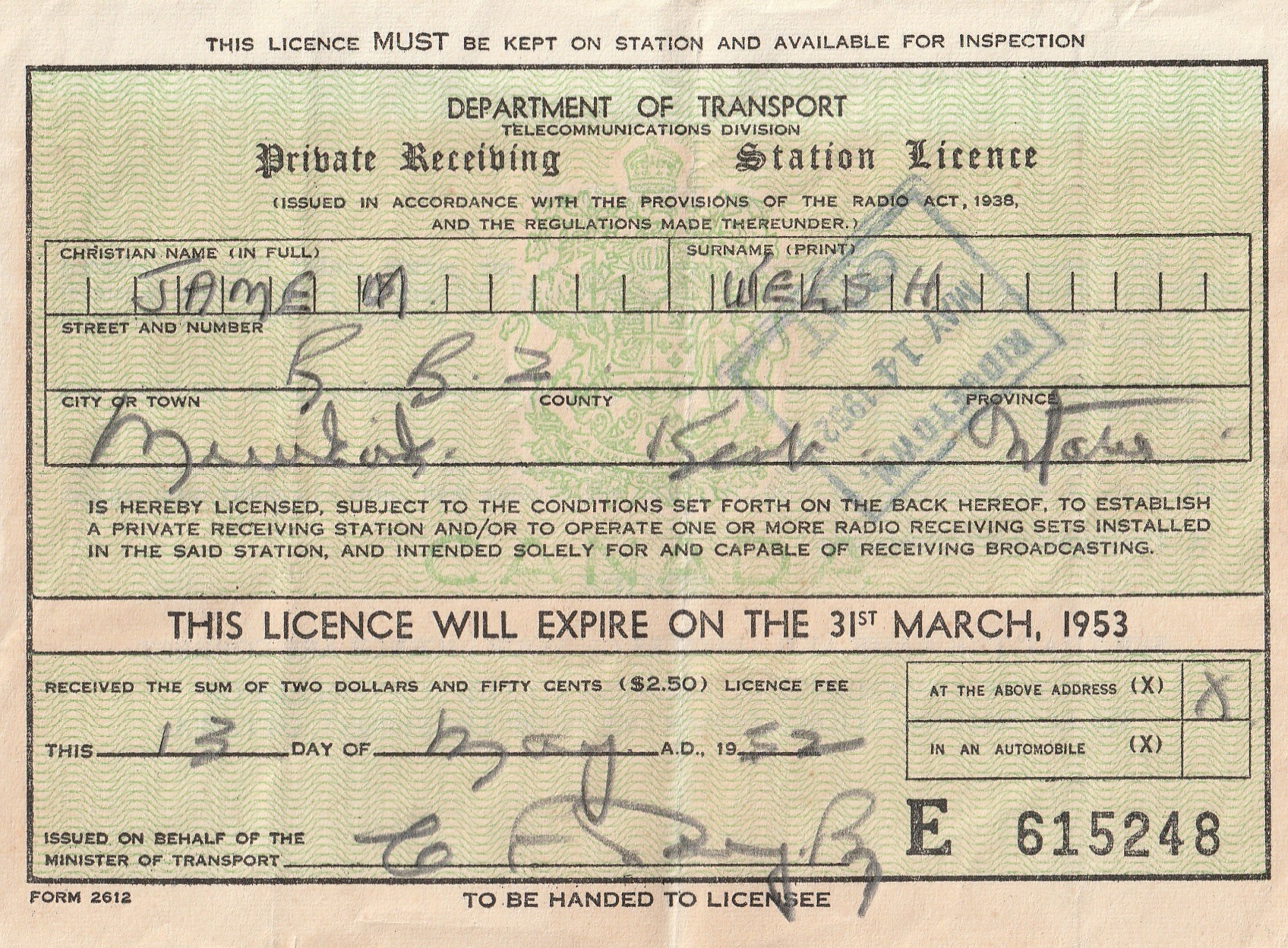
THE DAY YOU HAD TO PAY: Radio Receiving Licences in Canada

by Dan Greenall

MANY of us who are licensed [Canadian] amateurs can appreciate the fact that we are no longer subject to an annual licence renewal fee. As of April 1, 2000, that practice was discontinued by Industry Canada as a new streamlined authorization procedure was put in place for the amateur radio service. This came as a pleasant surprise to many who were paying $24 per annum per licence up until that point.

What many of us may not realize is that, prior to 1953, Canada had a licensing system in place for your radio receiver. Under the Radiotelegraph Act of 1913, a government minister (for most of this period, the Minister of Marine and Fisheries) had the power to license radio broadcasting stations and to charge a $1 licence fee on each receiving set. By 1929 three hundred thousand licenses were bought at $1.00 each.

An article appearing on the Friends of Canadian Broad- casting website a few years ago stated that the annual licence fee for receiving sets doubled to $2.00 in 1930. It was also noted that this was a lot of money during the Depression days that followed and two bucks could buy more than 40 loaves of bread. As a result, so the story goes, “harassed citizens” would try to outwit approaching government collectors by passing word along in time for their neighbours to shut off their radios and lock their doors.

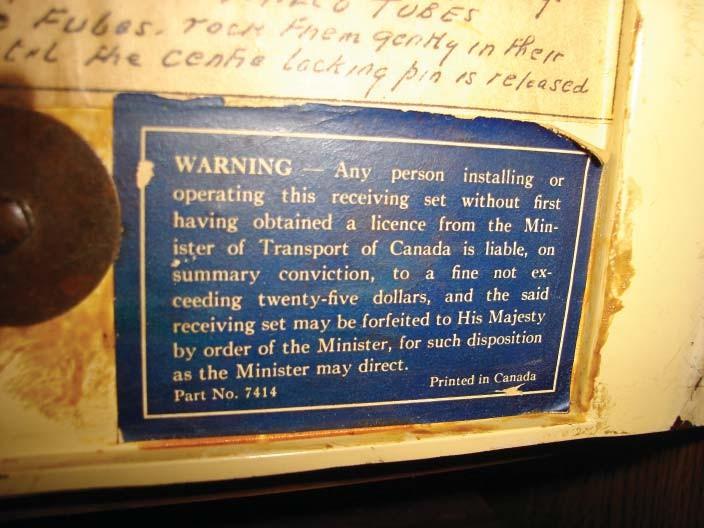
During much of this period, radios that were made in Canada bore a “Warning” sticker such as the one in the accompanying photo. It stated that anyone convicted of operating the receiving set without first having obtained the proper licence could be liable to be fined for up to $25 and have their equipment confiscated. As noted in the book Radios of Canada by Lloyd Swackhammer, the penalty in 1924 was $50.

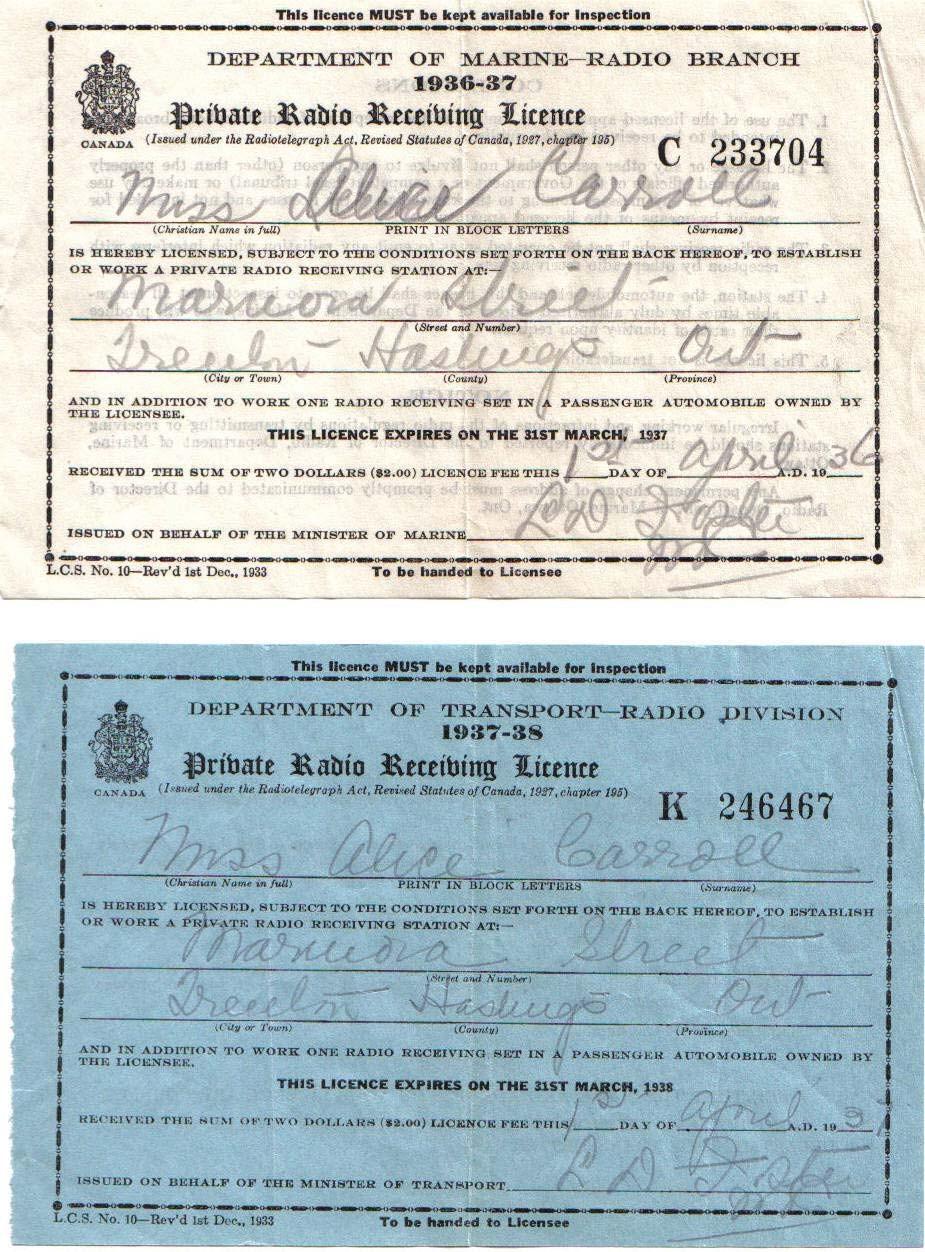
As you can see from the attached copies, such licences were being issued by the Department of Marine Radio Branch in 1936. In 1937, it was the responsibility of the Department of Transport – Radio Division.

Then in 1938, the DOT upped the fee to $2.50. It was another 15 years until this practice was finally abandoned.

So the next time you sit back and flip on the switch of your receiver, you might now have a greater appreciation of a privilege that most of us now take for granted.

Radio Waves: WWFD All Digital, End of CBC Long Dash, HD Aviation Interference, NC Broadcast History Museum Plans, and Ukrainian Radio Resistant to Jamming

Radio Waves:  Stories Making Waves in the World of Radio

Welcome to the SWLing Post’s Radio Waves, a collection of links to interesting stories making waves in the world of radio. Enjoy!

Many thanks to SWLing Post contributors Dennis Dura, Mark Koskinen, Stuart Smolkin, and Ron Chester for the following tips:


AM Digital WWFD Concludes Its Test Phase (Radio World)

The Hubbard station now is a full-time, all-digital operation

WWFD in Frederick, Md., has concluded the experimental phase of its MA3 HD Radio operation. It has notified the FCC that after five years, it will now continue to operate as a full-time all-digital AM station as is allowed under commission rules.

Dave Kolesar at a meeting of SBE Chapter 37 in Wheaton, Md.
The Hubbard-owned facility was the first AM station in the United States to convert to the MA3 mode, doing so under experimental authority in 2018.

Dave Kolesar, the engineer and program director who spearheaded the initiative and has given numerous presentations at engineering conferences about it, tells me that Hubbard recently asked the FCC to conclude the special temporary authority. [Continue reading…]

The end of the long dash: CBC stops broadcasting official time signal (CBC)

Segment connected Canadians, kept the country on time for over 80 years

The beginning of the long dash indicates exactly 1 o’clock eastern standard time.

For more than 80 years the beeps and tones of the National Research Council (NRC) time signal have connected Canadians at exactly 1 p.m. ET.

But as of Monday, CBC Radio One audiences won’t be listening for the beginning of the long dash — they’ll have listened to the end of it.

Variations of the daily message and the “pips” that sound along with it have played over CBC’s airwaves since Nov. 5, 1939 — forming a link that connects Canadians from coast to coast to coast.

CBC and Radio-Canada have announced they’ll no longer carry the National Research Council (NRC) time signal.

Monday marked the last time it was broadcast, ending the longest running segment on CBC Radio.  [Continue reading and listen to the report on the CBC...]

Xperi Discussing HD Radio Power Boost Proposal With Aviation Groups (Radio World)

The Aerospace Industry Association and the Air Line Pilots Association International have voiced interference concerns

Several aviation groups have recently expressed concern about the potential for interference on navigation systems if a proposal to increase power for digital FM stations in the United States is adopted. Now, HD Radio developer Xperi said it is working to address those concerns.

In comments filed with the FCC (MB Docket 22-405), the Aerospace Industries Association (AIA) and the Air Line Pilots Association International (ALPA) raised the possibility of interference between HD Radio stations at 107.9 MHz and the adjacent Aeronautical Radio Navigation Service (ARNS) band operating from 108.0 – 117.975 MHz.

The ARNS band is occupied by safety critical navigation and landing systems essential for safety of flight, according to the groups. They include Instrument Flight Rules (IFR) needed for landing during low visibility conditions at night and during inclement weather. [Continue reading…]

State Broadcast Leaders Announce Plans for Broadcast History Museum in North Carolina (Beasley Media)

State broadcast leaders have unveiled details of a North Carolina Broadcast History Museum. Details were announced during a press conference that took place on Friday, October 13th at the Governor’s Mansion in Raleigh, NC.

The museum initiative is a 501(c) 3 non-profit corporation dedicated to preserving North Carolina’s broadcasting legacy.

North Carolina has a rich broadcast history, dating back to March 1902, when radio pioneer Reginald Fessenden transmitted a 127-word voice message from his Cape Hatteras transmitter tower to Roanoke Island. Then fast forward to July 23, 1996, when WRAL-TV became the first television station in the United States to broadcast a digital television signal. The state has been and continues to be a wealth of pioneers and innovators in industry.

North Carolina has been and continues to be a wealth of pioneers and innovators in industry. The State has numerous famous broadcast personalities, including Andy Griffith (born in Mount Airy), Charles Kuralt and David Brinkley (both from Wilmington), National Sportscaster Jim Nantz (from Charlotte), and National Public Radio Newscaster Carl Kasell (from Goldsboro).

The Museum is seeking assistance from the public and people who worked in broadcasting to collect artifacts, documents, photographs and recordings that chronicle the history of prominent radio and television stations, broadcasters, programs and events. Through exhibits and collections, the Museum seeks to highlight the contributions made by North Carolina Broadcasters in shaping the industry and the state’s culture landscape.

The Museum is guided by a distinguished group of broadcast professionals that include Caroline Beasley, CEO, Beasley Media Group; Don Curtis, CEO, Curtis Media Group; Jim Goodmon, CEO, Capitol Broadcasting Co.; Wade Hargrove, media lawyer; Harold Ballard, Broadcast Engineer; Carl Venters, Jr., Broadcast Executive; David Crabtree, CEO, North

Carolina Public Media, Dr James Carson, Broadcast Executive; Jim Babb, Broadcast Executive, Cullie Tarleton, Broadcast Executive, and former member of the NC House of Representatives; Dave Lingafelt, Broadcast Executive, Carl Davis, Jr., Broadcast Engineer, Jim Heavner,

Broadcast Executive, and Mike Weeks, Broadcast Executive.

The North Carolina Broadcast History Museum web site will serve as a digital repository accessible by the public that will grow in content and importance as items are gathered and

displayed. The museum web site is under construction and currently available online at www.NCBMuseum.com. Future plans include a brick-and-mortar facility for education, inspiration and enjoyment.

For more information, please contact Michael Weeks, North Carolina Broadcast History Museum Board Trustees Chairman, at [email protected] or call 252-721-0470.

Ukraine claims to have invented a new radio that’s immune to Russian jamming (Business Insider)

Ukrainian Deputy Prime Minister Mykhailo Fedorov announced on Tuesday the launch of radio technology that “cannot” be blocked by Russian jamming.

Fedorov, who also serves as Ukraine’s Minister for Digital Transformation, wrote on Telegram that the Himera radio is “a unique technology that works despite enemy electronic warfare,” according to Ukrainska Pravda’s translation.

“The Russians cannot block the radio’s signals or decrypt it,” he said, adding: “The radio can also be integrated into a situational awareness system or used as a GPS tracker to search for and evacuate soldiers.”

Russia’s electronic warfare capabilities have long proved a thorn in Ukraine’s side, as Michael Peck previously reported for Insider.

Russia has managed to achieve “real time interception and decryption” of the Motorola walkie-talkie systems in widespread use by Ukraine, according to a May report by the Royal United Services Institute. [Continue reading…]


Do you enjoy the SWLing Post?

Please consider supporting us via Patreon or our Coffee Fund!

Your support makes articles like this one possible. Thank you!