Shortwave listening and everything radio including reviews, broadcasting, ham radio, field operation, DXing, maker kits, travel, emergency gear, events, and more
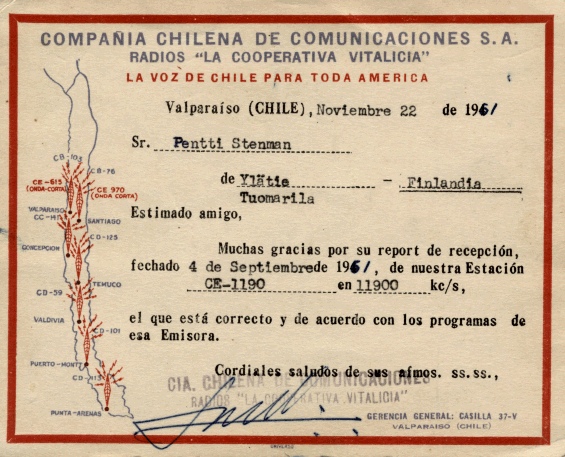
Pentti’s collection is impressive indeed! Since he’s in Finland, some of his site is in Finnish, but it’s still quite easy to navigate and you can have Google translate it into any language.
I have pasted direct links below to Pentti’s various galleries.
Many thanks to SWLing Post contributor, April TimeLady, who writes:
To aid in my knowledge of the Japanese language I have been using SDRs and recording what I hear.
I have uploaded a collection of recordings of Japanese audio made from various SDRs, primarily those located in Japan itself. Those with 6105 kHz in the title were generally made off of American SDRs. Occasionally there will be some European and African off air recordings in there. These are in .ogg format.
This morning, I uploaded a recording of 2001 shortwave pirate The Purple Nucleus of Creation to the Shortwave Radio Audio Archive (SRAA). The recording was submitted by Adam C. Smith, a regular over at the SRAA.
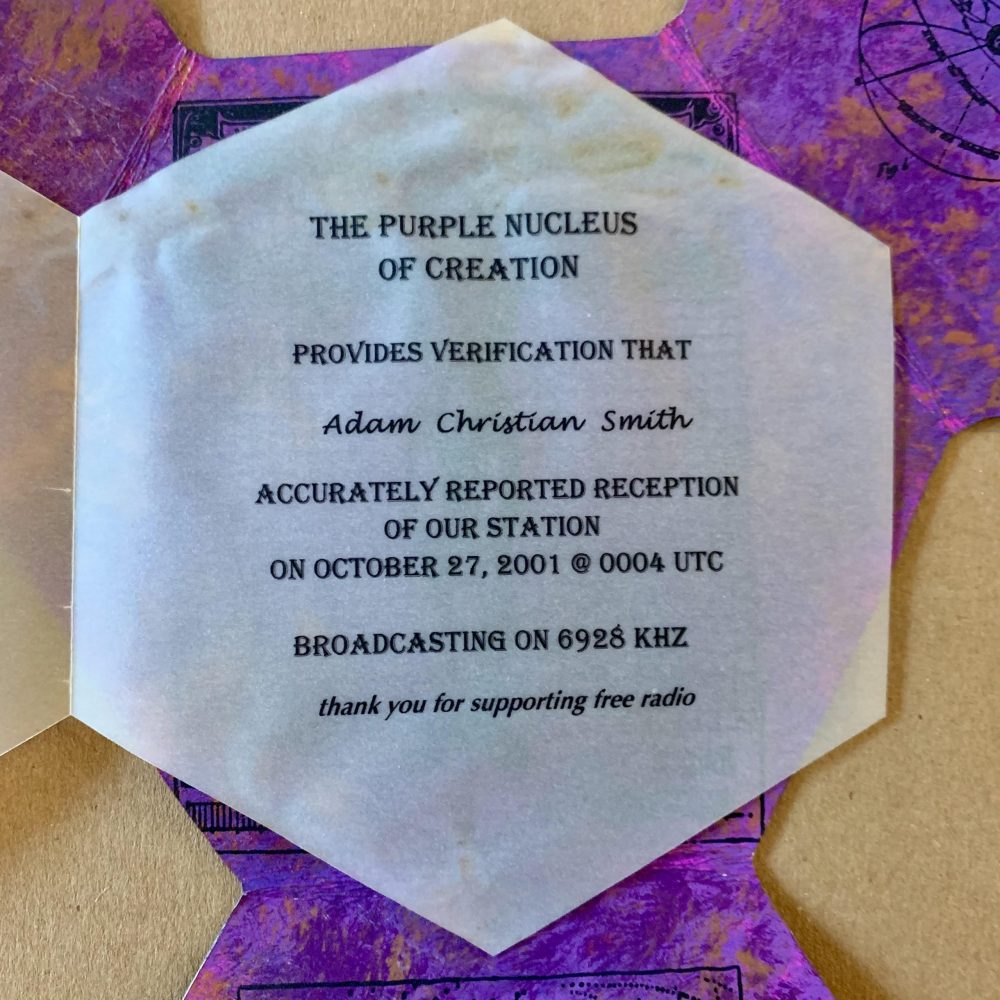
Adam’s six minute off-air recording was made on October 27, 2001 at 0009UTC on 6,928 kHz USB with Adam’s Grundig 800 and 100’ wire antenna. Check out the audio embedded below or via the SRAA.
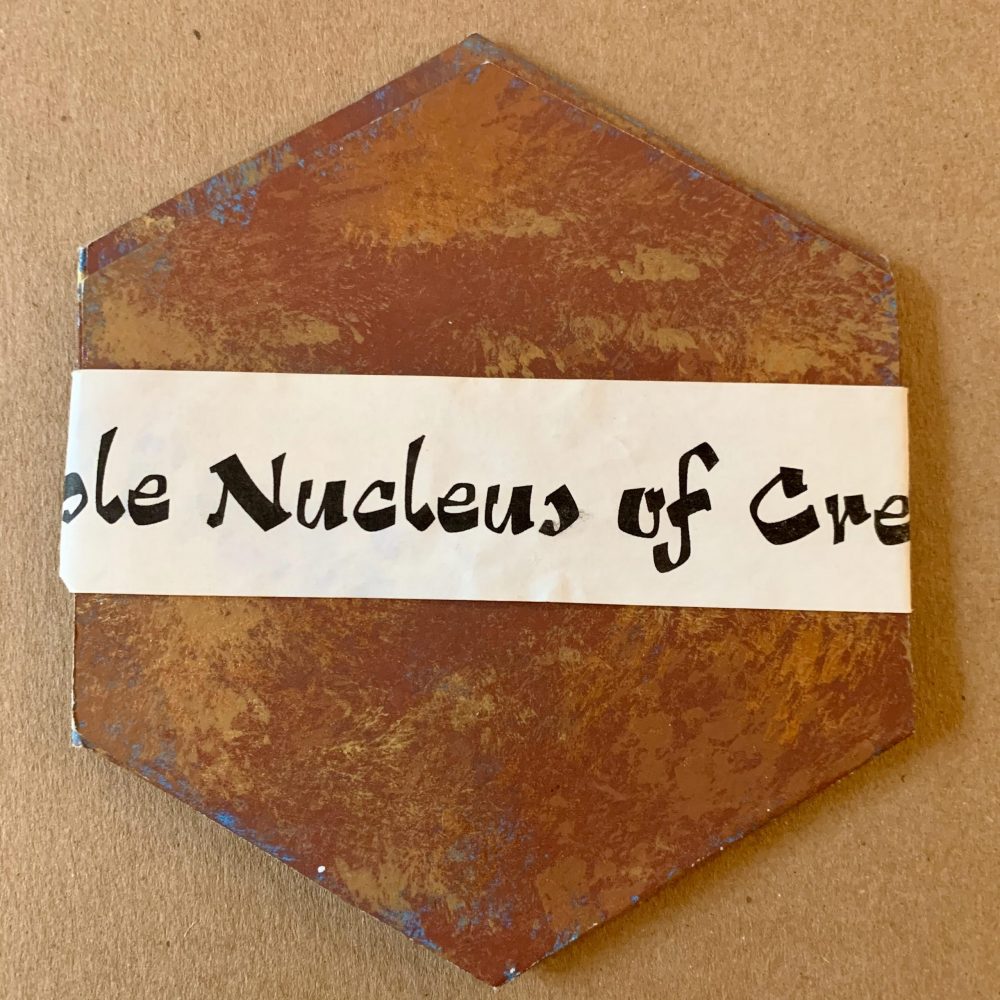
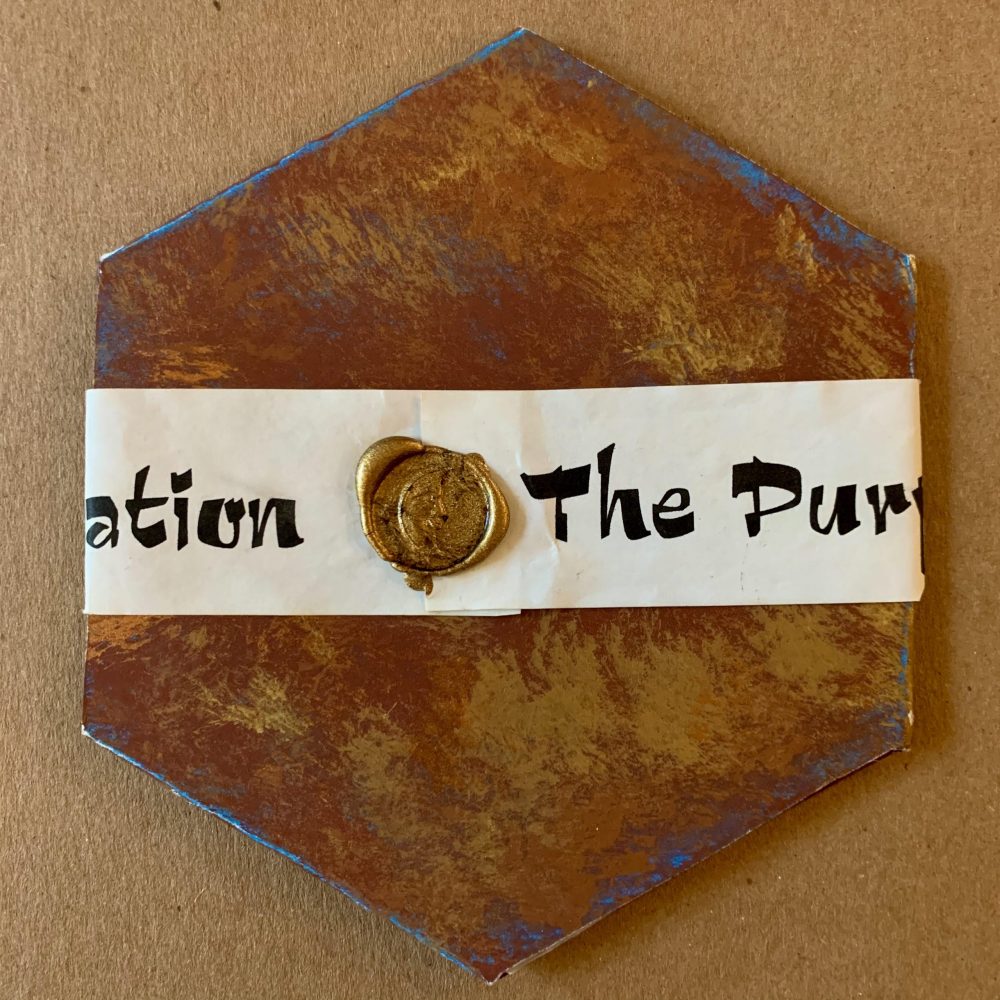
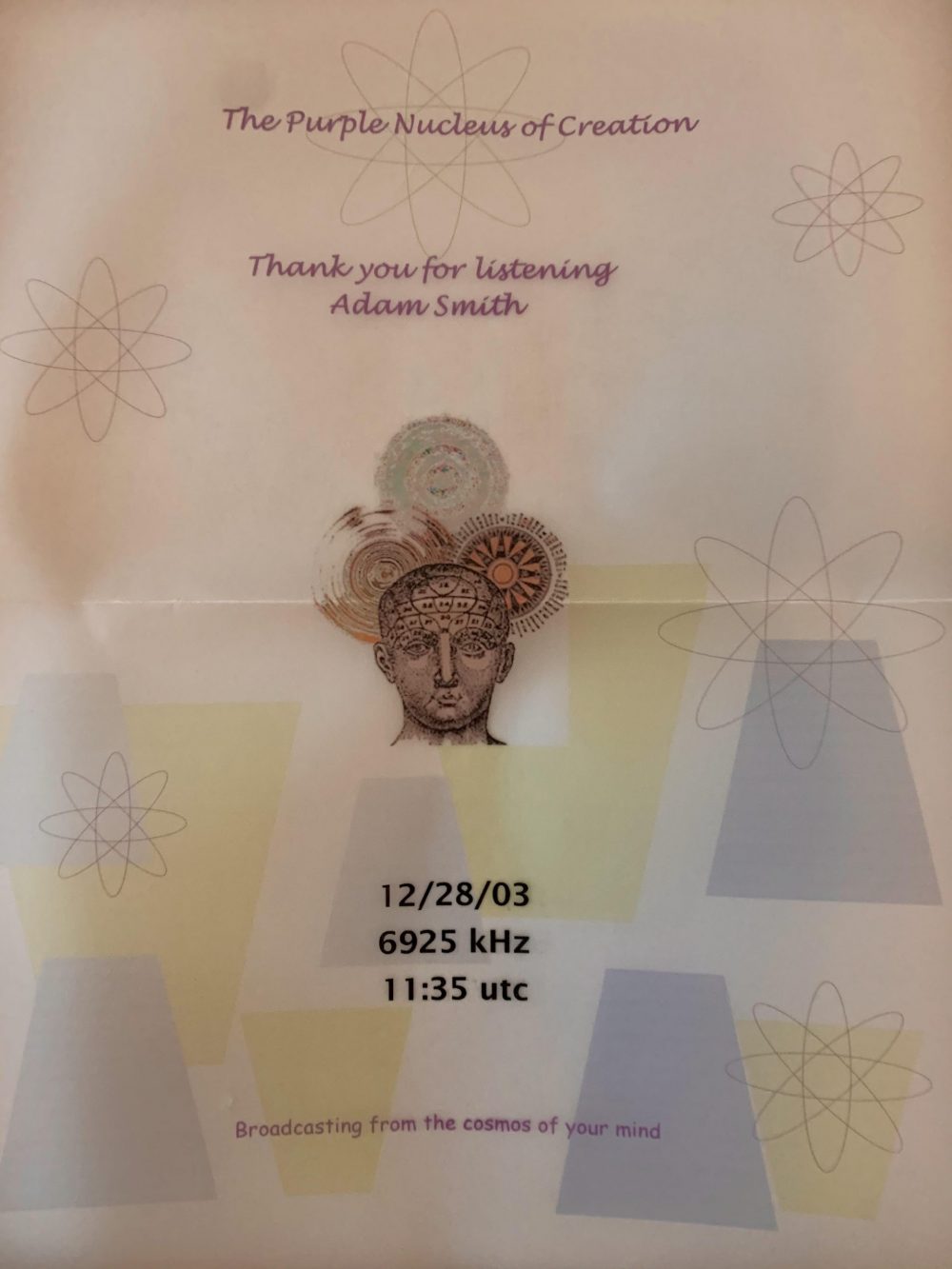
But first? Check out this extraordinary QSL card:
This QSL is more intricate than a wedding invitation! I love it! Thanks for sharing, Adam!
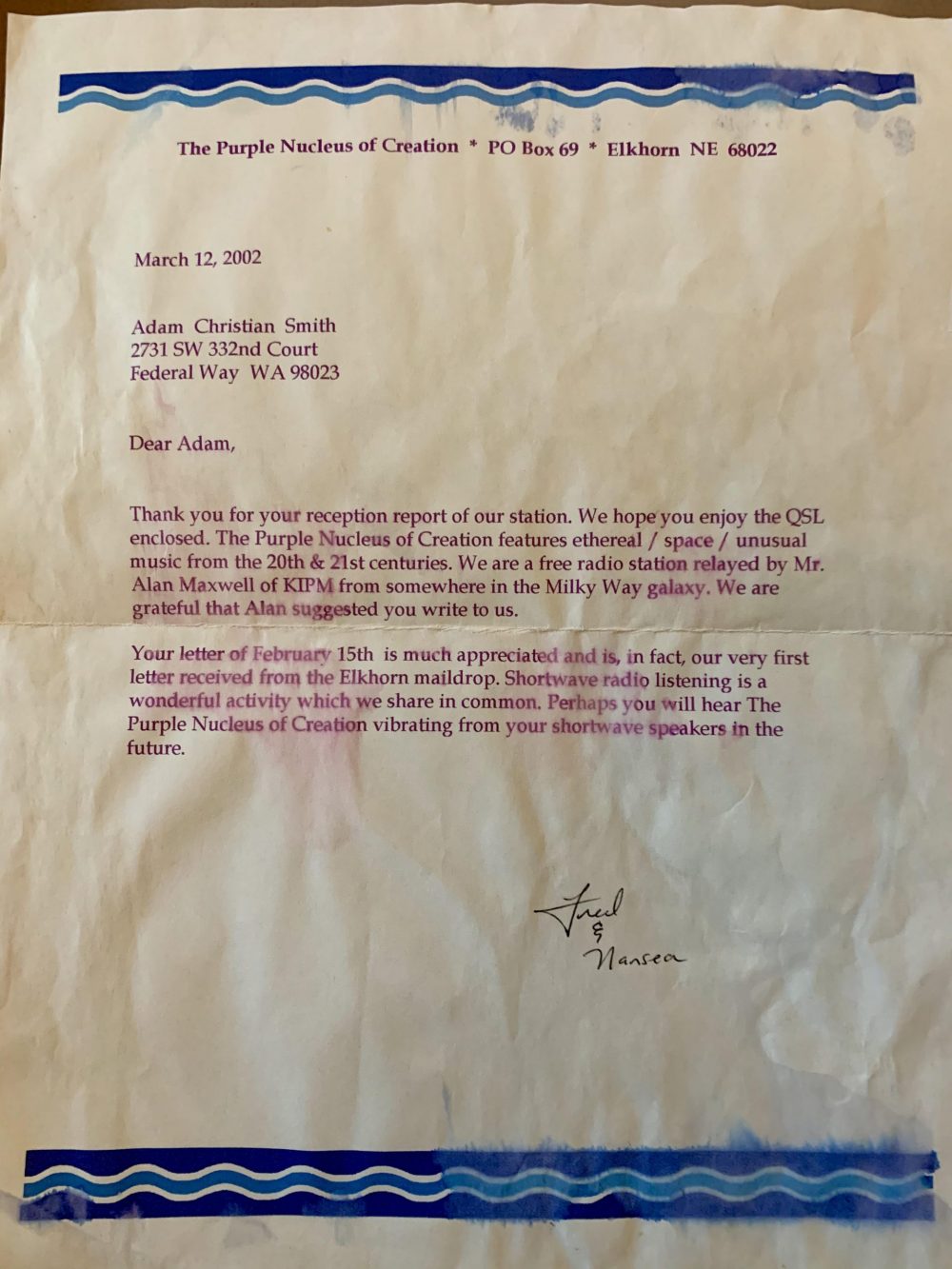
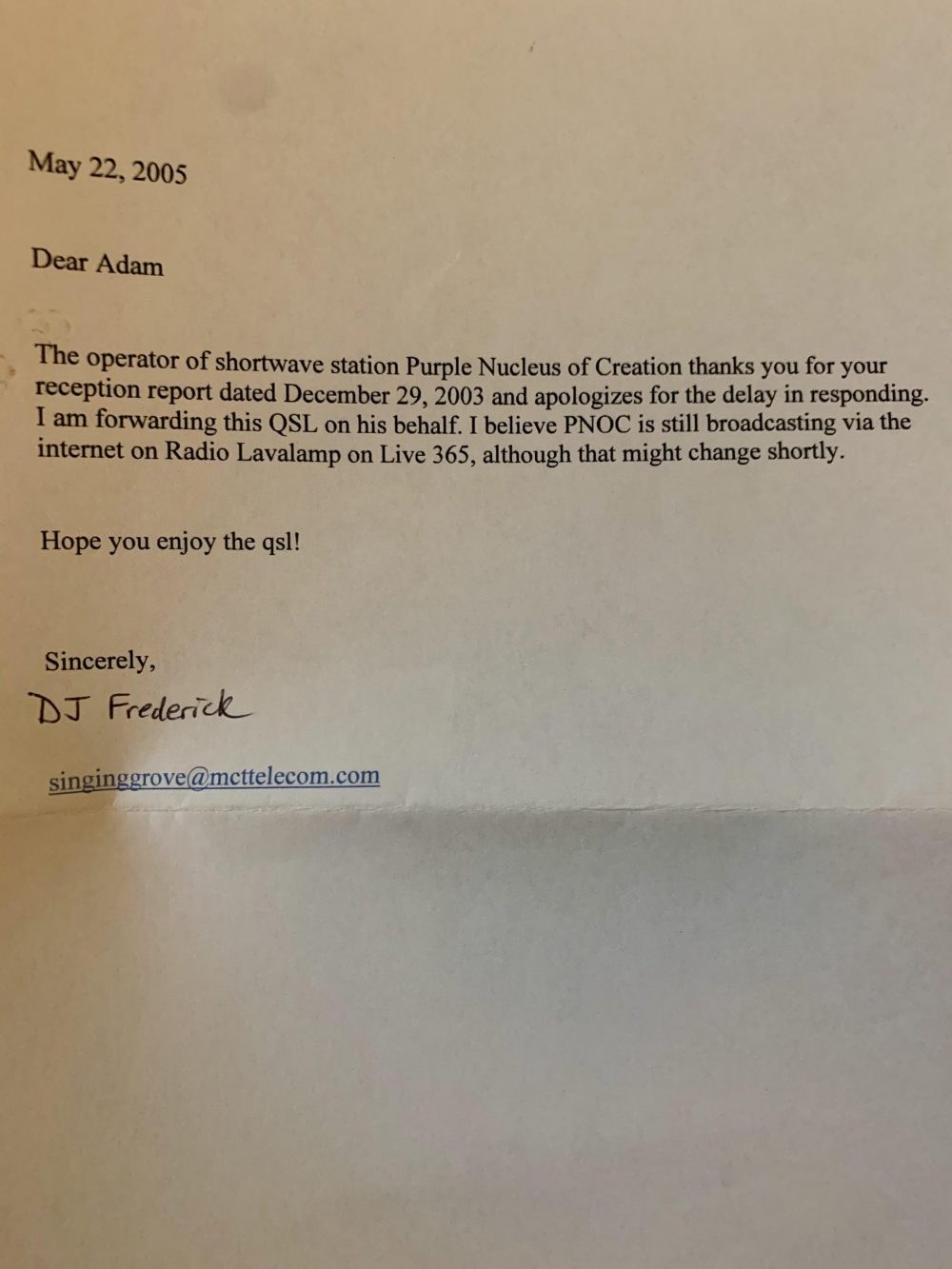
Adam also included other correspondence from The Purple Nucleus of Creation:
Again, thanks so much, Adam, for submitting this recording and memorabilia with everyone via the SRAA. Now your recording will (literally) be shared with our thousands of podcast subscribers and also streamed to devices across the globe via TuneIn. It’ll also be permanently preserved on the SRAA website and the Internet Archive.
How many of you remember Ian McFarland’s Shortwave Listener’s Digest on Radio Canada International? It was certainly one of my favorite DX and SWL shows!
Our good friend Tom Laskowski recently sent in the following recordings of the Shortwave Listener’s Digest recorded (in part) on July 26, 1982 starting around 21:30 UTC on 15,325 kHz.
Tom notes:
Here are two more back to back episodes from my collection of recordings of Shortwave Listener’s Digest from Radio Canada International, this time from July 26 and August 02, 1982.
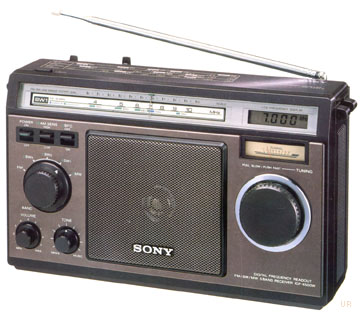
This program’s highlights are: ANARC 1982 Convention promo, Larry Magne’s test of the Sony ICF-6500W, a look at underseas intercontinental cables with Walter Foster of Teleglobe Canada, Glenn Hauser’s DX tips.
The second program highlights are: coverage of the 1982 ANARC convention with guest co-host Bab Zanotti of Swiss Radio Intl., interview with David Meisel about the solar cycle, a rundown of the awards given out at ANARC 82.
This recording is chock-full of shortwave nostalgia. How many of you remember some of the folks featured and mentioned in this show?
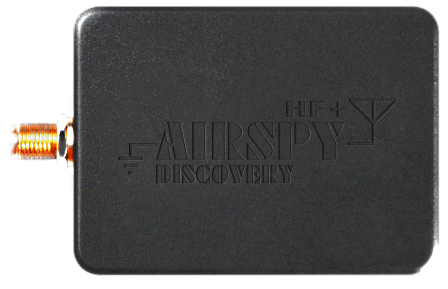
The highly anticipated AirSpy HF+ Discovery SDR has been in the hands of early adopters for about two weeks–and I’ve seen nothing but positive comments!
After a long run (2007-2013) with a Microtelecom Perseus, my SDR of choice became the Elad FDM-S2, and more recently an Elad FDM-DUOr “hybrid” SDR receiver. The two Elads have the same core processing components and identical performance when the DUOr is connected via SDR software.
This week I’ve compared the HF+ Discovery ($169) against the FDM-DUOr ($899) using Studio 1 software and identical modes & settings. The following video features the radios’ performance on a crowded daytime medium wave band from suburban Seattle-Tacoma USA.
Mode, filter bandwidth, AGC, etc. are the same for each radio
768 kHz sampling bandwidth used for both receivers
Stations tuned are:
1320 KXRO Aberdeen WA, 74 miles @ 5 kW (in-line with antenna)
1110 Oak Harbor WA, 78 miles @ 500 watts (in antenna’s null)
1040 CKST Vancouver BC, 147 miles @ 50 kW (in antenna’s null)
1430 KBRC Mt. Vernon WA, 85 miles @ 5 kW (in antenna’s null)
750 KXTG Portland OR, 118 miles @ 50 kW (in antenna’s null)
I purposely sought out signals difficult to hear in the presence of powerhouse stations. Only 1320 kXRO (in-line with my antenna) and 750 KXTG are what you might consider average or fair quality signals. Headphones are recommended for most of these, particularly 1040 kHz.
You’ll note that the pass band has been “pulled” over the edge of the carrier frequency by a few hundred Hertz. This is an excellent trick that can often reduce noise and/or improve intelligibility. It’s a feature unique to Perseus, Studio 1, and SDRuno software; it works in sideband modes and in selectable sideband Sync AM (SAM) mode.
After listening to the signal comparisons, what are your thoughts on the HF+ Discovery? Please leave your comments below.
Guy Atkins is a Sr. Graphic Designer for T-Mobile and lives near Seattle, Washington. He’s a regular contributor to the SWLing Post.
Thanks to a tip from SWLing Post contributor, Dan Robinson, I spent some air time with an old friend last night: Radio Educación broadcasting from Mexico City on 6,185 kHz.
Like a lot of small Central and South American shortwave stations, I believe XEPPM only broadcasts at 1,000 watts–though in the past, I believe they were allowed 10,000 watts. Still, their signal often makes it into eastern North America with relative ease, although it’s rare that it’s so clear. As summer approaches here in the northern hemisphere, QRN (noise from natural sources, like thunder storms) will rise on the 49 meter band. Even last night, there were some mild static crashes.
I tuned in around 01:25 UTC (April 1, 2019) with the WinRadio Excalibur and heard some amazing jazz, so I had to hit the record button.
For your listening pleasure, here’s the one hour ten minute recording I made:
Many thanks to SWLing Post and SRAA contributor, Richard Langley, who has recently uploaded an off-air recording of the Voice of Peace to the Shortwave Radio Audio Archive. This is a fascinating recording that I thought I would re-post here on the Post.
Richard notes:
Live, off-air, approximately twenty-minute recording of the Voice of Peace from Baghdad on 29 December 1990 beginning at 21:40 UTC on a shortwave frequency of 11860 kHz. This broadcast originated from a transmitter either in Iraq or Kuwait.
Iraq’s Voice of Peace was established in August 1990 to beam programs to American servicemen stationed in Saudi Arabia during Operation Desert Shield following Iraq’s invasion of Kuwait at the beginning of the month. Programming consisted of music, initially easy-listening music but subsequently changing to a “Top 40” mix, news and commentary in a failed effort to try to demoralize the American troops. Beginning in September 1990, the broadcasts used a female announcer dubbed “Baghdad Betty” by the Americans. Reportedly, Baghdad Betty was replaced by a team of announcers sometime in December 1990. The recording is an example of the news and music programming. It is not known if the female announcer is the famous Baghdad Betty or someone else.
Reception of the broadcast was poor to fair with slight interference and fading. At 21:58 UTC, there is interference splash from WYFR starting up on 11855 kHz. The initial frequency recorded may have been 21675 kHz before switching after a minute or so to 11860 kHz as the radio teletype interference abruptly stops at this point. The recording includes frequent station identifications such as “You are tuned to the Voice of Peace from Baghdad.”
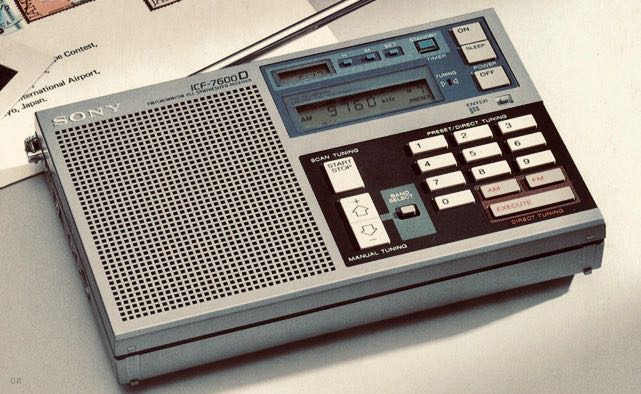
The broadcast was received in Hanwell, New Brunswick, Canada, using a Sony ICF-7600D receiver and supplied wire antenna draped around the listening room.