Many thanks to SWLing Post contributor, Dennis Dura, who shares the following video via YouTube:
Click here to view/listen via YouTube.
Wonderful recording. Thank you for the tip, Dennis!

Many thanks to SWLing Post contributor, Dennis Dura, who shares the following video via YouTube:
Click here to view/listen via YouTube.
Wonderful recording. Thank you for the tip, Dennis!
Many thanks to SWLing Post contributor, Ben-Zion, who writes:
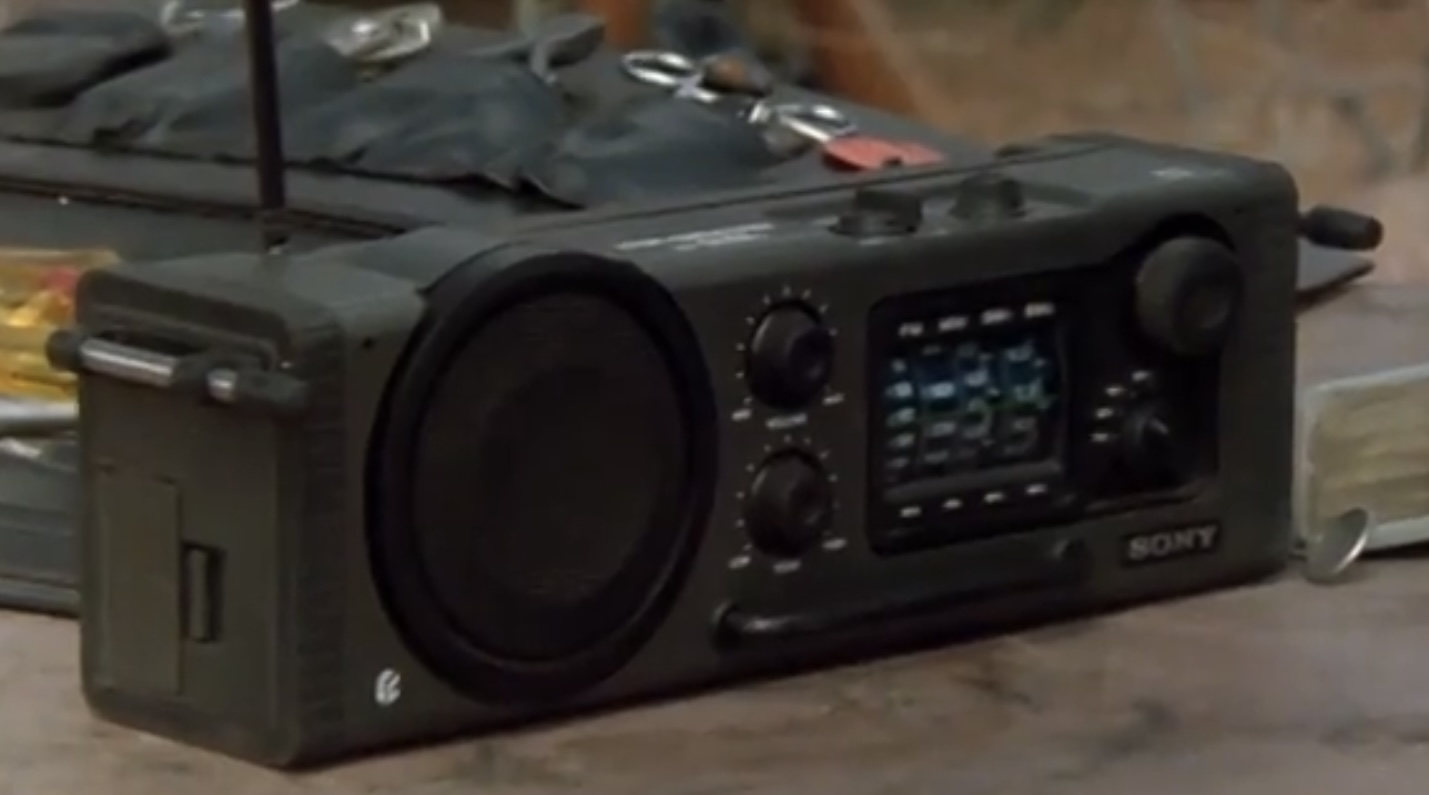
I love your website and wanted to contribute a radio in cinema sighting from the 1980 South African film The Gods Must Be Crazy.
I look forward to your readers feedback regarding this SONY unit.
Kind Regards.
Ben-Zion
Thanks for the tip! Oh I do love that particular Sony model! Can anyone ID it?
 Many thanks to SWLing Post contributor, Pavel, who shares the following message and images. Note that this message was originally sent to me prior to Christmas, but never arrived in my inbox. Thank you, Pavel, for the follow-up:
Hi Thomas,
First of all, I wish you and your entire family and all blog readers a wonderful rest of the Christmas holidays, all the best for the new year 2023, lots of health and well-being and many beautiful moments listening to the radio.
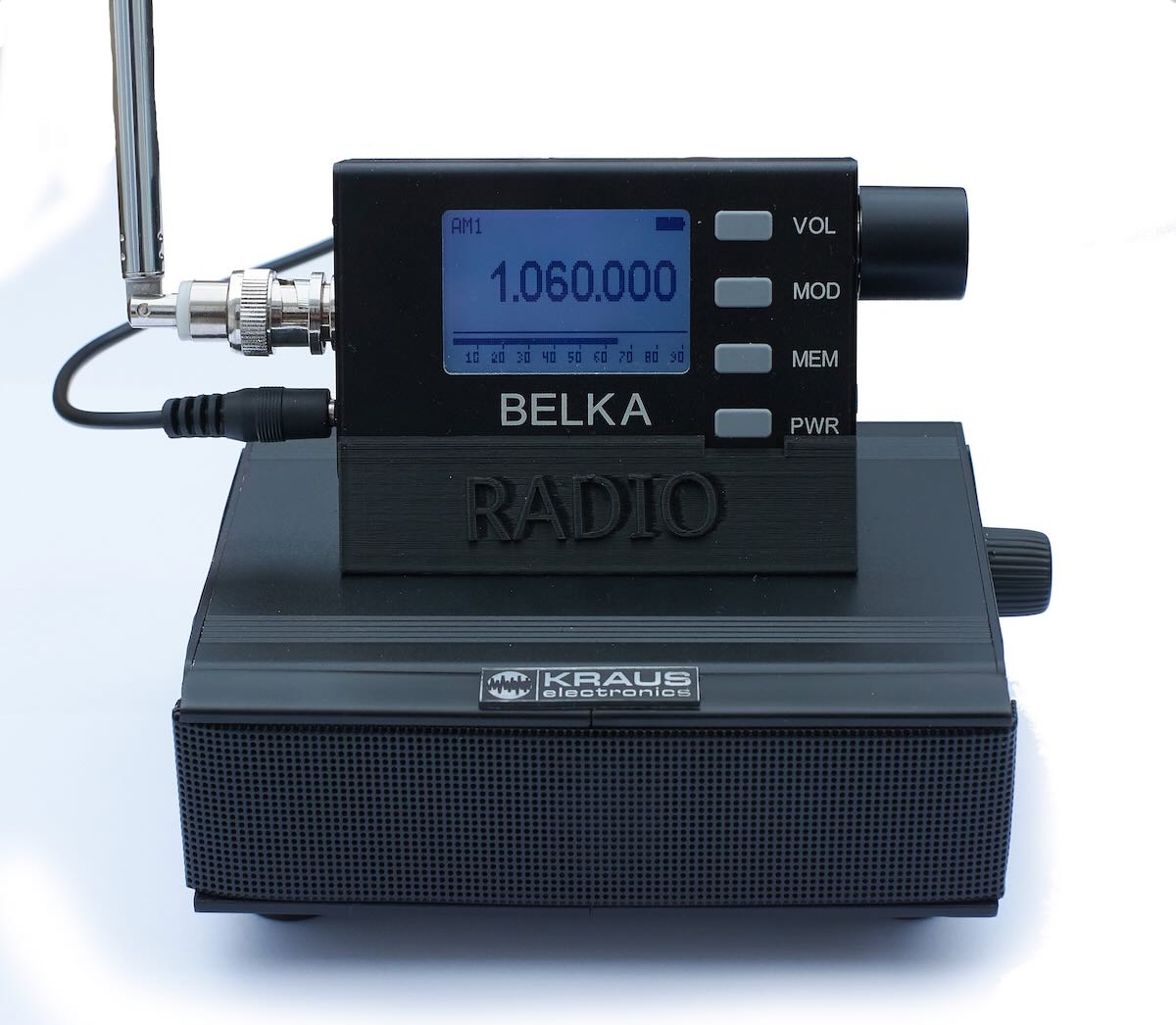
Some time ago I became the owner of the last type of Belky. I’m excited about her. So I immediately made an advertising poster with my wife and Belka :-).

I made a small docking station for the Belka – it has a built-in stereo amplifier, speakers and a battery with a charging circuit and a Dc-Dc converter for emergency charging of the Belka in the field. The status of the battery is indicated by LEDs. The Belka holder itself is made on a 3D printer.
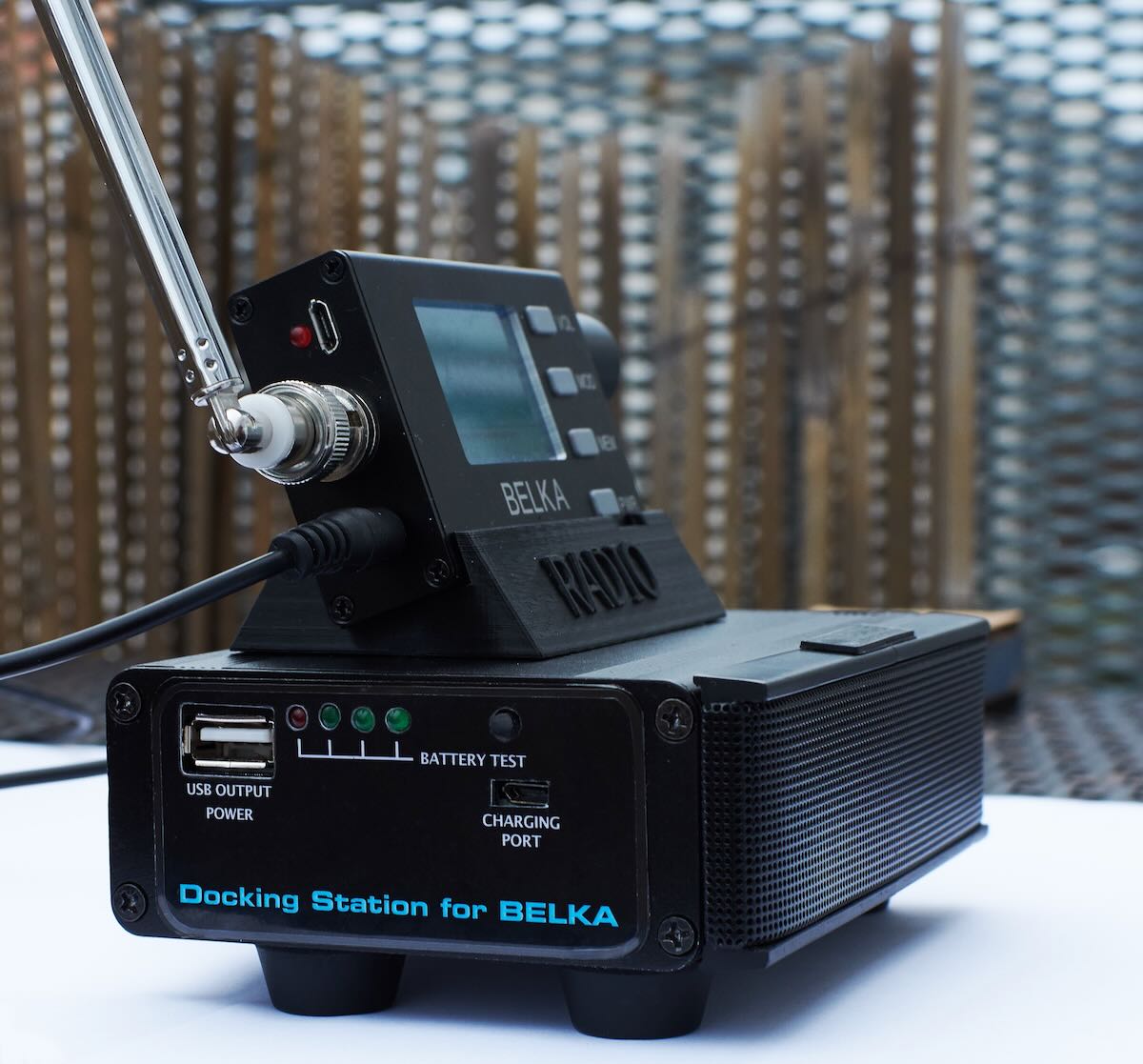
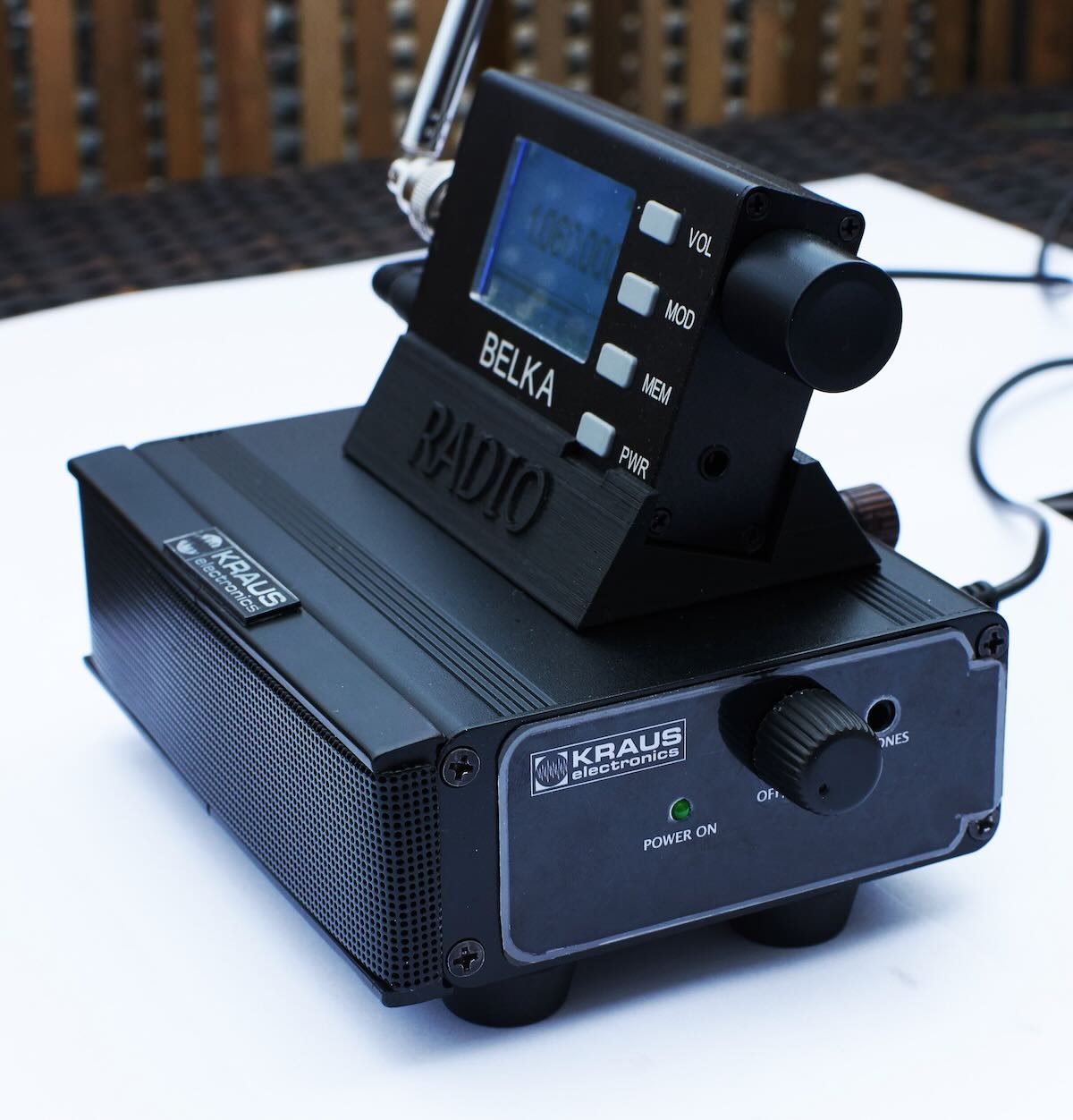

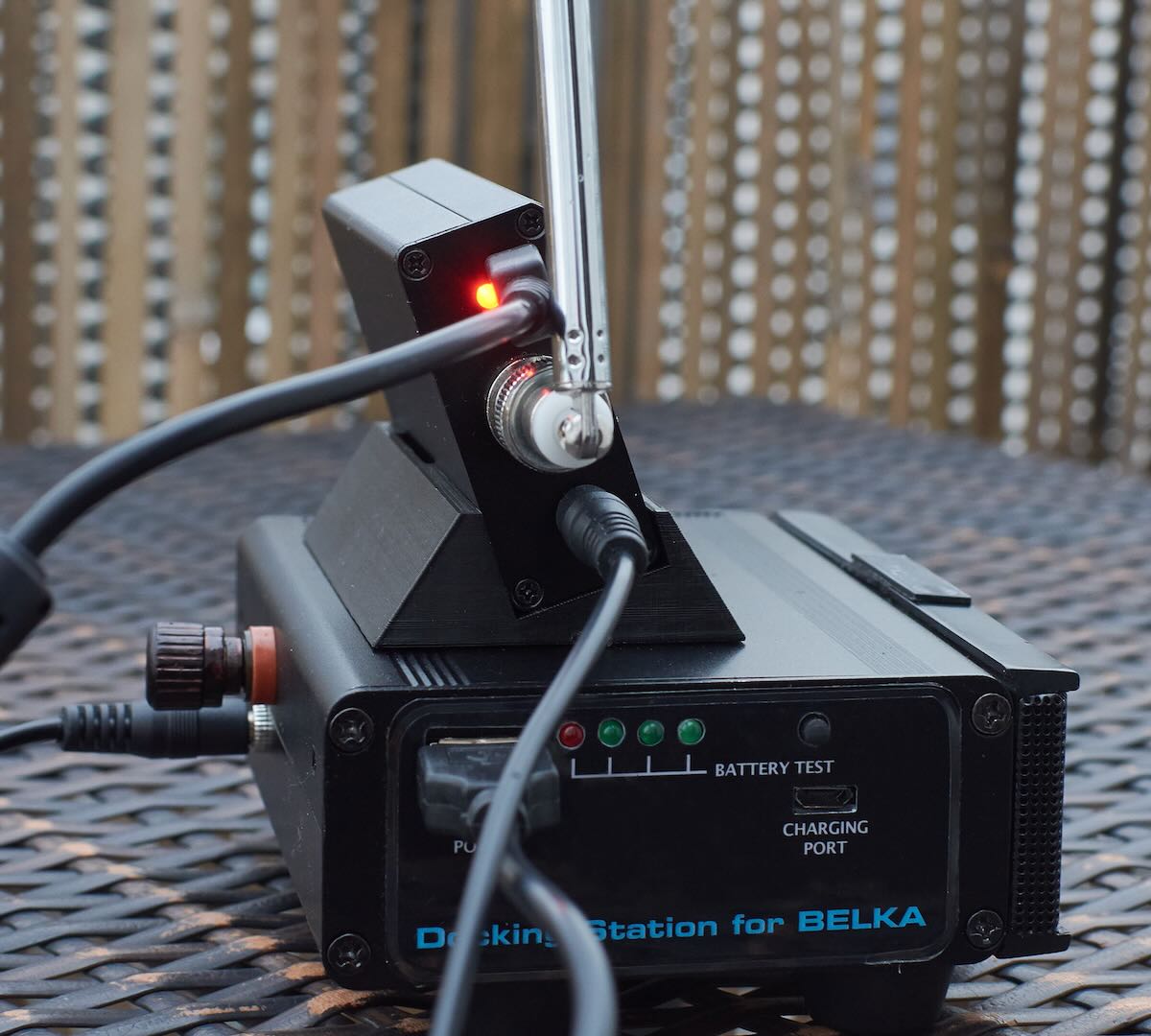
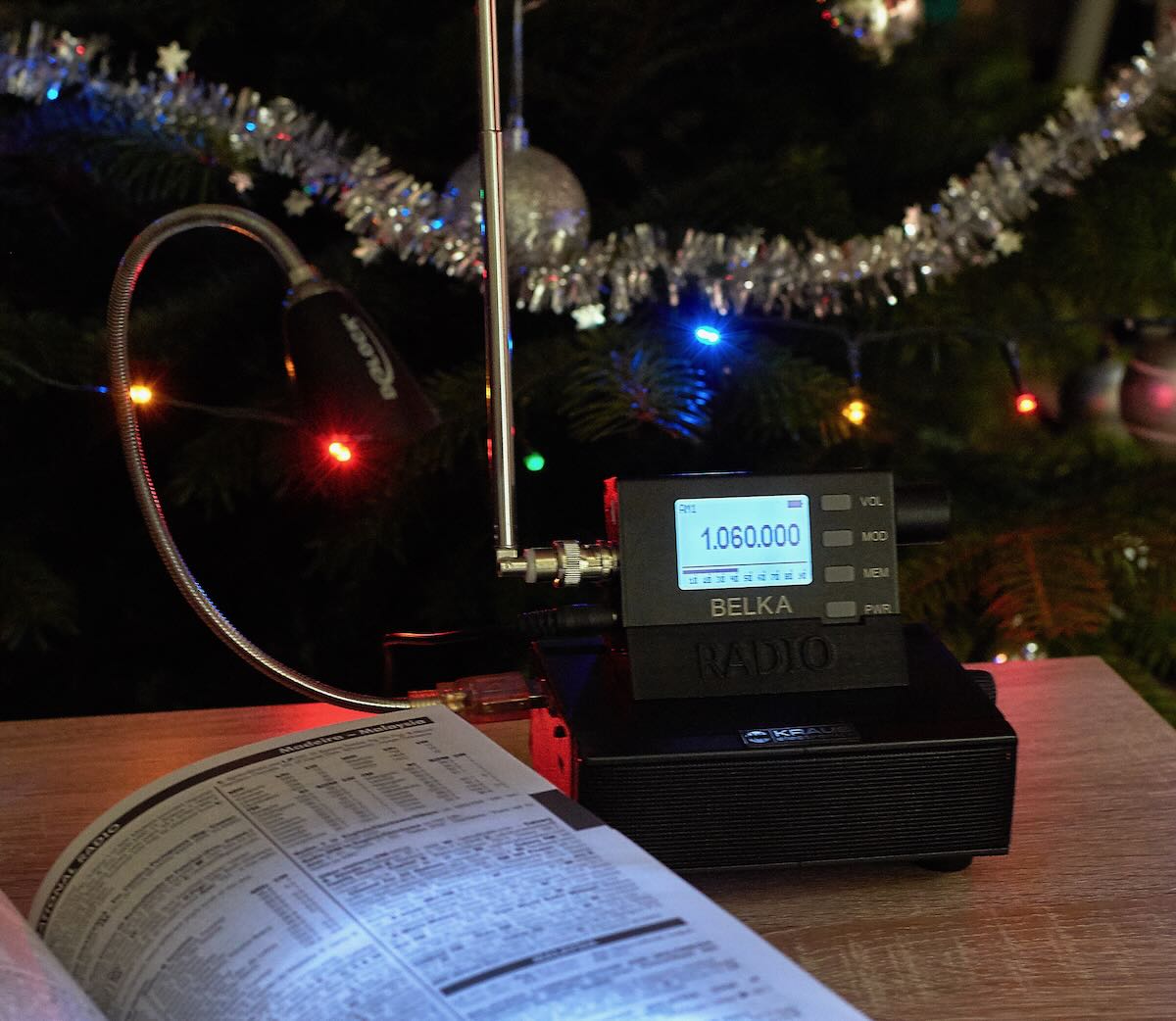
Maybe it can serve as inspiration for blog readers.
Hi
Pavel Kraus
Thank you for sharing this, Pavel. We all love both your creativity not only in your photos, but the amazing radios you produce. We love how you use your wife as your model in your work!
Many thanks to SWLing Post contributor, Jeff (KJ7LTU), who writes:
Thomas,

I was wondering if you, or your readers, know if Radio Tamazuj and Radio Dabanga are coordinating their broadcasting efforts? This last Sunday I picked up their transmission on 15550 kHz. Radio Tamazul signs off at 15:57 UTC and Radio Dabanga signs on at 15:59 UTC.
Some quick research indicates that this is the intended broadcast schedule. The times, and shared frequencies, seem to allude to a joint effort. Other than these are both Sudanese broadcasters, I can’t seem to find any additional evidence to support this. Wondering if you might be willing to put this out there to see if anyone has any information to satisfy my curiosity.
Here’s a link to the transmission for reference: Radio Tamazuj & Radio Dabanga
Again, appreciate your many contributions to our listening community!
Best Regards,
Jeff Cooper
KJ7LTU
Thank you, Jeff!
Readers: Please feel free to comment with any insight!
 Many thanks to SWLing Post contributor, Frans Goddijn, who writes:
Hi Thomas:
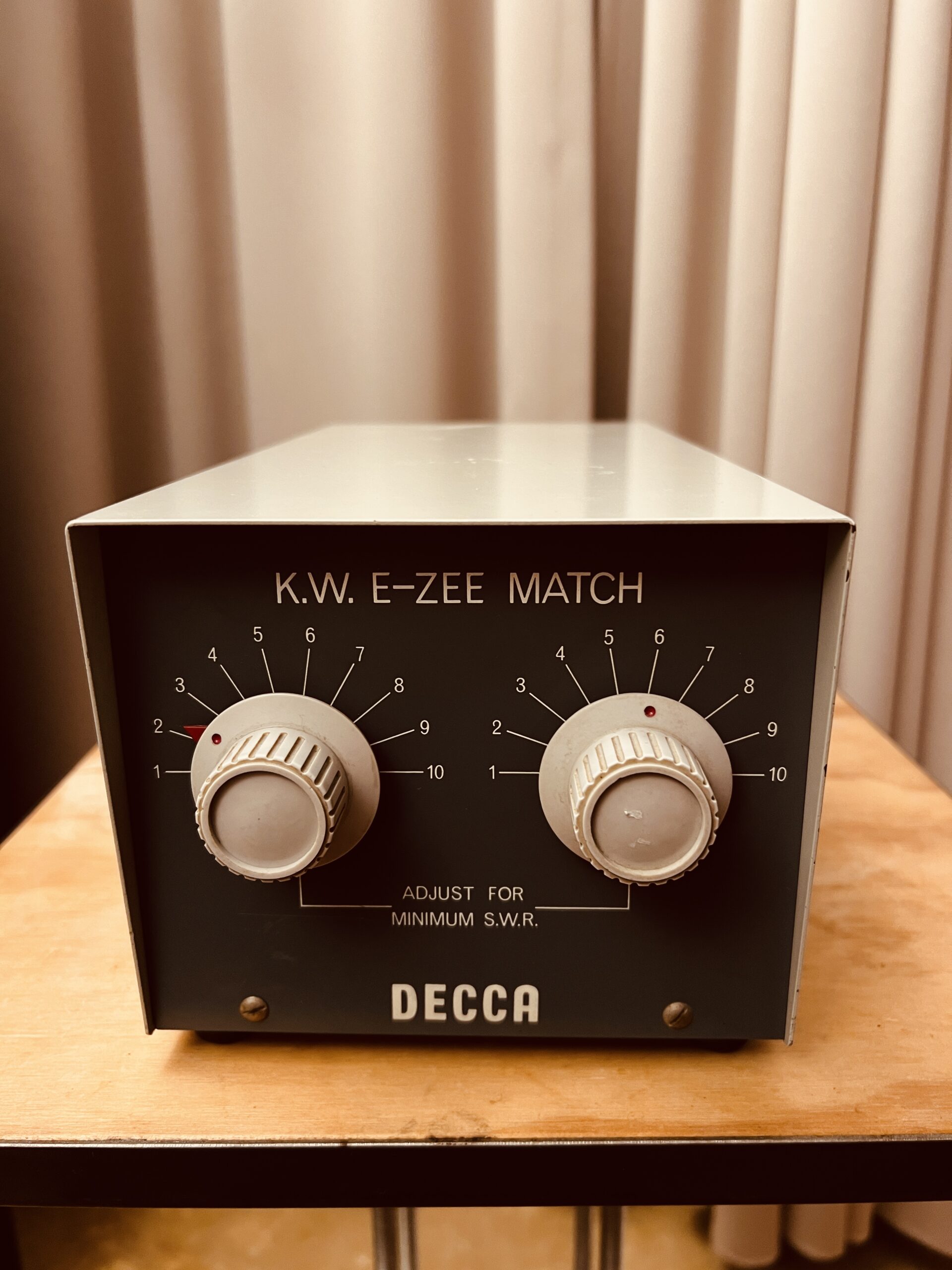
I bought a vintage antenna tuner, one that does not need a power source, very basic just a box with some beautiful coils and nice big variable capacitors and it works for the big magnetic loop antenna here.
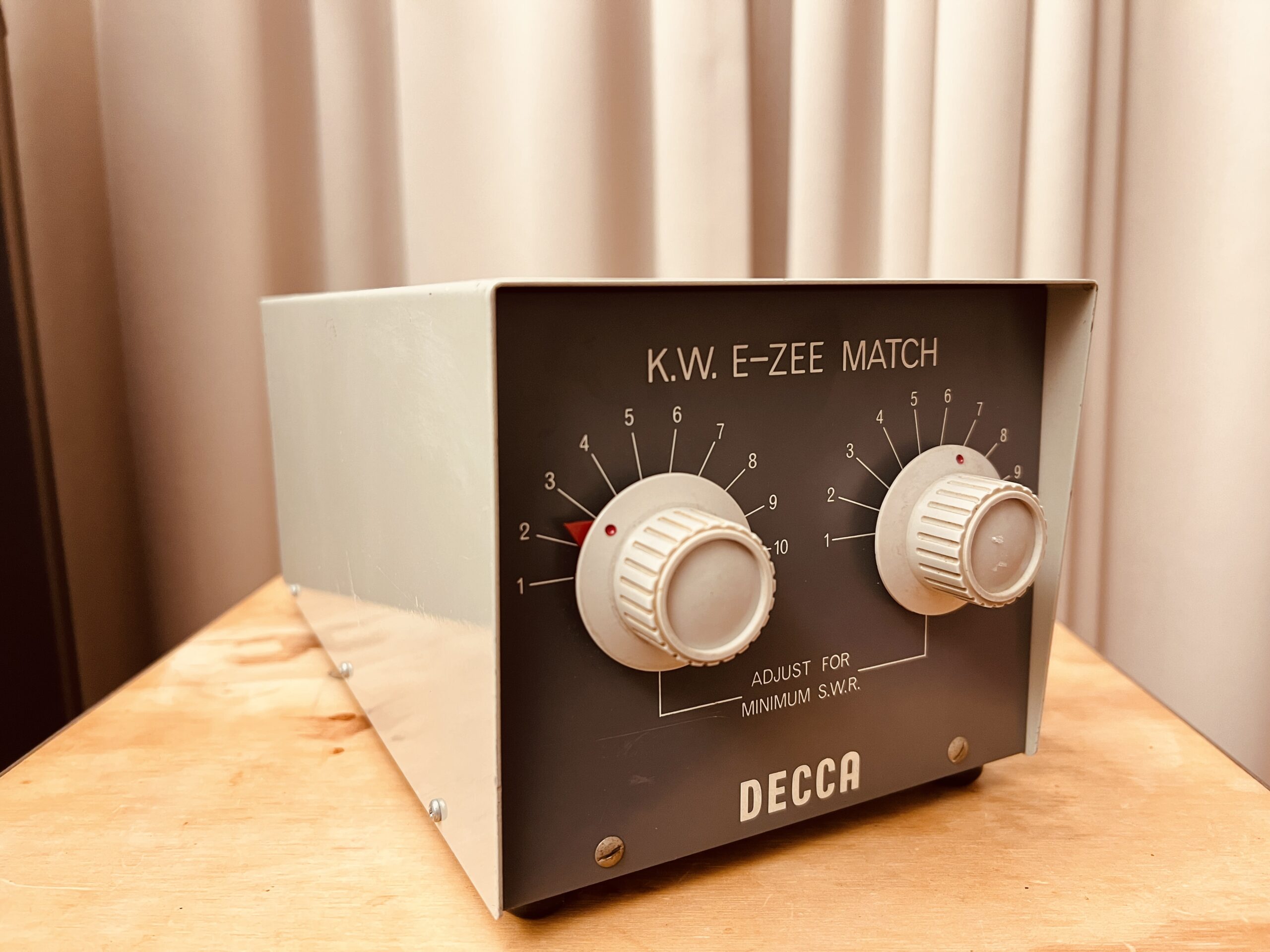
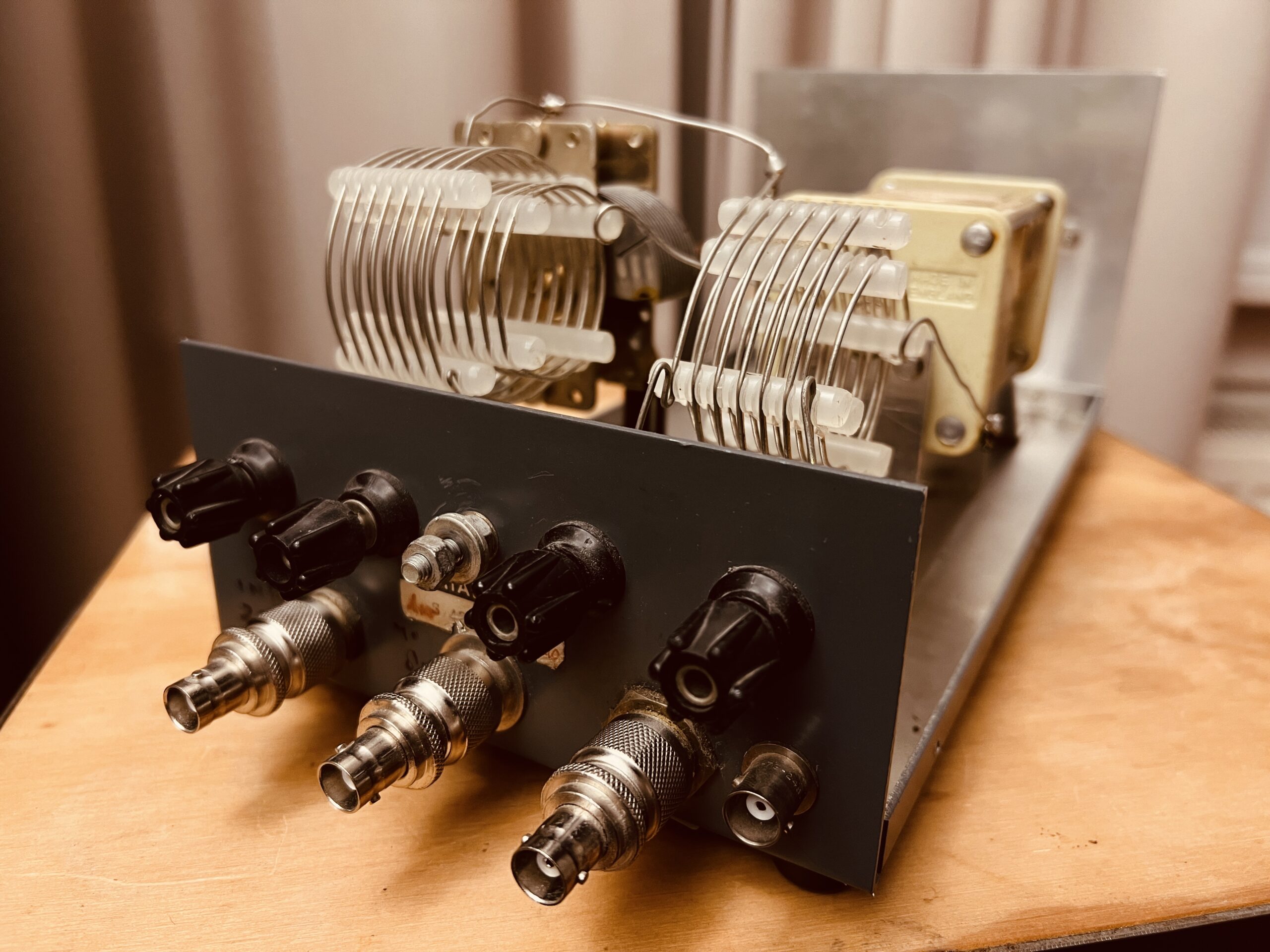
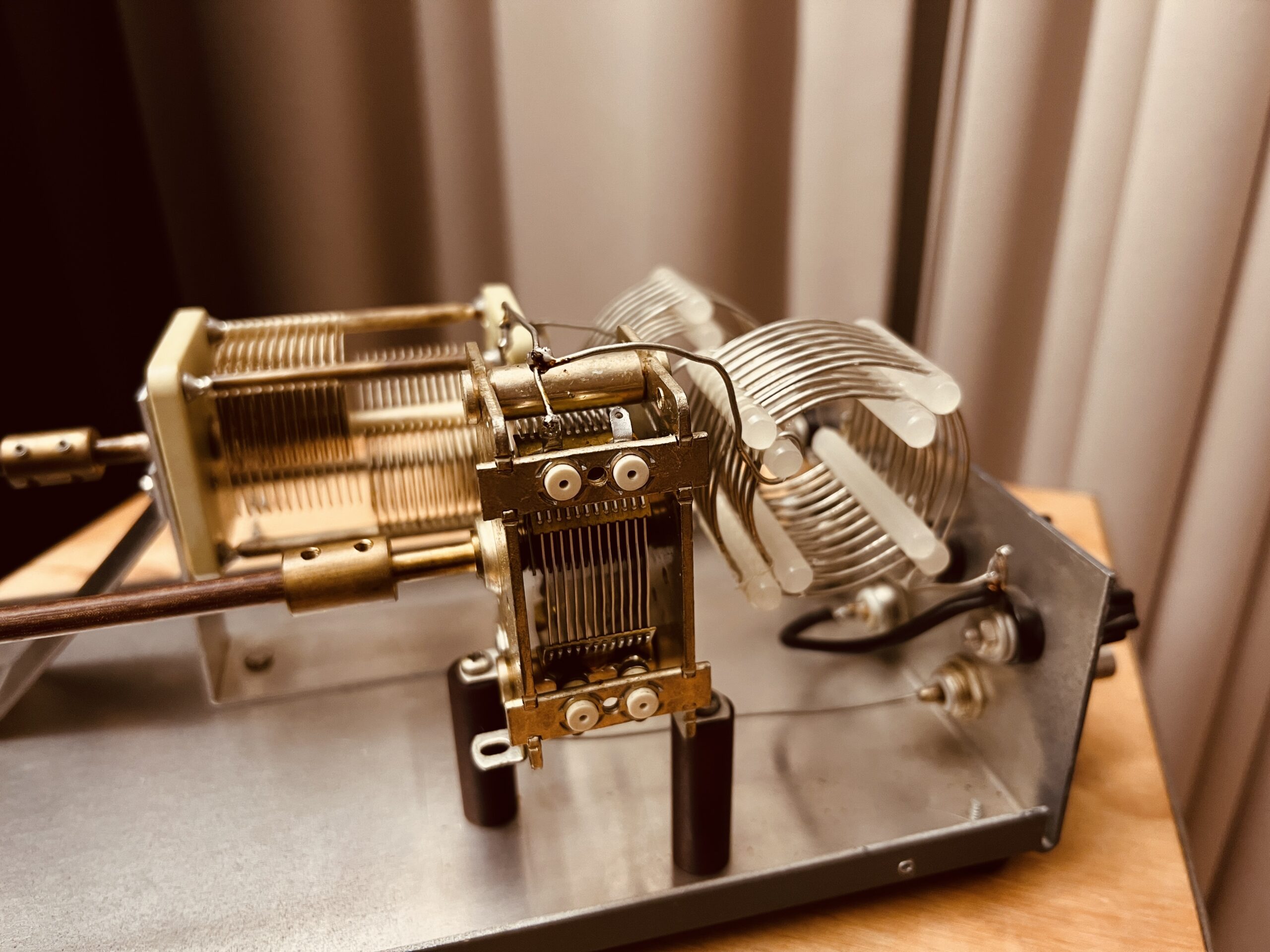
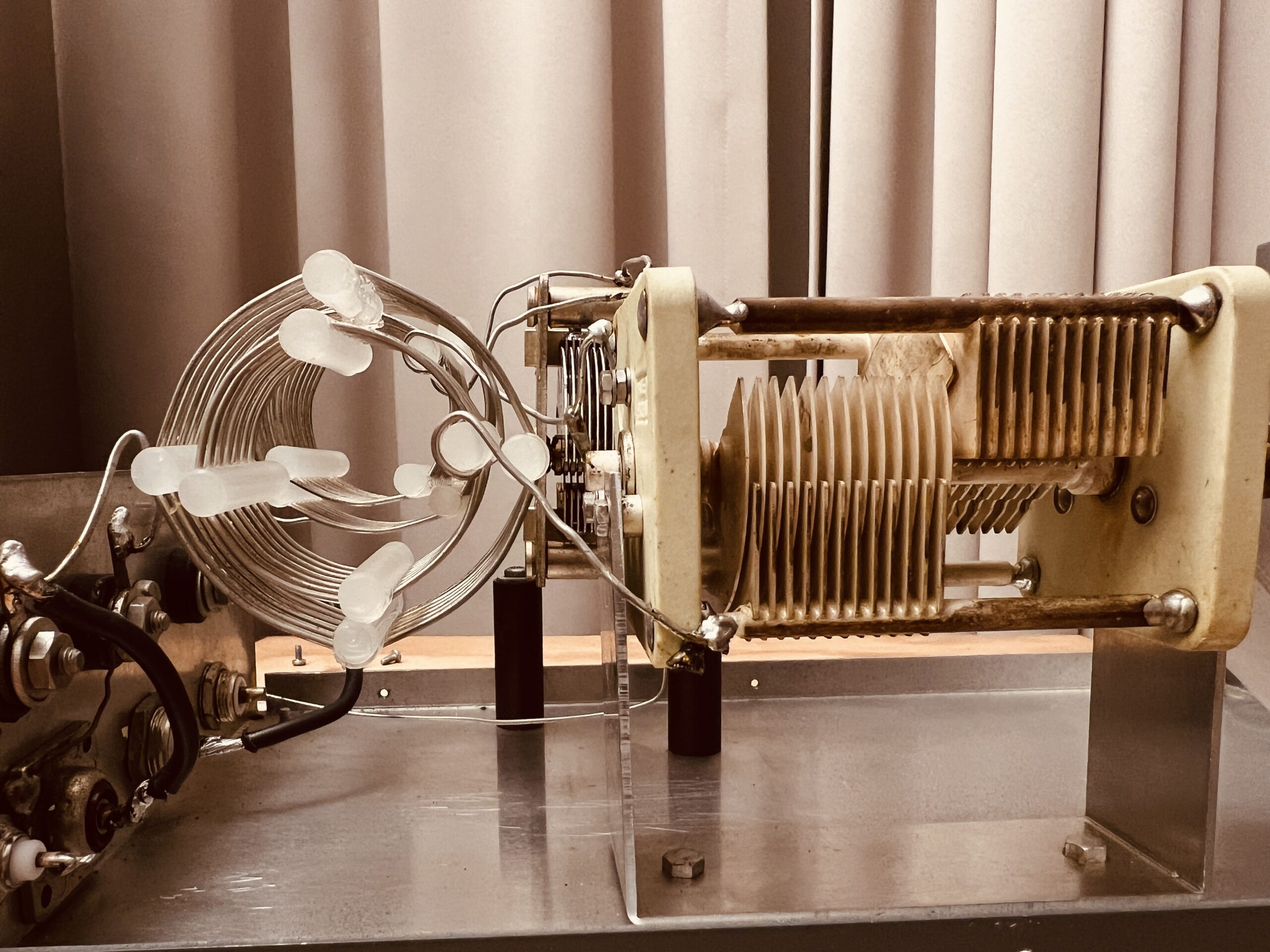

I have four GRAHN loop antennas which each have their box with dials to fine tune the signal but the big loop didn’t have that yet.
The tuner works well, filters out some noise but I must say the iCOM radio also managed to select good signal from the loop with its own tuner system and the DSP noise filter at the speaker end of the system further clears up the voice sounds.
Best regards,
Frans
The internals of manual antenna tuners are simply hypnotizing, aren’t they? You’ve a beautifully-built tuner there that is functional and will outlive us all!
Thank you for sharing!
Welcome to the SWLing Post’s Radio Waves, a collection of links to interesting stories making waves in the world of radio. Enjoy!
Many thanks to SWLing Post contributors Dennis Dura, JP, NT, and Paul for the following tips:
Many thanks to SWLing Post contributor, JP, who shares a link to the FCC Pirate Radio database:
Pirate Database
In accordance with section 511(g) of the PIRATE Act, the following databases are provided to identify (i) each entity against whom an enforcement action for pirate radio broadcasting has been issued, and (ii) licensed radio stations.
Pirate Radio Database
Licensed AM and FM Radio Station Database
As far as islands go, Manhattan is one of the most famous and instantly recognisable. But if you were to charter a boat and sail around its coastline and through New York’s natural harbour you’d come across many more islands so small that hardly anyone knows are there. There are around thirty or so of these odd little islands, all mostly uninhabited or privately owned and strictly off limits, but filled with strange tales and peculiar histories.
Many of these islands are tantalisingly close to New York City, but remain out of reach. As travel writer Robert Sullivan put it “the islands are our silent neighbours. It is easy to live here and never notice them.”
[…]This story however, is about one such tiny island, just 150 feet square, and so small you can barely spot it on Google Maps unless you knew where to look. Once known as Little Pea Island, it is located about a mile off shore from Pelham Bay Park in the Bronx, and has room enough for just one building. It has been home to a Jazz Age era swanky yacht club, a radio station and for a while, the home to a glitzy Hollywood showbiz couple who ran a morning radio show from their home on the island. The last owner recently renovated the island into a self-sufficient, five thousand square feet luxury home, which today lies empty. [Continue reading the full story…]
A new ultra-low-power method of communication at first glance seems to violate the laws of physics. It is possible to wirelessly transmit information simply by opening and closing a switch that connects a resistor to an antenna. No need to send power to the antenna.
Our system, combined with techniques for harvesting energy from the environment, could lead to all manner of devices that transmit data, including tiny sensors and implanted medical devices, without needing batteries or other power sources. These include sensors for smart agriculture, electronics implanted in the body that never need battery changes, better contactless credit cards and maybe even new ways for satellites to communicate.
Apart from the energy needed to flip the switch, no other energy is needed to transmit the information. In our case, the switch is a transistor, an electrically controlled switch with no moving parts that consumes a minuscule amount of power.
In the simplest form of ordinary radio, a switch connects and disconnects a strong electrical signal source – perhaps an oscillator that produces a sine wave fluctuating 2 billion times per second – to the transmit antenna. When the signal source is connected, the antenna produces a radio wave, denoting a 1. When the switch is disconnected, there is no radio wave, indicating a 0. [Continue reading…]
Is AM radio dying? If you ask Tesla, it’s already dead. But what does that mean for the hundreds of local AM radio stations across the US?
Please consider supporting us via Patreon or our Coffee Fund!
Your support makes articles like this one possible. Thank you!


Cuenca Cathedral
Many thanks to SWLing Post contributor, Don Moore–noted author, traveler, and DXer–for the latest installment of his Photo Album guest post series:
by Don Moore
For me travel is all about seeing new places and having new experiences. When I retired in 2017 my plan was to spend the next fifteen years visiting new countries and new places in countries I already knew. Is that a viable goal? Three years ago while crossing the border from Ecuador to Colombia I shared a taxi with Dutch man who, like me, was traveling overland by bus with just a knapsack and a suitcase. And two weeks earlier he had celebrated his eightieth birthday. I don’t remember his name but he’s my hero.
The pandemic put a pause on travel but I’m happy to be back on the road. I’m currently in Ecuador, the country where I’ve spent more time than anywhere except the United States and Honduras. After landing in Quito at the beginning of December I visited four provinces I hadn’t been to before, including spending three nights at the bohemian beach town of Montañita where I had some good DX. I like seeing new places but there is also something to be said for returning to a familiar place that holds a special meaning. For me that place is where I am now – Cuenca, Ecuador.
My ex-wife and I finished our Peace Corps service in 1984, flew home to get married, and then in January 1985 flew to Quito, Ecuador to begin a long journey that would take us overland all the way to Buenos Aires and back. On our way to Peru in late February we stopped for a few days in Cuenca and fell in love with the little city. We visited Cuenca again in July at the end of our travels. When we left I knew we would be back but I never could have imagined the circumstances that would lead to that next visit. In 1997 we returned with our seven-year-old daughter to adopt a six-year-old son. We spent almost three weeks in Cuenca doing all the required paperwork but we had no complaints as we enjoyed being there so much. I clearly remember sitting in a park one day and commenting that Cuenca would be a perfect place to retire in someday. I was only ten years ahead of my time.
Cuenca was home to several shortwave broadcasters over the decades but La Voz del Río Tarqui was probably the best known to my generation of DXers. The station was founded in 1960 by Manuel Pulla but didn’t begin its shortwave service on 3285 kHz until 1982. My loggings of the station run from July 1982 through 1997 but I believe they were on shortwave for a few more years after that. (Don’t confuse La Voz del Río Tarqui with Radio Tarqui, a sometimes broadcaster from Quito on 4970 kHz.)
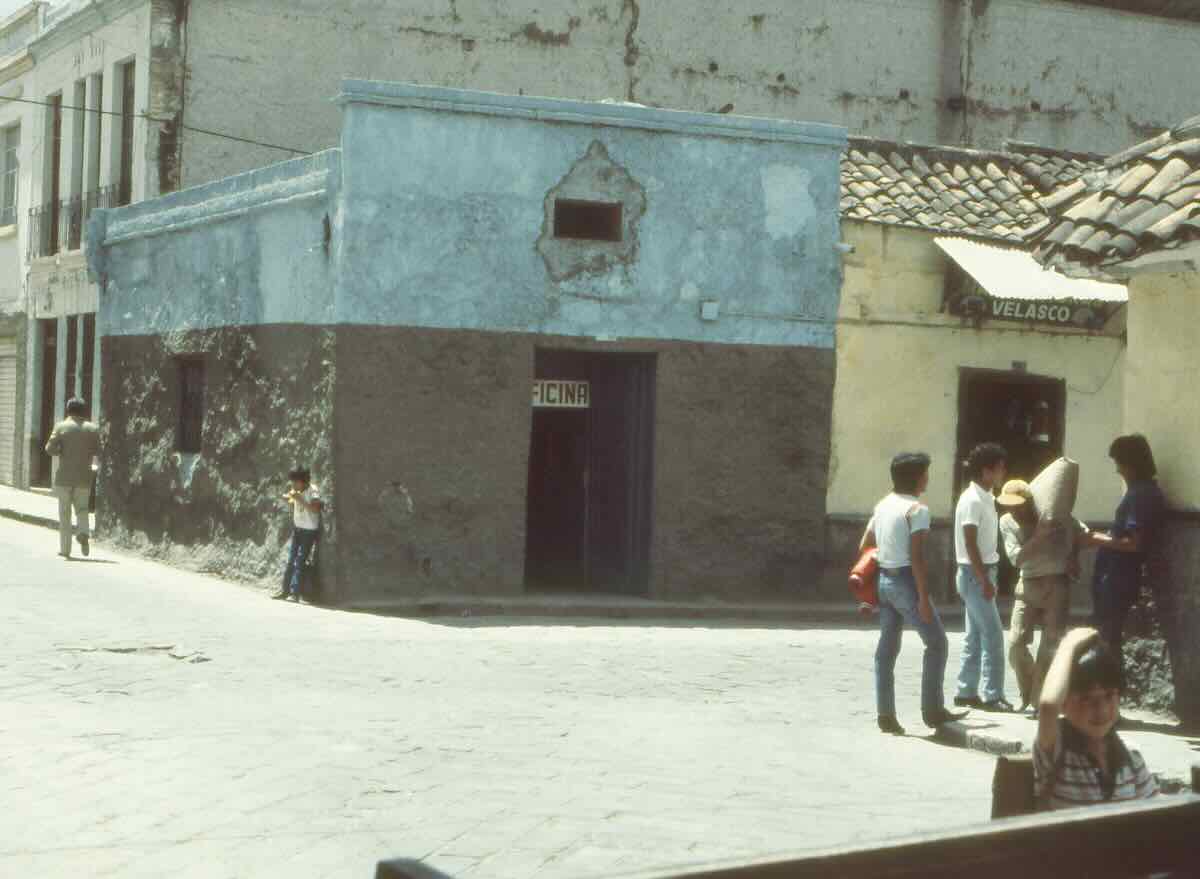
La Voz del Río Tarqui in 1985. The facilities inside were no more impressive than the outside of the building was.
La Voz del Río Tarqui takes its name from the famous Battle of the River Tarqui. After the new countries of South America gained their independence from Spain there was often disagreement over just where the boundaries were that they had inherited from Spanish rule. Ecuador was in a union with present-day Colombia and Venezuela until 1830 and during this time Peru claimed much of present-day southern Ecuador, including Cuenca and Guayaquil. In 1828 a large Peruvian army occupied Loja, to the south, and a few months later marched north to complete their conquest. In February 1829 General Antonio de Sucre, a hero of the war of independence, met the Peruvians on the banks of the Tarqui, twenty-five kilometers south of Cuenca. Both sides suffered heavy losses but Sucre’s army routed the Peruvians. Cuenca, Guayaquil, and Loja remained a part of Ecuador. Continue reading