Author Archives: Thomas

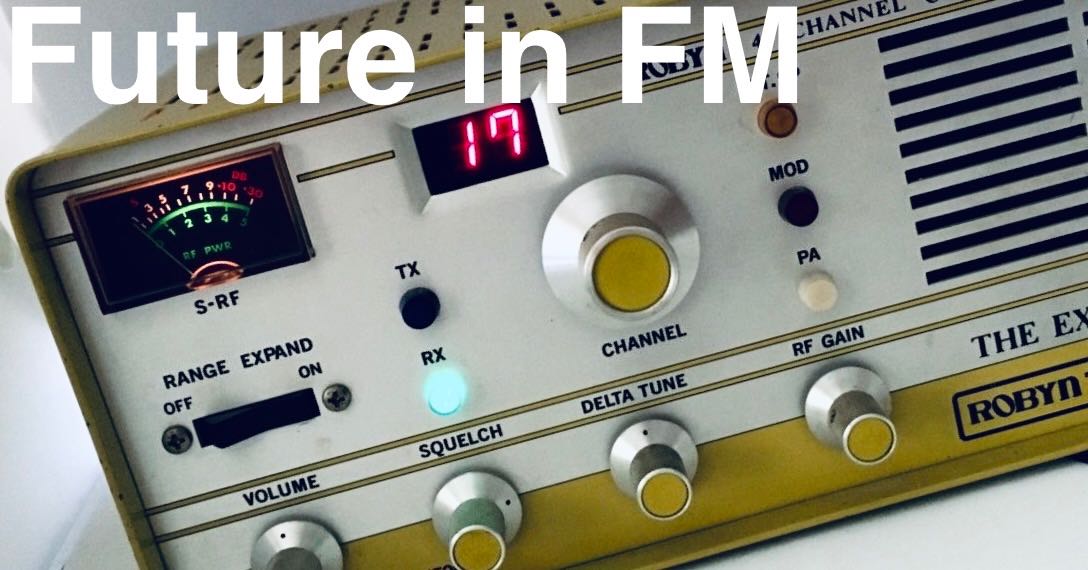
FCC approves FM for CB Radio

Many thanks to SWLing Post contributor, Ron who shares the following news via the Southgate ARC:

FCC signals FM CB will be permitted on 27 MHz

63 years after the introduction of Class D 27 MHz AM CB Radio the FCC has agreed to permit FM to be used

From FCC Memorandum Opinion and Order on Reconsideration WT Docket No. 10-119, issued July 15, 2021:

What the Memorandum Opinion and Order on Reconsideration Would Do:

• Grant Cobra’s Petition requesting that the Commission allow FM as an optional modulation scheme for all existing 40 CB Radio Service channels (with AM remaining mandatory).

• Grant Motorola’s Petition requesting that the Commission allow automatic or periodic location and data transmissions in the GMRS and FRS. The Commission’s rules currently permit the transmission of location information and brief text messages initiated by a manual action and automatic responses of location information.

• Grant Medtronic’s Petition requesting the correction of typographical errors and rule changes in the Part 95 Personal Radio Services Rules Report and Order that inadvertently altered the substance of the Medical Device Radiocommunications Service (MedRadio) rules

The FCC say:

After considering this additional information, we conclude that allowing manufacturers to add FM as an optional modulation scheme will not substantially change the fundamental nature of the CB Radio Service and will improve the user experience, as described by Cobra and President. How people use the service will not materially change or be expanded. Further, Cobra states that AM is a “well established” operating mode that is unlikely to disappear, even if we permit operations in FM mode.

Continuing to mandate AM capability while permitting dual modulation will provide benefits to CB radio users who will have an additional modulation option, while maintaining the basic character of the service.

The addition of FM as a permitted mode will not result in additional interference because users who hear unintelligible audio on a particular channel can simply select another channel or switch modes.

Read FCC Memorandum Opinion and Order on Reconsideration WT Docket No. 10-119
https://docs.fcc.gov/public/attachments/DOC-374114A1.pdf

Looking for firmware files? Don’t download unless you know the source!

A quick PSA from SWLing Post HQ…

Many of our modern receivers, transceivers, and SDRs allow us to perform firmware updates in order to upgrade product functionality and even fix known bugs. I try to keep the latest firmware on all of my radios.

With that said, always go to the original manufacturer or authorized retailer’s website to download firmware files, drivers, and firmware installation tools.

The internet is chock-full of deceptive sites offering “firmware files” for a wide variety of products that are nothing more than viruses and malware.

Never follow a firmware file link from a radio discussion forum, for example, unless that link can be verified as authentic and supported by the manufacturer or product designer/developer. It’s too easy for someone to pose as a discussion member and drop a link to a malicious bit of code!

I was contacted by two different SWLing Post readers recently who found links to malware posing as firmware files for radios in discussion groups. Obviously, I’m not going to share those links, so I simply ask that you double check the authenticity of the site before downloading.

That is all! Have a wonderful weekend and good DX!

-Thomas

Radio Waves: Skyworks Acquires Silicon Labs, DRM Response to RW Article, CNN finds Radio Biafra, and Free Online Foundation Course

Radio Waves:  Stories Making Waves in the World of Radio

Because I keep my ear to the waves, as well as receive many tips from others who do the same, I find myself privy to radio-related stories that might interest SWLing Post readers.  To that end: Welcome to the SWLing Post’s Radio Waves, a collection of links to interesting stories making waves in the world of radio. Enjoy!

Many thanks to SWLing Post contributors Troy Riedel, Dan Robinson, and the Southgate ARC for the following tips:


Skyworks completes acquisition of the infrastructure & automotive business of Silicon Labs (Skyworks)

IRVINE, Calif.–(BUSINESS WIRE)–Jul. 26, 2021– Skyworks Solutions, Inc. (Nasdaq: SWKS), an innovator of high-performance analog semiconductors connecting people, places and things, today announced that it has completed its acquisition of the Infrastructure & Automotive business of Silicon Laboratories Inc. (Nasdaq: SLAB) in an all-cash asset transaction valued at $2.75 billion.

“On behalf of the entire Skyworks organization, I want to welcome the Infrastructure & Automotive team,” said Liam K. Griffin, chairman, chief executive officer and president of Skyworks. “In addition to a strong legacy of innovation and execution, the I&A business brings a highly diversified customer base that will enable our continued expansion into strategic end markets. Together, we will accelerate profitable growth in key industry segments, including electric and hybrid vehicles, industrial and motor control, power supply, 5G wireless infrastructure, optical data communications and data center.” Continue reading

Paul wants to know: How do you store your radios?

Many thanks to SWLing Post contributor, Paul, who writes:

This may be a good discussion question on your great blog.

Basically, I am curious to learn where and how do people store their various radios – I think it’s safe to say that many of us have more than 5 or 10. Do you use bookshelves? TV stands? Those storage cube organizers? Custom shelving on the walls? It will be interesting to know …

All the best
Paul

I think this is a great question, Paul.

Personally, I have a lot of portables, so storage is definitely an issue. Since I do radio reviews, many models aren’t ones I use daily but I keep them for comparison reviews and for using in rotation.

The first thing I do when I store a radio is remove its batteries if it takes traditional cells (like AA, AAA, C, or D batteries). I remove them to prevent them from leaking and corroding the battery terminals. Even though I’ve migrated the Eneloop batteries (for AA and AAA), I still remove them for storage.

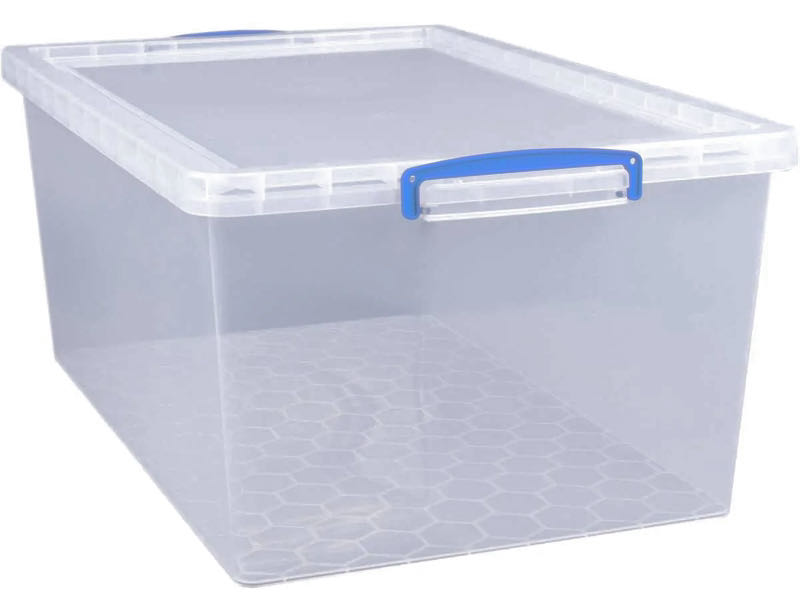
I built custom shelves into my office to accommodate large standard size clear storage containers; I believe the ones I have originally came from IKEA. I store all of my portables in those containers with a little padding or their original box to keep them from getting scratched up.

This system has worked for me very well over the years, but I’ll admit that I wish my small office had more shelf area for radios on display!

Readers: How do you store your radios when not in use? Please comment!

eBay find: Mint NOS Barlow Wadley XCR-30

Many thanks to SWLing Post contributor, Robert, who writes:

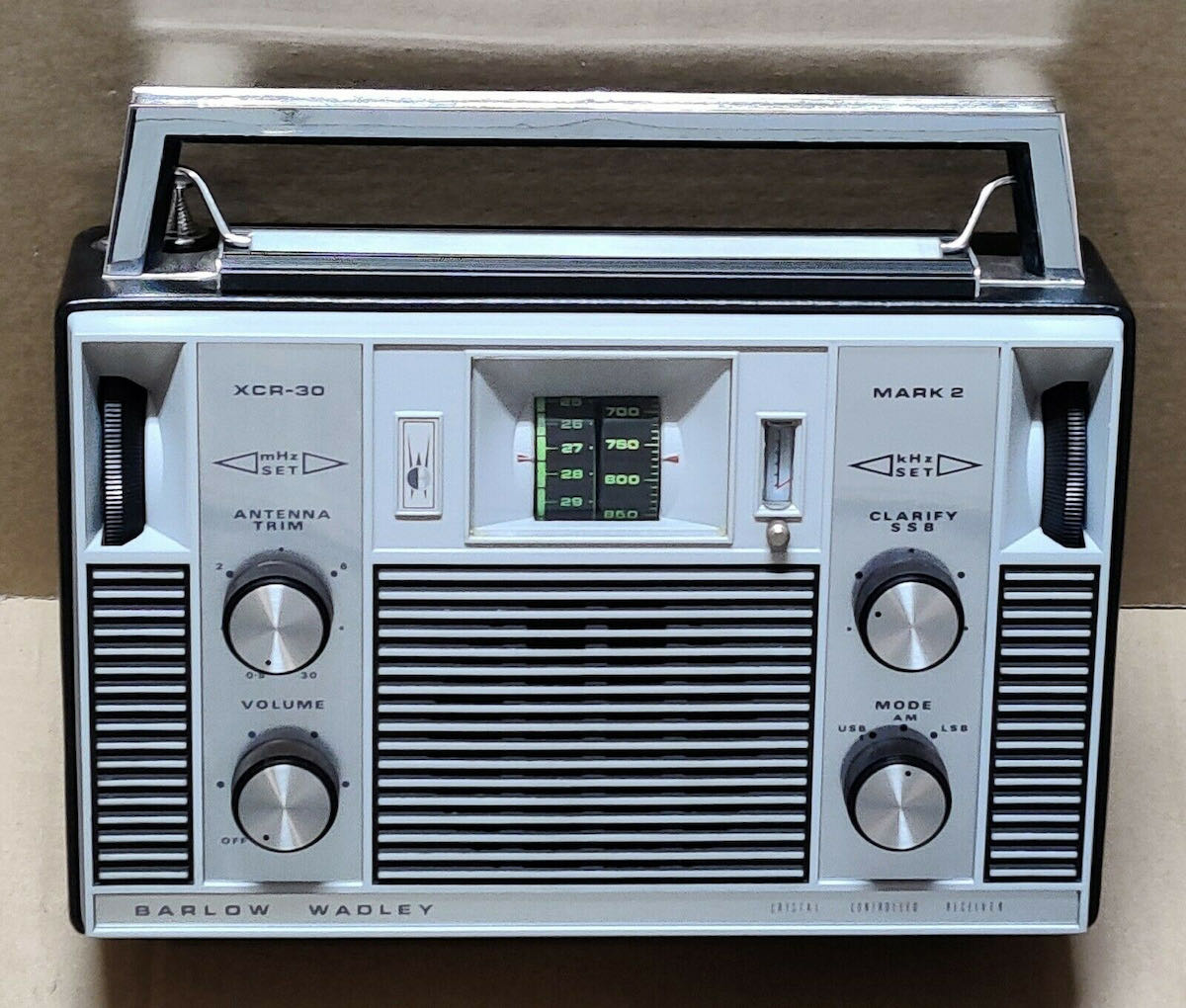
Thomas – Check out this NOS Barlow Wadley XCR-30 on eBay. I have never seen one of these in this condition!!

Photos

Listing Description

Offered is a MINT condition, brand new Barlow-Wadley XCR-30 Mark 2 receiver manufactured in 1974. This particular unit is in the original box, has never been used and is in pristine shape. It’s just like someone would have received it when buying it new nearly 50 years ago. Until a few months ago, it was still sealed in the original plastic and my initial intention was to leave it like that. However, the tape on the plastic had become brittle with age and no longer was adhering to the plastic. I therefore decided to remove the receiver long enough to get a series of photos and carefully placed it back in the plastic. All original accessories and documentation are included: one bag with the operating instructions, original warranty (guarantee) card, and extra log cards; another bag with the the plugs for the user to make the following items: grey plug (earphone), red banana plug (external antenna), black banana plug (grounding/earth), and grey plug (external power supply).

If you are searching specifically for an XCR-30, it’s most likely you know that this receiver was considered state-of-the-art and rather famous when first manufactured. The receiver uses what is known as a Wadley loop which is a clever method of obtaining frequency stability. There are various articles online which go in to greater detail regarding this receiver as well as the theory and significance of the Wadley loop. This receiver has a frequency range of 500 kHz to 30 MHz and which is covered in 30 separate bands of 1 MHz each.

Due to the age of this receiver it is being sold as-is with no guarantee of its operability in the future. Also, it is very much recommended that it be properly serviced prior to any attempt at powering up. At a minimum, all electrolytic capacitors should be replaced.

This receiver will be well packaged with extra layers of cardboard and packing peanuts around all sides, top and bottom for protection during shipping.

On Sep-20-21 at 18:39:31 PDT, seller added the following information:
Please note: I have NOT installed any batteries into the receiver. That’s what “never used” means in the title and description.

Wow! What a find, Robert. Thank you for sharing it with us. I bet this listing will go much higher in price–it’s rare to see a mint NOS Barlow Wadley XCR-30 on eBay. I would love an XCR-30 some day, but this will surely go beyond my bidding comfort level! Indeed, I’m very curious how high it will go!

Click here to view this XCR-30 on eBay.