Author Archives: Thomas

Build an affordable (but stealthy) Magnet Wire Vertical Loop antenna to mitigate condo QRM

Many thanks to SWLing Post contributor, TomL, who shares the following guest post:


Magnet Wire Vertical Loop Antenna

by TomL
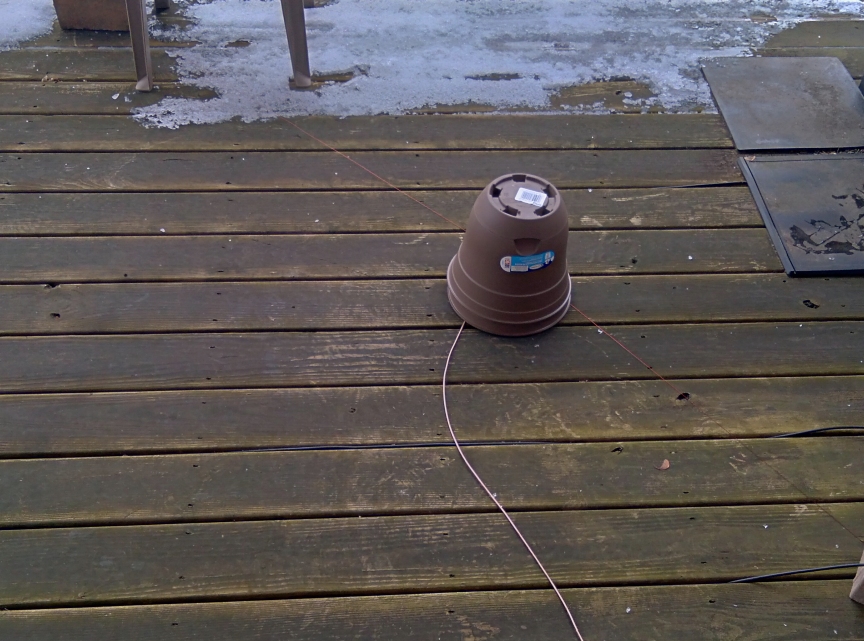
For those of you in a noisy condo like me, the environment does not give me many options.  I was experimenting with a YouLoop on the wooden porch with somewhat acceptable results.  For its size, it is an excellent performer, especially on the lower bands.  Here is a very interesting review of the YouLoop, including close-up pictures of the innards of the phase inverter and 1:1 balun, by John S. Huggins.  However, it is not waterproof and I was concerned about the ice and snow ruining it.  I could tape up the connectors with waterproof tape but I also wanted  something with a bigger capture area.  A magnet wire stealth antenna might be just the thing!

I just happened to have a waterproof 1:1 ATU balun from Balun Designs that I was going to use for future Amateur Radio use whenever I get around to passing the next level test; it is total overkill for what I intended to use it for.  It would make a good connection point and (this one) also acts as an RF choke as well.  One can make a 1:1 balun by buying the right Type of ferrite core and winding it yourself.  Here is just one idea from Palomar Engineers.

So I dusted it off, went to a local store to get a 100 foot spool of 26 gauge magnet wire and tested it strung up around my living room. It came out to be a rectangle about 42 feet in circumference.  Results were usable. I expected lots of noise and there is a great deal across the bands, so only the strongest shortwave stations were received. However, I was surprised by how strong the mediumwave band was and good to listen to without an amplifier.

I am ambivalent towards trying to perfectly match the impedance since this is a broadband receive-only antenna and the impedance will vary greatly over MW and SW bands.  And I don’t want to mess with a remotely controlled tuned loop since this antenna was destined for the outdoor porch.  I tried a Cross Country Wireless preselector at my desk but had some mixed results.  I later found out, by disconnecting things in series, that the preselector inline raised the noise level about 5 dBm, so I took it out for now. Perhaps it needs more internal shielding or the connecting cable is bad.

Polarization is an issue, too.  I have read that most man-made noise (QRM) is vertically polarized, so why would I use a vertically oriented loop?  Then I saw David Casler’s video on loop antennas where he explains that connecting a vertical loop antenna at the bottom or the top makes it horizontally polarized (connecting the coax on the side makes it vertically polarized).  I never knew that!  Horizontal polarization will mitigate some of the offending QRM as well as match the polarization of mediumwave band transmitters.  Furthermore, I read that a horizontal loop will have poor signal pickup at low frequencies because it is not high enough off the ground, similar to a horizontal dipole. For now, a vertical loop connected to facilitate horizontal polarization is what I want.

A note about wire size. People make a big deal about it but those are mostly amateur radio people.  Transmission depends on efficiency so things like wire size, skin effect, standing waves, and other things matter (see here, for example).  With a receive-only antenna it is OK to use very thin wire.  Resonance can matter if you want the last ounce of signal strength with an antenna tuner, like in high-Q type loops where the bandwidth is very narrow and you are using a multi-turn loop with variable capacitor and a pick-up coil of wire to the receiver.  Comparatively, my simple loop is depending more on a single turn of wire, the aperture size, length of wire for its performance, and carefully isolating the feedline coax using RF chokes at both ends.

Here is one example of a strong station from Cuba I was able to record because WLW was off the air for some unexpected reason.

Radio Reloj, Cuba 870 kHz (At the end, you can hear WLW come back online with CBS news):

Side note about Radio Reloj on Wikipedia, the strange format seems to fit well with a totalitarian regime, including a “corrector” who “corrects the content/writing errors to meet the requirements”.  Read the wiki link for yourself.  Not a society I want to live in, thank you very much!

Example of 80 meter band performance – Greetings to a new person from members of the “Awful, Awful, Ugly Net”, 3855 kHz:

Encouraged by the results, I “installed” the magnet wire around the support beams of the wooden porch, wrapping it carefully to create a square loop. Holding it in place is a brick at each bottom corner since I am not allowed to nail anything into the Association-owned porch.  The length came out to about 32 feet (8 feet per side), so I trimmed it and connected to the balun.  I also added an RF choke at the Airspy HF+ input from Palomar Engineers which helped bring noise down a couple of S-units.   That might not sound like a lot but by also shutting off the living room air filter and an AC switch with “wall-wart” AC power adapters on it, I was able to reduce the noise a little bit more.  There is still a lot of noise from the neighbors, so it is not a perfect situation.

Here are two examples of reception with the outside installation.

Gateway 160 Meter Radio Newsletter, broadcast (in AM) by WA0RCR every Saturday on 1860 kHz:

Side note about the Radio Newsletter.  I stumbled on it when using the YouLoop and found that some of the content is very interesting and informative.  Of course it is geared mostly towards amateur radio but some of the news items are of general radio interest as well. It airs 1pm Saturday through 2am Sunday, USA Central Time.  Obviously, many segments repeat during that lengthy timeframe and reception depends on propagation from Missouri.

KDDR 1220 kHz, West Fargo, ND station ID (presumably “nighttime” power of 327 watts):

The shortwave bands are still a noisy disaster but signal levels are higher compared to the YouLoop.  Only the strongest stations come in like WRMI, WHRI, Radio Espana, Radio Habana, and CRI. And I can hear the loudest amateur radio operators.

Just for grins, here is Radio Rebelde on 5025 kHz when band conditions were above average:

Another phenomenon I am looking into is the reception pattern of a vertical loop.  Less than 1/10th wavelength, the null is through the center of the loop.  At one wavelength, the null manifests in the plane of the wire loop.  They are too close to phase them but switching between two directional loop antennas might improve reception depending on frequency.  We shall see in the future.

At least for now, I have a decent mediumwave band which performs better than the useful CCrane Twin-Ferrite amplified loop antenna that was used in the (noisy) indoors, I can hear the 160 & 80 meter amateur bands better, and the reception of the strongest shortwave broadcasters are more predictable.  Not bad for four dollars of wire!


Brilliant, Tom! Again, I love how you’ve not only made an inexpensive antenna, but you’ve even done it within your HOA regulations. You’re right, too: if you’re not transmitting into an antenna, it blows the experimentation door wide open! Thank you once again for sharing your project with us.

Click here to check out all of Tom’s guest posts and portable adventures!
Radio Waves: Jessica Rosenworcel Acting FCC Chair, Nature Broadcaster Ludwig Koch, India DRM Update, and the QSO Today Ham Expo

Radio Waves:  Stories Making Waves in the World of Radio

Because I keep my ear to the waves, as well as receive many tips from others who do the same, I find myself privy to radio-related stories that might interest SWLing Post readers.  To that end: Welcome to the SWLing Post’s Radio Waves, a collection of links to interesting stories making waves in the world of radio. Enjoy!

Many thanks to SWLing Post contributors Trevor S, Ron, Phillip Smith,  for the following tips:


President Biden Taps Commissioner Jessica Rosenworcel as Acting FCC Chair (ARRL News)

President Joseph Biden this week designated FCC Commissioner Jessica Rosenworcel as acting chair of the FCC. She succeeds, at least temporarily, former FCC chair Ajit Pai, who resigned effective on January 20.

“I am honored to be designated as the Acting Chairwoman of the Federal Communications Commission by President Biden,” Rosenworcel said in a statement. “I thank the President for the opportunity to lead an agency with such a vital mission and talented staff. It is a privilege to serve the American people and work on their behalf to expand the reach of communications opportunity in the digital age.”

Prior to joining the FCC, she served as Senior Communications Counsel for the United States Senate Committee on Commerce, Science, and Transportation. Before entering public service, she practiced communications law in Washington, DC.

The newest FCC commissioner, Nathan Simington, a Republican appointee, said Rosenworcel “brings deep knowledge and experience and highly informed judgment to her new position,” and he expressed appreciation that the Biden Administration acted promptly to establish FCC leadership by “selecting such a distinguished public servant for this vital role.

Fellow Democrat Geoffrey Starks said Rosenworcel “has been a passionate advocate for bringing the benefits of broadband to all Americans — particularly our children.” He said her designation as acting chair “comes at a critical juncture for the Commission, as COVID-19 has made bold action to end internet inequality more vital than ever.”

The Commission’s other Democratic appointee, Brendan Carr, called Rosenworcel “a talented and dedicated public servant, as evidenced by her 8 years of distinguished service on the FCC.”

On Twitter, Rosenworcel said, “The future belongs to the connected,” and she described herself as an “impatient optimist, mom, wife, [and] inveterate coffee drinker.”[]

Ludwig Koch and the Music of Nature (BBC Radio 4)

Ludwig Koch was once as famous as David Attenborough, as pioneering as ‘Blue Planet’ and as important as the BBC Natural History Unit. They all owe their existence to this German refugee who first recorded the music of nature. Through his archive and new field recordings the poet Sean Street tells the story of Ludwig Koch.

When Sean Street was recording in a store-room at the Science Museum for a Radio 4 archive programme he came across a grey crate, stencilled, as if it belonged to a band on tour, with KOCH on it. This was the disc-cutting machine which Ludwig Koch used for a decade to make the recordings of birds, mammals and insects that led to a new field of study, of broadcasting and the creation of the BBC’s Natural History Unit.

Sean and his producer then began investigating and discovered that Koch made the first ever wildlife recording, of a bird, when he was eight, in 1889 – and that it still exists in the BBC’s archives.

Koch was an effusive man and this led to several confrontations with Nazi officials, whom he despised. There is an extraordinary recording of him telling the story of a Berliner whose bullfinch sang ‘The Internationale’. He was carted off to prison and the bird ‘executed’. “Under dictatorship,” Koch observed, “even songbirds suffer”. He came to England, worked with Julian Huxley on theories of animal language, and recorded birds from the Scillies to Shetland.

In 1940 he joined the BBC and soon became a household name, beloved of comedians (there’s a great sketch by Peter Sellers parodying him at work) because of his resolute pronunciation of English as if it were German.

As well as being wonderful radio in itself his work was of great significance. It inspired producer Desmond Hawkins to start ‘The Naturalist’, (using Koch’s enchanting recording of a curlew as its signature tune). Sean Street uses his recordings and contributions of those who worked with him in what becomes a natural history programme in itself, with Koch the subject and Sean exploring his habits and habitat.

There is also an attempt to record curlews as he did so successfully, to shed light on the achievements of this courageous, influential and loveable genius. Today sound-recordists use tiny digital machines and sophisticated microphones. But there are other problems – traffic, planes, people – and fewer, shyer curlews.

Producer: Julian May

Click here to listen to this radio documentary on BBC Radio 4.

Digital Radio Mondiale in Focus in India (Radio World)

The author of this commentary is chair of the Digital Radio Mondiale consortium.

Right from the beginning of 2021, Prasar Bharati, the public radio and TV broadcaster of India, has put its cards on the table. First it clarified that no AIR station was being closed anywhere in any state, a rumor that had made the media rounds in India.

Prasar Bharati has further announced that it is moving ahead with its plans to strengthen All India Radio, expanding its network with more than 100 new FM radio transmitters across India.

The AIR Network already comprises a few hundred stations and several hundred radio transmitters in one of the world’s largest public service broadcasting networks that operates on multiple terrestrial, satellite and internet platforms.

Prasar Bharati is also moving ahead with its plans to introduce digital terrestrial radio in India. According to the Indian broadcaster, select AIR channels are already available through digital DRM technology to listeners in many cities/regions. They can experience the power of DRM through a choice of multiple radio channels available on a single radio frequency in digital mode. These include AIR News 24×7 dedicated to news and current affairs, AIR Raagam 24×7 dedicated to classical music, apart from local/regional radio services and Live Sports.

According to Prasar Bharati AIR is in an advanced stage of testing digital technology options for FM radio, and a standard will be announced soon to herald the rollout of digital FM radio in India.

Already in 2020 AIR had introduced nonstop pure DRM transmissions with three services or programs on one frequency in four key metros: Mumbai 100 kW (1044 kHz), Kolkata 100 kW (1008 kHz), Chennai 20 kW (783 kHz) and New Delhi 20 kW (1368 kHz).[]

QSO Today Virtual Ham Expo (QSO Today Expo)

Coming to your desktop, laptop, and tablet: March 13 and 14, 2021 and “on-demand” until April 12, 2021

?Early Bird Ticket Sales begin January 4, 2021

?Our first QSO Today Expo was a great success with over 16,000 attendees! We’re working hard to make our upcoming Expo even better with new speakers, panel discussions, kit building workshops, easy-to-use video technology to meet with exhibitors, and much more. There’s no need to travel – anybody can participate in this groundbreaking, amateur radio Expo built on a virtual reality platform.

After our last Expo, we asked for feedback from the amateur radio community on how we could make our next Expo even better. We received great suggestions, many of which we’ve incorporated into our upcoming event. Whether you’re a ham that doesn’t want to travel because of Covid or just live too far from a hamvention, the QSO Today Expo offers the opportunity to learn from many great speakers, meet with exhibitors to see the latest technology, and engage with fellow hams without leaving your home ham shack. And save thousands of dollars since you don’t have to worry about travel, food, and lodging! Early Bird Tickets are just $10 (to help cover the cost of this event, $12.50 at the “door”) and include entry for the Live 2 day period as well as the 30 day on-demand period).

Attendees have the opportunity to:

  • ?Listen to and engage with 60+ internationally recognized ham radio luminaries that have committed to lead Expo sessions.   For the list of speakers and speaker topic, click here
  • Take part in Live virtual kit building workshops.  Kits will be available for purchase and delivered to you in time for the Expo so you can participate and build from the convenience of your home.
  • Walk through our virtual exhibit hall filled with popular amateur radio suppliers. Watch new product demos and interact directly with booth staff.  At this Expo we’ll introduce new video technology to enable a better experience when engaging with exhibitors.
  • Prior to the Expo, take advantage of our new speaker calendar technology to download speaker times in your local time zones to Google and Outlook calendars.  This way you’ll have a complete schedule of what sessions you want to participate in.
  • Return over the next 30 days to listen to speakers you missed during the Live period, explore, and re-engage exhibitor offerings.

Do you enjoy the SWLing Post?

Please consider supporting us via Patreon or our Coffee Fund!

Your support makes articles like this one possible. Thank you!

“This Is A Music Show” 100th show via WRMI

Many thanks to the host of This Is A Music Show, who shares the following announcement:

Hi Thomas,

Just wanted to let you (and your readers) know about the special milestone broadcast happening on Wednesday evening in North America: “This Is A Music Show” will be having its 100th episode, and to celebrate the occasion the show will be 2 hours long. The show is broadcast on WRMI’s 5850 kHz transmitter, which covers most of North America coast-to-coast. The official schedule:

Thursday 0200-0400UTC on 5850 kHz (Wednesday 6-8pm PT/9-11pm ET) via WRMI

For those who haven’t heard the program, each week I play the finest secondhand vinyl records found at thrift stores, garage sales, flea markets, etc. The 100th episode will feature some favourite finds from the past couple of years, along with a wide range of lesser-known-but-still-great tunes that you may or may not have heard before. I hope you can tune in and maybe hear your new favourite song or artist. 🙂

Best Regards–

Your Host

The Icom IC-705 is about to achieve ‘Holy Grail’ status

In 2019, shortly after Icom announced the Icom IC-705, I speculated that this rig might be a contender for “Holy Grail” status.

I must admit…the more I use this radio, the more I love it. It is a proper Swiss Army Knife of a radio. Even though I’ve owned and operated it for a few months, I still haven’t explored all that it can do, and I keep finding features I love.

Case in point

Yesterday, I upgraded my IC-705’s firmware. Unlike other devices I’ve been evaluating recently, IC-705 firmware updates aren’t fixing numerous bugs and issues, rather they’re adding more functionality.

After completing the upgrade, I hooked the ‘705 up to my main antenna and worked a few Parks On The Air (POTA) stations off of the supplied battery pack (instead of a power supply). While I worked on other projects in the shack, I checked the POTA spots and work a few stations with a whopping 5 watts of output power.

After a couple hours on the air (mostly listening), the internal battery pack still had a good 60-70% capacity.

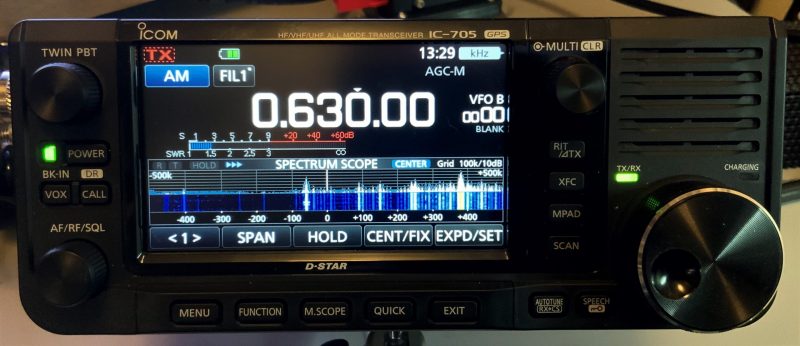
At one point, I tried a little daytime mediumwave DXing and cruised past 630 kHz which some of you might already know is the home of one of my favorite hometown radio stations, WAIZ.

From my home, WAIZ is a tough catch, so it was weak, but I could hear it.

This reminded me that I had made a recording of WAIZ with the IC-705 when in my hometown earlier this month.

Normally, I pull the MicroSD card out of the IC-705–which almost requires needle nose pliers and is one of my few complaints about this rig–and view the files on my PC or MacBook, but I was curious if perhaps the IC-705 software had a built-in file display.

Of course it does!

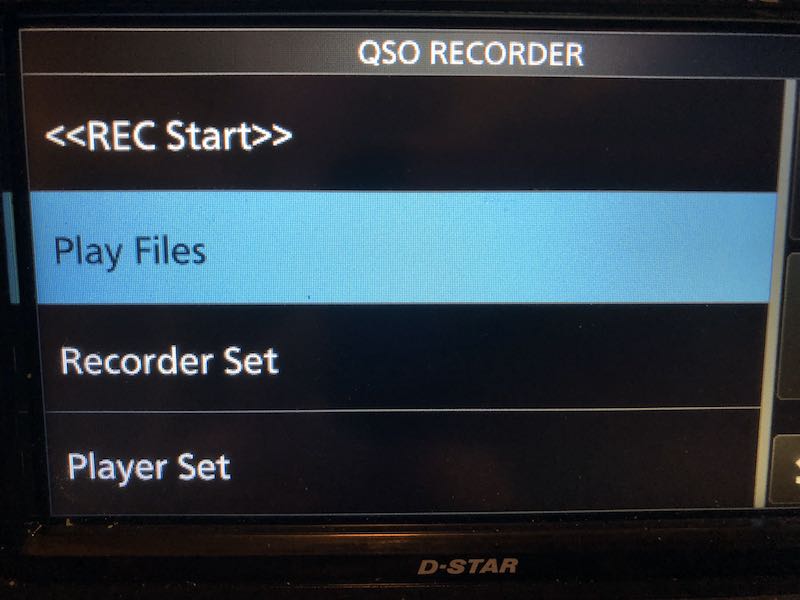
Simply press the MENU button, then the RECORD button on the touch screen, and you’ll see the following selections:

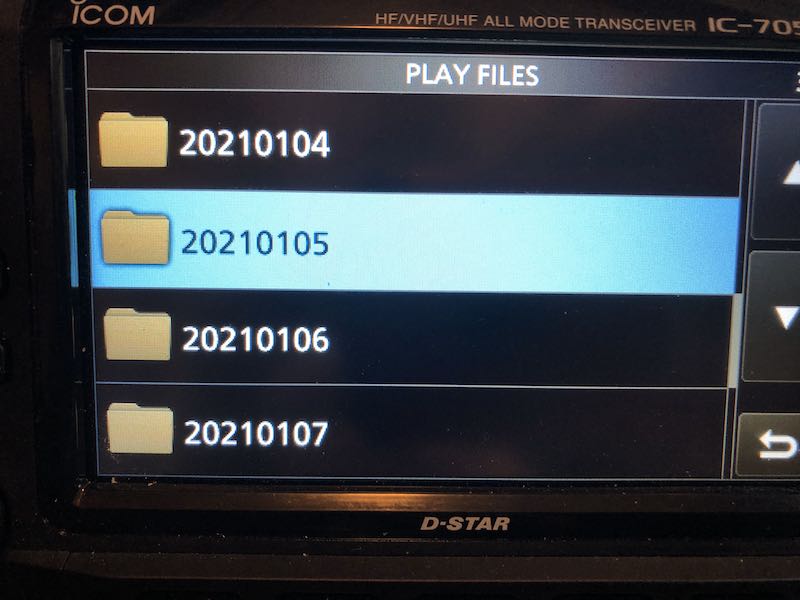
Press “Play Files” and you then see a list of folders organized by date:

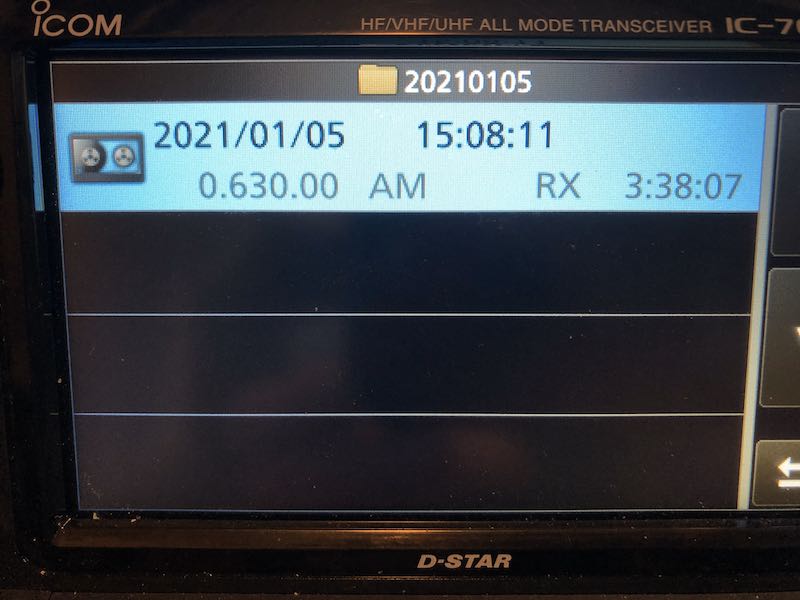
Click on a folder and you’ll see a list of recordings made that day:

Here’s the genius bit for those of us who like to archive broadcast recordings…the IC-705 embeds the following meta data:

  • Date of recording
  • Start time of recording
  • Recording length
  • Frequency
  • Mode

These are some of the most important pieces of information I use to index my audio recordings and the IC-705 does this automatically.  In fact, if you allow the IC-705 to gather its time information from the internal GPS, the time stamp will be incredibly accurate.

The only thing I add to the file name after export is the broadcaster name/station callsign.

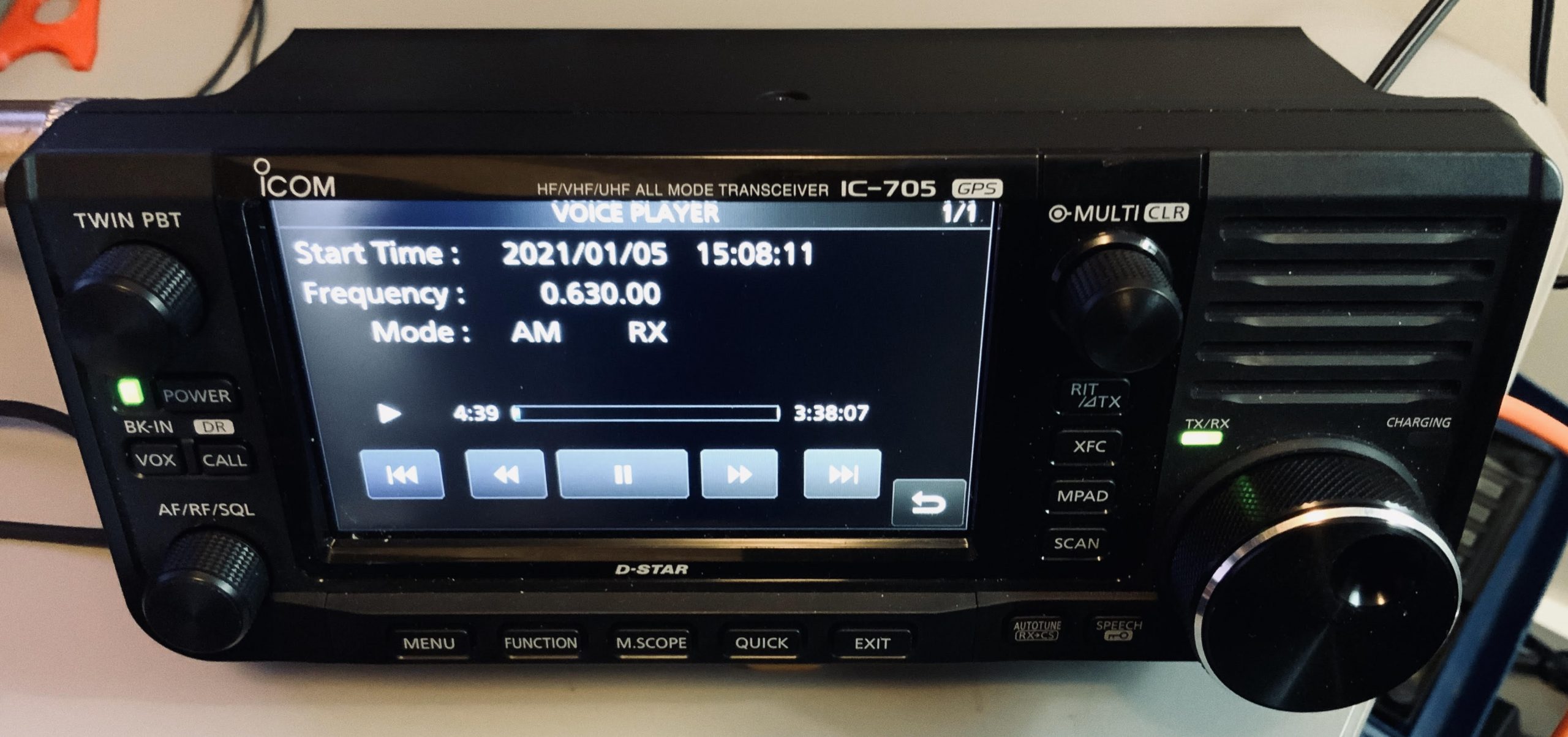
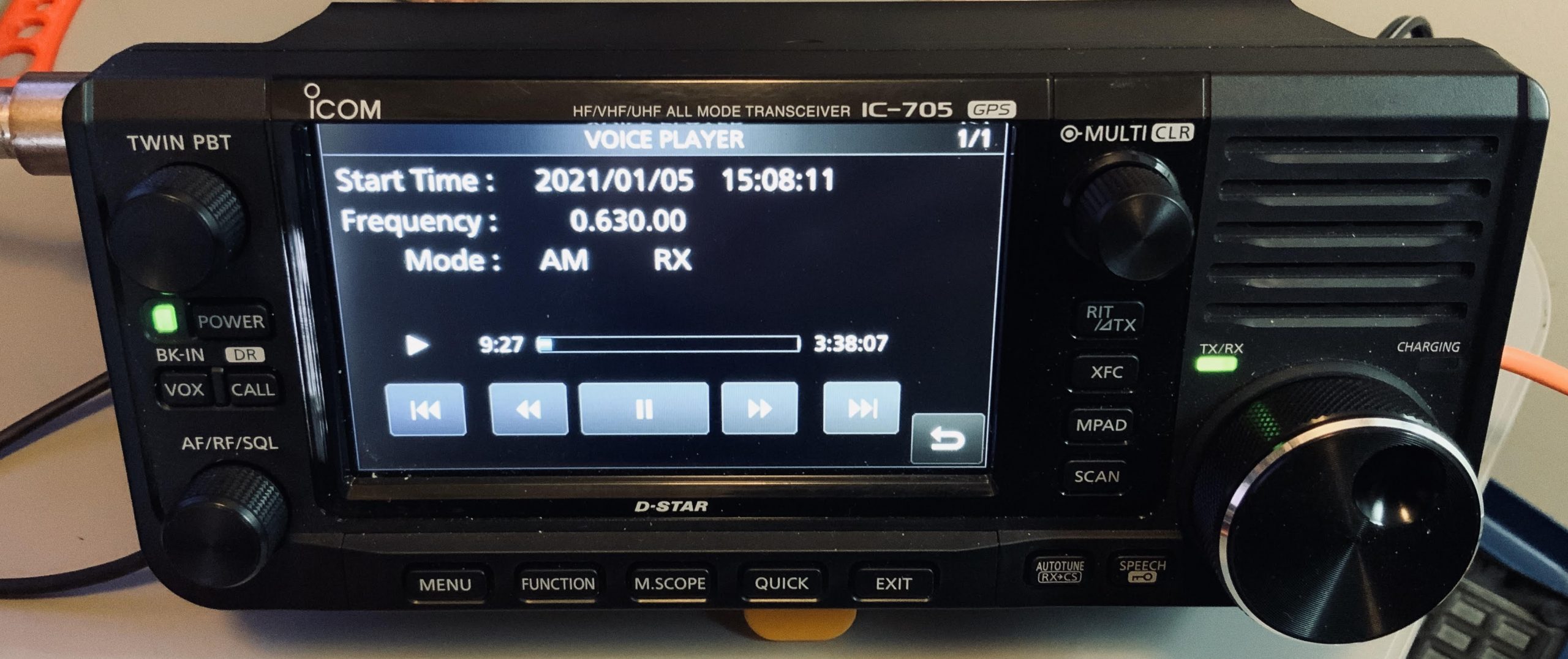
If that wasn’t enough, if you touch one of the recording files, the IC-705 will open it in an audio player:

The built-in player displays the meta data, and even includes a number of controls like fast-forward, rewind, skip to next or previous file. and pause.

I’m sure this is the same audio player found in the IC-7300, IC-R8600 and other late-model Icom SDR rigs. But in a portable battery powered transceiver? This is a genius feature.

As I type this post I’m listening to the audio from the WAIZ file shown above. I can imagine when I’m able to travel again (post-pandemic), how useful this will for one-bag air travel.

(If you’d like to listen to WAIZ, check out these ‘705 recordings.)

Not only is the IC-705 a QRP transceiver and wideband multi-mode general coverage receiver, but it’s a recorder and audio player with a built-in front-facing speaker. I can set this transceiver at my hotel bedside and listen to recordings I made in the field earlier that day or week.

Keep in mind that the IC-705 is an expensive radio–certainly one of the most pricey QRP radios ever produced at $1,300 US (at time of posting although I’m sure we’ll start seeing lower pricing this year). But if you’re an SWL and ham, you’ll find the IC-705 is the most versatile portable transceiver on the market. If you’re an SWL only, you can disable the transmit on the IC-705 and essentially have a portable battery-powered SDR receiver with built-in audio recording and playback with color touch screen spectrum and waterfall display.

Despite the price, this is Holy Grail territory in my book.

Icom IC-705 Review

If you subscribe to The Spectrum Monitor magazine, you’ll be able to read my (4,000 word!) review of the IC-705 in the upcoming February 2021 issue.

Icom IC-705 firmware v1.20, programming software v1.10, and a new 3rd party remote app for Android

Many thanks to SWLing Post contributor, Markku Koskinen, who notes the following new and updated programs for the Icom IC-705 general coverage transceiver:

First, Icom has published firmware version 1.20 which includes a number of new features. We’ll post the full announcement below. Click here to view the release notes and download.

Secondly, Icom has published a new version (1.10) of their IC-705 programming software. The new release also includes a number of additions. Click here to view the release notes and download.

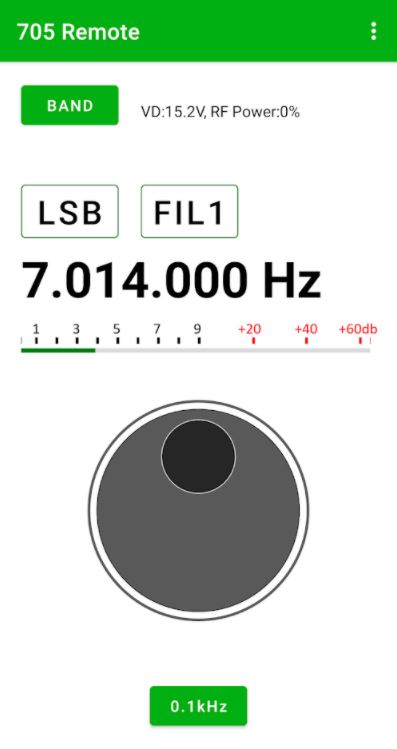
Finally, Markku notes that there is now an IC-705 Remote application on the Google Play app store.

The app appears to control basic functionality like tuning, band, mode, filter, and CI-V address switching.  The app is free and should work on most Android devices.

Thanks for the tips, Markku!

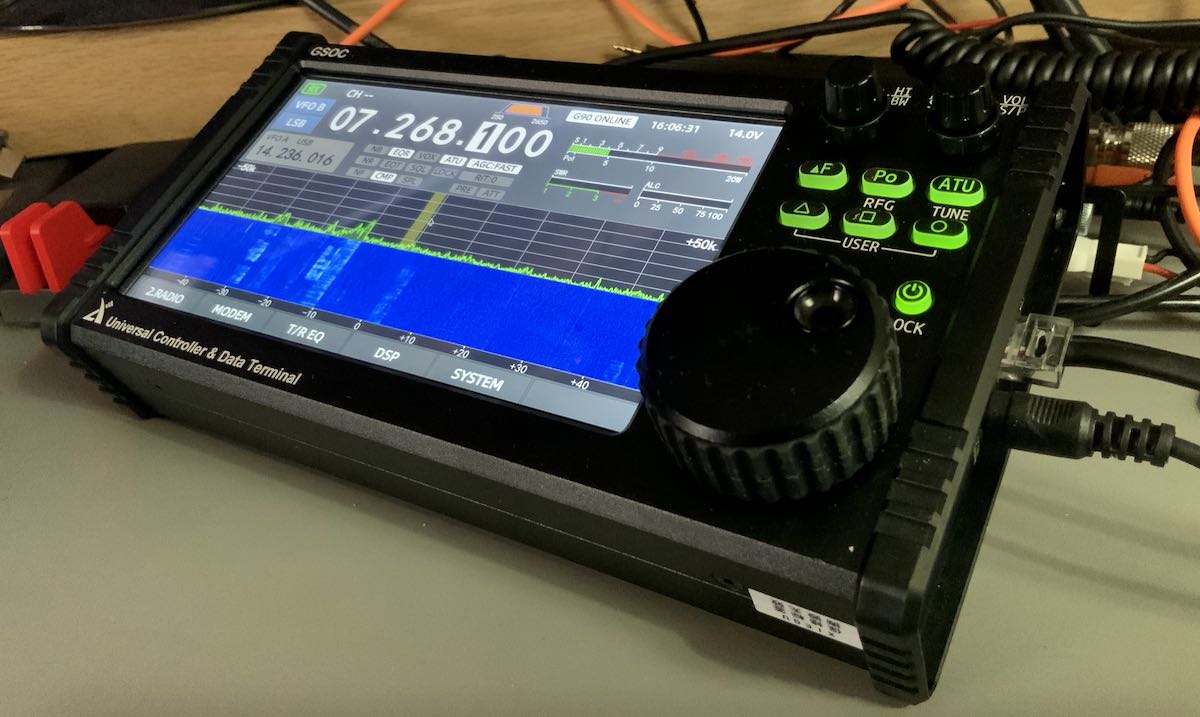
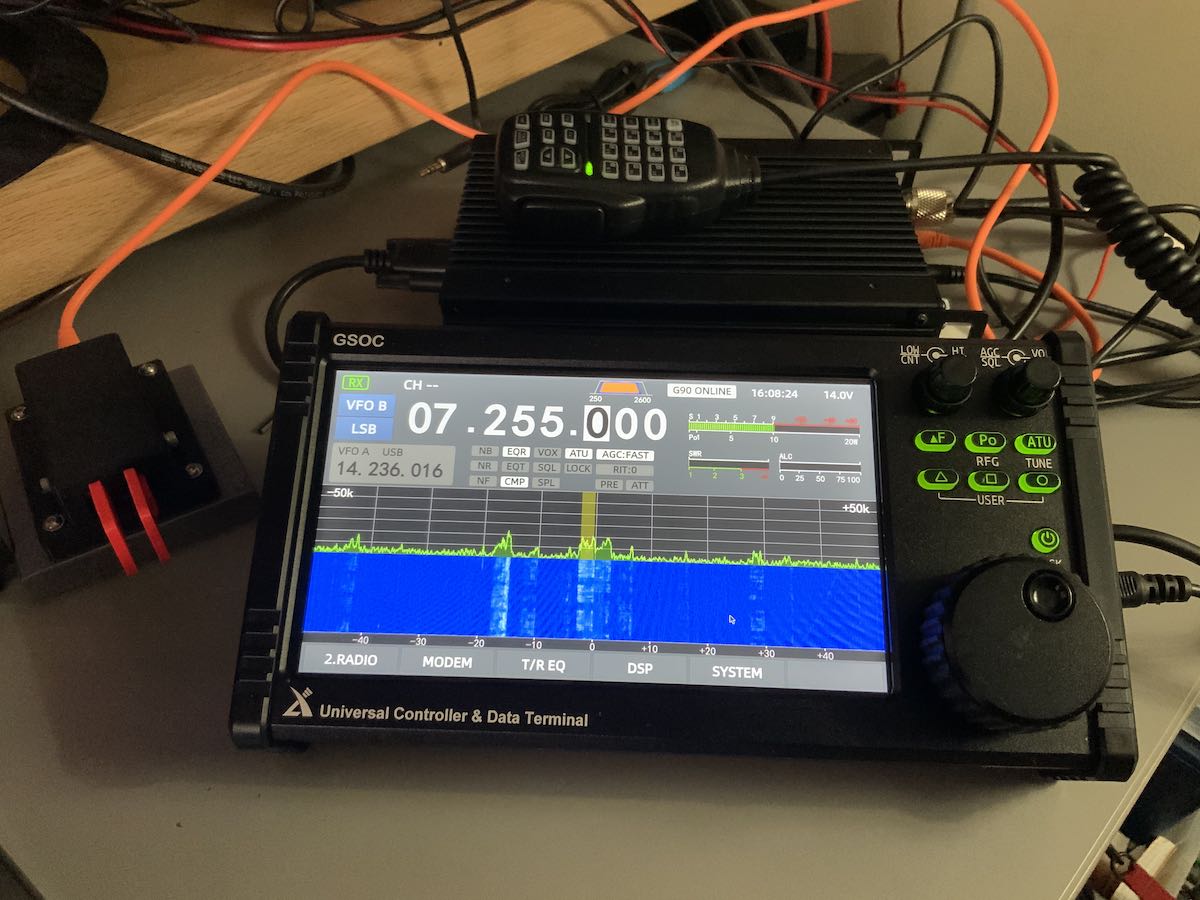
Xiegu GSOC after latest v1.3 firmware update

Yesterday, I cleared my radio bench and performed a few firmware updates that were recently published for the Xiegu GSOC Controller and Xiegu G90.

Upgrading the Xiegu GSOC to the latest firmware version requires also upgrading the Xiegu G90 to take full advantage of the GSOC fixes.

I downloaded the G90 firmware, driver and upgrade tool, then read through the upgrade manual. The process is pretty straight-forward, but the G90 transceiver actually has two units to upgrade: the control head and the transceiver body. I successfully completed both with no errors from the firmware tool.

Next, I downloaded the 300MB+ GSOC upgrade which is essentially an entire Linux operating system. I flashed it to a 16GB MicroSD card, inserted it in the GSOC and after turning it on it extracted and upgraded its OS. It’s an easy upgrade, but requires a MicroSD card and download time (especially if you’re like me and have a crummy rural internet connection). 🙂

GSOC v1.3

After I completed the upgrade, I connected the GSOC control head to the Xiegu G90 once again and turned it on.

The GSOC still takes a good 30 seconds to start up because it’s essentially loading a Linux OS.

Keep in mind there was one fix in particular I was looking forward to checking out: the CW latency issue.

CW latency

As I mentioned in my initial GSOC post, and also in the post after the first GSOC firmware update, the GSOC had been exhibiting sidetone latency that interfered with my ability to correctly send words and letters. In fact, it really made it impossible to send accurate code at speeds north of 11 WPM or so.  Xiegu engineers tried to fix this after the first GSOC update, but it was still present. I suspected the GSOC CPU simply wasn’t fast enough to produce sidetone audio as the G90 body fed it a steady stream of dits and dashes. So far, my GSOC evaluation has pretty much been on hold because I’m unable to use CW mode.

I’m happy to note that Xiegu has now fixed the CW latency issue, but there’s a small caveat. I’ll explain…

In SSB, FM, or AM mode, for example, the GSOC produces audio via its internal speaker. This is also how it used to produce CW sidetone audio.

After the v1.3 firmware update, when you use CW mode, the audio will be produced by the G90 body. Not an elegant solution, but this does eliminate CW sidetone latency because the GSOC controller is effectively eliminated from the audio chain.

I connected the GSCO/G90 to a dummy load and tested CW which seemed to work fine. Then I hopped on the air and worked POTA activators in Ohio, Maryland and Indiana with no problem because I was essentially only using the G90 body (hence the same experience I had in my G90 review).

Honestly? This might not bother some ops, but it is a bit weird to use the GSOC on AM and SSB then switch to CW mode since the speaker audio moves from the GSOC to the G90 body. (If using headphones, I suppose you’ll have to unplug from the GSOC and plug into the G90.)

When I’ve had the GSOC in the shack, I’ve placed the control head on my table (which is the main operating position) then placed the G90 body about 2 feet away behind one of my PC monitors. With this setup, the audio jump to the G90 body is very noticeable.

This GSOC and G90 are both on loan from Radioddity, but if I owned the GSOC, I believe I’d connect an external speaker to the G90 to bring the audio closer.

It’s worth noting that If the “Modem” function is turned on in CW mode, the audio will be played via the GSOC (not the G90 body).

Noise on the spectrum display

Although it wasn’t noted in the firmware release notes, I had hoped they might have adjusted the IQ feed to help eliminate some ever-present noises on the spectrum display (which cannot be heard in the audio).

After I performed the update, the GSOC spectrum display seems to be somewhat “deaf.”

At least, I’m not able to see signals as I did moments before the upgrade. I can hear signals as I tune through the bands–and they sound fine–but I can’t see anything corresponding appropriately on the spectrum display or waterfall. I tried adjusting the default spectrum gain values but this doesn’t seem to help. I’ll try replacing out the IQ cable, but again I doubt this will have an effect because I’m sure it’s associated with the update.

If I tune to the broadcast bands, I can see strong AM signals in the spectrum, but it seems weaker SSB and CW signals are lost.

I haven’t seen other GSOC owners report this yet, so must assume it’s an issue with my particular unit and possibly a glitch from the firmware updates? I will contact the manufacturer and see if this can be sorted out.

Summary

The v1.3 firmware update also added a Bluetooth serial port, tweaked AGC algorithms, and added the ability to perform a full reset from the GSOC system menu. There are still some missing anticipated features like direct audio recording to the MicroSD card.

If I’m being perfectly honest, though, the GSOC still feels like a product in Alpha or Beta testing–not one in production. The CW sidetone issue would have been discovered if Xiegu had even one Beta tester attempt a few CW contacts prior to production. Spectrum display noise would have also been found. In addition, most promised features should have been on the unit from day one and some–like the notch filter–should have functioned properly. The whole unit feels rushed and not yet ready for prime time.

I personally much prefer using the Xiegu G90 as-is, without the GSOC controller. It’s not an Icom IC-7300 or even a Yaesu FT-891 for that matter, but it’s a very budget-friendly, full-featured field radio that sets a benchmark for its $425 US price. While I’m not a huge fan of the G90’s audio, it’s perfectly fine for field use and normal operation.

I’m undecided if I’ll continue reviewing the GSOC at this point–I may simply send it back to Radioddity who–very much to their credit–has embraced my criticisms of this unit.  At present, the GSOC and G90 are living in their shipping boxes until I pull them out to perform upgrades, test them, then put them back in the boxes. Not how it should be. When I review new gear, I’m usually eager to put it in full service in my shack and in the field. Frankly, I just feel like the GSCO and G90 take up too much space and are in the way of radios I prefer using.

Are you a Xiegu GSOC owner? What are your thoughts? Please comment.

ABR Industries and the importance of quality cable and connectors

Two radio accessories I often forget to mention in my posts and reviews are cable and connectors. When a cable functions well, it’s taken for granted and easily overlooked.

You’ll hear me say that a radio is only as good as its antenna and while that’s true, the important link in the system is your antenna cable and connectors. If you have a fabulous antenna and a benchmark radio, but you connect the two with substandard cables, it will create unnecessary losses and even shorts if you’re not careful.

But let’s be honest: it’s easy to cheap out on cables.

When I first started using tabletop receivers and transceivers in my youth, I had a tight budget. When I would go to a local hamfest where I’d find excellent prices on cable assemblies from those accessory retailers who sell a little bit of everything.  You know…the tables with everything from $10 multimeters to $5 blinking lights–? I’d find their prices for cable assemblies too attractive and would grab them.

No more.

Back when I owned my original Yaesu FT-817, I used one of these cables on Field Day and blew my finals due to a small short ono a connector end (if memory serves, braiding was touching the conductor). From that point forward, I decided I’d invest in quality cables.

ABR Industries

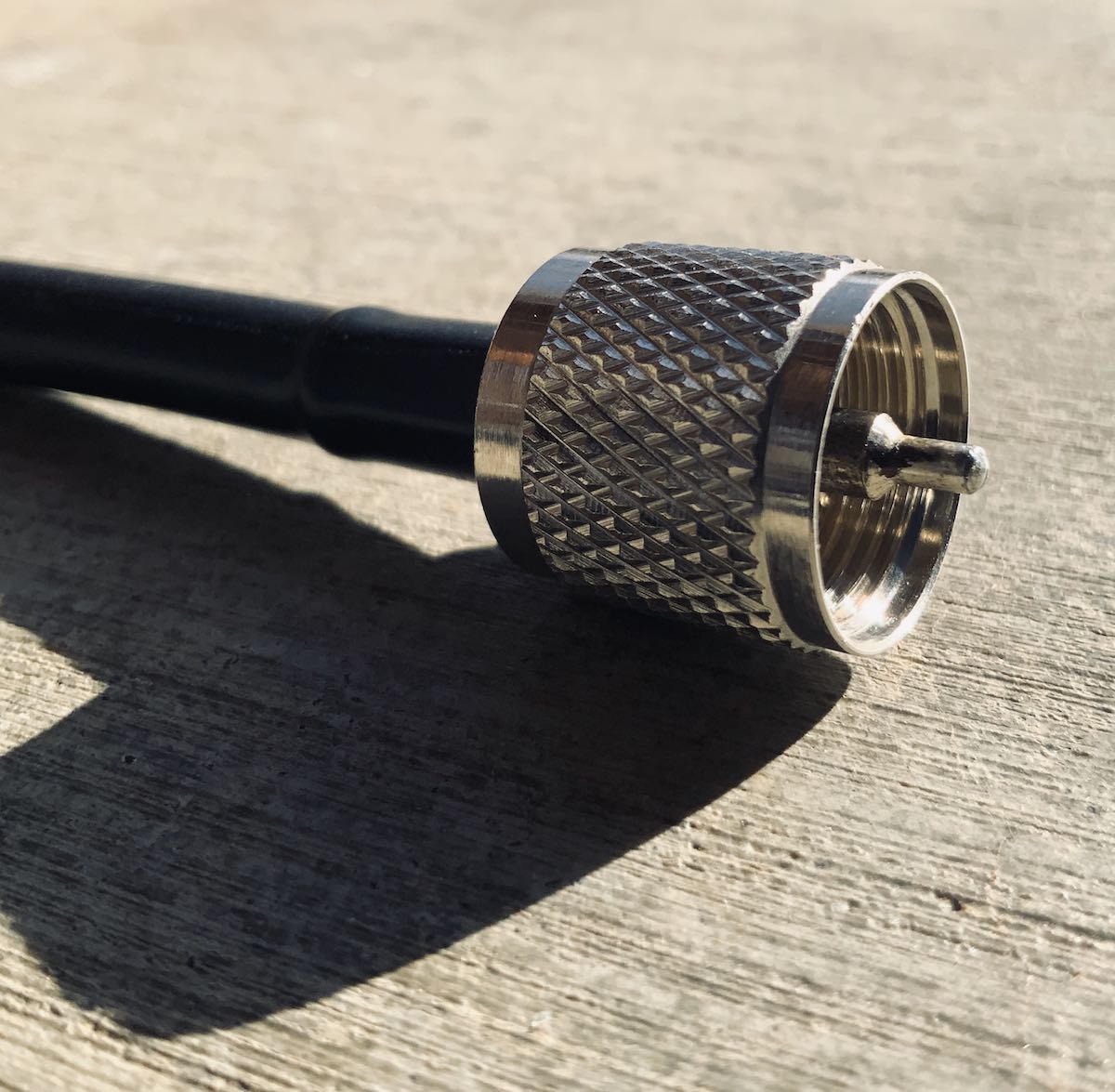
At the Hamvention in 2010, I found ABR Industries’ table. The only thing they had on display were cable assemblies and a handful of cable accessories. I picked one cable up and inspected it–I could tell it was good quality. Although I know how to make my own cable assemblies (with PL-259s, at least) I appreciate professionally-built assemblies.

I spoke with the representative that day and learned about their company and how they go about making standard and custom cable assemblies in the USA for the consumer, commercial, and government markets.

Although the price was at least double what I would have paid at one of the discount retailers, I never looked back.

From that point forward, I’ve only purchased ABR cables typically at Hamvention, Universal Radio, or even directly from ABR’s website (when I ordered custom assemblies).

The quality of ABR cables is second to none. I have never had one fail at home or (especially) in the field.

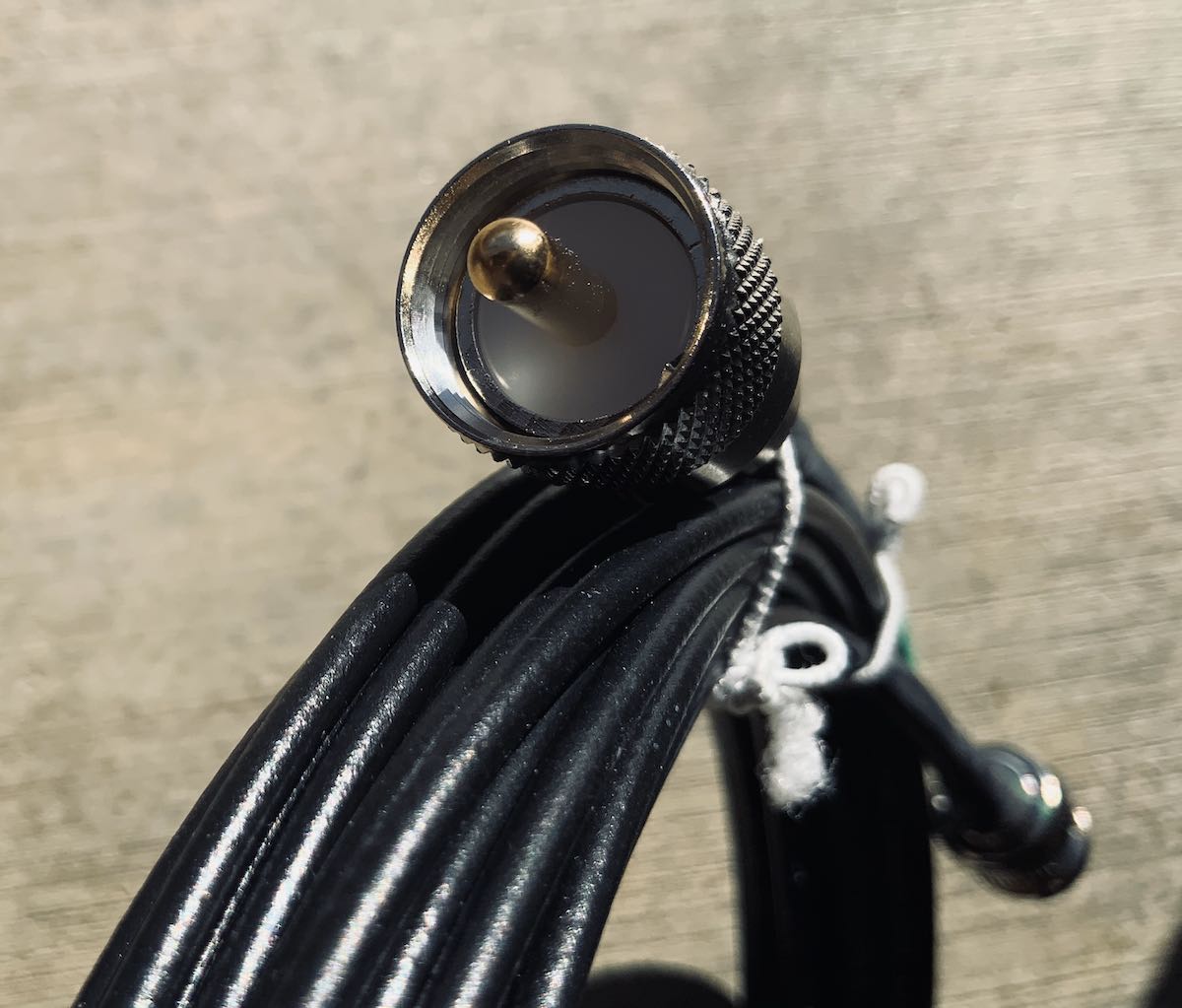
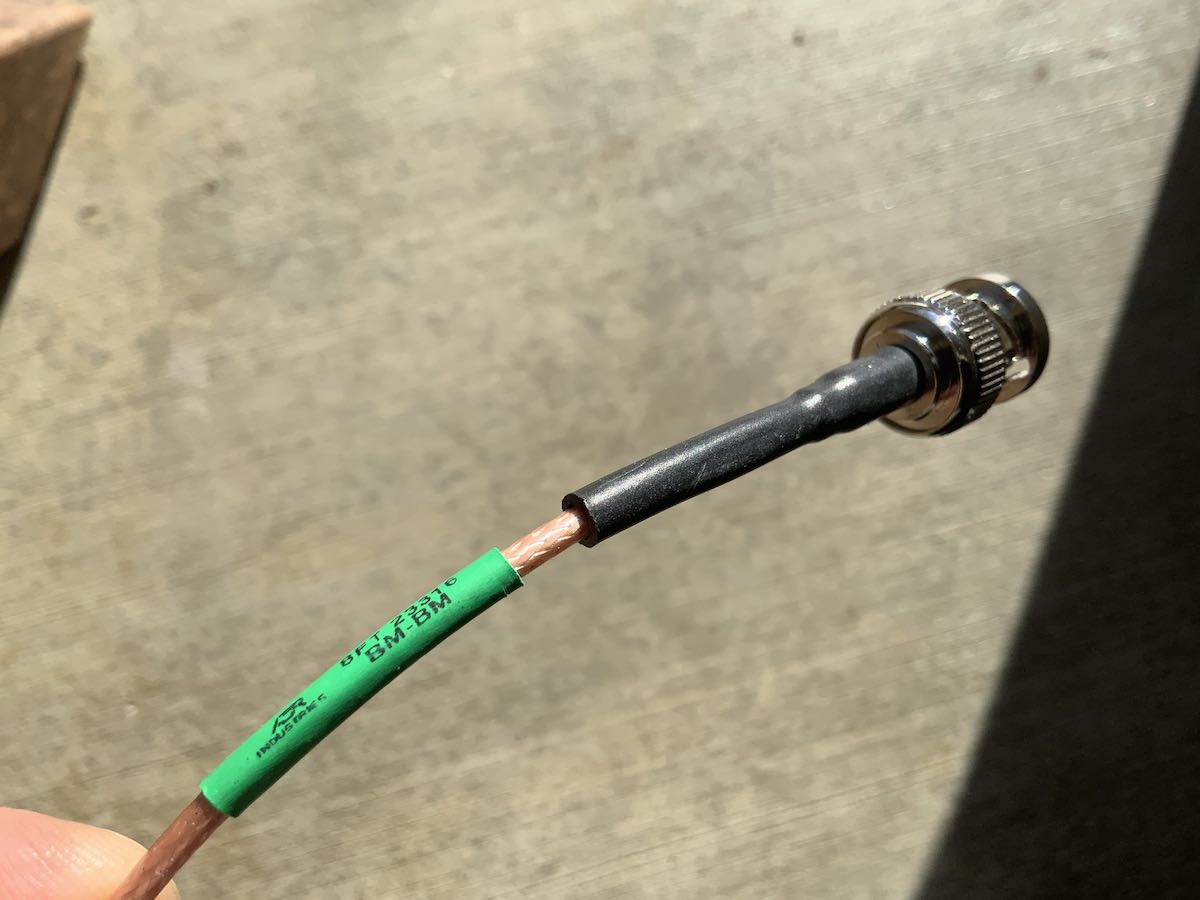
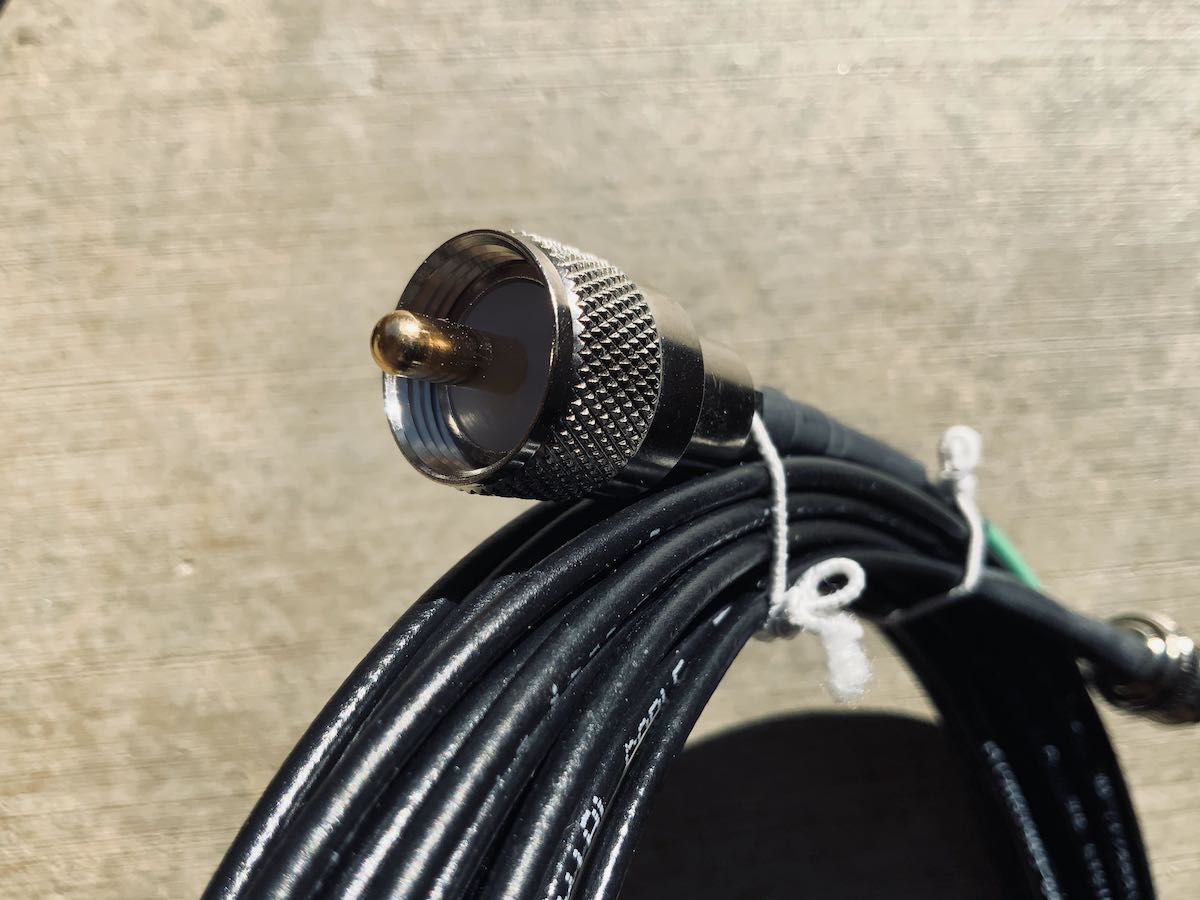
For my QRP POTA activations, I started investing in ABR316 and ABR100 BNC to BNC assemblies. I’m especially fond of the ABR316 assemblies (above) because they’re so resistant to memory when I coil them.

You pay for what you get

I suppose this is on my mind because I’m about to do an assessment and make another ABR order so that my new field radio kits have their own dedicated cable assemblies with correct ends (so I’m also not forced to use BNC or PL adapters for matching).

I’m also replacing some of my 3 foot cable assemblies with SMA connectors to PL-259 for my bank of SDRs. This is a part of achieving one of my goals for 2021. I’ll know then that each receiver will have a quality link to my antenna splitter and antenna.

My point here is don’t skimp on your cable, adapters, or cable assemblies.

If you have the skill to build your own, buy quality components and take your time building them.

If you prefer purchasing pre-made cable assemblies, talk with your local ham radio retailer, or seek out cable assembly houses like ABR Industries. I’d avoid purchasing cheap cables you may find on eBay or Amazon.com, for example. That’s not to say that there aren’t quality discount assemblies out there, I just prefer buying from a company that takes pride in their work and stands behind the quality.

Click here to check out ABR Industries. 

ABR Industries isn’t a sponsor of the SWLing Post (although I’d love to add them!)–I’m just a long-time customer who is happy to plug their products. I can recommend them without reservation.

[Update: In August 2023, we did become an affiliate of ABR Industries. Purchasing with our links supports the SWLing Post at no cost to you.]

I’ve also bought numerous long cable runs, wire, DC cable, ladder line, paracord, and sealant from The Wireman. I also highly recommend them.

ABR isn’t the only quality cable assembly house–there are many others throughout the world. Who do you recommend? Please leave a comment and links to your picks!