Shortwave listening and everything radio including reviews, broadcasting, ham radio, field operation, DXing, maker kits, travel, emergency gear, events, and more
I’ve gotten a number of inquiries regarding my lab599 TX-500 review. It is featured in the current (October 2020) issue of The Spectrum Monitor magazine:
As I’ve said in the past (and despite the fact they publish my features–!) TSM is one of the best values in our radio world. Truly superb articles spanning the full spectrum of radio!
FYI: I understand that Ham Radio Outlet will have the TX-500 in stock within days.
Many thanks to SWLing Post contributor, Christoph Ratzer (OE2CRM), who is well aware that I’m a fan of LRA36, so sent me a tip Saturday (September 26, 2020) at 19:40 UTC that LRA36 was being received in Europe.
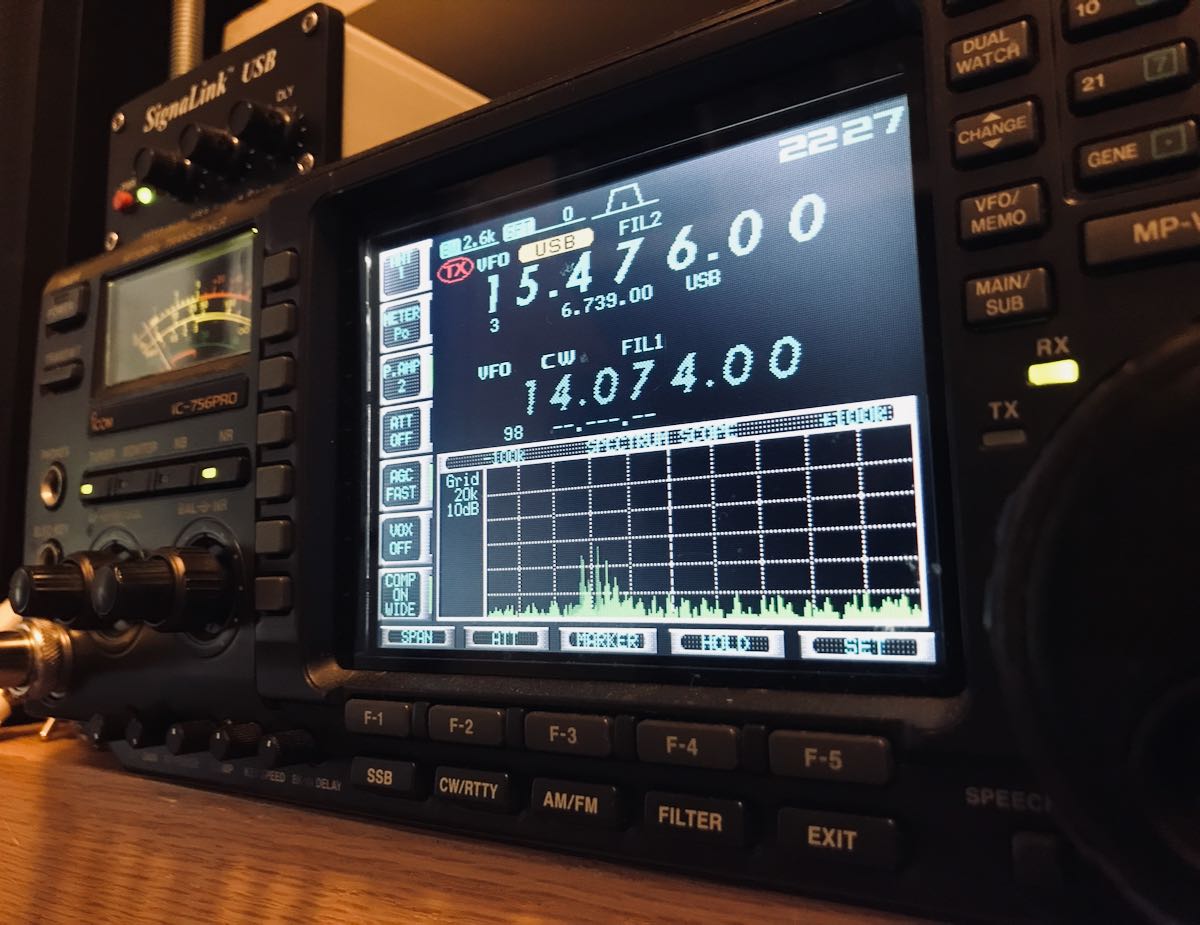
I had been working a few POTA stations that afternoon, so simply tuned the IC-756 to 15476 kHz USB–the ‘656 Pro was connected to my large horizontal delta loop antenna. I was rewarded with excellent weak-signal reception from the Argentine Antarctic research station. The signal was surprisingly clear even though the signal was still near noise level.
Here’s a short video (hoping YouTube won’t remove it since there’s music involved–!):
Since the LRA36 signal was in upper sideband mode, the IC-756 Pro was exceptionally well suited to the task! The more I use this transceiver, the more I love it.
Many thanks to SWLing Post contributor, Linus Ruckstuhl (HB3XSQ), who writes:
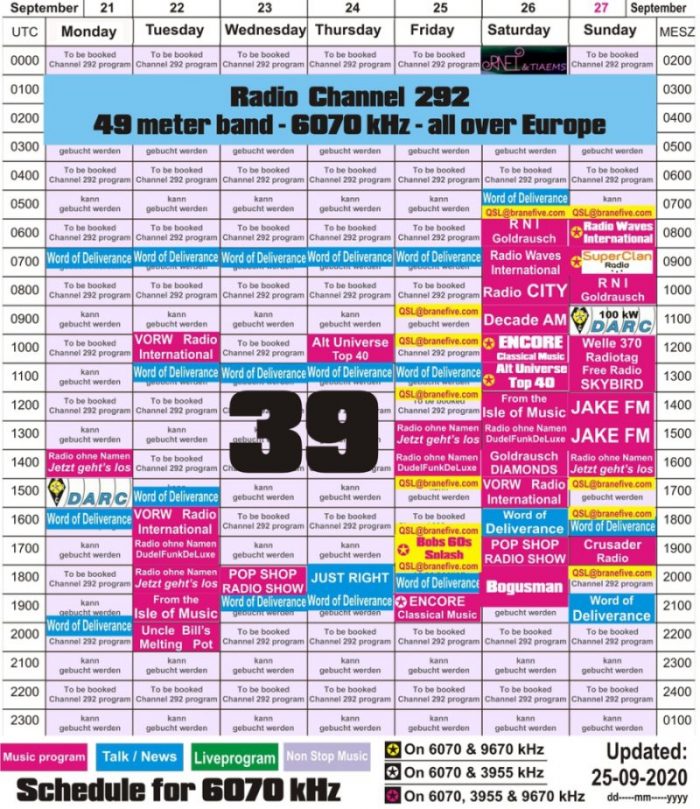
I am a longtime reader of your blog. My brothers band (branefive.com just released their first rock song “Free the Animal in You” today on September 25th 2020. I got the idea to launch the song on shortwave in addition to the streaming services to celebrate it, especially because there are no physical discs and records anymore. The first broadcast at 0900 UTC on Channel 292 on 6070kHz already got us many Reception Reports. The song with the corresponding announcement will be rebroadcast by Channel292 this weekend from 25.-27.09.2020. The schedule is in the attachment.
73 from Lucerne, Switzerland
Channel 292:
WRMI Schedule:
Saturday 09/26/2020
7:00 pm ET (2300 UTC) on 7570 kHz to North America
7:30 pm ET (2330 UTC) on 9395 kHz to North America
9:30 pm ET (0130 UTC Sunday) on 9395 kHz to North America
0300 UTC Sunday (11:00 pm ET Saturday) on 5800 kHz to Caribbean, Latin America
Sunday 09/27/2020
5:00 pm ET (2100 UTC) on 9455 kHz to North America
7:00 pm ET (2300 UTC) on 7570 kHz to North America
7:30 pm ET (2330 UTC) on 9395 kHz to North America
7:45 pm ET (2345 UTC) on 9955 kHz to Caribbean, Latin America (and on Internet www.wrmi.net)
0300 UTC Monday (11:00 pm ET Sunday) on 5800 kHz to Caribbean, Latin America
0430 UTC Monday (10:30 pm Sunday in Costa Rica) on 5985 kHz to Central America
WRMI will repeat the same schedule next weekend. Due to the broadcast through Channel292 on 6070, 3955 and 9760 kHz we already received many reception reports from DXers and SWLs all over Europe as well as Malaysia and Australia. Now we hope to receive some more from the Americas and the Caribbean thanks to the broadcasts of WRMI.
Thank you for sharing this broadcast, Linus, and my apologies for missing your first email before the weekend.
Post readers: Check out the schedule and send in your reception reports! As Linus said, they’re especially looking forward to more reports from the Americas and Caribbean!
Many thanks to SWLing Post contributor and Ultralight DX enthusiast, Gary DeBock, for sharing the following guest post:
Nulling a local pest with dual FSL Loops
by Gary DeBock
After many dual FSL antenna experiments I’ve finally determined how to effectively cancel out QRM from a local pest that is off to the side (ideally 90 degrees different, but practical from 50 degrees to 90 degrees different) from a weak DX station, although I’m not quite sure of the theory behind this discovery.
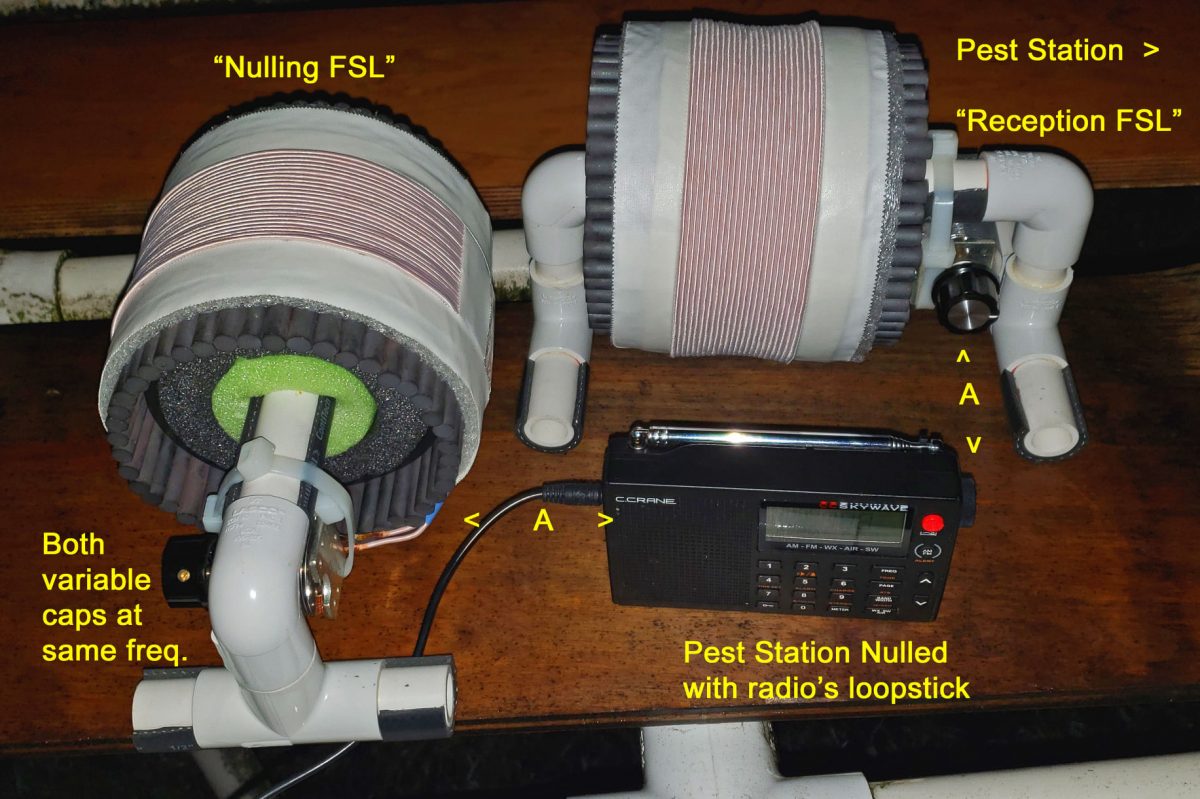
This experiment was an attempt to cancel out QRM from a local pest, 950-KJR in Seattle, WA (35 miles/ 56 km to the north) and chase 950-KKSE in Parker, CO (1005 miles/ 1617 km to the southeast) during the early morning hours. The receiver was a basic (non-SSB) C.Crane Skywave, and two identical 5 inch ferrite rod FSL antennas were used. Please refer to the photo (above) to follow this description.
Step 1) Null out the pest station with the portable radio’s loopstick (away from the FSL antennas). Set the radio down in this nulled position, so that the pest station is as weak as possible, while ensuring that there is space to set up the FSL antennas to the back and side (see photo).
Step 2) Take the “Reception FSL” and use it to peak the pest station’s frequency, setting it up parallel to the portable radio as shown, at the position providing the maximum inductive coupling gain. This will temporarily boost up the pest station, which previously was nulled.
Step 3) Take the “Nulling FSL” and pretune the frequency to that of the pest station. You can do this either by adjusting the variable cap plates to match those of the “Reception FSL,” or by temporarily peaking the pest station’s signal in a position in front of the portable radio. After setting this frequency, set the “Nulling FSL” off to the side of the portable radio as shown, with the spacing identical to the spacing between the radio and the “Reception FSL.”
Step 4) Slowly and carefully tune the “Nulling FSL” until you hear the pest station’s signal take a sharp drop. This setting will be very sharp, but once you find this position you will have nulled out the pest very effectively, and if another station is on the frequency, it may suddenly become dominant, even if it is far away (like 950-KKSE in Denver).
Some MP3’s from this morning’s experiments:
950-KJR in nulled position with the portable only
950-KKSE generally dominant over the local pest KJR when the “Nulling FSL” is peaked
Fascinating, Gary! I don’t understand the dynamics of why this works, but it’s amazing that it does so effectively. I can think of two MW frequencies in particular where I could put a system like this to the test.
Radio Waves: Stories Making Waves in the World of Radio
Because I keep my ear to the waves, as well as receive many tips from others who do the same, I find myself privy to radio-related stories that might interest SWLing Post readers. To that end: Welcome to the SWLing Post’sRadio Waves, a collection of links to interesting stories making waves in the world of radio. Enjoy!
Many thanks to SWLing Post contributors Ron, John (K5MO) and the Southgate ARC for the following tips:
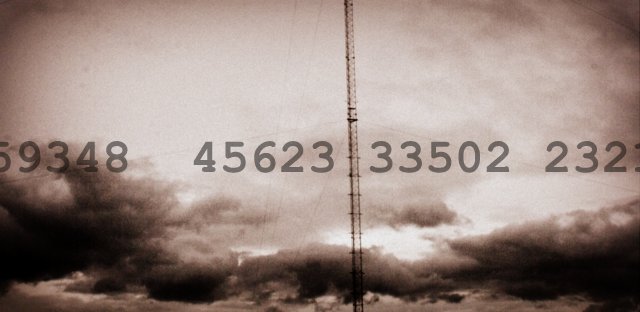
Did a broken random number generator in Cuba help expose a Russian espionage network?
I picked up the new book Compromised last week and was intrigued to discover that it may have shed some light on a small (and rather esoteric) cryptologic and espionage mystery that I’ve been puzzling over for about 15 years. Compromised is primarily a memoir of former FBI counterintelligence agent Peter Strzok’s investigation into Russian operations in the lead up to the 2016 presidential election, but this post is not a review of the book or concerned with that aspect of it.
Early in the book, as an almost throwaway bit of background color, Strzok discusses his work in Boston investigating the famous Russian “illegals” espionage network from 2000 until their arrest (and subsequent exchange with Russia) in 2010. “Illegals” are foreign agents operating abroad under false identities and without official or diplomatic cover. In this case, ten Russian illegals were living and working in the US under false Canadian and American identities. (The case inspired the recent TV series The Americans.)
Strzok was the case agent responsible for two of the suspects, Andrey Bezrukov and Elena Vavilova (posing as a Canadian couple under the aliases Donald Heathfield and Tracey Lee Ann Foley). The author recounts watching from the street on Thursday evenings as Vavilova received encrypted shortwave “numbers” transmissions in their Cambridge, MA apartment.
Given that Bezrukov and Vaviloa were indeed, as the FBI suspected, Russian spies, it’s not surprising that they were sent messages from headquarters using this method; numbers stations are part of time-honored espionage tradecraft for communicating with covert agents. But their capture may have illustrated how subtle errors can cause these systems to fail badly in practice, even when the cryptography itself is sound.[…]
From today, Thursday, Sept 24, the RSGB are allowing Full amateur radio online exams to be booked. All 3 levels of exam required to get a HAREC certificate can now be done completely online
Potentially this could mean amateurs in other countries could take the RSGB online exams, get their HAREC certificate and then apply for an amateur licence in their own country. This would be beneficial in those countries where provision of local exams is virtually non-existent.
Currently there is a 4-5 week backlog for amateur radio exams, the next available exam slots that can be booked are at the end of October.
The wartime BBC was involved in a range of top secret activities, working closely with the intelligence agencies and military.
by Professor David Hendy
As well as making programmes for the public, the wartime BBC was involved in a range of top secret activity, working with closely with the intelligence agencies and military. Here, newly-released archives lift the veil on the broadcaster’s role in this clandestine world of signals, codes, and special operations.
It’s always been known that just before the war began in September 1939, the BBC’s fledgling television service was unceremoniously shut down for the entire period of the conflict.
What’s less well-known is that, far from being mothballed, the television facilities of Alexandra Palace were carefully kept ticking-over by a small team of engineers – and that the transmitter which had supposedly been silenced for reasons of national security was soon sending out its signals again.
From May 1940, Alexandra Palace’s ‘vision’ transmitter was being tested for its ability to jam any messages passing between tanks in an invading German force. The following year, its sound transmitter was being deployed for something called ‘bending the beam’. One of the BBC’s engineers who remained on site was Tony Bridgewater:[…]
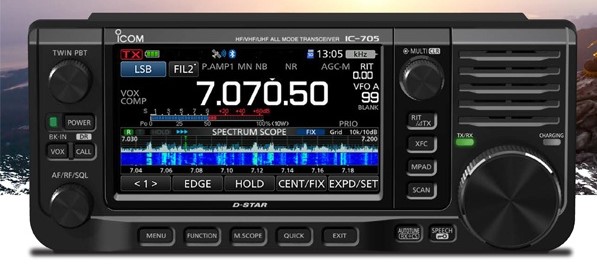
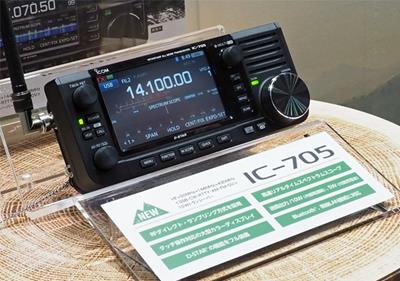
I was contacted by Universal Radio yesterday afternoon with a tracking number for my Icom IC-705. It will arrive by Monday evening.
A number of SWLing Post readers in the US and UK have notified me that their IC-705s have also been shipped and a few have even been received already.
I’m really looking forward to checking out the IC-705. The preliminary reviews (overviews, really) have been pretty positive. I found the IC-7300 to be a fabulous rig and the IC-705 smacks of the ‘7300. The ‘705 even includes more features than the ‘7300 (multi-mode VHF/UHF, D-Star, Wifi, and built-in GPS to name a few) although lacks an internal tuner.
I’ve received more questions about IC-705 and the TX-500 than I have any other radios this year. Both, in many senses, are ground-breaking in their features, (and in the case of the TX-500) form-factor and build.
If I’m being honest, I was more excited about the TX-500 because it simply suits my field operating style better (my full TX-500 review will be in the Oct 2020 issue of TSM).
Since I haven’t received the IC-705 yet and haven’t read any truly detailed reviews or comparisons, I’m going to do something I’ve never done before and share a few of my personal predictions.
Predictions
I’m human and can’t help but form a few expectations/opinions prior to a thorough rig evaluation. That and, having owned a number of their products, I’m very familiar with Icom as a company. I’ll probably regret this later, but here goes…
I suspect:
I’ll like the touch screen display more than I think I will. I’m not a big fan of color backlit displays in field radios. I prefer simple high-contrast LCD displays that are readable in full sunlight. I’m hoping Icom will have optimized the IC-705 display for reading outdoors.
I’ll be able to operate the radio without referring to the manual because I’m so familiar with the IC-7300.
I’ll really miss having a built-in ATU on a rig in this price class. Feels like a missed opportunity, however seeing the inside of the IC-705, there really isn’t a lot of spare room. With that said, I plan to review the mAT-705 ATU compact external tuner and hope it’ll pair nicely.
I’ll be disappointed with the amount of run time I’ll get from a fully-charged BP-272 battery pack. I really hope I’m wrong about this one. Icom did some serious engineering on the IC-705 to lower the amount of current needed in receive. We’ll see if that paid off and if it can compare, for example, to the run time I get from the rechargeable battery pack in my Elecraft KX2.
I’ll be very pleased with some of its features like CW and Voice memory keying for POTA and SOTA activations.
I’ll still find D-Star complicated to use even though, hypothetically, the IC-705 can connect directly to D-Star via WiFi. I hope I stand corrected on this point.
I’ll struggle to find the perfect padded pack to house the radio. I’m a bit of a pack geek/snob and don’t really like the Icom LC-192 backpack. I’ve no intention to order it even though it’s designed to work with the radio. So while this doesn’t apply to 99% of my readers, it’s a big deal in my world. 🙂 I’m sure I’ll sort out a solution.
I’ll feel some buyer’s remorse when, in 6 months, the IC-705 price drops a couple hundred dollars. That’s okay. I see it as taking a bullet for my readers (and, let’s face it, I love new radio gear). Plus, I’m banking on the notion that the IC-705 will make for a capable QRP EME transceiver.
I’ll love the built-in digital recorder for making off-air shortwave broadcast recordings (although I do fear I’ll find the AM audio filter too narrow).
Again, these are completely off-the-top-of-my-head predictions and based on no hands-on time with th IC-705. Next week, I’ll start to see how many of these predictions are correct and how many I totally missed.
I can tell you this: I’m not sure I want to see the invoice from Universal Radio. It includes the IC-705, two Yaesu FT-60R HTs, and some Anderson PowerPole connectors! Although I’ve had the IC-705 on order for ages, I added the HTs and connectors at the last moment because they don’t seem very pricey when you’re already at the $1300 US mark, right–? (Shhhh! The FT-60Rs are a gift for my daughters who take their Technician test this weekend!)
How about you? Do you have an IC-705 on order? What are your predictions and thoughts? Please comment!
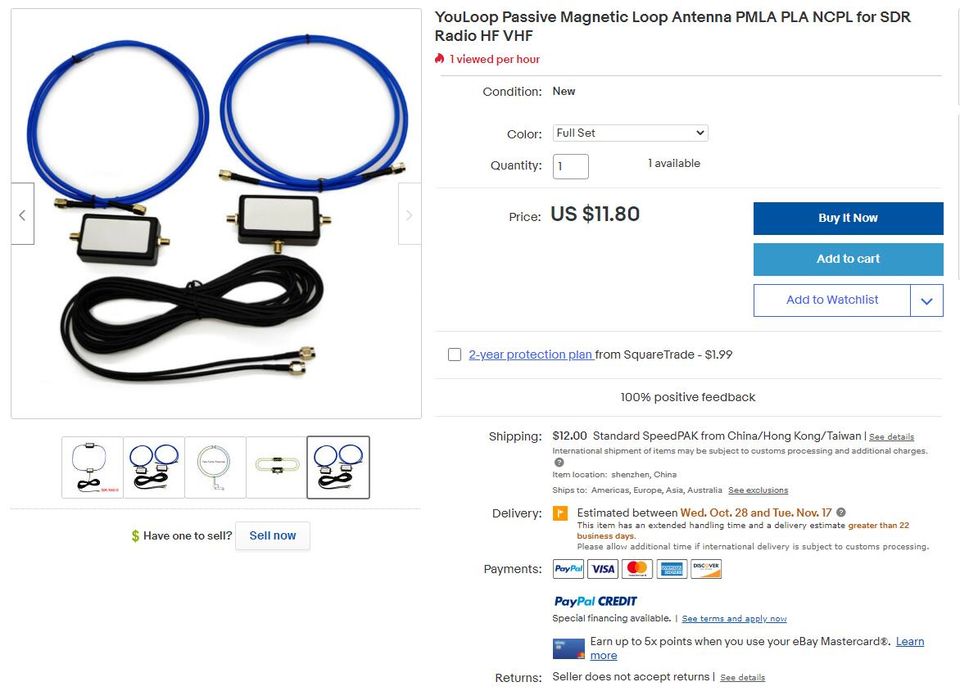
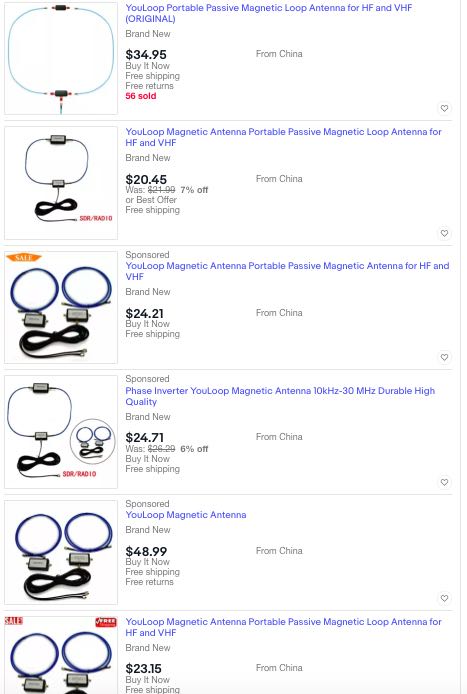
Many thanks to SWLing Post contributor, Chris Smolinski, who shared the screen shot above of a “YouLoop” being sold by a vendor on eBay.
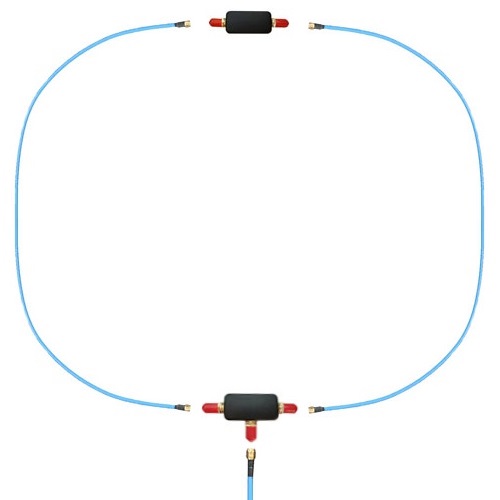
While the Airspy YouLoop is based on a public domain noise-cancelling passive loop design that dates back decades (a.k.a. the Moebius loop antenna) buyers should note that many of the “YouLoop” antennas on eBay are not manufactured by Airspy. The product titles are misleading in this regard:
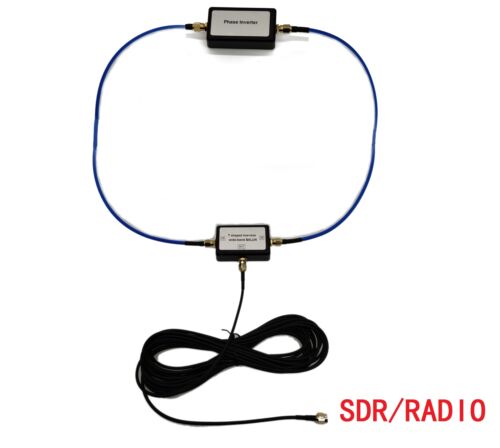
Many of the other loops being marketed as “YouLoops” on eBay cost around $23.00-25.00 shipped. About $10 less, but there’s no guarantee the toroid windings, for example, will have the same specs as the original YouLoop.
It’s easy to spot the YouLoop copies because the cross over and toroid enclosures are much larger than those of the authentic AirSpy YouLoop:

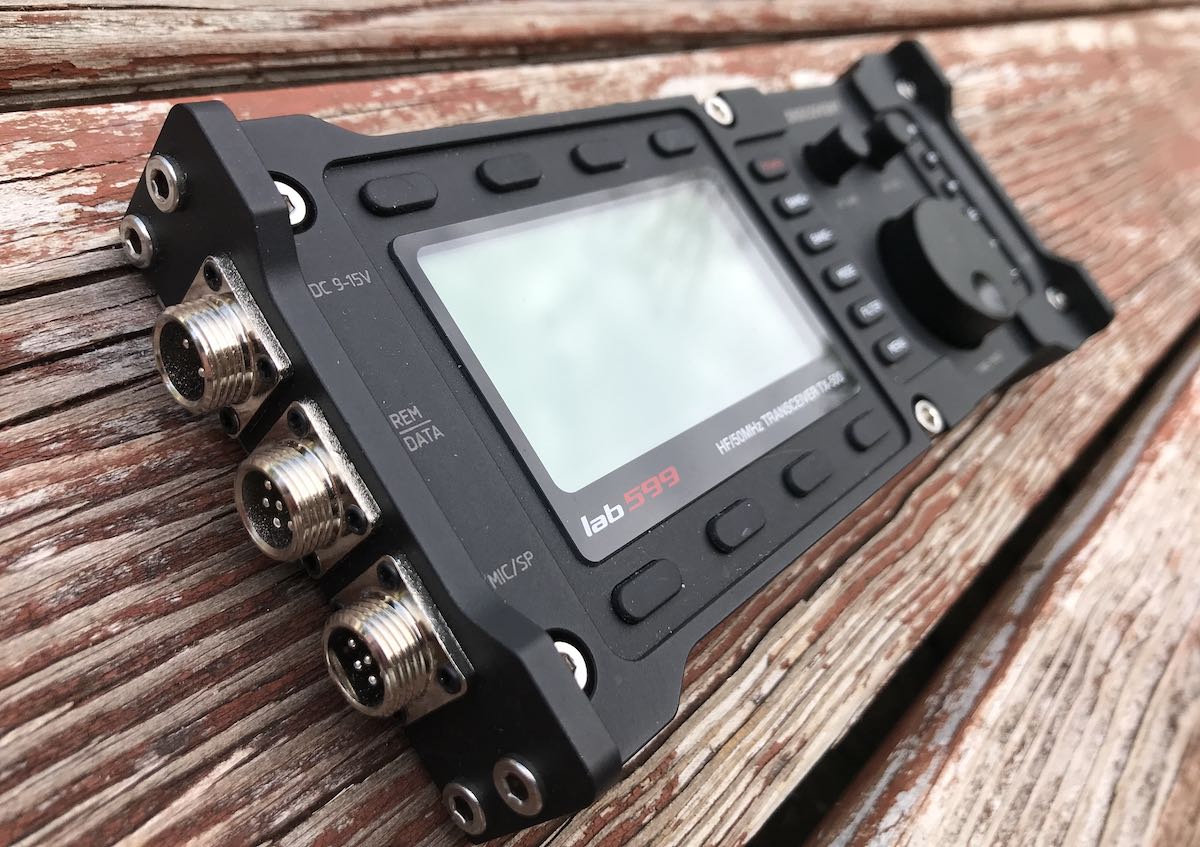 I’ve gotten a number of inquiries regarding my lab599 TX-500 review. It is featured in the current (October 2020) issue of The Spectrum Monitor magazine: