Author Archives: Thomas

The Cricket: The Four State QRP Group’s latest transceiver kit

Here’s a hot tip for those of you who enjoy building transceiver kits:

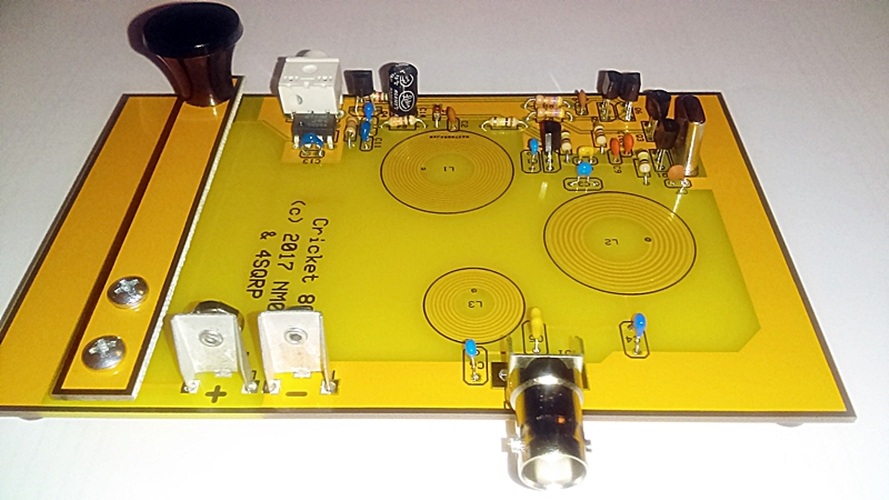
The Four State QRP group has just released The Cricket: a simple 80 CW transceiver kit. The Cricket was designed by David Cripe (NM0S) who is behind a number of successful kits (including the Ozark Patrol and the Bayou Jumper).
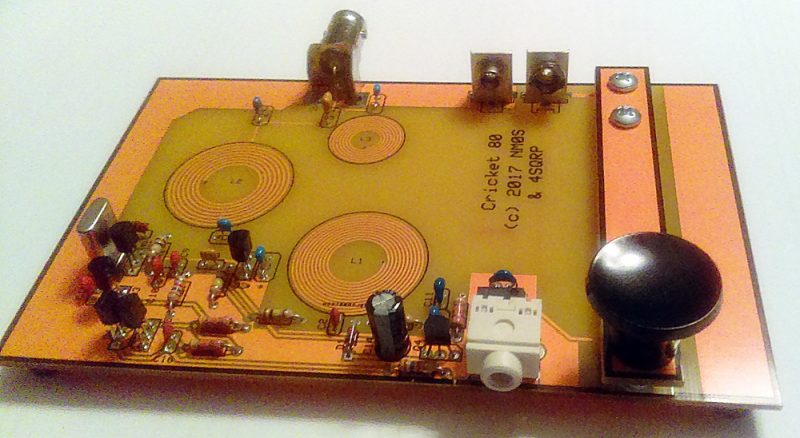
The amazing part about this kit is that it’s super simple, has no toroids to wind and doesn’t even need to be aligned. It even includes a Morse key.

All this shipped for $32.68 in the US, $39.50 in Canada and $43.50 for international orders. A serious bargain, in my book.

Typically, Dave’s kits sell out the same day they are posted for sale. If you’re interested in The Cricket, don’t hesitate to order! (I just bought three, for example.)

Click here to order The Cricket.

Here’s The Cricket kit description via the Four State QRP Group website:

Kitted and Offered For Sale By The Four State QRP Group

The Cricket is a low cost entry level minimalist CW transceiver for the 80 meter band. Chosen as the build session kit for OzarkCon 2017, it bears a family resemblance to the well known but much lower performing Pixie. However it is very different and vastly improved over the Pixie. This is NOT a Pixie, it is far superior! It features low parts count, better components including MOSFETs for better sensitivity and switching, and a modern NJM2113D audio amp.

A TX/RX offset is also incuded so that you can work other stations that have zero beat you, or are using a crystal on the same frequncy. Full QSK and a sidetone complete the essential operating features. Dave’s famous etched spiral coils are included on the pc board, so there are NO TOROIDS to wind. Additionally a straight key is included on the pc board, just snap it off, mount it on the board, and the whole rig is then self contained. Also included is an electronic keyer adapter – you can use your favorite keyer with the Cricket! These are many features for such a low parts count and inexpensive transceiver.

ALL THROUGH HOLE parts make this kit very easy to assemble. It will make a fine, fully functional, and educational first rig for a new builder, the new ham, or seasoned veterans wishing to just have fun with a new rig at minimal expense and effort. Note that Novices and Technicians have 80M CW privileges from 3.525 to 3.600, same as everyone else – so they also can build and use the Cricket.

This simple rig is fun and functional, and made many contacts at OzarkCon after the build session. A proven design and a great choice for your next rig, it is perfect for a group build with nets and contacts after the build. This is an excellent club project.
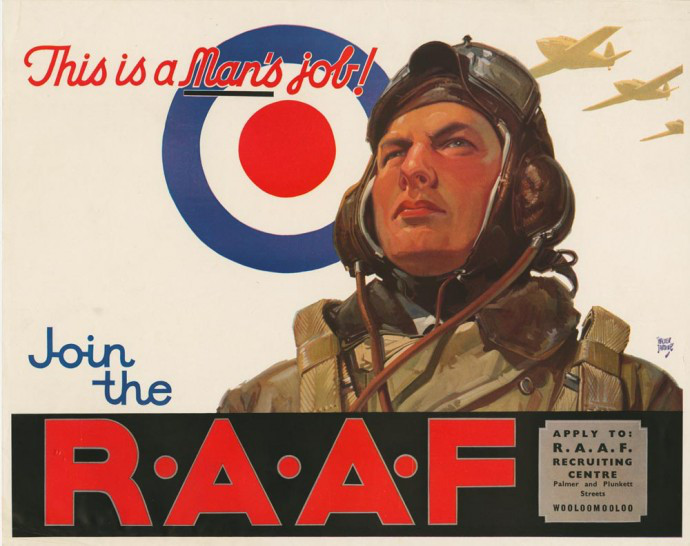
The RAAF No. 4 Wireless Unit: Never to march, never to be mentioned

Many thanks to SWLing Post contributor, Neil Bolitho, who shares the following story in reply to our post yesterday Australian Codebreakers in WWII. Neil writes:

Never to march, never to be mentioned.

Since the end of the Second World War, many thousands of returned service personnel have marched at Anzac Day services throughout Australia.

My father never marched.

My father served in RAAF No 4 Wireless Unit, Central Bureau.

Central Bureau was under the direct command of General Douglas MacArthur, and was set up to detect, record, and translate all messages transmitted by Japanese forces in the Pacific.

Central Bureau was headquartered in Brisbane, but its Wireless Units worked in the field, moving forward with MacArthur, constantly intercepting and deciphering enemy messages.

As the war progressed, the units became so efficient in their work that they were monitoring all enemy radio traffic, and in fact frequently knew the Japanese intentions before the messages reached their intended destination.

The Wireless Units served throughout the Pacific islands providing vital information about enemy strengths and positions.

RAAF No 4 Wireless Unit was formed as a highly mobile unit, and served at Hollandia, Morotai, Labuan Island, and at Luzon, Philippines.

The U.S. High Command highly praised the Wireless Units of Central Bureau, stating that their work effectively shortened the War in the Pacific by at least two years.

At the end of the war, Central Bureau was dismantled. All personnel signed a lifetime secrecy order to not speak of their wartime activities.

No promotions applied. No evidence of their Central Bureau service was recorded, including overseas service. No medals were struck.

Family members, including children, were not told in any detail, of their father’s war experience.

It was only in the late 1990’s that the Australian government allowed information to be released.

In the early 1960’s, my father mysteriously went on an unexplained visit to Brisbane.
It was not until over thirty years later that I found out that he attended a twenty-year anniversary of his unit’s graduation.

I write this on behalf of the children and grandchildren of those Central Bureau personnel that served diligently and efficiently when called upon, and who, when the job was done, quietly went home. They are our heroes.

Indeed. Thank you so much, Neil, for taking the time to share your father’s story. We’re honored to post it here.

If you’re interested in WWII signal intelligence, here are a few fascinating posts from our archive:

Australian code breakers in World War II

Many thanks to SWLing Post contributor, Ian P, for sharing the following from the radio program, ABC Overnights:

The crucial role of Australian code breakers in World War 2

Thanks to the recent film, The Imitation Game, you may be familiar with the story of how British intelligence, led by mathematician Alan Turing, cracked Nazi codes during WW2. Did you know there were also two secret organisations in Australia working to break Japan’s military codes?

These were staffed with brilliant cryptographers, including some who had studied mathematics and the classics, and others who had lived or grown up in Japan. By patiently and carefully unravelling the codes in Japanese signals, their intelligence played a crucial role in the battles of Midway and the Coral Sea, as well as the push into the Philippines.

Trevor Chappell interviews Craig Collie, author of the book Code Breakers – Inside the Shadow world of Signals Intelligence in Australia’s two Bletchley Parks.

Duration: 36min 36sec
Broadcast: Mon 10 Apr 2017, 1:00am
Published: Mon 10 Apr 2017, 4:43pm

Listen to the full program/interview via the embedded player below:

Click here to download the MP3 or click here to listen on the ABC website.

I’ve also noted that you can pre-order Code Breakers – Inside the Shadow world of Signals Intelligence in Australia’s two Bletchley Parks at Amazon.com. There is no expected delivery time yet, however.

Code Breakers is available directly from the publisher in Australia–click here to view.

Requiem For Radio: Amanda Dawn Christie’s performance piece honoring RCI Sackville

(Source: Amanda Dawn Christie via Twitter)

(Source: CBC News)

Moncton artist bringing back sounds of former Sackville Radio-Canada towers

A Moncton artist has brought back to life the sounds of the 13 CBC Radio-Canada International shortwave towers that once stood in Sackville, N.B. on the Tantramar Marsh.

“It’s kind of like you’re conjuring ghosts of radio towers,” explained the artist Amanda Dawn Christie on Shift N.B.

Requiem For Radio: Full Quiet Flutter

The experimental sound art project Requiem For Radio: Full Quiet Flutter involves a scale model of the original towers, but a large model — about 16-metres wide, six-metres deep and five-metres tall.

Christie said the towers have red lights resembling the originals. They are made from pipes with four copper pads on each tower.

She added that when someone touches one of the copper pads, a wireless signal is sent to a computer, which then sends a sound file back to that tower of the actual, recorded sound the original tower made when it was operational. The sound is transmitted through a speaker on the model tower.

[…]But the model towers are more than something to be gazed upon and admired. They are musical instruments that Christie and two other musicians will be playing at one-hour performances on May 26 and 27 at the Aberdeen Cultural Centre in Moncton. The performances will also be broadcast on radio stations in Moncton, Montreal and New York.[…]

Continue reading at CBC News…

Eric seeks advice: Building a directional mediumwave antenna for the RSP2 SDR

Many thanks to SWLing Post contributor, Eric McFadden (WD8RIF), who writes with the following question:

A request for assistance.

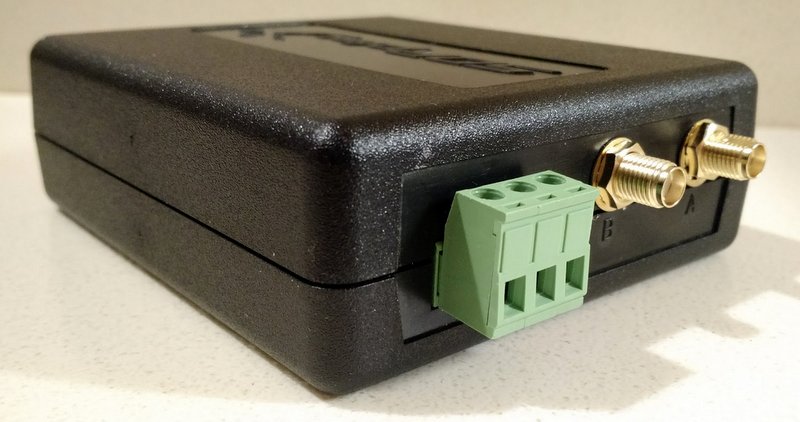
After comparing the reception of the RSP2 and 1/2 doublet to the reception of the County Comm GP-5 SSB and its little external ferrite-bar, I’ve decided I probably want to make some sort of directional antenna to use on AMBC with the RSP2. A wire loop, perhaps, or some sort of ferrite-bar thing, that connects to the RSP2’s Hi-Z input.

[Perhaps SWLing Post readers can suggest] options and then I can get the needed bits at the 2017 Hamvention.

Post readers: if you can offer Eric suggestions, or point him to antenna plans, please comment! I do believe he would rather build an antenna than simply buy one and he’s looking to permanently mount this antenna outdoors.

Steven is pleased with the Tecsun PL-360 and Anon-Co


Many thanks to SWLing Post contributor, Steven Crawford, who shares the following:

I just wanted to take a moment and thank you for posting my inquiry on the Sony 7600GR. The post comments answered my question.

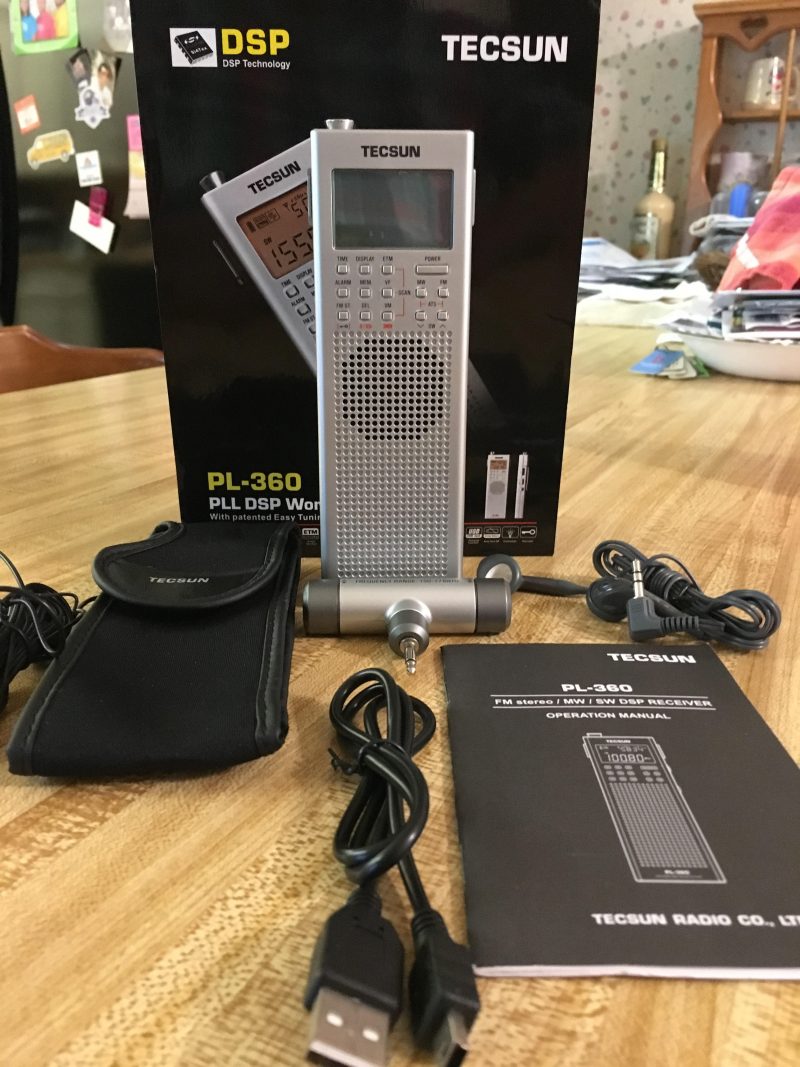
I also wanted to let you know your confidence in Ebay seller Anna and Anon-co continue to be well founded. Remembering your recommendation and wishing to pick up a Tecsun PL-360 as a spare to my CountyComm GP-5 SSB (Tecsun PL-365), I placed the order for it and a couple of other bits of Tecsun kit with Anon-co.

The order arrived in 6 working days to my Gulf coast Texas home, taking longer to travel from Chicago to my home than it took to move from Anon-co in Hong Kong to Chicago and clear customs.

I then had a question about the connecting cable included with the Tecsun badged, Tecsun / Kato / Grundig / Eaton, AN200 Loop Antenna. Posed through Ebay Anna promptly answered the question and added a photo of the cable to Anon-co’s Ebay listing for the AN200. It just doesn’t get better than that. You can continue to recommend Anon-co with full confidence from my perspective.

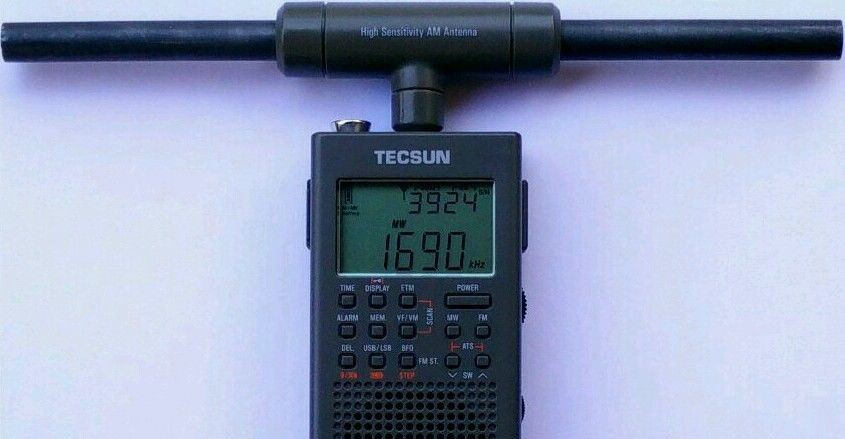
I picked up the PL-360 as a lower cost AM/FM/SW backup to the GP-5 SSB that would allow me to accept the risk of using the larger and heavier extended ferrite rod loop stick aftermarket antenna that garnered so much interest on your blog a year ago, before CountyComm warned of accelerated wear on the antenna jack. Happily the antenna works just as well on the PL-360 as it did on the GP-5 SSB.

Overall I am pleased with the PL-360.

The performance on AM and SW appears to match that of the GP-5 SSB (Tecsun PL-365) albeit with a slightly higher noise floor. Whether this is due to something akin to sample to sample variation or a direct result of inherent design differences between the PL-360’s Silicon Labs Si4734 DSP chipset versus the GP-5 SSB’s Silicon Labs Si4735 DSP chipset I can’t say. I can say the PL-360 with the included High Gain loop stick external tee antenna received my list of news gathering AM clear channel stations out to 900 miles during the night hours matching the GP-5 SSB. This list includes WGN, WBBM, WLS and KOA at the furtherest extreme. It also includes Mexico City’s XEEP 20kW at night at 800 or so miles. Switching to SW broadcast using the whip antenna and Tecsun’s / CountyCom EZTune system day or night the PL-360 and GP-5 SSB select and load the same stations within the PL-360’s slightly shorter SW tuning range.

Dittio on FM on the whip. Both radios snag my list of FM stations out to 60 miles.

For my purposes both are extremely close in performance to my Sony SW7600GR when using their supplied external loop stick. On AM if you combine one with the larger and heaver aftermarket loopsticks they will slightly outperform the 7600GR combined with a Tecsun / Kato / Grundig / Eaton, AN200 Loop Antenna. The Sony’s speaker gives it the edge in listening pleasure, but on earphones or plugs all three are close.

None of forgoing addresses the SSB performance as the PL-360’s chipset doesn’t offer that option.

I am pleased with the PL-360, Anna and Anon-co and I do thank you for posting my 7600GR inquiry.

I look forward to your blog.

Steve

Thank you, Steve! I’m happy to hear the 7600GR posting helped you–that’s what this community is all about…helping each other. Thanks to everyone who commented on that post.

And, yes, I think what surprises so many SWLs is the fact that Anna at Anon-Co actually knows Tecsun radios as well, if not better, than the manufacturer. I’ve only had good experiences working with Anon-Co and that’s why I recommend them so readily. Anna provides excellent customer service. (Click here to check out Anon-Co on eBay.)

I’m also happy to hear you’re enjoying the PL-360 and that you understand the risk of using the large ferrite bar on this radio series (PL-360, 365 and GP5 DSP and SSB). I use my antenna as well, though like you, very carefully.

I only use the large ferrite bar when I’m stationary and I’m careful not to put a strain on the antenna in any way; keeping it balanced and steady. In other words, you must handle it with kid gloves. If you take these precautions, I think your radio will enjoy expected longevity.

Thanks, again, Steven for sharing your review! I’m very pleased to hear you’re enjoying the SWLing Post!