Author Archives: Thomas

VOA Museum celebrates VOA 75th anniversary

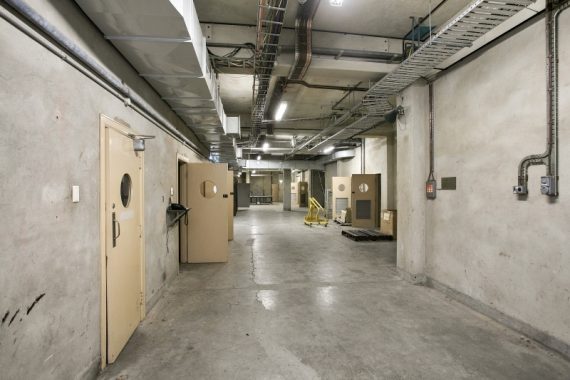
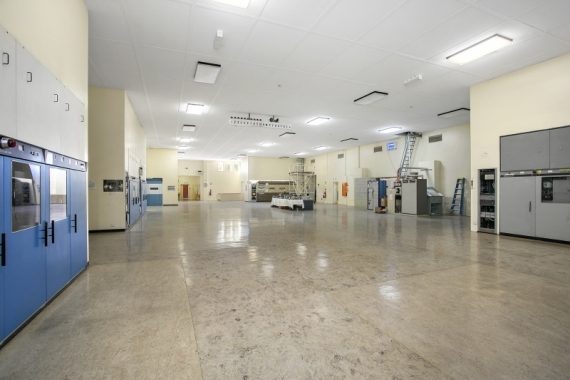
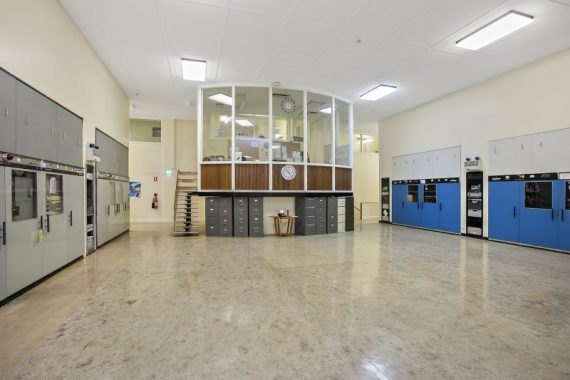
Photo from the control room at the VOA Bethany museum.

(Source: Southgate ARC)

National VOA Museum to celebrate 75th anniversary of Voice of America

There’s an important birthday celebration in West Chester this year: the 75th anniversary of the Voice of America.

“We’re planning a series of events and exhibits this year to celebrate the VOA’s commitment across America and the world to embrace best practices in telling the truth in order to let the world decide,” said Jack Dominic, museum executive director.

The VOA was formed in 1942 as a way to counteract Nazi propaganda in Germany and provide war news to American troops and Allies overseas.

“WLWO, a division of WLW, was transmitting news via shortwave radio overseas long before 1942,” said Dominic. “In fact, broadcasters from WLWO provided the nucleus of the early VOA broadcasting team. Cincinnati’s shortwave technology and its broadcasters truly helped the U.S. win the war.”

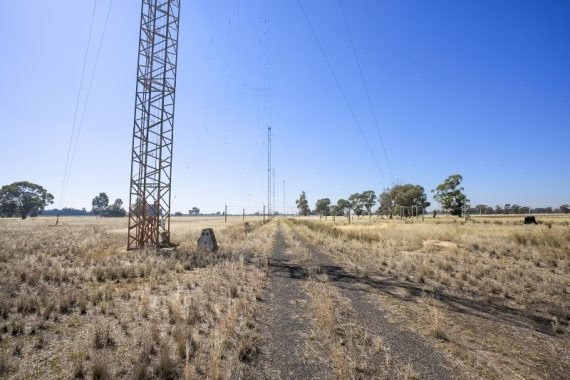
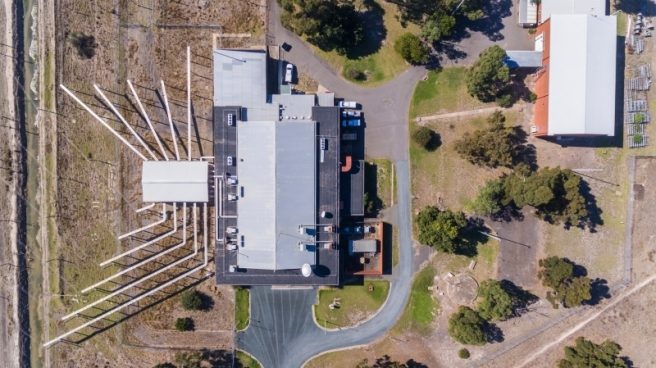
The reentrant rhombic antennas at the VOA-Bethany station in West Chester were so powerful that they became quickly known as the “siege guns of radio” for their capacity to reach the far corners of Nazi-occupied countries with little audible distortion. A frustrated Adolph Hitler was known to call the VOA “those Cincinnati liars.”

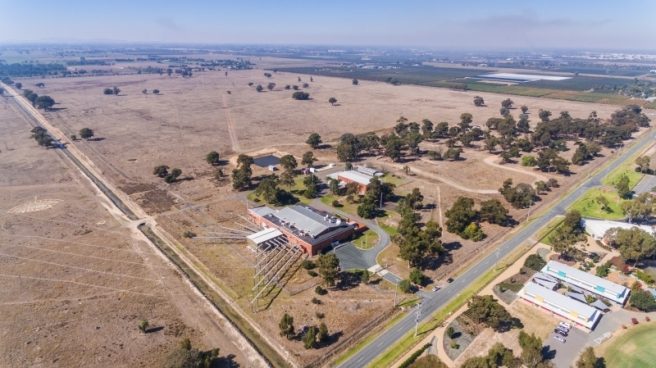
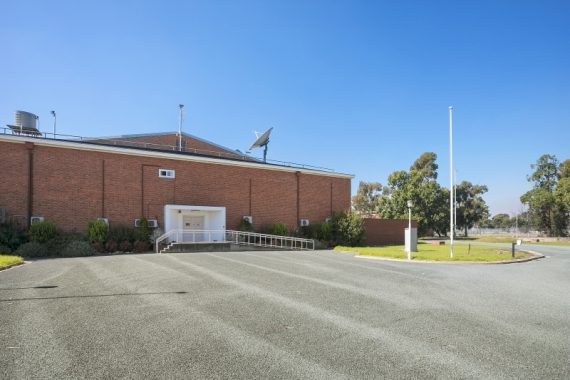
The VOA-Bethany station transmitted VOA news to Europe during WW II and South America during the Cold War through its innovative shortwave rhombic antenna network developed by the Crosley Corporation. The Bethany station was decommissioned by the federal government in 1994, after shortwave radio technology was supplanted by television and satellite technology.

“The men and women who made up the VOA broadcasting system were our journalistic beacons of light during the 20th century,” said Ken Rieser, president of the VOA museum board.

“Elmer Davis, John Houseman, Edward R. Murrow and Robert Bauer all had positions of leadership within the VOA.

“We hope that the VOA enjoys many more years of embracing the highest of journalistic standards in its reporting so it inspires people in war-torn and oppressed countries to hope, dream and work toward democracy.”

The Voice of America, based in Washington, D.C., is the world’s largest international broadcaster, providing balanced and comprehensive news and information in 47 languages to 236 million people each week, according to the VOA website. It continues to reach people in countries lacking a fee press today and its languages include: Russian; Ukrainian; Azerbaijani; Serbian; Armenian; Thai; and Somali.

The National VOA Museum of Broadcasting is located in the art deco Bethany station building and houses three collections: Gray History of Wireless radios; VOA-Bethany station’s Voice of America control room; and the Media Heritage Cincinnati Museum of Broadcast History. The West Chester Amateur Radio Assn. operates station WC8VOA from the museum building.

The VOA museum now offers an annual $50 membership that provides free admission for the member, an adult guest, and up to three children under 12. Members also receive updates and advance information about new exhibits and programs.

For $250, members receive the benefits above, as well as a 50 percent discount on any and all lectures, programs or visiting exhibit tickets.

The National VOA Museum of Broadcasting is open the third Saturday of each month from 1 to 4 p.m. Admission is $5 for adults and $1 for children. The museum is located at 8070 Tylersville Road in West Chester.

Museum will be open this Saturday, Feb. 18

For more information, visit the VOA Museum website at www.voamuseum.org or call (513) 777-0027.

To access Voice of America programs, visit www.voanews.com

The VOA Bethany museum is certainly worth a visit! I went there in 2015 and was most impressed with the work these volunteers have accomplished.

Click here for our short photo tour.

Kris also forced the Shipping Forecast to repeat a broadcast

Many thanks to SWLing Post contributor Kris Partridge (G8AUU) who shares the following comment in reply to our post about Dave’s experience forcing the Shipping Forecast to repeat a broadcast:

Hi Dave, G4OYX, et al

Not the only time the Shipping Forecast has had to be repeated for ‘Operational Error’

I hold my hand up for having had a broadcast repeated.

One morning, whilst still under the duvet, I found myself still listening to the overnight simulcast of BBC World Service on the BBC Radio 4 outlets. The simulcast of World Service is scheduled from 0100 local, just after the 0048 Shipping Forecast, till 0520 when it is followed by the Shipping Forecast. That wasn’t right, it now being around 0540. A quick check on the LF output, I was listening on my VHF-FM alarm radio, again it’s World Service. Something not quite right..!

Having the internal extension number of LCR (London Control Room) at BH (Broadcasting House) I made a quick call. A voice I recognised answered and after a short conversation was assured it would be remedied.

It was a few minutes later the Shipping Forecast was going out on 198 kHz and other R4 frequencies, followed by a short apology ” for technical reasons”.

A later phone call and heard, the overnight software update had managed to have done an update where it shouldn’t have.! I think a few red faces all round in the IT department.

So Dave the transmitters were OK it was the feed this time.

73 de Kris (G8AUU)

Thank you so much for sharing your story, Kris!

I mean, what are the odds that two people in our Post community have forced a re-broadcast of the Shipping Forecast??? Anyone else want to make a confession? 🙂

Celebrate World Radio Day 2017

Today is UNESCO World Radio Day:

“a day to celebrate radio as a medium; to improve international cooperation between broadcasters; and to encourage major networks and community radio alike to promote access to information, freedom of expression and gender equality over the airwaves.

Radio is the mass media reaching the widest audience in the world. It is also recognized as a powerful communication tool and a low cost medium.”

In honor of World Radio Day, at Ears To Our World, we sent 60 HumanaLights and 40 self-powered AM/FM/SW radios to be distributed in Haiti through our partners, the Haitian Health Foundation.

We’ve been working steadily in Haiti since 2009, shortly before the 2010 earthquake. You may know that Haiti has most recently been dealing with the effects of Hurricane Matthew which struck on October 4, 2016. Shortly after urgent food and medical supplies started making their way to the island, we began sending radios and other supplies.

The importance of radio access in disaster situations cannot be overstated, and the results getting receivers into the hands of those in need are both immediate and enduring. According to the Knight Foundation, a non-profit organization that advances journalism in the digital age, radio was “the undisputed lifeline for the Haitian public after the [2010] earthquake.” In their report, “Media, Information System and Communities: Lessons from HAITI,” the Foundation asserted, “Of all the available humanitarian information tools, radio was the most effective means to share information with the community and to distribute information to affected populations.”

This remains true today as Haiti rebuilds after Hurricane Matthew.

If you would like to help those who ETOW serves, please consider a donation of any amount. This is unquestionably a meaningful way to give the gift of radio, as well as education on World Radio Day!

Tecsun S-8800 update

UPDATE: Click here to read our full review of the re-engineered Tecsun S-8800. Note that the post below refers to the first production run units only.

If you’re considering purchasing the Tecsun S-8800, this is an important post.

I’ve had the S-8800 for about two weeks and had planned to have audio clip comparisons prepared and posted by now. My exceptionally busy schedule has made this difficult–and there a few other complicating factors.

First off, the good news: in terms of sensitivity, selectivity and audio fidelity, I’m very happy with the S-8800. I’ve compared it a number of times with the Tecsun PL-880 and the Sony ICF-SW7600GR and it either holds its own or even has a leg-up on both radios in terms of overall performance. I find that the S-8800’s AGC is more stable than my 1st generation PL-880.

Of course, what will be most telling is what you, dear reader, think of the performance when compared in a blind audio test.

As I mentioned, though, there are complicating factors–It’s not just my schedule which has made the S-8800 review come to a halt.

Birdies…

Yes, birdies. Lots of them.

At first, I thought the noises were due to the fact my mobile phone and Zoom H2N digital recorder were too close to the S-8800.  I dismissed this interference as it didn’t sound like the typical steady tone/carrier birdies I’ve come to loath over the years.

As my testing continued, though, I quickly realized these variable heterodyne and digital hash noises must be internally-generated.

Quite literally, as I was outdoors testing the S-8800 and making this discovery last week, I received a message from SWLing Post contributor, Bertrand Stehle (F6GYY). You might recall, Bertrand provided us with an initial review of his S-8800e (the European version of the S-8800). He also started noticing the birdies and, like me, initially assumed they were due to an external source of RFI.

Bertrand kindly mapped out the extensive list of birdies he found on his S-8800e–he noted a total of 81 birdie/carrier locations:

  • 14 birdies on longwave
  • 4 birdies on mediumwave
  • 63 birdies between 1859 – 29095 kHz

Comparing notes, there are some differences between Bertrand’s S-8800e and my S-8800:

  • Only 50-60% of the birdies on my S-8800 are in the same frequency locations as those mapped by Bertrand on his S-8800e
  • The total number of birdies, however, are likely identical–I find birdies where Bertrand hadn’t noted them

The appearance and intensity of the birdies can vary depending on listening location and the strength of any nearby broadcast signals. I’ve noticed four distinct birdie sounds: a variable carrier, a steady carrier, digital hash, and something I might describe as digital variable noises.

I’ve even noticed some change slightly as you move the radio around.

Here are a couple of examples:

Example on 610 kHz:

Click here to view/listen via YouTube.

Example on 2009.15 kHz:

Click here to view/listen on YouTube.

Moving forward

Obviously, this is a major issue for an enthusiast-grade portable.

I’m sharing all of this information with Anna at Anon-Co. No doubt, she’ll share this information with Tecsun engineering. The last I heard, projected availability of the S-8800 from Anon-Co is late March 2017. Perhaps there will be time for Tecsun to eliminate these birdies by improving internal grounding and/or shielding?

Until the birdie issue is sorted out, I’m not proceeding with audio comparisons or a full review. It goes without saying that, at present, I couldn’t recommend purchasing the S-8800. Sad, because this is otherwise a great radio.

I hope Tecsun can sort this out, though.

I will share any/all updates here on the SWLing Post.

Follow the tags S-8800 Birdies or S-8800.

“Afternoon On The River” via WRMI: February 24, 2017

Many thanks to SWLing Post contributor, Paul Walker, who shares the following announcement:

KIYU 88.1 Galena, Alaska oldies show “Afternoon On The River” via WRMI 15,770 kHz Friday February 24th 2200-0100UT.

Many thanks, Paul! It’ll be fun tuning in!

ISS SSTV: Receiving images from space

(Source: Southgate ARC)

Slow-scan television (SSTV) transmissions are planned from the International Space Station (ISS) on February 13-14, 2017

The SSTV images will be transmitted as part of the MAI-75 Experiment on 145.800 MHz FM using the Kenwood TM-D710 transceiver located in the Russian ISS Service module. It is thought they may use the PD-180 SSTV format.

The MAI-75 activities have been scheduled for the Russian crew on Monday, February 13 from 09:25-18:00 GMT and Tuesday, February 14 from 11:25-16:30 GMT.

Note the ISS transmissions on 145.800 MHz FM use the 5 kHz deviation standard rather than the narrow 2.5 kHz used in Europe. If your transceiver has selectable FM filters try the wider filter.

The ISS Fan Club website will show you when the space station is in range http://www.issfanclub.com/

ISS SSTV information and links at
https://amsat-uk.org/beginners/iss-sstv/

ARISS-SSTV Images
http://ariss-sstv.blogspot.co.uk/

Listen to the ISS when it is over Russia with the R4UAB WebSDR
http://websdr.r4uab.ru/

Listen to the ISS when in range of London with the SUWS WebSDR
http://websdr.suws.org.uk/

If you receive a full or partial picture from the Space Station your Local Newspaper may like to know
http://www.southgatearc.org/news/2016/july/now-is-a-great-time-to-get-ham-radio-publicity.htm

95 Years: A celebration of radio station 2MT

Many thanks to SWLing Post contributor, Jim Salmon, who shares the following press release:

95 years ago on Tuesday 14th February 1922, a small group of young, gifted, charismatic – & perhaps slightly irreverent – Marconi employees turned on a medium wave transmitter in a ‘long low hut’ in a waterlogged field in Writtle, Chelmsford, & began a year long experiment which is now regarded as the birth of broadcasting in the UK. Led by the irrepressible Captain Peter Pendleton Eckersley, the 2MT team broadcast regularly every Tuesday evening, & what started as a request for a station for ‘calibration purposes’ for the fast growing number of radio hams, transformed into an entertainment programme like none before.

A small group of us are celebrating the upcoming 95th anniversary of 2MT – ‘Two Emma Toc’ – with a combination of amateur radio transmissions & an internet radio service. On the 12th & 14th February, members of the Chelmsford Amateur Radio Society will be operating a special event amateur station using the callsign GB95 2MT, & these transmissions will emanate from the very same ‘long low hut’ now preserved at Sandford Mill Museum in Chelmsford, UK.

On the 12th, 13th & 14th February, radio enthusiast Jim Salmon will be running an internet radio service ‘Radio Emma Toc’ with radio related documentaries, vintage comedies, & 5 hours of live programming each day including a visit to the long low hut. We are not attempting to re-create 2MT, more a case of having fun, paying tribute & looking ahead to greater celebrations for the centenary in 2022.

We invite radio hams to join us on the bands & listeners to join us on ‘wired wireless’ (Peter Eckersley’s futuristic 1930’s phrase for what we now call the internet) to remember 2MT & pay tribute by having fun on the radio. Email us at Radio Emma Toc with your radio memories during our live programming & we will say hello to you !

For details of Radio Emma Toc including how to listen & our 3 day schedule – www.emmatoc.com

Email us – [email protected]

For details of Chelmsford Amateur Radio Society – www.g0mwt.org.uk

Jim Salmon 2E0RMI / Chelmsford Calling Network

Thank you for sharing, Jim–I’ll certainly make time to listen!