Author Archives: Thomas

With switch from AM to FM, some Polynesians now in the dark

(Source: Southgate ARC)

Some inhabitants of French controlled Polynesia are unhappy at the switch over from Medium Wave AM to VHF FM broadcasting

Radio New Zealand reports Radio Polynesie Premiere switched to an all FM service at the beginning of December, leaving pockets of inhabitants in valleys and on remote atolls without any local radio service.

The broadcaster added five FM transmitters to its network of 48 to improve its reach but in an area the size of Europe, the signal fails to reach all communities.

Concern has been expressed that vital weather warnings are no longer heard.

The mayor of Makatea in the Tuamotus Julien Mai said there is a risk to public safety because people have always been advised to have an emergency kit that includes a radio when severe weather strikes.

Source:
http://www.radionz.co.nz/international/pacific-news/321809/loss-of-am-radio-irks-french-polynesia

Fred Lundgren: “What happened to AM radio”

We all read articles about the utility and the demise of AM (mediumwave) broadcasting. In this short article via the Huffington Post, Fred Lundgren (Founder and CEO of KCAA) discusses “What Happened To AM Radio (that’s NOT a question)”:

On Christmas Eve morning, the electricity went off at our house and panic quickly spread among our younger guests.

First, the TV sets went dark. Then, the desktop computers began to die as UPS back up batteries failed. For a while, we were reassured by the sound of familiar alarms, but then suddenly, total silence. Could this be the end times? Is this the onslaught of the apocalypse?

Smart phones were quickly deployed and guests began calling each other from room to room. The panic began to subside when several millennials volunteered communal usage of their wireless data plans. The kingdom would be saved…crisis abated.

[…]As the younger generation huddled around the smart phones with data plans, I began to think of the outage as an opportunity to listen to AM Radio, so I went to my office and dusted off my old RCA SuperRadio III.

I couldn’t remember the last time I replaced the batteries but to my surprise, it came to life with its signature popcorn sound when I pushed its big silver button. “IT’S ALIVE” WOW…the AM band was extraordinarily quiet and responsive.

[…]I scanned across the dial from 610 AM to 1590 AM. All the stations were as clear as a bell. Then, I decided to press my luck. I tuned to KTSA 550 AM in San Antonio and then I moved the dial slightly to the right and heard KLVI 560 AM in Beaumont, Texas. Every station was booming in loud and clear.

I felt like a child with a new toy. I dialed up and down the band, experiencing the clear booming sound of AM Radio without any noise or interference. It was a feast for the senses. It was beautiful.

After a few minutes, one of my daughters walked in and asked about the source of my entertainment. I pointed to my SuperRadio and said joyfully, “listen”. She looked at the big black box and asked “How can you listen with the internet and electricity off?” I responded, “It’s my portable SuperRadio III.” Before I could explain further, she shrugged her shoulders, closed the door and went back upstairs, convinced that her Dad was conducting some sort of high tech experiment.

In a manner of speaking, her assumption was correct. I was listening to AM Radio in a big city without the interference of computers, wireless modems and an overloaded electrical grid. For the first time in my recent memory, the “Senior Radio Band” sounded beautiful. Sadly, my experiment ended with preordained results when the electric power was restored.[…]

Click here to read Lundgren’s full article on The Huffington Post.

Radio Wall Clocks: Mario’s eBay find

Many thanks to SWLing Post contributor, Mario Filippi (N2HUN), who writes:

Hi Thomas,

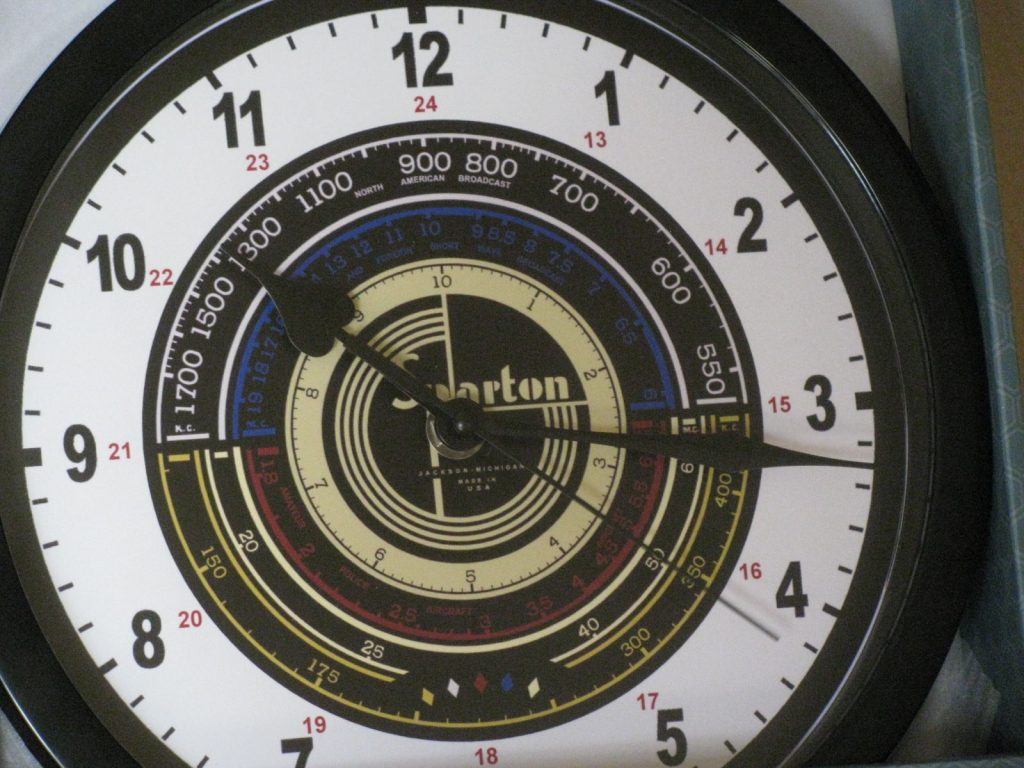
These have been popping up on eBay, reasonable price, with face markings just like an old shortwave radio dial.

Click here to view Zenith wall clock.

Pretty nice gift for the SWL who has everything!

Click here to view Sparton wall clock.

Have a good day and weekend!

Thank you, Mario! Those are nice clocks and, as you say, rather affordable at $26.49 shipped! I like the fact they also include 24 hour markings.

Your message lead me down a path to search eBay for other radio wall clocks. There are hundreds out there! I found that searching with the term “ham radio wall clock” seemed to work best.

Greek mediumwave station on-track to resume operation

Many thanks to our friends at The Greek Radio who share this news:

The medium wave broadcasting center of the Greek Radio in Pachi Megara is likely to go live again after three and a half years, since the procedures for the necessary maintenance and repairs have recently been initiated, with a high possibility that one of the two transmitters will operate again soon. It is worth noting that the broadcasting center, which used to host two powerful mediumwave transmitters (the ones of multilingual “Filia” and of EPA Sport) had been subject to looting by burglars, few days after the ERT closure by the Samaras government, which left the premises unattended. Since then, it has not operated again.

Repairs and maintenance

As revealed by official announcements, ERT is launching a tender for the maintenance of the building and electricity poles with a budget of EUR 18,703, while in December they proceeded with a maintenance of the broadcast center and a cleaning of the 100 KW mediumwave transmitter. In November, a dummy load was installed by a team of the ERT subdivision of structural and electromechanical projects and they checked the generator Nautel, which ensures the continuation of the broadcast in case of power outage. They also installed a new grounding network in the main building of the transmitters.

Alongside, there were other smaller operations required for the safe operation of the facilities, such as the placement of fire extinguishers by a private firm, the restoration of the water supply, the maintenance of fence lighting. In October there was also a visit by a private security company, in response to a tender, whereas data were collected for the water insulation and the lighting of the buildings where the transmitters are placed.

Continue reading at The Greek Radio website…

BITX40 Goes Digital

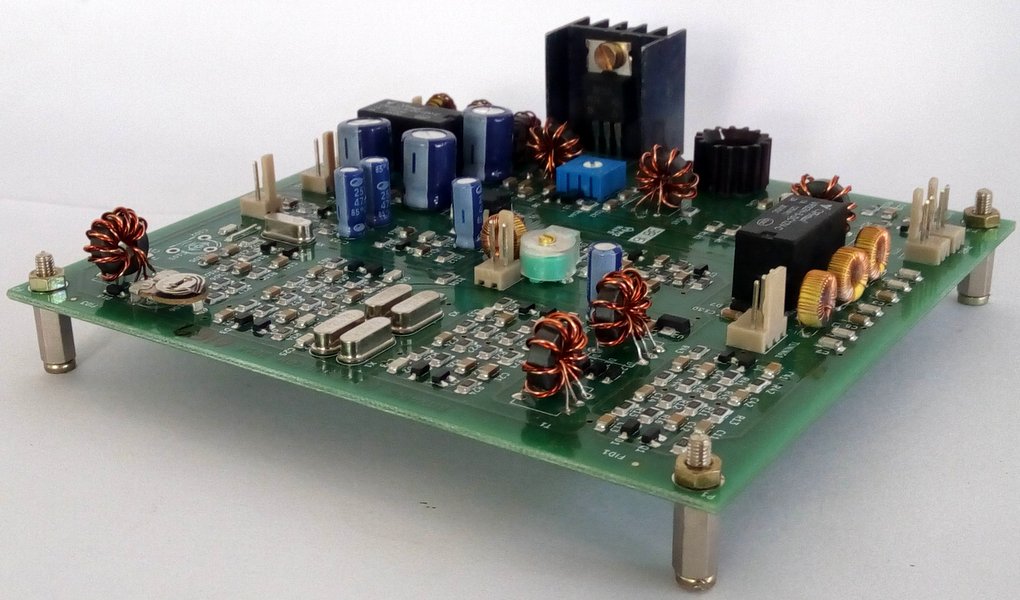
Many thanks to SWLing Post contributor, Pete (WB9FLW), who notes that Ashhar Farhan (VU2ESE) has upgraded the BITX40 Transceiver with a Arduino Nano/Si5351 VFO:

http://www.hfsigs.com/

The BITX40 is an affordable, fully assembled QRP transceiver  we’ve mentioned on the SWLing Post before–click here to read more.

Thanks for the tip, Pete!

Remnants of WOO at Good Luck Point to be removed

Many thanks to SWLing Post readers Al Quaglieri and Alan Tu for sharing the following story via app.com about the removal of the remnants of radio station WOO:

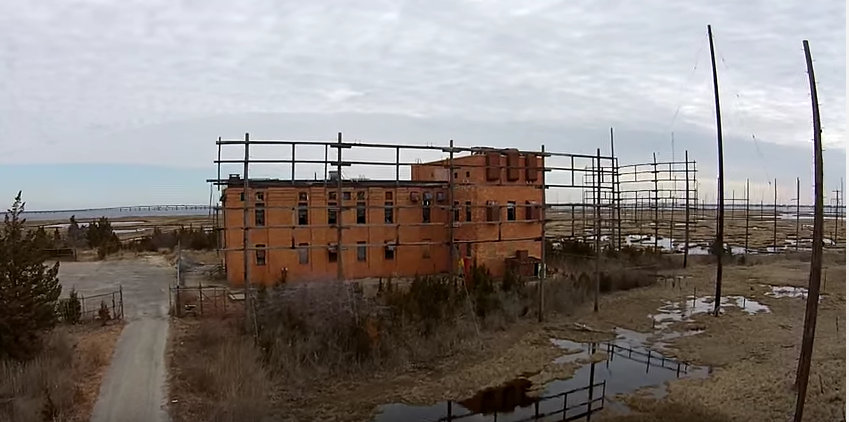
BERKELEY TOWNSHIP — The mysterious poles have stood in the open marshland off Good Luck Point for nearly 80 years, but sometime in January these local landmarks will finally be removed.

“We’re still working with the contractor to determine the exact start time,” said Virginia Rettig, a spokeswoman for the Edwin B. Forsythe National Wildlife Refuge. “This is a little more difficult than the typical project, as we’re trying to be sensitive to the marsh surface.”

The Good Luck Point poles – and a similar pole field in Stafford’s Manahawkin section – were part of inactive shortwave antenna fields used by AT&T for ship-to-shore shortwave communications.

They’ve become a familiar landmark for boaters, fishermen and residents of the area, and can be seen from the bayside in Seaside Heights and Seaside Park.

The antenna field was in operation from the early 1930s until 1999. A shuttered building on the Good Luck Point portion of the antenna field contained equipment related to shortwave communications.

Under the call sign WOO, the shortwave facility at Good Luck Point (known as Ocean Gate) was a renowned transmitting station, which helped broadcast Voice of America around the globe after 1944 and enabled communication with ships at sea throughout the 20th century, according to the U.S. Fish and Wildlife Service.

According to federal officials, about 340 poles will be removed from the Berkeley site, along with several metal antennae.

In Manahawkin, about 113 wooden poles will be removed from the antenna field. Several metal antennas will also be removed.

Continue reading at app.com…

Check out this excellent video–an aerial view of Good Luck Point:

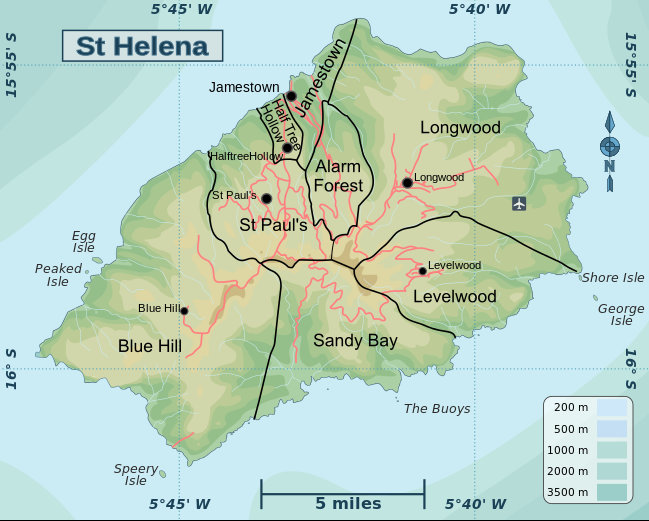
St. Helena is “ready to welcome the world”

If you’ve been a shortwave listener for very long, you may remember the annual Radio St. Helena Day: one weekend a year when this small island broadcaster hit the shortwaves and accepted reports from across the globe. I never had the fortune of receiving their modest signal, but I surely tried!

Since I’m fan of remotely inhabited parts of the world, St. Helena is on my bucket list of places to visit–and it looks like visiting the island may become much easier:

(Source: BBC Travel)

For more than 500 years, the only way to reach the British Overseas Territory of Saint Helena was by sea. Travelling to the South Atlantic island by sailboat, after a nine-day voyage from Namibia, my family and I made landfall the way every person before us has: the way Napoleon Bonaparte did when he was sent into exile in 1815; the way modern-day Saints (as the local population is known) do when they venture home from work in the UK; and the way the occasional, intrepid visitor has always done. But we were one of the last travellers to do so.

In April, the first commercial plane landed at the island’s new airport, and the last working Royal Mail Ship, the St Helena, was slated for decommissioning.

A dwindling population and defiant island geology – which, as Charles Darwin put it, “rises abruptly like a huge black castle from the ocean” – were long-time barriers to the development of an airport. But fears that the island could become nothing more than a remote old age home as younger Saints look elsewhere for employment finally forced the issue. Planned weekly flights will replace the monthly ship visits, and tourism is projected to take off.

Now, for the first time, visitors won’t risk being doused in the Atlantic swell when they reach for the ropes at the sea-washed Jamestown landing, trying to time their first step onto solid ground.

Continue reading on the BBC Travel website…

I do understand that the new airport may be a challenging place to land an aircraft. The following is noted on Wikipedia:

Due to the short runway and the long distance to South Africa, a Boeing 737-700 flying to Johannesburg is not able to use its full seat and cargo capacity. Only flights to and from Namibian and Angolan destinations would allow using a Boeing 737-700 near its full load capacity. The other planned destination, London, requires a fuel stop in Gambia, at almost the same distance as Johannesburg.

If Wideawake Airfield on Ascension Island were open for commercial non-military flights, it could be listed as an alternate aerodrome; this would mean that the load capacity of an inbound Boeing 737-700 could be increased as fewer fuel reserves would be required.

The distance from key destinations, the length of runway available, and the type of aircraft available in the region dictate that air services to St Helena must operate to the requirements of extended twin engine operations (ETOPS) which implies the provision of an instrument approach system based on an off-set instrument landing system localiser (ILS LLZ).

Such is also required by the terrain of the airport which, in commercial passenger air transport terms, is safety-critical due to its steep approaches, high elevation (1,000 ft or 300 m above sea level) and rocky outcrops. Without an instrument approach the provision of a viable air service is considered impossible.

There were doubts concerning local weather conditions and, in particular about the amount of turbulence on the approaches from fallwinds resulting from the elevated location and the surrounding bluffs. Therefore, it was recommended that a charter aircraft should perform approaches to and departures from the intended runway. By April 2016 such flights had taken place, and they weren’t 100% positive[…]

There are so many reasons air service will help this isolated community–especially for medical evacuations–but I suspect this will be a challenging airport for any pilot. St. Helena is one of the most remotely inhabited island on earth–due to aircraft fuel limits and the inability to land at alternate locations, aircraft will be forced to land in occasional adverse weather conditions.

While I’d love to to take a cruise to St. Helena, air service will likely make my future visit much more accessible!

Post readers: Please comment if you’ve visited or live(d) on St. Helena! Please share your experiences! Has anyone had luck receiving Radio St. Helena Day broadcasts in the past?