Author Archives: Thomas

Klaus demonstrates his folding mag loop antenna

Many thanks to SWLing Post contributor, Klaus Boecker, who follows up after our recent post showcasing his homebrew magnetic loop antenna.

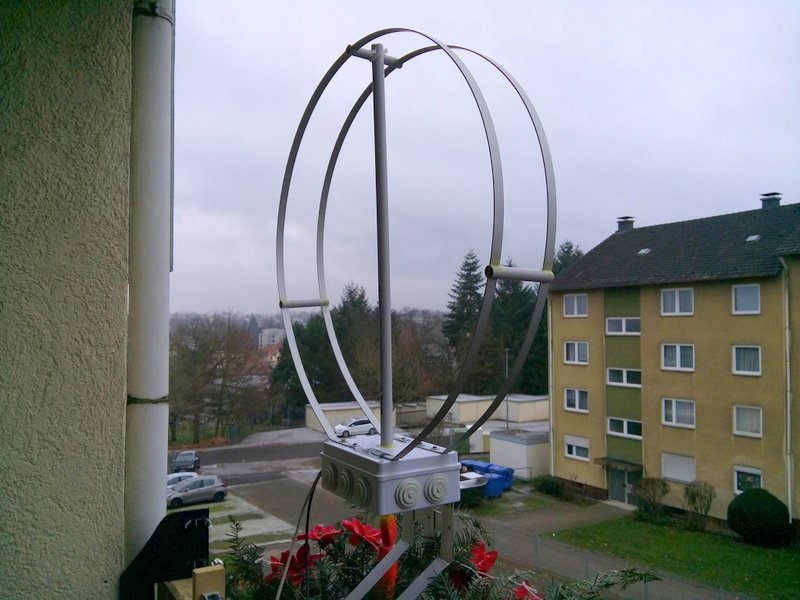
One of the cool things about Klaus’ antenna is that he can easily position it vertically (see above), or fold it over into a horizontal position (see below).
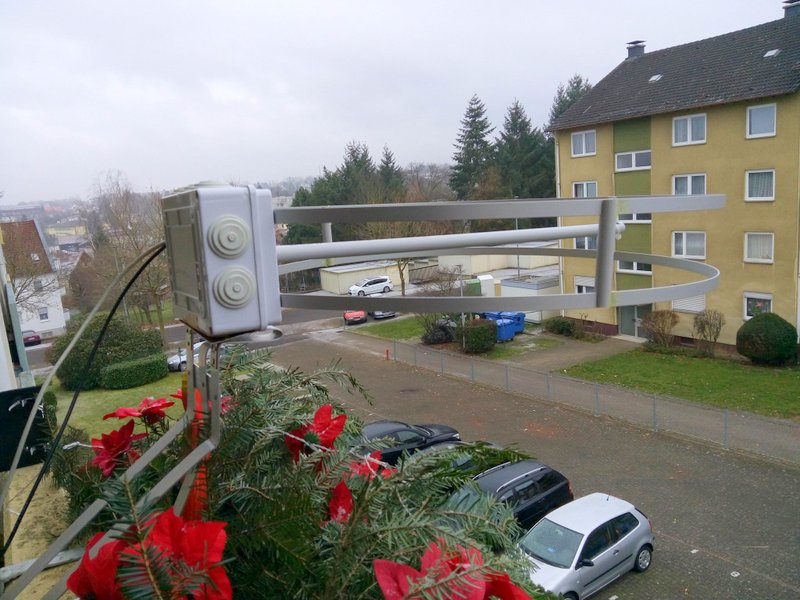
While one would think Klaus would get optimal performance from his loop while vertically-oriented, it’s not always the case. Klaus has discovered that on some frequencies, placing the antenna in the horizontal position lowers the noise level and increases the target signal’s strength.

To demonstrate, Klaus made the following short video for us:

Click here to view on YouTube.

That’s a pretty amazing difference, Klaus! I’m no antenna expert, but perhaps what’s happening is you’re eliminating noise that is polarized in the plane of your antenna, thus the signal “pops out” much better when oriented horizontally?

I’m curious if any readers can explain this.   I know very little about loop antennas–especially small loops since so much of their surroundings affect their performance.

Thanks for sharing, Klaus!

Music copyright issue sends Bulgarian National Radio back to 1945

(Source: BBC via Mike Terry on the WRTH Facebook Page)

Bulgaria’s public radio broadcaster has been banned from playing millions of contemporary songs because of a row over copyright payments.

Since 1 January, state-funded Bulgarian National Radio (BNR) has been filling its airwaves with classical pieces, jazz and traditional folk music instead, the Novinite news agency reports. It’s locked in a dispute with the non-profit Musicautor organisation, which manages the rights to work by both local and international artists – 14 million pieces of music in total.

Even the traditional version of the national anthem is off-limits. Listeners tuning in on New Year’s Eve instead heard the BNR symphony orchestra and choir’s take on the tune, Balkan Insight reports, adding that the copyright row means only music made before 1945 can be played. BNR itself says it cannot play “95% of today’s modern music repertoire”.

Musicautor wants BNR to pay more in royalties – triple the amount it pays at the moment – to bring it more into line with national radio in other EU countries. But radio director Aleksander Velev says that’s impossible unless it gets more funding or drops a regional broadcast, which would “tarnish the radio’s public mission”.[…]

Read the full article on the BBC website.

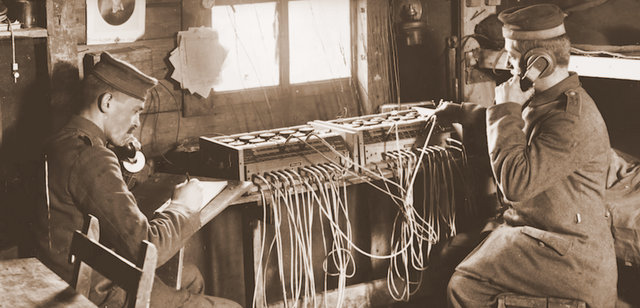
The Great War: A look at WWI communications

Many thanks to SWLing Post contributor, Mike, who shares the following from the YouTube channel The Great War.

This short video gives an excellent overview of communications methods and equipment used throughout World War I. I’ve included the video’s description below:

Click here to view on YouTube.

“If one thing was vital to the the new kind of modern warfare in the First World War, it was communications. The Industrial Revolution had brought wireless transmission of signals with it and the huge armies of World War 1 needed to be in contact constantly to be successful in the field. In this special episode we introduce you to the birth hour of modern military communication and signals.”

Thanks again, Mike! I’ll subscribe to The Great War channel on YouTube.

The Great War Project

If you enjoy reading about WWI history, I would also highly recommend following The Great War Project blog.

The Great War Project follows WWI as it unfolded 100 years ago. It’s an absolute treasure trove of information and brilliantly written.

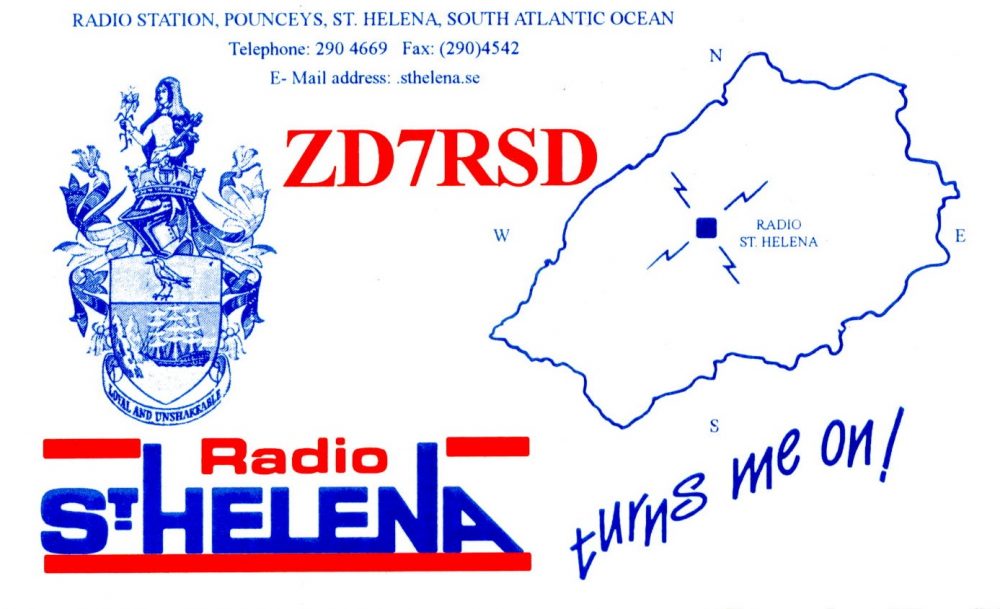
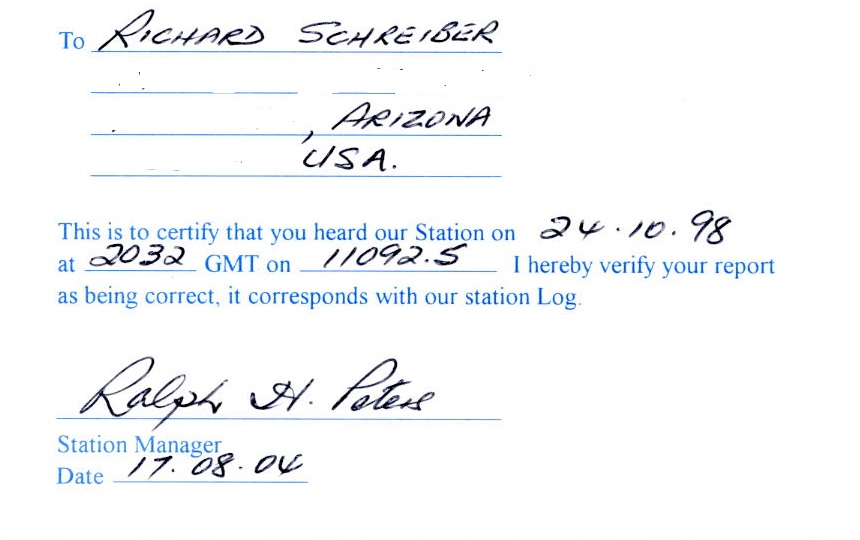
Richard’s 1998 St. Helena Day QSL Card

Many thanks to SWLing Post contributor, Richard Schreiber (KE7KRF), who shares the following:

Here [above] is the QSL card I received in 2004 for the 1998 St Helena Day shortwave broadcast. There were, I recall, some staff changes and other issues that delayed many reports from being verified, but resubmitted everything in 2004 and they promptly verified.

For the 1998 broadcast I actually phoned the station in St Helena and was put on the air, but unfortunately didn’t record the broadcast.

This is one of my most prized QSLs.

Thank you, Richard. It would be one of my most prized QSLs as well! What a great memory–thank you for sharing!


Giuseppe’s recordings of Radio St. Helena Day 2006 & 2009

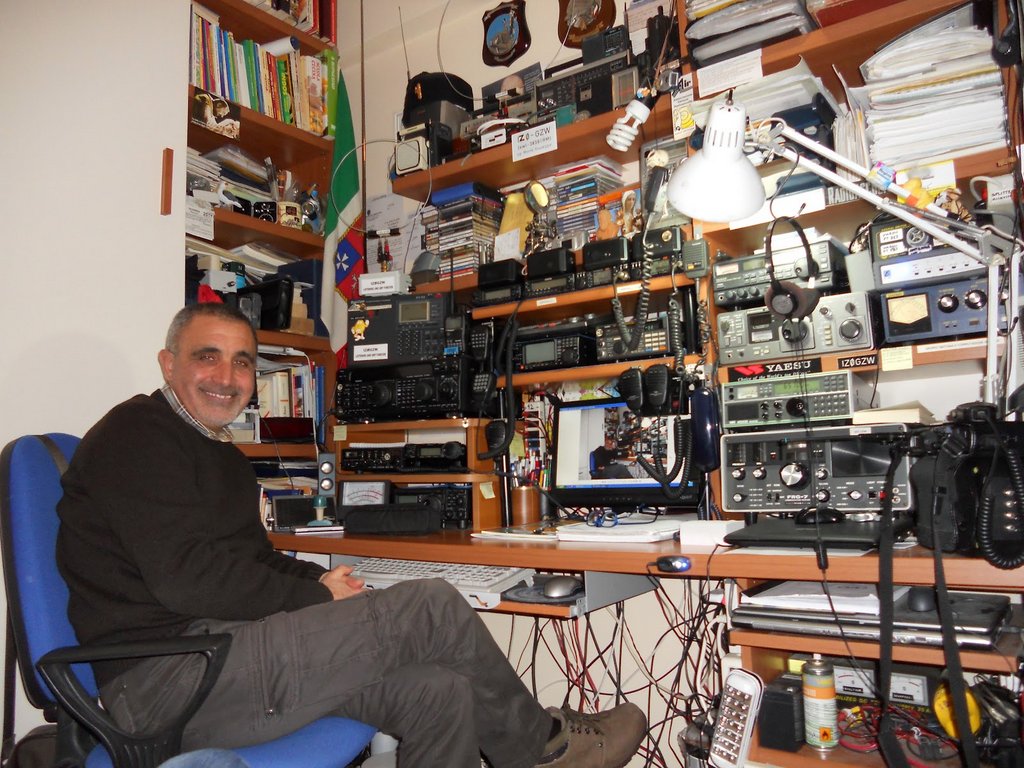
The current listening post and ham radio shack of Giuseppe Morlè (IZ0GZW) from Ponza Island, Italy.

Many thanks to SWLing Post contributor, Giuseppe Morlè (IZ0GZW), who shares the following short recordings of Radio St. Helena day in 2006 and 2009. These recordings were made from his home on Ponza Island, Italy using the Yaesu FRG-7 and FRG-100 and a 30 meter length of wire antenna:

Radio St. Helena – November 4, 2006

Click here to download.

Radio St. Helena – November 14, 2009

Click here to download.

Thank you again, Giuseppe, for sharing these recordings following my recent post about St. Helena island!

With loss of Northern Territory service, ABC recommends AM/FM and a satellite phone

Photo: Lisa Herbert via Twitter

Many thanks to SWLing Post contributor, London Shortwave, who shares this tweet from Northern Territory resident, Lisa Herbert.

Read about the cuts to the ABC NT service and Radio Australia by clicking here.

Chris’ Seoul AM Radio Listening Guide now live

Many thanks to SWLing Post contributor, Chris Kadlec, who shares the following announcement about his Seoul AM Radio Listening Guide:

After a long 14 months of work, I’m happy to present the completed Seoul AM Radio Listening Guide, a three-hour documentary broadcast exploring the Seoul AM band one frequency at a time, plus a look at the radio war on the Korean peninsula accompanied by a 115-page guide.

http://www.beaglebass.com/dx/seoul/

In addition to radio broadcasts from across East Asia, the broadcast includes Korean noise jammers and AM, FM, shortwave, and television propaganda broadcasts from both the north and the south, additionally outlined in a 25-page broadcast transcript and 115-page informational guide. It also includes:

* A comprehensive list of 260 East Asian AM stations, including station names, tower locations, distance and direction from Seoul, parallel FM frequencies, broadcast hours, and station website links.

* A full bandscan of 235 regular nightly skywave signals as heard after the sun sets over Seoul.

* Daytime groundwave bandscans taken from eleven different locations in the Seoul metro area, along the North Korean border, beside the sea, and in Korea’s mountainous interior with background information about each location.

* A guide showing stations organized by their network affiliations in addition to privately-owned stations and networks. Alternatively, stations are also shown organized by country, region, and city.

* A chart showing signal strength for each bandscan – day and night – in bar graph format.

* A full colour-coded regional station map covering both skywave and groundwave signals.

* A view of some of Korea’s signal jammers as seen on an SDR (software-defined radio).

* Plus, a complete transcript of the three-hour audio broadcast with additional information on the featured audio clips as well as the songs featured in those clips.

– Chris Kadlec

Brilliant, Chris! I can only imagine the amount of time and effort you’ve put into this guide. Thank you!