Category Archives: AM

Radio Preservation Task Force conference in the press

Shepperd-RPTF-LOC-2

Last week, the Radio Preservation Task Force held a conference which focused on saving America’s radio heritage. I had hoped to attend in DC, but sadly had a conflict in my schedule that weekend.

I’m happy to see that the conference got several mentions in the press.

Many thanks to SWLing Post contributor, Bill Patalon, for sharing a link to this article in RadioWorld:

Preservation Conference Highlighted Unique Radio Perspectives

The launch of the first “Save America’s Radio Heritage” conference saw a greater turnout than expected, with a total of roughly 300 attendees over two days in the nation’s capital last week.

The event, held at the Library of Congress and the University of Maryland, focused on the state of radio preservation, but the conference was more than just about the process of preserving historical recordings and other radio documents, but sharing some of America’s unique uses of the medium.

The Radio Preservation Task Force calls itself the first national radio history project of the Library of Congress. It grew out of the Library’s ambitious National Recording Preservation Plan, published in 2012. The task force says radio is “perpetually declared to be a dying medium” but nevertheless attracts dedicated listeners and commercial and public support. The organizers have said radio’s history is a chronicle of culture and a potential trove for historical researchers. The national plan in 2012 specifically called for a symposium to discuss the challenges of preserving American radio broadcasts; last week it was put into action.[…]

Continue reading on RadioWorld’s website…

The conference also caught the attention of APM’s Marketplace:

Task force aims to preserve radio history

A group of librarians, academics, and audio enthusiasts is gathering in Washington Friday for a first-of-its kind conference. The topic: “Saving America’s Radio Heritage.” The meeting is part of a massive effort to preserve recordings going back to the early 20th century.

The effort is not focused on the classic network quiz shows and radio plays of the 1930s through 50s, said Chris Sterling, who chairs the Radio Preservation Task Force at the Library of Congress.

“We’ve pretty much got that stuff,” he said. “What we’re talking about instead is trying to get the local radio voice in America: commercial, educational, college radio, all of that.”

One example is a 1956 interview with Rosa Parks from the Pacifica Radio Archives, recorded after Parks’ arrest for refusing to give up her seat to a white man on an Alabama bus.

Also at PopUp Archive:

http://blog.popuparchive.com/?p=836

And on the CBS Radio Network:

Those of us who work in radio are proud it has such a long and interesting history…

[…]But there’s a problem: Radio, by its very nature, is ephemeral. That makes its history a little hard to document.

A conference going on in Washington, DC is helping to make the airwaves a bit more solid.[…]

Continue reading and listen to the full audio report on the CBS Radio Network.

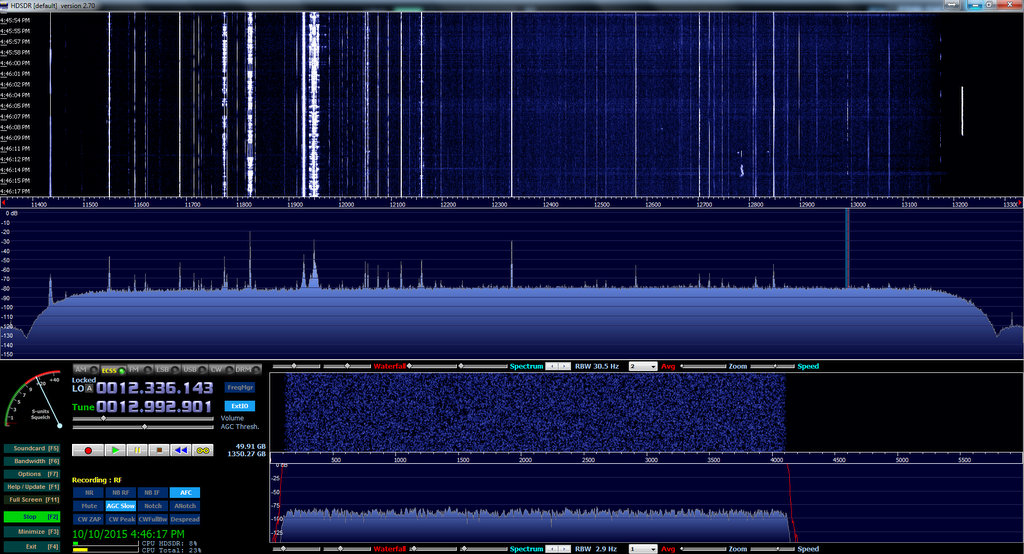
I hope the RPTF hosts another conference next year as I would like input on archiving AM/MW spectrum recordings–something I suspect few in the field even know exists!

Any SWLing Post readers attend the conference?

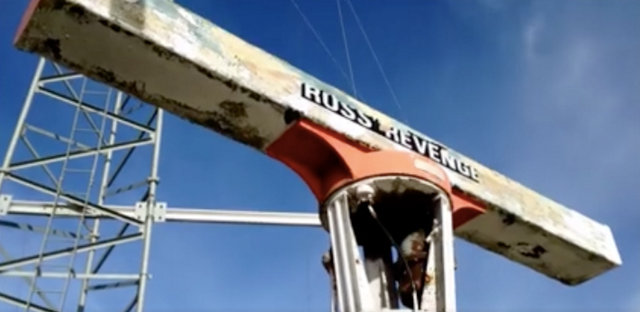
Radio Caroline: A video diary of the weekend aboard the MV Ross Revenge

Ross-Revenge-CarolineMany thanks to Mike Terry who shared the following note and video via Facebook:

The great old days when the signal was mellow and radio waves were not blocked by buildings and hills and propagated beyond the horizon especially at night, it all added to the excitement. We would never have heard many of the great records of the 60s and later without this station! So many international stars made their name on the offshore stations around our coast 50 years or so ago. UK radio was changed for ever.

[Note: This video may only be viewable via Facebook or the SWLing Post site.]

Mike’s low and high pass filter deals

HDSDR-SDRPlay-RSP-PARISWLing Post contributor, Mike Ladd, is an avid SDR enthusiast and an administrator of the SDRplay Facebook group. Mike contacted me about special pricing he has arranged for low and high pass filters through Rescue Electronics. Mike explains:

These filters retail for $70.00 each. I spoke to the builder. I told him who I was and what I do and got him to make a deal for anyone in the United States with these filters and a direct link to his site. I make zero dollars on this. I always try to give back to the hobby and the community any way possible.

You have 3 choices: a high pass filter, a low pass filter, or a combo package.

These are hand built one at a time by Paul W1VLF with your choice of SO-239 or BNC connections. Full details are below:


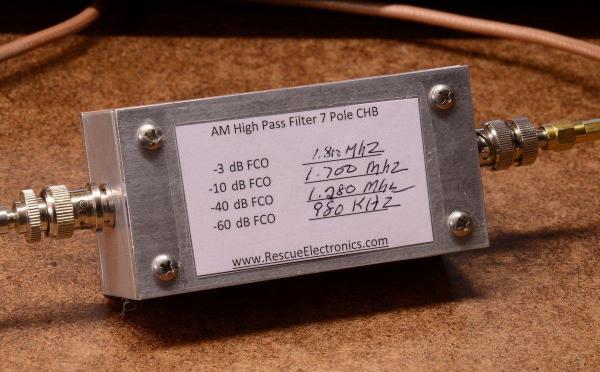
High pass filter $55 shipped anywhere in the USA

AM-HP_Filter-600x372

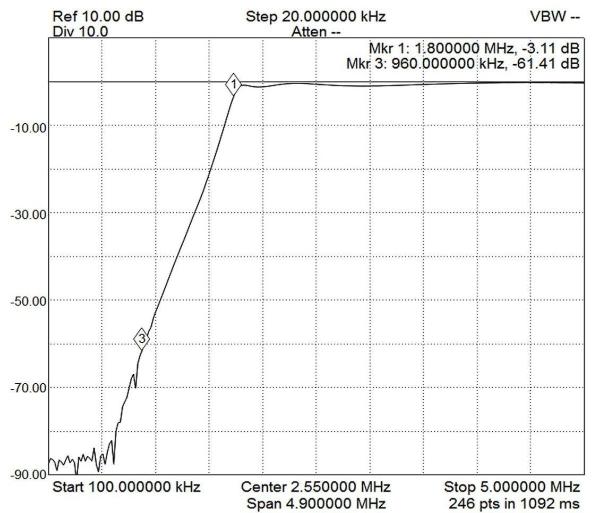
This filter will begin attacking the AM band at 1770 Khz and increase attenuation as frequency decreases.

You can see this in the screen capture of the swept filter below.AM-HP_Filter_Plot2-600x513

160 Meters and above is virtually left untouched, but below that is where the attenuation takes place.

The filter has attenuated 60 db by 960 KHz.

The AM band has some very large signals that can mix in the front end of your. A lot of these spurious frequencies can land in 160 meter band or above.

For instance, I have a big signal at 1080 Khz and another at 770 Khz, add these 2 together and you get a spur that falls at 1850 Khz

Picture this happening at multiple frequencies with multiple mixes and you have a raised noise floor in the 160 Meter band.

The filter is built into a 2″ x 4″ 1.25″ 1/8″ wall aluminum enclosure for excellent RF shielding

Low pass filter $55 shipped anywhere in the USA

AM-2_Filter-600x343

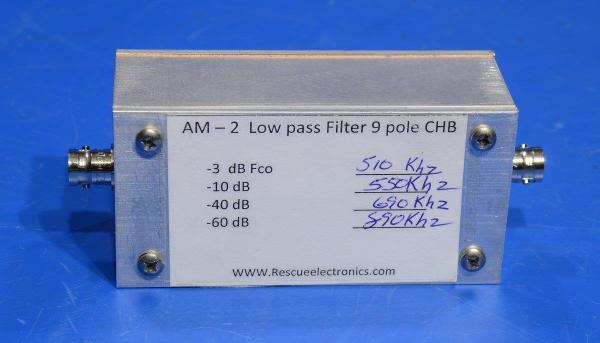
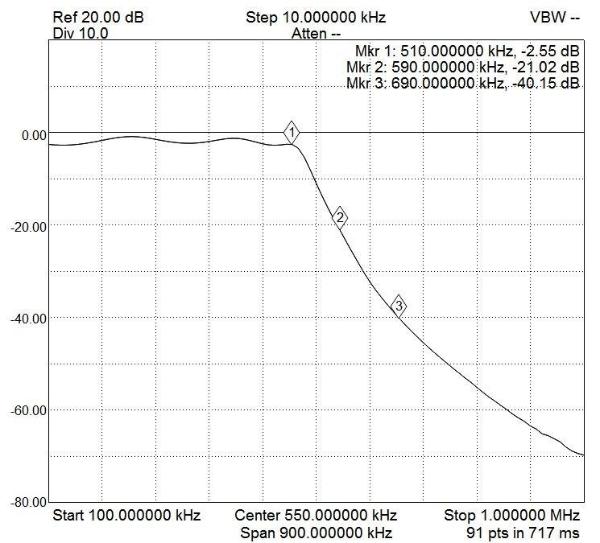
The AM-2 filter has a cutoff at 520 KHz.

AM-2_Filter_Plot2-600x543Then, and without a lot of fanfare it begins the attack on the MW band.

Purchase this filter if you are into NDB, DX’ing, Maritime Mobile, Navetex, FCC Part 5 600 Meter band.

Each filter is handmade and swept in my lab.

The AM -2 Low pass is equipped with BNC connectors.

The filter begins to roll off at 520 Khz and gives an ultimate rejection of around 80 Db.

The filter is built into a 2″ x 4″ 1.25″ 1/8″ wall aluminum enclosure for excellent RF shielding

Combo deal for both $100 shipped anywhere in the USA

AM-2_Filter-600x343 AM-HP_Filter-600x372

Click here to view/purchase via Mike Ladd’s promotional page at Rescue Electronics. 

Many thanks for sharing this Mike! During my presentation at the Winter SWL Fest last week, I spoke about the need for high/low pass filters for listeners who live in the presence of strong broadcasters and interference. Many of the inexpensive SDRs on the market do not have built-in filters and preselectors thus can overload under these conditions.

While filters can be homebrewed or built from kits, these filters seem to be a good deal for a quality shielded and tested product. Thanks for arranging this, Mike!

AM radio proposal has Class A broadcasters upset

WHKY-AM-Radio-Tower(Source: Times Union)

When the sun goes down, AM radio signals travel much farther. You can listen to 50,000-watt stations such as WGY hundreds of miles away.

But that could soon change, if the Federal Communications Commission goes through with a plan to let more local stations broadcast through the evening hours and potentially makes changes in the daytime signal of WGY and other powerful stations.

The proposed change in protections to Class A stations such as WGY would ease restrictions on the smaller stations, which are now required to reduce power or change the direction they broadcast their signal so they don’t conflict with the more powerful Class A stations.

WGY has begun an online petition drive to oppose the changes.

Called “Save AM Radio,” the petition opposes reducing WGY’s so-called “protected service area.”

The changes, WGY says, “will make it very difficult for many of our listeners to receive our programming, especially at night and during morning and evening drive times.”

[…]The FCC, meanwhile, says the changes are being considered in an effort “to help revitalize the AM service.”

More local stations would give listeners a wider choice of programming, supporters of the change argue.

[…]WGY’s online petition is at http://www.wgy.com/features/save-am-radio-1919/
The FCC is accepting comments through March 21 and replies through April 18, at www.fcc/ecfs. Click on “submit a filing.” The proceeding number is 13-249.

Read the full article at the Times Union online…

I’m very curious what Post readers think about this proposal from the perspective of both access to regional information, as well as from MW DXing. Will this move crowd the AM broadcast band or give local stations a stronger voice?

Colin’s welcome additions to the shortwave archive

IMG_0135If you’re a subscriber to the Shortwave Radio Audio Archive, you’ve no doubt noted the excellent recordings submitted by Colin Newell (of DXer.ca) the past few weeks.

Colin has been digitizing loads of off-air recordings made in the 1970s and 1980s. His recordings include rare DX, Cold War broadcasters, west coast pirate radio stations, mediumwave DX, and much more.

I encourage you to click here to browse and listen to what Colin has uploaded so far.

Consider subscribing to the shortwave archive so you don’t miss new additions when they’re published!

Al Jazeera: In the internet age, radio still rules the world

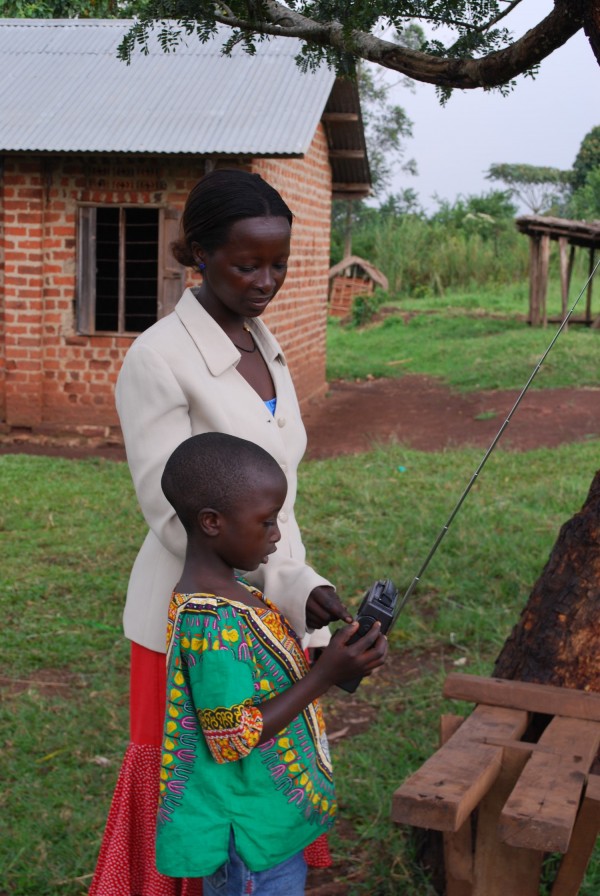
ETOW-Uganda-Radio

Teacher and student with Ears To Our World radio in rural Uganda (2010)

(Souerce: Al Jazeera)

The United Nations cultural agency UNESCO has marked World Radio Day by calling for more freedom of expression and wider access to information in times of emergencies and disasters.

While digital technology dominates the modern means of transmitting information, UNESCO said on Saturday that radio remains the primary source of information for most people in the world.

“Radio still remains the medium that reaches the widest audience worldwide, in the quickest possible time,” the UNESCO statement said.

According to the UN, an estimated 44,000 radio stations broadcast to at least five billion people, representing 70 percent of the population worldwide.

“Radio is a platform that allows people to interact, despite different educational levels, so somebody may be illiterate but still be able to call in a show to give a testimony and participate in radio, Mirta Lourenco, a UNESCO spokesman, told Al Jazeera.

“This is not the same if the person wants to read a newspaper.”

[…]In developing countries, an estimated 75 percent of households have access to a radio, making it an essential and reliable part of disaster and emergency response, UNESCO said.

In India, the biggest advantage of radio is that it is cheap, making it accessible to 99 percent of the population, Dilip Cherian, radio commentator at Radio One India, told Al Jazeera’s Jane Dutton.

The arrival of mobile phones has changed the consumption habits of millions, but many come with built-in radio chips and this has helped keep the radio industry effective, more than 120 years after the first radio broadcast.

[…]”It’s very local, very community-driven, so people feel that they can really relate to presenters and the conversations on the radio,” Amy O’Donnell, a spokesman for the aid organisation Oxfam, told Al Jazeera.

“It’s actually a very participatory mechanism in local communities for people to have their say and have their voices heard.”

Guest post: The future for radio broadcasting in Australia

Many thanks to SWLing Post contributor, Phil Brennan, who shares the following guest post–an article he originally authored for the Australian DX News:

WHKY-AM-Radio-Tower

What Future for Radio Broadcasting in Australia?

By Phil Brennan, Darwin, NT

As we witness the worldwide decline in long wave, medium wave , shortwave and indeed FM broadcasting, it can be at times a slightly depressing exercise to ponder the future of our hobby.  As I write, just last week Radio France announced that it will soon cease all LW broadcasting.  There’s an on-line petition to save the service: this morning it had collected 770 signatures after one week. It was 769 until I sent my modest click across the universe L.

On the domestic front we’ve seen the pointy-headed bean counters in Canberra and their political masters take the knife to our national broadcaster to the point where Radio Australia now seems to be little more than a relay station for the ABC with barely any in-house production tailored for its audience.

With all this doom and gloom it was with some trepidation that I spied a recent Australian Government report entitled Digital Radio Report [1] which arrived via my email in-box through the excellent Australian Policy On-line resource.  The report was published in July 2015 by the Department of Communications and was conducted by the Minister for Communications under the Broadcasting Services Act and the Radiocommunications Act. Note: the Minister for Communications then was Malcolm Turnbull who is now Australia’s Prime Minister.

The report makes for an interesting read (for nerds like us) and provides some great insight into the bureaucracy’s thinking on the future of radio broadcasting in this country.  So while the report ostensibly considers the current and potential state of digital radio in Australia, in so doing it looks at the other forms of radio broadcasting and gives us a peek into the future.

The report broadly considers the following issues:

  • The current state of digital broadcasting and alternative forms, eg streaming services through the interwebs
  • Whether Australia should set a digital switchover date and close off analogue services; and
  • The legal and regulatory framework for digital services.

Like you would have dear reader I quickly scrolled through the report to see if it was recommending a full switchover to digital.  The good news is that this won’t happen anytime soon and perhaps not ever.  Phew! It seems Australia’s geography and sparse population works in our favour (for once).  Anyway, more on that later.

So what does the Australian radio broadcasting landscape look like at present?  Well for lovers of analogue radio it’s still looking pretty strong and it’s likely to remain that way for some time to come.  In the five big cities the 2014 average weekly audience for commercial radio services grew by 4.13 per cent to 10.1 million people.  That’s pretty impressive given the quality of the stuff they serve up each day.  Aunty’s (that’s the ABC to foreign folk) radio service reached a record 4.7 million people in 13/14, an increase of 155,000 listeners on the previous year. Well done Aunty!

All up there are 273 analogue commercial radio services (104 on AM, 152 FM and 12 outside the broadcasting service bands.  Community radio is going strong with 357 analogue services (13 AM and 344 FM) plus 244 narrowcasters (33 AM and 211 FM).  There’s lots of stuff still out there it seems.  Perhaps too much as the FM band is becoming very crowded in the major metropolitan areas.

There are 142 commercial digital services in the big capitals plus the two trial sites in Canberra and Darwin.  Interestingly a good proportion of the digital services are simulcast analogue services, for example 11 out 29 of the commercial digitals in Sydney.  Listenership of digital radio is growing slowly and steadily, reaching 25 per cent in the first quarter of 2015, primarily due to the growth of receivers in motor vehicles.

Streaming services are rapidly gaining ground with services like Spotify, Pandora and the new Apple Music picking up new subscribers each week.  The move by Aunty and the Special Broadcasting Service’s (SBS) to mobile apps for streaming content is also showing good growth. It would appear that to some extent this growth has been at the expense of terrestrial digital services, but audience data in this area is pretty sketchy it seems.

So what of the future for digital radio? Well it seems that for the present the public does not show a preference for digital radio over other forms. And while some European countries such as Norway with near total digital coverage are looking to switch off their FM services, some countries such as the UK have postponed their planned switchover to digital due to slow uptake by the listening public.

In Australia there are big interests such as SBS, Commercial Radio Australia and Broadcast Australia pushing for a switchover to digital as soon as possible.   Thankfully the report’s authors have listened to other bodies that advocate for a multi technology approach.  Significantly the report notes that while digital could match FM for coverage with a similar number of transmitters, it will struggle to match the coverage provided by the medium and high powered AM transmitters that reach the remaining population.  Digital Radio Mondiale and satellite digital radio technologies could increase digital’s coverage but are not considered viable.

Internet based services are not seen as a realistic alternative in the medium term due to high data costs, restricted wifi coverage, likely interruptions in high traffic areas and poor battery life on mobiles.  It’s likely that this will be a niche medium for some time.

So what does the report conclude and recommend?  Well, digital radio was only ever introduced as a complimentary technology and that will continue to be the case.  In saying that the report makes a series of recommendations to free up the rules so broadcasters can take up the digital option more readily.  DAB+ is the preferred technology so don’t go ordering a DRM set anytime soon.

Perhaps most interestingly, the report makes a major finding that there may be an opportunity to consider how analogue terrestrial radio coverage can be improved pending the roll out of digital radio.  This includes further research into how AM coverage can be improved in metropolitan areas and whether the FM spectrum can be made available in regional areas for new analogue services or switching existing AM services over to FM, potentially in lieu of the rollout of digital services.  For us lovers of analogue radio this is certainly good news, particularly if more high powered AM broadcasters hit the band.

Does this actually mean that analogue radio services are safe?  Well, governments have been very good at ignoring reports advocating for the public good and succumbing to the commercial interests with other agendas, particularly when it comes to media.  That said, it doesn’t make a lot of sense for the government to pull the plug on analogue anytime soon given the coverage issues in regional Australia.  However, when it comes to governments, the sensible thing to do is often viewed as the last option.

[1] © Commonwealth of Australia


Thank you, Phil, for your article and opinions! I agree–in a country with such vast expanses, analog radio still has advantages over other mediums. Comments?