Dennis Blanchard (K1YPP), author of Three Hundred Zeroes: Lessons of the Heart on the Appalachian Trail, recently contacted me from the road, en route to another lengthy trail in Vermont.
Before this latest hiking expedition, Dennis spent many hours pouring over the Virtual Radio Challenge III entries, looking up weights and specifications of radio gear and accessories…And the upshot? He’s chosen a winner of our Reader Challenge.
Again, in summary, a participant’s goal was to find the best and most portable radio gear to receive shortwave, AM (medium wave), FM, and NOAA weather to support a long through-hike on the Appalachian Trail, to plan each day’s hike, and to make accommodations for frequent spring and summer thunderstorms (as well as occasional spring snow or sleet)…all for a budget of $300 US. [Read full details of the Challenge by clicking here.]
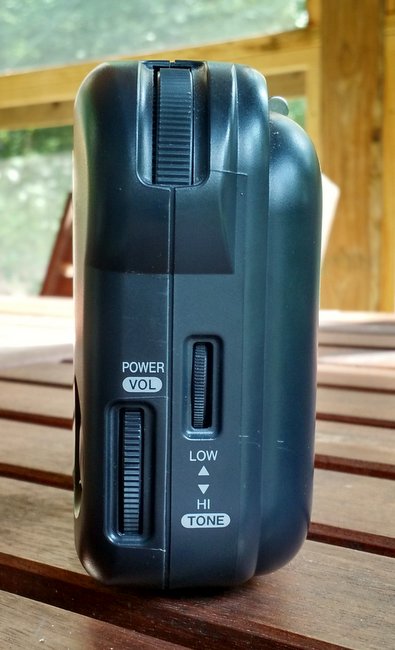
This year, Universal Radio rewarded–and has already dispatched!–a brand new CountyComm GP5/SSB portable receiver to the winning entrant.
Below are Dennis’ comments, along with those of the Challenge winner.
Dennis Blanchard (K1YPP) writes:
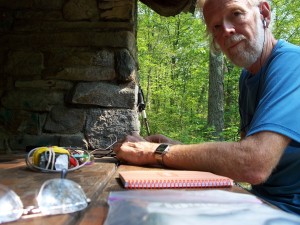
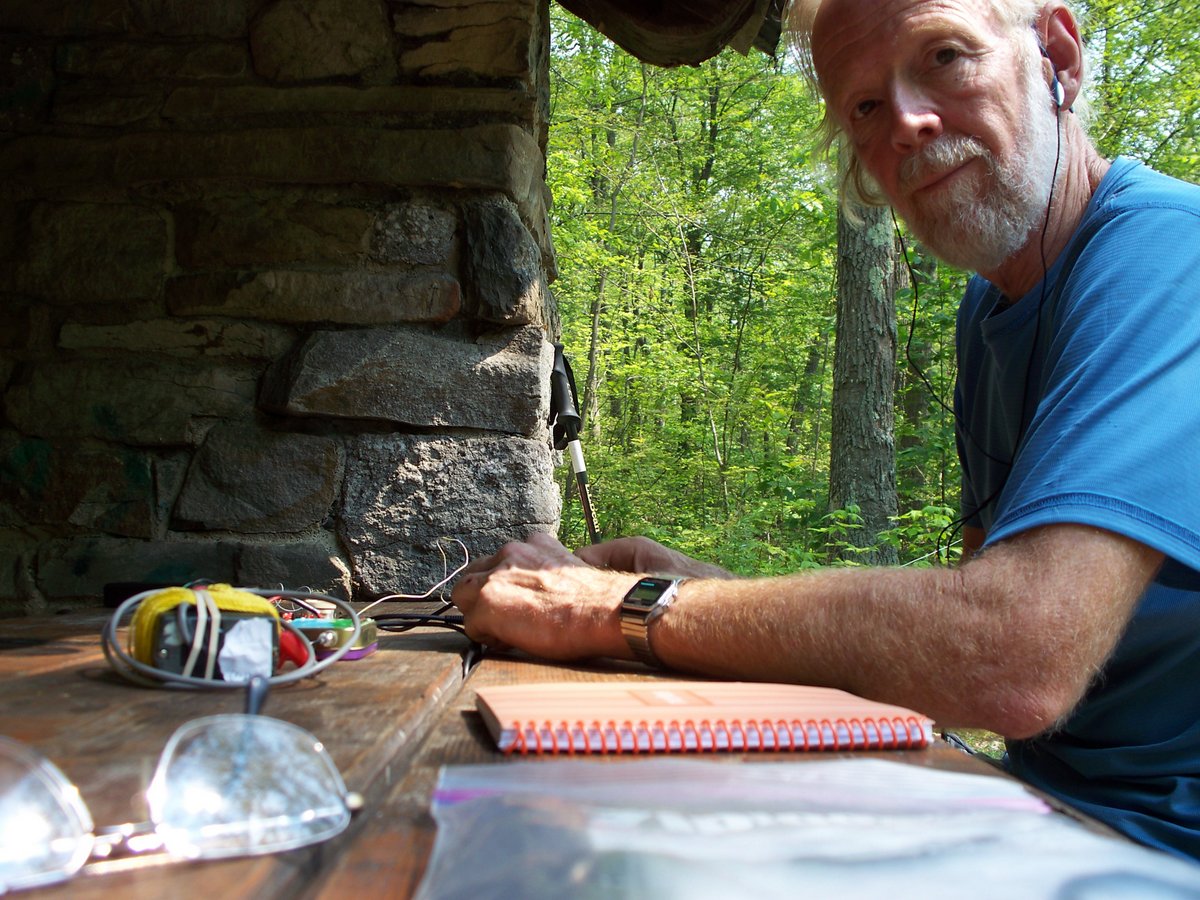
Dennis Blanchard operating a portable radio on the Appalachian Trail. (Photo: K1YPP)
I’ve just spent about five hours going over the entries. There are several that are very good…indeed, Challenge participants obviously put lots of thought into their entries.
It was really tough to decide, but I had to go with most practical.
Weight is a big consideration for me, and that leaves out solar panels, hand crank generators, and the like.
What most don’t realize is that the AT has a nickname: “The Long Green Tunnel.” This eliminates solar panels because there is little sun to be had, as you’re in the shade most of the time. By the time you get to camp it is usually too late in the day for any charging, and wearing a panel just doesn’t do any good because of the shade (and weight).
Not only is weight an issue, so is space in the pack…hikers need all the room they can get for food, and in the cooler weather, heavy clothes.
Anyway, out of five finalists, I would have to go with Eric McFadden (WD8RIF).
Eric’s winning entry
So, what did Eric choose? The following is Eric’s winning entry, beginning with his radio choice and following with a clear, practical explanation for it:
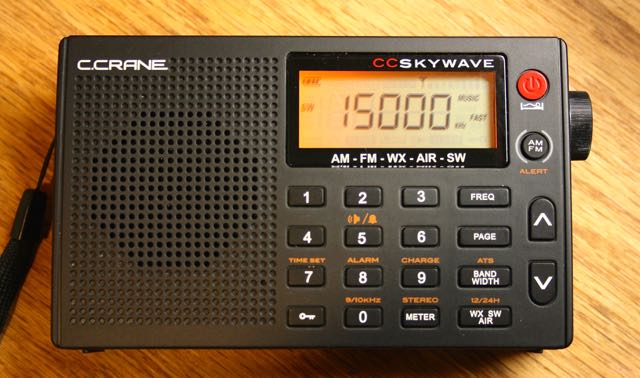
C.Crane CC Skywave, AM/FM/SW/Air/WX, $89.95 at Universal Radio
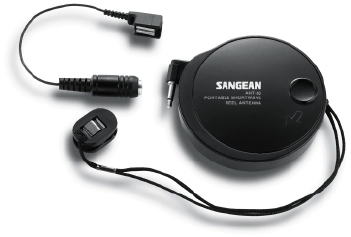
Sangean ANT-60 Roll-Up 23′ Antenna, $12.95 at Universal Radio
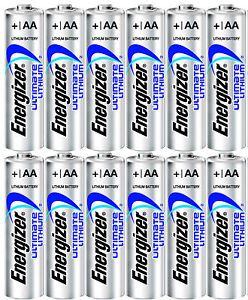
Energizer L91 Ultimate Lithium Cells, AA, 12-pack, $17.45 at Amazon
“The C.Crane Skywave is small (4.75″ x 3″ x 1.1″); light (5.5oz); power-stingy (30mA with headphones); and receives AM, FM, SW, NOAA Weather, and VHF Aviation.The Skywave runs on two AA cells, and comes with a case and CC Earbuds.
The Energizer L91 Ultimate Lithium AA cells provide 1.5v at approximately 3000m Ah, weigh 1/3 that of an alkaline AA cell, and last several times longer than an alkaline cell.
The Sangean ANT-60 would be tossed over a handy tree-limb and clipped to the Skywave’s whip antenna when the Skywave’s built-in 16″ whip isn’t quite adequate for listening to a shortwave broadcast station.
The purchase price of the Skywave, six pairs of Ultimate Lithium AA cells, and ANT-60 would be about $121 plus shipping, well under the $300 limit. The entire station should be small enough and light enough for easy carry in a backpack. If the twelve Ultimate Lithium AA cells don’t last the entire hike, enough of the budgeted $300 remains to purchase more cells (either Ultimate Lithium or alkaline, as available) along the route.”
To this sensible explanation, Eric adds:
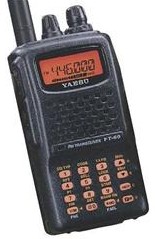 “Being a ham radio operator, I’d want to have a ham rig along, too. While I’d love to be able to operate HF CW along the AT, my Elecraft KX3 is too large and heavy to carry that far. However, my current Yaesu FT-60R 2m/70cm HT and Diamond SRH77CA whip should travel nicely clipped to a backpack strap and would serve as a back-up receiver for NOAA Weather and be available for pedestrian-mobile QSOs (chats) and calls for help, if needed.
In order to save weight and not have to hassle with charging batteries, I’d leave the NiMH pack at home and carry the FBA-25 six-cell AA holder and stuff it with additional Energizer Ultimate Lithium cells in order to save weight.
Since the C.Crane Skywave already meets all the requirements of the Virtual Challenge, and since I already own the HT, battery holder, and antenna, I won’t consider the cost of the HT, antenna, and batteries as part of the challenge.”
About Eric’s entry, Dennis notes:
Eric’s solution is small, lightweight, and does everything needed. He speculates that he would also bring along his Yaesu FT-60R, but didn’t feel he could include it because of cost. Curious, I looked it up on Amazon; should he take it along, this addition would still keep his total well under the $300.00 limit.
This would provide Eric with two receivers, [the ability to enjoy] ham radio communications, and not much weight to haul. He includes the AA Lithiums, and I have to say that, without a doubt, these are the finest hiking batteries out there: they’re light, last forever, and are readily obtainable. I only had to change mine out once on the entire, six-month AT hike, and I was on the air a lot.
Several of the other entries were winners also great; I basically had to use a dartboard to pick a winner. Good thinkers out there, especially considering none of them have actually ever done a hike of this magnitude.
Congrats, Eric! Thanks, Dennis! And more to come…
Congratulations to Eric McFadden for such a well thought-through entry!
I must say, I don’t envy Dennis in making this selection: it was obviously a challenging process on his end, too, and I’m glad I didn’t have to make it!
Dennis informed me that he plans to post and comment on some of his favorite entries in a few weeks, once he completes this latest multi-week hike. We will, of course, post his comments along with the finalist entries.
Note that when I originally received the reader inquiry which prompted the idea behind this Reader Challenge, the CC Skywave had not yet entered the market. Yet several of you chose it as your sidekick for the Appalachian Trail; clearly, clever minds think alike. Obviously, a radio that would function well on the Appalachian Trail would also be a great radio for your BOB (“bug out bag”), go kit or emergency supplies.
Thanks again to Dennis Blanchard, our intrepid judge, thanks to Universal Radio for the great prize, and many, many thanks to all our Reader Challenge participants, who made this process even more exciting and challenging! Meanwhile, don’t worry if you didn’t win the CountyComm GP5/SSB this time; we’ll soon have another opportunity to win one of these handy rigs in a completely different–and fun!–way.


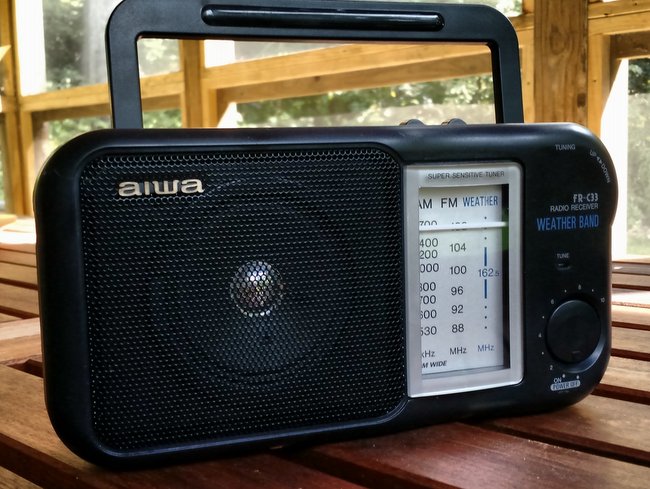
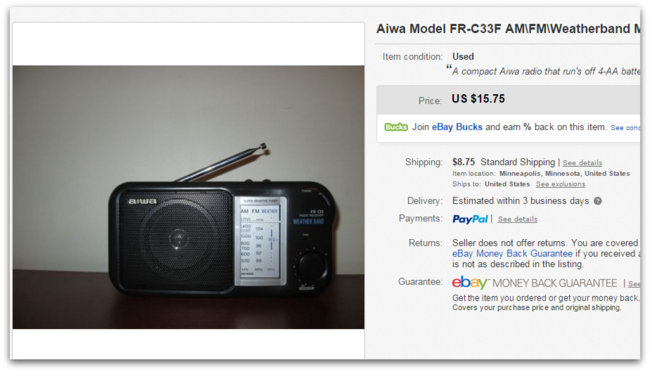
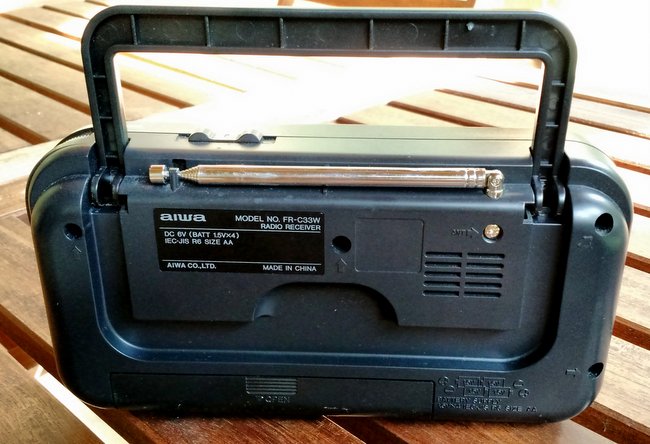 I’ve been enjoying the FR-C33 for a few weeks now; Ron’s assessment is spot-on.