Category Archives: Antennas

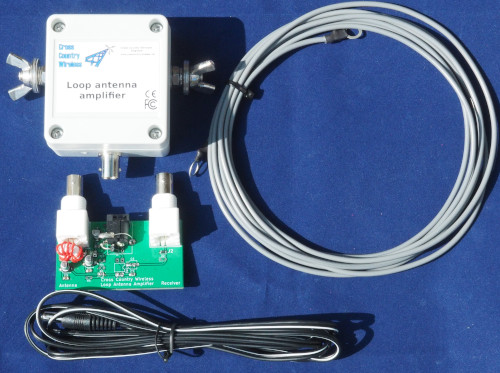
Joshuah says: “The Cross Country Wireless LAA++ amplifier rocks!”

Image Source: Cross Country Wireless

Many thanks to SWLing Post contributor, Joshuah, who writes:

Dear Thomas,

I recently dedicated some funding to rebuilding my shortwave listening station.

I had paid attention to new amplifiers  and became aware of some review data by an engineer at SDRPlay comparing amplifier performance that suggests the Cross Country Wireless amplifier, at a cost of only 80 dollars, had become a competitive design offering performance comparable to amplifiers costing 10 times that much.
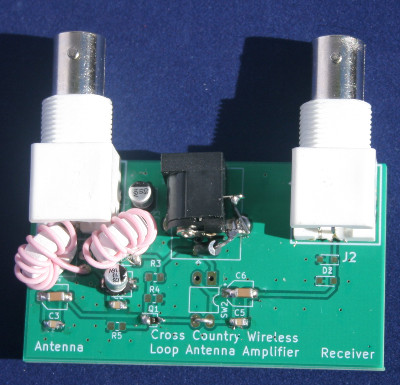
I was hooked by the specific demonstrations showing that the LAA++ offered IMD characteristics more similar to a Wellbrook, with gain more similar to other high amplification designs. I had to have one.

I set up my station with the following components:

    • A used Icron Ranger 2304 USB over ethernet extender off eBay
    • A used Airspy Discovery off eBay
    • A Cross Country Wireless receiver protector(or similar ferrite + gas discharge diode isolator)
    • A custom ordered LAA++ amplifier from Cross Country Wireless built for 75 ohm with F connectors and a low pass filter at 14MHz
    • A power inserter from an W6LVP that wasn’t cutting the mustard
    • A pair of classic, solid transforming power adapter bricks
    • An unshielded ethernet cable
    • Some Fair-Rite ferrite snap ons with multiple turns

I obtained a weatherproof enclosure and some pex tubing and specialty cable glands and built an antenna housing. Inside the enclosure I mounted the amplifier, adding a large gauge copper wire for the antenna element, and used an affordable tri-shield RG11 with specialty connectors as the feedline for the antenna.

The antenna measures approximately a 2 meter diameter, and is mounted about 5 feet off the ground at the base of the antenna. It is located outside of a remote shed at the edge of my property, and the ethernet (alternatively, wireless repeating parabolic dish with router) mirrors the USB data back to the PC in my basement which serves as the shortwave receiving server host.

I have been overwhelmed both with the amount of new noise and new signal that this antenna picks up.

In shortwave, the other night, I was picking up stations around the world.

Tonight, I was able to very clearly make out CHLO. I am located in EM38, over 700 miles from the transmitter, which only operates at 250 watts during the night time.
I was also able to pick up some international NOAA NAVTEX alerts on 518kHz about a right whale slow zone in the Atlantic off the shore of New Jersey.

I would  highly recommend this antenna amplifier.

Yours sincerely,

Joshuah

Thank you so much, Joshuah, for allowing me to post your note here in the SWLing Post. I’m so glad you found such an affordable way to cobble together an effective antenna system to not only mitigate interference, but also afford you DX-worthy reception. 

I’ve only heard good comments about Cross Country Wireless as well. 

Again, thank you for sharing your impressions and details about your setup!

Click here to check out the Cross Country Wireless amplifier.
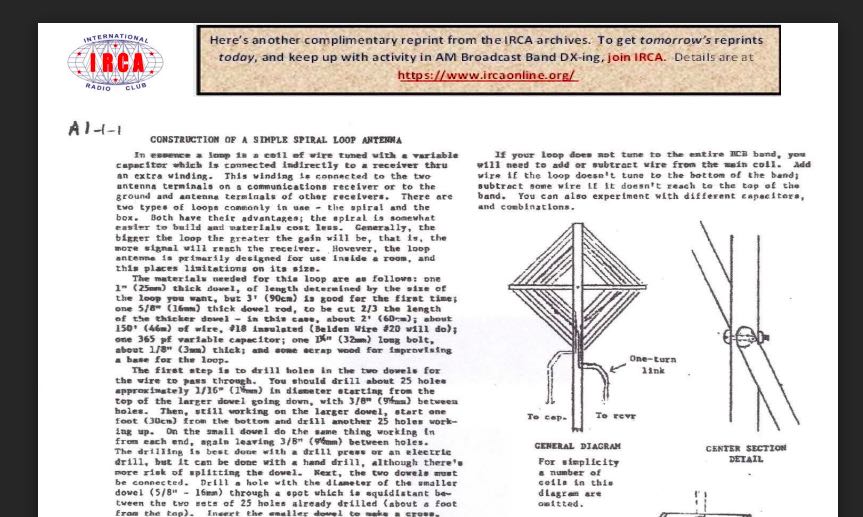
International Radio Club’s Reprints collection of 900+ articles

Many thanks to SWLing Post contributor, Nick Hall-Patch, who shares the following announcement:

The International Radio Club’s Reprints collection of 900+ articles about antennas, radio propagation, receivers, accessories, plus items of general interest to MW DXers, continues to grow.   We’ve published an update to the index, at https://www.ircaonline.org/editor_upload/File/reprints/irca-reprint-index.pdf  ,  so that everyone can get access to these latest additions.

We’re also pleased to start offering reprints that did not initially appear in IRCA’s DX Monitor, but are not easily found elsewhere.  For example, we’ve obtained permission from the family of the late prolific author, Dallas Lankford, to organize and republish his out of print articles. 

(if you’ve used the index before, you may need to refresh the browser page to see the latest update, dated December 2021)

Click here to check out the IRCA Index (PDF).

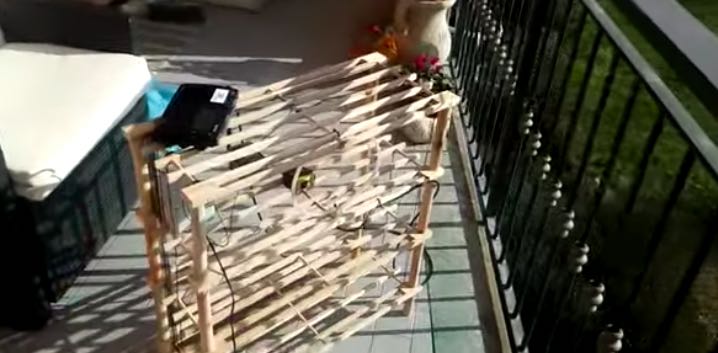
Giuseppe’s portable multi-loop homemade shoe rack antenna

Many thanks to SWLing Post contributor, Giuseppe Morlè, who writes:

Dear Thomas,

I’m Giuseppe Morlè iz0gzw from central Italy on the Tyrrhenian Sea, Formia.

I am sending you this umpteenth project of mine built with poor materials…it is a test bench, loops / capacitors to find the best tuning.

The frame is a shoe rack in beech wood, very light, to take anywhere or to try out at home.
On the frame, there are 4 different loops of different sizes and 3 variable capacitors with different capacities. Only one signal transfer link to the receiver for all loops.

With alligator plugs I can use the different combinations of loop / variable to find the best tune

This test rig can tune the whole HF frequency range and medium wave.

I’ve attached 3 videos where you can see from the beginning to the last test on the balcony of my house.

Videos

Note that the following videos are in Italian, but you can turn on closed captioning and in the settings of the video have it auto-translate into the language of choice:

Click here to view on YouTube.

Click here to view on YouTube.

Click here to view on YouTube.

All, as always, spending very little and employing used materials!

Thanks to you and a warm greeting to the whole SWLing Post community.

I remain available for any clarification.

Greetings to all and good experimentation!

Thank you for sharing this Giuseppe! I love your ingenuity and spirit of experimentation! What a fun project that obviously yields excellent results!

Frugal Radio’s Loop On Ground (LoG) Antenna

Many thanks to SWLing Post contributor Rob, with Frugal Radio, who writes:

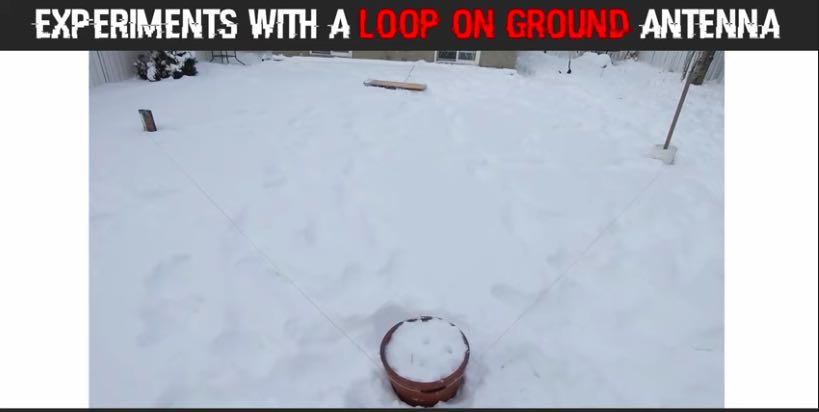
On New Year’s Day I decided to spend some time make a Loop on the Ground HF antenna. It had been a project I had wanted to undertake for a while, after seeing the KK5JY web site.

The LoG is supposed to work fairly well in noisy RF environments, and with my house being in suburbia,I thought it would be worth a shot.

I use some old speaker wire, RG6, some connectors I had lying around, and some random items from the back yard (old tyre, flower pot etc). It only took about 30 minutes to build with the stuff I already had lying around. I used a NooElec balun as my transformer.

Despite the snow on the ground, it all worked.
I made a video showing the construction and initial testing which your readers may enjoy.

As you mention, Rob, the LoG has become a very popular antenna for folks living in an urban RFI jungle. Paired with a nice high dynamic range SDR, the results are quite impressive and the noise floor much lower than it would be with a traditional wire antenna or even a sky loop. I am curious how it compares with any other antennas as your home. Thanks for sharing!

Ernie’s portable Youloop antenna deployment system

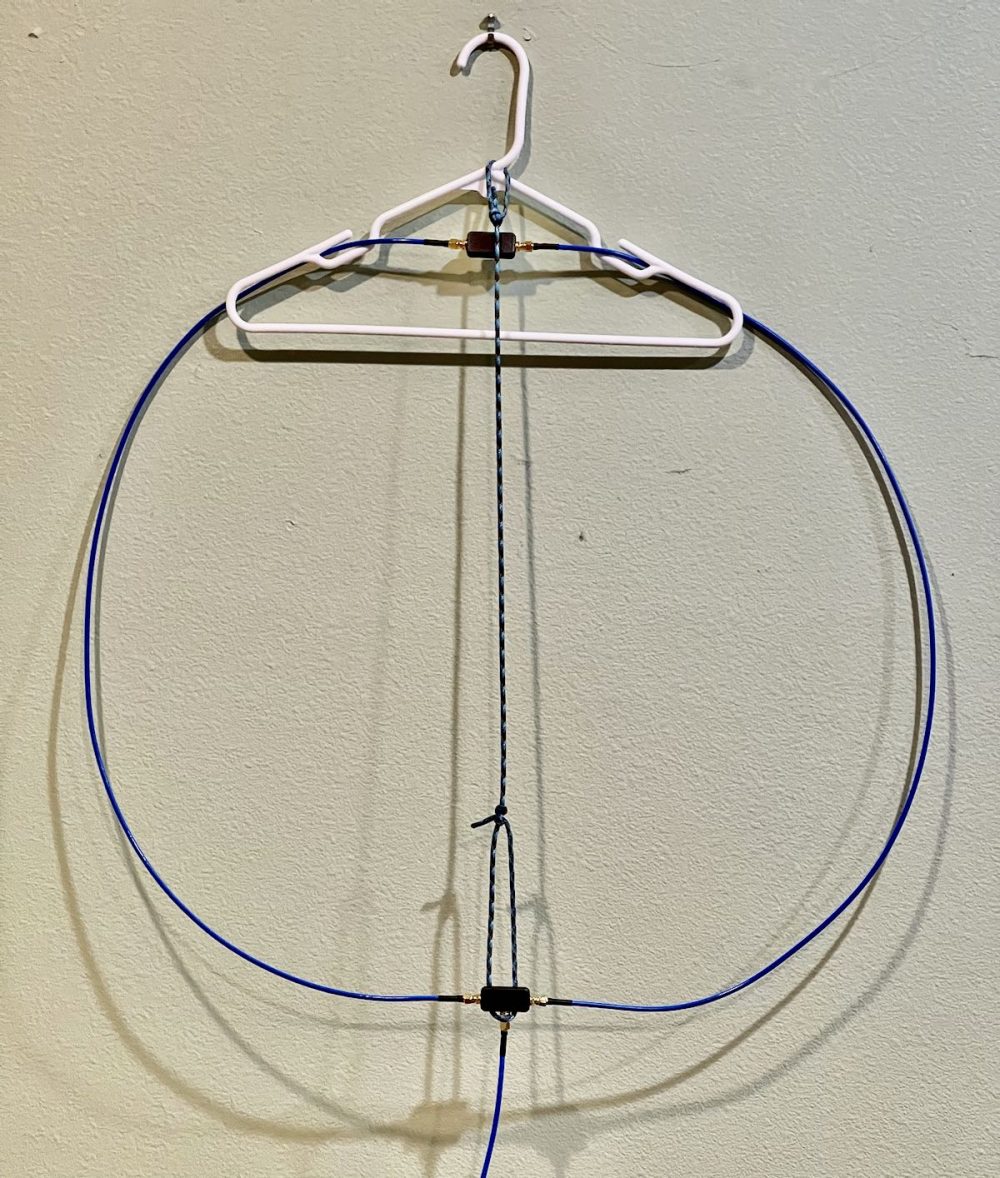
Many thanks to SWLing Post contributor, Ernie (NH7L), who shares the following photo and notes that this is his solution to “Youloop strain relief.”

I love it, Ernie! Very practical, affordable, accessible, and portable! Perfect for hanging on the curtain rod in your hotel room as well!

Thanks for sharing your tip!

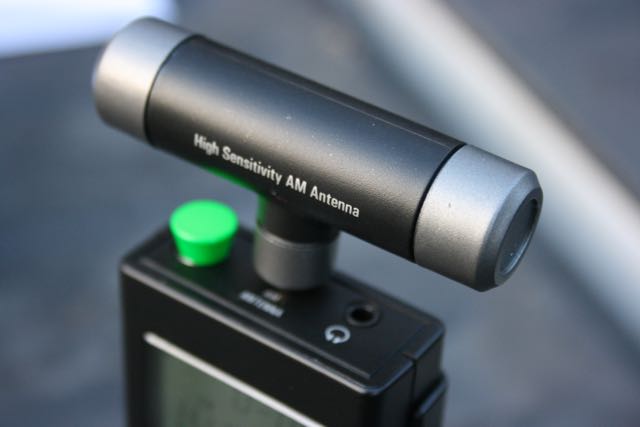
Ulrich seeks advice with Tecsun PL-365/PL-368 ferrite bar issues

Many thanks to SWLing Post contributor, Ulrich Ruch, who writes:

Hi Thomas

Wondering if you’ve heard of similar experiences: since receipt on 4th
November I have been using the new gadget (Firmware 3684E) almost daily
until yesterday when the ferrite bar antenna suddenly did not work any
longer. I became aware of the fault when I put the rod into the antenna
jack noticing that the field strength reading drops to zero so that the
radio becomes deaf!

I somehow suspect that the fault lies in the socket. As a matter of
fact, I had/have the same problem with the old 365 with its green design
ferrite rod. What seems rather odd to me however, is the fact that if I
plug in an external active antenna (Wellbrook, Bonito, RF Systems
DX-one) both units work properly, furthermore, the 368 ferrite bar
miraculously works on the 365 whereas the 365 rod doesn’t on either
model!? So, with the best of will, I cannot blame the socket for sure –
or is it that the rod-plugs are too thin to give proper contact – I
don’t know.

Since I was unable to find any pertaining findings in the net, I do hope
that you may have further information from your worldwide reader feedbacks!?

SWLing Post readers: If you have experienced this same issue or can diagnose what might be happening with Ulrich’s PL-365 and PL-368, please comment!

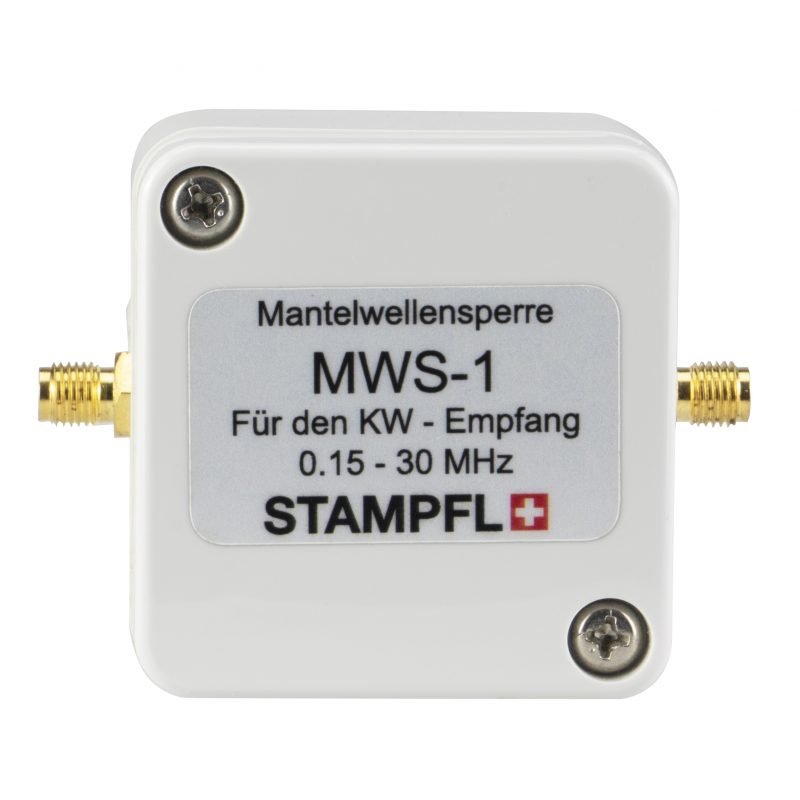
The new Stampfl MWS-1 Standing Wave Barrier

Many thanks to SWLing Post contributor, Markku (VA3MK), who notes that Swiss manufacturer Stampfl has introduced the MWS-1 Standing Wave Barrier.

Stampfl notes (translated from German):

A standing wave barrier can improve reception. The standing wave barrier interrupts the ground loop and suppresses the interference caused by the cable shield.

This is designed only to work with receivers (not transmitters) between 0.15 – 30 MHz.

I suppose this might be a form of an RF choke, although I’m sure someone else might know better.

Thank you for the tip, Markku!

Click here to check out the MWS-1 at Stampfl.