Category Archives: Current Events

Halloween was a very active night for pirate radio

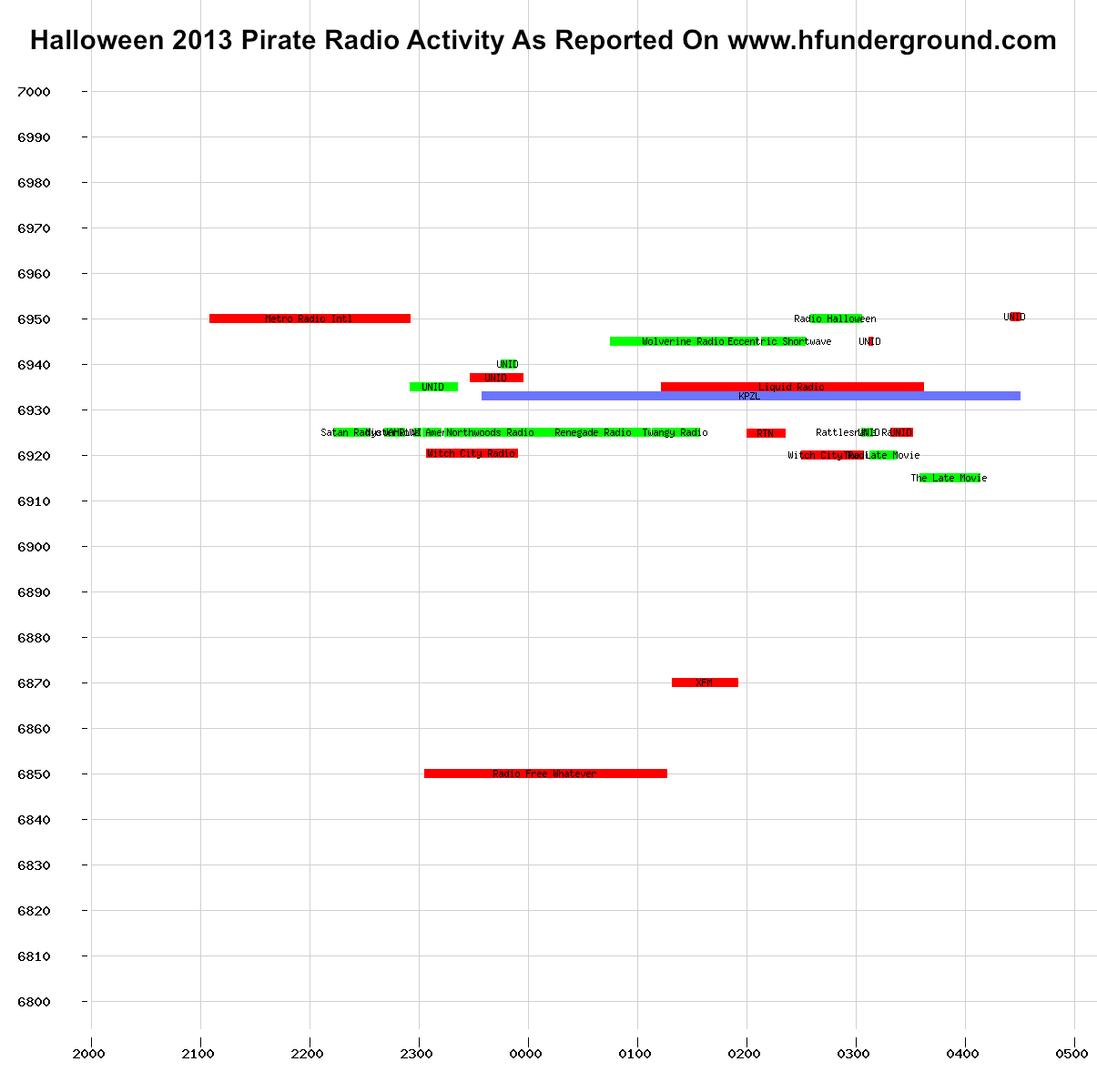
Haloween-Pirate-RadioYou might remember my post from last week saying that Halloween is a pirate radio holiday? Chris Smolinski from the HF Underground has crunched some numbers from North American pirate radio loggings on Halloween. The number of pirates (and his chart with times and frequencies) are most impressive.

He writes:

Here’s some more pirate activity info for you: http://www.hfunderground.com/board/index.php/topic,13574.0.html

Quite impressive, 28 transmissions logged.

Halloween-2013-Pirate-Radio-Activity

Listen to the The Melbourne Cup on Radio Australia

Melbourn-CupJohn Figliozzi writes:

“Radio Australia will preempt its regular programming beginning at 0400 UT Tuesday to provide live coverage of the running of the 2013 Melbourne Cup horse race.  RA will have special programming at 0400 and 0530, before and after the race.  It will join the national sports program Grandstand beginning at 0430.  The Melbourne Cup is Australia’s greatest and most loved horse race and is run annually on the first Tuesday in November. It is known as “the Race that stops a Nation!”

Listeners can access the coverage via shortwave [9660, 12080, 15160, 15240, 15415, 15515, 17750, 17840, 21725; and 13630 after 0500 ] and the internet [http://www.abc.net.au/news/sport/] and [http://www.radioaustralia.net.au].”

Radio Romania International celebrates 85 years on the air

RRI-RadioRomaniaInternationalTo celebrate 85 years on the air, RRI is asking their listeners: “How do you see the future of international radio broadcasting?”

Send your response and RRI might read it on the air during their November 3rd, 2013 broadcast.  Read full details below.

(Source: Radio Romania International)

On November 1, 2013 we celebrate 85 years of Romanian radio broadcasting. An anniversary that we take pride in, that we think about more or less nostalgically, and which brings questions about the future.

It is an occasion for Radio Romania International to challenge you, on this year’s Listener’s Day, to answer the question “How do you see the future of international radio broadcasting?”

Ever since its first days, radio broadcasting has been subject to countless tests, on the one hand prompted by the changes in the media landscape, such as the growth of television, the development of private radio stations, the emergence of the Internet and of social networks, and on the other hand triggered by the diversifying means of reception and transmission. In response, the radio outputs and contents have also changed. Radio broadcasting and reception modernized.

Political factors, regime changes and wars also influenced the mission and programmes of radio stations, while economic factors, such as the periods of economic growth or slumps, have affected the number of stations and their broadcasts. International stations have been subject to all these influences, just like all other radio stations.

This is why, dear listeners, we invite you to tell us how you think international radio stations will develop in the coming years, and what your expectations are in this respect. What will the global supply of programmes for foreign audiences look like, and how large will it be? What means of transmission will be used by most international broadcasters? What will be the role of radio stations for foreign listeners, in a world where access to information is ever easier?

We are looking forward to your answers to the question “What will be the future of international radio broadcasting?” and will award the most interesting 20 contributions.

As usual, it is based on your answers that we will produce the “Listener’s Day” programme on RRI, aired on the first Sunday in November, that is November 3rd this year. You can send your answers in audio format, or in writing, via email, regular mail or fax, on Facebook or using the form on our website. Our contact details are: Radio Romania International, 60-64 General Berthelot Street, sector 1, Bucharest, PO Box 111, code 010165, fax no. 00.40.21.319.05.62, email [email protected].

KVOH test broadcasts this weekend

KVOHCoverage-Map-VoiceOfHopeRay Robinson, Operations Manager at KVOH (Voice of Hope / Voz de Esperanza) writes:

[W]e would very much appreciate your reception reports (or preferably, recordings) of the tests we will be running on 9975 kHz on Friday and Saturday evenings this week. The exact times are:

  • Saturday 7th – 0100-0400 UTC
  • Sunday 8th  – 0100-0400 UTC

In North and Central America, that would be this Friday and Saturday evenings, 8-11pm Central, 9pm-12am Eastern. The test program will be similar to last time, but not exactly the same. It will contain segments in both English and Spanish.

The transmitter site is near Los Angeles, and here it is currently getting dark at about 0230 UTC (7:30pm local). Therefore, during the first half of these tests, the transmission path will be increasingly in darkness, and for the last 90 minutes or so will be in complete darkness. Please let us know what reception sounds like at your location as the evening progresses, and also what type of receiver and antenna you are using.

Reception reports may be emailed to “[email protected]” or sent to:

KVOH – Voice of Hope
P.O.Box 102
Los Angeles, CA 90078
United States of America

All correct reports will be verified with our QSL card.

Thank you very much in advance for your assistance with this test!

Voice of Russia to cease shortwave radio service

Voice of Russia Antenna site in Wachenbrunn, Germany (Source: Wikimedia Commons)

Voice of Russia Antenna site in Wachenbrunn, Germany (Source: Wikimedia Commons)

It appears the Voice of Russia will cease shortwave radio service on January 1st, 2014. According to this article on RiaNovosti, the shortwave service is closing due to “funding  cuts.”

I have listened to the Voice of Russia since they were known as Radio Moscow in the Cold War era. But they’ve been around much longer than the Cold War, indeed, they’ve been on the air since 1922 with their first transmitter station (RV-1) in the Moscow region.

Needless to say, I’m sad to see them leave the shortwave spectrum.

Atlantic 2000 on air Sunday August 18

1-RadioListening2Thanks to HK for the tip:

Atlantic 2000 will be on the air this Sunday 18th of August from 08:00 to 09:00 UTC (10:00 to 11:00 CEST) on 6005 and 9480 kHz, and at the same time on our webstream.

Only precise and detailed reception reports will be confirmed by QSL-card.

Atlantic 2000 émettra sur 6005 et 9480 kHz ce dimanche 18 août de 08:00 à 09:00 TUC (10:00 à 11:00 heure de Paris).

L’émission sera diffusée à la même heure sur notre site internet.

Seuls les rapports d’écoute précis et détaillés seront confirmés par QSL.


Visit our website :
http://radioatlantic2000.free.fr

The Gezi Park Protests: don’t look to the Voice of Turkey for information

On shortwave, sometimes it’s what’s not heard that speaks volumes.
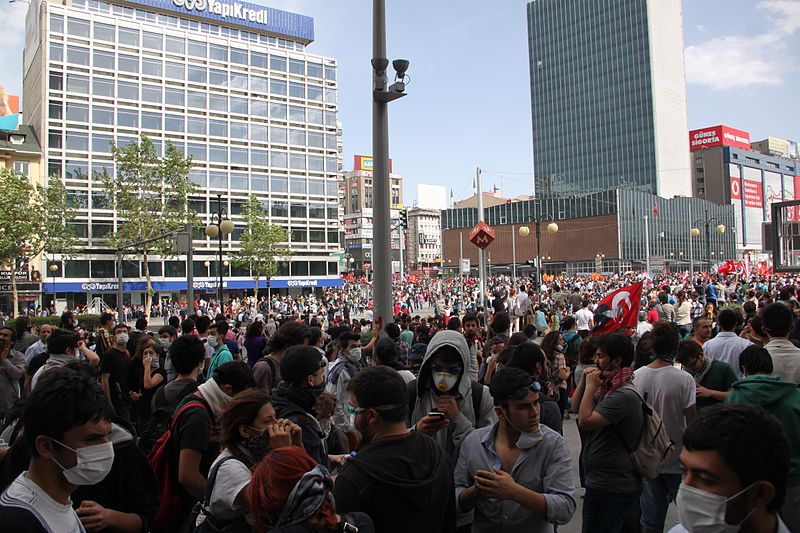
Gezi protest in K?z?lay Square, Ankara (Source: Wikimedia Commons)

Gezi protest in K?z?lay Square, Ankara (Source: Wikimedia Commons)

Turkey has been in the world headlines now for well over a week. In case you’re not up-to-date, here’s a summary of what has happened:

On May 28, 2013,  about fifty environmentalists led a small protest in Istanbul to oppose the replacement of Taksim Gezi Park with a reconstruction of the Taksim Military Barracks.  The protests escalated when the group occupying the park was attacked with water cannons and tear gas by the Turkish police. This event led to riots, which were soon widespread; the protests, meanwhile, broadened their scope into full-fledged anti-government demonstrations across the country and even into the Turkish diaspora across the globe.

Yesterday, I turned to the Voice of Turkey on shortwave radio to hear about the active protests currently ongoing throughout the country…

But what did I hear? The only mention I heard of the Gezi Park protests in the Voice of Turkey’s English language service were in a passing Turkish press report on the reaction to the protests by the US Secretary of State, John Kerry. The item, moreover, was completely buried in their broadcast and certainly not something upon which they elaborated in the least (listen, beginning at 12:50 below).

I’ve always loved listening to the Voice of Turkey, but events like this remind me of the simple fact that many international broadcasters are still very much the mouthpieces of their governments.
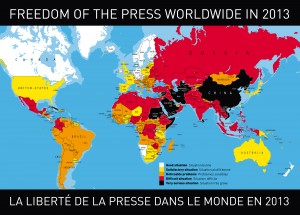
Click to enlarge (Source: Reporters Without Borders)

Click to enlarge (Source: Reporters Without Borders)

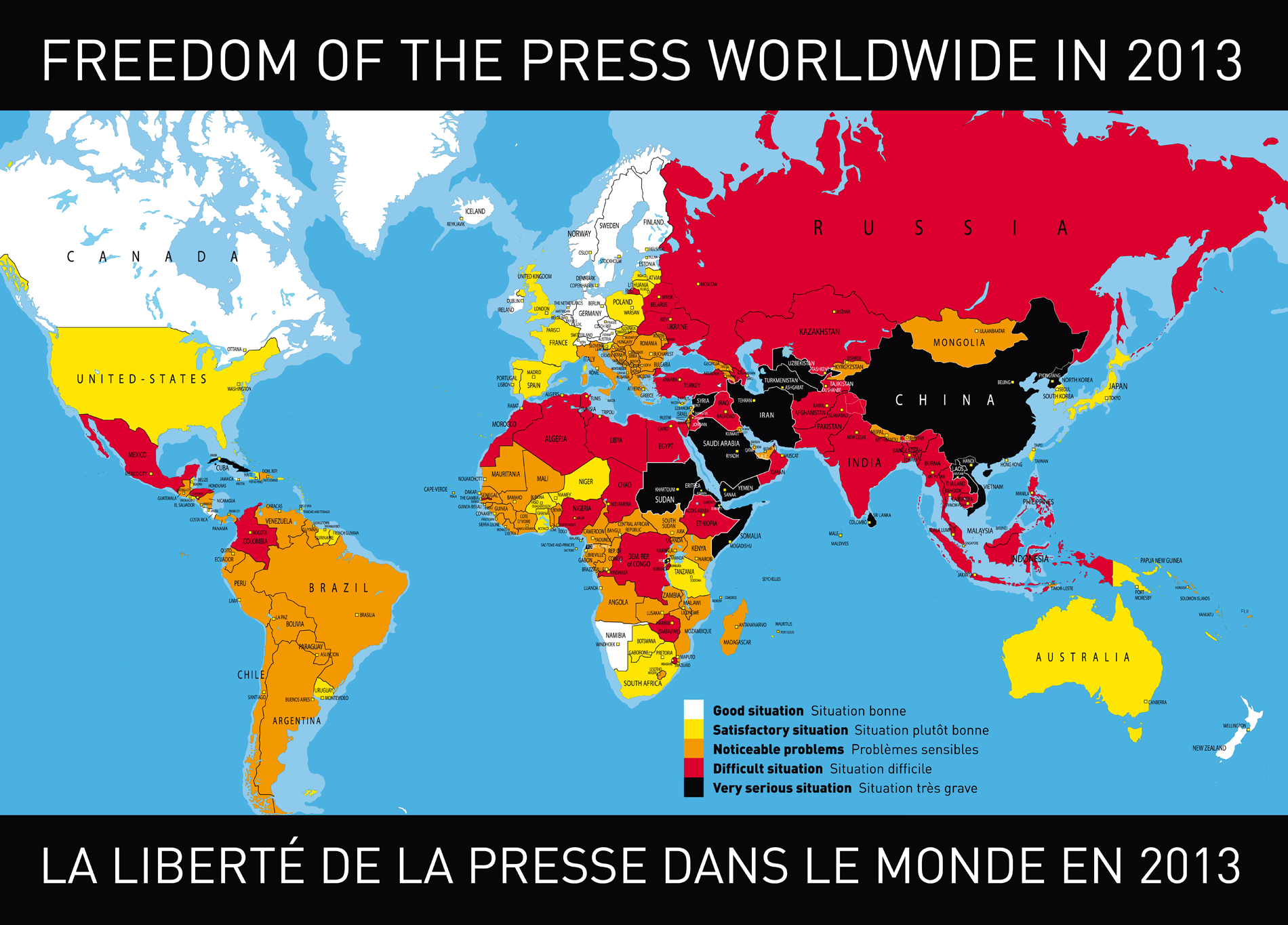
Of course, Turkey certainly would not win an award for press freedom; not even close. Reporters Without Borders list Turkey as a country with a “Difficult Situation” with regards to press freedoms, ranking them 154th out of 179 countries in their 2013 Press Freedom Index. To put this in perspective, Finland and the Netherlands occupy the top two spots as models of press freedom, the USA is number 32, and North Korea and Eritrea occupy the bottom spots (numbers 178 and 179, respectively) obviously countries without press freedoms.

I’d like to think that the news readers at the Voice of Turkey would rather give this news the attention it deserves, or at least offer the Turkish government’s perspective on the demonstrations. Instead, what we heard was…nothing.  And we heard that loud and clear.

Indeed, the world is paying attention to the lack of news coming out of Turkey right now. Time Magazine posted this article article yesterday, which begins:

As epic clashes between anti-government protesters and riot police turned downtown Istanbul into a battle zone last weekend, the country’s two main news channels had, well, not much to report. One ran a documentary on penguins. The other, a cooking show. To many Turks, their silence was symptomatic of the self-censorship Turkey’s media have practiced under Prime Minister Recep Tayyip Erdogan’s tightfisted 10-year rule. Penguin T-shirts, penguin jokes and penguin costumes now abound — the bird has become a symbol of protesters’ frustration with the mainstream media.

VoiceOfTurkeyOne of the most amazing things about shortwave radio is that by really listening, you can hear the unfiltered voices of regional broadcasters, the clandestine organizations, and the media representatives of their respective countries.

If this story had broken twenty years ago, moreover, I would have heard it as a headline from every respected international broadcaster. Then, upon turning to the in-country “news source,” as I attempted to do yesterday when I tuned in the Voice of Turkey and was subjected to a total lack of news, I would therefore be instantly made aware of what the Turkish government didn’t want me to hear.

Unfortunately I feel we’ve lost a bit of this comparative news consumption, not just because of the exodus of many trusted radio broadcasters from the field, but because we’ve been trained to consume news in (palatable) bites. Our attention spans and interest seem to have diminished to the point that we now often rely on our news sources to interpret for us.  A sad fact…especially considering politically-evolving countries like Turkey still need our attention, interest, and thoughtful support.

Listen to the same Voice of Turkey broadcast I heard yesterday, by downloading the off-air recording or by listening via the embedded player below: