Category Archives: FM

Peter recommends the Sony SRF-S84 and SRF-18 ultralights

Sony-SRF-18

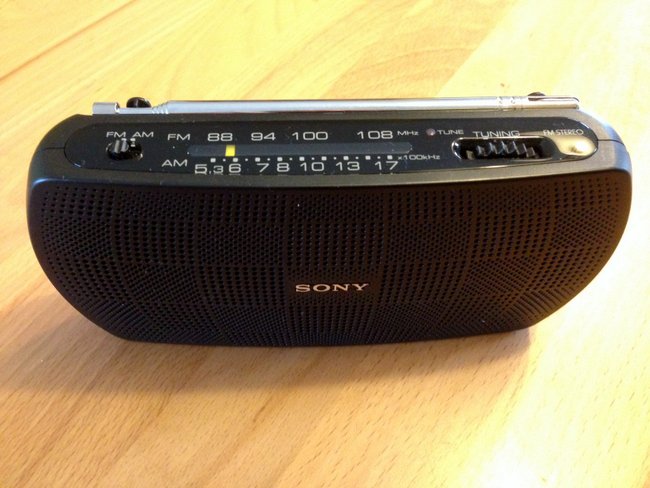
The Sony SRF-18

In reference to our post about the Sony SRF-39FP and SRF-59, SWLing Post reader, Peter, writes:

The Sony SRF-S84

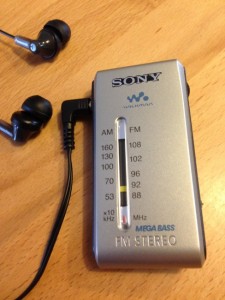
The Sony SRF-S84

As usual a very interesting post.

I sold most of my collection of receivers some years ago but I’m still interested in AM DXing and especially ultralight DXing (thats why I have three SRF59).

May I draw your attention to other receivers as well?

The famous CXA1129N chip has been built into the SRF-S84 and into the SRF-18 as well. I use the SRF-S84 during sports. As the ferrite rod is even smaller than in the SRF-59 AM reception is a little bit less sensible but FM shines with mega sound.

The SRF-18 is my favorite travel radio!! It runs endlessly on two AA-cells, has built in stereo speakers, audio-in and audio-out, a rather large dial which is easy to use and due to a larger ferrite rod it is very very sensitive on medium wave.

SRF-S84 on Amazon

SRF-18 on Amazon

Best regards from Germany

Peter Oden

Thank you, Peter! Perhaps the SRF-18 can take the place of the SRF-59 as an affordable MW ultralight that is still in production. The Amazon price for the SRF-18 is $32 US–quite affordable. While I don’t need another ultralight, that price makes it very tempting.

The SRF-S84 reminds me of a super compact radio I used to sneak into my fifth grade class. I would listen to the radio during class by concealing the receiver in an interior jacket pocket and snaking the earphone cord through my sleeve. I would then rest my head on my left hand where the earphone was conveniently located.  Somehow I never managed to get caught.

While I’m sure my education suffered a little that year, it still makes for good memories!

In Korogocho, Koch FM focuses on water sanitation

KenyaMap

(Source: BBC Media Action)

On Global Handwashing Day, Diana Njeru looks at how a radio station constructed from a shipping container is helping people improve their health in one of Kenya’s largest slums.

On the banks of a slimy grey river, a man is using a handcart to dump a barrel of human waste into the water. Sliding down the slope, the cart slips from his grasp and it tumbles in, forcing him to wade through the sludge to retrieve it.

This was the scene before me as I visited Korogocho slum last week, one of Nairobi’s largest informal settlements and home to over 150,000 residents.

A shipping container turned studio

Just up the road from the river is Koch FM, a popular community radio station BBC Media Action is helping to support through tailored mentoring to improve the technical skills of its staff. The station’s studio – constructed from an old shipping container and sound proofed with egg boxes – has been run by a team of passionate volunteers since 2006.

[…]Clean water is very hard to come by. In slums like Korogocho, people must either rely on rainwater or water vending points run by cartels. This toxic environment paired with limited awareness of good hygiene means life-threatening but preventable illnesses like diarrhoea are all too common.

To help tackle this, BBC Media Action mentor Davie Njuguna is currently working with staff at Koch FM to help them produce programmes that address water, sanitation and hygiene (WASH) issues.

Continue reading on the BBC Media Action blog…

In the US, radio audience continues an upward trend

tivoli-model-3-radio

(Source: CNN Money via Andrea Borgnino)

It turns out that radio still gets results.

Amid all the changes in television and digital media, a report from Nielsen released Tuesday found that radio’s nationwide audience reached an all-time high during the second quarter of 2015.

According to Nielsen, about 245 million Americans ages 12 and up used radio during the that span.

It was a continuation of an upward trend for radio, which has seen its national audience swell to record highs in each of the last two years. In the first quarter of this year, radio eclipsed television as the country’s top reaching medium.

Continue reading on CNN.com…

Jeff gives high marks to the Sangean PR-D4W

Sangean

My pal, Jeff McMahon, over at the Herculodge, has just posted a video review of the Sangean PR-D4 portable radio. In summary, he writes:

“It’s a great radio with top FM, AM, and speaker sound. It blows away my C.Crane Radio-2E. Lack of illumination, however, makes it less than ideal as a bedside clock radio.”

Wow! I’m most impressed that Jeff places the PR-D4W (which retails for $69 on Amazon) above the venerable CCRadio-2E (which retails for $169 on Amazon) in terms of AM performance.

I just checked and it appears that Universal Radio also retails the PR-D4W for $69.95.

Follow Jeff at the Herculodge and on YouTube.

Guest Post: Joris’ home brew Si4835-based receiver

Many thanks to Joris van Scheindelen (PE1KTH)–an SWLing Post contributor from the Netherlands–for the following guest post:


High Tech AM-FM DSP Receiver From
AM FM ontvanger P3060601

The old mode AM is still an interesting mode for amateur radio communication, also in amplitude CW.

Building your receiver is not difficult and quite fun. The semiconductor industry makes interesting integrated receiver chips today that will be useful for an AM receiver. Not only for broadcast reception but also for amateur AM reception or as part of an AM transceiver.

Silicon Labs also makes Si4734/35 receivers; these need a CPU to control the receiver, but are of interest for amateur use because the frequency can be tuned in 1 KHz steps and the audio channel bandwidth in 7 steps. There is no need for the transmitter to be on the receiving channel…

Si4835 AM-FM receiver

Looking for a small SW broadcast receiver design, and pocket size, I came to the excellent range of modern DSP receivers in a single chip from Slicon Labs.

I made a test bed set up has been made for the Si4835 AM-FM receiver.

The target specification was:

  • minimal components,
  • no micro-controller,
  • low power,
  • backlash free mechanical tuning,
  • good sensitivity,
  • earphone,
  • robust housing,
  • a short and small antenna system for outdoor use,
  • and minimal controls.

The Si4835 makes miniature design possible on a PCB (see photo Figure 1).

The red Dip (band) switch was replaced by a rotary switch in the final receiver design (Figure 4).

The receiver power is minimal 2 x 1.2 = 2.4 volts or a one cell LI-ION accu.
5 volts is the maximum for the Si4835 chip; current consumption is 30 mA.

Fig 1. Testbed setup for the Si4835.

Fig 1. Testbed setup for the Si4835.

The receiver has an RF pre-amplifier transistor and the LF amplifier is the TDA7050T.
All receiver functions are in the chip; the schematic is very simple and can be built with minimal components (see schematic appnote AN555 Fig 2. below).

Only an LF amplifier has to be added to complete the receiver.

schematic

Fig 2. Receiver schematic Si4835 in the AN555 application note.

The Si4835 receiver has the following frequency bands–they are divided in sub bands 800 or 900 KHz wide (See Figure 3). The frequency step tuning is 10 kHz on AM, following the international broadcast raster standard.

Fig 3. Si4835 receiver sub bands.

Fig 3. Si4835 receiver sub bands.

This means there are 80 or 90 receive channels in the sub bands and make finding the BC stations on the scale more easy. The 10 KHz scale steps are linear. The frequency stability is locked to the 32 kHz X-tal via the synthesizer so there is no frequency drift. The AM LF audio channel is 5 kHz wide set by the DSP filter. Volume control can be done width 2 up-down push switches or by a LF potentiometer..

Fig 4. The experimental pocket aluminium receiver housing on PCB2.

Fig 4. The experimental pocket aluminium receiver housing on PCB2.

Receiving results

I have been testing many hours and I am surprised about this little receiver.

The receiving results are excellent on FM and AM and signals of 2 -3 uV are well received.

Also the audio quality is good–especially on FM. As can be seen in the frequency table the 40 and 20 meter band are in the range. Clear AM phone amateur transmission has been received when the transmitter was tuned on the 10 kHz raster in 40 meter band on AM.

Also AM modulated CW signals can be received bud not un-modulated carrier CW–they sound “plop…plop”.

The 5 kHz wide LF channel is a bid too wide so many CW signals pass through the audio at the time, but if AM modulated that should not be a serious problem.

The broadcast stations in the SW bands (when the daytime conditions are good) up to 20 MHz are good and strong.

Conclusions

The Si4835 receiver can be a fine broadcast receiver for outdoor work and if an AM transmitter is tuned in the 10 kHz raster this receiver can also used for amateur phone reception.

Addendum: The Si4734/35 is a better amateur AM Receiver

The Si4734 and Si4735 are a better receiver choice for amateur AM purpose because the frequency tuning can be done in 1 kHz steps. Also the BW of the LF channel can be adjusted to 1 kHz wide.

In Fig 5. from the programming APP note you see the code 0X3102 AM CHANNEL_FILTER it is possible to adjust the audio width by sending this code to the Si4734/35.

Fig 5. From the programming APP note

Fig 5. From the programming APP note

The LF bandwidth can be set on 1, 1.8, 2.5, 2, 3, 4 and 6 kHz wide.

This is excellent for modulated CW and AM phone discrimination in the audio channel.

The disadvantage is the need of an CPU and LCD display, “away from a minimalistic design”.

See also the note 1 and 2 improved 100 Hz rejection. See data sheet of the Si4734/35.

It look like that this receiver is a good receiver for building a modern AM-(AM)CW receiver or in a transceiver application. Tuning can be done digitally.

Think about this receiver [and the Si4835 chipset] when you intent to build a high tech AM – T/RX.

73 ‘ Joris van Scheindelen PE1KTH


What a fantastic home-brew receiver, Joris! I love the simple design of your receiver and the fact that it’s quite portable.  Thanks so much for sharing your notes and documentation.

Winner of the Virtual Radio Challenge III

AT_-_Franconia_Ridge

Dennis Blanchard (K1YPP), author of Three Hundred Zeroes: Lessons of the Heart on the Appalachian Trail, recently contacted me from the road, en route to another lengthy trail in Vermont.

Before this latest hiking expedition, Dennis spent many hours pouring over the Virtual Radio Challenge III entries, looking up weights and specifications of radio gear and accessories…And the upshot?  He’s chosen a winner of our Reader Challenge.

Again, in summary, a participant’s goal was to find the best and most portable radio gear to receive shortwave, AM (medium wave), FM, and NOAA weather to support a long through-hike on the Appalachian Trail, to plan each day’s hike, and to make accommodations for frequent spring and summer thunderstorms (as well as occasional spring snow or sleet)…all for a budget of $300 US. [Read full details of the Challenge by clicking here.]

This year, Universal Radio rewarded–and has already dispatched!–a brand new CountyComm GP5/SSB portable receiver to the winning entrant.

Below are Dennis’ comments, along with those of the Challenge winner.


Dennis Blanchard (K1YPP) writes:

“This photo was taken in NJ. Shortly after I took these photos, and walked down the trail about a 100 feet, a bear came over to check the table to see if I had left anything.” (Photo: K1YPP)

Dennis Blanchard operating a portable radio on the Appalachian Trail. (Photo: K1YPP)

I’ve just spent about five hours going over the entries. There are several that are very good…indeed, Challenge participants obviously put lots of thought into their entries.

It was really tough to decide, but I had to go with most practical.

Weight is a big consideration for me, and that leaves out solar panels, hand crank generators, and the like.

What most don’t realize is that the AT has a nickname: “The Long Green Tunnel.” This eliminates solar panels because there is little sun to be had, as you’re in the shade most of the time. By the time you get to camp it is usually too late in the day for any charging, and wearing a panel just doesn’t do any good because of the shade (and weight).

Not only is weight an issue, so is space in the pack…hikers need all the room they can get for food, and in the cooler weather, heavy clothes.

Anyway, out of five finalists, I would have to go with Eric McFadden (WD8RIF).

Eric’s winning entry

So, what did Eric choose?  The following is Eric’s winning entry, beginning with his radio choice and following with a clear, practical explanation for it:

CC-Skywave-1

C.Crane CC Skywave, AM/FM/SW/Air/WX, $89.95 at Universal Radio

Sangean-ant-20-roll-up-antenna

Sangean ANT-60 Roll-Up 23′ Antenna, $12.95 at Universal Radio

Energizer-Ultimate-Lithium-Cells

Energizer L91 Ultimate Lithium Cells, AA, 12-pack, $17.45 at Amazon

“The C.Crane Skywave is small (4.75″ x 3″ x 1.1″); light (5.5oz); power-stingy (30mA with headphones); and receives AM, FM, SW, NOAA Weather, and VHF Aviation.The Skywave runs on two AA cells, and comes with a case and CC Earbuds.

The Energizer L91 Ultimate Lithium AA cells provide 1.5v at approximately 3000m Ah, weigh 1/3 that of an alkaline AA cell, and last several times longer than an alkaline cell.

The Sangean ANT-60 would be tossed over a handy tree-limb and clipped to the Skywave’s whip antenna when the Skywave’s built-in 16″ whip isn’t quite adequate for listening to a shortwave broadcast station.

The purchase price of the Skywave, six pairs of Ultimate Lithium AA cells, and ANT-60 would be about $121 plus shipping, well under the $300 limit. The entire station should be small enough and light enough for easy carry in a backpack. If the twelve Ultimate Lithium AA cells don’t last the entire hike, enough of the budgeted $300 remains to purchase more cells (either Ultimate Lithium or alkaline, as available) along the route.”

To this sensible explanation, Eric adds:

Yaesu-FT-60R“Being a ham radio operator, I’d want to have a ham rig along, too. While I’d love to be able to operate HF CW along the AT, my Elecraft KX3 is too large and heavy to carry that far. However, my current Yaesu FT-60R 2m/70cm HT and Diamond SRH77CA whip should travel nicely clipped to a backpack strap and would serve as a back-up receiver for NOAA Weather and be available for pedestrian-mobile QSOs (chats) and calls for help, if needed.

In order to save weight and not have to hassle with charging batteries, I’d leave the NiMH pack at home and carry the FBA-25 six-cell AA holder and stuff it with additional Energizer Ultimate Lithium cells in order to save weight.

Since the C.Crane Skywave already meets all the requirements of the Virtual Challenge, and since I already own the HT, battery holder, and antenna, I won’t consider the cost of the HT, antenna, and batteries as part of the challenge.”

About Eric’s entry, Dennis notes:

Eric’s solution is small, lightweight, and does everything needed. He speculates that he would also bring along his Yaesu FT-60R, but didn’t feel he could include it because of cost. Curious, I looked it up on Amazon; should he take it along, this addition would still keep his total well under the $300.00 limit.

This would provide Eric with two receivers, [the ability to enjoy] ham radio communications, and not much weight to haul. He includes the AA Lithiums, and I have to say that, without a doubt, these are the finest hiking batteries out there: they’re light, last forever, and are readily obtainable. I only had to change mine out once on the entire, six-month AT hike, and I was on the air a lot.

Several of the other entries were winners also great; I basically had to use a dartboard to pick a winner.  Good thinkers out there, especially considering none of them have actually ever done a hike of this magnitude.


Congrats, Eric! Thanks, Dennis!  And more to come…

Congratulations to Eric McFadden for such a well thought-through entry!

I must say, I don’t envy Dennis in making this selection: it was obviously a challenging  process on his end, too, and I’m glad I didn’t have to make it!

Dennis informed me that he plans to post and comment on some of his favorite entries in a few weeks, once he completes this latest multi-week hike. We will, of course, post his comments along with the finalist entries.

Note that when I originally received the reader inquiry which prompted the idea behind this Reader Challenge, the CC Skywave had not yet entered the market. Yet several of you chose it as your sidekick for the Appalachian Trail; clearly, clever minds think alike. Obviously, a radio that would function well on the Appalachian Trail would also be a great radio for your BOB (“bug out bag”), go kit or emergency supplies.

Thanks again to Dennis Blanchard, our intrepid judge, thanks to Universal Radio for the great prize, and many, many thanks to all our Reader Challenge participants, who made this process even more exciting and challenging! Meanwhile, don’t worry if you didn’t win the CountyComm GP5/SSB this time; we’ll soon have another opportunity to win one of these handy rigs in a completely different–and fun!–way.

DAB Praha: Czech Radio begins digital broadcasting

Czech-Republic

Many thanks to SWLing Post reader, David Iurescia, who shares this news and audio report via the Radio Praha website:

“10:55 on Thursday morning was an important occasion in the history of radio in the Czech Republic as it was the exact moment that full digital broadcasting was launched in the country. The new network carries nine Czech Radio stations, some of which were previously only accessible online. For now the service is just available in the capital and Central Bohemia, but there are plans to roll it out to other parts of the country in the next few years.”

Click here to read the full transcript at Radio Praha.