Category Archives: Guest Posts

Frank reports on the Deshibo RD1860BT portable shortwave receiver

Many thanks to SWLing Post contributor, Frank, in Germany, who shares the following guest post and review of the Deshibo RD1860BT:


Deshibo RD1860BT report

Hello Thomas,

Today I would like to report on a new portable world receiver. Unfortunately, new devices have not been found on the shelves of electronics retailers for a long time, but now in the depths of the world wide web. And that’s how I came across the Deshibo RD1860BT.

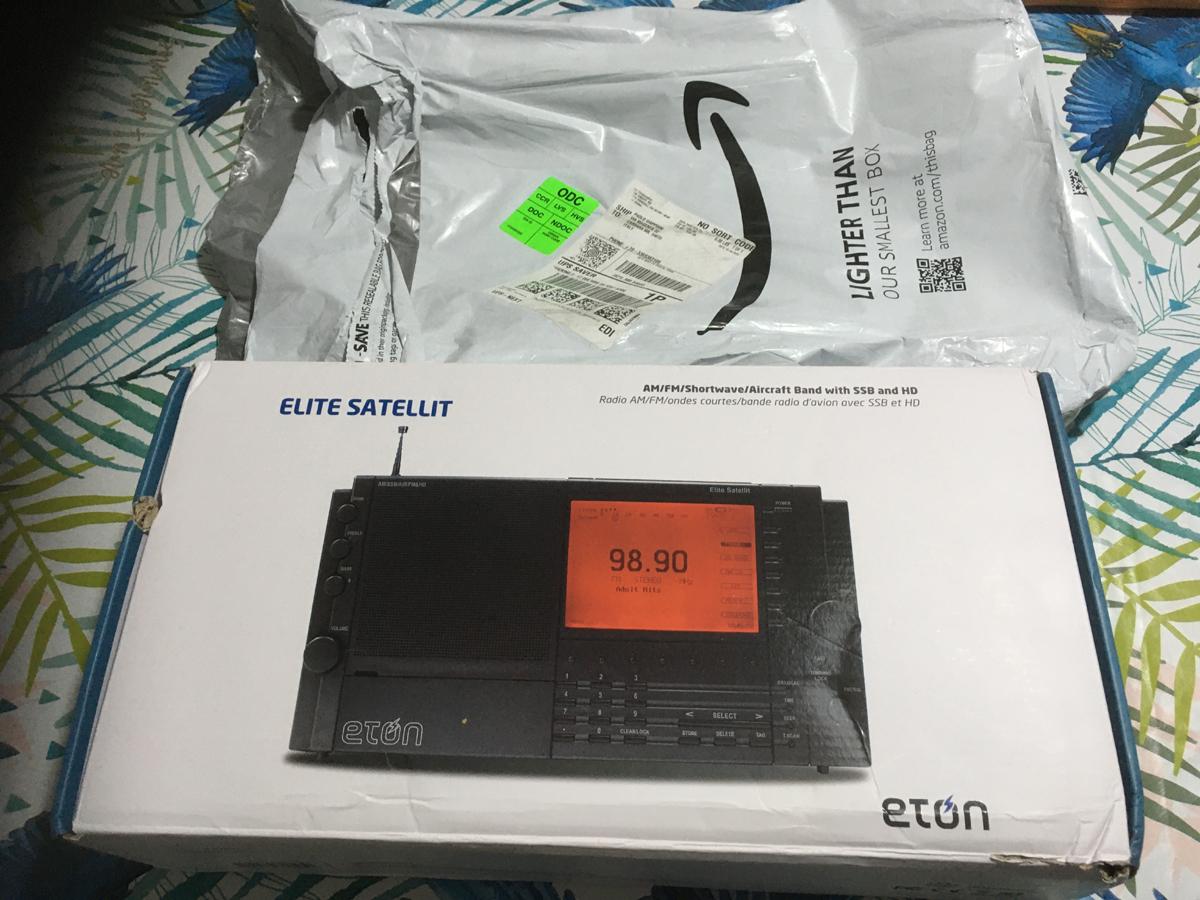
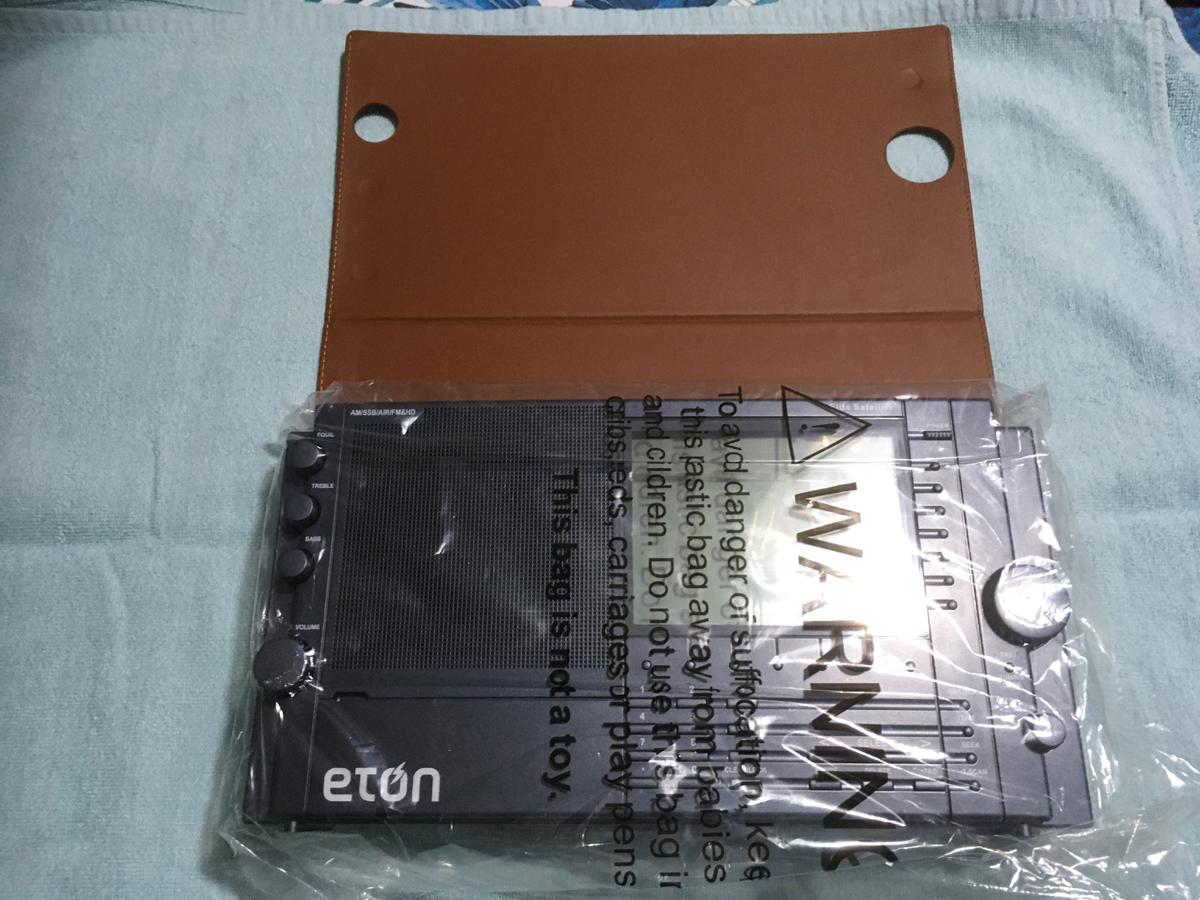
Deshibo is certainly known to many from their GA450 loop antenna. But Deshibo has also produced several radios, including the RD1780L, which is probably a little better known. New to the segment is the RD1860BT, which initially seemed like an old friend to me. An Eton Elite Executive? Yes, there are external similarities, but also differences.

Many months ago I had an Eton Elite Executive for a short time. I had heard of its excellent reception properties, which I can confirm, but the design is reminiscent of older receivers from the 80s, is relatively heavy, operation is sometimes a bit cumbersome, the protective cover does not protect properly. I find the device to be portable overall difficult. We didn’t become friends, so I sold it on to a Swede, who in turn became a friend.

I still missed the Eton. RDS on VHF is not found in any Tecsun , nor are there memory banks that can be written on.

Then I discovered the RD1860BT and couldn’t resist. First of all: the Deshibo is only labeled in Chinese for important function keys. But the friendly dealer on eBay provided me with an English manual before I bought it. That was the deciding factor, because I was sure that after a little use , the Deshibo could be operated blindly.

However, some questions have arisen in the user manual. Some things didn’t seem quite right, others were completely missing from the description. That’s why I decided to write my own manual on a journey of discovery of the new Deshibo. And so that it might also help others who might be interested in radio, I wrote it in English and attach it here.

Click here to download Frank’s version of the RD1860BT manual (PDF).

The Eton’s somewhat unsorted manual was very helpful, but I also added my own drawings. For example, I added an English-labeled keyboard as a back cover, so that the keys can be assigned without a long search.

Here you can already find the first differences to the Eton: the keyboard layout is a bit more orderly. Also, the Deshibo doesn’t have a metallic speaker grille (which frankly I don’t like about the Eton). The display, not the writing, is backlit in orange on the Deshibo . Most importantly, the Deshibo is a lot lighter than the Eton ( around 500g if I researched correctly). And that means: the structure of the Deshibo must be different. Continue reading

Guest Post: Monitoring Digital Selective Calling (DCS) with YADD

Many thanks to SWLing Post contributor, Don Moore–noted author, traveler, and DXer–for the following guest post:


Photo by Borderpolar Photographer

Monitoring DSC with YADD

By Don Moore

(The following article was originally published in the April/May 2022 edition of the Great Lakes Monitor, bulletin of the Michigan Association of Radio Enthusiasts. An all-band listening club, MARE publishes a bi-monthly print bulletin and a weekly e-mail loggings tip-sheet. The club also holds regular get-togethers, picnics, and DXpeditions, generally in southeastern Michigan.)

There are dozens if not hundreds of different digital modes used for communication on the MF and HF bands. These aren’t broadcasts you want to listen to unless you like to hear weird tones, beeps, warbles, and grinding noises interspersed with static. Digital modes are for monitoring, not listening. And monitoring them requires having software that does the listening for you and converts the noises into something meaningful – like the ID of the station you’re tuned to. The learning curve to DXing digital utilities can be steep. There are lots of modes to identify and the software can be complicated to learn. Some broadcasts are encrypted so you can’t decode them no matter how hard you try. But the reward is lots of new stations and even new countries that you wouldn’t be able to add to your logbook otherwise.

One of the easiest digital modes to DX is DSC, or Digital Selective Calling. DSC is a defined as “a standard for transmitting pre-defined digital messages.” Look online if you want to understand the technical specifications that specify the values, placement, and spacing of the tones. The result of those specifications is a string of three-digit numbers like this:

125 107 125 106 120 105 120 104 000 120 022 120 041 000 002 022 020 041 108 002 053 020 080 108 006 053 021 080 070 006 118 021 126 070 126 118 126 126 126 126 126 126 126 126 126 126 117 126 112 126 117 117 117 112 109 125 108 125

Each three-digit value represents either a digit or a key word and the positions of the values map to the various fields contained in the message. This message, which was received on 8414.5 kHz, is a test call from the tanker Brook Trout to the coastal station Coruña Radio in Spain. The sender and destination are not identified by name but rather by their nine-digit MMSI (Maritime Mobile Service Identity) numbers – 538006217 for the vessel and 002241022 for the coastal station.

GETTING STARTED WITH DSC

Logging DSC stations requires three pieces of software. First you need a decoder program that turns the noises into numbers and the numbers into meaning. There are several free and commercial options but the most popular one for beginners is YADD – Yet Another DSC Decoder. YADD is free and easy to set up and while YADD can be used by feeding the audio from a traditional radio into your computer, the most common use is with an SDR. That’s what I use and what I will describe here.

Second you need an SDR application and an SDR. I prefer HDSDR for most of my SDR use but I like SDR-Console for digital work. But any SDR program will work if you can feed the audio to a virtual audio cable. And that’s the final thing you need – a virtual audio cable to create a direct audio connection between your SDR application and YADD. There are several different ones available but I recommend VB-Cable. Your first VB-Cable is free and that is all you need to run a single instance of YADD. If you want to expand you can buy up to four more cables from them later. Continue reading

Don Moore’s Photo Album: Ecos del Torbes

Many thanks to SWLing Post contributor, Don Moore–noted author, traveler, and DXer–for the following guest post series:


Don Moore’s Photo Album

by Don Moore

Introduction

When I discovered DXing over fifty years ago I also discovered the world. Through my ears I traveled to other countries and explored other cultures. But DXing has also literally taken me places. My early interest in Latin American DXing developed into a broader interest in Latin America. That led to me joining the Peace Corps after college and working three years in Honduras. That experience furthered my interest in Latin America and I have continued to travel in the region whenever possible. For me DXing and travel were always intertwined. I’m one of a handful of hobbyists who took DXing beyond just listening and went knocking on broadcasters’ doors to visit the distant stations I heard. My ex-wife dubbed this ‘door-to-door DXing.’

To date I’ve visited over 150 radio stations in thirteen countries. A few were medium-wave or FM only, but I was always most interested in visiting broadcasters that used shortwave, either at the time of my visit or a few years before. As my station visits were primarily made in the 1980s and 1990s, almost all of the stations are long-gone from the shortwave bands. However, many are still around on medium wave and FM and often also via streaming on the Internet. As much as I miss the magic of shortwave I know that these stations reach more listeners today via streaming than they ever did with their low-powered shortwave transmitters. Honestly, I sometimes enjoy tuning them in without the fading and static of shortwave. But the memories of what shortwave once was are still there.

Photos also bring back memories. I took dozens of pictures on my station visits and enjoy scrolling through them now and then. You may have seen some of them. Many of my photos were printed with articles I wrote for various DX publications and I’ve done a few slide-shows at DX get-togethers over the years.

In this series of columns I want to share my old photos once again. If you’ve been DXing as long as I have maybe they’ll bring back memories of what you once heard. And if you haven’t been around that long you will have a better understanding of the good old days we oldtimers talk about.

Ecos Del Torbes

There is no better place to start this journey than with Ecos del Torbes. Using ten kilowatts on 4980 kHz, this Venezuelan broadcaster was possibly the most consistent station in the sixty-meter band throughout the 1970s, 80s, and 90s. If you were DXing the tropical bands during those years you surely logged them a few times. If you were lucky you may even have heard their one kilowatt signal on 9640 kHz. They were a very good verifier and for many DXers Ecos del Torbes was among the first Latin American stations QSLed.

Just after Christmas in 1994, my then-wife, four-year-old daughter, and I flew to Mérida in western Venezuela for a family vacation. For ten days we had a great time in this Andean city and then Theresa and Rebecca returned to Iowa while I stayed another week to visit radio stations. I was also getting paid by the Voice of America to research and write a study on the media scene in Andean Venezuela. The now very-out-of-date report can be read at my Patepluma Radio website (which hasn’t been changed in over twenty years and is in need of a facelift).

In that week I visited fifteen radio stations in six towns and cities and Ecos del Torbes was the highlight. I arrived at their doorstep unannounced but was immediately treated as an important guest. I was given a great tour and even got to sit in on a live newscast to see the famous Venezuelan doorbell being used live. I was there about ninety minutes and then walked a block up the street to sister station Radio Táchira. Their facilities were smaller but that’s where the technical offices were and Chief Engineer Ivan Escobar had been told to expect me. Ivan gave me a tour and invited me to visit the Ecos del Torbes transmitter site with him in the afternoon. On the way we stopped by his house where his wife had lunch waiting for us. Visiting Ecos del Torbes was not just the highlight of this trip but ranks as one of my all-time favorite station visits. These pictures bring back many good memories.

Photos

Ecos del Torbes was located in the second floor of this building in downtown San Cristóbal. The entrance was the door on the side.

The small plaque next to the door was easy to miss. I walked right by the first time.

Edgar Fabala of the news department showed me around. Here he demonstrates the mini-xylophones that Venezuelan stations used to make the distinctive ‘doorbell’ sound that separated items in the news reports.

Announcer in the studio preparing to read the news.

The adjoining control room.

Ecos del Torbes had one of the largest record libraries in Venezuela. The LPs were color-coded by type.

Julio Achila was a control room operator who had worked at the station since it opened in 1947.

This pennant was considerably larger than the ones sent to DXers.

Sister station Radio Táchira was located a block up the street on the fourth floor of this building.

The Ecos del Torbes transmitter building.

The 50 kilowatt medium wave transmitter on 780 kHz.

Chief Engineer Ivan Escobar and Don Moore next to the 31 meter transmitter. The larger transmitter was for the well-heard 4980 kHz frequency.

The antenna array used for 4980 kHz. The medium wave tower is in the background.

Dipole antenna used for 9640 kHz.

San Cristóbal once had a third broadcaster on shortwave. Radio San Sebastian used 6070 kHz in the early 1970s. (They were not affiliated with Ecos del Torbes).

That was nearly three decades ago and a lot has changed. Ecos del Torbes and Radio Táchira have been gone from shortwave for over twenty years.

In 1995 Ecos del Torbes was at the corner of Calle 9 and Carrera 8, the same address as when I first QSLed them in 1972. Sometime since my visit they moved an outer neighborhood about two kilometers to the east. To find the new offices locate San Cristóbal on Google maps and then search for “Grupo Radial Gonzalez Lovera”. The transmitter site is still where I visited it and can be seen by plugging the coordinates “7.7885, -72.2725” into Google maps and switching to satellite view. (Ignore the picture that pops up to the side. That’s not it.) Zooming in, the medium wave tower is clearly visible but there are no signs of the old shortwave antennas. I suspect they were sold for scrap years ago. I never have found out where the Radio Táchira transmitter site was.

I’d love to go back to Venezuela someday and see some of the other cities that I used to listen to, such as Barquisimeto, Valencia, El Tigre, and Sucre. Unfortunately the political and economic situation there doesn’t look good and it doesn’t look as if it will improve any time soon. But when it does, I’ll be back.


Click here to check out all of Don Moore’s Photo Album columns. Each new article will appear on the SWLing Post home page/feed and in this link.

Julian reviews the Panasonic RF-B45 and shares comments regarding shortwave broadcasting and portable radios

Many thanks to SWLing Post contributor, Julian S, who shares the following guest post and review:


Panasonic RF-B45 – A Comparative Review

by Julian S

18 and 19 October, 2022

I was raised on valve / tube radios. From my pre-teens in the 1960s, I enjoyed tuning through the frequencies as a form of exploration. In the 1970s I experimented with antennae to improve reception. And later, starting in the 1980s, I began to use travel radios, always looking for that perfect radio.

Today the perfect radio for us SWL’ers might need to include a time machine to take us back to the halcyon days of SW, say in the 1980s or 1990s, before so many Western broadcasters axed their Short Wave services.

Looking at the BBC World Service’s latest round of cuts, I am filled with horror. Is whoever decided those cuts deeply cynical or deeply ignorant?

Switching BBC World Service content from radio to the internet for countries that block or restrict internet access is not the way to reach people living there. In places where every person’s internet access is monitored, where access to websites and web-content is censored or blocked, BBC news internet content will not be widely available. Today and for the foreseeable future the way to reach perhaps half or more of the world’s population is radio, especially Short Wave radio broadcasts.

The People’s Republic of China (PRC) and other like-minded countries, eg the DPRK (North Korea) fully understand the importance of radio, especially Short Wave and they vigorously maintain multiple Short Wave broadcast programmes as a way to project soft power and influence people.

In this context, it’s no surprise that when the Australian Broadcasting Corporation in 2017 suddenly, unexpectedly and against a back-drop of protests from Pacific Island Nations and rural Australians ditched its Short Wave broadcasts, the PRC’s China Radio International grabbed Australia’s SW frequencies.

I heard that in an earlier round of cuts China acquired frequencies dropped by the BBC World Service.

By the time the West wakes up again to the importance of Short Wave radio broadcasting as a means to communicate to the world, they will find the SW airwaves are full of PRC, North Korean, Vietnamese, Cuban and other broadcasters who never forgot how important SW broadcasts to the world are. I’m reminded of a line from the Sean Connery film, Rising Sun, “If you don’t want us to buy it, don’t sell it.”

Aside from the broadcasters mentioned above, there are still many others broadcasting on SW and there are plenty of Hams too. Short Wave radio listening and Ham radio are widespread and popular in Asia and Africa and are a major source of news. In some countries SW is also used as a means of business and social communication. So much so that there are home-grown radio and transceiver manufacturers in a number of African and Asian nations.

SW listening is big in China. So it’s no surprise that probably the best manufacturer of consumer grade short wave radio receivers is a China based company, Tecsun, who need no introduction. Tecsun seems to have taken over the role that was once held by Grundig, Sony, Panasonic and others. Indeed many of the later Grundig models are made by Tecsun.

If you’ve guessed that I like short wave radio, you’ve guessed right. And I suppose like many other fans, I usually have my eye open for something special.

Since hearing of the Panasonic RF B65 some years ago, I’ve been on the look-out for one at a reasonable price… this search led me to the RF B45…. But I’m a man of modest means so I need them to be priced accordingly.

Usually these two 30+ year old radios are priced on North American eBay like holy grail radios. More expensive than a 2nd hand Sony ICF 2010 / 2001D. Go figure. But the other day I found a Panasonic RF B45 for what I considered a reasonable price. It arrived yesterday, well packed, clean and in good condition. After dinner and this morning before breakfast I put it through some of its paces

What follows are some initial impressions of the Panasonic RF B45:

I’ve read a few reviews of it on eham, shortwave.ch etc. The controls are pretty easy to figure out. It has a similar form factor to the Sony ICF7600 series and is probably comparable in performance to the digital iterations of the Sony 7600 series… though the only 7600 series radio I have at present is the analogue 7601 which is comparable to the Tecsun R9700DX, except in price. New the Tecsun R9700DX is likely to be cheaper than a used Sony 7601 on eBay, and the Tecsun has a wider range of features, eg external antenna socket, comes with a long wire antenna, has better audio… but I digress…

…back to the Panasonic RF B45. This is a fine compact travel radio about the size of a paperback book or two DVD stacked boxes. Continue reading

Mario reminds us to log 10 meter CW beacon activity!

Many thanks to SWLing Post contributor, Mario Filippi (N2HUN), who shares the following guest post:


Ten meter beacon band spans 28.100 – 28.300 MHz (photo by author)

Recent 10 Meter CW Beacon Activity

Mario Filippi, N2HUN

The 10m band has been coming alive lately and it’s time for all hams and SWLs to take advantage of it.  For several years I’ve been listening to 10m beacons with mediocre results but this has all changed over the past few days with loggings of European beacons running as low as seven watts.

These amateur radio beacons can be found from 28.1 – 28.3 MHz, sending out their callsigns in CW along with other information such as power output, grid square, antenna type and other tidbits of interesting information.  Most USA beacons are heard from 28.1 – 28.2 MHz while international ones inhabit 28.2 – 28.3 MHz. Some beacon ops will request QSL card reports the old school way via mail. I’ve written out a few already, bringing back fond memories of my early days as a ham and SWL.

Over the past few days at my central NJ QTH, using an Airspy HF+ Discovery and a ground mounted 31 foot vertical, here are some of the DX beacons logged:

  • IZ8RVA, 28.239 MHz, 1230 UTC
  • OH9TEN, 28.265 MHz, 1253 UTC
  • LA5TEN, 28.237 MHZ, 1300 UTC
  • OK1AR, 28.249 MHz, 1214 UTC
  • DA5TEN, 28.237 MHz, 1219 UTC (7 watts, vertical antenna!)
  • DL0IGI, 28.204 MHz, 1251 GMT (50watts)

Note that most signals were 449 with QSB so a quiet room, a good pair of headphones, many cups of good hot coffee/tea and a heap of patience are needed.  Beacons will send a continuous CW tone as a preamble while others will transmit a series of V’s (…-).  So, spin that VFO dial up to 10 meters, a band which comes alive as sunspots rise.  If you are a QRP’er, this comes as good news since this band is great for those who love to run peanut whistles.

Thanks and have fun!

Testing the MFJ-1886 Receive Loop Antenna

By Jock Elliott, KB2GOM

Hang out any place online where shortwave listeners gather, and you won’t have to wait long before you hear something like this: “I recently moved to a condo, apartment, or house where there is a home-owners association. Listening conditions are pretty rotten, and I cannot string up outdoor antennas because of physical constraints or HOA rules . . . help!”

Ever since I got back into SWLing nearly two years ago, I have faced similar issues, as I explained here. During that time, I have frequently read that amplified small loop antennas work pretty darn well, and that has piqued my curiosity.

A couple of days ago, the good folks at MFJ (an SWLing.com sponsor) sent me their MFJ-1886 receiving loop antenna. Weighing just 2.5 pounds, the 1886 is a 36-inch-diameter loop of aircraft-grade with an amplifier attached in a weatherproof enclosure. Designed for receiving only, it covers .5 to 30 MHz.

The fit and finish of the 1886 is, in my opinion, great. Looking at the seamless loop and the molded enclosure for the amplifier, I have no reason to doubt what MFJ has to say about it: the MFJ-1886 is weather-sealed, very ruggedly constructed, and mechanically stable under all weather conditions. In fact, you can mount it permanently on any inexpensive TV rotor and direct it from the comfort of your shack . . . it also installs easily on a tripod or handheld mast for portable use.

From MFJ’s manual for the 1886 loop.

Important: the 1886 loop is a directional antenna. If you are looking through the open area in the middle of the loop (the flat side, if you will), you are looking in the direction in which the antenna tends to null out signals . . . in both directions. If you are sighting along the edge of the loop (at right angles to the flat side), that is the direction in which the antenna produces the most gain. As a result, you will get the most utility out of the 1886 if you can mount it in such a way that you can rotate it to maximize gain and/or null out noise or interfering signals as needed.

Since my mission was to test the 1886 indoors, I wrapped some parachute cord around the loop and hung it from a screw attached to the top of a window frame. Obviously, I am not getting the most from the 1886 by keeping it in a fixed position (in fact, I was getting maximum gain to the northeast and the southwest), but I did experiment with the antenna hanging from the ceiling so that it could rotate, and I did, indeed, find that signal strength rose and fell as the antenna changed position.

To see how the 1886 performed, I used my Grundig Satellit 800 as a test bed. The Satellit 800 has three different antenna inputs: a wire input, to which I attached the 50-foot horizontal room loop (an indoor antenna which runs around the perimeter of my radio room at about seven feet in the air); a coax input, to which I attached the MFJ 1886 loop, and the four-foot whip antenna that is built into the Satellit 800. By reaching around the back of the radio and sliding the antenna selection switch, I could easily change from one antenna to another and compare the 1886 loop with the whip and the horizontal room loop at various frequencies and settings.

Setting up the 1886 loop is super easy. First, attach a length of coax to bottom of the amplifier box. (The 1886 uses SO-239 connectors.) Attach that coax to the top of the Bias Tee. The Bias Tee supplies power to the amplifier mounted on the loop using the coax and without introducing noise. Run another piece of coax from the bottom of the Bias Tee to the receiver, and, finally, plug the power supply into the Bias Tee and the house power where you are using the antenna.

Operating the 1886 is even easier. To hear the signal from the loop without amplification, leave the Bias Tee switch in the OFF position. To hear the signal with amplification, just slide the switch to the ON position. That’s all there is to it. There are no fussy adjustments to make.

So how did the 1886 loop perform? Very well, thank you. In all cases, it clearly outperformed the Satellit 800’s whip antenna, providing more signal with less noise. When pitted against the 50-foot horizontal room loop wire antenna, the 1886 typically delivered more signal and less noise. In a few instances, the horizontal room loop was equal to the 1886 loop in terms of signal strength and low noise. In no cases, did the horizontal room loop outperform the 1886 loop.

Tuning around a bit, I found myself listening to a ham from Spain working DX on the 15 meter band. A little further up the band, a ham from central Bulgaria was dealing with a pile-up of U.S. hams trying to reach him. Of the three antennas options I had on the Satellit 800, the 1886 loop offered the most pleasant listening with more signal, less noise.

Then I tried the 1886 with a couple of my portable shortwave receivers. The Bulgarian ham was still on the air and was marginal on one portable and not hearable at all on the other on their native whip antennas.  With the 1886 loop connected, however, the Bulgarian was clear and easy to hear. And – thanks to a ham friend who whipped up an additional coax “jumper” with amazing speed – I tried the 1886 loop with the MFJ 1045C active preselector and found the two made a very potent combo for pulling signals out of the mud.

So, would I recommend the MFJ 1886 Receiving Loop for a would-be HF listener who lives in a condo, apartment, or house with antenna woes? Absolutely . . . even if you have to hang it flat in front of a window. And if you can find a way to mount it so that it can be rotated, even better. (Someday, I hope to try the 1886 outside mounted on an inexpensive TV rotator. For now, there simply isn’t room in my cramped radio space.)

Of course, the performance at your location will depend on the conditions where you live. Nevertheless, I found the MFJ 1886 Receiving Loop to be easy to set up, easy to use, and effective.

Click here to check out the MFJ-1886 Receiving Magnet Loop Antenna at MFJ.

Suggestions for MFJ: offer a kit or accessory that would be make it easy to set the 1886 on a desk or table. Likewise a kit or accessory that would facilitate using the 1886 on a camera tripod seems like a good idea.

Additional note: The SWLing forum is a great place for discussing all things related to shortwave listening.

Mario shares a short review of the Airspy HF+ Discovery SDR

Many thanks to SWLing Post contributor, Mario Filippi (N2HUN), who shares the following guest post:


Author’s Airspy HF+ Discovery (small black box to the left of the laptop)

A Short Review of the Airspy HF+ Discovery SDR

by Mario Filippi (N2HUN)

I recently purchased an AirSpy HF+ Discovery.  As a SWL for over 60 years who’s owned many shortwave radios by manufacturers such as Drake, Yaesu, Icom, Zenith, Kenwood, Panasonic, Sony, Radio Shack, Grundig, CountyComm, MFJ, Sears, AOR and have used a number of different SDRs such as the RTL-SDR.com, HackRF, NooElec and many other rudimentary inexpensive first generation SDR dongles, I feel the AirSpy was an excellent choice. It cost $169 plus shipping.

For LW/MW/HF reception, I use a 30’ ground mounted vertical with about 50 buried radials in different stages of decomposition hihi. For VHF, a roof mounted 2m/70cm SlimJim antenna is used, but I haven’t done much listening in that portion of the spectrum yet except for occasional foray into the aero, 2m ham, NOAA satellite and public service bands.  Note that the AirSpy also covers 60 – 260MHz.

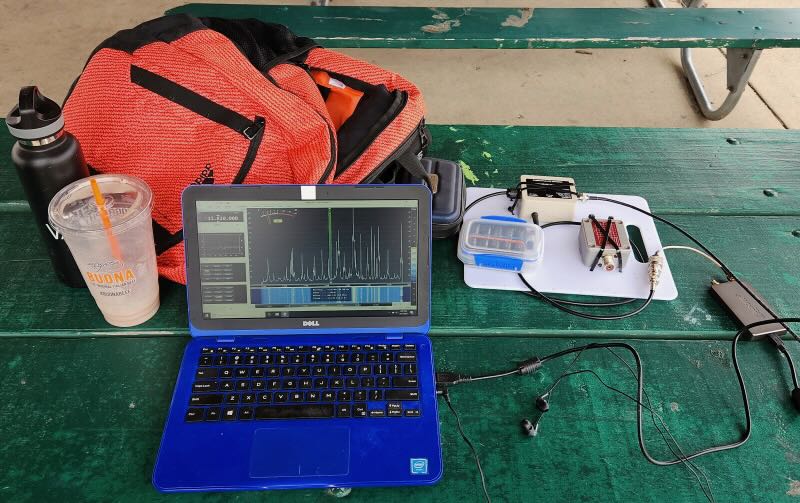
An older Dell Inspiron laptop and SDR# are used in conjunction with the AirSpy.  For decoding, MultiPSK, FLDigi, MTTY, Yand (for NAVTEX), along with VB cable are the accompanying software to make the digital modes intelligible.

So far I’ve logged a few local LF aeronautical beacons and some DGPS beacons on longwave but will be in a better position to judge its performance when winter sets in.  As for the medium (520 – 1710 kHz) wave AM broadcast band, the AirSpy easily brings in both local stations during daytime and distant stations at night with no adjacent channel interference whatsoever.  Even low powered community Emergency Alert Stations in the 1600 – 1710 kHz portion of the band can be heard daily from this QTH. A rotatable loop would certainly improve reception though.

As for shortwave listening the AirSpy HF+Discovery is, in my opinion, great for listening to both shortwave broadcasts and utility stations though I tend to concentrate on UTES mostly such as VOLMET, WEFAX, RTTY (the few that remain unencrypted), CW marker stations (e.g. XSG and XSQ from China) NAVTEX (519 kHz), aero/maritime SSB, time signal stations (WWV, CHU) and many of the other esoteric digital utility signals populating the band.  As for SW broadcast stations, WRMI, Radio Exterior, RFI, R. Marti,  BBC, WWCR and Radio Algerienne, to mention a few have been received.  The Frequency Manager (memory storage) in SDR# has quickly filled up with intercepts using the AirSpy.

As a ham and CB operator (yes, the two can mutually coexist in the same human body), I’ve found the AirSpy HF+ Discovery to be a trouper on all the HF ham and CB bands. One of my favorite hangouts is the 28.100 – 28.300 MHz slice of 10m where domestic and international low power CW beacons transmit their callsigns (and at times their grid squares and power output) into the ionosphere and achieve great distances.  Recently, beacons from 5, 6 and 7 land in the US along with DX prefixes ED4, PY4 and XE1 were logged.  If you’re into 10m FM operation you can also tune the AirSpy to hear local and distant repeaters on 29.62 – 29.68 MHz.  When the band is open, .62 and .64 seem to be the most active here in Central NJ.

If you’re a CB (aptly named the Citizen’s Band) op, the AirSpy HF+ Discovery does a stellar job on Channels 1 – 40 which is especially exciting when the band’s open.  While domestic (USA)  CB’ers are limited to frequencies from 26.965 – 27.405 MHz you’ll nonetheless hear DX ops below our (USA) channel 1 and above channel 40 conversing in French, Spanish and German in LSB/USB.  Add to this mix the fact that the FCC dropped the 150 mile limit for US ops a few years back and now the advent of the FM mode operation in the US, you’ll find the AirSpy won’t disappoint.  In my opinion the AirSpy HF+Discovery was an excellent choice and I’m more than satisfied with its performance.

In the matter of honesty and full disclosure, I purchased the AirSpy HF+ Discovery completely on my own in an effort to upgrade my station.  My choice was based on information gathered from the Internet and YouTube video reviews.  The performance of this receiver was based on my experience using the vertical antenna described earlier, the hours spent at my QTH (location) listening to stations of interest to me and my six decades experience as a SWL.  No test equipment to assess sensitivity, selectivity or other empirical methods to measure performance was used. That information can be found on the Airspy website.  The main purpose of this article was to craft a rudimentary review for those interested with the caveat that reception will vary depending on many factors such as location, antenna, ionospheric conditions, feedline quality, computer/software variations, QRN, QRM, and operator experience.  The results presented in this article are typical for my location; others may experience different results.  Thanks very much.