Category Archives: Ham Radio

Mike’s low and high pass filter deals

HDSDR-SDRPlay-RSP-PARISWLing Post contributor, Mike Ladd, is an avid SDR enthusiast and an administrator of the SDRplay Facebook group. Mike contacted me about special pricing he has arranged for low and high pass filters through Rescue Electronics. Mike explains:

These filters retail for $70.00 each. I spoke to the builder. I told him who I was and what I do and got him to make a deal for anyone in the United States with these filters and a direct link to his site. I make zero dollars on this. I always try to give back to the hobby and the community any way possible.

You have 3 choices: a high pass filter, a low pass filter, or a combo package.

These are hand built one at a time by Paul W1VLF with your choice of SO-239 or BNC connections. Full details are below:


High pass filter $55 shipped anywhere in the USA

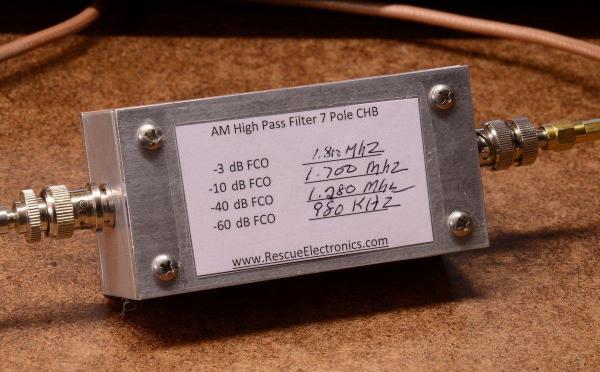
AM-HP_Filter-600x372

This filter will begin attacking the AM band at 1770 Khz and increase attenuation as frequency decreases.

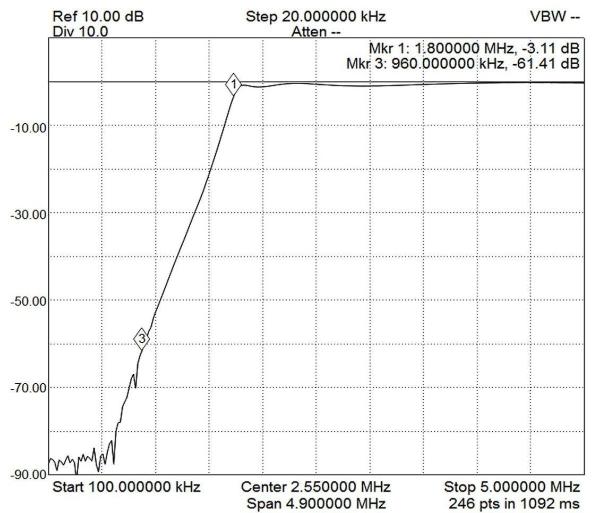
You can see this in the screen capture of the swept filter below.AM-HP_Filter_Plot2-600x513

160 Meters and above is virtually left untouched, but below that is where the attenuation takes place.

The filter has attenuated 60 db by 960 KHz.

The AM band has some very large signals that can mix in the front end of your. A lot of these spurious frequencies can land in 160 meter band or above.

For instance, I have a big signal at 1080 Khz and another at 770 Khz, add these 2 together and you get a spur that falls at 1850 Khz

Picture this happening at multiple frequencies with multiple mixes and you have a raised noise floor in the 160 Meter band.

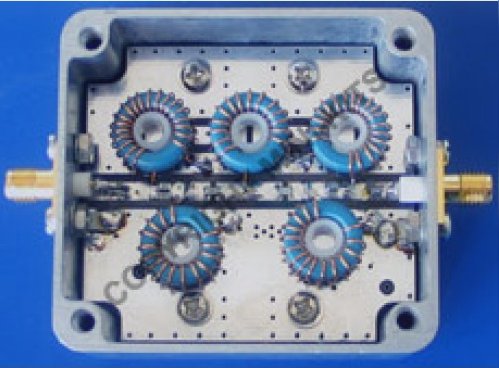
The filter is built into a 2″ x 4″ 1.25″ 1/8″ wall aluminum enclosure for excellent RF shielding

Low pass filter $55 shipped anywhere in the USA

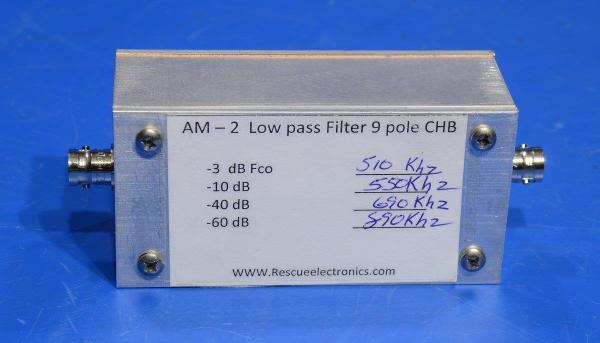
AM-2_Filter-600x343

The AM-2 filter has a cutoff at 520 KHz.

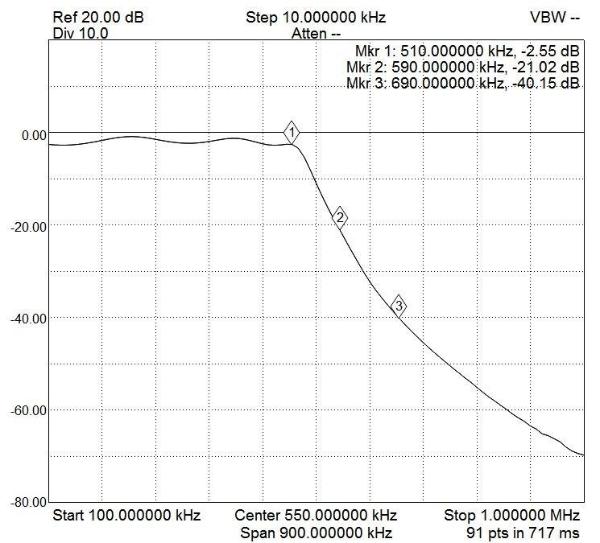
AM-2_Filter_Plot2-600x543Then, and without a lot of fanfare it begins the attack on the MW band.

Purchase this filter if you are into NDB, DX’ing, Maritime Mobile, Navetex, FCC Part 5 600 Meter band.

Each filter is handmade and swept in my lab.

The AM -2 Low pass is equipped with BNC connectors.

The filter begins to roll off at 520 Khz and gives an ultimate rejection of around 80 Db.

The filter is built into a 2″ x 4″ 1.25″ 1/8″ wall aluminum enclosure for excellent RF shielding

Combo deal for both $100 shipped anywhere in the USA

AM-2_Filter-600x343 AM-HP_Filter-600x372

Click here to view/purchase via Mike Ladd’s promotional page at Rescue Electronics. 

Many thanks for sharing this Mike! During my presentation at the Winter SWL Fest last week, I spoke about the need for high/low pass filters for listeners who live in the presence of strong broadcasters and interference. Many of the inexpensive SDRs on the market do not have built-in filters and preselectors thus can overload under these conditions.

While filters can be homebrewed or built from kits, these filters seem to be a good deal for a quality shielded and tested product. Thanks for arranging this, Mike!

Guest Post: Listening to 10 Meter Radio Beacons

SX-99-Dial-NarMany thanks to SWLing Post contributor, Mario Filippi (N2HUN) for the following guest post:


Listening in to 10 Meter Radio Beacons

Mario Filippi, N2HUN

(All photos courtesy of author–click to enlarge.)

Radio beacons can be found across the RF spectrum from the LF (low frequency) band all the way up to bands inhabited by satellite signals. If you are a ham, shortwave listener or a QRP (low power) buff then a great place to start is on the 10 meter band, which is included on most table-top shortwave radios and even some portables. Beacon signals come and go with band conditions, emanate from different parts of the globe and provide one with listening challenges and hours of fun. So let’s talk about 10m as it’s a good place to start.

A good indicator of band conditions on 10m is via the 10m beacon band which ranges from 28.1 to around 28.3 MHz. In general, most stateside beacons are found from 28.2 – 28.3 MHz while DX (ex-US) beacons are heard from 28.1 – 28.2 MHz. However, I’ve heard DX beacons as high up as 28.297 MHz. These stations provide hams and SWLs not only with code practice but with the adventure of hearing low power signals from around the globe. To get acquainted with what is on the air, check out the Ten-Ten International Net website which has one of best lists of beacons, along with a plethora of information on the band itself: http://www.ten-ten.org/index.php/resources/ten-meter-beacons . The Ten-Ten club has been around for many decades and is a good resource of information on 10 meters in general; one can even be issued a unique Ten-Ten ID number upon request. Then, when making 10m contacts you can exchange Ten-Ten numbers with fellow operators.
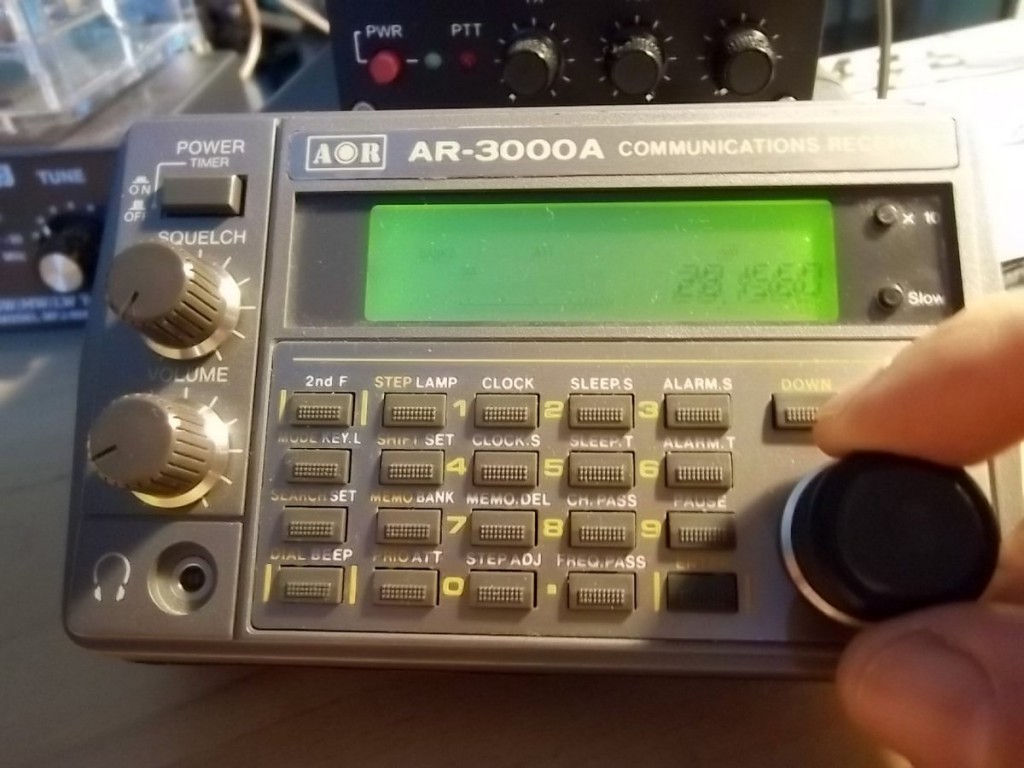
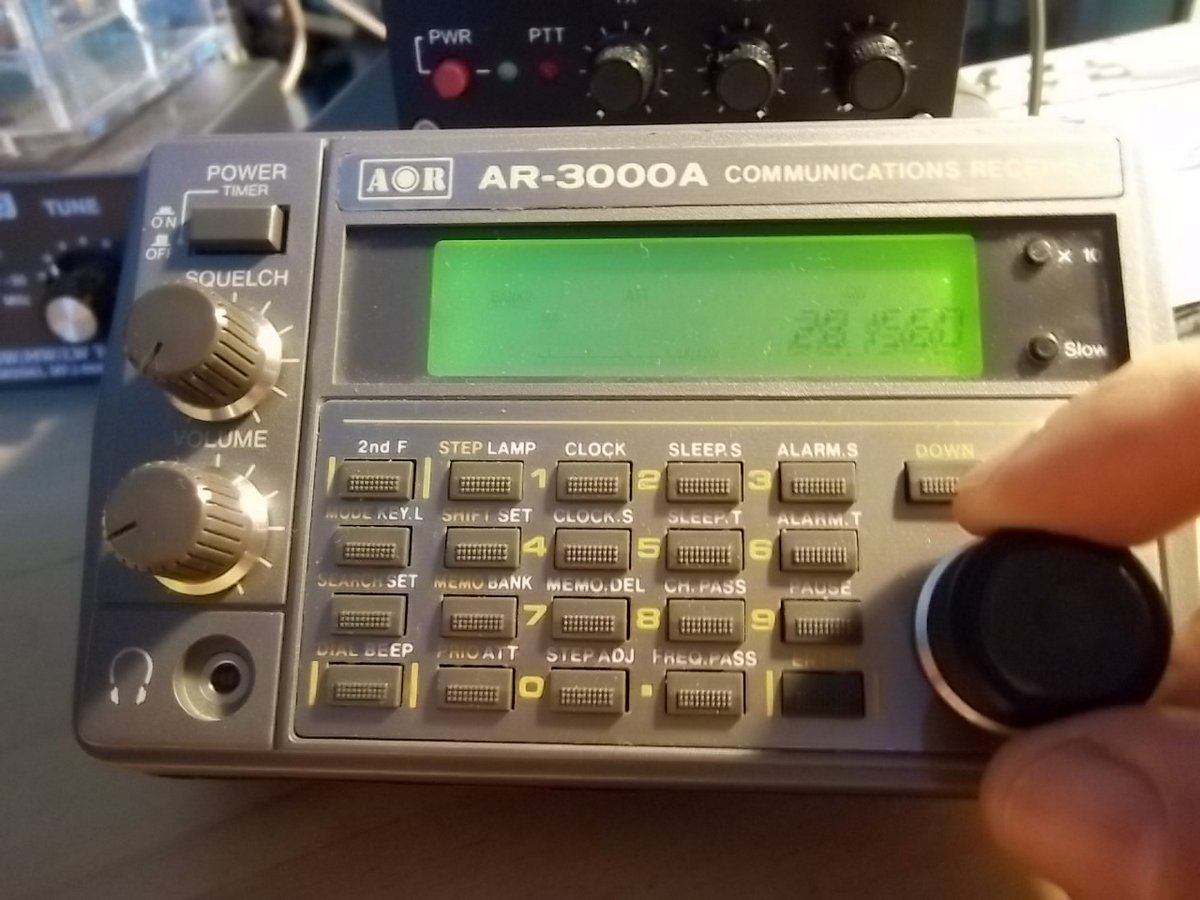
AR-3000A

Let your fingers do the spinning of the VFO on 10m.

Many of these beacon stations have been logged over the years at this QTH simply because they dot the globe with their low powered one-way signals and are a challenge. Hearing a beacons’ very weak CW signal fading in and out with its’ short message, usually starting with a series of “Vs” followed by the call, then by info such as location, wattage, grid square is a timeless source of pleasure. There are literally hundreds of beacons to hear using your shortwave or ham radio, all coming in at different times of the day from places far and near. And there’s no need to be in the shack; check them out using a portable radio because when band conditions are favorable, you’re bound to hear them. And for those of you with RTL-SDR dongles, these miniscule radios are perfectly capable of receiving beacons and have the added feature of “looking” at that portion of the spectrum both via the 2-MHz wide spectrum display and accompanying waterfall image. These dongles are an inexpensive entry into HF/VHF/UHF listening and cover all modes. However they are not a plug ‘n play venture, you’ll need a computer, driver program, software to turn the dongle into an operating wideband receiver, patience learning the software, and a good antenna.
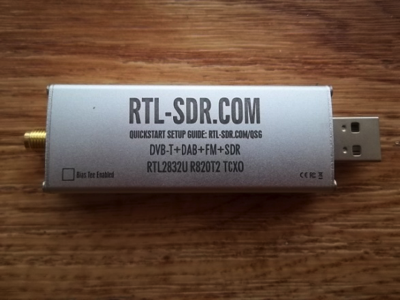
Typical “dongle” Software Defined Radio covering 24 – 1766 MHz.
Typical “dongle” Software Defined Radio covering 24 – 1766 MHz.

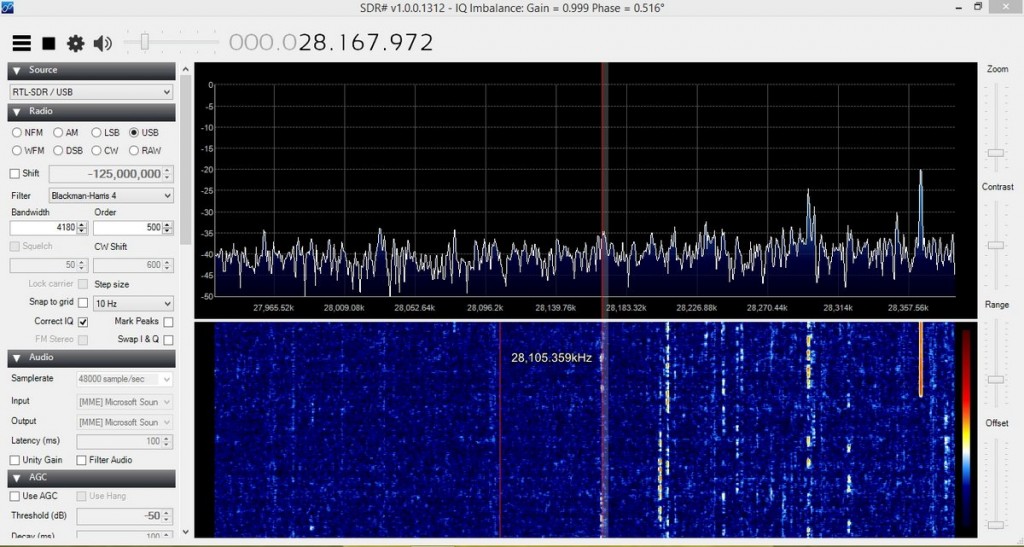
Screenshot of 10m beacon activity in right-half of waterfall on 6/22/15; VA3KAH was heard on 28.168 MHz.

Screenshot of 10m beacon activity in right-half of waterfall on 6/22/15; VA3KAH was heard on 28.168 MHz.

Most 10m beacons operate at low power, anywhere from 100mW to as high as 100W but generally operate in the 1 – 5W range using a variety of antennas, the vertical being the most popular. So in essence these beacons are not what you would classify as“big guns” and that’s the beauty of it all. They are an intriguing and challenging quarry to write into your logbook! While 10m tends to be more active during daylight hours and when sunspot numbers are good, this doesn’t mean that beacons will not be heard; a quick “sweep” of 21.1 – 28.3 MHz while you are in the shack or outside listening on a portable is always worth a check. Having a good pair of headphones will aid in hearing the weak ones.
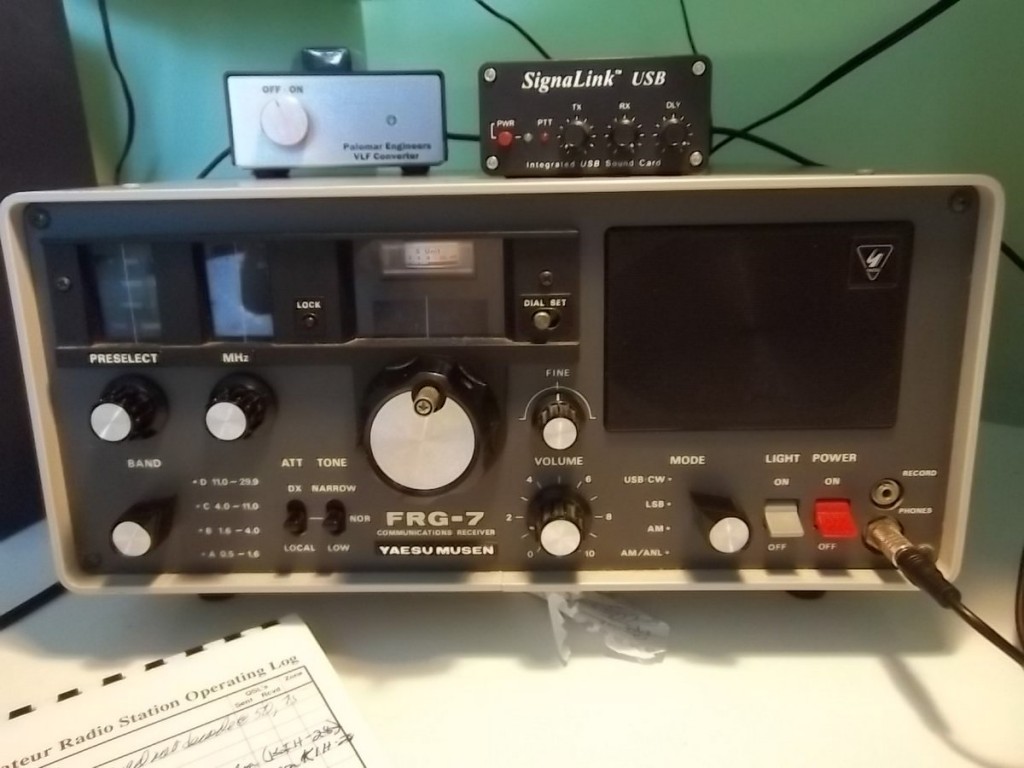
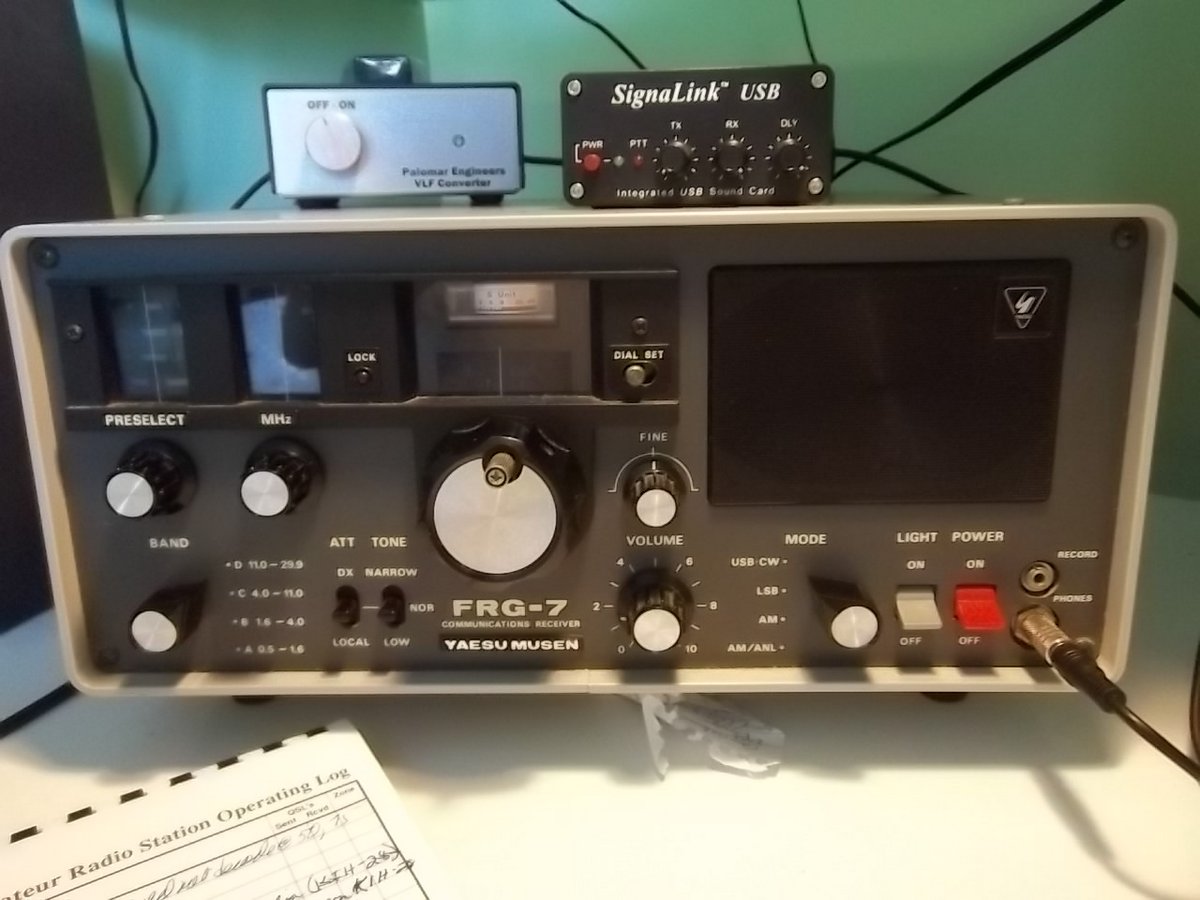
Yaesu frg-7

My all-time favorite, the Yaesu “Frog 7” performs well for 10m beacon hunting.

To give readers some inspiration, below are some recent morning loggings using an AR-3000A and a 43 foot S9 vertical antenna. Band conditions were not the greatest, with most beacon stations fading in an out and propagation favoring Europe. Using a pair of headphones, logbook and pencil at the ready, it required sitting on some frequencies a few minutes as the beacon of interest faded in an out, until all the information was logged. Most beacons will begin their transmission with a series of “Vs” which helps to identify an active frequency. Some will send a long tone out first, allowing you to fine tune the station, while some start with a series of “dits” to get your attention. As you log these beacons you’ll see that each has its’ own agenda. For example, some only send their call sign. Others will send call sign, grid square, and power. Some even include a website or an address to send QSL information. If your code is rusty, no worries as most beacons send their call at least twice or thrice! 

Recent 10m Beacon Loggings de N2HUN

Date Time (GMT) Frequency Call QTH Comments
2/14/16 1423 28.166 XE2O/B Allende, Mexico 5W, EL05 (grid square), some QSB
2/14/16 1440 28.298 SK7GH Jonkoping, Sweden Very weak, heavy QSB, 5W
2/14/16 1447 28.223 KP3FT/B Ponce, PR Series of five “dits” precedes CW identification
2/14/16 1455 28.205 DL0IGI Hohenpeissenberg, Germany Long tone precedes CW identification, 48W
2/14/16 1500 28.173 IZ1EPM Chivasso, Italy Long tone before and after transmission, 20W
2/14/16 1530 28.242 IZ8DXB Naples, Italy Tone preceding transmission, JN70BU (grid square), 6W

My thanks go out to the Ten-Ten International Net (www.ten-ten.org ) for their excellent website covering the 10 meter band and to all those ham operators worldwide who took the time and energy to construct radio beacons for all of us to enjoy. Now, go forth and check out those beacons; don’t assume the band is dead, check out the beacon section of the band which will give you an indication of propagation conditions. Ten meters is very capricious and can open up at any time of the day, even late at night. And don’t forget to QSL the beacon operator! Good luck hunting down beacons and 73’s!


Thank you so much for this, Mario! Check out Mario’s other excellent guest posts by clicking here.

 

1.8MHz 9th Order High Pass Filter Kit

hpf9-1m8a-500x500In reply to our post about a home brew high-pass filter, SWLing Post contributor Guy Atkins replied:

I recently purchased one of these high pass kits and an enclosure from an Australian company, and look forward to assembling it:  http://www.minikits.com.au/electronic-kits/filter-kits/hf-highpass-filters/HPF9-1M8

The price was just $14.95 USD at the current exchange rate, but I did pay extra for the matching enclosure.

It’s a 9th order Chebyshev filter at 1.8 MHz with less than 1 dB insertion loss from 1.8 to 100 MHz, and I expect it to work very well. Since it’s a kit with all parts and a PCB, it is half way between a “DIY from scratch” and a completely built commercial high pass filter.

Very cool, Guy! Looks like it’ll be a fun kit to build. Please let us know what you think of the filter once you have it assembled. $14.95 is a very fair price.

1944 WWII Hallicrafters Shortwave Radio Promo

WWII-HallicraftersInteresting 15 min. video demonstrating the Army Signal Corps using an Hallicrafters SCR-299.

https://www.youtube.com/watch?v=TURd_XVpwvk

While certainly a promotional piece for Hallicrafters, this has great footage and captures a bit of the excitement of radio expanding into new frontiers. There is a discussion of how the radio was modified for military conditions as well as some innovations which were implemented to make such a system mobile.

As an aside, it never ceases to amaze me how clear and crisp black and white film technology of the time seems somehow better than the color images which replaced it. But that may just be me — a black-and-white guy living in a colorized world!

There is a second part to this video, as well as other WWII-era videos available on YouTube with a bit of searching, and of course don’t forget to check out the SWLing’s Shortwave Radio Archive page for more interesting shortwave audio old and new!

Robert Gulley, AK3Q, is the author of this post and a regular contributor to the SWLing Post. Robert also blogs at All Things Radio.

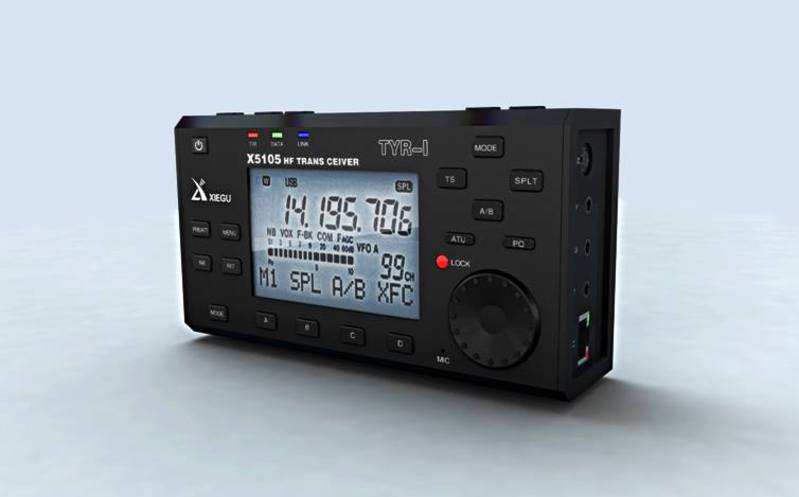
The Xiegu X5105: a new QRP portable transceiver in development

Xiegu-X5105

Many thanks to SWLing Post reader, Mike, who writes:

I thought your readers might like to know about the new Xiegu X5105 [HF] transceiver which is being developed by the Wouxun group out of China (the same company who produces an inexpensive line of amateur HTs).

According to YaesuFT817.com, the X5105’s receiver is a double-conversion superheterodyne design and is made portable by way of 3 rechargeable lithium batteries of 1.8 mAh each. Native output of 5 watts.

I’ve read that the price will be around $500 US.

The X-108 forum also has the following message, I assume, from a company representative…

“Xiegu Tech will launch new products. I’m very pleased to share relevant information with you:-)

I. X5105 short wave transceiver

  • X5105 is a highly portable transceiver working at HF+6m band, with a built-in power output of 5W.
  • Technical features: double-conversion superheterodyne, fitted with up to 3 lithium batteries of 18,650mph each.
  • Expandability
  • A standard main unit (embedded with one 8-pole 2.7k-SSB crystal filter)
  • An optional high stability, high precision TCXO module
  • An optional 500Hz narrow band crystal filter
  • An optional plug-in 5W antenna tuner module

II. XPA125 integrated amplifier and antenna tuner

  • XPA125, with a built-in antenna tuner, amplifies the output up to 125W.

Technical features:

  • 125W linear power amplifier + combined LC antenna tuner.

Expandability: 

  • A standard 125W amplifier, An optional 125W automatic antenna tuner.”

Thanks for all of the info, Mike!

That’s an interesting portable design. I like the display–reminds me of the Icom IC-746.

I’ll be very curious how well it performs as a general coverage receiver. I don’t see any specs regarding AM mode or the maximum bandwidth. The price is certainly competitive; nearly half that of the Elecraft KX3. I seriously doubt it could give the KX3 a run for its money, performance-wise, but who knows? Looks like we’ll have more info by the end of the year when the X5105 hits production. Thanks again for the tip!

Chris has developed an easy way to run the RTL-SDR dongle on a Mac

RTL-SDR-001

Many thanks to Chris Smolinski who writes:

I wanted to run SdrDx, and other SDR apps on my Mac with an RTL SDR Dongle. So I wrote this server app, that makes it appear like a networked SDR.

No need to install any RTL libraries, or compile any code.

Just run the app on your Mac, configure it and your SDR app, and you’re all set.

The app is free, and should work with Mac OS X 10.6 through 10.11.

Chris has kindly allowed me to share his full post here on the SWLing Post below–you can read the original at RadioHobbyist.org:


Running an RTL SDR USB Dongle On Your Mac The Easy Way With Cocoa RTL Server

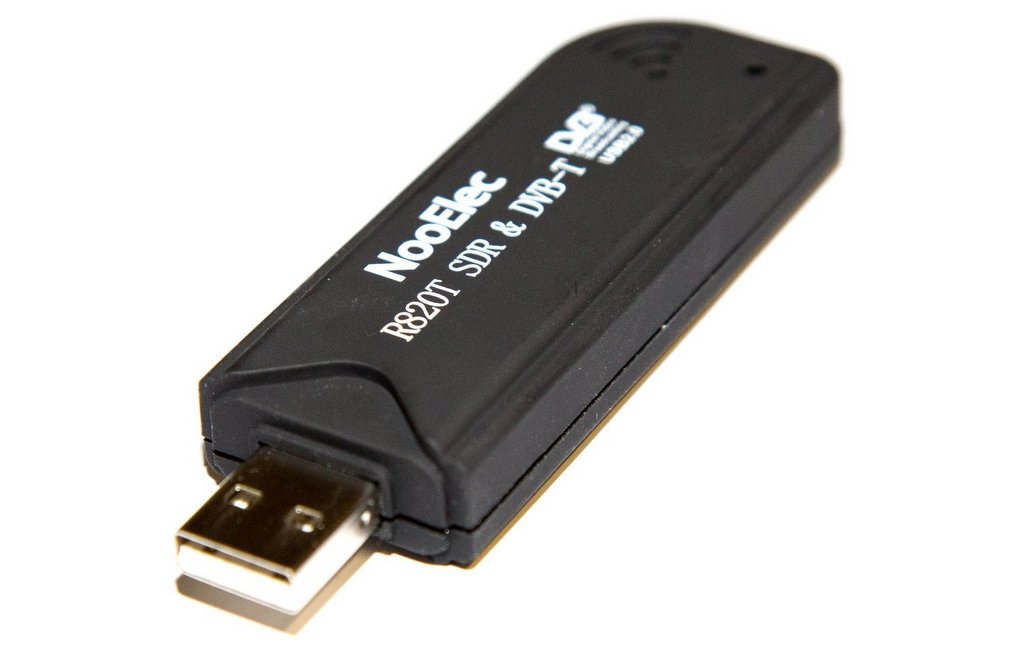
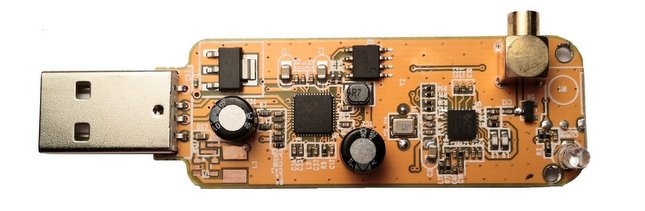
I’ve had a few of the RTL radio tuner dongles for a while. These are USB devices that were originally made for use as TV tuners overseas, but it turns out that you can access the I/Q data stream, and turn them into an SDR (Software Defined Radio). They can be tuned roughly over a range of 25 to 1700 MHz, and sometimes even higher, depending on the tuner IC chip inside the particular dongle.RTL-SDR


I previously posted about how to get the RTL dongle working on the Mac here: An SDR for $17 – The R820T USB RTL-SDR DVB-T Dongle and here: An SDR for $17 – The R820T USB RTL-SDR DVB-T Dongle – Part 2. These posts were from 2013, and I did the installation on a Mac running OS X 10.6, using some pre-built libraries.

Fast forward to the present day. I got a new Mac running OS X 10.11 El Capitan, and I wanted to be able to use the RTL dongles with my favorite SDR software on the Mac,SdrDx. Enter Cocoa RTL Server.

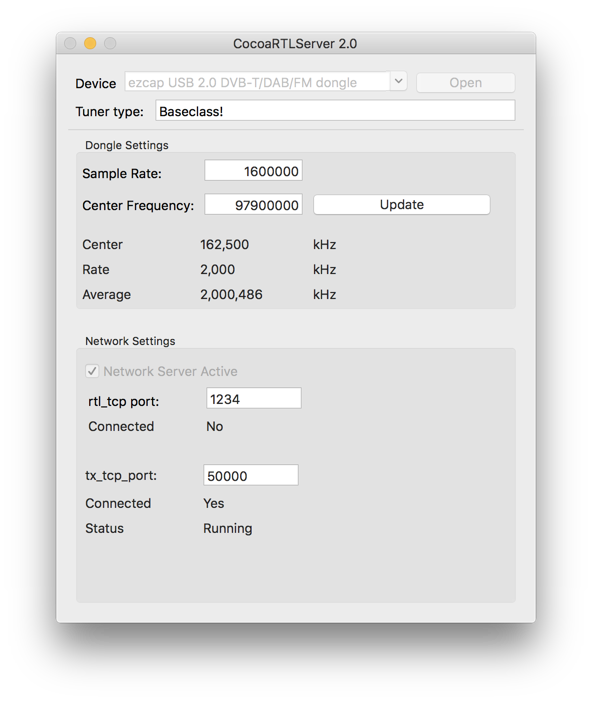
Cocoa RTL Server is a stand alone app that interfaces with an RTL dongle. It does not require you to build or install any drivers or libraries. It just works. It’s based off of an open source app called SoftShell, that I heavily extended. Cocoa RTL Server also acts like a networked SDR, following the RF Space protocol. That means it works with SdrDx, as well as any other SDR app on the Mac that supports RF Space SDRs like the netSDR. You can download a copy of the app from the Cocoa RTL Server page. Source code is included, however I am not offering any support for the project or final app.

Here’s a screenshot of the app running:

Chris-Screen-Shot

Getting up and running is easy:

1. Plug in your RTL device
2. Run CocoaRTLServer 2.0
3. Select the device from the popup menu (usually it is already selected)
4. Change the rtl_tcp or tx_tcp port values if needed
5. Click Open
6. Configure your SDR app (set the correct TCP port) and run it

I’ve run it under Mac OS X 10.6, 10.10 and 10.11, It should run under 10.7-10.9 as well.

Using SdrDx, I can tune a large portion of the FM broadcast band, click to view full size:

Chris-Screen-Shot-2


In this case I am tuned to 97.9 MHz. To the left of the signal meter, you can see it has decoded the station ID from the RDS data. Yes, SdrDx decodes RDS.

If you look at the lower right corner, you see the scope display of the demodulated FM audio. There are markers for the portions of interest:
You can see the main audio above the green marker to the left.
The stereo pilot at 19 kHz (red marker).
The stereo subcarrier (aquamarine)
The RDS data (orange)
The 67 kHz SCA subcarrier (purple)
The 92 kHz SCA subcarrier (yellow)

Cocoa RTL Server also includes a server that emulates rtl_tcp, so it works withCocoa1090 which decodes aircraft transponders that transmit on 1090 MHz. It should also work with any other app that gets data from rtl_tcp. Here’s a screenshot of Cocoa1090 running:

Chris-Screen-Shot-3


Thanks so much for developing this app, Chris!

I think I might go ahead and pull the trigger on an RTL-SDR as it would be great to run one on my Mac. I think your app will make the process much easier.

Readers: make sure you check out Chris’ blog RadioHobbyist.org.

Dave notes that the Icom IC-7200 is being discontinued

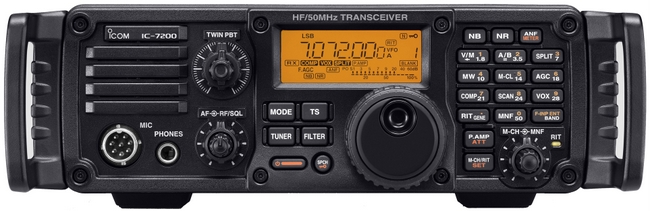
Icom-IC7200Many thanks to SWLing Post contributor Dave Zantow, who notes that the Icom IC-7200 general coverage transceiver is being discontinued.

Dave notes the following on his website:

Icom IC-7200 “Last Call” : It appears that the Icom IC-7200 DSP HF Transceiver is discontinued (or near of being discontinued) and dealers are now selling the last production samples. Information as via the Gigaparts (US Icom dealer) web site. If you always wanted a brand new Icom IC-7200 model , better grab it while you still can. Yes…here we go again, but the model is on the way out for sure this time. […]

Continue reading on Dave’s site…

Readers may recall that I listed the IC-7200 as a transceiver with a very good general coverage receiver.  Check out my article, The best general coverage transceivers for shortwave listening.

Icom-IC-7200

Though I don’t own an IC-7200, I’m a little sad to see that it’ll no longer be produced. I’ve used one on the air before and thought it packed a lot of performance for the price. I think it’s an ideal ham radio club transceiver as it’s easy to use and has virtually no learning curve (for those who are familiar with transceivers)–a very good choice as a field day rig.

Universal Radio still has the IC-7200 in stock priced at $890 US. Gigaparts also has the IC-7200 priced at $895. That’s a good deal for a 100 watt, full-featured HF transceiver.

Thanks for the tip, Dave!