Category Archives: Ham Radio

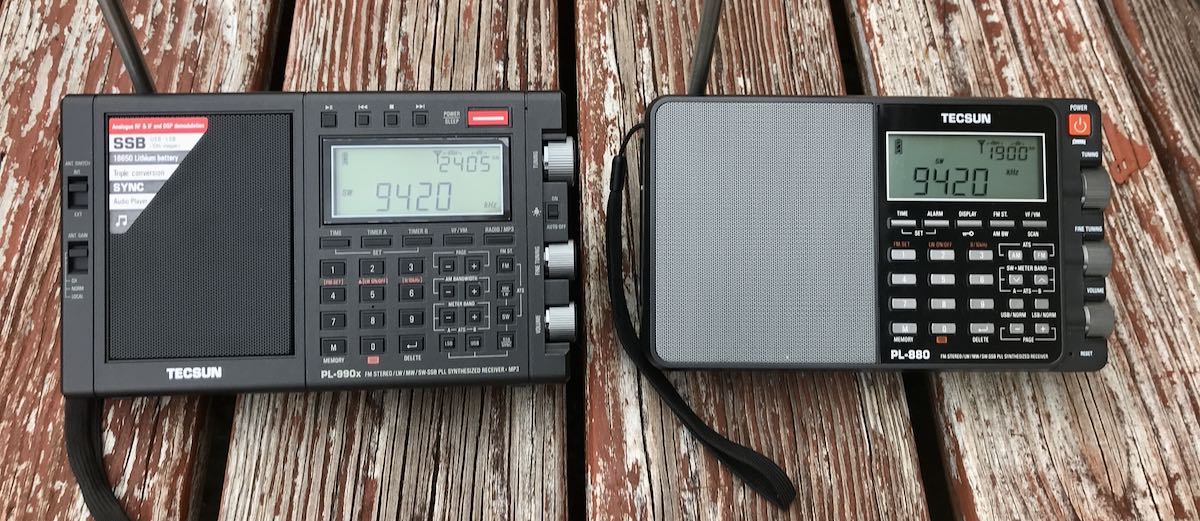
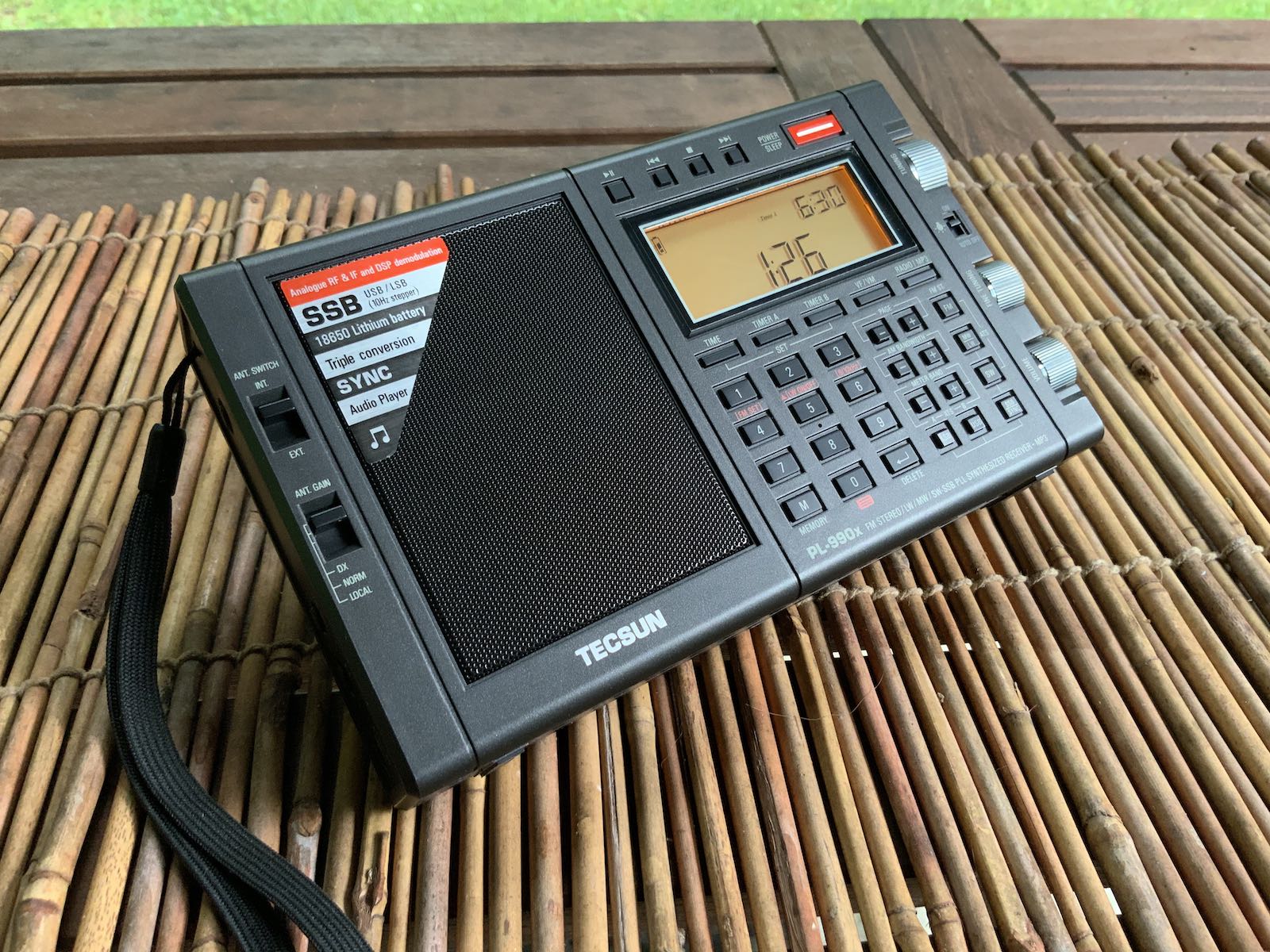
Tecsun PL-990x vs. PL-880: Comparing SSB audio characteristics and pre-production/production PL-990 models

A number of SWLing Post readers have been asking about SSB audio characteristics on the new Tecsun PL-990.

Earlier this week, I took a moment while visiting family to make a few quick comparison videos with the PL-880 outdoors and away from RFI.

As I mention in the videos, there are a lot of cicadas singing in the background and you can also hear a bit of road noise–not ideal for audio, but I had to take advantage of a break in the weather!

You should also note that this isn’t a sensitivity comparison. The radios were pretty close together–if measuring sensitivity, I would have spaced them much further apart. Rather, I hope these videos give you an idea of the audio characteristics in SSB (both CW narrow and voice) and one comparison in AM. If you’re curious about sensitivity and how the PL-990x compares, check out Dan Robinsons initial evaluation.

CW Audio: .5 kHz filter on the 80 meter band

CW Audio: .5 kHz filter on the 30 meter band

SSB audio: 75 meter band

AM Audio: 5 kHz filter WWV 10 MHz

My thoughts

While these videos are far from ideal, they should give you a real-word impression of audio characteristics.

Personally, I think the PL-990x is a much better performer in single sideband. The noise floor is lower, but I think that may have more to do with better filter implementation. I’ve always felt that the PL-880 audio sounds “wider” than the selected filter in the more narrow SSB selections.

In addition, the PL-990x exhibits better SSB stability that’s especially noticeable in CW. The PL-880, at times, almost sounds garbled in comparison.

I also mentioned in the last video that the audio sounds better on the PL-880. I should have qualified that statement a bit better.

In general, yes, the PL-880 audio sounds better because its built-in speaker has slightly better audio fidelity that’s most noticeable when listening to music on the FM band, or a strong local AM station. On shortwave, I feel like I actually prefer the PL-990 audio for all but the strongest stations although I do wish the PL-990 filter could be widened to 9 kHz like the PL-880.

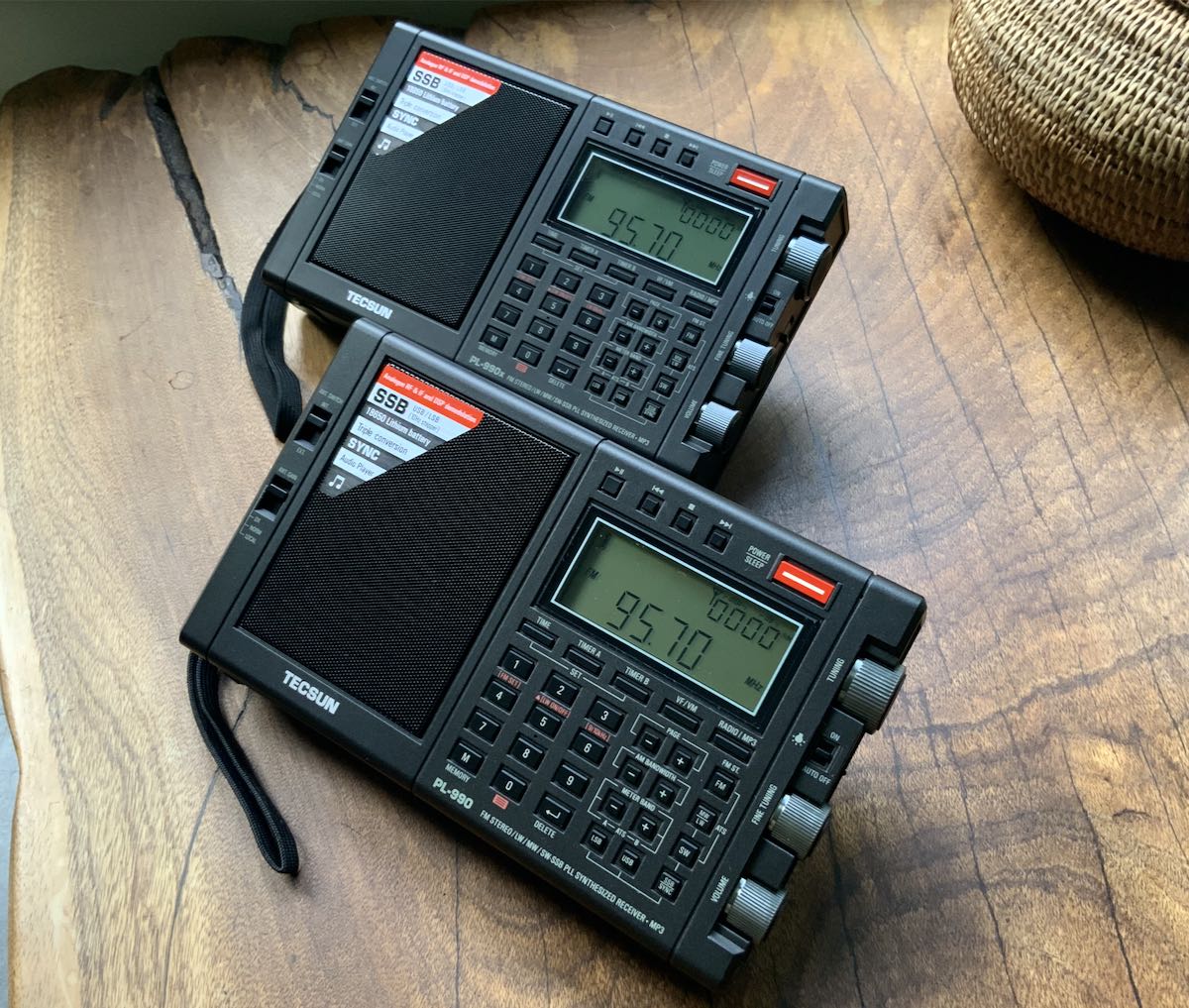
PL-990x (pre-production) vs. PL-990 (production model)

Tecsun Radios Australia reached out and kindly sent me one of their PL-990 production model radios to compare with the PL-990x pre-production model from Anon-Co we’ve been testing up to this point. This has been incredibly helpful as I put together my PL-990 review for the 2021 World Radio TV Handbook.

As I’ve mentioned in previous posts, I feel it can be problematic using a pre-production model radio for review only because there can be differences in quality control when a small number of pre-production units are manufactured compared with a proper first production run (remember this case?).

I’ve only had the production model PL-990 for a few days and most of that time we’ve been dealing with the remnants of hurricane Sally moving through our area dumping torrential rains.

Last night, however, a massive tree fell across our road knocking out power for the better part of 5 hours. This gave me a perfect excuse to start my comparison indoors while rain continued outside.

Based on my comparisons last night, it appears performance is nearly identical between the production and pre-production models. I’ve still more testing to do, but my initial impressions are most positive. Very happy quality appears to be consistent.

Many thanks again to Tecsun Radios Australia for making this comparison possible.

Taking the Par EndFedz EFT-MTR triband antenna to the field!

The Par EndFedz EFT-MTR triband (40/30/20M) antenna

In July, I purchased a tiny QRP transceiver I’ve always wanted: the LnR Precision MTR-3B. It’s a genius, purpose-built little radio and a lot of fun to operate in the field.
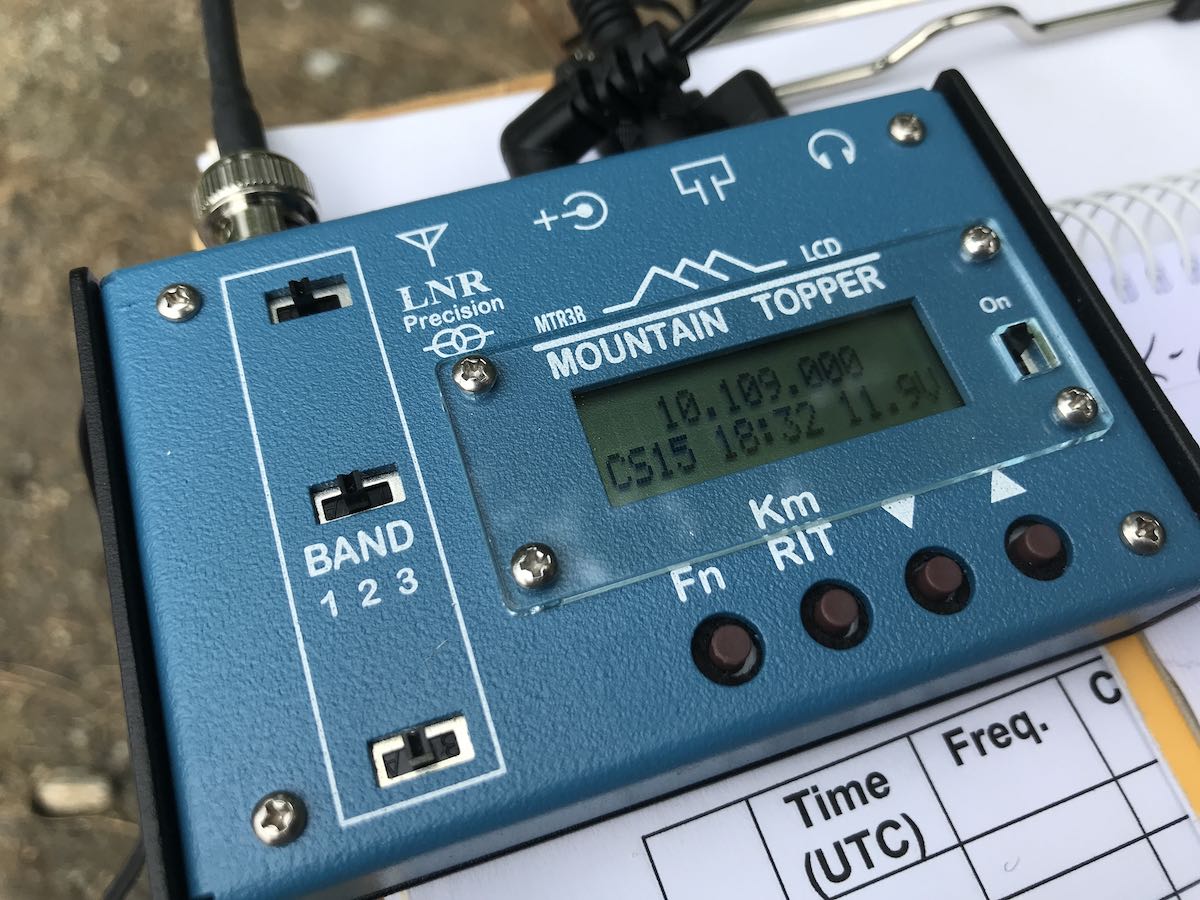
It’s also rather bare-bones, only including a specific feature set built around ultra-portable CW operation.

While the MTR-3B has features like CW memory keying, a wide operating voltage (6-12 VDC), extremely low operating current (20 ma in receive), real-time 24 hour clock, and a full compliment of keying adjustments, it lacks other features like a volume control, SWR meter, speaker, and built-in antenna tuner.

Some of those may seem like big omissions but SOTA and POTA activators who like extremely lightweight/portable gear love the MTR-3B for being so purpose-built.

The MTR-3B (and its predecessors) operate on three bands: 40, 30, and 20 meters. These are, without a doubt, my favorite bands when operating portable since antenna lengths are reasonable.

Since the MTR-3B doesn’t have an internal ATU, you need to pack an external tuner or, better yet, a resonant antenna–ideally, one that can be used on all three bands.

Although many of my portable transceivers have built-in ATUs, I rarely use them because I primarily operate with resonant antennas. Resonant antennas are more efficient–giving you the maximum mileage per watt. In addition, they’re also more simple: connect them to the rig and hop on the air. No tuner or tuning required.

Since I keep self-contained field radio kits, my MTR-3B needed a dedicated resonant antenna.
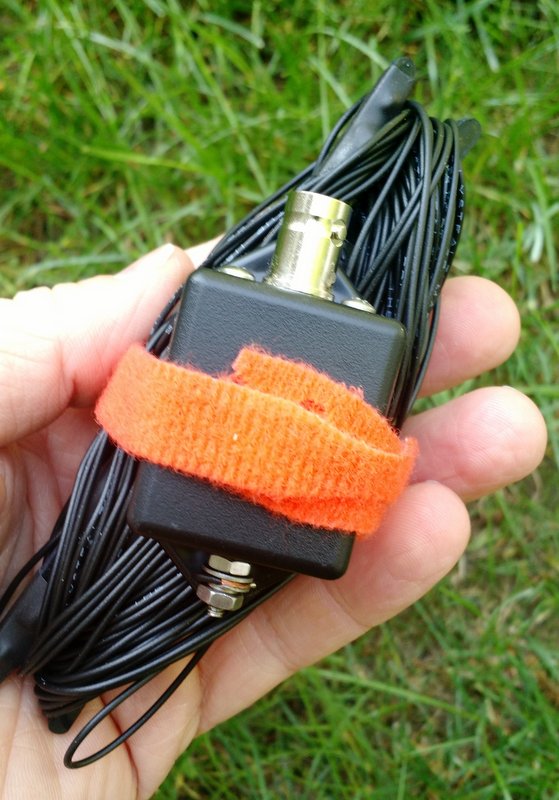
The EFT Trail-Friendly antenna is incredibly compact and quite easy to deploy.

I’ve mentioned in previous posts that I’m a big fan of the Par EndFedz Trail-friendly EFT tri-band antenna (above) which is resonant on 40, 20, and 10 meters.  I’ve activated well over 130 parks with this little antenna.

After I took delivery of the MTR-3B, I borrowed the Trail-friendly EFT antenna from my KX2 field kit. It worked well on 40 and 20 meters, but it doesn’t cover the 30 meter band. Also, by borrowing the EFT from the KX2 kit, I broke one of my rules: never borrow from one field kit to feed another. This led to me leaving the EFT hanging in a tree at a remote park and returning a week later–a three hour round-trip(!!!)–to retrieve it. (FYI, in all fairness, I also blamed my trusty canine companion for this mishap!)

Enter the Par EndFedz EFT-MTR triband antenna
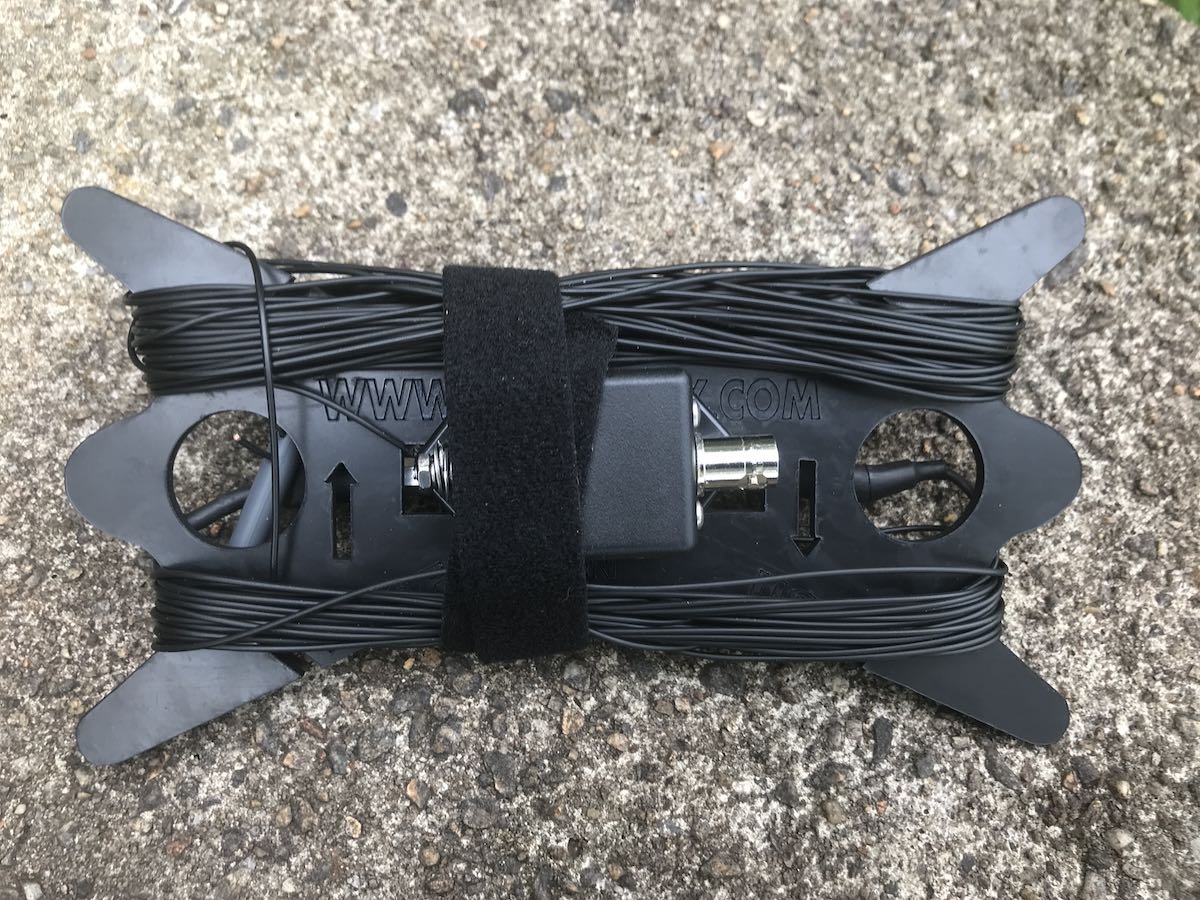
A few months ago, Vibroplex purchased the Par antenna line from LnR Precision.

I was very pleased with this decision as I’m guessing LnR Precision wanted to hand off antenna production so they could focus on the very popular Mountain Topper transceiver line.

Vibroplex is owned by my buddy, Scott Robbins (W4PA), who is not only a successful entrepreneur, but also an award-winning contester and DXer. I’ve known Scott for years and knew he’d not only be a great steward of the Par product line, but also push new innovations.

I emailed Scott asking if Vibroplex had a field-portable antenna that would be resonant on 40, 30, and 20 meters. Turns out, there’s a Par antenna designed specifically to pair with the MTR-3 series transceivers: the Par EndFedz EFT-MTR.
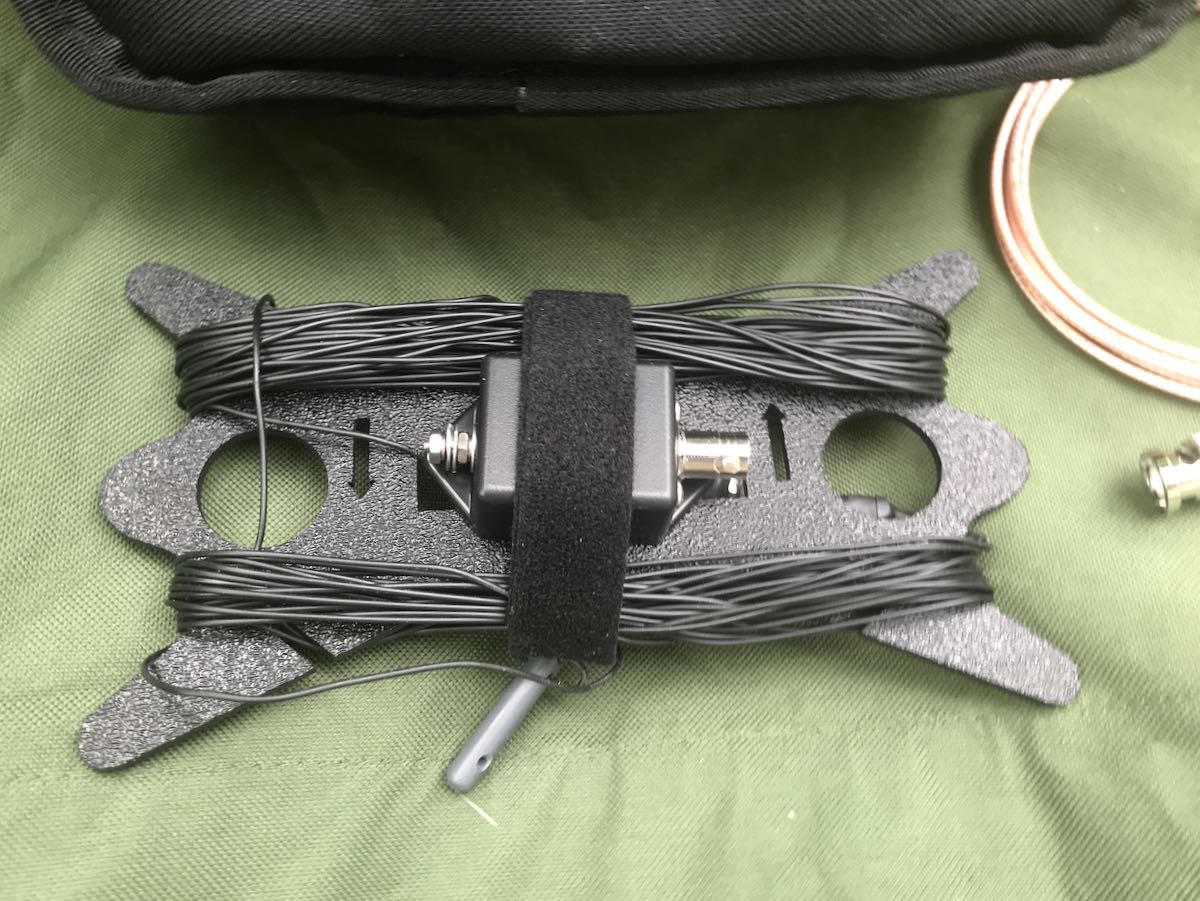
Scott pointed me to a description of the antenna on the Vibroplex website:

The new EndFedz ® EFT-MTR is a 40m/30m/20m tri-band QRP antenna rated up to 25 watts. The “MTR” name was selected as LNR Precision developed this antenna to be the perfect companion to the wildly popular 40/30/20m Mountain Topper QRP transceiver. The EFT-MTR’s total length is 65′ of 22 AWG polystealth wire and weighs less than 4 ounces! It is built with the same high level of workmanship and quality that you have come to expect with all EndFedz ® antennas.

A particular innovation on this antenna: This EndFedz is a little different than previous designs. The user has the option to remove an SMA connector at the end of the 30M resonator to enable just 30 meters, or keep the SMA installed for 40 and 20 meters. Because of the broad bandwidth of the antenna, it is unlikely that it will require tuning in the vast majority of deployments. This is particularly true of 30 meters where the band is very narrow. As our tagline states, “They Just Work!”

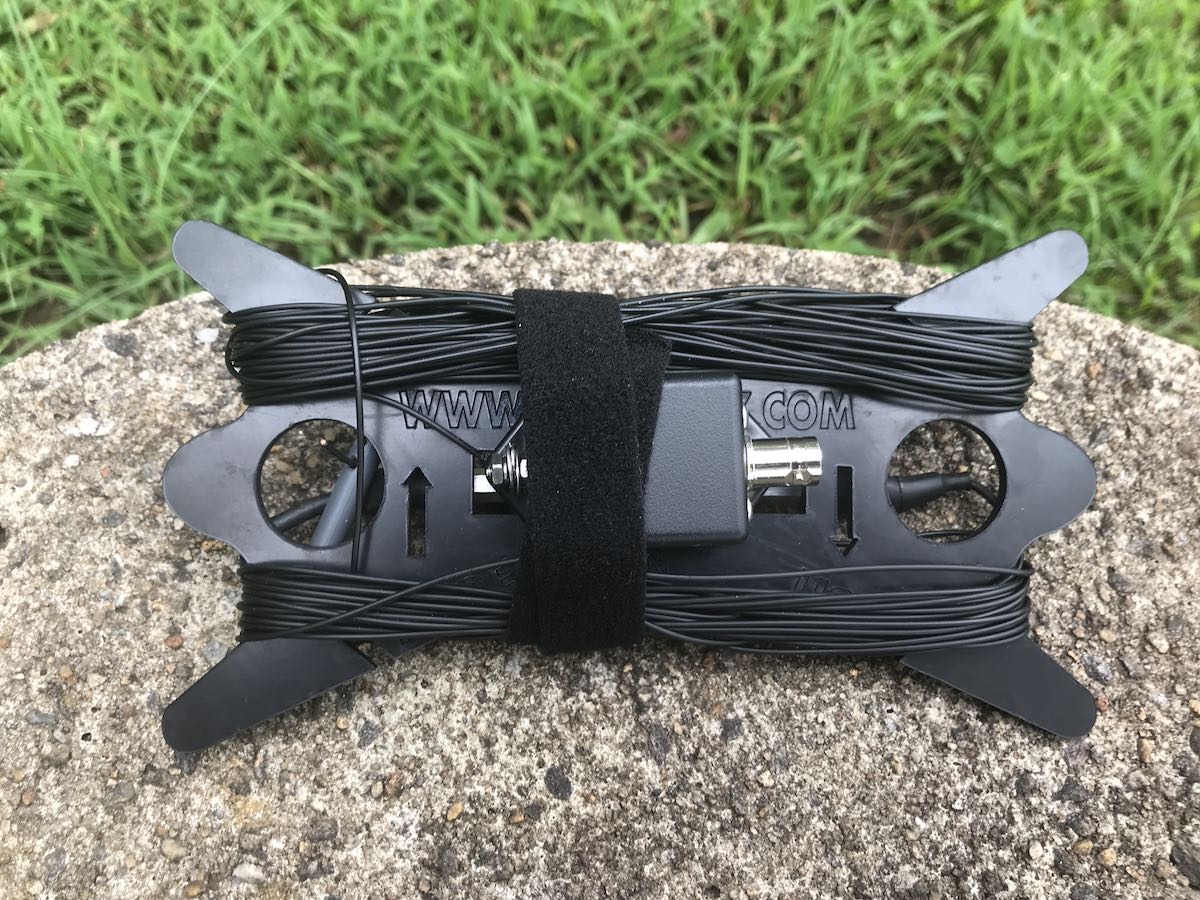
Included with the EFT-MTR is the EndFedz Antenna Winder. Conveniently allowing winding up the antenna line to not have a tangled mess at the end. The winder will hold both the antenna and 25 feet of RG-174U coaxial cable (optional accessory).

Scott offered to send me an EFT-MTR to evaluate in the field (disclaimer: at no cost to me) and I accepted without hesitation, of course!

An EFT-MTR field review
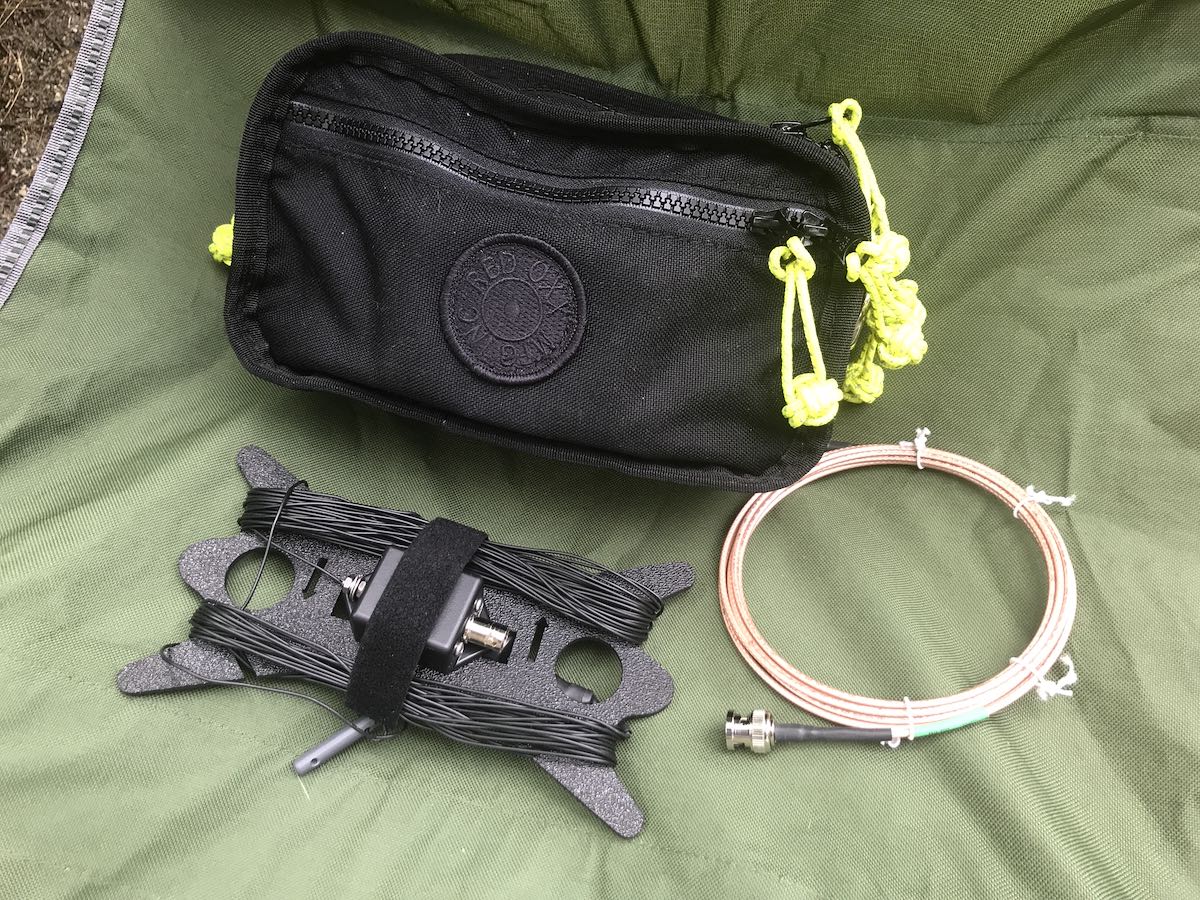
I’ve taken the EFT-MTR antenna to three park activations at this point and have formed some opinions about it.
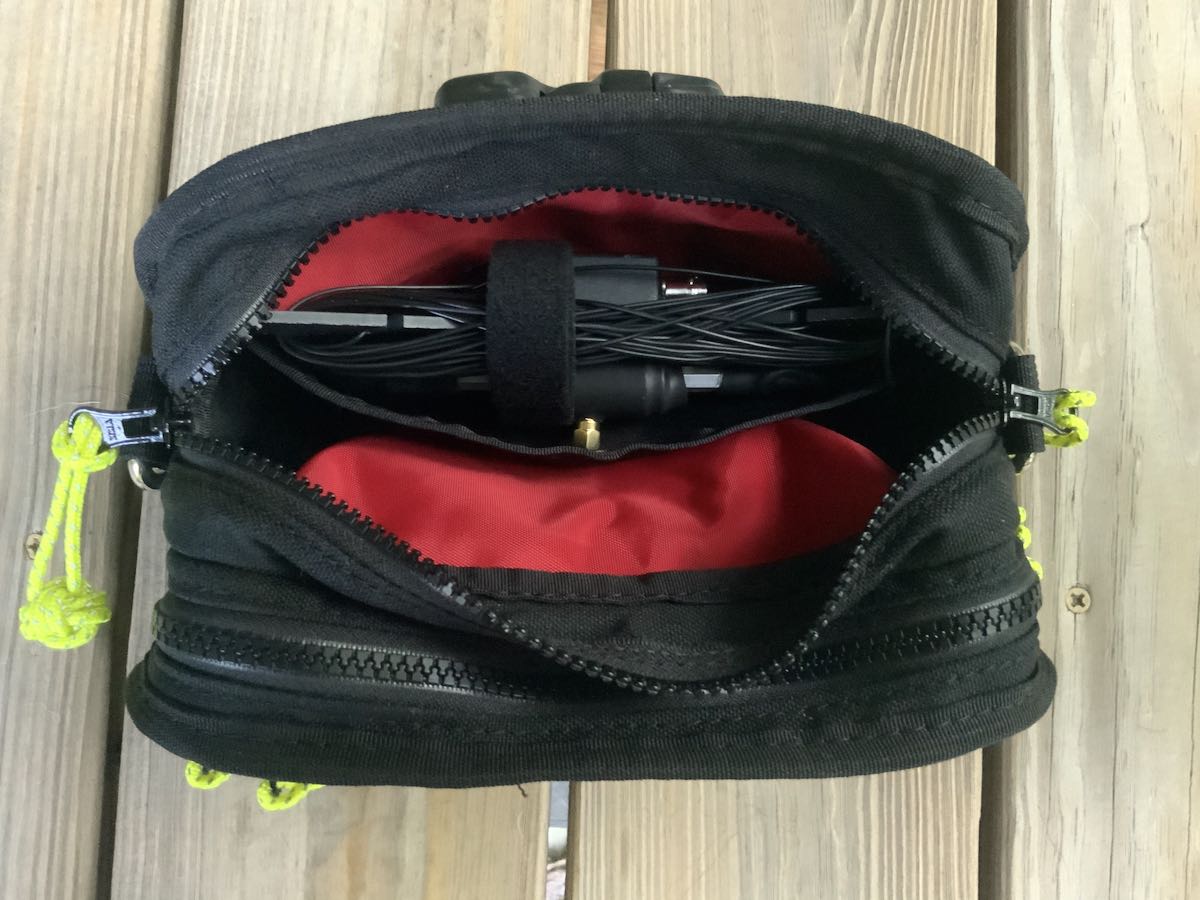
The EFT-MTR fits perfectly in a slide-in pocket in the main compartment of the Boot Boss.

First of all, I couldn’t be more pleased with the size as it fits perfectly in my MTR-3B field kit built around my Red Oxx Booty Boss pack.

I really like the built-in antenna winder: it’s larger than that of the EFT Trail-Friendly, but also much easier to wind up and manage post-activation.

I’ll admit, the length of the EFT-MTR was a bit surprising the first time I deployed it: 65 feet.  Keep in mind, though, I had been used to a much shorter 41 foot radiator on the EFT Trail-friendly. Occasionally, I operate in spots where I simply don’t have the room to deploy a long antenna. I also worried that the EFT-MTR resonance might be negatively affected by winding its way through trees and over a branches. The MTR-3B transceiver does not like high SWR values and has no built-in SWR meter to monitor it. Last thing I wanted to do was harm the MTR finals.
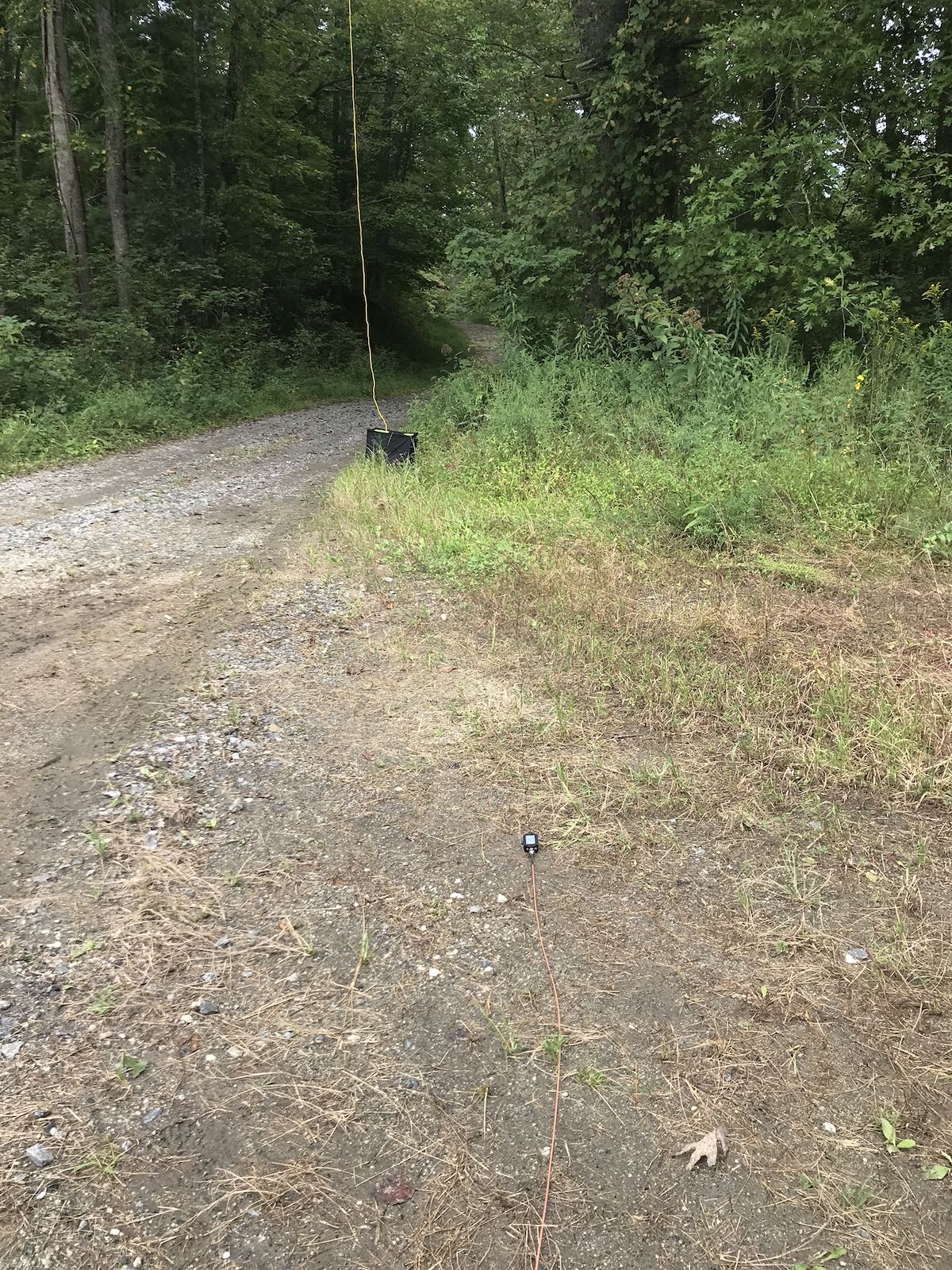
You might be able to spot the feed point of the EFT-MTR at my activation of K-6952 this week.

Fortunately, winding its way through trees doesn’t seem to have a significant impact on SWR.

Each time I’ve taken the EFT-MTR to the field, I’ve also taken my KX2 which I’ve used to read the antenna’s SWR value. So far, the difference has only been negligible and SWR well within the tolerances of the MTR-3B.  Score!

I should note here that since I’ve started using an arborist throw line, I’m also able to hang antennas much higher than I could before. This has had a huge impact on all of my field activities.
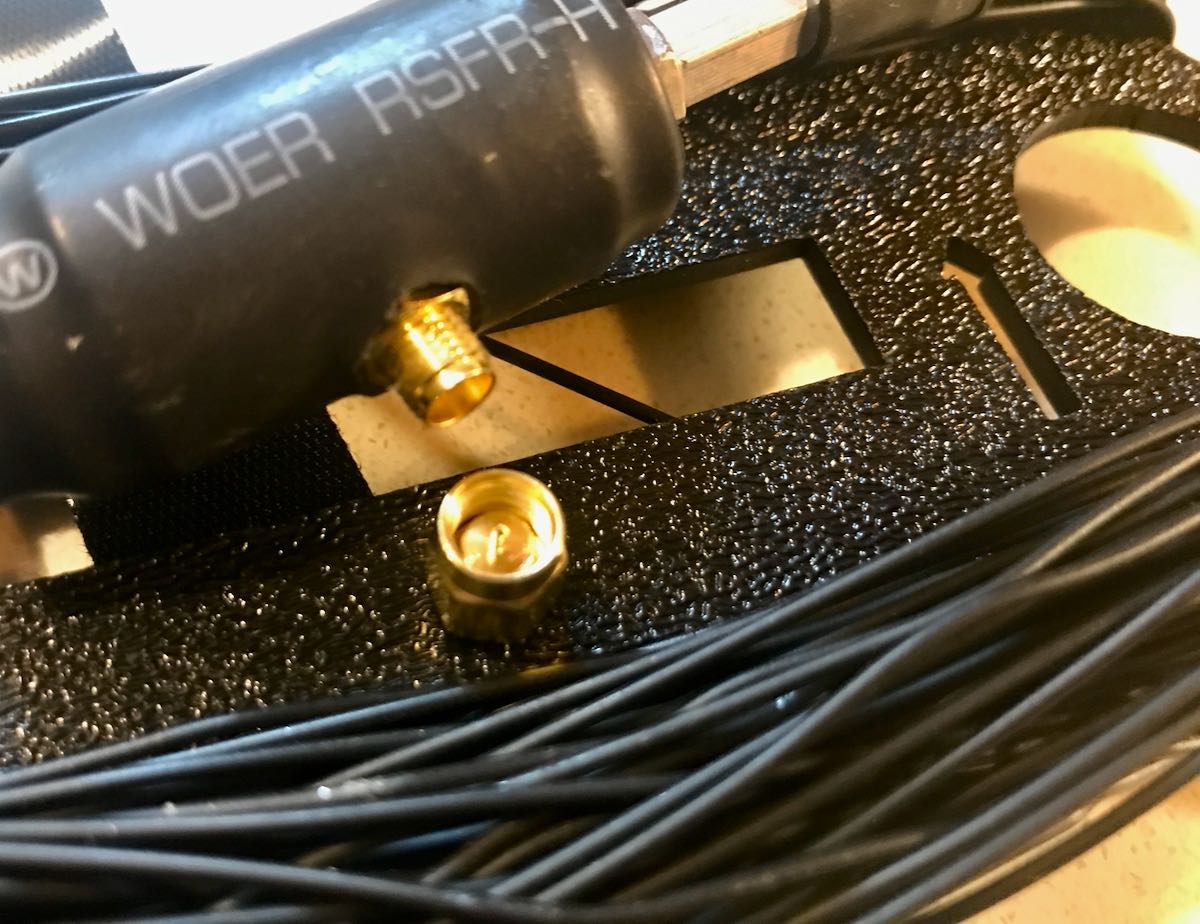
Removing the SMA cap changes the EFT-MTR from a 40/20 to a 30 meter resonant antenna.

To be resonant on 40, 20 and 30 meters, the EFT-MTR requires a field modification. On the coil about 2/3 the way up the antenna, there’s an SMA connector with a small screw on cap (see above). When the cap is on (thus completing the connection) the antenna is resonant on 40 and 20 meters. You must remove the cap for it to be resonant on 30 meters.
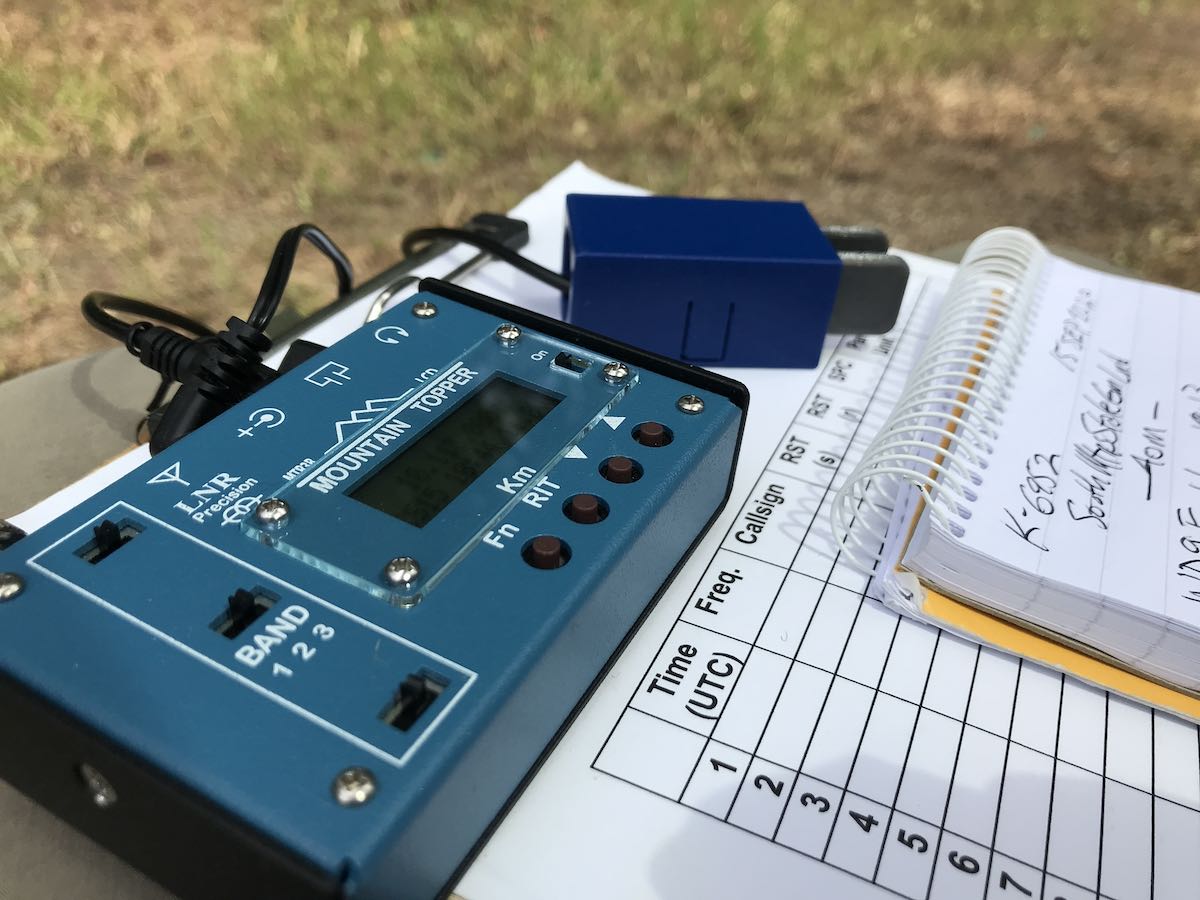
Since I’ve been using the EFT-MTR, I start an activation on 40 meters (which is typically my most productive band), then move to 20 meters (typically, my least productive). If I have the time, or need the extra contacts to confirm a valid activation, I lower the antenna, unscrew the SMA cap, and raise the antenna again.

I thought at first this would be a major pain, but it hasn’t. Now that I’m using an arborist throw line, it’s super easy to lower and raise antennas. But even when I’ve used fishing line, it really hasn’t been an issue.

The only issue I see is I’m afraid I’m going to lose that little SMA cap in the field. To prevent this, I’ve made it a routine to immediately put it in the internal zippered compartment of the Booty Boss pack. I might find a source for those caps, though, just in case I still lose this one.
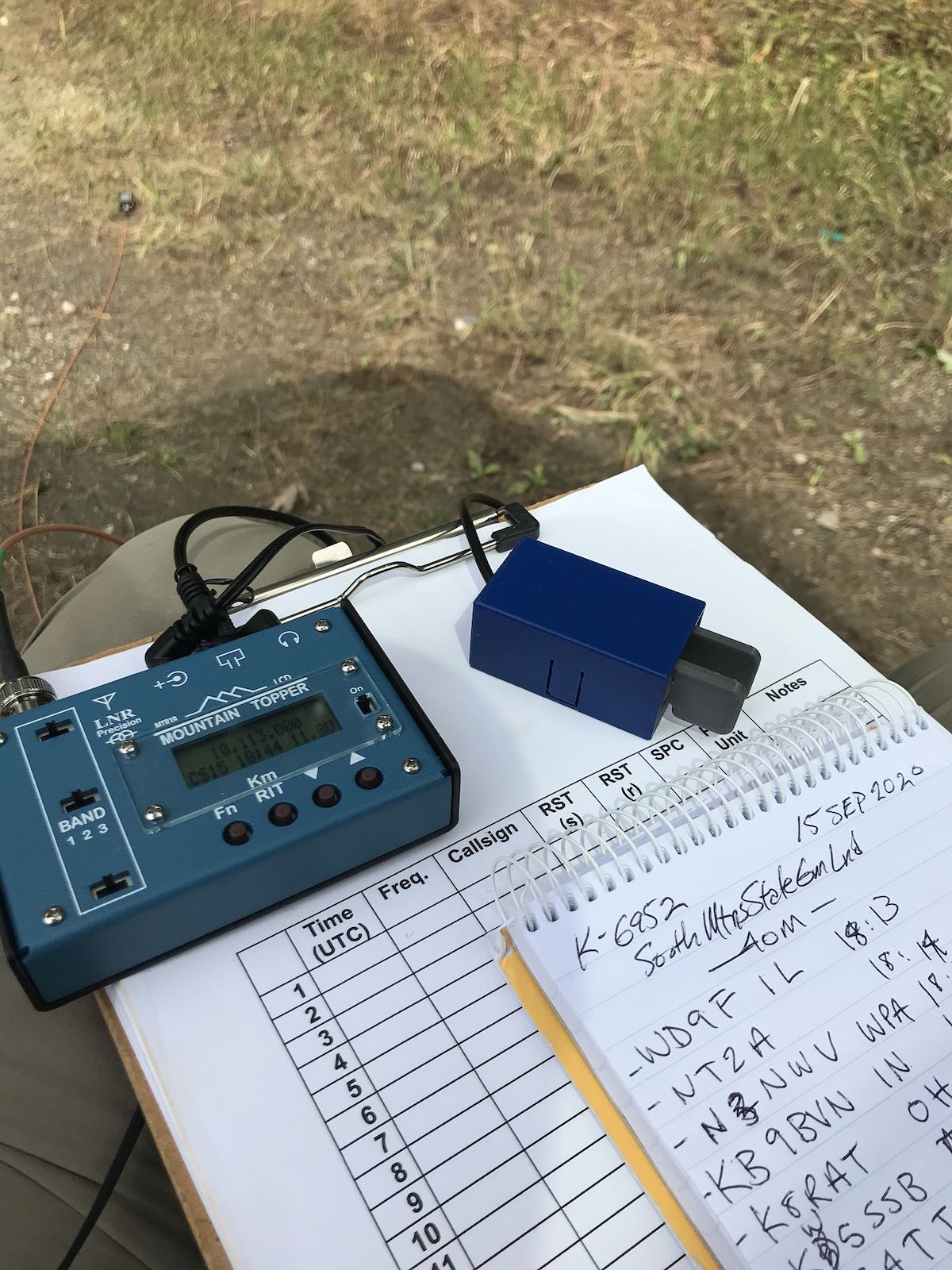
I’ve been very pleased with the EFT-MTR’s performance. I’m guessing it’s actually higher gain than my beloved EFT Trail-Friendly antenna. On my last activation with the EFT-MTR, I knocked out eight 40 meter contacts in about eight minutes during a period of poor propagation. Note that the MTR-3B was only pushing 3 or 4 watts of power.
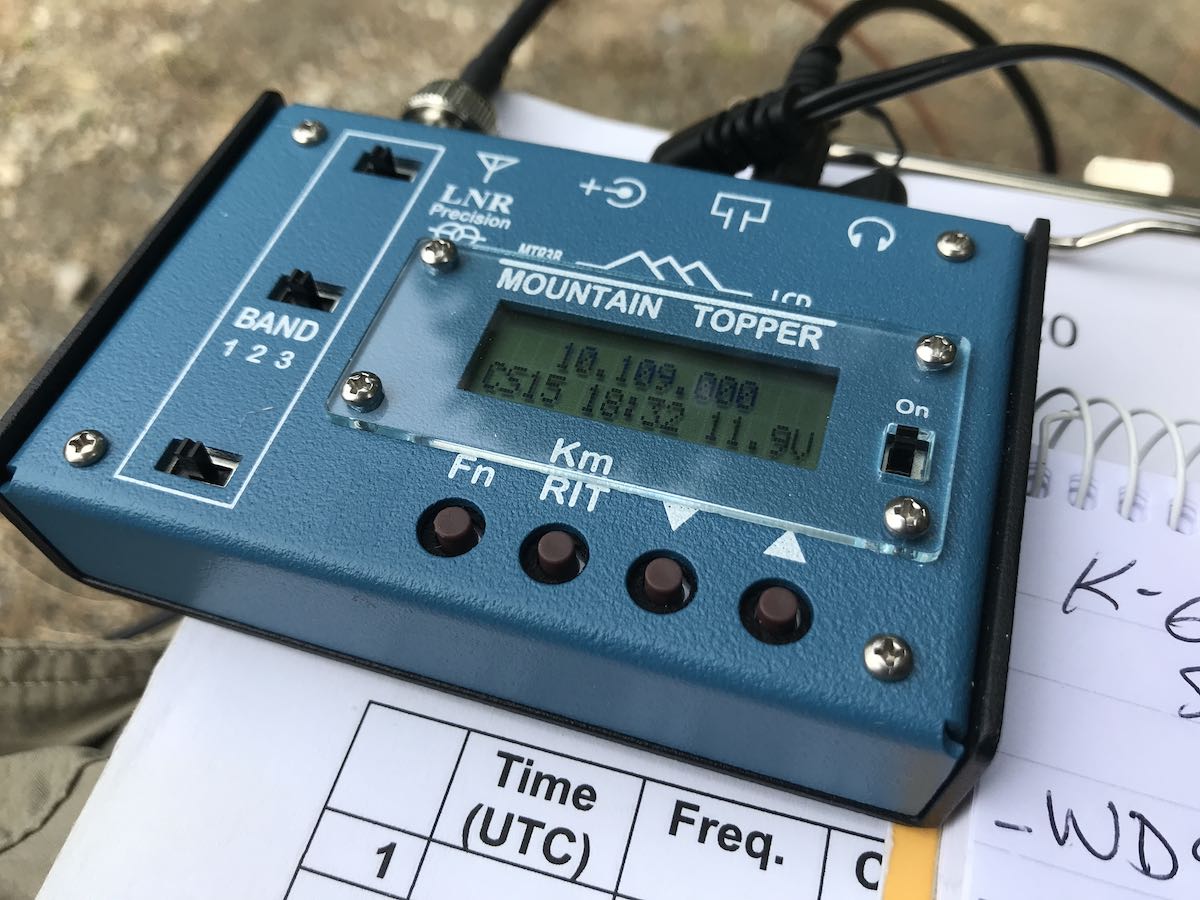
I then moved to 20 meters where, frankly, propagation was so crappy I didn’t hang out there long. Instead, I lowered the antenna, removed the SMA cap, and started calling on 30 meters. Within a few minutes, I racked up the rest of my contacts.

I was very pleased with how quickly the Reverse Beacon Network picked up my CQs and was thus auto-spotted on the POTA website.

Conclusion?

If you own a Mountain Topper MTR-3 series transceiver, I highly recommend the EFT-MTR antenna. As with my EFT Trail-friendly and Par sloper, the quality is top-shelf. I expect the EFT-MTR will last even longer than the EFT Trail-friendly since the winder is so accommodating and the in-line coil is designed so that it doesn’t snag on branches as easily.

I’m looking forward to much more field fun with the MTR-3B and EFT-MTR combo!

Click here to check out the EFT-MTR at Vibroplex.

Click here to check out Vibroplex’s full line of antennas.

Many thanks again to Scott at Vibroplex for sending me the EFT-MTR for evaluation!

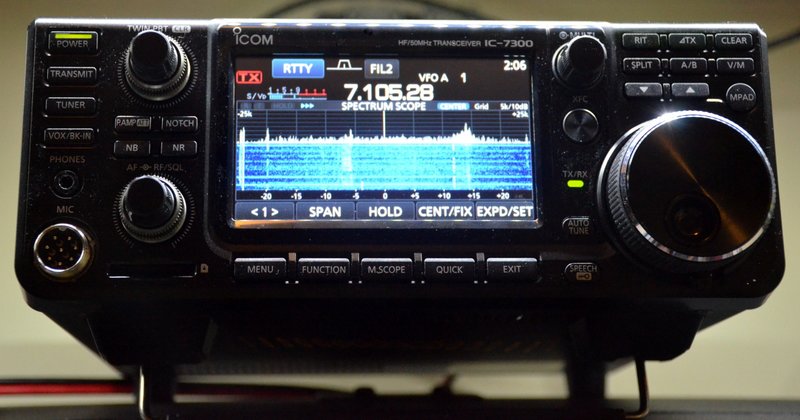
Disabling transmit on the Icom IC-7300 or Kenwood TS-590 series transceivers?

Many thanks to SWLing Post contributor, Muthu, who writes with the following inquiry after reading our Xiegu G90 review:

Very nice review. I have a question.

I’m preparing for a restricted ham license in Hong Kong and may try transmitting for a couple of months. However, in the long run I plan to use the rig just as a receiver mainly for shortwave broadcast listening once I return back to India next year.

I’m considering Icom IC-7300 or an almost new Kenwood TS 590-S[…].

You said that there is no way to completely disable the transmitter on the Xiegu G90. Is there a way to completely disable transmit on the Icom IC-7300 or Kenwood TS-590?

Thank you for your question, Muthu. My hope is that SWLing Post readers who own the IC-7300 and/or TS-590 series transceivers can confirm.

I only had the IC-7300 on loan a few weeks during my evaluation/review period. While I feel like I recall the ability to disable transmit (or perhaps lower the output power to 0 watts), I’m not sure if that also applies to the internal ATU. I have no clue if this is possible with the TS-590S as I’ve never spent meaningful time with this fine transceiver.

Post readers: If you own either of these transceivers and can you confirm if transmit can be disabled on the IC-7300 or TS-590? Please feel free to comment!

Mission RGO One Firmware update (2.10b) and pre-order form

A number of SWLing Post readers have been asking about the pricing and availability of the Mission RGO One transceiver.

RGO One designer, Boris (LZ2JR), has informed me that he’s published a new pre-order form available via the following link. The form specifies all options and pricing and applies to a third production run of the radio:

Click here to view the Mission RGO One pre-order form.

They’ve also announced firmware version 2.10b which improves ATU performance and addresses a number of other tweaks and user requests. Click here to read details and download the update.

Note that my full review of the Mission RGO transceiver is scheduled to publish in the November 2020 issue of The Spectrum Monitor magazine.

I took the RGO One on another Parks On The Air activation yesterday. Look for a post about it soon!

Hurricane Watch Net Activated September 13, 2020

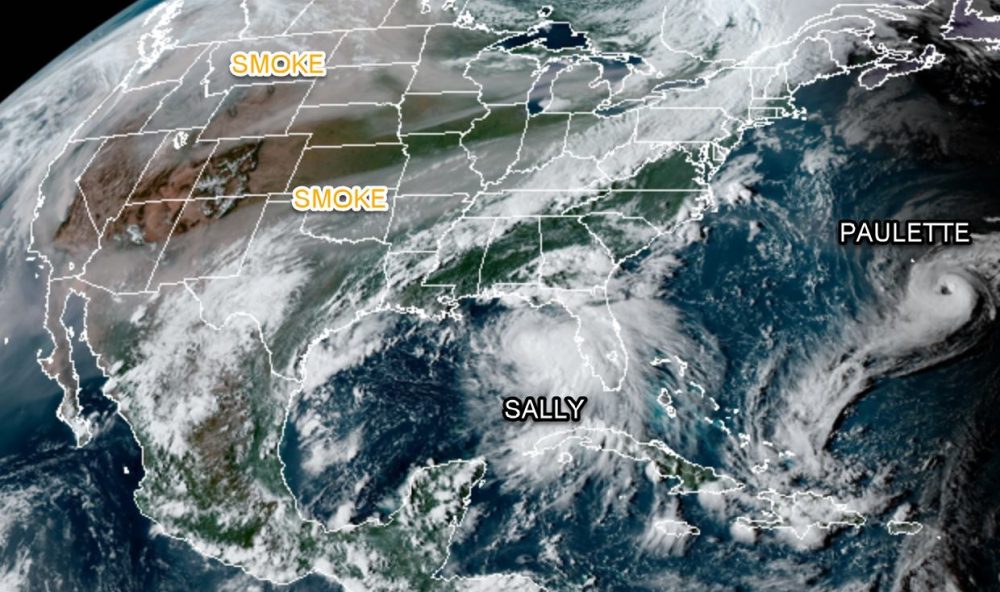
(Source: Brad Panovich) “Smoke, Fires, a Tropical Storm, and a Hurricane all in one satellite image today.”

(Source: ARRL via RTC)

Hurricane Watch Net to Activate as Paulette Bears Down on Bermuda

The Hurricane Watch Net (HWN) has announced plans to activate today (Sunday, September 13) at 2100 UTC on both 14.325 MHz and 7.268 MHz as Hurricane Paulette is predicted to make landfall on Bermuda early on September 14 as a Category 2 storm. HWN Manager Bobby Graves, KB5HAV, noted that activation plans are subject to change as weather forecasts unfold.

As of 1500 UTC on Sunday, Hurricane Paulette was moving to the northwest toward Bermuda at about 14 MPH, with strong winds, storm surge, and heavy rain expected to begin there by evening, the National Hurricane Center (NHC) reported. A hurricane warning is in effect for Bermuda. Paulette was some 240 miles southeast of Bermuda, with maximum sustained winds of 80 MPH.

“Monday morning, after landfall, we will do what we can to gather weather data and damage reports while operating on both 20 and 40 meters,” Graves said. “Once we’ve completed operations for Paulette, we will switch gears and begin operations for Sally immediately.

The HWN will be on 20 meters during daylight hours, switching to 40 meters in the evening, although propagation could dictate going to 40 meters during daylight as well.

Tropical Storm Sally is forecast to become a Category 1 Hurricane on September 14, with landfall expected on the evening of September 15, somewhere along the coast of Mississippi.

“Of course, should the forecast track be adjusted to the left or right of the current track, landfall timing and location will change,” Graves noted. “Everyone in the forecast path of Sally should follow the directions of local emergency management.

[…]WX4NHC at the NHC will also activate on Sunday, September 13, at 2100 UTC for Paulette and Sally and will remain activated until 1900 on Tuesday, September 15, monitoring and gathering reports from the HWN on 14.325 and 7.268 MHz and via the VoIP-WX Net on Echolink WXtalk 7203 Conference and IRLP 9219.

Click here to read the full article at the ARRL News.

Radio Waves: BBC radio reporters axed, Ham Radio on BBC Surrey, K6UDA on IC-705 features, and VLF balloon launched with request for detailed reception report

Radio Waves:  Stories Making Waves in the World of Radio

Because I keep my ear to the waves, as well as receive many tips from others who do the same, I find myself privy to radio-related stories that might interest SWLing Post readers.  To that end: Welcome to the SWLing Post’s Radio Waves, a collection of links to interesting stories making waves in the world of radio. Enjoy!

Many thanks to SWLing Post contributors Mark Hist, Kris Partridge, John Palmer, and the Southgate ARC for the following tips:


Radio reporters to be axed by BBC and told to reapply for new roles (The Guardian)

Radio reporters to be axed by BBC and told to reapply for new roles
Critics fear end of an era because of plans to make audio journalists work across media platforms

BBC radio voices have described and defined modern British history. Live reports from inside a British bomber over Germany during the second world war, or with the British troops invading Iraq in 2003, or more recently from the frontline of the parent boycott of a Birmingham school over LGBT lessons have also shaped the news agenda.

But now the BBC plans to axe all its national radio reporters and ask them to reapply for a smaller number of jobs as television, radio and digital reporters, rather than as dedicated audio journalists. Many fear it is not just the end of their careers but the premature end of an era for the BBC.

“Radio reporting is a different job. Of course, you can do both, but a report designed for television starts from a completely different place. Radio is also more agile and also a lot less expensive,” said one experienced broadcast journalist. “I am pretty sure most of us will not be given new TV roles. It seems sad to lose all that specific radio expertise.”

Among the well-known voices likely to be affected are Hugh Sykes, Andrew Bomford – who has just completed a long feature on the child protection process for Radio 4’s PM show – and the award-winning and idiosyncratic Becky Milligan, as well as a wider team of expert correspondents.[]

Amateur radio on BBC Radio Surrey (Southgate ARC)

RSGB report Board Director Stewart Bryant G3YSX and SOTA organiser Tim Price G4YBU were interviewed on BBC Radio Surrey on Friday, September 11

The interview starts just before 1:43:00 into the recording at
https://www.bbc.co.uk/sounds/play/p08pkykw

RSGB https://twitter.com/theRSGB

What is Amateur Radio?
http://www.essexham.co.uk/what-is-amateur-radio

Free UK amateur radio Online Training course
https://essexham.co.uk/train/foundation-online/

10 Things That Make The Icom IC 705 A Revolution in Ham Radio (K6UDA YouTube)


VLF Balloon with 210m long antenna launches Sept 12 (Southgate ARC)

A high-altitude balloon experiment, launched by Warsaw University of Technology, is planned to lift off September 12, carrying a VLF 210-m-long fully-airborne antenna system, transmitting on 14.2 kHz

14.2 kHz is the former frequency of the Babice Radio Station in Poland.

The project is delivering very important data for a doctoral dissertation – any and all feedback on the reception of the signal (reception location, SNR, bandwidth etc.) is extremely important; your help with the listening to the transmission would be invaluable!

The balloon will also be transmitting APRS on 144.800 MHz FM, callsign SP5AXL.

Full details at
https://alexander.n.se/grimetons-sister-station-shall-reappear-in-the-stratosphere/?lang=en


Kris also points out this article which provides more detail about the station and request for reception reports:

Invented for the first time in 2014, in 2020 it will finally be implemented – the idea of „restoring” the TRCN, but in the stratosphere, where there are no mechanical limitations at the height of the antennas, and the achieved range can be gigantic.

The launch of a stratospheric balloon from the Przasnysz-Sierakowo airport of the Warsaw University of Technology is planned for September 12, 2020, in order to perform atmospheric tests – measuring UV radiation, recording the cloudy surroundings with a high-speed camera and conducting an inductive experiment at 14.2 kHz using a special antenna system.

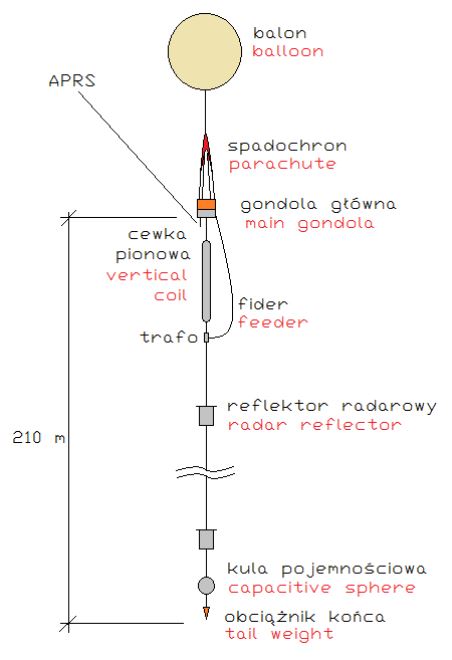
The inductive system uses a modified long-wave transmitter (A1 emission, unkeyed) from the GLACiER project of the Warsaw University of Technology, implemented as part of the IGLUNA – a Habitat in Ice programme (ESA_Lab / Swiss Space Center). The power of the transmitter, due to the emission limits for this type of inductive devices, shall not exceed a few watts. The antenna system is a centrally fed (35: 1) dipole with capacitive (Hertzian) elements and a vertical axial coil. The electrical length is between 400 and 500 m, with a total system length of 210 m. The antenna is equipped with metalized radar reflectors.

The entire balloon mission will use 144.8 MHz (as SP5AXL) and 868 MHz (as part of the LoVo system) for navigation. Flight information will be available in advance in NOTAM (EPWW).
Planned balloon launch (even if the sky is full of ‘lead’ clouds) at 12.00 UTC (14.00 CEST, local time). The 14.2kHz experiment will be switched on on the ground, with the antenna initially folded in harmony. The predicted total flight time is 3 hours – around 13.30-14.00 UTC / 15.30-16.00 CEST it is planned to reach the maximum altitude of 30 km above sea level.

Source: https://trcn.pl/do-stratosfery-to-the-stratosphere/

How can you help with the experiment? By recording as much as possible! Every parameter is valuable – from the spectrum / screenshot with the spectrum, to the EM field strengths, SNR and bandwidth, to the change of the EM field strength over time. The collected data can be sent to our e-mail address: [email protected]. On the day of launch, we plan to post updates on the launch, flight and the experiment itself via our Facebook page: facebook.com/radiostacjababice.
Stay tuned!


Do you enjoy the SWLing Post?

Please consider supporting us via Patreon or our Coffee Fund!

Your support makes articles like this one possible. Thank you!

QRM-busting: Rob’s practical approach to tackling unwanted radio noise

Our good friend Rob Wagner (VK3BVW) over at the  Mount Evelyn DX Report has posted an excellent article on how to deal with man-made radio interference (QRM/RFI) in our homes and neighborhoods. This has been a frequent topic here on the SWLing Post (indeed, as recently as Thursday).

I’ve copied an excerpt from his article below, but I highly recommend reading his entire post which includes practical ways you can investigate and mitigate RFI within your home and neighborhood:

Mount Evelyn is a semi-urban, semi-rural location, about 45 kilometres east of Melbourne, the southeastern part of Australia. When we retired eight years ago to this lovely mountain region known as the Yarra Ranges, noise levels on the shortwave bands were quite manageable. At times, it might rise to perhaps an S3, but hanging a variety of antennas cut for a mix of bands and erected in different directions certainly allowed for some flexibility and control over the local man-made noise.

Previously, we lived in a highly urbanized environment where 24-hour S9 noise levels prohibited any SWL or Ham activity from home. But moving to more spacious living at Mount Evelyn allowed me to drag out the radios, string up those wire antennas and really enjoy again the hobby that was such a part of my youth.

But over the past 12 months, I have noticed an increase in local man-made noise around here. The level of general electrical hash on the bands has increased markedly. At certain times of the day, the S-meter is rising to between 5 and 7. And it is not always predictable when the noise levels will rise and fall.

A few weeks ago, the local electric company decided to do a major overhaul of some power poles and wires in an area not far from here. So, the entire region was without power for about seven hours. Fantastic, I thought! I’ll hook up the Yaesu FTDX3000 to the 12v sealed lead acid battery and do some daytime DXing right here in the shack in a totally noise-free environment. Once the lights went off, I fired up the rig and tuned the bands in search of weak signal DX delights.

Err….well, not to be! Indeed, the results were somewhat underwhelming! It was disappointing just how much man-made interference was evident on the shortwave bands, even though such a large area around Mount Evelyn was without power. The hash was still registering a steady 3 on the S-meter. Certainly, it was better than when the mains power is in regular operation. But in the past, when the power had been off, the noise dropped right away, and battery-powered DXing from the radio shack was a real pleasure. But alas, not on this occasion!

So, I began thinking about why this was so. What is going on here?[…]

Click here to read the full article at The Mount Evelyn DX Report.