Category Archives: Ham Radio

W9IMS: A delayed start for the Indianapolis Motor Speedway special event station 

Many thanks to SWLing Post contributor, Brian D. Smith (W9IND), who shares the following announcement:


W9IMS: A delayed start for the Indianapolis Motor Speedway special event station

by Brian D. Smith, W9IND

It’s a late start for auto racing at the Indianapolis Motor Speedway, as well as the amateur radio station that honors this century-old tradition … but the show must go on!

And this week it will, as special event station W9IMS returns to the airwaves from now through Sunday to offer radio hobbyists a fresh opportunity to collect more “wallpaper”: Two vivid racing-themed QSL cards and the popular certificate known as the Checkered Flag Award.

The 2020 certificate will be easier than ever to earn. Normally the Speedway’s three major races take place on three different weekends, but this year, because of Covid-19 concerns, they’ll be consolidated into two. Accordingly, hams and SWLs will be required to contact or tune in W9IMS during only two race weeks – the current one, which continues through Sunday, July 5; and Aug. 17-23, which ends on the day of the venerable Indianapolis 500.

Even if you succeed in snaring W9IMS only once, you can still send off for the corresponding QSL card. All certificate and QSL designs are new each year.

The coming Independence Day weekend will feature an unprecedented racing doubleheader, with the IndyCar Grand Prix and the NASCAR Brickyard 400 slated for Saturday and Sunday, respectively. Consequently, the first W9IMS QSL of 2020 will be a full-color, four-sided card portraying images from both races.

So where do you find W9IMS? The station will stick to three bands, 20, 40 and 80 meters, and may appear at any time of day or night from now through Sunday.

However, the best bet is to catch the station during prime time – 2200 through 0200 UTC on weeknights (6 to 10 p.m. Indy time). W9IMS operators also plan to activate 20 meters during daytime hours, often between 8 a.m. and 2 p.m. (1200-1800 UTC); and will cover the various bands all weekend starting at 10 a.m. (1400 UTC) daily.

If you still haven’t caught W9IMS by the time Sunday evening arrives in Indianapolis, operators commonly conduct their own happy hour – working stations in rapid contesting style – right up to midnight (0400 UTC Monday).

Here are a couple of hints for tracking down the station during special event weeks:

  1. Go to the W9IMS web page (www.w9ims.org), find the “2020 Operating Schedule” heading, and click on the link to “Grand Prix & Brickyard” or “Indianapolis 500.” Although some W9IMS operators get on the air at unscheduled times, you’ll have your best luck looking for the station during the hours and bands reserved with a name and a callsign.
  2. Check DX Summit (www.dxsummit.fi) for spots that identify the current frequency (or frequencies) of W9IMS, if any. And if you type “W9IMS” in the search box, you can customize it to show reports for only that station.

For additional details, consult the W9IMS web page. Feel free to submit both of your 2020 QSL card and certificate requests in the same envelope, and if you don’t have your own QSL card, a printout of your W9IMS contacts or reception reports will suffice.

A Field Day weekend of rain, shine, battery power, pile-ups, and radio improvisation

If you’ve been reading the SWLing Post for long, you’ll know that I’m a big fan of portable radio gear. Whether it’s a portable receiver, an SDR, or a ham radio, I believe radios are made to be taken outside––rain or shine; hence I love programs like Parks On The Air (POTA ) and Summits On The Air (SOTA), and I’ve always loved ARRL Field Day.

Of course, this ARRL Field Day was a bit different than years past due to Covid-19––there were more individuals on the air with their own Field Day stations, while there were relatively few clubs on the air. Typically, the opposite is true.

This year I’d planned to operate from the field at various POTA locations in western NC; some contenders were the Blue Ridge Parkway, Pisgah National Forest, and Mount Mitchell State Park. In the past few years, my buddy Vlado (N3CZ) and I––with spouses in tow––hit the field together, but this year he was out of town, and I planned to go solo.

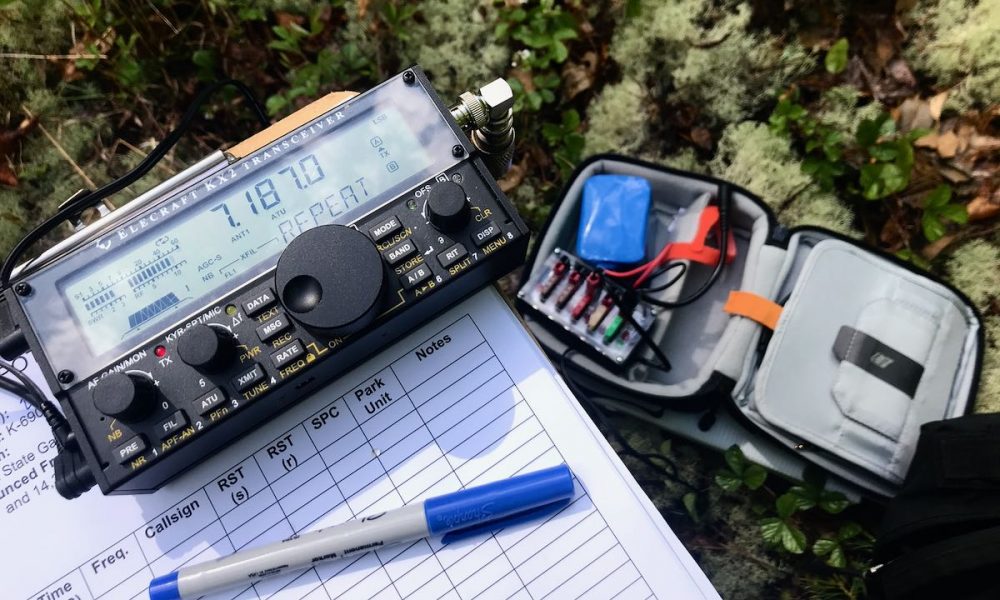
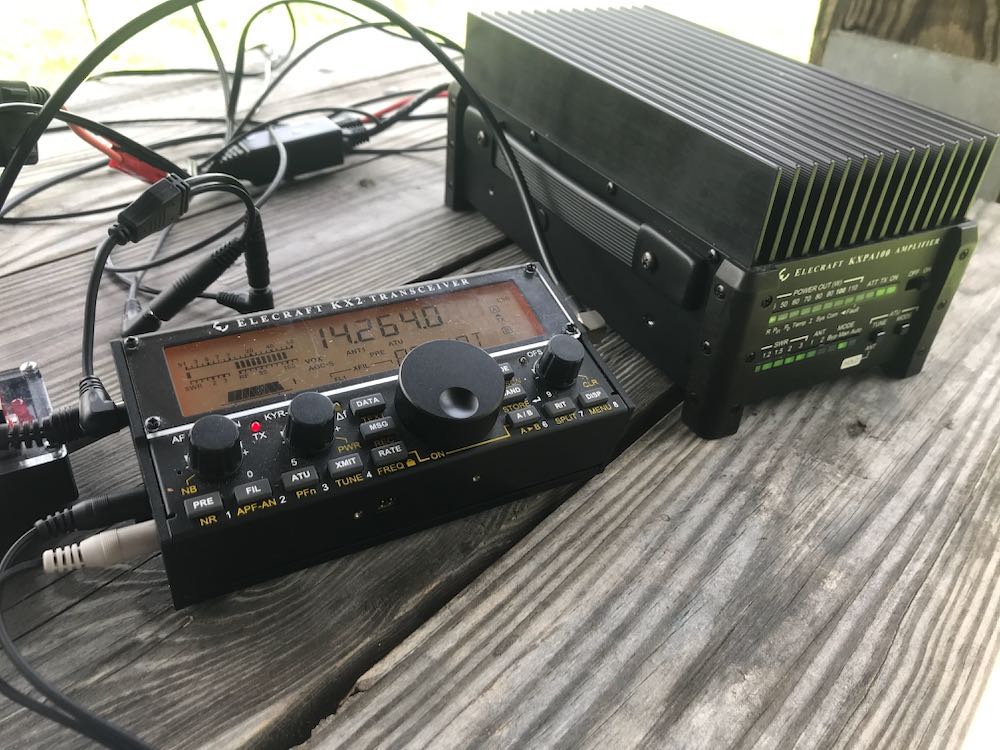
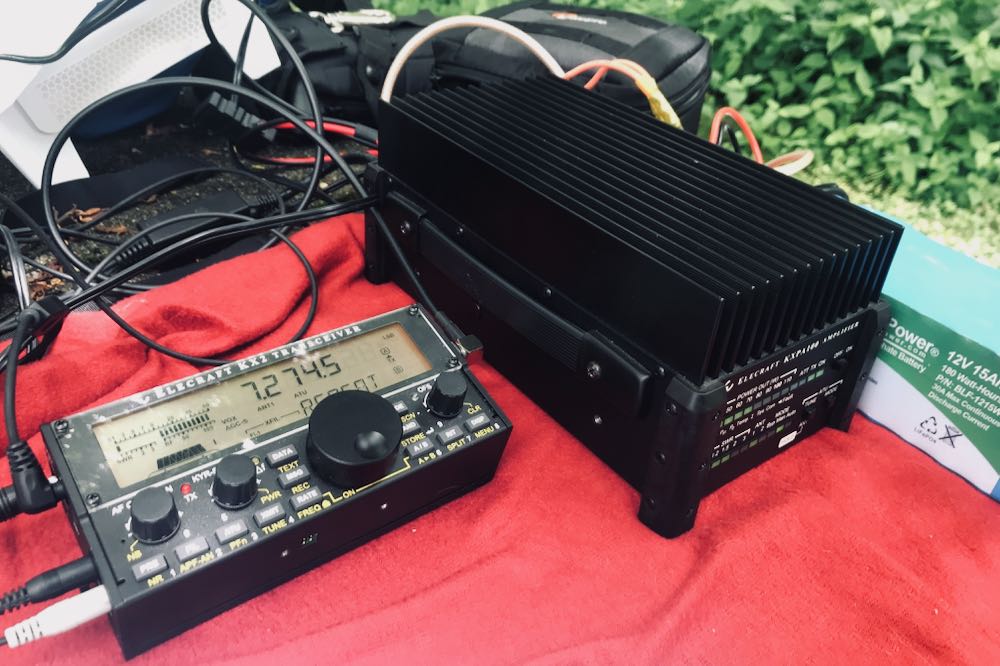
I plotted a few hours of Field Day time at Craggy Gardens on the Blue Ridge Parkway. The night before, I had my antennas and the Elecraft KX2, KXPA100, Heil Pro Headset, and 15 aH LiFePo battery (all packed in my go-packs, of course), in the car and ready to go.

Saturday morning.  I woke expecting fairly nice weather: partly cloudy with a chance of showers. Turned out, it was chilly, gusty, with total cloud cover and fairly constant rain. I’ll admit, it dampened my enthusiasm for Craggy, because while it’s a gorgeous site, it’s well above 5000′ ASL, thus the winds up there can be seriously gusty and the weather can turn on a dime.

So, I decided to put up my feet in the shack  and operate class 1E, meaning on emergency/battery power.

I started calling CQ at the start of Field Day and, to my surprise, worked a constant pile-up for nearly an hour. Within that fairly short space of time I found I’d already collected about 90 or more stations on 40 meters.

After that, I hunted and pounced for maybe an hour, then took a break; later that night, I operated intensively again for 30 minutes or so.  Had I been at a Field Day site, I would have been a much more dedicated operator, but frankly, I’m not even sure I plan to send in my logs. Still, it was fun.
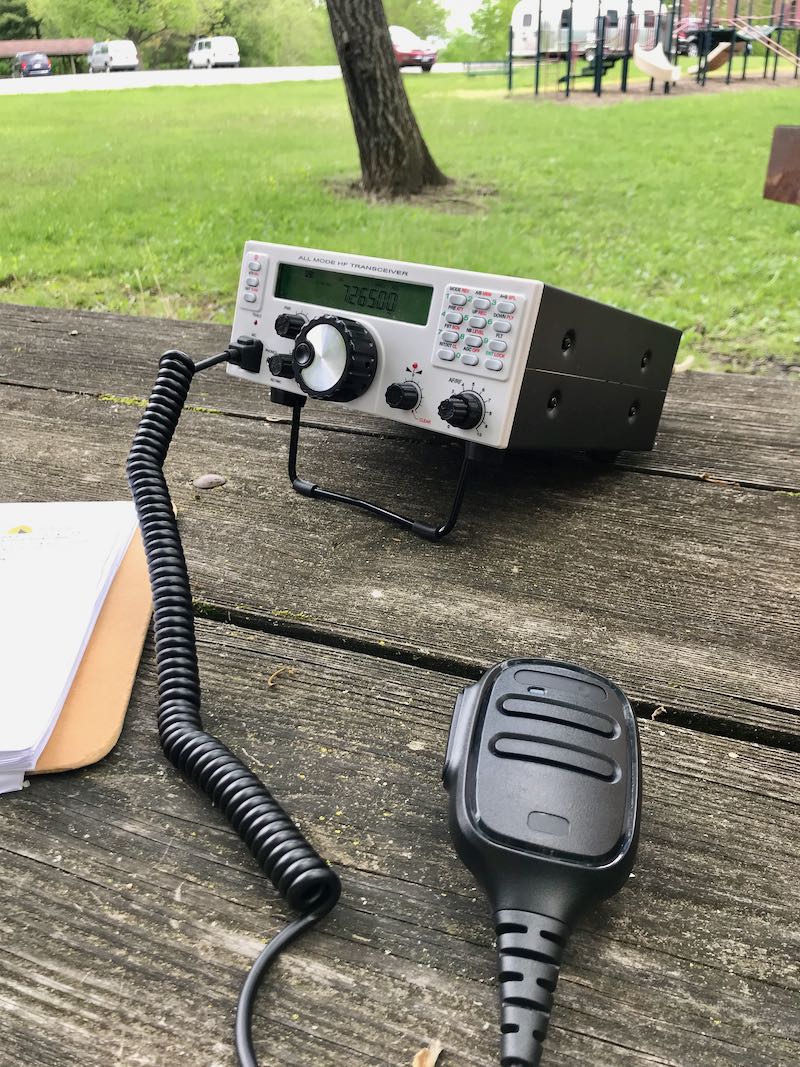
My set up on a damp picnic table at the Craggy Gardens Picnic area.

Sunday morning.  The weather was much more pleasant from the get-go, with sun and wind, though thunder showers were in the forecast. Around 11:00 or so, my wife suggested we pack up and head to Craggy Gardens for a little radio fun followed by some lunch and hiking.

We reached the site–it was beautiful, but ominous. Thick fog and Saharan dust (no kidding) covered the site and surrounding mountains.  Still, I set up the station and my new Wolf River Coils TIA portable vertical.
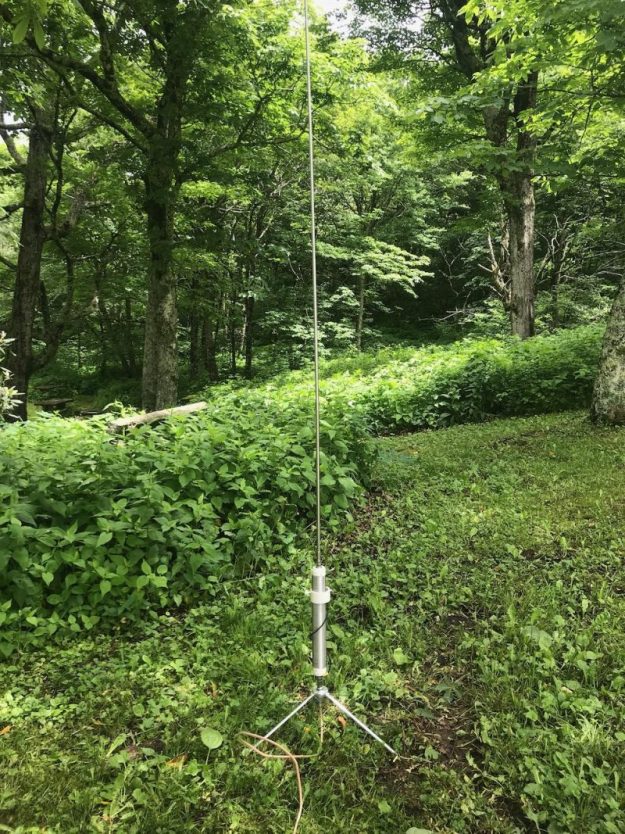
My daughter and I deployed the TIA vertical in a matter of 5 minutes.

I think I logged two stations before the misty clouds rolled up all around me; then (remember that change-on-a-dime weather?) a sudden––and torrential––downpour came from nowhere. My wife snagged all she could carry and ran for the car, and I quickly covered my gear with my raincoat and packed everything in my packs as soon as possible. I had to make two trips to the car to pack everything, and needless to say, with my raincoat in the service of my equipment, I was drenched to the skin. I literally looked like I had jumped into a lake with my clothes on.  Fortunately my gear––at least, the important gear––was only a bit damp, but internally fine. Herein lies one of the great things about being a pack geek: quality packs tend to be water-resistant, if not fully waterproof.

But. If I’m being completely honest, I’ll admit I was a bit miffed that I got so little radio time before the heavens opened. We knew there would be a risk of bad weather and, frankly, other than the hassle of packing and unpacking, we actually acknowledge the entertainment value of a little WX from time to time. After all, this is the hazard of operating under a wide open sky.

My wife, sensing my disappointment, suggested we go to another site to play a little radio, but at that point I just wasn’t feeling it. What I felt instead was the damp…wringing wet-level damp…and my spirits were dampened. too. I suggested we make our way back.

En route, I saw a sign for the Zebulon B. Vance Birthplace––a historic site that I knew was a POTA entity. I’d completely forgotten about this site, and decided to make a detour so I could scope out the site for a future activation. By now I’d warmed up a bit, and a bit of lunch helped revive my flagging spirits.

Turns out the site’s visitor’s center is closed on Sunday, but the gates are open so the public can enjoy the grounds. We drove up to their covered picnic area, although the cover was now peace of mind only, as the sun was again making an appearance. The setting was…well, ideal. And here I was. How could I not go ahead and activate this POTA site?

Zebulon B. Vance Birthplace (K-6856)

It was windy but warm, and while my wife spread out the packs, lunch cooler, and jackets to dry, I, too, found I was no longer dripping. By the time I set up the Wolf River Coils TIA vertical and my KX2/KXPA100, the togs were fairly dry, and indeed I was quite comfortable again. I hopped back on the air and worked a number of stations in short order, easily logging the ten needed to confirm the park activation.
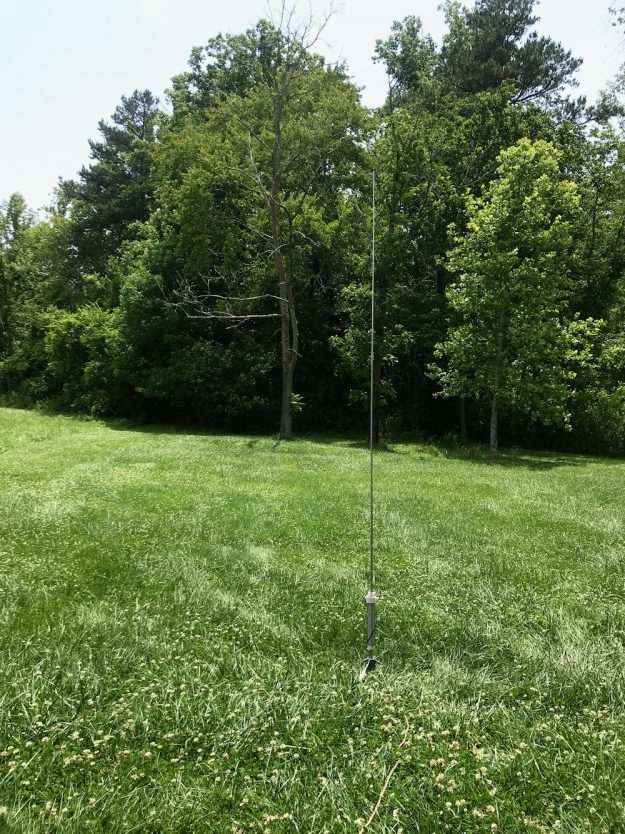
The Wolf River TIA is outstanding in its field (sorry!)

Later, I discovered that the site was an “All-Time New One” (ATNO) in the POTA system. A bittersweet discovery, in a way, because Field Day is not the best time for POTA hunters to log a new site. Still, I wasn’t even calling CQ with POTA in mind; I just worked Field Day stations and had a great time.
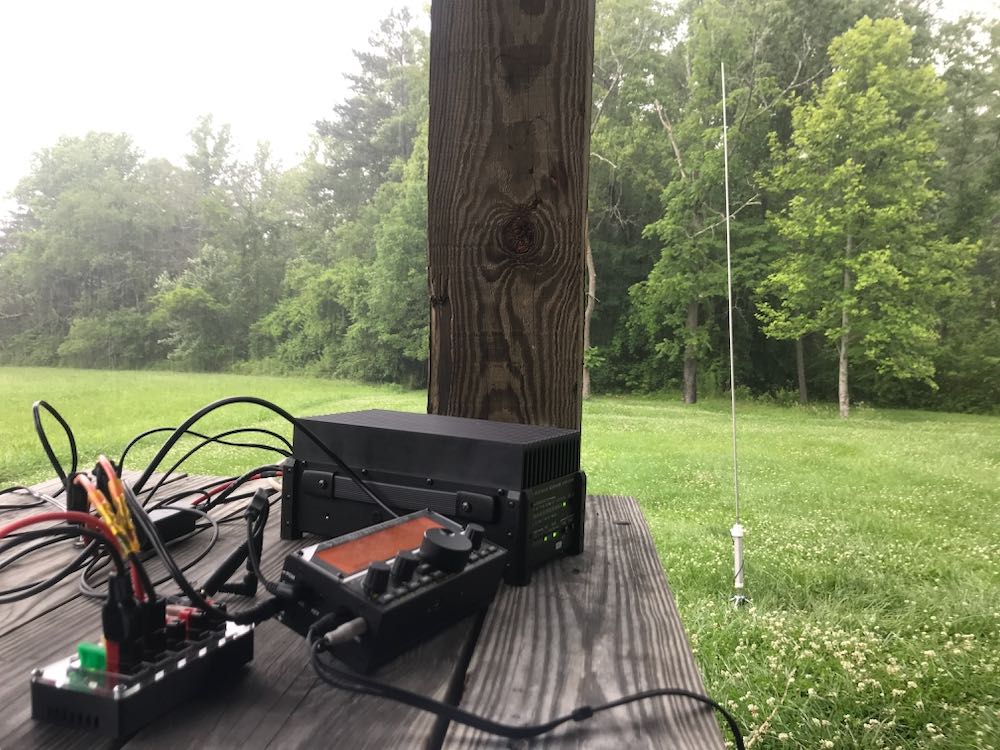
Just as I finished, there was yet another downpour, but as the picnic area where I’d set up was covered, I no longer feared my gear getting soaked. This time, it was a sudden loud clap of thunder that gave me my cue to pack up quickly!
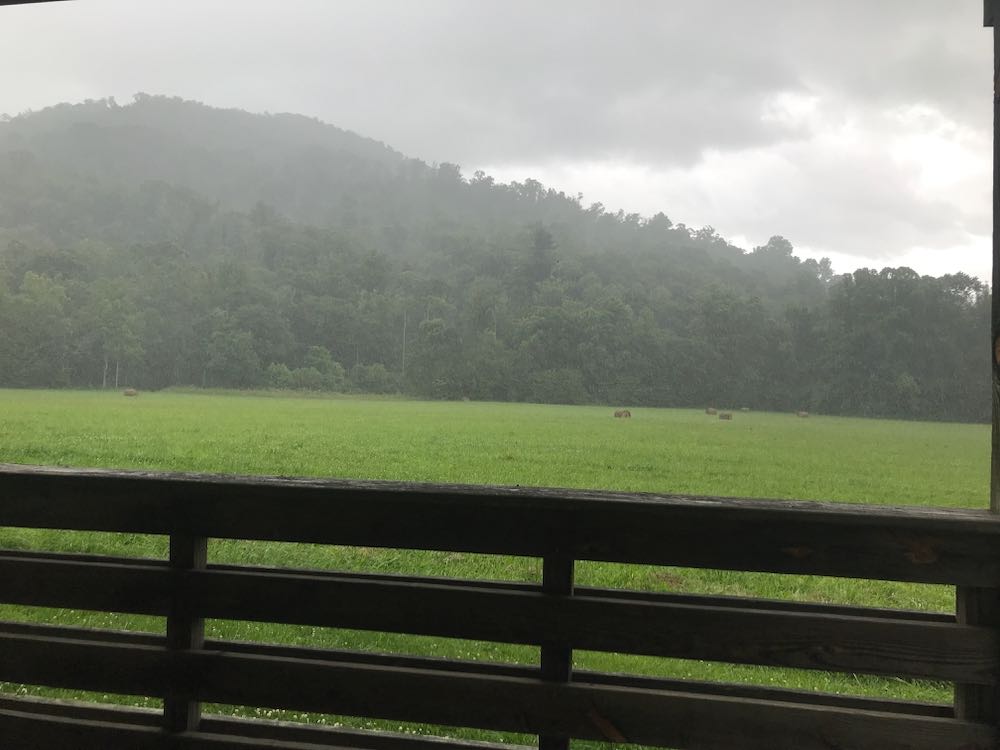
Still, all in all, I was very pleased with my weekend Field Day chase, and it was worth dodging rain storms for it. Sure, I would have loved to play radio at Craggy Gardens for a couple hours, but it was a pleasant surprise to fit in an ATNO activation before the end of the day. I’d have never guessed the Vance site was an ATNO, since it’s so accommodating and accessible. Indeed, I’ve discovered that, at this stage in POTA, most of the sites that haven’t been activated are either newly-incorporated into POTA or are very inaccessible. If you missed me there on Field Day, no worries: I plan to head out there again in the very near future.

Oh, and I did learn one more thing over the weekend: the Wolf River Coils TIA vertical antenna is incredibly easy and speedy to deploy. I’m very pleased with this recent acquisition!

Parkway and parks? I’ll be back soon. My radio’s already packed.

Did you participate in Field Day or put your receivers to the test by trying to log exchanges between stations?  Please comment!


Do you enjoy the SWLing Post?

Please consider supporting us via Patreon or our Coffee Fund!

Your support makes articles like this one possible. Thank you!

It’s Field Day 2020 weekend during a pandemic and I see it as an opportunity!

This weekend is the 2020 ARRL Field Day!  Typically, I’d be telling you about the benefits of finding a local club’s Field Day site and getting on the air for the first time. This year?  Not so much.

2020 being a pandemic year, many clubs that would normally host a large public event are asking that either their members operate Field Day on their own–as individuals–or if they do host a public site, to practice social distancing and adhere to all local/state/provincial guidelines.

The 2020 setup is certainly a departure from the Field Day norm.

An opportunity

Field Day, at its core, is all about practicing radio preparedness. The contest classes and scoring are designed to promote battery/generator/solar power and even low-power (QRP) operations.

Field Day tends to be a group event and it certainly gives clubs a chance to coordinate and build an impromptu station with multiple operators.

But in a real emergency–say, a natural disaster that disrupts local transportation–responsibility would truly fall on an individual operator to get on the air from home and coordinate communications.

Use this Field Day as an opportunity to build a radio go-kit, to set up a portable antenna, operate from battery or generator power, and to see just how well you, as an operator, can cope with crowded radio conditions.

If you’re an SWL, Field Day is a perfect time to see just how well your receiver can cope in an RF-dense environment. If you want a challenge, try to see how many QSOs/exchanges you can monitor and log from as many sections as possible.

My Field Day plans

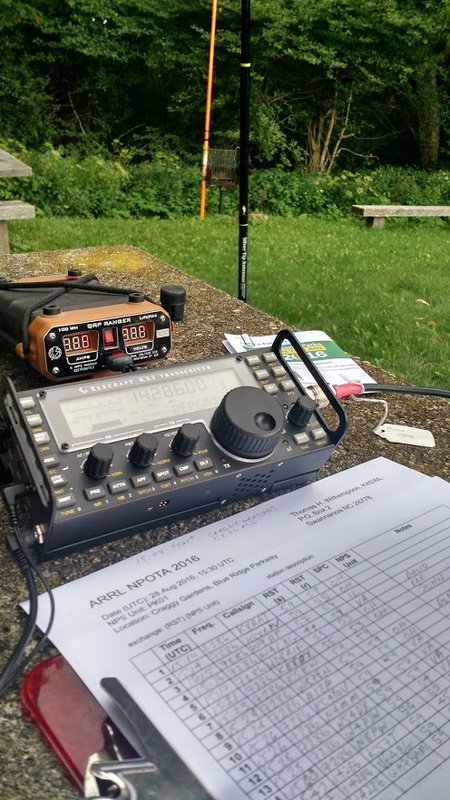
My trusty KX3 during one of my 90+ NPOTA activations.

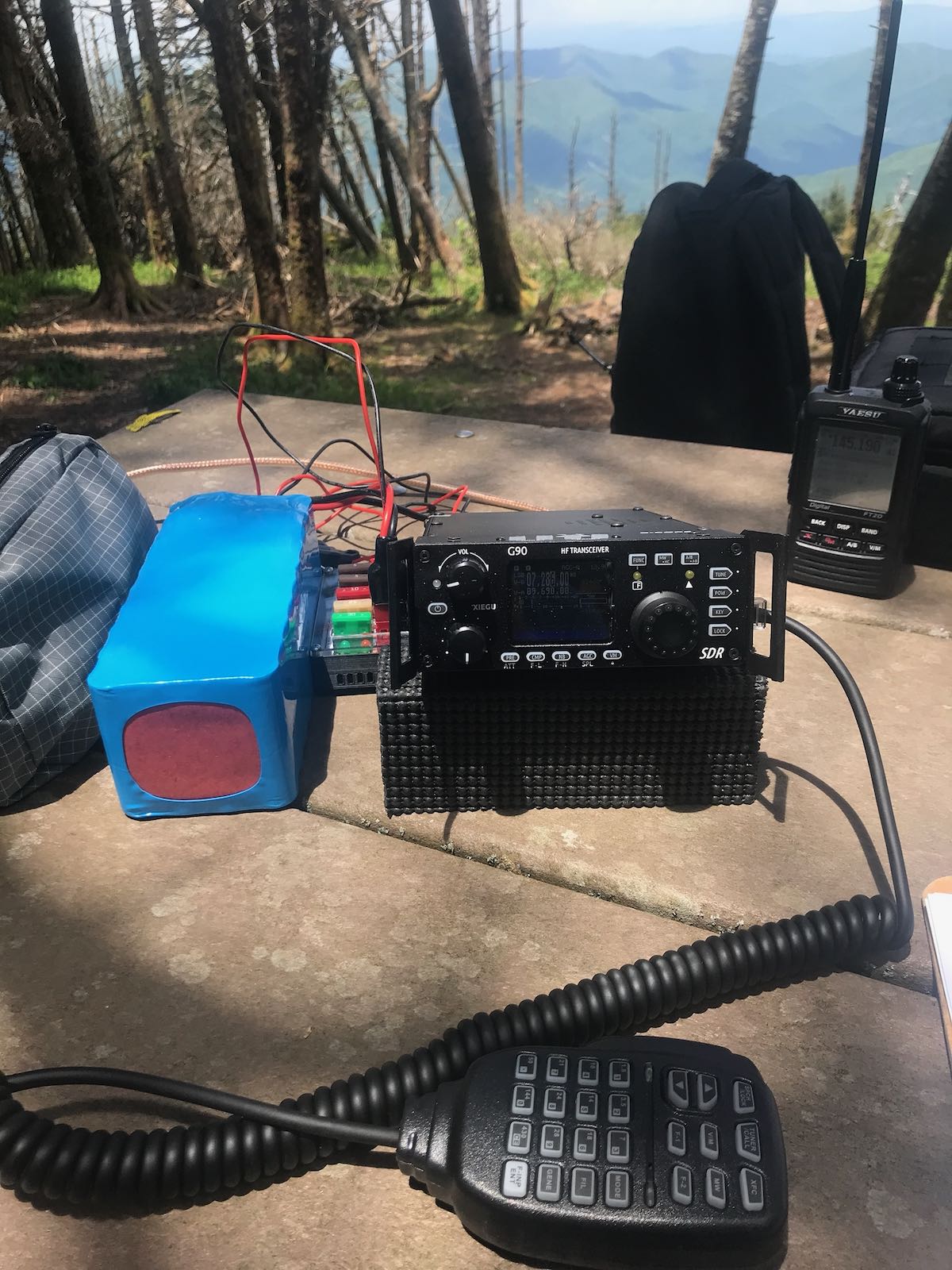
This year, I plan to operate Field Day from a local National Park. I’ll set up a couple hours in advance of Field Day and activate the site for Parks On The Air (POTA).  When Field Day starts, I’ll abandon my POTA exchange and simply work stations as a Field Day site. I hope to play radio for at least a few hours or until afternoon thunderstorms chase me away. I plan to use both my Elecraft KX3 and Xiegu G90.

Being a radio reviewer, I always use Field Day as an opportunity to see how well a transceiver can handle adjacent signals. This year, I’ll be putting the G90 through its paces!

What are your plans?

Do you plan to operate on Field Day? Please comment with any plans you may have!


Do you enjoy the SWLing Post?

Please consider supporting us via Patreon or our Coffee Fund!

Your support makes articles like this one possible. Thank you!

Radio Waves: Deep ABC Cuts, Ham Radio Saves a Life, SDR Academy Updates, and a new free e-magazine from RASA

Radio Waves:  Stories Making Waves in the World of Radio

Because I keep my ear to the waves, as well as receive many tips from others who do the same, I find myself privy to radio-related stories that might interest SWLing Post readers.  To that end: Welcome to the SWLing Post’s Radio Waves, a collection of links to interesting stories making waves in the world of radio. Enjoy!

Many thanks to SWLing Post contributors Michael Bird, Alexander von Obert, and the Southgate ARC for the following tips:


Up to 250 ABC jobs to go, ABC Life brand scrapped, flagship radio news bulletin dumped to tackle $84 million budget cut (ABC News)

The ABC will axe up to 250 jobs and cut programming as it deals with budget cuts of $84 million.

Managing director David Anderson said a flagship radio news bulletin would go, the ABC Life lifestyle portal would be rebranded, and programs would be reviewed as part of a major overhaul of the national broadcaster.

There will also be cuts to travel and to spending on television productions, as the organisation moves to become more relevant to more Australians and better reflect community diversity, he said.

Mr Anderson said the redundancies and savings would affect every division across the ABC.

“We anticipate we may farewell as many as 250 colleagues through this process,” he told staff in a briefing.

The News division is set to lose about 70 staff, the Entertainment and Specialist division 53 staff and the Regional and Local division 19.

Mr Anderson said there would be changes to executive staffing, but did not offer any details.

And he said the organisation would aim to have 75 per cent of its content-makers based outside its Sydney headquarters by 2025.

The ABC had already flagged that it would shed about 250 jobs due to a three-year funding indexation pause announced by the Federal Government in 2018.

Mr Anderson said the flagship 7:45am radio news bulletins would end, and be replaced by a five-minute bulletin at 8:00am. A 10-minute bulletin at 7:00am will remain.

The changes include:

  • ABC Life will become ABC Local and have a “broader editorial direction”
  • The travel budget will be cut by 25 per cent
  • Spending on external and independent television productions will be cut by $5 million a year
  • The ABC Comedy television channel will be rebranded to cater for a broader array of programs and content
  • Leasing of space at the ABC’s Sydney headquarters will be explored
  • TV and radio broadcast channels will remain, but transmission cuts have been flagged for future years[]

Ham Radio Saving A Life Locally! (Western Massachusetts ARRL)

On Tuesday, June 15, Alden Sumner Jones IV, KC1JWR, was hiking on the southern part of the Appalachian trail in Vermont (it’s also been reported as being on the Long Trail) with his cousins at around 12:30 PM. Alden started feeling light headed, his pulse was racing and the next thing he remembers is waking up with an EMT named Dave, from AMR out of Springfield, MA, who was hiking and saw Alden go down. Alden had suffered seizures. It was later determined that this was caused by low blood sugar. Dave attempted to call 911 on his cell phone. He could connect, but the 911 operator couldn’t understand him. At this point, Alden pulled out his HT ham radio, a BaoFeng.

He made contact through the K1FFK repeater. This repeater is located on Mt. Greylock on 146.91. The repeater is owned and maintained by the Northern Berkshire Amateur Radio Club. The initial call went out just before the Cycle 1 of the Western Massachusetts Traffic Net. Ron Wonderlick, AG1W, took the call. Alden initially asked if the 911 call went through. Ron began an eight hour process of acting as a relay between Alden, the emergency crews and various others.

The Traffic Net was truncated and the frequency was cleared by Peter Mattice, KD2JKV, who also stood by as a backup for Ron. KC1JPU, Matthew Sacco, was also monitoring and after a short consultation with Ron & Peter, proceeded to head to the staging area where the Fire and EMS crews were going to come from.[]

Software Defined Radio Academy 2020 Update (Markus Heller)

Dear ARRL recipients,

this year’s Software Defined Radio Academy is going to take place during the next weekend on June 27 / 28. We have now finalized the programme.

Since we decided very early in March that we’d organize an online strategy, we were not grounded by Corona. Using YouTube and our video conferencing system, we were able to organize a rich SDRA conference with speakers from all over the world.

Since this year’s European GNURadio Days conference in Besancon, France, could not take place either, we were asked to give their speakers a stage. This is the reason why we have a specially strong GNURadio focus.

With such a rich programme, we decided to span the talks over two days and start in the European afternoon, so that we could give our overseas audience a chance to participate live.

The mode is this: Even though all the talks are pre-recorded, the speakers will attend in the video conferencing system and respond to questions that come in through the YouTube channel. This way we can maintain a certain degree of interaction, which is important for any kind of scientific conference.

Here is the programme:
https://2020.sdra.io/pages/programme.html
and here is our YouTube stream URL:
https://youtube.sdra.io

We will start on Saturday 27 at 12:30 UTC+2
and on Sunday June 28 at 13:00 UTC+2.

For those of you who understand German, please note that this year’s HAMRADIO conference will also go online. We have worked hard in the past two months to record 65 hours of talks and discussions. Here is the HAMRADIO programme, which the SDRA is part of:

https://www.darc.de/fileadmin/filemounts/gs/oeffentlichskeitsarbeit/Veranstaltungen/HAMRADIOnline/HAMOnline_Sendeplan.pdf

QTC e-magazine (RASA via the Southgate ARC)

RASA is pleased to announce the release of a new E-magazine for Amateur Radio in Australia.  The magazine, QTC, named after the Q-code “I have a message for you” will be published every two months.

We’ll be renaming our regular email bulletins QTC-Lite and they’ll be aligned with the release of our fortnightly Podcast.

In this first issue of QTC, we have news and updates about regulations, and information on our 60m submission in response to the ACMA’s Consultation paper.  There’s a “Getting started” regular column, with this issue covering HF DX-ing.  There’s also a regular column on how you can deal with QRM and RFI in your shack.  This month we have a feature technical article on 3-Phase Power Converters.

Click here to download the first issue of QTC.


Do you enjoy the SWLing Post?

Please consider supporting us via Patreon or our Coffee Fund!

Your support makes articles like this one possible. Thank you!
Radio in the field: Two new POTA activations this weekend!

This past weekend my wife suggested that I do a Parks On The Air (POTA) activation. I think she wanted me out of the house so that she could prepare a birthday and Father’s day surprise with my daughters.

Of course, I happily obliged. My motto in French: “Profitez-en bien!” or “Make the most of it!”

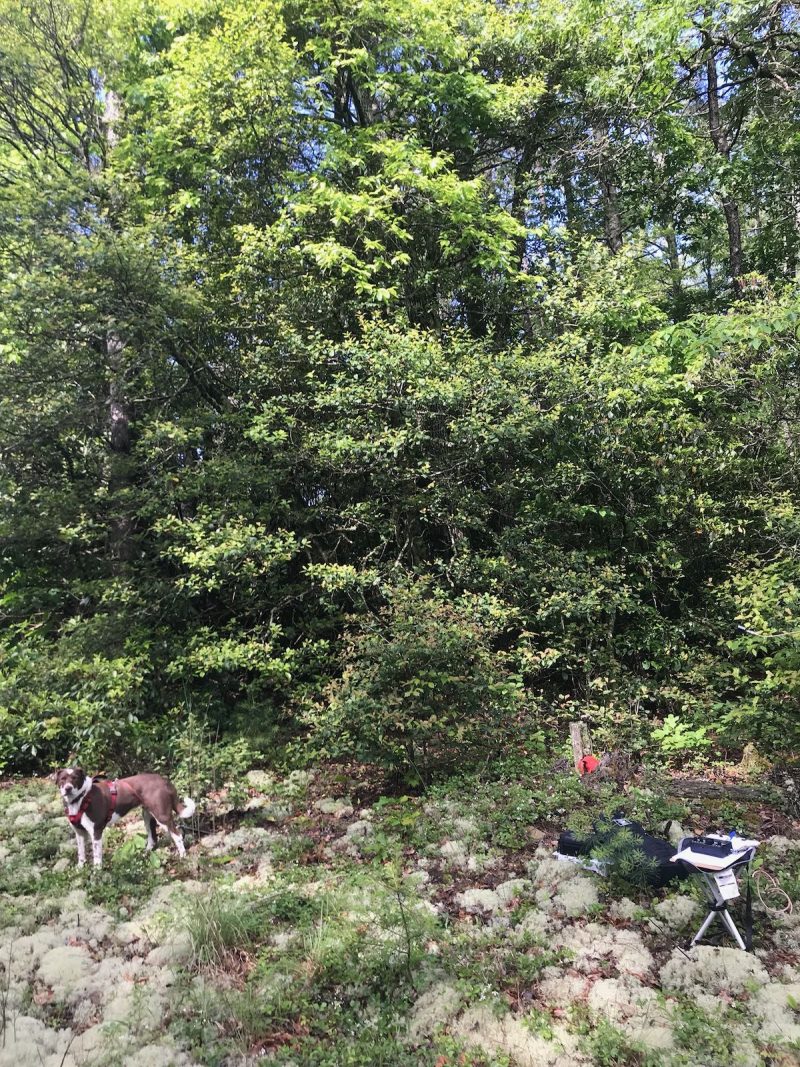
Hazel (our dog) made it crystal clear she wanted to join me as well. She’s a great hiking companion and also watches out for black bears while I operate in the forest!

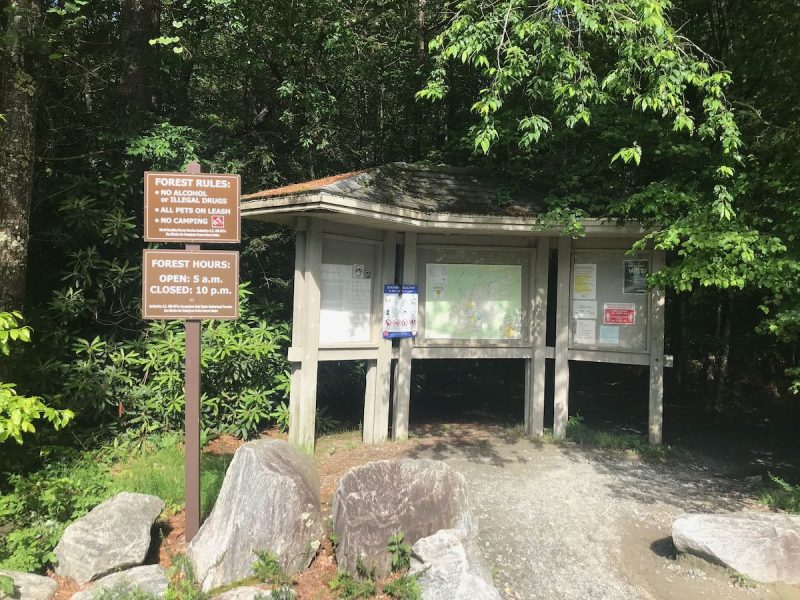
DuPont State Game Land (K-6902)

I decided to activate the DuPont State Game Land which was about a one hour drive from my house. Not only was it a new park for me, but it was also an ATNO (All-Time New One) for the POTA program.

I arrived onsite around 10:15 AM local and the parking lot for the forest trail heads was already packed.

It was a gorgeous day and this part of the DuPont Forest is well-known as a great mountain biking spot. I was very lucky to find a place to park.

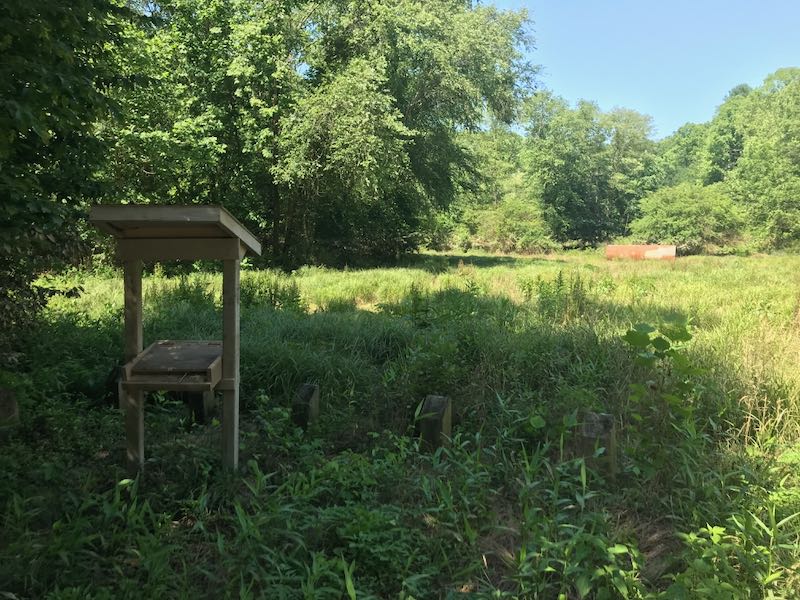
We’re still in full social distancing mode in North Carolina due to Covid-19, so I had no desire to be anywhere near other people. Hazel and I went off-trail and hiked in about 1/4 of a mile to a nice clearing.

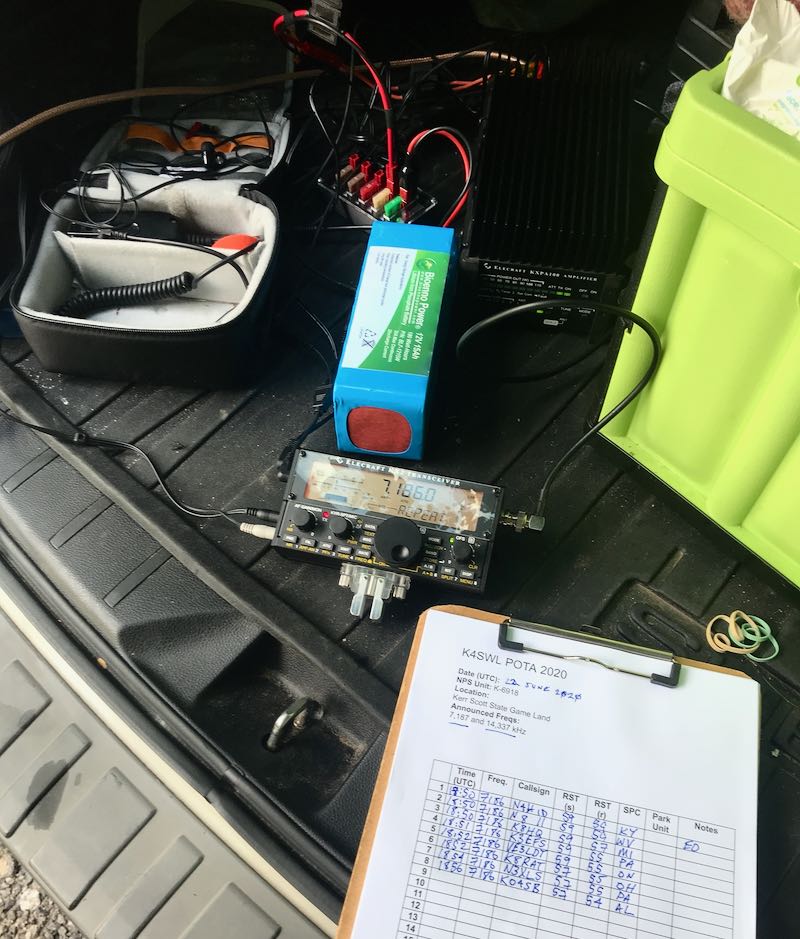
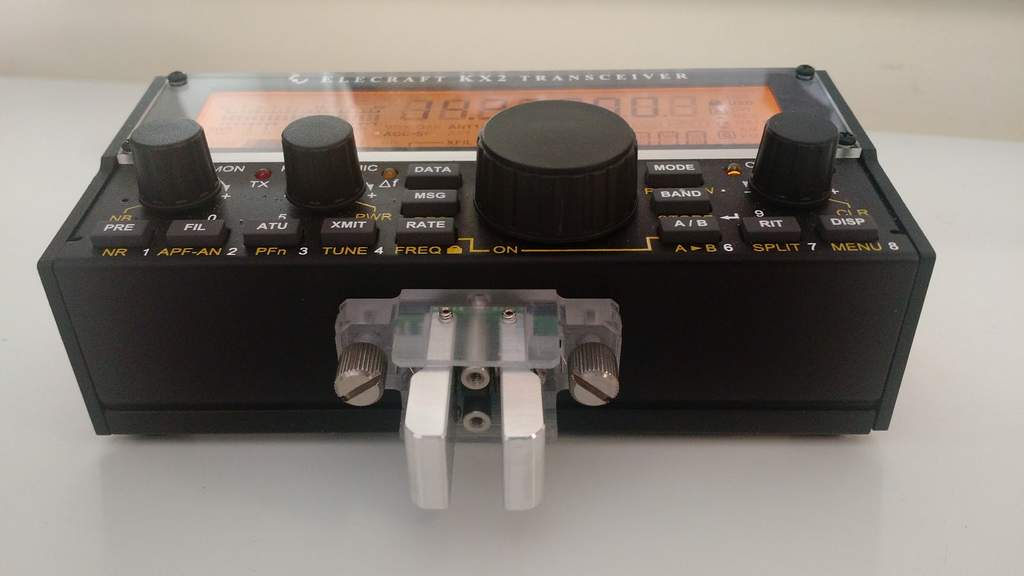
I set up the EFT Trail-Friendly end-fed antenna and operated with the Elecraft KX2.

I called for quite some time before I was spotted in the POTA system. After being spotted, I quickly racked up more than the required 10 contacts for the activation to be considered valid.

Although the weather was amazing and my antenna deployment was near-ideal, the bands were rough and unstable, so it was challenging.

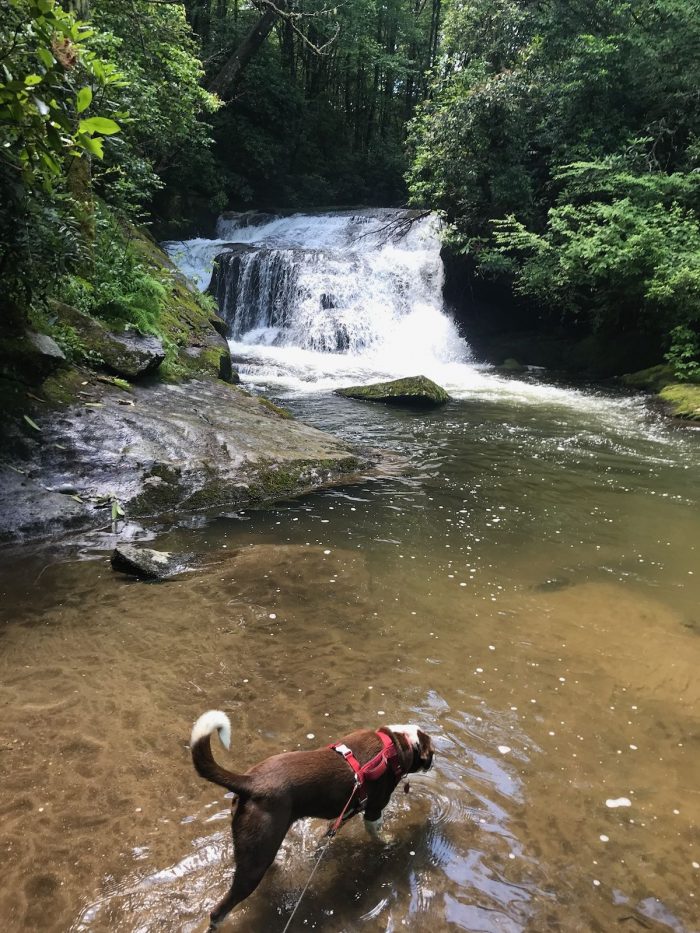
Hazel and I packed up, moved out, and made a detour to visit a waterfall near a site I hope to activate in the near future. Here’s a short video:

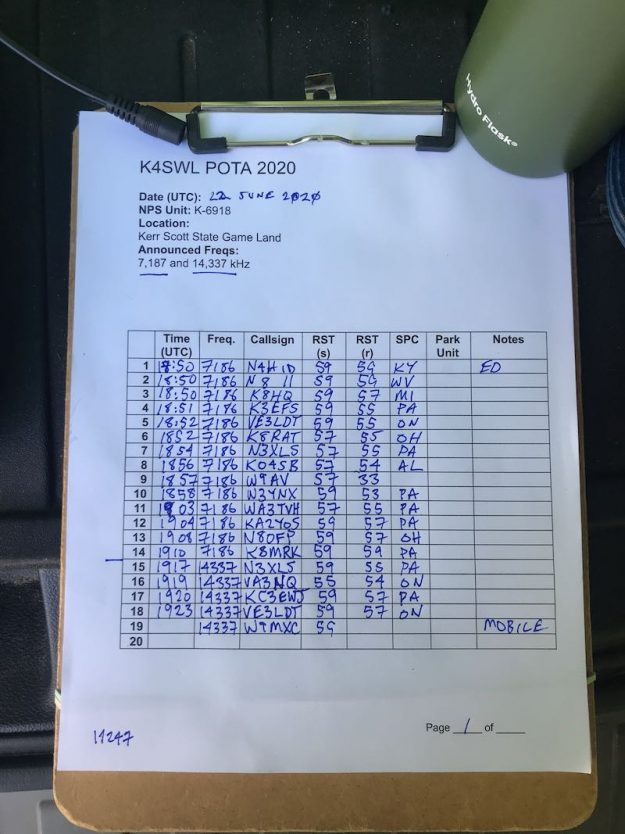
Kerr Scott State Game Land (K-6918)

Since Sunday, I’ve been visiting my hometown to help my parents with a few projects.

Yesterday, I had a four hour break in the day and decided to, of course, benefit from the beautiful weather and activate another new-to-me site. (Can you tell I’m addicted to POTA?)

I picked the Kerr Scott Game Land because it was “only” a 50 minute, rather scenic, drive.

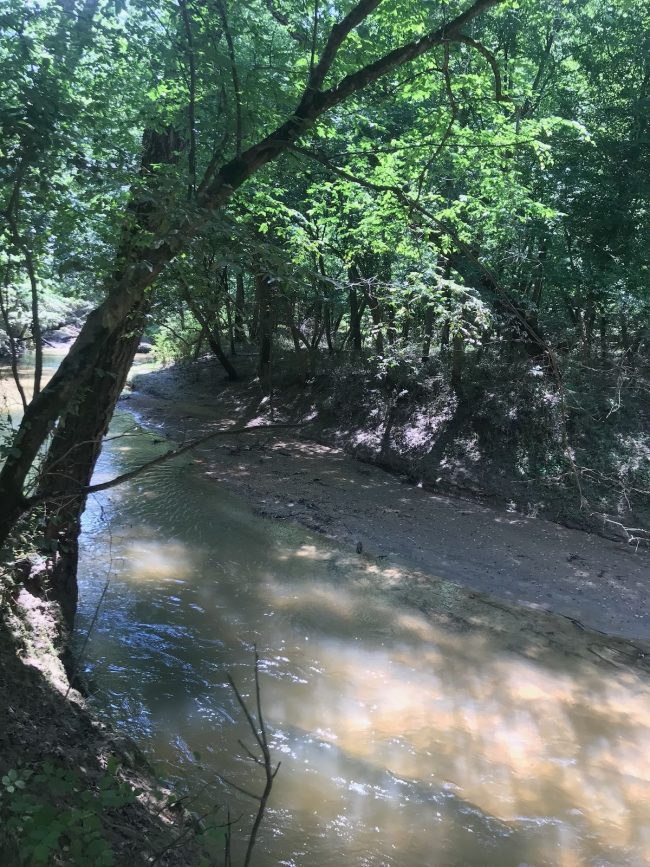
It was quite easy finding a spot to park.  Like most game lands, though, you must be prepared to go through off-road conditions. Part of the driveway into the site was incredibly muddy and definitely required at least all-wheel drive.

I set up my station in the shade and easily deployed the end-fed antenna once again.

Lesson learned

This activation of Kerr Scott Game Land taught me an invaluable lesson: if you don’t have a “spot” of your activation on the POTA site, it’s like you don’t exist.

The POTA spotting network (much like popular DX spotting networks and clusters) is simply amazing. As a POTA hunter, you open the spots page and you’ll see a list of all of the current operators, their park numbers, and frequencies where last heard.

As an activator, your number one priority when you find an available frequency and start calling CQ is to be spotted on the POTA network.

If I have good mobile phone coverage at my site, I self-spot on the network. Within a few seconds of the spot posting, I’ll typically have a pile-up of a few operators trying to reach me.

If I have cell phone service, but no data, I’ll text my good friend Mike (K8RAT) and ask him to spot me on the network.

Kerr Scott, like most game lands, however, had no mobile phone service whatsoever, so I had no way to self-spot. In fact, this particular site was a good 15 minute drive from the nearest cell phone signal.

I called CQ for 30 to 40 minutes on my announced frequency, at the announced time, but not one single op come back to me.

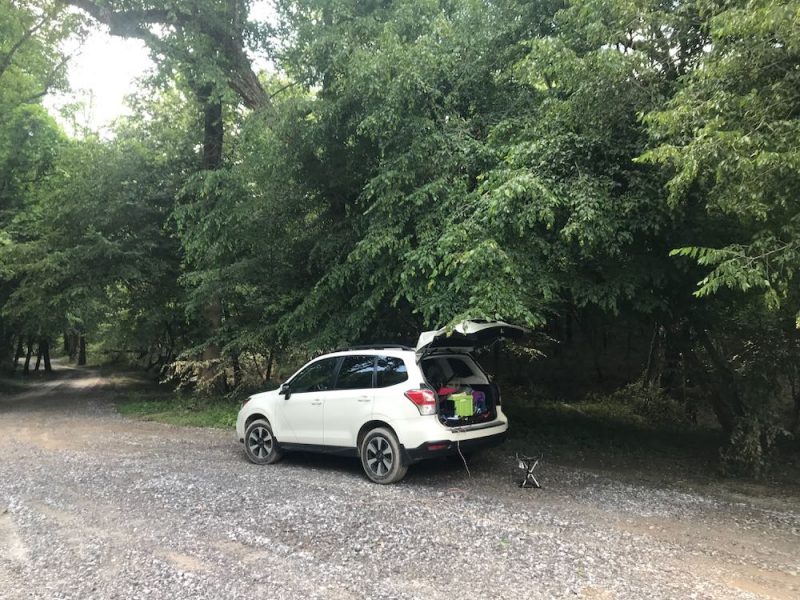
Since I had just driven 50 minutes to reach this site, there was no way I was going to give up so easily. I had already set up my station in the trunk/boot of my car, so I simply secured it, disconnected the antenna and tied it to a tree branch (so it wouldn’t be in the way), and drove 15 minutes to a spot where I could send a quick message to Mike.

When I got back to the Kerr Scott, I hooked up the antenna, made one call, and had a pile-up of five operators I worked in rapid succession. In fact, I had my required 10 contacts within 8 minutes.

I do wonder how some of the most adventurous POTA activators manage to post spots while in remote areas. It’s such a key component of having a successful activation, I wonder if they use a satellite phone or satellite messaging device to text a friend for help. (If you’re a POTA or SOTA activator, I’d welcome your comments here!)

At any rate, I was very pleased to hammer out an activation so effortlessly once I was spotted on the network.

The CW secret weapon

I should add here that CW activators have a secret weapon that’s incredible effective: the Reverse Beacon Network (RBN).

As a CW operator, the POTA spot system will read your callsign from the RBN as long as you have made an announcement on the POTA website in advance or have already been spotted to the POTA website. All you have to do is set up your station at the site and call CQ: the POTA system will auto-generate an accurate spot for you based on the frequency from the RBN.  It’s incredibly effective and more than enough reason for me to think I should start doing CW activations.

I can operate CW–in fact, I routinely make CW contacts in POTA and in other contests. However, I’m not quite brave enough to call CQ from a POTA site and work my way through even a modest pile-up.

I need to practice CW more, and I will!

This week, I also take delivery of my Wolf River Coils TIA antenna. I’m looking forward to having the TIA as an option when I need a self-supporting antenna that’s quick to deploy and can handle up to 100 watts when needed.

Post readers: Did you play radio in the field this weekend? I’d love your comments–especially if you simply took a receiver outdoors to enjoy some noise-free broadcast listening!


Do you enjoy the SWLing Post?

Please consider supporting us via Patreon or our Coffee Fund!

Your support makes articles like this one possible. Thank you!

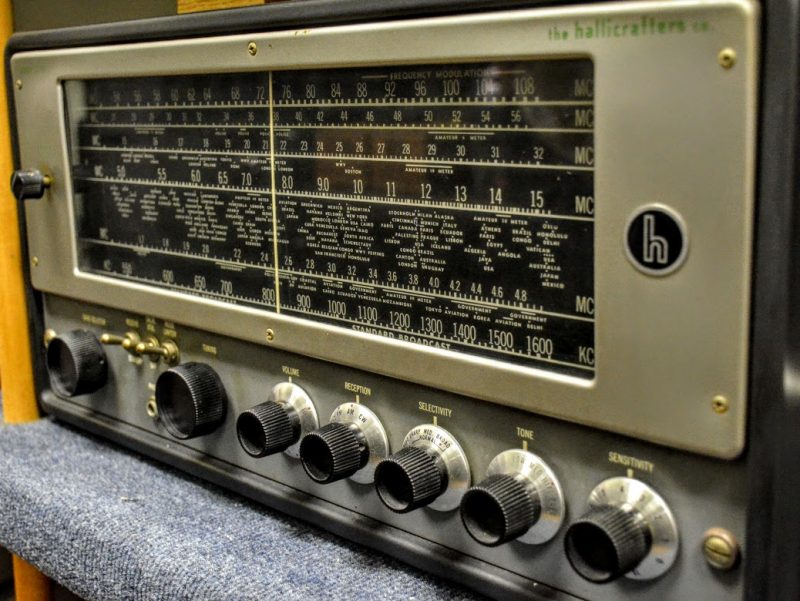
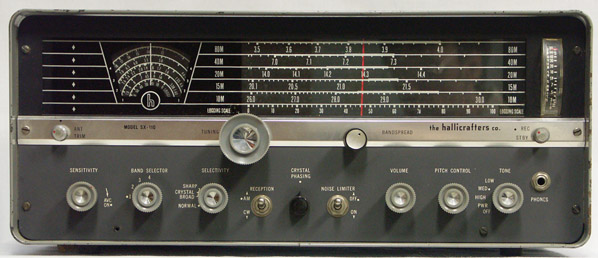
Listener Post: Mike Stutzer’s love of radio began with a Hallicrafters S-120

Photo: Universal Radio

Many thanks to SWLing Post contributor, Mike Stutzer, who recently shared the following listener post:

I started SWLing as a teenager. My favorite uncle gave me a Hallicrafters S-120.

My dad hung a longwire under an eave and through a casement window frame into my bedroom. I marveled at all the AM international stations broadcasting in English, listening to everything from BBC cricket coverage on Saturday morning to hysterically unbelievable Albanian political news coverage.

After college I could afford something better, so I upgraded to a “boat anchor” Hallicrafters SX 110. It had a useful crystal filter to improve selectivity, but it was still nigh on impossible to decipher a Ham on SSB.

Photo: Universal Radio

Many decades later I bought a house on a steep foothill. Realizing that it was a perfect QTH for a Ham station, I got licensed and now am President of the local ARC. Here is a loving look at the original SWL receiver that got me hooked.

Prof. Mike

Boulder, CO

Thank you for sharing this, Mike!

Mike’s radio story is the latest in our multi-year series called Listener Posts, where I place all of your personal radio histories. Feel free to submit your own by contacting me.

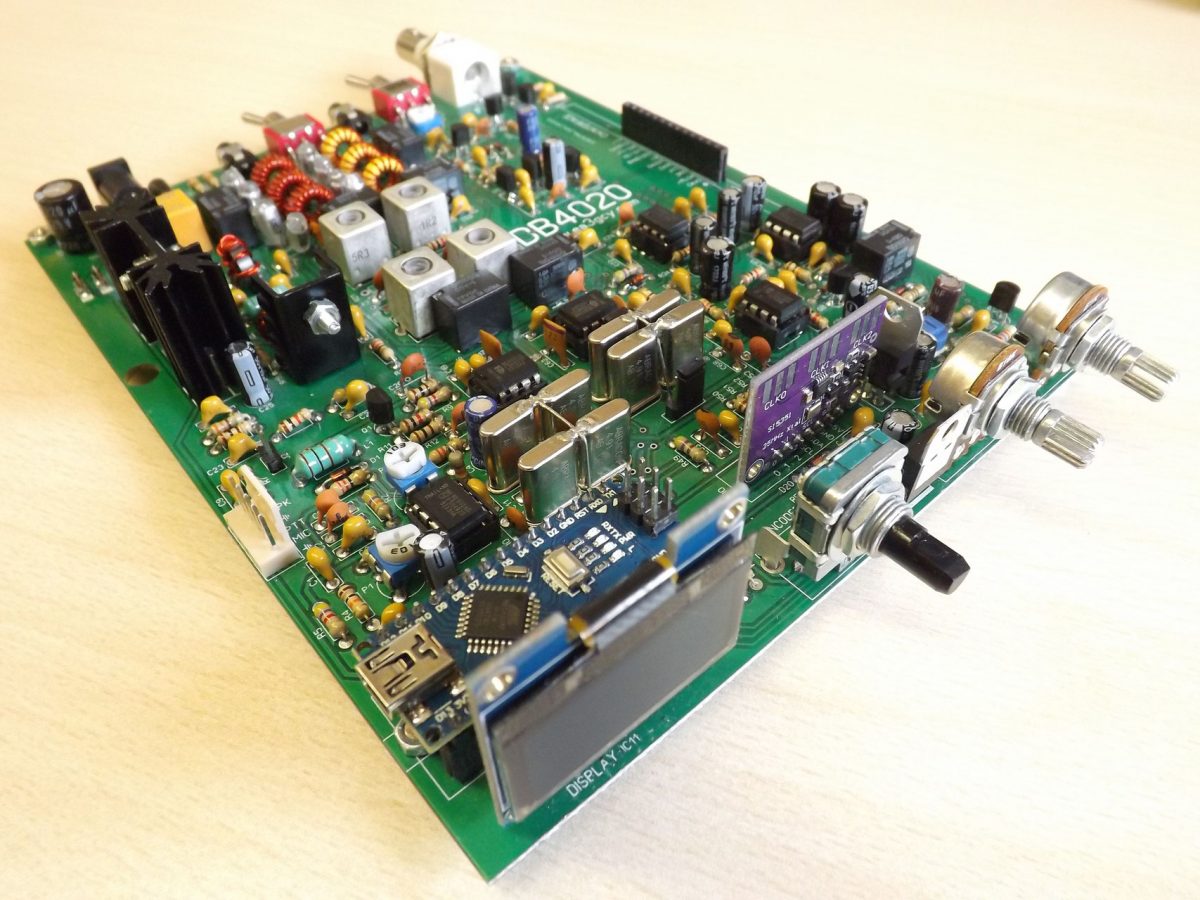
Building the EA3GCY DB4020 Dual-band 40 and 20M QRP SSB Transceiver Kit (Part 1)

Many thanks to SWLing Post contributor, Frank (ON6UU), who shares the following guest post:


Building EA3GCY’s DB4020 QRP Transceiver kit

by Frank Lagaet (ON6UU)

In May, I discovered via a newsletter that a new kit was available from Javier EA3GCY in Spain.  I was immediately sold as this was a kit from my favourite kit producer and it has 2 bands–it will also be able to do CW and there also will be a CW filter.

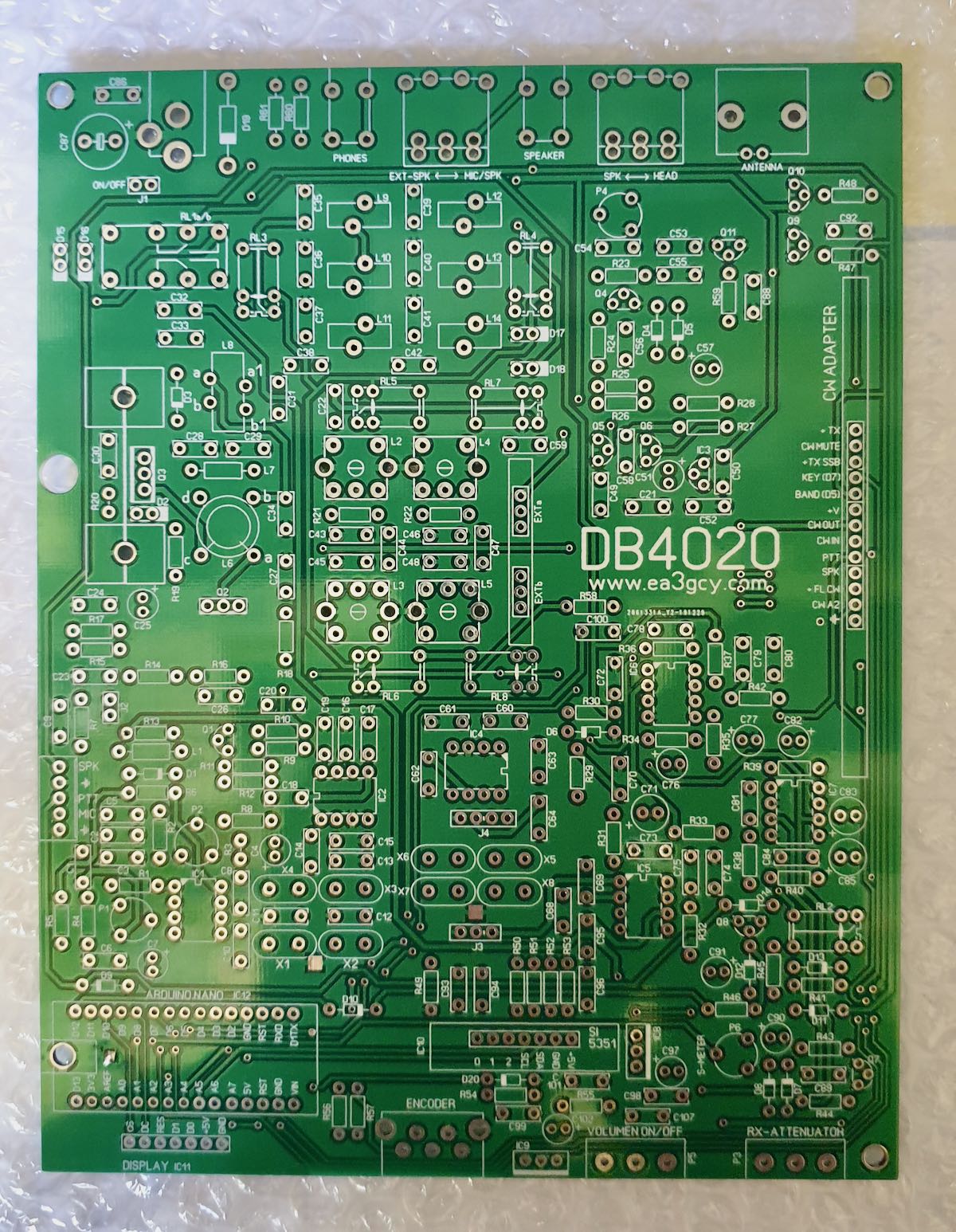
After building 2 MFT’s from Javier which work without problems, I needed to have the DB4020.  The MFT’s are for 20 and 40 mtrs and do DSB (double side band).  I did put them in a not-so-graceful box but they do what they are intended for which is QRP phone (SSB).   They came together without problems so I expected the same for the DB4020–I knew for sure when I saw the board:  all through-hole components (except for some capacitors which are factory soldered) and a lot of space on the board.   The board has been silk-screened with clear indications on where all components have to come and the manual has very clear instructions where each component has to be soldered with referral to a quadrant.  The manual provides a 252 quadrant page so it is a piece of cake to find where each piece goes.

What do you get?

Javier provides you with all components which need to be installed on the board and, of course, the kit board.  The components come in small marked plastic bags and all is well-wrapped up in bubble wrap.  The board is wrapped separately and that is put together with the component wrap which is then again wrapped up in bubble plastic.  All goes into an envelope.  Very well packed I must say.

Here’s a picture of the bags with components:

The silk-screened board:

I started with the resistors since that’s the easiest way. After that, I did the capacitors.  I like to solder in all flat components first, so next were the diodes and IC sockets followed by the elco’s.  The transistors were next together with all relays.  As you solder in the transistors one also has to mount the cooling heatsinks,  these cooling sinks are high and are ideal to protect the coils one has to make,  they also protect the polystyrene caps (which I always find vulnerable) when the board is upside down.

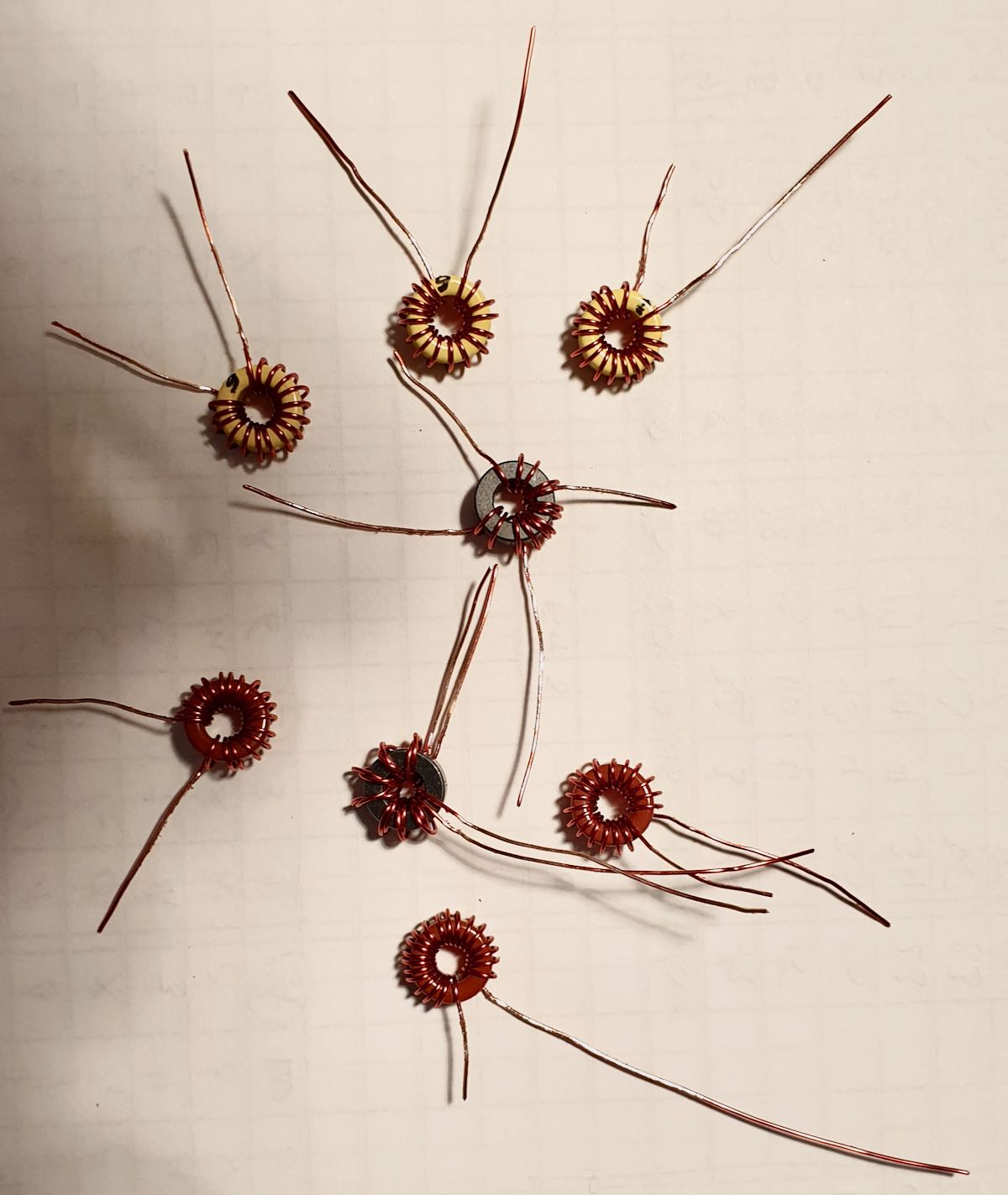
Many kit builders are afraid of winding the toroids in kits–don’t be!  It is easy.  Just take your time and follow the instructions given by Javier in the construction manual.  In this kit the builder has to wind 8 toroids:  6 are a single wire which goes through the toroid body,  1 is a toroid with 2 different windings, and 1 has a twisted pair which goes through the final toroid.  Be sure to measure the wire you need per toroid as instructed in the manual.  Javier gives some spare, so you can be sure.  You will also see that on next picture where the legs of the toroids have not been trimmed yet.  Once done I still had some centimetres of wire leftover.

Picture of the toroids ready to be soldered in:

Finally all other parts and pin headers went in,  jumpers were immediately put on where needed.

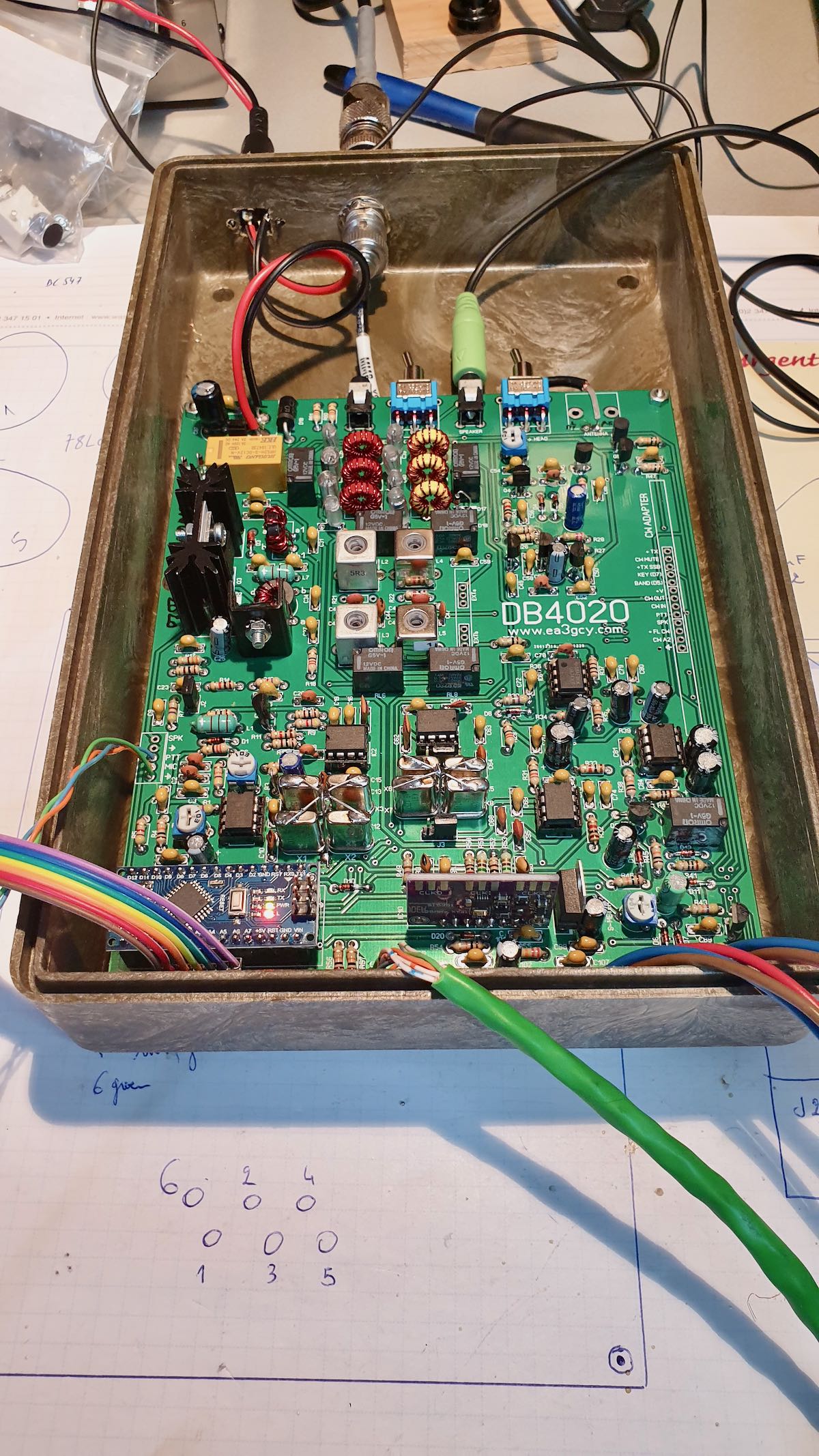
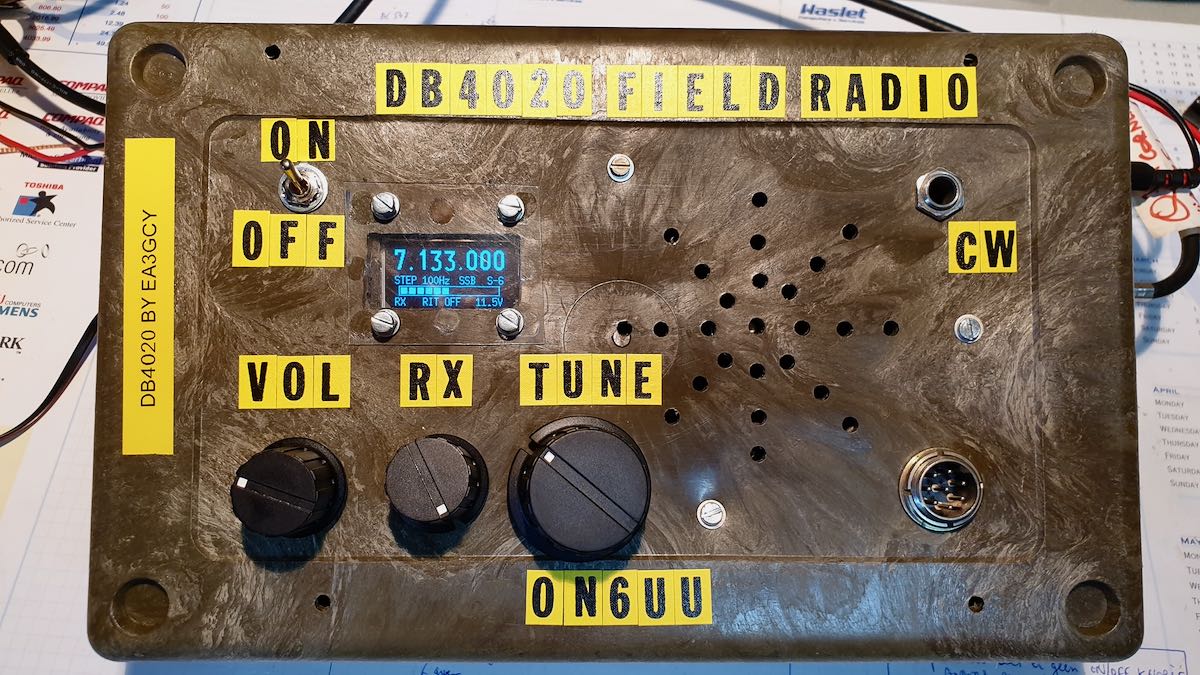
As I’m using a military-grade plastic box, I have to break-out some components like the display,  tuning encoder,  volume and rx control from the board.  I also have put an on/off switch on the box and already have the CW KEY connector ready installed. I also installed a loudspeaker in the box.  The SI5351 board and the Ardiuno Nano are the final components which go into the board after installing all wires.

Picture of the board:

I intend to attach a CW paddle to the box made out of a relay.  A HWEF tuner (from EA3GCY) which I was planning to incorporate in the box is I think a bit overkill. That HWEF tuner is already in a nice little box and would be a pity to dismantle,  also I’m running out of space in the box…  Maybe I can fit in a 9-1unun which would then give me good results on both bands…?

Maybe I will install a battery pack in the same box.

The box with board installed:

The box completed front side:

Mind you,  it still needs some additional switches for the CW part of the transceiver.

73
Frank (ON6UU)

Video


Brilliant, Frank! I really appreciate the video as well–sounds like the kit produces smooth audio and should serve you well. No doubt, that military box enclosure will survive even the roughest field conditions!

Click here to check out the DB4020 kit at EA3GCY’s store.