Shortwave listening and everything radio including reviews, broadcasting, ham radio, field operation, DXing, maker kits, travel, emergency gear, events, and more
When the Moon’s shadow glides across the U.S. on August 21st, you’ll have have a chance to hear the eclipse as it happens.
Solar eclipses are more than remarkable visual astronomical phenomena; they’re pretty interesting from a radio viewpoint too. Should overcast skies prevail over your location on eclipse day, you can still make some interesting observations using an AM radio.
Dramatic changes can take place in radio reception when day changes into night and vice versa. Perhaps you’ve had the experience of driving in your car at night, listening to some program on the AM dial, when the announcer will identify the station as WBBM in Chicago. This might seem odd if you are listening from Albany, New York, more than 700 miles (1,100 km) from the Windy City. Yet, cases like this happen every night.
A total solar eclipse produces a broad, round area of darkness and greatly reduced sunlight that travels across Earth’s surface in a relatively narrow path during the daytime. Its effect on sunlight’s local intensity is remarkably similar to what happens at sunrise and sunset. Distant radio stations along and near to the path of totality might briefly experience enhanced propagation, thus making long-distance reception possible during a solar eclipse unlike any other time.
I’ll be volunteering at the Pisgah Astronomical Research Institute (PARI) for the eclipse–they are in the path of totality. I also plan to do a spectrum recording of both the mediumwave and 31 meter band during the event.
Do any other SWLing Post readers have eclipse plans?
I thought I would pass along this article from Radio World concerning the connection between Amateur Radio and Broadcast professionals. (And please, no flames for not being strictly SWLing related!)
Here a taste of the article, while the full piece may be found here:
Many people who work in broadcast radio got their start as amateur radio operators — hams — and remain active in the hobby.
At iHeartMedia alone, “we have 157 people on our ham radio list,” said Charles Wooten, director of engineering and IT at iHeartMedia Panama City, Fla. An amateur radio operator himself since the age of 12 (call sign NF4A), Wooten maintains that list. “Ninety percent of them are engineers, but we also have DJs, program directors and operations directors.” At least four of the company’s regional engineering VPs are hams.The fact that so many of iHeart’s hams are engineers makes sense. Many of the skills that a ham learns to get on air are the same needed by a technical broadcast professional.
Many thanks to SWLing Post contributor, James Townley, who shares the following guest post originally posted on his Shortwave/Medium Wave blog:
540 kHz to 1700 kHz Loop Antenna (Click to enlarge)
AM Broadcast Loop Antenna
by James Townley
Several years ago, I became interested in medium wave DXing. One of my limitations was the size of my yard, so I developed an interest in tuned loop antennas to compensate, because setting up a beverage antenna was out of the question. I experimented with different sizes of loops, and found that the bigger the aperture, the more gain the loop would have. The tuned loop antenna is also very directional, which allows you to reject, or null out interference from either noise or other stations. Loops are considered bi-directional in that they receive to the front and back, but not to the sides. The tuned loop antenna quickly became my weapon of choice for medium wave DXing.
Recently when the weather began allowing me to enjoy the outdoors, I decided to make another smaller loop antenna from a plastic milk crate I had lying around. I saw the idea on the internet when I observed that someone had used a milk crate for their loop. Click here to see a variety of tuned loop antennas that others have made. Whichever material you decide to make your loop antenna from, just make sure that it is not a conductive material. Wood, plastic, and cardboard seem to be popular materials for loop making. In the photo above, I am using my Sony ICF-2010 to listen to WCCO on 830 kHz. This station is nearly 200 miles south of me, but I am able to receive it with 9 LEDs lit on my signal strength meter while using the loop. There is no direct connection of the loop to the radio, it is inductively coupling with the radio’s own ferrite rod antenna.
If you are interested in making a loop antenna like mine, here are the materials you will need:
120 ft of 18ga insulated wire (I bought a 100 ft spool of cheap speaker wire and pulled the 2 conductors apart):
1 – Plastic milk crate
1 – 15 to 365 pF air variable capacitor (found in many old radios, or a google search to buy one from an internet store)
1 – Tuning knob. Any knob will do as long as it fits the shaft on the variable capacitor.
1 – Tape or wire ties. I used tape to secure the wire while winding, then hot glue when finished.
When you begin to wind your coil, use tape or a wire tie to secure the wire, and leave about a foot of wire. This extra foot of wire will later be soldered to the frame on the capacitor. As you wind your coil, pull the wire snugly and with each turn leave about a quarter inch spacing between each turn. The spacing isn’t critical as long as the spacing is consistent. I wound 21 turns on my crate. This may differ for you, depending on the size of your crate, or the value of you capacitor. If you find that the bottom frequency isn’t low enough, you can add more wire to make a few more turns. This will lower the bottom frequency for you.
After winding the coil, you can solder each end of the coil to your capacitor. The beginning of the loop gets soldered to the frame of the capacitor, and the other end of the coil to the rotor solder lug on the side of the capacitor. If you do not have a soldering iron, you can use alligator clips to connect your loop coil to the capacitor as well. I secured my capacitor to the inside corner of the crate with hot glue. I put a generous amount of the hot glue onto the bottom of the capacitor frame, and held it to the crate until the glue cooled enough for the capacitor to stay on it’s own. I used enough to get the job done, but not so much that it interfered with the plates in my capacitor. The hot glue seemed to adhere very well. I then checked the spacing of my coil turns, and secured them with the hot glue as well.
I was very impressed with the results after spending some time with the loop. It’s small enough to maneuver around easily, but big enough to give it some gain, so I can listen to daytime DX. I may make another tuned loop using two crates to see how much more gain I get with the larger aperture.
Happy DXing,
James Townley
Many thanks, James, for sharing your project with us! This loop appears to be relatively simple and accessible even to those with little knowledge of soldering or homebrewing. I’m now wondering how a loop made of four milk crates might perform!
Many thanks to SWLing Post contributor, Gary DeBock, who shares the following notes and recordings from an Ultralight DXpedition in Kona, Hawaii:
April 2017 Kona, Hawaii Ultralight DXpedition
The first long-range test of a “Frequent Flyer” FSL Antenna
By Gary DeBock, Puyallup, WA, USA April 2017
Introduction
Ever since the U.K.’s Graham Maynard published his innovative article about the “Ferrite Sleeve” antenna in early 2011 an enthusiastic group of DXers and tinkerers has continually refined and upgraded the design, with most of them going in the pursuit of maximum possible gain. Monster FSL models were designed with weights of up to 38 pounds (17 kg), and considering the size, weight and subversive appearance of the typical model, the general assumption was that this new type of antenna was highly unsuitable for air travel, since it would send airport security personnel into a serious panic.
This situation continued for a full 6 years, during which the FSL antenna became a star performer in the related new niche of ocean cliff transoceanic DXing. But was there another possible application for the antenna’s compact performance advantage? What if a very lightweight, high-performing model could be designed which would not only provide a huge boost in DXing gain, but fit inside a hand-carry suitcase, and routinely pass airport security screening inspections around the world? This was a tough design challenge, but well worth the effort if successful!
Since the new antenna would need the maximum possible performance for its small, lightweight size, the use of the Russian surplus 100mm x 20mm x 3mm ferrite bars was mandatory. Every possible effort would be used to make the antenna as compact and lightweight as possible, although the choice of the highest-sensitivity 1162/46 Litz wire was critical for best performance. The PVC frame would be shrunk down to the smallest practical size. Finally, in a major experimental effort here over the winter season, the first of the new 5 inch (127mm) “Frequent Flyer” FSL’s became a reality. The finished antenna had a very non-subversive appearance, and could fit inside a custom-sized plastic tote within a hand-carry suitcase. Most importantly, it could still deliver a serious amount of inductive coupling gain– roughly similar to that provided by a 4 foot (1.22m) air core box loop, but with the advantage of somewhat lower noise reception.
Because the Russian surplus 100mm x 20mm x 3mm ferrite bars are extremely scarce (without any current supply source) only five of these original “Frequent Flyer” models would be made, although alternative models using the commonly available 140mm x 8mm ferrite rods were also designed. These antennas would be somewhat heavier and larger, but these “Baby FSL” ferrite rod models could be easily assembled from parts available on eBay, fit inside the hand-carry suitcases, and still deliver a lot of DXing performance (while routinely passing airport security screening). Finally, an economic model using the commonly available 62mm x 12mm x 4mm Russian surplus ferrite bars was also designed. This lightweight FSL can be constructed for around $65 US, and can still provide a serious DXing gain boost to a stock Ultralight radio. For want of better terms, these three classes of “Frequent Flyer” FSL antennas are called the “first class,” the “business class” and “coach class” models, with FSL sensitivity scores (ferrite length x coil diameter) of 585, 490 and 300 respectively.
From April 9-12 a Mini-DXpedition was conducted on a 6th floor oceanfront room at the Royal Kona Resort Motel in Kona, Hawaii. This was the first of many long-range DXing trips based upon the performance boost provided by the compact new antenna– which was specifically designed to easily pass through airport TSA security checkpoints. A 5 inch (127mm) “Frequent Flyer” FSL antenna was packed inside a matched-size plastic tote within a hand-carry suitcase, and breezed through TSA security screening in both the Seattle and Kona airports (without even a single question ever being asked). This was one of the “first class” Frequent Flyer models described previously, and was used to boost DX station gain on a 7.5″ loopstick C.Crane “Skywave” Ultralight radio. This combination was effective enough to track down many exotic Pacific Island stations (540, 621, 1440, etc.) at S9 levels during transmitter-site sunset skip propagation into Kona, as well as Asian TP-DX of varying strength around local sunrise.
This Kona trip was primarily designed as an anniversary celebration with my wife, so before we took off I had (somewhat reluctantly) agreed that DXing would have a secondary priority to sightseeing over the four days. Because of this there were many frequencies that could not be investigated in Kona, but I knew very well which Pacific island stations were tough challenges in both North America and Japan, and I was determined to go after them with a vengeance. 540, 621 and 1440 would all receive serious attention in Kona– not because they were great challenges in Hawaii, but because most DXers in both North America and Japan needed all possible information about them if they were to have any chance of reception at all. Besides this I was eager to try my long-range luck chasing exotic Asians around local sunrise with the innovative FSL antenna, but I knew that east-west propagation was almost totally dependent upon solar activity– and as it turned out both the A and K indexes shot up after our arrival.
Overall the Kona MW propagation to the Pacific islands was exceptional around local midnight (as expected), but the sunrise propagation was somewhat challenging for long range Asians. Perhaps the biggest success of this entire trip was the interest and excitement that the “Frequent Flyer” FSL antenna series (the major experimental project here this past winter) has inspired among DXers who routinely travel to foreign countries and other faraway venues. As I write this Craig Barnes of Wheat Ridge, Colorado is conducting his own 5 inch “Frequent Flyer” FSL- based DXpedition to Hawaii. Good luck, Craig!
Recordings
[Note: a selection of audio files have been embedded in the post below, but all audio is available to download and stream via the links provided.]
531 6DL? Dalwallinu, Australia Presumably the one with the same-sounding announcer and program as the one on 630-4QN at the time (at 1547 on 4-9; see MP3 for 630-4QN), but it didn’t seem to be exactly parallel (maybe a time zone delay?)
https://app.box.com/s/7bg1hruxrufccuys5axc4yzumexr3q36
540 2AP Apia, Western Samoa This station features a lot of Samoan music (with both male and female announcers), and dominates the frequency in Kona at night as long as it transmits. Unfortunately it doesn’t follow the listed PAL sign off time of 1000, but runs past this time routinely, which made it tough to track down an exact sign off time during my limited sessions. My guess is that it signs off sometime between 1030 and 1100. The following MP3 is of S9+ level Samoan Christian worship music at 0931 on 4-9. This overwhelming signal was one of the most awesome recorded during the entire DXpedition:
558 Radio Fiji One Suva, Fiji Somewhat of an underperformer considering its South Pacific location and (nominal) 10 kW power level. My guess is that the station has some transmitter and/ or antenna issues. Here is some fair level male speech with island music at 1001 on 4-9, which was the strongest signal it managed during the entire trip
558 UnID-TP Once again, this weak signal sounded a lot like the 630-4QN program at the time (1548 on 4-11), so my guess is that 6WA in Wagin, Australia is the most likely possibility
603 HLSA Namyang, S. Korea One of the common Asians which ran the gauntlet of dicey solar activity. It was fairly good at 1521 on 4-12, but was MIA during a couple of days
621 3RN Melbourne, Australia This LR network station would start to fade in just when Radio Tuvalu was about to sign off (around 1000), although it never provided any serious competition for the exotic station. This MP3 was made just after Tuvalu’s sign off at 1006 on 4-9
621 Radio Tuvalu Funafuti, Tuvalu A very tough station to track down on the mainland, but certainly a “piece of cake” in Kona. Routinely has sign off at 1003 UTC, preceded by island choral music and the national anthem (sung by the same choral group). Around 0950 a female announcer begins the routine by giving a monolog news broadcast about 5 minutes long, typically followed by an island music song right before the fixed 5-minute sign off routine. The latter two features are included in the following 8 minute recording (at near S9 strength) made at 0955 on April 10
The usual female announcer with her 5 minute news broadcast at near S9 strength at 0955 prior to the sign off routine on April 11. The lady giving the correct pronunciation for “Tuvalu” is at the 11 second point
630 4QN Townsville, Australia This 50 kW station was far and away the strongest Australian signal heard throughout the trip. Unfortunately it wasn’t in the same time zone as fellow LR network stations on 531 and 558 in Western Australia, making parallel checks seem dubious. Here is a typical signal at 1543 on 4-9
657 Pyongyang BS Pyongyang, N. Korea This bizarre station was far and away the strongest Asian heard during the trip– almost like it was a South Pacific semi-local. When solar activity cooled off it could blast in with serious power, such as at 1555 on 4-9
693 UnID-TP This mystery signal showed up at 1604 on 4-9, after NHK2 (JOAB) sign off. Obviously there is male speech and some kind of backup music at various times, but I’m totally unfamiliar with stations on this frequency (except for JOAB). Any hints or suggestions? This station only showed up on 4-9; rising solar activity brought in only 690-Honolulu splatter on the other three days
1035 Newstalk ZB Wellington, NZ Received late in sunrise enhancement at 1611 on 4-12, this was a rather modest signal from the Kiwi big gun, which never seemed to get anywhere close to its Oregon cliff strength during the entire trip
1098 V7AB Radio Marshalls Majuro, Marshall Islands One of the regular Pacific island stations received in Kona, and one of the best bets for Mainland reception. The frequency has very little QRM, although Newstalk ZB could be weakly received in between the island music songs after around 0900.
Strong island music at 0955 on 4-9 (its best performance during the trip)
1098 Newstalk ZB Christchurch, NZ Heard only once in between island songs on V7AB (at 0957 on 4-9); and never really strong enough to compete for the frequency with Radio Marshalls
1440 Radio Kiribati Bairiki, Kiribati Because of its domestic frequency this obscure station is another of the toughest Pacific island stations (and countries) to receive on the Mainland, but some very helpful identity clues were discovered in Kona (where the station is a breeze to hear). The station routinely signs off at 0936 UTC each evening, with a very loud 1000 Hz audio tone right before it cuts power. The sign off routine includes station ID’s in both the local language and English around 0932 prior to the choral music national anthem, although because of her heavy accent the fact that the female announcer is talking in English might well go unnoticed. The full sign off routine is included in the following MP3, preceded by an Island music number (during which a 1440 Spanish pest attempts a run on the frequency, only to be immediately drowned out)
The American country music format can be heard prior to the 4-bong time signal.
Prior to the sign off routine this station also uses its female announcer to give a final news update (like 621-Tuvalu). This recording is of such a news update at 0925 on 4-11, with several mentions made of the American president
1566 HLAZ Jeju, S. Korea Fairly regular with its Chinese Christian service around 1530 each morning in Kona, but never at very great strength (possibly due to unfavorable solar activity). Here at 1609 on 4-9 it is the music station playing the Chinese version of “I Would Rather Have Jesus,” in a mix with the (presumed) Mainland Chinese Yanbian Jammer
1566 Yanbian, China (Presumed location, Jammer) Because of Chinese inflection this is the apparent co-channel of HLAZ in the same recording at 1609 on 4-9; it was also received at 1600 on 4-10 with Chinese 5+1 time pips (thanks to Chris Kadlec for his assessment)
“Arctic Radio Club in Sweden celebrates the 2017 Convention in Jönköping, Sweden May 6 & 7th. Our radiostation ( the radiovan above) will be on the air with many different type of programs, mostly in Swedish. The transmitter will have a power of 250 W (ERP) on 1593 kHz and the antenna is located on a high hill near lake Vättern. In the evening of May 5th we will start tests. There will be station identifications in English, too.
The official start will be May 6th at 1900 UTC and the programs will be running until 1100 UTC on Sunday noon
On the 7th there will be a program dedicated to the local SR P4 Radio Jönköping that celebrates its 40th year of broadcasting. this year. This program starts at 1000 UTC and will be in Swedish. Until the station signs off at 1100 UTC.
Reception reports are appreciated and a special QSL-card is issued, if you enclose return postage in your letter. Reception reports by e-mail will be answered by an e-QSL. Address: Ronny Forslund, Arctic Radio 1593, Vita Huset, SE-17995 Svartsjö, SWEDEN. E-mail: info(AT)rock.x.se”
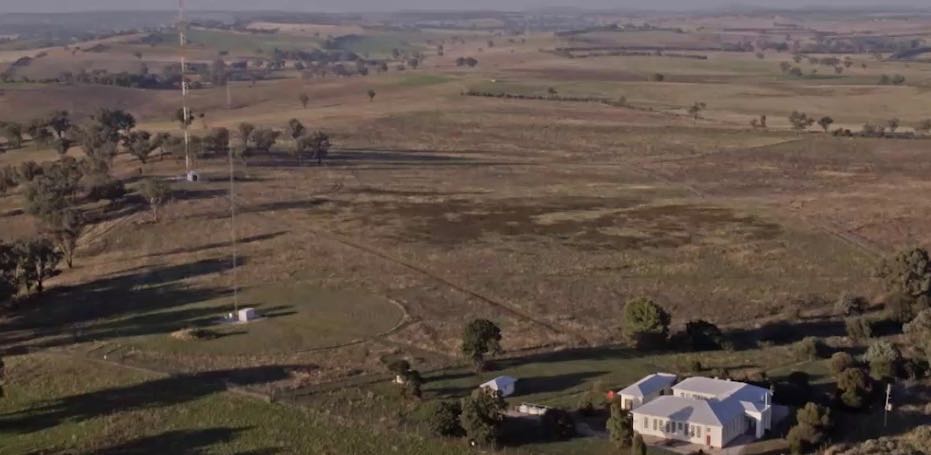
Many thanks to SWLing Post contributor, Dave Porter (G4OYX), who shares a link to this excellent video tour of the ABC Central West radio transmitter in Cumnock, NSW, Australia.
Many thanks to SWLing Post contributor, Eric McFadden (WD8RIF), who writes with the following question:
A request for assistance.
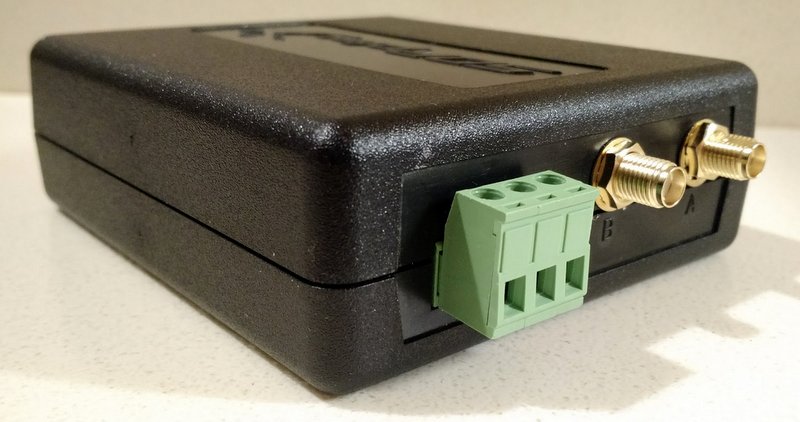
After comparing the reception of the RSP2 and 1/2 doublet to the reception of the County Comm GP-5 SSB and its little external ferrite-bar, I’ve decided I probably want to make some sort of directional antenna to use on AMBC with the RSP2. A wire loop, perhaps, or some sort of ferrite-bar thing, that connects to the RSP2’s Hi-Z input.
[Perhaps SWLing Post readers can suggest] options and then I can get the needed bits at the 2017 Hamvention.
Post readers: if you can offer Eric suggestions, or point him to antenna plans, please comment! I do believe he would rather build an antenna than simply buy one and he’s looking to permanently mount this antenna outdoors.
Please support this website by adding us to your whitelist in your ad blocker. Ads are what helps us bring you premium content! Thank you!