Category Archives: Mediumwave

Greek mediumwave station on-track to resume operation

Many thanks to our friends at The Greek Radio who share this news:

The medium wave broadcasting center of the Greek Radio in Pachi Megara is likely to go live again after three and a half years, since the procedures for the necessary maintenance and repairs have recently been initiated, with a high possibility that one of the two transmitters will operate again soon. It is worth noting that the broadcasting center, which used to host two powerful mediumwave transmitters (the ones of multilingual “Filia” and of EPA Sport) had been subject to looting by burglars, few days after the ERT closure by the Samaras government, which left the premises unattended. Since then, it has not operated again.

Repairs and maintenance

As revealed by official announcements, ERT is launching a tender for the maintenance of the building and electricity poles with a budget of EUR 18,703, while in December they proceeded with a maintenance of the broadcast center and a cleaning of the 100 KW mediumwave transmitter. In November, a dummy load was installed by a team of the ERT subdivision of structural and electromechanical projects and they checked the generator Nautel, which ensures the continuation of the broadcast in case of power outage. They also installed a new grounding network in the main building of the transmitters.

Alongside, there were other smaller operations required for the safe operation of the facilities, such as the placement of fire extinguishers by a private firm, the restoration of the water supply, the maintenance of fence lighting. In October there was also a visit by a private security company, in response to a tender, whereas data were collected for the water insulation and the lighting of the buildings where the transmitters are placed.
Continue reading at The Greek Radio website…

Video: Gary DeBock’s “Baby FSL” antenna

Many thanks to SWLing Post contributor, Gary DeBock (N7EKX), who shares this video and notes the following on YouTube:

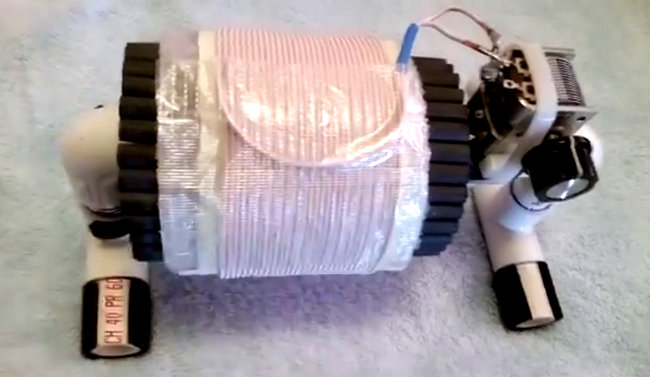
This is the new 3.5 inch (89mm) “Baby FSL” antenna, designed to provide a powerful DXing gain boost for Ultralight radios (or any other portables) despite its very small size. It has 32 Russian surplus 140mm x 8mm ferrite rods and 31 turns of 1162/46 Litz wire. In the demonstration video it provides a daytime DX gain boost for 750-KXTG (Tigard, Oregon, 50 kW at 160 miles) from inaudible up to about S7 on the Eton Traveler III Ultralight radio.

Click here to view on YouTube.

Gary is certainly a first-rate DXer and an ambassador of our radio hobby. Gary shows us here that, with a little ingenuity, we can take a $50 radio and turn it into something exceptional! Homebrewing at its best.  Thank you, Gary!

Also, I had never considered that a high-gain FSL antenna would require very precise placement of the receiver for proper inductive coupling. It makes sense, though. This loop is tuned for razor-sharp precision!

Some day, when I have a little free time, I’m going to build one of Gary’s FSL designs.

Transatlantic medium wave DX: 3 Canadian stations rarely heard in Oxford, UK

Hi there, I thought I’d share with you, three recent catches from Canada that I had not previously heard here in Oxford, UK, over the past 18 months of DXing. The first is VOWR, a religous station in Saint John’s, Newfoundland and Labrador. At the time of reception their TX power was 2.5 kW, thus a really pleasing catch. 800 kHz is such a difficult channel to DX in Europe due to heavy adjacent channel QRM, but the brilliant selectivity of the Elad FDM DUO operating via the FDM-SW2 software performed really well, producing mostlyy intelligble audio on LSB with an audio bandwidth filter of 2.1 kHz. Below is an embedded video and text link.

MW DX with 200 m Beverage: VOWR 800 kHz, St. John’s, N&L, first reception, with ID

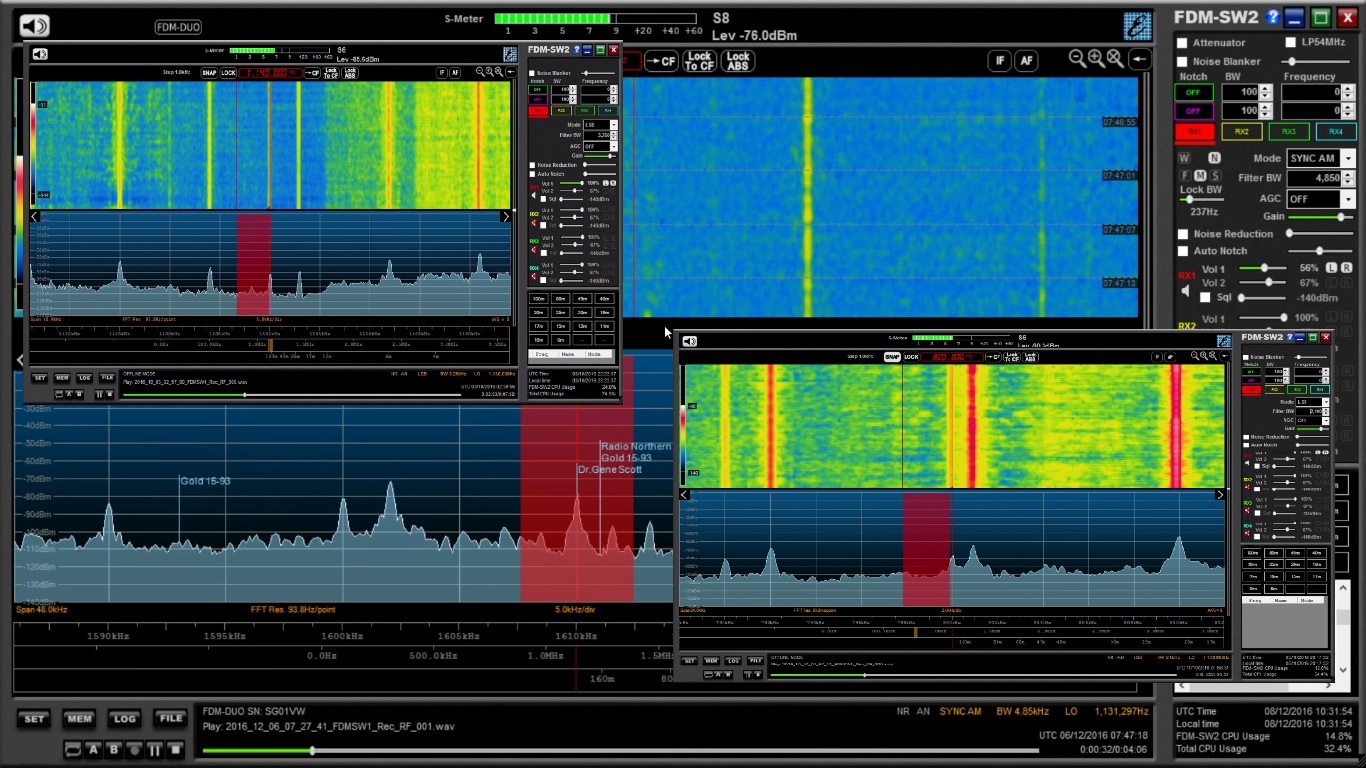
The next reception video is CHHA ‘Voces Latinas’ from Toronto on 1600 kHz. This was the biggest surprise because this channel at the start of the X-band is dominated by The Caribbean Beacon, Anguilla. In fact, I would go so far as to say I’ve never heard anything else but Anguilla on 1600 kHz. The only difference in this reception is that it occurred relatively late in the morning for me – around 7:45 am. To catch CHHA for the first time, with a very clear ID was great, I hope to hear them again soon.  Below is an embedded video and text link.

Finally, a reception video of CBC Radio 1, transmitting on 1140 kHz. CBC are very often herad at my shack in Oxford, in fact, I see at least one carrier, usually with audio most evenings/mornings and often multiple signals are present across 600, 750 and 1400 KHz. However, their transmission from Sydney, Nova Scotia had never been copied previously and so this was a pleasing catch. Below is an embedded video and text link.


Thanks for reading/watching/listening and I wish you all great DX!

Clint Gouveia is the author of this post and a regular contributor to the SWLing Post. Clint actively publishes videos of his shortwave radio excursions on his YouTube channel: Oxford Shortwave Log. Clint is based in Oxfordshire, England.

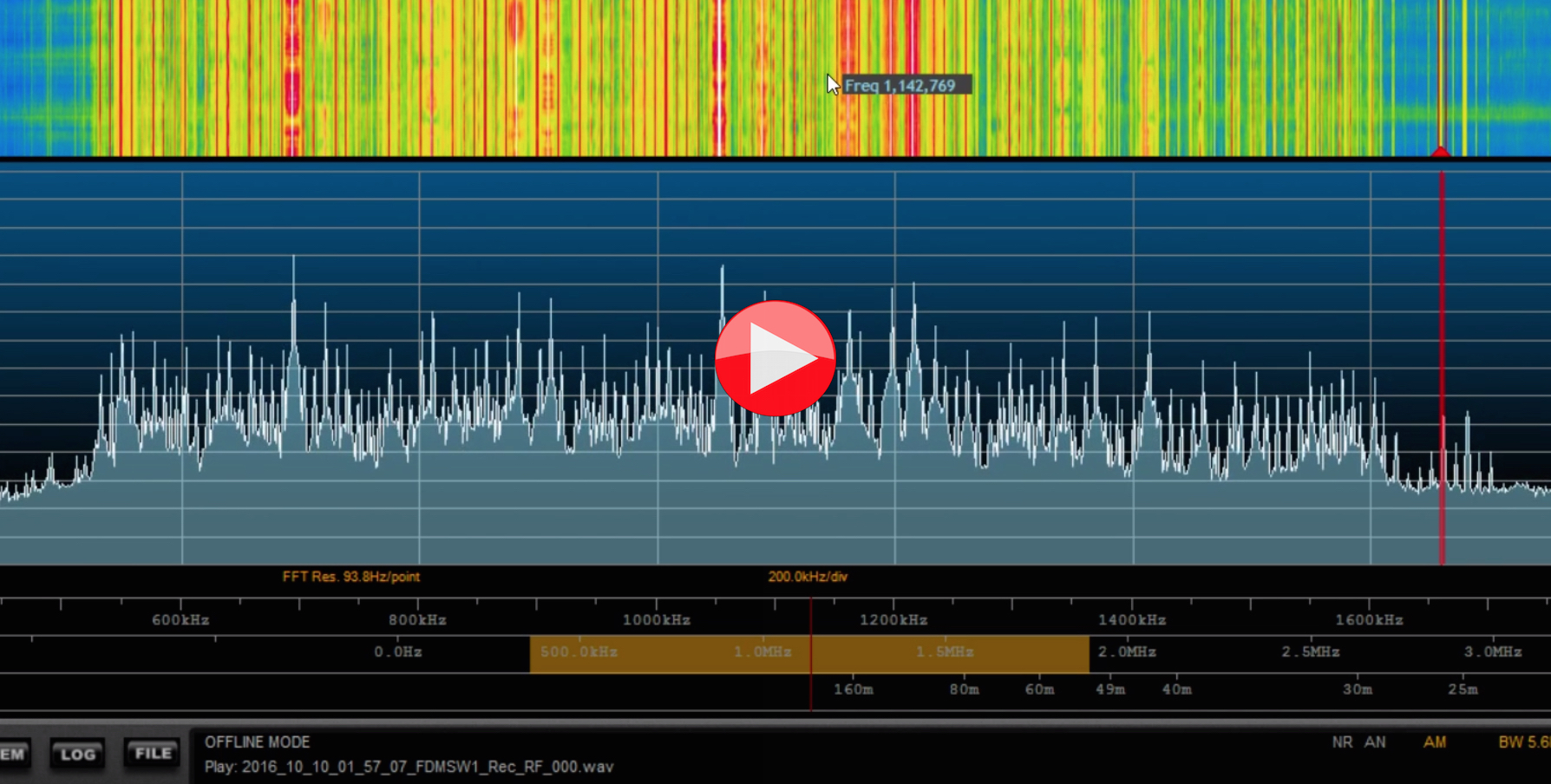
Medium wave SDR spectrum with over 20 transatlantic signals: a quick tour


Tour of a medium wave spectrum with over 20 transatlantic signals

Hi there, I thought some of the readers of SWLing Post might be interested in a review of a MW spectrum with multiple transatlantic signals – all with audio. This is one of the recordings I took with the 200 metre Beverage antenna and although I haven’t properly counted, I believe it generated about 50 catches that were either personal firsts or best-ever receptions. You will note that this video is nearly 20 minutes long, whilst the recording is only just over 5 minutes, thus to capture the signals listed below and demonstrate audio to you, it was necessary to effectively ‘rewind’ a few times. I haven’t annotated the video, however, the stations I’ve paused on to demonstrate audio are listed below. There are actually more catches in this spectrum, but hopefully the video will give you a good idea of propagation on the morning of 10/10/16 and the effectiveness of the Beverage/Elad FDM DUO combination. Also note, I didn’t have time to fully optimise the demodulation settings, so for example, I haven’t used AM SYNC in this demonstration. Individual videos of all catches, with optimised settings appear on my YouTube channel Oxford Shortwave Log. I hope you enjoy it! Recorded in Oxford UK on 10/10/16 at 02:00 hrs UTC. Thanks for watching and I wish you all great DX!


590 kHz VOCM Saint John’s
600 kHz CBNA Saint Anthony
620 kHz CKCM Grand Falls-Windsor
660 kHz WFAN New York
710 kHz WOR New York
730 kHz CKAK Montreal
750 kHz CBC Radio 1 Bonavista Bay
790 kHz WAXY (presumed)
800 kHz VOWR
970 kHz WBGG
1010 kHz CFRB Toronto
1030 kHz WBZ Boston
1130 kHz WBBR New York
1190 kHz WLIB New York
1280 WADO New York
1390 WEGP Presque Isle
1400 kHz CBC Radio 1 Gander
1440 kHz WRED Westbrook
1510 kHz WMEX Boston
1520 kHz WWKB Buffalo
1570 kHz XERF La Poderosa, Mexico
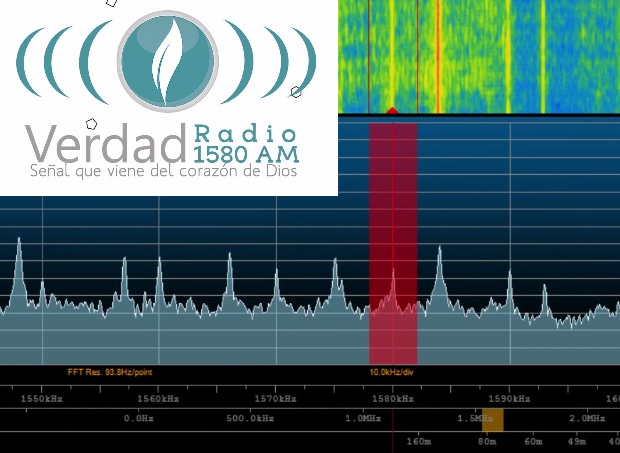
1580 kHz HJQT Verdad Radio 1580 kHz, Bogotá, Colombia
1610 kHz Caribbean Beacon, Anguilla
1660 kHz WGIT Puerto Rico


Clint Gouveia is the author of this post and a regular contributor to the SWLing Post. Clint actively publishes videos of his shortwave radio excursions on his YouTube channel: Oxford Shortwave Log. Clint is based in Oxfordshire, England.

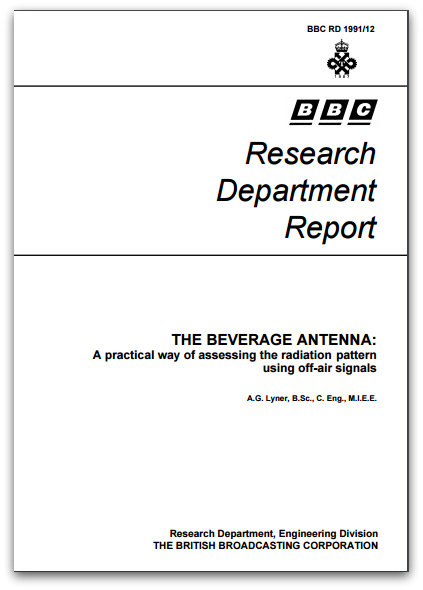
BBC Research Department Report on the beverage antenna

Many thanks to SWLing Post contributor, Kris Partridge, who writes:

[R]esearch on DTH satellite TV service took me to a public website which is an archive going back to 1934. And boy, there is so much information there ..!

So what I pass to you for the Blog is this one as a start:

http://downloads.bbc.co.uk/rd/pubs/reports/1991-12.pdf

Knowing that many of your readers/contributors have made mention of using Beverage antennas I think this may make interesting reading. The report describes a method for accessing the performance of a Beverage, long wire, receiving antenna using off-air HF broadcast signals.

[…]It looks like the lower the better. And yes, there’s some heavy maths formula in there ..!

Wow–you’re right, Kris! This is very useful information. I’ll skip the maths bit and just follow the advice! Thank you for sharing.

WRTH 2017: Available to pre-order

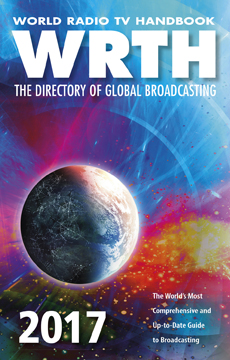
2017-wrth-coverMany thanks to SWLing Post contributors Andrea Borgnino and Tom Ally who’ve notified me that WRTH 2017 is available for pre-order!

Here’s a description from the WRTH website:

The Features section for this 71st edition includes articles on Remote Receivers, a Pacific Radio Adventure, The Mighty KBC radio station, CKZN St John’s, the International Radio Disaster Relief Project, and a reminiscence by Vagn Fentz. There are equipment reviews of the Icom IC-7300, Reuter Elektronik RDR55D, SDRPlay RSP, Wellbrook ALA1530LNP, and Bonito AAS300, as well as other articles, information and maps.

The remaining pages are, as usual, full of information on:

  • National and International broadcasts and broadcasters
  • Clandestine and other target broadcasters
  • MW and SW frequency listings
  • National TV by country
  • Extensive Reference section

Click here to pre-order your copy!

Oxford Shortwave Log: transatlantic MW DX catches with 200 metre Beverage – part 2

verdad-final

Hi there, here is the second set of reception videos for my transatlantic MW DX catches using the 200 metre Beverage antenna. Most of the signals originate from the United States and Canada, however, there is also a catch from Mexico – XERF La Ponderosa – which is a personal first and another from Bogotá, Colombia – Verdad Radio. I hope you enjoy them. Please do not hesitate to contact me if you would like further details regarding the Beverage design and/or construction. in the meantime, thank you for watching/listening and I wish you all great DX!


Clint Gouveia is the author of this post and a regular contributor to the SWLing Post. Clint actively publishes videos of his shortwave radio excursions on his YouTube channel: Oxford Shortwave Log. Clint is based in Oxfordshire, England.