Category Archives: New Products

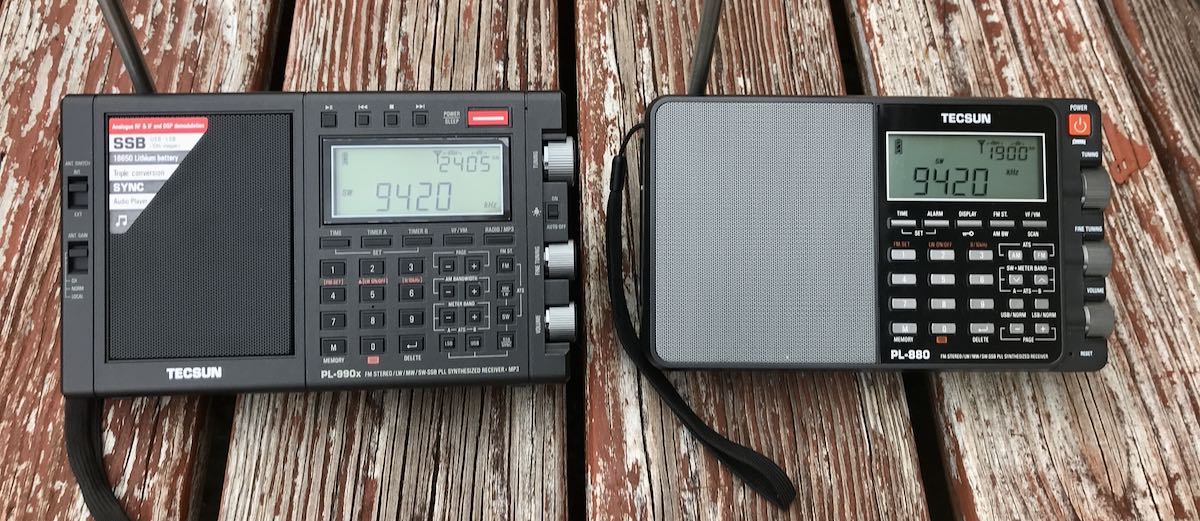
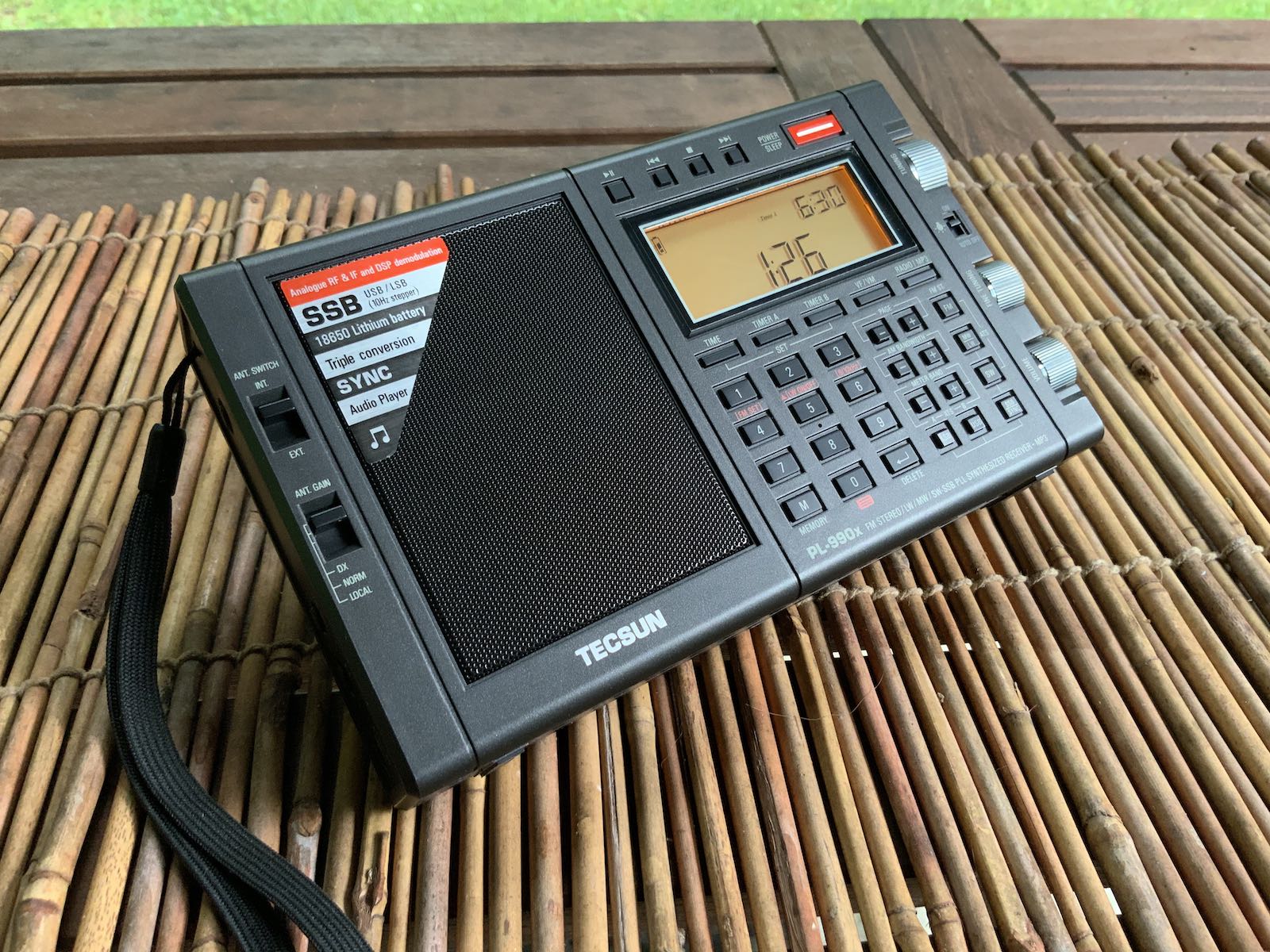
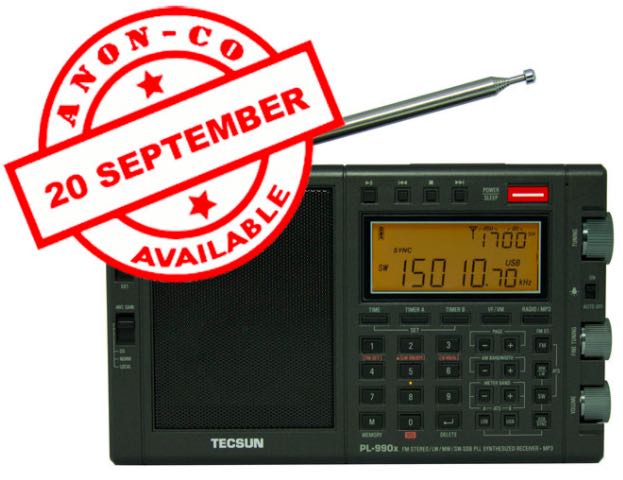
Tecsun PL-990x vs. PL-880: Comparing SSB audio characteristics and pre-production/production PL-990 models

A number of SWLing Post readers have been asking about SSB audio characteristics on the new Tecsun PL-990.

Earlier this week, I took a moment while visiting family to make a few quick comparison videos with the PL-880 outdoors and away from RFI.

As I mention in the videos, there are a lot of cicadas singing in the background and you can also hear a bit of road noise–not ideal for audio, but I had to take advantage of a break in the weather!

You should also note that this isn’t a sensitivity comparison. The radios were pretty close together–if measuring sensitivity, I would have spaced them much further apart. Rather, I hope these videos give you an idea of the audio characteristics in SSB (both CW narrow and voice) and one comparison in AM. If you’re curious about sensitivity and how the PL-990x compares, check out Dan Robinsons initial evaluation.

CW Audio: .5 kHz filter on the 80 meter band

CW Audio: .5 kHz filter on the 30 meter band

SSB audio: 75 meter band

AM Audio: 5 kHz filter WWV 10 MHz

My thoughts

While these videos are far from ideal, they should give you a real-word impression of audio characteristics.

Personally, I think the PL-990x is a much better performer in single sideband. The noise floor is lower, but I think that may have more to do with better filter implementation. I’ve always felt that the PL-880 audio sounds “wider” than the selected filter in the more narrow SSB selections.

In addition, the PL-990x exhibits better SSB stability that’s especially noticeable in CW. The PL-880, at times, almost sounds garbled in comparison.

I also mentioned in the last video that the audio sounds better on the PL-880. I should have qualified that statement a bit better.

In general, yes, the PL-880 audio sounds better because its built-in speaker has slightly better audio fidelity that’s most noticeable when listening to music on the FM band, or a strong local AM station. On shortwave, I feel like I actually prefer the PL-990 audio for all but the strongest stations although I do wish the PL-990 filter could be widened to 9 kHz like the PL-880.

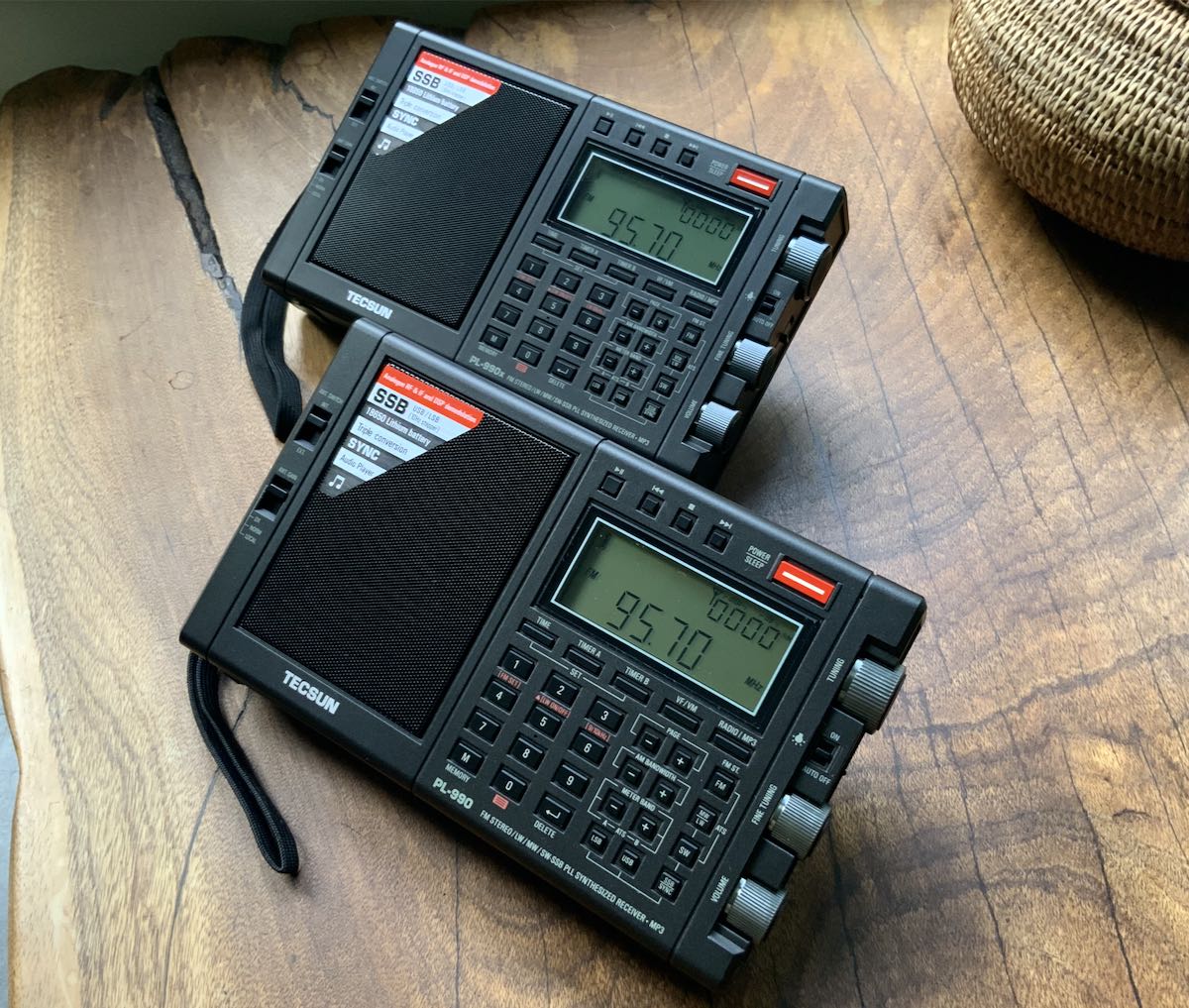
PL-990x (pre-production) vs. PL-990 (production model)

Tecsun Radios Australia reached out and kindly sent me one of their PL-990 production model radios to compare with the PL-990x pre-production model from Anon-Co we’ve been testing up to this point. This has been incredibly helpful as I put together my PL-990 review for the 2021 World Radio TV Handbook.

As I’ve mentioned in previous posts, I feel it can be problematic using a pre-production model radio for review only because there can be differences in quality control when a small number of pre-production units are manufactured compared with a proper first production run (remember this case?).

I’ve only had the production model PL-990 for a few days and most of that time we’ve been dealing with the remnants of hurricane Sally moving through our area dumping torrential rains.

Last night, however, a massive tree fell across our road knocking out power for the better part of 5 hours. This gave me a perfect excuse to start my comparison indoors while rain continued outside.

Based on my comparisons last night, it appears performance is nearly identical between the production and pre-production models. I’ve still more testing to do, but my initial impressions are most positive. Very happy quality appears to be consistent.

Many thanks again to Tecsun Radios Australia for making this comparison possible.

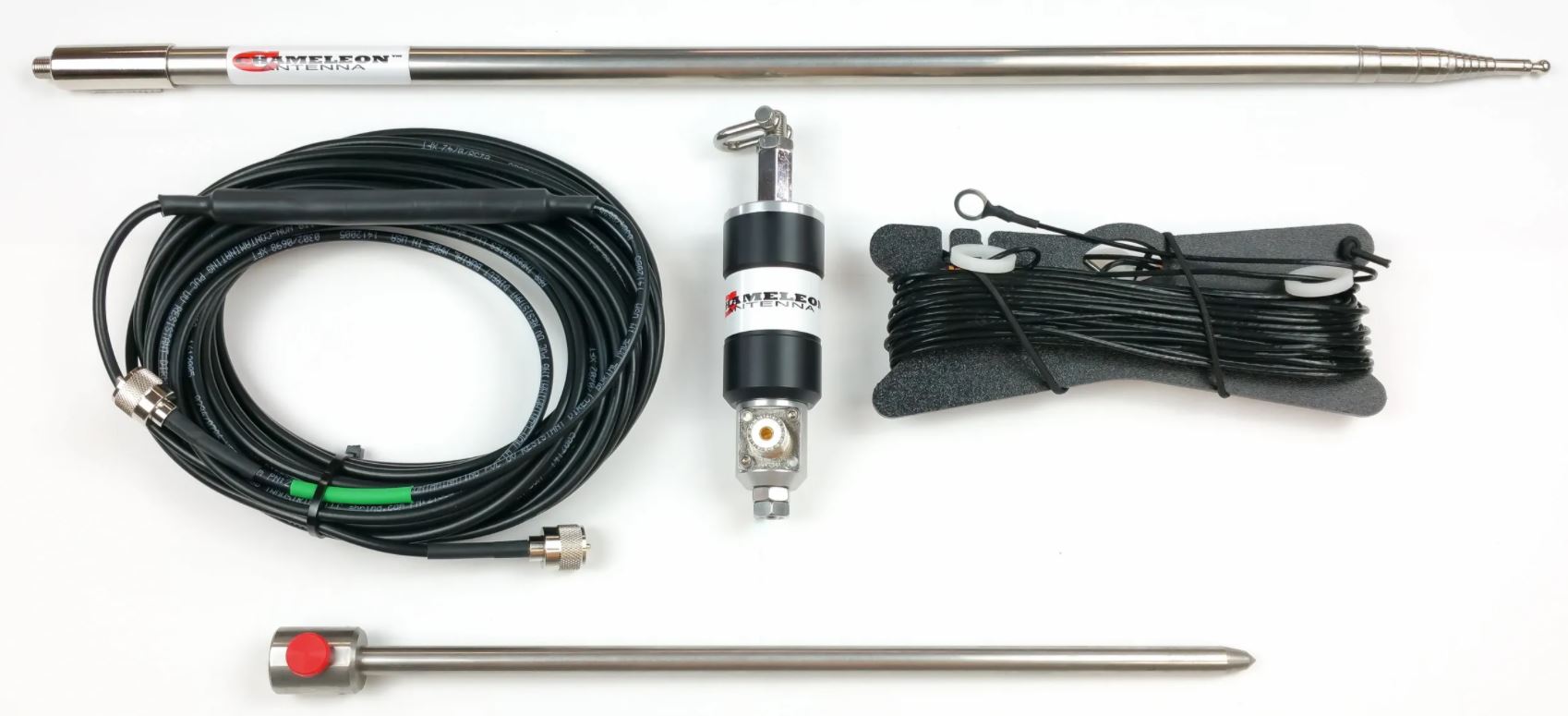
CHA MPAS Lite: Chameleon designs a new compact portable antenna system

Many thanks to SWLing Post contributor, Don, who notes that Chameleon Antenna has just introduced the CHA MPAS Lite: a modular portable antennas system covering from 6M – 160 meters.

I know a number of participants in the Parks On The Air program who use the CHA MPAS antenna system–the MPAS Lite is the “little brother” of that antenna, according to Chameleon.

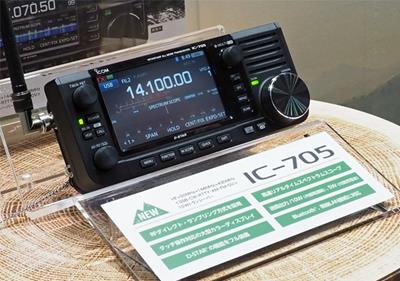
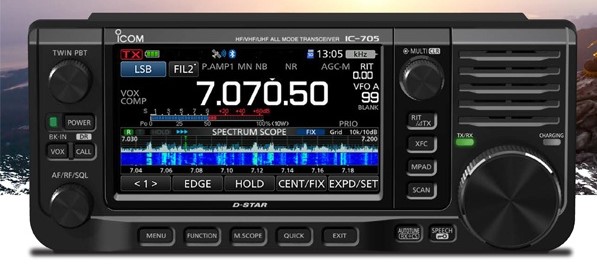
Although designed with the new Icom IC-705 and other QRP transceivers in mind, the CHA MPAS Lite can handle up to 100 watts in SSB or 50 watts in CW.

They plan to start shipping the antenna in early November 2020 and the price for the system is $340.00. That may sound like a lot of money for an antenna (it is, let’s face it!) but if you speak with pretty much anyone who owns a Chameleon antenna they’ll tell you it’s worth it. The quality is second to none. I’ve been testing their Emcomm III wire antenna recently and it must be one of the most robust portable wire antenna systems I’ve ever evaluated.

Also, all of their products are designed and manufactured in the USA.

Click here to check out the CHA MPAS Lite product page.

We recently added Chameleon Antenna to our list of sponsors here on the SWLing Post. I’m very proud to include them because one of my personal missions is to promote mom-and-pop companies that push innovation here in our radio world! It’s humbling that they support us too.

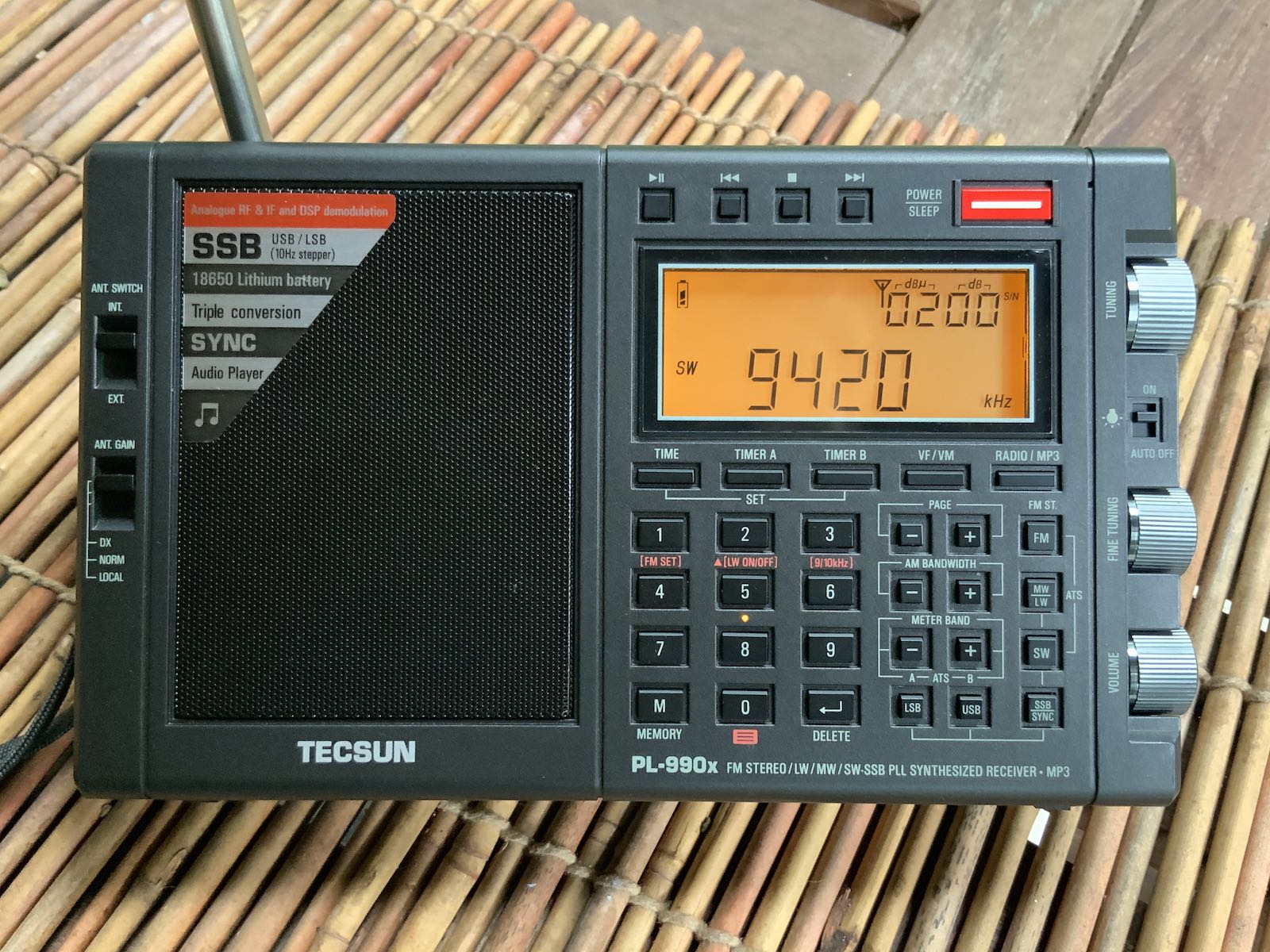
Anon-Co publishes pricing and availability of Tecsun PL-990x packages

Anon-Co has just posted pricing and availability of the Tecsun PL-990x:

The PL-990x package like the pre-production unit I received costs $235 US shipped free via the postal service or via FedEx for an additional $9.00.

This package includes the Tecsun PL-990x, Tecsun EP-20 stereo earphones, 16GB microSD card, Tecsun AN-03L wire antenna, protective carrying pouch, charging cable, USB wall charger, radio amateur world map, and an English manual.

Click here to view the product page.

In October, Anon-Co will also start shipping a PL-990x package that comes in a hardcover case and an ICR-100 recorder. This version will be $283.00 US.

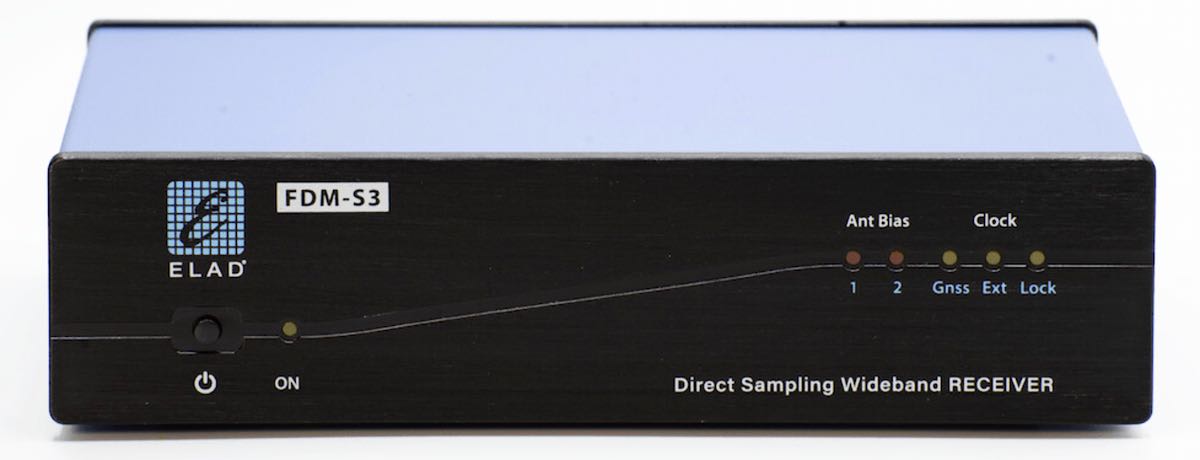
The ELAD FDM-S3 is in production and shipping to distributors!

(Source: Elad USA)

Elad USA Inc.
618 Cummings Chapel Road
Ridgeville, SC 29472 [email protected] or call 312-320-8160 (10am-6pm)

PRESS RELEASE

Elad S.R.L. Italy and Elad USA Inc.

Elad are pleased to announce the ELAD FDM-S3 is now in production and shipping to distributors world-wide.

The ELAD FDM-S3 is a 16bit state of the art Software Defined Radio, for radio enthusiasts, shortwave listeners and radio hobbyists and test labs. The S3 contains several exciting options. It will allow for reception of up to 24Mhz of bandwidth across the frequency range of 9kHz to 108Mhz as standard. (Extended range from 9Khz- 2Ghz will be available later in the year with an optional internal downconverter.)

Oscillator features:

Standard Oscillator version with TCXO 0.1ppm lockable to GPS (included) need only GPS antenna

Optional Oscillator OCXO with less phase noise and accuracy lockable to GPS. Includes GPS Antenna.

The radio can be used with Elad’s famous SW-2 software or third-party software, like SDR- Console from Simon Brown.

The radio has Bias-T power on two of the three antenna ports, one for HF and one for VHF to enable items like powered LNA/Filters

Connects to PC via USB3.0 cable (supplied) and GPS can also be interrogated via UBlox software.

The radio is in production now and shipping, pre-order for USA/Canada via https://shop.elad-usa.com/sdr-radio/
or in the UK via Martin Lynch https://www.hamradio.co.uk/
or Germany via http://www.wimo.com/
or direct from the Elad Factory http://www.eladit.com
For Release 09/14/2020

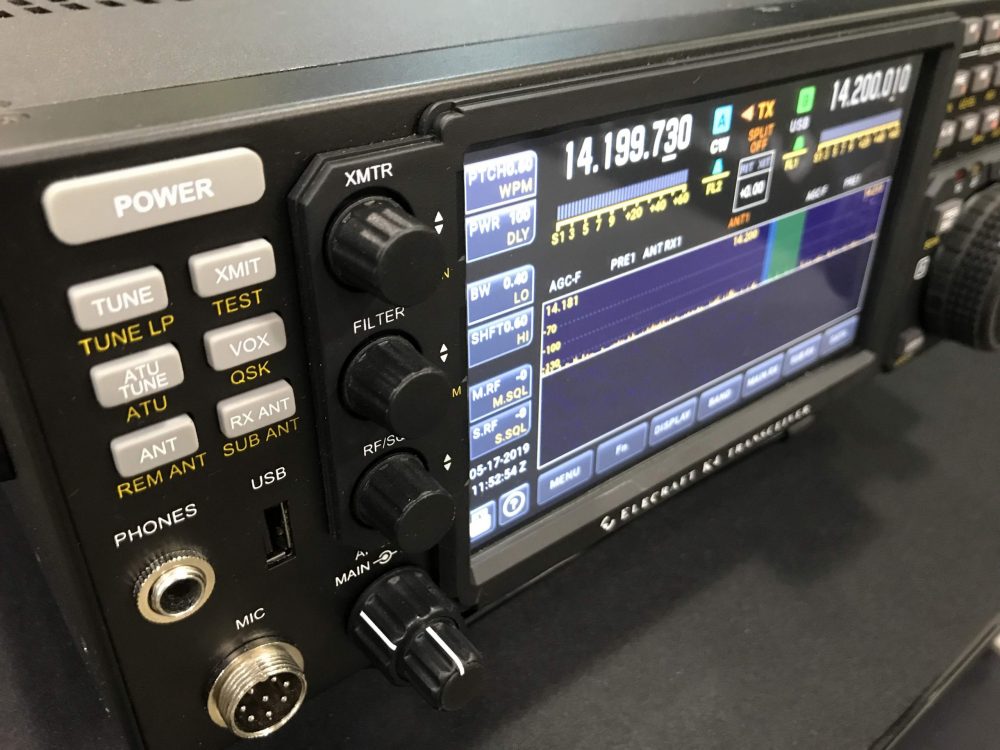
Elecraft posts photos of the new K4 transceiver in production

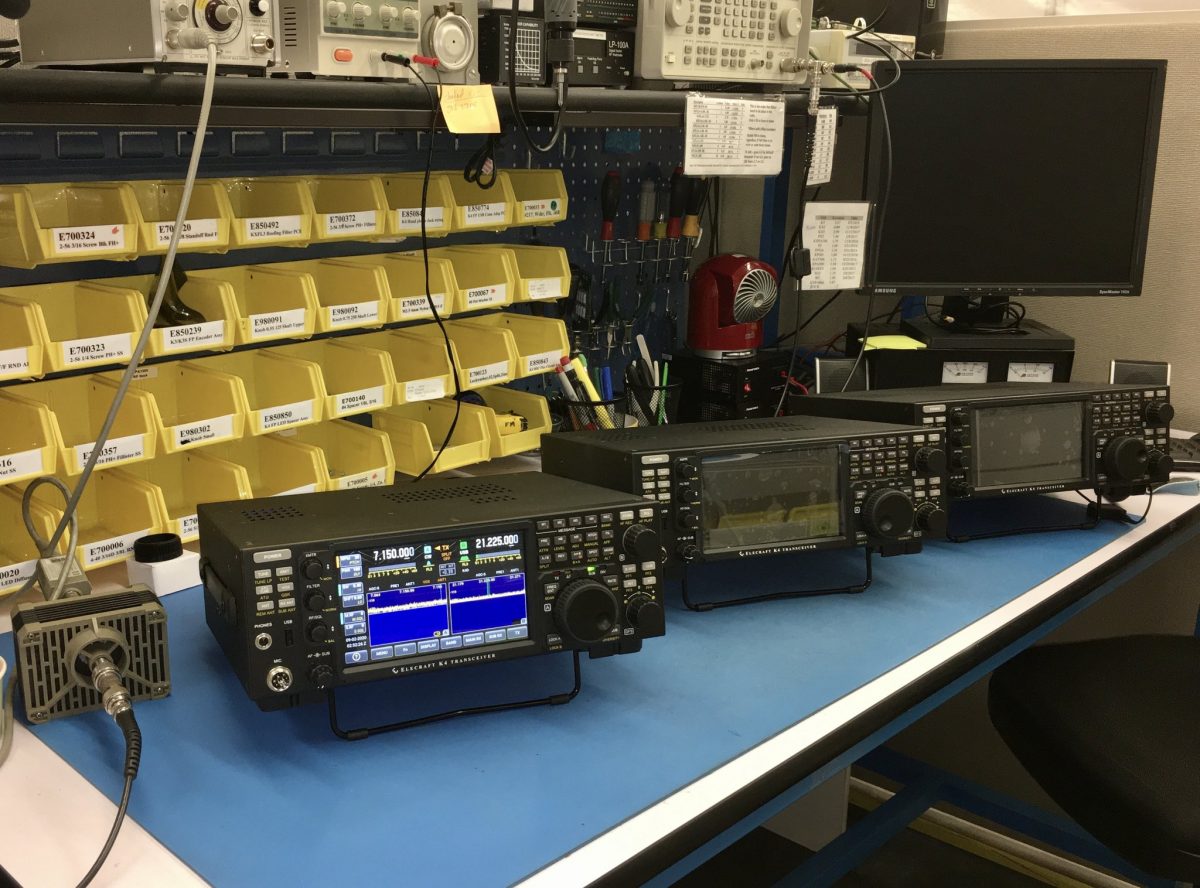
Elecraft had hoped to start shipping the new K4 flagship transceiver this week and I’m sure it’s been a real challenge realizing this goal in the day and age of the Covid-19 pandemic.

This morning, Elecraft posted the following photo on their Twitter account with the caption, “New K4s in production 🙂“:

I’m sure this is a welcome sight for those who have pre-ordered the K4.

Many thanks to Paul Evans for the tip!

Click here to check out the K4 product page at Elecraft.

The $50 tinySA spectrum analyzer is here!

Many thanks to SWLing Post contributor, Paul Evans (W4/VP9KF), who writes:

At last, the tinySA is out and target is $50 (orders at R&L): https://www.tinysa.org/wiki/

tinySA Introduction Video

The following information regarding orders and availability was taken from the tinySA Wiki Page:


Buying the tinySA

There are currently (September 1st, 2020) no clone tinySA. All are genuine and manufactured by hugen.

Various persons bought some small amount of tinySA and are now selling them on various sites. The sellers listed below are official partners and are guaranteed to deliver good service in case of problems.

The tinySA is on pre-order at Alibaba.com
For other payment methods, such as Paypal, hit the “chat now” button and Maggie will help you.

At the right top of the browser window there should be “my messages” where you will have a better overview of your messages

The tinySA is on pre-order at AliExpress

The tinySA is on pre-order at R&L Electronics in the USA

Shipment is expected to restart end of August

An additional re-seller is expected to appear on eBay, Amazon and other platforms, these will also originate from hugen.

How to recognize a genuine tinySA.

  • Look for the tinySA logo. As this is part of our trademark, no others manufacturers may use this logo.
  • Look for the nice black gift box with the golden logo and the accessories as you can see on the First Use page

For more info about the tinySA check out the tinySA Wiki.

Thank you again, Paul, for sharing this tip! I love how the tinySA developers recognize it’s only a matter of time before clones appear on the market. Sadly, a true sign of the times…

lab599 Discovery TX-500: Answers to your questions…

Caught in light rain while operating from South Mountains State Game Land.

I shipped the lab599 Discovery TX-500 I’ve been evaluating to HRO yesterday. I’ve had it on the air now for a week with intense use. I’ve activated a total of 8 parks in 7 days–via the Parks On The Air program. I’ve operated CW, SSB, and spent time listening to HF broadcasts.

I’ve gotten a number of questions from readers in comments and via email. What follows are my answers to the most frequently asked questions. Note that this will be a “living” FAQ post for the TX-500–I will update it periodically with new questions/answers:


TX-500 Frequently Asked Questions

Q: The TX-500 looks so thin and flat. Is it durable?

A: The TX-500 chassis is made of CNC-machined aluminum alloy. Without a doubt, it’s the most durable and rugged portable ham radio transceiver I’ve ever tested.

Q: Why did lab599 choose multi-pin connectors for the mic, speaker, and CW ports instead of standard 1/8″ plugs? Are they proprietary connectors?

A: Their goal was to make the TX-500 water-resistant. The TX-500’s connectors help prevent water intrusion. These are not proprietary connectors. While they’re uncommon in the world of amateur radio, they’re often used in aviation, commercial, and military applications.

The connectors are GX12mm in various pin numbers–refer to the port/pin configurations from the diagram above (taken from the TX-500 manual).

Note that W2ENY is selling a number of connector packages and TX-500 accessories.

Q: Is the TX-500 completely waterproof?

A: It’s my understanding that the TX-500 is sealed to the point of being water and weather resistant. Meaning, if it gets caught out in the rain, it should be fine. If you’re operating maritime mobile and it falls in the water? All bets are off. To my knowledge, the TX-500 is the most weather-resistant amateur radio transceiver currently on the market (please comment and correct me if I’m wrong on this point).

Q: Does the TX-500 have a built-in antenna tuner?

A: No. If you’re using the TX-500 you’ll either need a portable external antenna tuner, or operate with resonant antennas. In the field, I actually prefer using resonant antennas to get the most mileage per watt. At home, I employ an external ATU. In the field, I’ve used my ZM-2 ATU (see photo above) to tune my resonant antennas on other bands.

Q: Does the TX-500 have full break-in QSK for CW operators? Does it have pin diode switching?

A: No. The TX-500 uses a relay for transmit/receive switching. In my videos, you’ll hear the T/R switch as I’m keying. I keep the delay set to the shortest amount of time. At this setting, I can’t hear between characters, but I can hear between words. Some may call this “semi break-in.” The relay clicking, for what it’s worth, is the softest I’ve heard in a portable transceiver. I believe this is due to the fact the TX-500 is solid and sealed so thoroughly. You can hear it, though.

I believe this video will give you a good impression of how the relay sounds when set to the shortest delay/recovery time:

Q; How hot does the radio chassis become after continuous use?

A: Not hot at all. In fact, I’ve operated this rig up to two hours calling CQ at POTA sites and it just felt warm–not hot–which is exactly what I would expect. This radio was designed to be operated without any sort of cooling fan and the aluminum alloy chassis seems to do a fine job dissipating heat.

Q: How easily can the screen be read outdoors?

A: Very easily. Indeed, the LCD screen was designed for outdoor visibility. The screen has a sealed reflective covering that does produce some glare, but no more than any other field radio.

Q: How much current does the TX-500 draw on receive?

A: I’ve measured around 110 – 120 millamps with the volume level at a loud setting in the field. In a quiet environment like the shack, it draws 100 milliamps–I’m sure using headphones would be the same. This is very much a benchmark figure for full featured general coverage transceivers. It’s even a tad better than the Elecraft KX2.

Q: Who is lab599 and where do I send this radio if it needs repair?

A: Lab599 is a new radio manufacturer in Rubtsovsk city in the Altai region of Russia. See map:

Rubtsovsk city in the Altai region of Russia

At time of posting, I can confirm that there will be a US-based service center in Nevada. I don’t know yet if other service centers will be established across the globe.

Q: How much does the TX-500 cost and when will it start shipping?

A: According to Ham Radio Outlet and Pileup Communications–at time of posting, the only TX-500 distributors–they expect the TX-500 to start shipping mid-September 2020. The HRO price is $789.95 and Pileup Communications price is 890 EUR.

Q: Does the TX-500 ship with any accessories?

A: Yes. At least, the package Ham Radio Outlet is selling comes with a speaker/mic, and assortment of connectors–everything you need to get on the air. Click here for detail.

Accessory pack included with a Ham Radio Outlet purchase.

Q: Can I operate FT8, PSK31, and other digital modes with the TX-500? Does it have an internal sound card?

A: Yes, you can certainly operate digital modes with the TX-500. I did not have all of the connectors to do this with my pre-production demo unit. It does not have an internal sound card (so I would recommend something like the SignaLink USB), but it does have both CAT control and VOX capabilities in Digital mode. It should be simple to set up and easy to operate.

Q: Is the TX-500 a good radio for SWLing too?

A: Yes it is. I wrote a short post about this which includes a demo video. My full review will go into more detail.

Q: When will your full TX-500 review be published?

A: I will be publishing a comprehensive review of the TX-500 in the October 2020 issue of The Spectrum Monitor magazine. It will be published here on the SWLing Post one month later. Click here to read all of my TX-500 posts.

I’ll update this post with more TX-500 answers as I receive inquiries.


Do you enjoy the SWLing Post?

Please consider supporting us via Patreon or our Coffee Fund!

Your support makes articles like this one possible. Thank you!