Category Archives: New Products

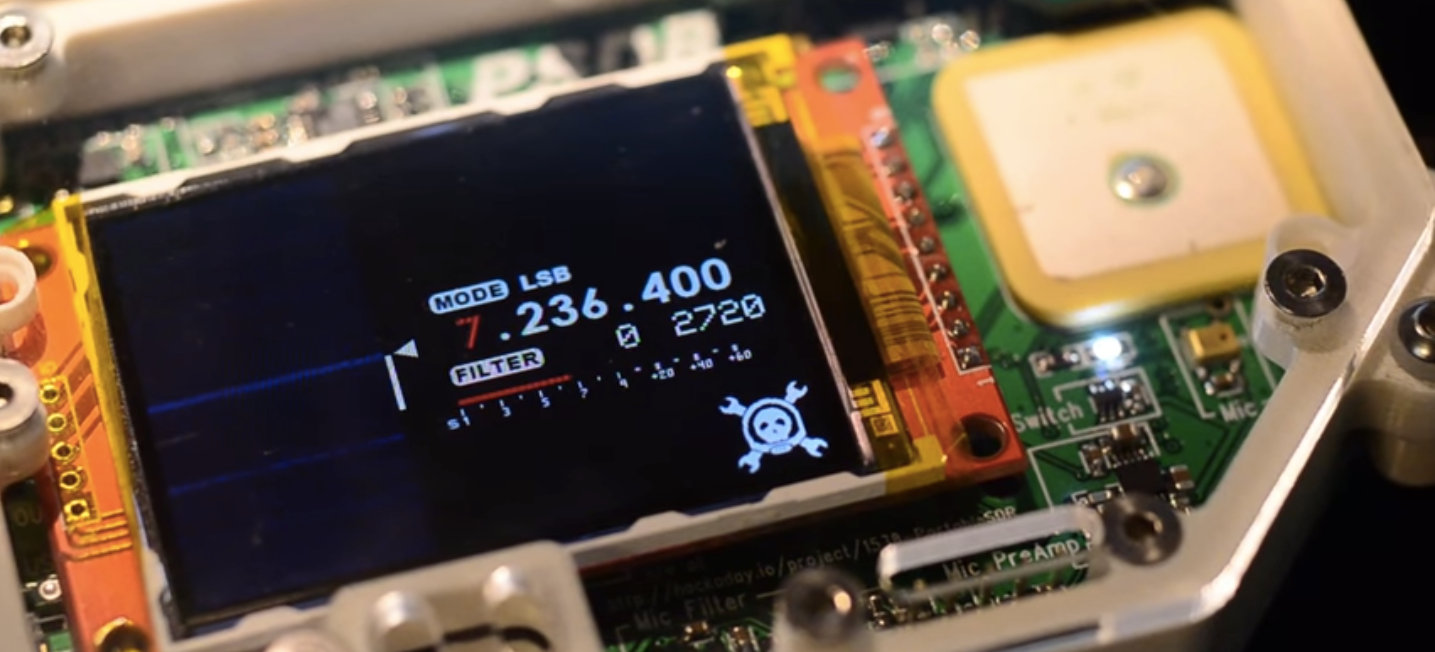
PortableSDR: The Holy Grail of portable SDR transceivers?

PortableSDRMany thanks to my buddy, Bennett Kobb (AK4AV), who shares information about the PortableSDR, one of five finalists in The Hackaday Prize.

PortableSDR creator, Michael R Colton, describes his project on Hackaday:

“The PSDR is a completely stand-alone (no computer needed), compact, Portable Software Defined Transceiver (hence the name, sorta). Originally designed for backpacking use by Ham Radio operators. It includes complete coverage up to about 30Mhz (plus 144Mhz), it has a 168Mhz ARM processor, color display, and an innovative interface.

Vector Network Analysis (which includes antenna analysis) and GPS functions are included.

The entire design is Open Source. The electronics are designed and laid out to be easy to understand and tinker with. In addition to source code, schematics, board layout and parts lists, articles and videos describing the theory of the design are being created.”

He includes this video of his working prototype:

I will certainly follow this project with interest. I love the fact that PortableSDR has such a small form factor, yet still manages to include room for a battery, display and CW paddles.

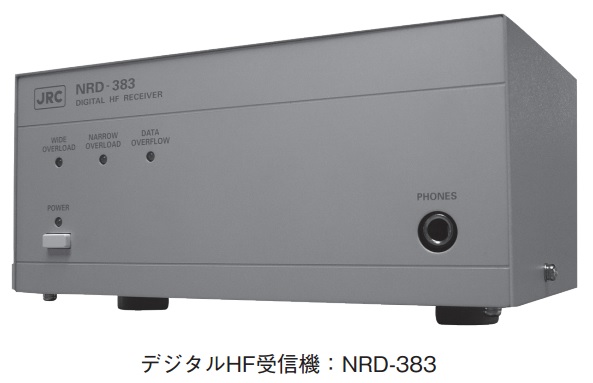
The Japan Radio Company NRD-383 SDR carries a hefty price tag

JRC-NRD-383Many thanks to Dave Zantow (N9EWO) who relays this info regarding the new NRD-383 via Takahito Akabayashi:

[The JRC] NRD-383 is sold by “Defense Systems Sale Division” of JRC, so this SDR receiver is especially for military use.

The price is more than $50,000 [each].

Recent JRC products [have] nothing to do with amateurs.

Takahito Akabayashi
Tokyo, Japan

OK, I think I can safely remove the NRD-383 from my wish list. At $50,000 each, this is indeed a receiver intended for government and commercial use.

Japan Radio Company (JRC) announces a new SDR receiver: the NRD-383

JRC-NRD-383

Dave Zantow (N9EWO) writes:

Sungchul Cho informs us that JRC has listed a new HF SDR Receiver on the web site. The new NRD-383 is a direct sampling, 2 channel with digital IQ data output with width up to 10 MHz each. Frequency coverage from 100 kHz to 32 MHz. Third-order intercept point + 23 dBm (typ), Second order intercept point + 80 dBm (typ). Not much information at this time , more when I have it .

See the PDF Brochure here : http://www.jrc.co.jp/jp/company/html/review65/pdf/JRCreview65_15.pdf

Many thanks, Dave!  It’s exciting to see that JRC could manufacture a receiver once again; their products, in the past, have been world-class. If history is an indicator, I imagine the NRD-383 will not be an inexpensive rig; still, JRC equipment is often worth the price.

Guest Post: Anil reviews the FiFi-SDR receiver kit 2.0

Many thanks to SWLing Post reader, Anil Raj, for sharing his review of the FiFi-SDR receiver kit 2.0:

FIFi4-TravelKit-001

The perfect radio for business travellers?

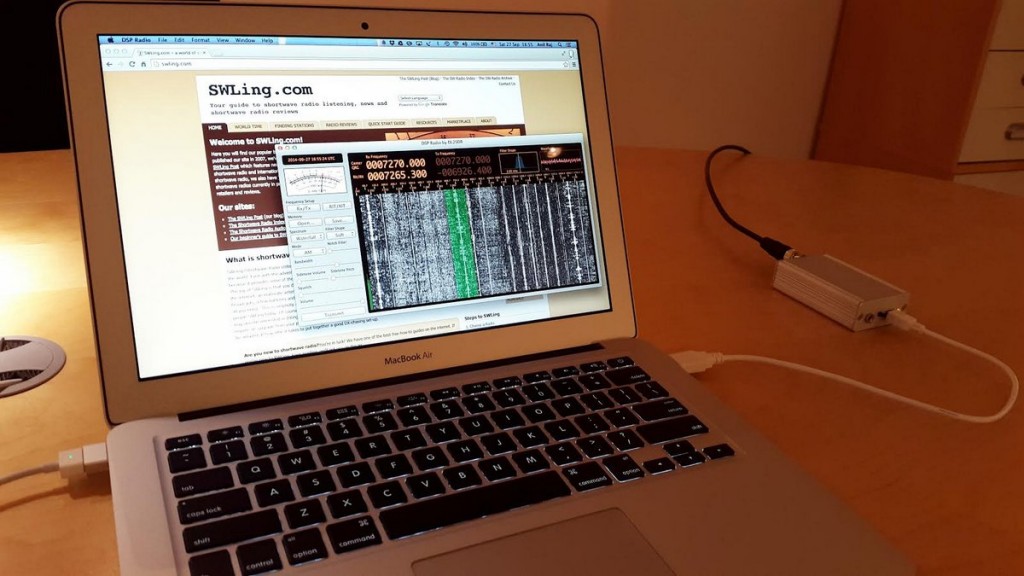
I travel regularly, or should I say commute between Europe and Asia, and have been on the lookout for a small receiver with good performance that would be easy to carry with me. I never travel without my laptop so an SDR would be the sensible thing to look for. A few weeks back the tiny FiFi SDR receiver caught my interest as I was browsing the website of Funkamateur http://www.box73.com/ the excellent German ham radio magazine. It looked promising as it had an impressive bank of filters covering all the way from LF to HF. Also, the front end is designed to emphasize sensitivity, so that it can work well with short wire antennas. It also had a built in sound card which would make interfacing to my computer a simple job.
Fifi5


The price was certainly right – $ 169. I ordered it, and it showed up in my mailbox a few days later. It is offered as a “kit” though in practice all that needs to be done is to solder a couple of connectors and sockets. All the surface SMD components are pre-soldered, and the rugged extruded case has die cut holes for the connectors and controls making the mechanical assembly very simple. The entire exercise took me about 20 minutes until the receiver was plugged in and powered up.
Fifi1-001

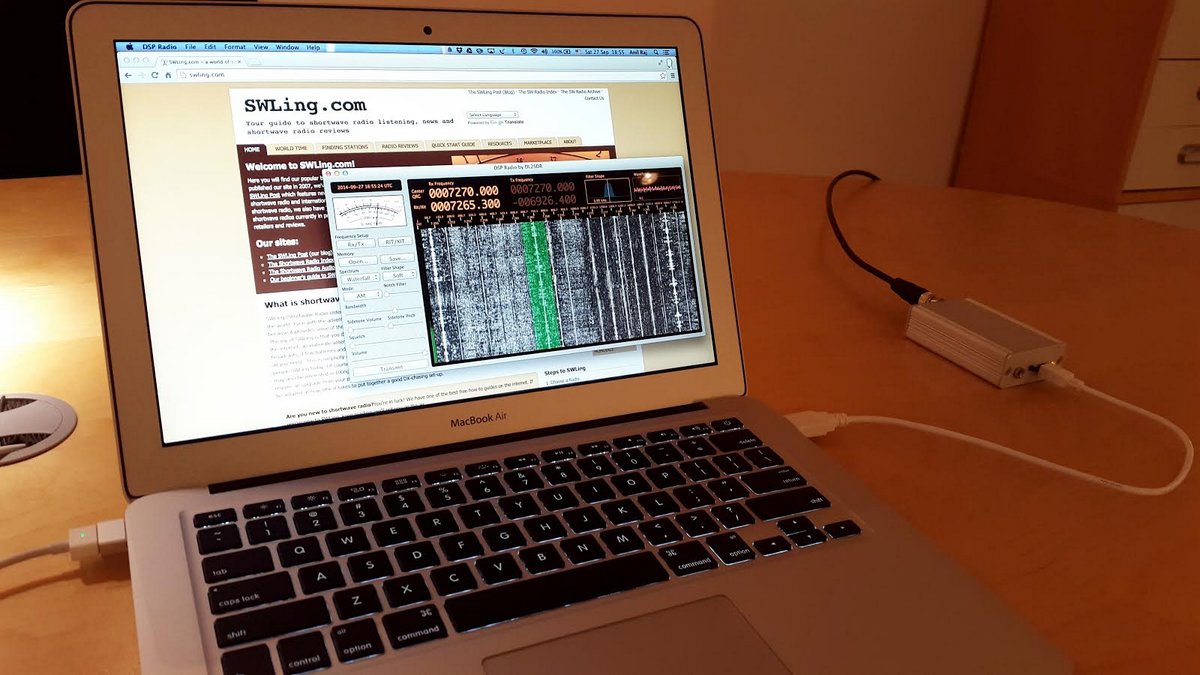
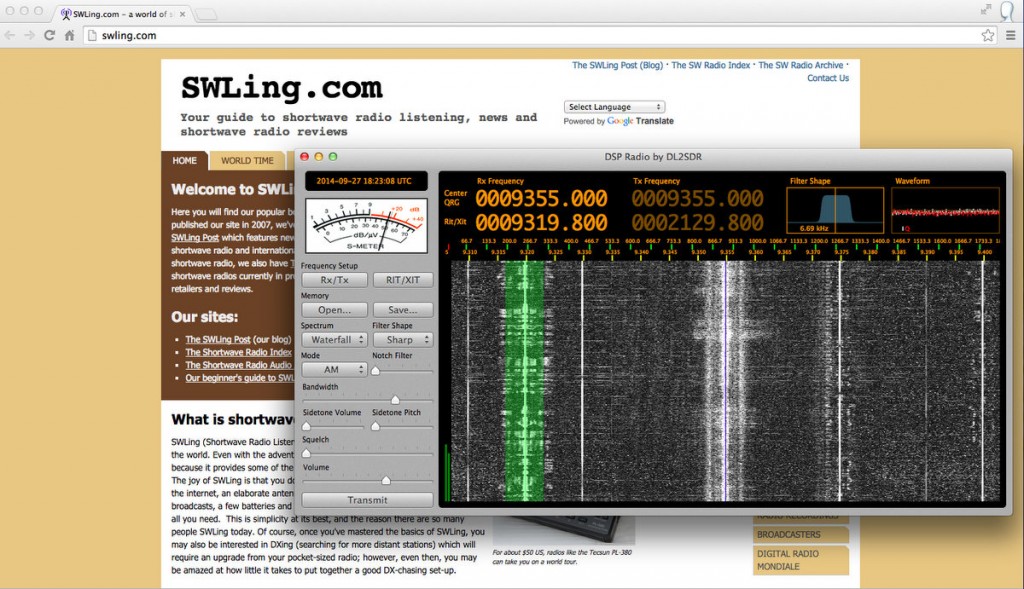
Since I use a Mac the choice of SDR software is a lot more restricted than that for Windows. I did however find free software called SDR Radio (http://dl2sdr.homepage.t-online.de/) developed by DL2SDR which does a great job of partnering with the FiFi and my Mac.

SDR Radio is still in development, so the UI can a bit rough at the edges at times. Also, configuring the Audio and MIDI settings on my Mac took a bit of work, but DL2SDR Sebastian was quick to reply to my mails requesting help when I got stuck.

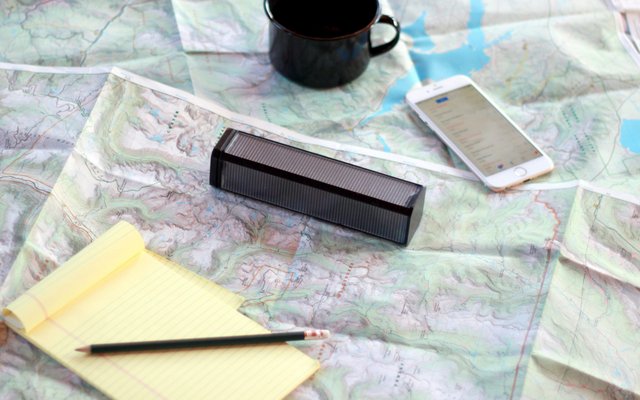
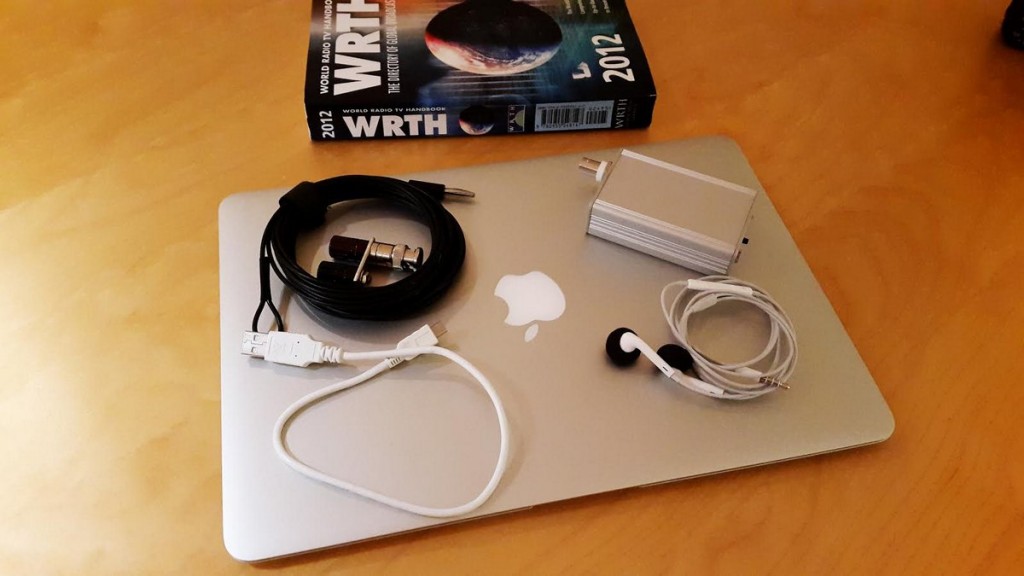
So how does it all sound? While I am sure that there may be better performing SDR radios out there, what this little matchbox sized receiver does is simply amazing. Users running Windows will have access to much more sophisticated applications than the simple programs available for Mac and will be better able to compare this radio. However, it does an outstanding job of handling both AM broadcast as well as CW and SSB utility and Ham signals. While SDR Radio does not offer a lot of bells and whistles at present, the continuously variable bandwidth which can be dialled in to almost zero, and effective notch filter get the job done very well. In empirical testing and comparisons with the Palstar R30C, the FiFi easily outclassed the older analog radio (and the Palstar is no slouch, especially on the lower frequencies).
Fifi3-TravelKit

In summary, this is going to be the radio that I will be taking with me on all my travels from now on. It is tiny, ruggedly built, and has excellent RF performance, especially at lower frequencies.


Many thanks for your review, Anil!

The FiFi SDR does indeed sound like an ideal SDR for travel. Like you, I am usually limited by the SDR applications available on the Mac OS. While I use a Windows 7 PC at home, on the road, I travel with the MacBook Air (a superb laptop!).

Click here to view details and purchase a FiFi SDR ($169 shipping included).

The Ozark Patrol regenerative receiver kit

k0awb_ozarkpatrol 3small

Just learned that David Cripe (NM0S) has a new kit for sale: the Ozark Patrol regenerative receiver kit.

The Ozark Patrol is a simple, straightforward kit, designed with beginners in mind. The kit uses through-hole components, which is to say, mounted on pads etched on the opposite side.  All of the component values and reference numbers are silk-screened on the board to indicate each part’s location, making for truly quick and fool-proof assembly.

What’s more, Dave is a talented kit designer; he’s the brains behind the kit for our successful ETOW HumanaLight (originally conceived by engineer Greg Majewski). He’s not only clever like that, he’s also a great pal.

In the past, when Dave has announced new radio kits for sale, he’s sold out within a few days. That’s why I ordered mine the moment I saw the announcement.

And, hey…not only does just $40 plus shipping ($46 in the US) get you a superb regen receiver kit, but proceeds also support the Four State QRP Group. Win-win, in my book.

Here are a few specifications and design features listed on the Four State QRP Group’s website:

  • Frequency Range: 3.5-15 MHz in two bands
  • Sensitivity: Yes!
  • Power Supply: 6 x AA batteries
  • Audio Output: A 2.6” speaker is included, as well as a jack for 1/8” stereo headphones

Want one, too? Click here to order your own Ozark Patrol kit…and enjoy tinkering as well as listening!

WRTH 2015 to ship in December

WRTH-Cover

Sean Gilbert, WRTH International Editor, just posted the following information on the WRTH Facebook group:

“WRTH 2015 will be published, as usual, in early December. This will be the 69th Annual edition! Even though both International and Domestic SW is declining there is still a lot to be heard out there on those broadcast bands, so don’t consign the SW receiver to the attic (to gather dust) just yet.

There is a mix of over 200 languages and dialects to get stuck in to, plus the Clandestine broadcasters are always around from politically troubled areas.

Some of these are low powered or broadcasting to a different part of the world and can be a tough challenge to pick up.

All the details you need to stand the best chance of catching these, or any of the other broadcasters (be it LW, MW, SW or FM), can be found in WRTH.

You will soon be able to reserve your copy of the 2015 edition and be one of the first to receive it. Check the WRTH website for pre-ordering details. If the 2014 edition is still showing, try again in a few days time.”