 WRTH has just announced that updates to the A season international radio broadcasting schedules are available to download on WRTH’s website.
This update includes the cuts and changes to VOA/RFA/RFE etc.

WRTH has just announced that updates to the A season international radio broadcasting schedules are available to download on WRTH’s website.
This update includes the cuts and changes to VOA/RFA/RFE etc.
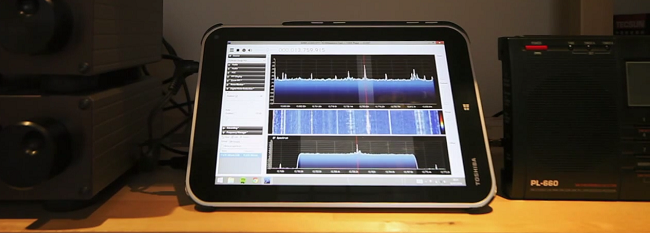 SWLing Post reader London Shortwave recently moved the Software Defined Radio (SDR) application SDR# (“SDR Sharp”) off of his MacBook Pro and onto a Toshiba Encore 8″ tablet PC. He recently posted this video of SDR# running his FunCube Dongle Pro+ on the Toshiba Encore tablet:
His reception of the Voice of Korea’s Spanish service is most impressive, especially considering the high level of RFI (radio noise) he must cope with at his home in London, England.
 Jeff Zang’s radio story is the latest in our series called Listener Posts, where I place all of your personal radio histories. If you would like to add your story to the mix, simply send your story by email!
In the meantime, many thanks to Jeff for sharing his personal radio history:
I have enjoyed your blog…indeed it has been a major factor in my getting the bug again after being away from shortwave for about 20 years.
 I had played around with DXing AM stations at night when I was around 10 or 11; I lived just outside of Washington DC and remember hearing WLS and WCFL at nighttime once WLMD went off the air (a daytime station only). Also WBZ in Boston and WBT in Charlotte were pretty easy to hear, as well as KMOX in St Louis.
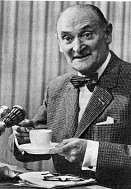
The original Happy Station Show host, Edward “Eddie” Startz. Photo courtesy of RNW.
I first remember hearing shortwave on a trip to see my uncle circa 1973. He had a shortwave radio. I clicked it on and was fascinated to hear all the different languages and odd music coming from Middle Eastern stations. I also quite clearly remember stumbling on some bagpipe music; I first thought this must be from Scotland but it turned out to be the “Happy Station” show on Radio Netherlands. Straight away I was hooked.
My parents got me a cheap shortwave radio (can’t remember the make, it wasn’t very good). It did however pull in the BBC and Radio Australia well enough and I became a devoted fan of both stations. I quickly moved up to the Realistic DX 160 once I’d saved a bit of money. This was a great radio to do serious Dxing with; especially later in the ’70’s when the sunspot numbers really went through the roof during the solar max at that time. I remember hearing Uganda, All India Radio, Radio Cairo came in fairly well at the time…Plus I was able to hear some Pirates on the weekends and since it had a BFO I could listen to Hams for the first time.
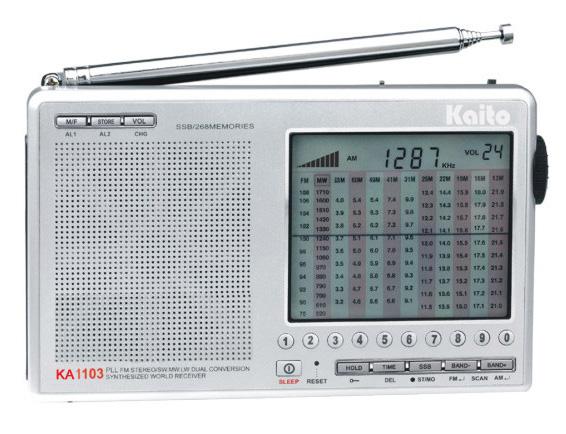 Somewhere around the early 1990’s I fell out of the hobby; had to concentrate on other things for a while. About 3 or 4 months ago I came across your blog and found myself getting the itch again. I now have a Kaito KA1103; amazing such a little radio can pull so much in. I’ve been reading your tips on what to listen to, have managed to catch some pirates and have enjoyed hearing Radio New Zealand in the mornings along with Radio Australia. I am sorry that so many of the stations I heard when I was a kid are now gone, SRI, Radio Netherlands, Radio Sweden, Radio Finland (I used to be a big fan of the latter two). But I have made up for this by doing some more ham DXing and also checking the Utility stations more often than I did years ago.
I just wanted to say Thanks for getting me into SWLing again.
Many thanks, Jeff, for sharing your story! I’m honored the SWLing Post had a part in your re-discovery of shortwave radio.
Click here to read our growing collection of Listener Posts, and consider submitting your own!
 SWLing Post reader, Walt, comments on the recent cuts to VOA’s shortwave radio service:
“Having spent many years as a VOA Foreign Service Officer and radio engineer, I can personally attest to the effectiveness of shortwave broadcasting and it’s ability to reach oppressed people around the world. The “new” technologies like the internet are so easily filtered and controlled, all the proxy servers in the world can’t get around all the blocking software that these oppressive countries’ can put in place.
If shortwave broadcasting was invented today it would be regarded as a modern wonder of technology. To bad that the IBB board of governors are so out of touch with conditions outside of the USA. Not everyone in these oppressed countries has internet access. They all have radios!”
Many thanks for your comment, Walt. I’ve often thought the same thing.
If shortwave would have been discovered in the Internet age, would be working on ways to use it as a digital communications medium in earnest; “targeting” people across the globe with digital information, without using the Internet? Quite possibly.
No other broadcast or communications medium crosses borders at the speed of light and has no regard for who is in power, nor who is receiving the information; shortwave is anonymous and accessible.
 Earlier today, I contacted Letitia King, Spokesperson for the Broadcasting Board of Governors (BBG). I asked her for details regarding the cuts to shortwave services that were recently announced.
Ms. King has just sent me the following list, with notes, which includes all shortwave reductions under the BBG:
Facts and Figures on Shortwave Broadcast Reductions
June 30, 2014
U.S. international media must optimize program delivery by market. We are ending some shortwave transmissions. We continue shortwave to those countries where these transmissions are still reaching significant audiences or where there are no reasonable alternative platforms at a lower cost to the BBG.
The shortwave reductions will save U.S. taxpayers almost $1.6 million annually.
There are no reductions in staff or programming – these are transmission platform reductions only. Programming continues to be available through other media.
Shortwave transmissions continue in many languages including to key shortwave markets like North Korea, Nigeria, Somalia, Horn of Africa, and elsewhere. (List enclosed below). Transmissions also continue on other platforms including AM, FM, TV and online.
VOA Azerbaijani
VOA Bangla
VOA English (in Asia)
VOA Lao
VOA Special/Learning English
VOA Uzbek
RFE/RL Persian (Farda)
RFA Lao
RFA Vietnamese
VOA
OCB
RFE/RL
RFA
MBN
 For your listening pleasure: three hours of Radio New Zealand International, recorded on June 28, 2014 starting around 7:59 UTC on 9,700 kHz.
This recording begins with the The RNZI interval signal: the charming and unmistakable call of the New Zealand Bellbird. After top-of-the-hour news breaks, you’ll hear Peter Fry’s music request show Saturday Night (click hear to read more about Fry).
SWLing Post reader, Mike, recently informed me that Peter Fry will be retiring this week. His last show will be next Saturday (July 5th). I will certainly miss hearing Peter Fry on the air, but wish him the best in retirement.
Click here to download this recording of RNZI as an MP3, or simply listen via the embedded player below:
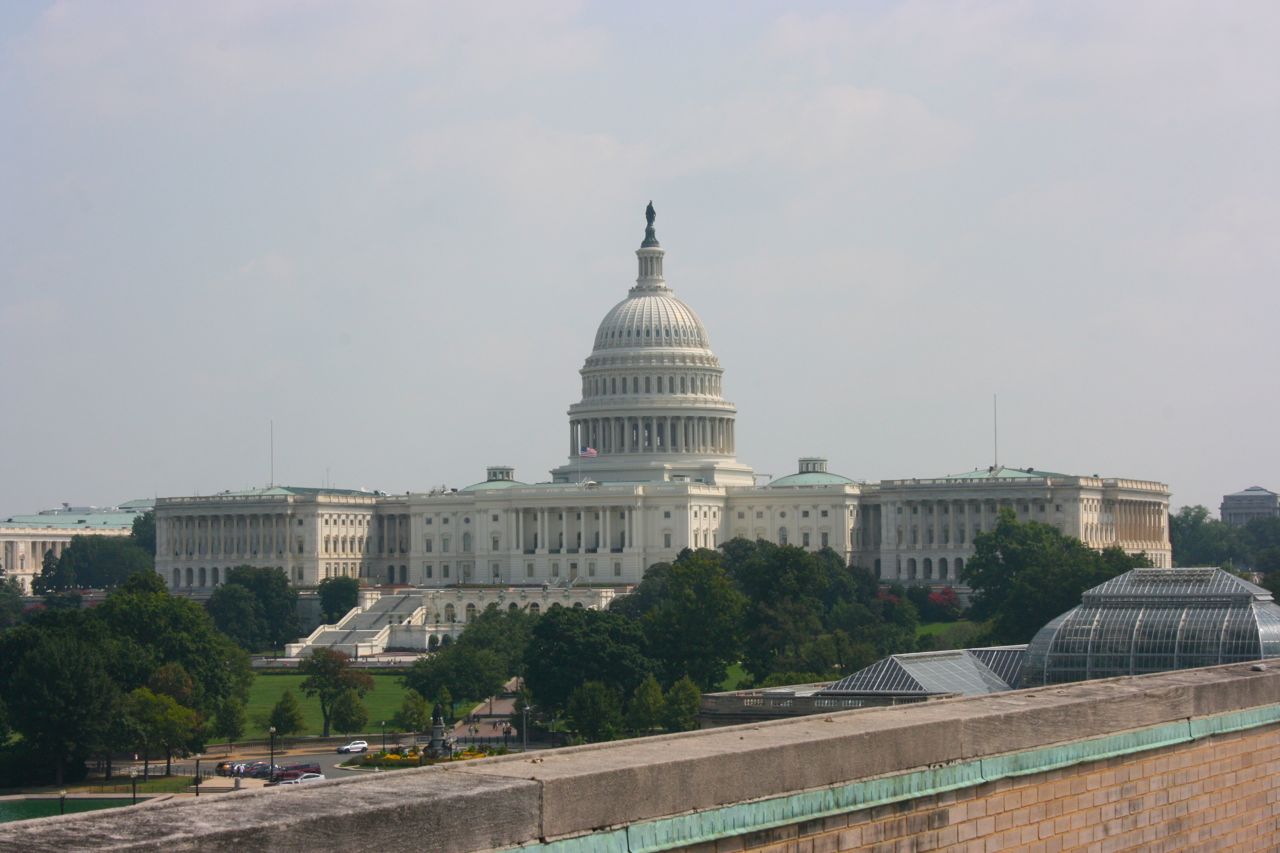
View of the Capitol Building from the roof of the Voice of America on 330 Independence Ave., S.W.
In response to yesterday’s post regarding sweeping cuts to VOA’s shortwave service, an SWLing Post reader (who wishes to remain anonymous) writes:
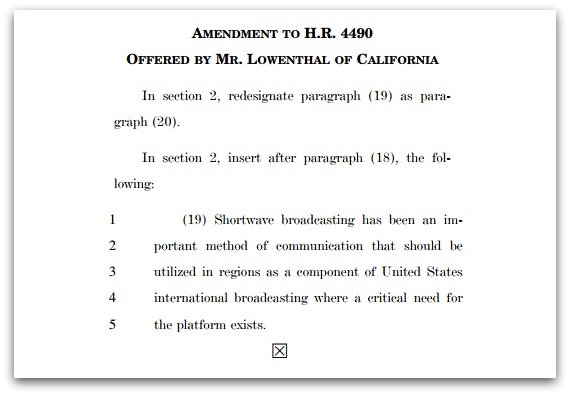
“HR4490 contains the following amendment attached to the bill by Cong Lowenthal of CA. Cong Lowenthal has the largest Cambodian community in the US in his constituency as well as Vietnamese.
This is the amendmentto HR4490 which was approved unanimously by the Committee on Foreign Affairs.
The Amendment to HR 4490 reads:
“Shortwave broadcasting has been an important method of communication that should be utilized in regions as a component of United States international broadcasting where a critical need for the platform exists.”