Category Archives: News

Ears To Our World: Giving the gift of radio

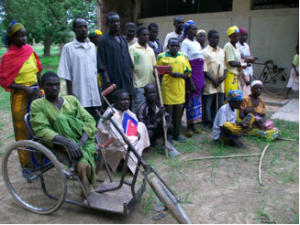
Doulek's Association of Disabled People, Cameroon (Photo: ETOW)

Doulek’s Association of Disabled People, Cameroon (Photo: ETOW)

This holiday season, you might consider giving a charitable donation to Ears To Our World. A one time donation of $40 US can help a community through the power of shortwave radio.

Many readers may know that I’m quite involved with ETOW.

We recently published this article showing the impact of one self-powered shortwave radio in rural Cameroon. It’s pretty amazing and this mission would not be possible without the support of those who understand the importance and impact of shortwave radio; people like you. Thank you!

The SWLing Post Podcast

podcasticonThanks to SWLing Post reader, Michael, I have set up our RSS feed for podcasts.

This means that if you enjoy listening to our shortwave radio recordings, you can now easily subscribe and download all of our audio automatically. This is not edited material–no introductions, nor host–simple shortwave radio recordings.

If you would like to subscribe to the SWLing Post Podcast, point your favorite podcasting application to our RSS feed:
http://feeds.feedburner.com/TheSwlingPost

In iTunes, for example, go to the “File” menu and select “Subscribe to podcast”–then, simply paste our RSS feed address in the url field.  Other podcast applications will have a similar approach.

Thanks, Michael!

Severance pay of Radio Netherlands CEO under scrutiny

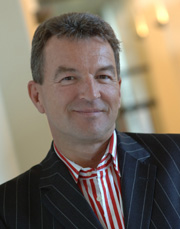
Outgoing Radio Netherlands CEO, Jan Hoek (Photo: RNW)

Outgoing Radio Netherlands CEO, Jan Hoek (Photo: RNW)

(Source: de Volkskrant, translated by Andy Sennitt)

The severance payment for the outgoing CEO of Radio Netherlands Worldwide is excessive. This is what Sander Dekker, deputy minister responsible for the media, wrote on Thursday in a letter to the Lower House of the Dutch parliament.

RNW Director-General Jan Hoek was originally set to receive a fee of 1.1 million euros. Following an urgent request by Mr Dekker and his predecessor, the RNW Supervisory Board agreed with the Director-General to reduce the severance pay to 800,000 euros. Despite the reduction in the amount, according to Mr Dekker it is still “too high and therefore inappropriate and undesirable.”

The Deputy Minister willl investigate the legal issues, but sees no possibility of preventing payment of the severance premium. Mr Dekker says that taking the matter to court offers no solution, because according to the agreement signed in 2001 Mr Hoek is formally entitled to receive his full severance payment.

A new law regulating the salaries of public officials goes into effect on 1 January. This will prevent excessive payments in the future. Under the new rules, a severance payment will be restricted to a maximum of 75,000 euros. But agreements already signed are not covered by the new law.

International Broadcasters support freedom of information

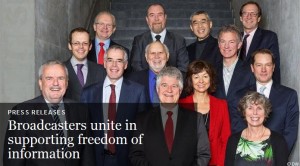
JointStatementThe international broadcasting arms of France, Australia, the US, the United Kingdom, Germany, Japan and the Netherlands issued a joint statement in support of press freedoms across the globe. With the exception of the Netherlands (RNW), all of these countries still broadcast over the shortwaves.

(Source: BBC Media Center via Kim Elliott)

We, the representatives of Audiovisuel Extérieur de la France (AEF), Australian Broadcasting Corporation (ABC) [Australia], British Broadcasting Corporation (BBC) [United Kingdom], Broadcasting Board of Governors (BBG) [US], Deutsche Welle (DW) [Germany], Nippon Hoso Kyokai (NHK) [Japan] and Radio Netherlands Worldwide (RNW), have met in Berlin to discuss common concerns.

We find international journalism is facing unprecedented challenges from countries that seek to deny their own citizens access to information from outside their borders in violation of Article 19 of the Universal Declaration of Human Rights, which states:

“Everyone has the right to freedom of opinion and expression; this right includes freedom to hold opinions without interference and to seek, receive and impart information and ideas through any media and regardless of frontiers.”

We call upon the world’s nations to strengthen their commitment to Article 19 and to support expanded opportunities to share information across borders through digital and mobile technologies.

Yet we note with dismay that certain governments continue to control the flow of information. For example, China routinely blocks the Web and social media sites of our broadcasters and jams our shortwave signals, or Iran and Syria interfere with the satellite signals that carry our programs. Governments in Eurasia, Africa, the Middle East and Latin America also seek to control what their own citizens can see, hear and read.

Many of these actions, including intentional jamming of satellites, violate international regulations. We condemn them without reservation.

We also call attention to troubling new challenges to free expression. Some governments are seeking to enact far-reaching telecommunications regulations to stymie free speech.

At the World Conference on International Telecommunication (WICT) in Dubai, representatives of the world’s nations have considered telecommunications rules that might explicitly apply to the Internet for the first time.

We cast a wary eye on such efforts to control the Internet, and we denounce efforts to identify and track Internet users in order to stifle free expression, inquiry and political activity.

We have agreed to increase, whenever possible, our support for efforts to circumvent Web censorship through the use of new and innovative hardware and software tools. We also agreed to increase our advocacy for Internet freedom.

NPR: WWII ‘Canteen Girl’ Kept Troops Company From Afar

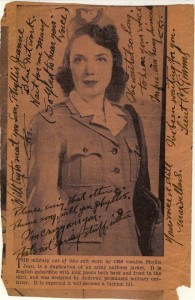
(Photo source: NPR)

(Photo source: NPR)

Long before the Internet and satellite phone, Phyllis Jeanne Creore Westerman brought soldiers home at Christmas via shortwave radio:

(Source: National Public Radio)

American service members have long spent holidays in dangerous places, far from family. These days, home is a video chat or Skype call away. But during World War II, packages, letters and radio programs bridged the lonely gaps. For 15 minutes every week, “Canteen Girl” Phyllis Jeanne Creore spoke and sang to the troops and their loved ones on NBC radio.

Her Christmas shows were morale boosters. America must “use more sentiment and less tinsel, and that’s the way it should be,” she told her listeners during one wartime Christmas broadcast. Now 96, Phyllis Jeanne Creore Westerman sits in her apartment on New York’s Fifth Avenue, remembering those seasonal broadcasts she recorded 70 years ago.

[…]She did a bit of radio work, found singing jobs with various bands at hotels like the Biltmore, and volunteered at the Stage Door Canteen. That’s where she got the idea for a regular radio show — to reach more troops — across the U.S., and in Europe by short wave.

Read the full article and listen to Susan Stamberg’s interview on NPR.org.

The Mighty KBC repeating digital tests this weekend

Caution: Don’t try this test if you’re driving an 18-wheeler!

The Mighty KBC is repeating the digital test they broadcast last weekend.

If you tune in (9,450 kHz, from 00:00-02:00 UTC) you should try decoding their digital message. If you configure FLDIGI according to their instructions, below, their broadcast should automatically launch your web browser with a message:

Because shortwave reception conditions were poor in many parts of the world last weekend, we will repeat the same digital text transmissions this weekend on The Mighty KBC.

These will be during the broadcast Sunday at 0000 to 0200 UTC (Saturday 7 to 9 pm Eastern Time in North America) on 9450 kHz. At about 0130 UTC, MT63-1000 will be centered at 1000 Hz, and PSKR125 will be centered at 2200 Hz. At just before 0200, MT63-2000 will be centered at 1500 Hz. Both MT63 modes will use long interleave.

Install both Fldigi and Flmsg from www.w1hkj.com.

In Fldigi, go to Configure > Modems > MT-63 > check 64-bit (long) interleave, 8-bit extended characters, and Allow manual tuning. Also, go to Configure > Misc > NBEMS > check Open with flmsg and Open in browser and, below that, indicate where your flmsg.exe file is located. If everything works, a shortwave transmitter in Bulgaria will open a new window of your web browser.

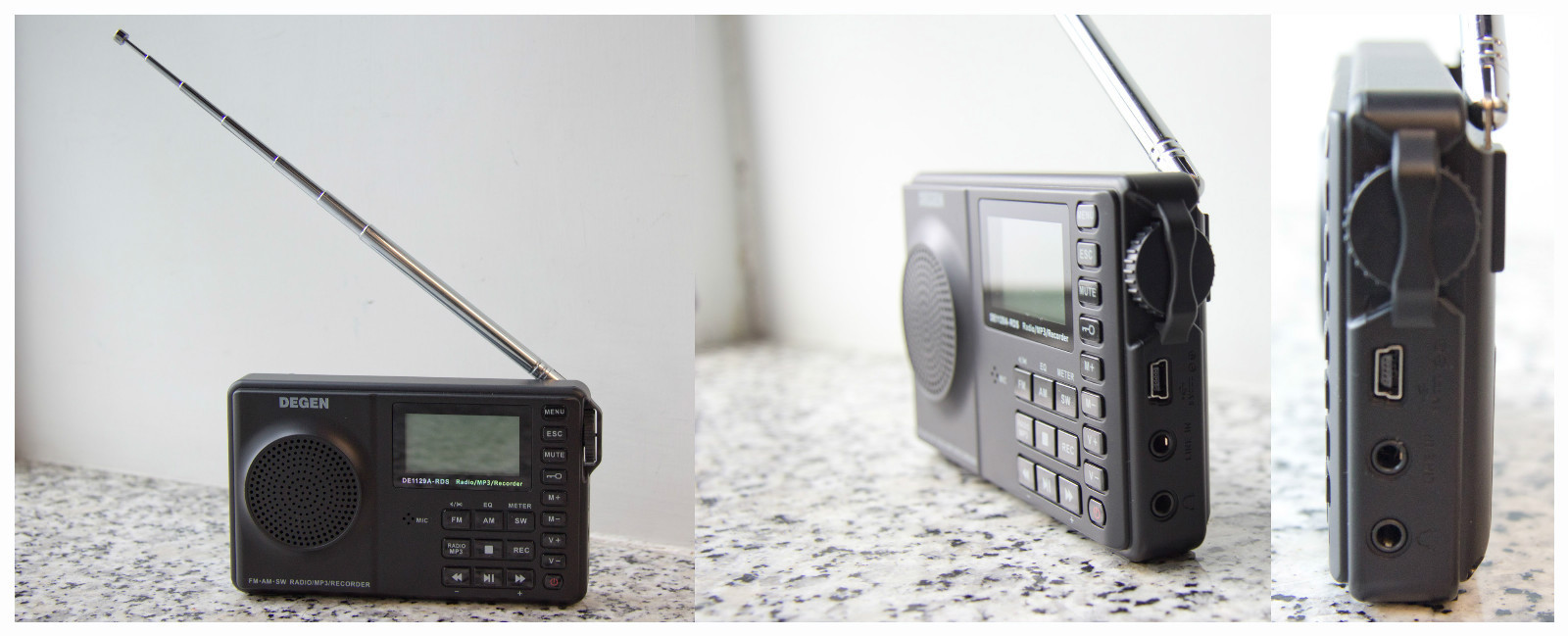
The new Degen DE1129A sports RDS, but is there really a version with keypad?

Thanks to a tip from the Herculodge, I discovered the DE1129A: a version of the recently reviewed Degen DE1129 with RDS. RDS is a very useful feature–especially for instant FM station ID on the go.

The DE1129A is available from Anon, a trusted Degen distributor from Hong Kong, on eBay. I have purchased from them before and have been very pleased with their service. Click here to view their listings.

If you’ve been sitting on the fence about purchasing the DE1129, perhaps RDS will sway you toward purchasing this portable radio with integrated digital recording and playback.

Frankly, I was unimpressed by the DE1129. Though the radio has very good FM reception and an impressive little speaker with bass response,  I believe the majority of shortwave and medium wave radio listeners would be upset with its overall performance.  I can’t imagine that Degen’s updates would bring dramatically improved performance on the shortwave and mediumwave bands. If nothing else, the lack of a number pad to directly input frequencies, would put me off. Cruising through the shortwave bands at slow 5kHz steps with noted muting between frequencies make band-scanning a chore on the DE1129.
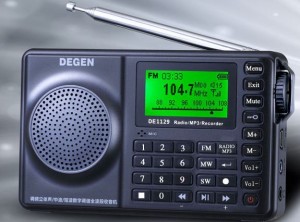
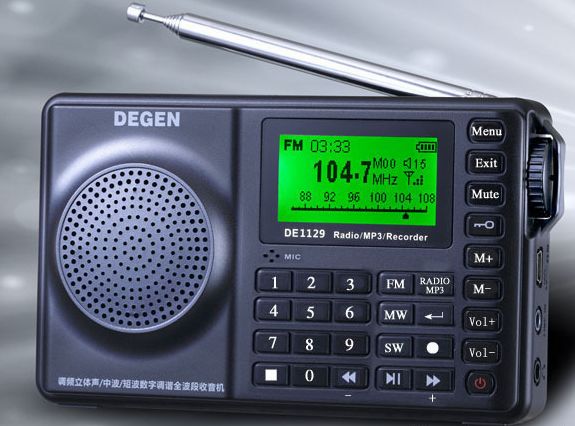
According to TecsunRadio.com, this image was altered by Degen to show what the DE1129 would look like with a number pad. It’s obvious that the image has been altered by Photoshop or another graphics application.

DE1129 Number Keypad?

Speaking of a number pad…earlier this year, TecsunRadio.com told me that there would soon be a version of the DE1129 with a number keypad.  They published a prototype image (see right). When I first saw this image, I could instantly see that it had been Photoshopped; obvious use of cloning tools and the fact that the number pad characters are not in alignment with the buttons really stand out. Still, for a prototype image, it gives you a good sense of what the final product will look like.

Within weeks, I started noticing the keypad version of the DE1129 appearing in search results on eBay and had assumed it was in production.
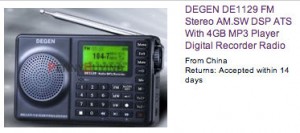
This eBay seller shows a version of the DE1129 with number pad, but the image is the Photoshopped image (see above) released from Degen earlier this year.

This morning, I opened an eBay listing of the DE1129 keypad version (see image on right) from pbuying.usa. Their listing clearly shows the same Photoshopped image from above. I then noticed that neither the product description nor any other image they feature indicates a number pad on the DE1129. I wrote a message to them this morning asking for clarification and will update this post with their response.

UPDATEpbuying.usa confirmed that his radio does not have a number pad and was apologetic and thankful that it was pointed out. The image has been removed.

I mention this as a note of caution: On eBay, you should always confirm any discrepencies before purchasing.  Though you could rightfully return the radio and get a refund, return shipping to Hong Kong/China (which you would pay for) could be in excess of $20-25 US.

By the way, though the addition of a number keypad on the DE1129 would make this radio at least 50% more usable, it would not sway me to recommend it because receiver performance is so mediocre. Check out my other review notes here.

I’m very curious if any SWLing Post readers have actually received a keypad version of the DE1129–please comment!