Category Archives: News

The Mighty KBC: two shows on shortwave tonight

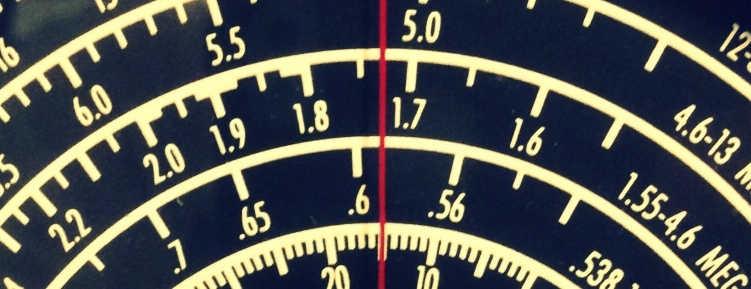
Scott-Marine-SLR-M-Dial

Sunday, August 7, 00:00 – 02:00 UTC, The Mighty KBC will broadcast on 9925 kHz for two hours:

  • 00:00 – 01:00 UTC It’s Radio, But Not As We Know It – Dave Mason
  • 01:00 – 02:00 UTC The Giant Jukebox – Eric van Willegen

Note that for those of us in North America, the broadcasts will start at 20:00 (EDT) tonight (Saturday).

I’m planning to tune “Scottie”–my Scott Marine Model SLR-M (above)–to the KBC signal and enjoy the shows!

Patrick comments on his newly-restored Sony CRF-320

Sony-CRF-320

Many thanks to SWLing Post reader, Patrick Mason, who writes from Juneau, Alaska:

I am the owner of the radio that Paul Carlson restored in the video. The serial number is 31358.

I wanted to comment about a statement regarding the receiver’s sensitivity.

After Paul concluded his final tune-up of the radio I can confirm on the shortwave bands, particularly 80 and 40 meters, the sensitivity on AM was better than 0.2 uV/m. That’s outrageous! The VFO is rock solid with no detectable drift whatsoever.

Also, Paul replaced all nylon gears with custom metal gears… they will never fail again.

Anyone considering acquiring this radio, buyer beware! There are many on the WEB who will claim it to be in some ‘totally restored’ condition…when mine arrived from the seller it ‘seemed’ to be ok…..until the counter went fruit loops shortly after unpacking. When Paul got inside the radio it had been ‘tweaked and peeked’….all wrong.

I have a CONSIDERABLE sum invested in this SONY. If I could have known it’s ACTUAL condition BEFORE my purchase, I may have passed….however, I now own what I consider to be the quintessential example of SONY’s best engineering. All I can say, it’s an absolute joy to use

Patrick, you no doubt have a benchmark Sony in that CRF-320.

It’s funny: I was just attending a local hamfest here in North Carolina and a vintage radio vendor pointed out Carlson’s repair video for your CRF-320! He said (and I agree), that your CFR-320 was restored to a level that’s almost in a league of its own. I know you invested a lot in this radio, but you certainly have a fine example now–that is fully-functional–and will most likely outlast us all! Enjoy!

Amateur Radio Special Event Station on Radio Caroline

Ross-Revenge-Caroline

(Source: Southgate ARC)

Many readers will remember with fond memories from the 1960s, 70s and 80s, the famous offshore radio station Radio Caroline and the last ship they used to broadcast from, the MV Ross Revenge.

From today, a group of amateurs from the Martello Tower Group are operating special event station GB5RC from the Ross Revenge, moored in the Blackwater Estuary near West Mersea and Bradwell-on-Sea in Essex to celebrate five decades of offshore radio broadcasting.

Over the last few weeks, the group have set up quarter wave verticals for 40m, 20m and 15m along with a 5/8 wave for 10m and dipoles for 80m and 40m at various locations on the ship in preparation for the special event station.  They also hope to be able to operate VHF and UHF for local contacts and with some D-STAR and DMR thrown in for good measure.

GB5RC will be on the air from today, the 5th August until Monday 8th August with two stations operating simultaneously running full UK legal output power.  Let’s hope HF conditions are decent.

The Ross Revenge has been the home of Radio Caroline since August 1983 and although broadcasts directly from the ship ended in 1991, the station continues via the internet and once a month, live programmes are broadcast from the Ross Revenge with the help of the Manx AM transmitters on 1368kHz.

For more information see either https://www.qrz.com/db/GB5RC
or the Martello Tower Group website
http://www.martellotowergroup.com/gb5rc.html

Direct QSLs to G6NHU, bureau via GB5RC

RFE and the 1956 Hungarian Revolution (Part 2)

HalliDial

Many thanks to Richard Cummings of the website, Cold War Radio Vignettes, who writes:

[F]or your weekend reading pleasure, Part Two, in which I briefly examine the background to and excerpts from the RFE controversial broadcasts:

https://coldwarradios.blogspot.de/2016/08/radio-free-europe-and-1956-hungarian_5.html

Many thanks for sharing, Richard!

Update: Sangean DT-160CL v Sony SRF-39FP

Sangean_DT-160CL_21

It’s been thirty seven hours since I started the Sangean DT-160CL versus Sony SRF-39FP endurance test and both radio are still going strong.

Sangean-DT-160CL_and_Sony-SRF-39FP

So far, the DT-160CL’s battery indicator still shows full voltage. The SRF-39FP has no battery indicator, but through experience I know it’s nowhere close to quitting.

I’ve spent some time tuning both radios and comparing them on mediumwave/AM and FM.

The DT-160CL does an amazing job on the FM band and has a definite edge on the SRF-39FP.

On AM, however, the SRF-39FP seems to wipe the floor with the DT-160CL.

In truth, though, it’s tough to evaluate performance and audio while the endurance test is ongoing, so I should reserve judgement. During the battery endurance test, I’m using the supplied earbuds from both radios. The Sangean’s earbuds a fairly large and uncomfortable in the ear–they make the audio sound hollow and too focused on mid-range tones. In truth it’s pretty much the same thing for the 39FP’s buds.

I can’t wait to use some of my proper in-ear buds on the DT-160CL and evaluate its audio characteristics on AM and FM.

Follow this review thread by bookmarking the following tag: Sangean DT-160CL v Sony SRF-39FP

Paul’s review of the Kaito KA108

Many thanks to SWLing Post contributor, Paul Dobosz (K8PD) who shares his review of the Kaito KA108. Paul originally wrote this for the Michigan Area Radio Enthusiasts and has kindly allowed us to post it here:


Kaito KA-108 Review

Kaito-KA108-AM

by Paul Dobosz (K8PD)

Kaito just introduced a pocket sized DSP based MW/SW/FM receiver with some interesting features missing in other SW receivers its size. I just got my hands on one for the first time a couple of months ago and am getting familiar with its features, performance, and quirks. I first saw the KA-108 at the Consumer Electronics Show in early January when I visited the Kaito booth and spoke with Walter about their newest radios. There are no schematics included with the KA-108 and I haven’t cracked open the case but based on the functionality, size, and price point it appears that the KA-108 utilizes the now common DSP based receiver architecture found in most of the new portable radios.

First of all, a brief run down on the features and functions of this compact little radio.

  1. Compact Size –  5.5” x 3.25” x 1.1” Weight 9 oz
  2. Frequency Coverage – MW: 520 – 1710 KHz, FM: 64 – 108 Mhz, SW: 2300 – 23000 KHz
  3. Memories – 400 (100 MW, 100 FM, 200 SW)
  4. Power – BC-5 Rechargeable LiPo 3.7V battery
  5. Other Features
    • Timer/Clock radio dual alarm function
    • MP3 Timer record & playback to/from a Micro SD card
    • Standard USB port that accepts a thumb drive.
    • Exceptional Bass Response for travel sized radio
    • “Auto Store” feature will scan and store frequencies
    • Battery charging via micro USB (no wall wart to carry)
    • Audio “line In” can be used as computer or MP3 speaker

Most radios have their good and not so good points and the Kaito KA-108 is no exception. Here is a rundown on the LA-108’s “HITS & MISSES”

The HITS

This radio is small and lightweight which makes it an ideal travel radio.  The control layout features a full keyboard for frequency entry as well as up and down keys that will search for signals when held down.  The fit and finish are excellent and the keys have good positive tactile feel.  There are two rocker switches, one for volume up/down and the other for band/mode selection.  The radio comes with a decent user manual and quick start guide.  The manual’s English is a little awkward in places but is fully understandable.

The backlit LCD display is brightly lit with large white numbers on a blue background.  It is easy for older eyes to read, even without glasses.  The signal strength meter is actually fairly useful which is rare for radios at this price point.  

The standard frequency step is matched to channel spacing for the band in use with exception of the FM band which tunes in 100 KHz increments instead of the US standard 200KHz steps when the frequency range is set to the North American band.  The FM band can be set up to tune all the way down to 64 MHz if desired but since TV has migrated from analog to digital the usefulness of that coverage is minimal for North American users.  AM is 9 or 10 KHz step capable with a frequency range to match all parts of the world.  In addition to the standard frequency steps, the thumbwheel encoder can be used to fine adjust the frequency between the standard increments in 1 KHz steps.

The MP3 playback is very pleasant to listen to.  I tested it with several different genres of music with consistently good sound quality.  I haven’t tried the recording function yet but it is definitely a nice feature, especially in such a compact package.  The KA-108 has a standard USB input (not mini or micro) behind a sliding door on top of the radio for external memory devices like thumb drives.  MP3s can be played and audio recorded to/from this port as well as the Micro SD card slot aside of it.   I’m also hopeful that the USB port may be capable of upgrading the radio firmware in the field.   If not, that’s another feature that Kaito should definitely consider for future versions of the KA-108.  (More on that later)

One feature I really like is the rotary tuning thumbwheel encoder on the side of the radio.  It has a light detent feel that allows you to manually tune the radio in 1 KHz steps to easily allow you to move to one side of a signal.  Frequency entry via the numeric keyboard is straight forward and intuitive with exception of the non-standard location of the zero key to the right of the bottom row of the numeric keys.  

The FM reception is excellent with bass response that makes you wonder how such a mellow sound comes out of such a small box.  Despite the 1.5” speaker, the audio has lots of bass and lacks the “tinny “sound of most travel portables with small speakers.  It plays loudly without distortion.

MW reception was typical for a radio with limited space for a small ferrite antenna and I was able to hear the usual SWBC stations and time/frequency UTE’s on the HF bands.  SW reception using just the 20” whip was just OK with easily listenable strong signals found on most of the active SW bands 2MHz and above.  The KA-108 is AM only on the HF bands (no SSB or CW).  There are some quirks with the MW and AM reception that I’ll cover in the MISSES section of this review

The MISSES

I never thought I would complain about a portable receiver with a “too tight” a bandpass filter but the KA-108 is a first.  The bandpass filter for MW &SW are extremely narrow which when coupled with the KA108’s exceptionally strong bass response, reduces the intelligibility of the received audio on the MW and Shortwave bands.  I have been able to mitigate the situation a little bit acoustically by covering a portion of the speaker grille with my hand or placing a small tube in front of it which seems to attenuate the bass and improve the overall audio response but the audio is still lacking in the higher frequencies that make things like music and the human voice more intelligible.  

Tuning 1-2 KHz off of the carrier frequency with the thumbwheel helped improve things a little bit similar to the way you might use IF shift on a high end tabletop receiver.  I also noticed that stronger stations that have a signal that spills further down the filter’s skirts had better audio response than those that lacked sufficient strength to spill over the filter response curve. I am hopeful that Kaito will offer a firmware upgrade to open up the bandwidth.  If the USB port used to play thumb drives has hooks into the radio’s CPU then it might be possible to open up the bandwidth and improve the MW and SW audio without cracking open the radio case to re-flash the CPU or make a hardware change.  The bandwidth issue is the largest single miss for the KA-108 in my opinion

I found a few buzzes and whistles on the MW band and you can hear the CPU clock oscillator strongly at 12MHz.  I haven’t looked inside of the radio yet but I would imagine that some of the MW noise can be tamed with a bit of internal shielding.  

I also found the AGC setting to be a bit too abrupt, jumping up and down in almost a step function with a signal whose level was fluctuating quite a bit.  That’s another minor software adjustment to consider for the next edition.

Due to the KA-108’s small size, the whip antenna is rather short (only about 20”) which means the front end must have a lot of gain leaving it more vulnerable to overload.  I was able to receive a the stronger SWBC stations while sitting in the middle of my house but I also heard another faint signal under the SW stations.  The interfering signal turned out to be a local 1KW AM station on 145o KHz whose transmitter is about 4 miles from my home.  It was present in the background while listening to SWBC and was heard standalone on its 2nd and 3rd harmonics which were most likely generated internally due to the high gain front end.  The short SW antenna does create the need for higher front end gain but should be accompanied by a high pass filter behind the SW whip antenna or at least a 10dB attenuator.  Either or both of those features would reduce AM BCB intrusion while listening to SWBC.  

In the coming weeks I’d like to do some parametric measurements on the KA-108 and will also see how it behaves with a longer antenna and antenna tuner with low pass filter ahead of it.  That should be a good test to see if a simple filter can eliminate the AM intrusion.  Improvements to widen the AM/SW filter bandwidth and reduce the AM overload should be high priority improvements for the next version of the KA-108.  

Summing It Up

I found the KA-108 easy to operate as I’ve explored the AM/SW/FM and MP3 operating modes and it’s a nice sized radio for casual listening when I’m at home or to take with me as I travel for use as an alarm clock, music player, and radio in one compact package.  

The KA-108 has potential with a few software and hardware tweaks. Fixing the MW/SW bandwidth is #1.  A simple high pass filter that rolls off just above the AM broadcast band behind  the SW whip antenna is #2.  I can live with a few buzzes and tones but why not fix them with a little inexpensive shielding while adding the other fixes.  

The KA-108 will never match the performance of tabletop or lunchbox sized portables, but if you’re looking for a nice little radio that will almost fit in your shirt pocket with nothing more than a micro USB cable to tote along for battery charging, and a radio that sounds twice its size, this radio fits the bill.  I hope that Kaito will address the issues I’ve noted with future software/hardware revisions to improve the performance of the KA-108 and maybe even offer a way for current owners to field upgrade their radios.  


That’s a thoughtful and fair assessment of the Kaito KA108, Paul. It’s a reminder that, with a few strategic tweaks, the KA108 could be a great little portable. Thank you for sharing your review with us! 

The Sangean HDR-16: Dan takes notice

HDR-16

Many thanks to SWLing Post contributor, Dan Hawkins, who comments in reply to our post about the Sangean HDR-18:

Darn. Just when you thought you read a review of the latest Sangean radio another one comes out. I have yet to find a review of the Sangean HDR-16.

[The] HDR-16 is a portable AM-FM HD radio with stereo speakers. Runs on household AC power or four C cells. At 10? long this is not exactly pocket sized but small enough for beach or nightstand duty. I wonder how fast it eats up the C batteries?

I don’t think HDR-16 will hit the shelves until mid-September.

Dan then followed up with pre-order prices:

That Adorama price is correct! I just noticed that Universal Radio also has a pre-order price of $99.99.

$100 US is not a terrible price for a quality portable AM/FM stereo analog/digital radio. Indeed, that may be the best price I’ve seen for that particular feature set. I bet four C cells will power it for quite a long time, too.

At second glance, the HDR-16 has an impressive feature list (via Sangean):

  • HD Radio digital and analog AM / FM-Stereo reception
  • 10 Memory Presets (5 FM, 5 AM)
  • PAD (Program Associated Data) Service
  • Support for Emergency Alerts Function
  • Automatic Multicast Re-Configuration
  • Automatic Simulcast Re-Configuration
  • Auto Ensemble Seek
  • Real Time Clock and Date with Alarm and Sleep Function
  • 2 Alarm Timer by Radio, Buzzer
  • HWS (Humane Wake System) Buzzer and Radio
  • Snooze Function
  • Tone & Bass Control
  • Information Display for Channel Frequency, Call Sign, Radio Text, Audio Mode, Service
  • Mode, Signal Quality and Clock Time
  • Easy to Read LCD Display with Backlight
  • Battery Low LED Indication
  • Auxiliary Input for Additional Audio Sources
  • Record Output for Connecting to Hi-Fi System or Recording from Audio Program
  • I/O Jacks: DC In, Line-Out (Rec-Out), Aux-In, Headphone and HD / FM Rod Antenna

The feature set sounds like something that would appeal to my buddy Jeff McMahon. He’s been looking for a bedside radio for quite a while. This one has a “Human Wake System”–perhaps meaning the alarm gradually increases the volume? Of course, I question if the HDR-16 will perform well on the AM broadcast band–I suppose it depends on how well the receiver is shielded from CPU noises, etc.

I might be tempted to grab one of these and test it. I like the price tag much better than that of the HDR-18, though I’m not sure its audio fidelity will be comparable. While I doubt I can receive an HD broadcast from my home, it might be fun trying.

Have any SWLing Post readers pre-ordered the HDR-16? Care to do a review?