Shortwave listening and everything radio including reviews, broadcasting, ham radio, field operation, DXing, maker kits, travel, emergency gear, events, and more
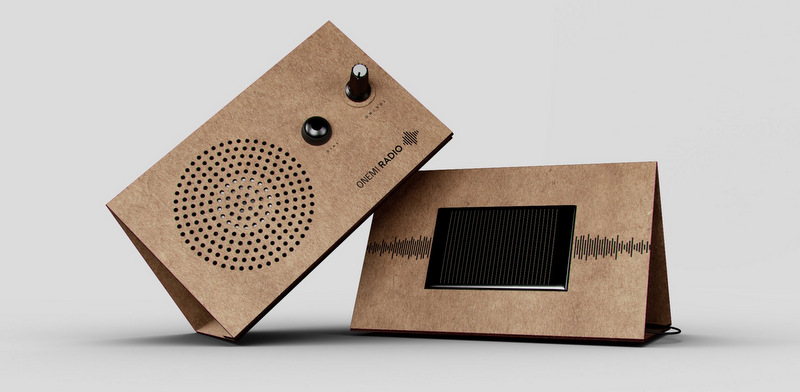
Chile is one of the most seismically-active countries in the world. The ONEMI (Oficina Nacional de Emergencia del Ministerio del Interior)–Chile’s emergency management office–recently added a a new tool to Earthquake kits Chilean families keep at hand.
It’s a foldable, flat-packed, solar-powered cardboard FM radio called the ONEMI Radio. It has a very simple design and interface: a volume control and tuning button that auto-tunes local FM stations.
It’s a cheap, portable and efficient solution that can enable Chilean emergency management to communicate advice during state of emergencies. Clever!
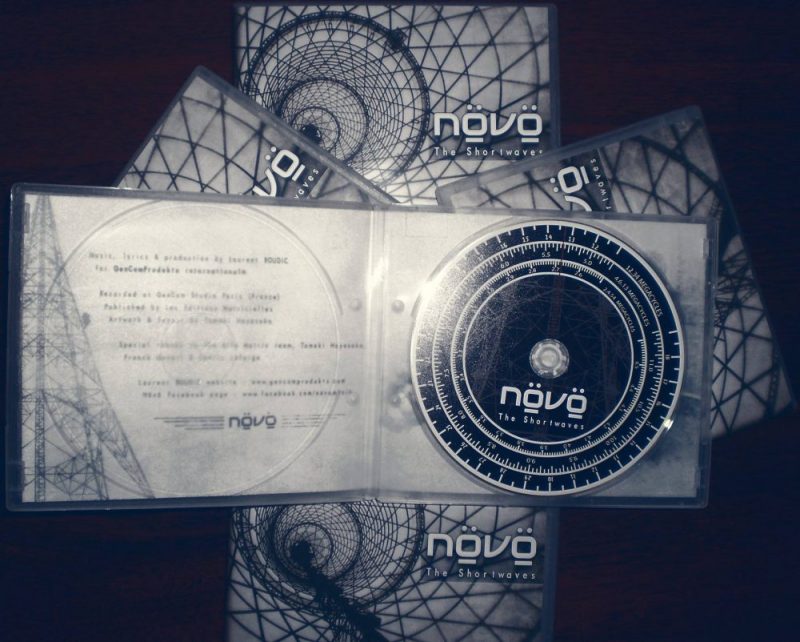
This is so fantastic, full of numbers stations including the very weird Asian ones, interval signal inspired tunes, data bursts and general shortwave radio weirdness.
Plenty of deep mixed samples of Radio Peking, Moscow, NHK, VOA etc.
Hopefully you can listen to it on Spotify, Apple Music or somewhere though any progressive DXer won’t be disappointed if they chose to purchase the album.
Mark actually sent this tip several weeks ago–immediately after the album release. I had problems, at first, downloading the album (probably because I was outside of the US at the time). I finally did download it, though, and I agree with Mark: it’s well-worth a listen. I’ve added it to my music collection.
Növö may not appeal to everyone, but if you’re a fan of electronic music with heavy use of samples and an “industrial” flavor, you’ll love The Shortwaves.
Many thanks to SWLing Post contributors Eric (WD8RIF) and Mike (K8RAT) who remind me that TX Factor episode 11 is online:
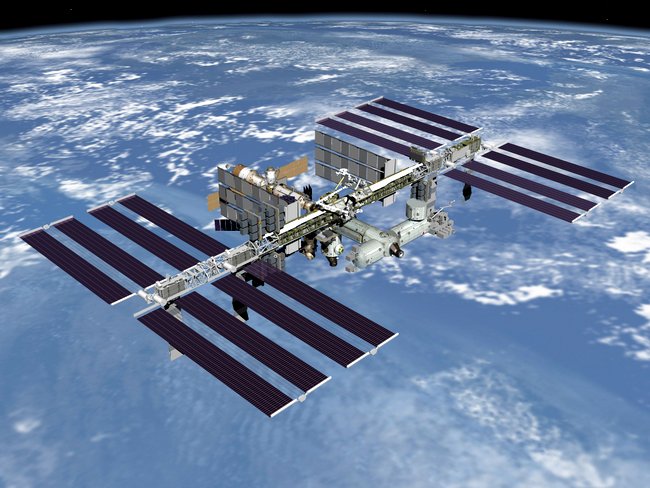
“In this special edition, we follow the progress of a Devon School in their attempt to be one of the ten lucky UK schools to link up with Tim Peake aboard the International Space Station.”
It is with sadness we pass along this message from Jonathan Marks concerning Lou Josephs:
I am afraid Lou passed away Sunday morning. But his wife Susan would like to pass on the thanks to those people who sent him best wishes via SWLing.com and shared memories with him. He heard them and perked up.
Picked some clips from the archive and added tributes from Vasily and Jim.
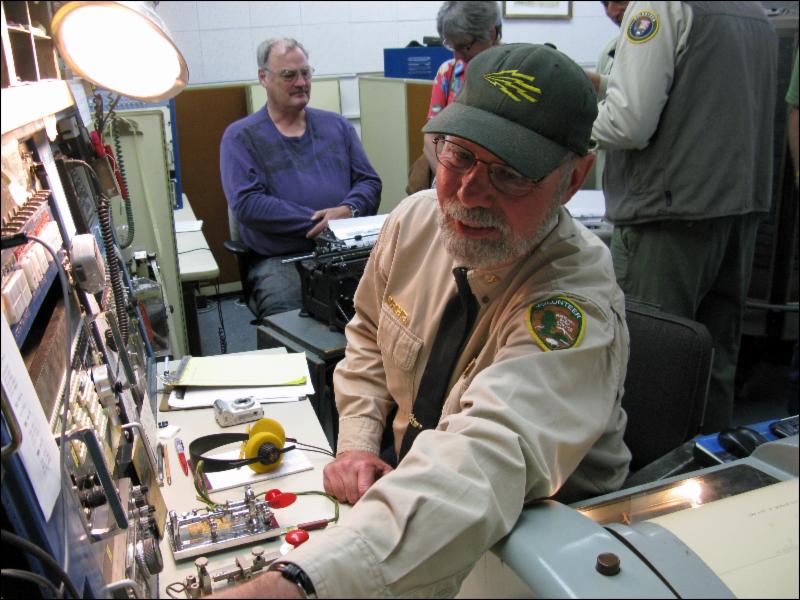
“Thought I’d forward you this information on the annual “Night of Nights” event on July 12 (U.S. local time)/July 13 UTC, which provides an opportunity for shortwave QSLs – assuming the listener understands Morse code!
I’m sure you’re familiar with this one-night-a-year happening, in which maritime radio stations rise from the dead and transmit Morse code messages again for a few hours.
As a guy who honed his CW sending skills by listening to these stations’ constantly repeating messages, I have a sense of nostalgia and gratitude toward these stations, which helped me obtain my first Novice license, WN9ICB, at the age of 15 … less than 2 months after I taped the WWV recording that I submitted.”
It’s that time of year again. Time to honor all those ops who came before us by preserving their skills, traditions and culture through on the air operations.
Why 12 July? Long time True Believers know the story. But it may be worth repeating for new arrivals and to remind everyone of the traditions we hope to keep alive.
On 12 July 1999 some very tough looking grizzled old radio pioneers had tears in their eyes as the last commercial Morse code radiogram was sent. It was the end of an era. And as the last beeps faded away into the static they witnessed the end of the career to which they had devoted their lives.
These men – and some women – had stood watch over the airwaves on shore and at sea. Theirs was mostly the business of maritime commerce. But when their ship was in peril they were called upon to send the most electrifying three letters in radio, S O S, knowing that all their fellow radio operators would press their earphones close to get every scrap of information and bring aid to their stricken ship.
Once, our coasts were dotted with great Morse code radio stations, all communicating with ships at sea. They’re all gone now… all except one, the one they called the Wireless Giant of the Pacific, located at Point Reyes.
On that sad day in 1999 another event took place. The Maritime Radio Historical Society (MRHS) was formed. We made it our life’s work to honor the men and women of wireless by restoring that wireless giant. One year and one minute later the giant’s voice once again spanned the oceas as we picked up the thread and kept the faith with our colleagues of the air.
Every year since, in an event that became known as the Night of Nights, Morse code station KPH has returned to the air, joined by KFS and the station of the MRHS, KSM.
This year our friends and colleagues at USCG station NMC have labored mightily to bring that storied call sign back to life on Morse code for the evening along with NMQ in Cambria, CA..
And station NMW in Astoria, OR will be on the air as well.
Stations WLO and KLB will join us again as hey have in years past.
This is a global and local event. Hundreds of listeners around the world will be waiting with their earphones on, waiting for the signals of the great station to once again arc over the dome of the Earth to their receivers.
You can be with us in person!
The frequencies for this event are numerous! I have listed the USCG (NMC) frequencies below, but please check the MHRS newsletter for MRHS and other maritime station frequencies.
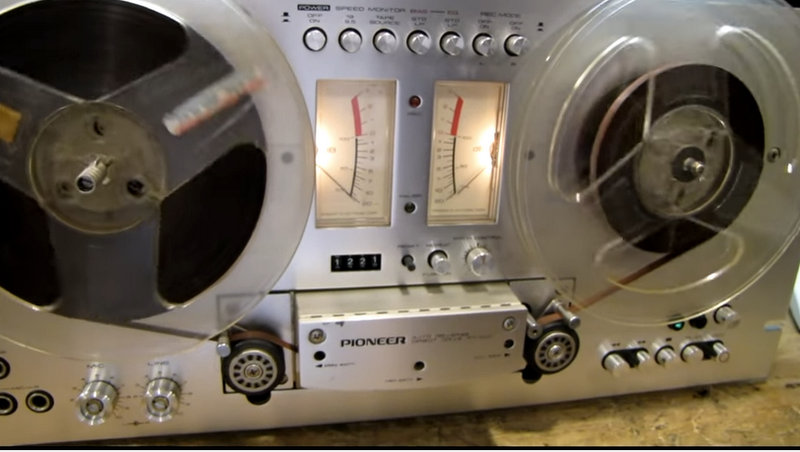
Several weeks ago, an SWLing Post reader (sorry–I’m missing your name in my notes!) sent me the following YouTube video. The video is essentially a review of the Pioneer RT-707 reel-to-reel tape deck. The reviewer is using a “mystery” tape of shortwave radio broadcasts in the deck.
You’ll recognize a number of broadcasters in his audio clips:
I’ve actually asked this YouTube reviewer if he would digitize the tape so that I could add it to the shortwave archive. I love lost and found recordings like this.
Last year, I was approached by die-hard shortwave radio listener Fred Studenberg, who had an idea that at first seemed outmoded, but soon had me intrigued: he wanted to design and build a car radio. Well, a car shortwave radio.
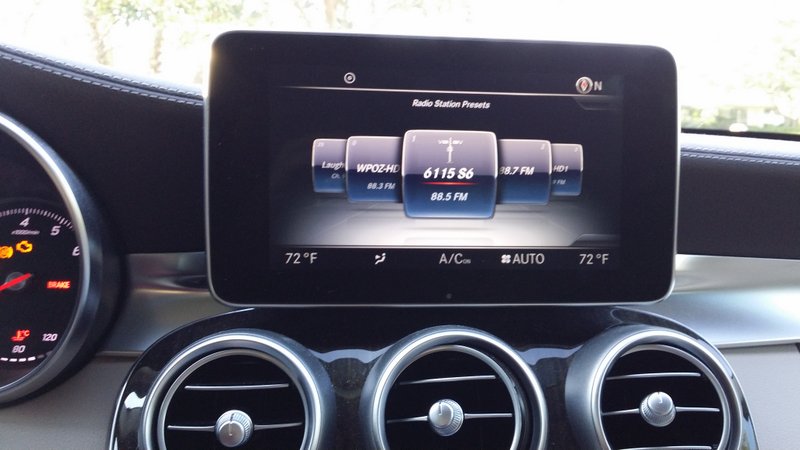
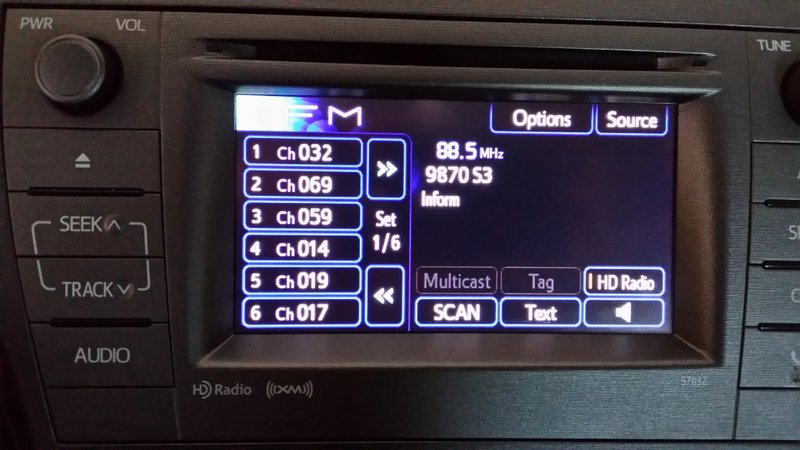
Studenberg described his ideal car receiver. It seems he’d abandoned the idea of making a radio along the lines of a Sony, for example, that takes the place of an existing car radio. Rather, Studenberg, with singular purpose, envisioned something quite unique: a little black box shortwave that could be easily installed in the back of a vehicle, transmitting audio from the shortwave receiver to the car’s system via an FM transmitter link. One would tune the car radio to an FM frequency––say, to 88.5––and listen to the shortwave receiver which would be located at a convenient location, near the mobile antenna, somewhere in the car (in the trunk, under a seat, etc.).
I was doubtful…and for good reason. To begin with, I’ve never used an effective audio FM transmitter link in a vehicle. They’re all rather mediocre, and usually inject noise––or, are simply too weak to be effective. Secondly, I imagined it would be frustrating to remotely operate a little black box stashed in the trunk of your car without some form of display feedback at hand, showing frequencies and so forth. Plus, I concluded, wouldn’t it be a pain to install? And how would you control such a shortwave receiver? To top it off, I just couldn’t imagine such a system coping with the RF-noisy environment of an car. The more I thought about it, the less feasible it seemed. I hated to disappoint Fred with my concerns.
And this video silenced my concerns: remarkably, it appeared Studenberg had managed to overcome each of my doubts. I was impressed, and interested.
All Studenberg wanted to know was, might any other SWLs benefit from such a device?
I thought of all the commuters and frequent travelers out there, with a penchant for shortwave and a shortage of time in which to enjoy it. Are you kidding? I thought. What SWLers wouldn’t give to turn a tedious traffic jam into a shortwave jam session?
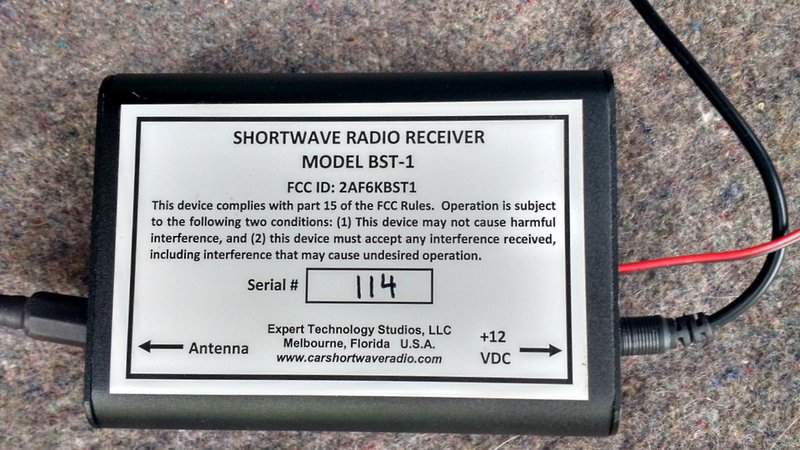
Fast-forward to this year, when Studenberg put his BST-1 on the open market. And in late February, he kindly sent me a loaner BST-1 to evaluate.
Installation
As many regular readers know, this has been a particularly busy winter and spring for me, so I had to delay installing the BST-1 in my car. I was sure it would require dedicated time and likely a bit of troubleshooting to get the shortwave working as intended.
But recently I finally had a moment to install the BST-1. And I quickly I realized that, yet again, I had been fretting over nothing. My Toyota minivan was actually well-suited to installation of the BST-1, since it has a hinged hatchback door, a dedicated 12VDC plug in the rear, and even a small niche in which to tuck the BST-1.
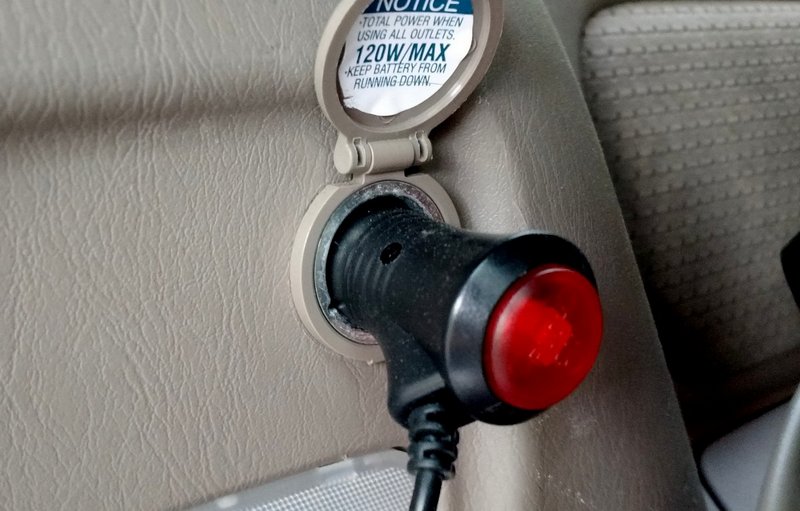
The BST-1 is also supplied with a 12VDC cigarette lighter plug. If you have a minivan or SUV with an auxiliary DC port, powering the BST-1 will require no tools.
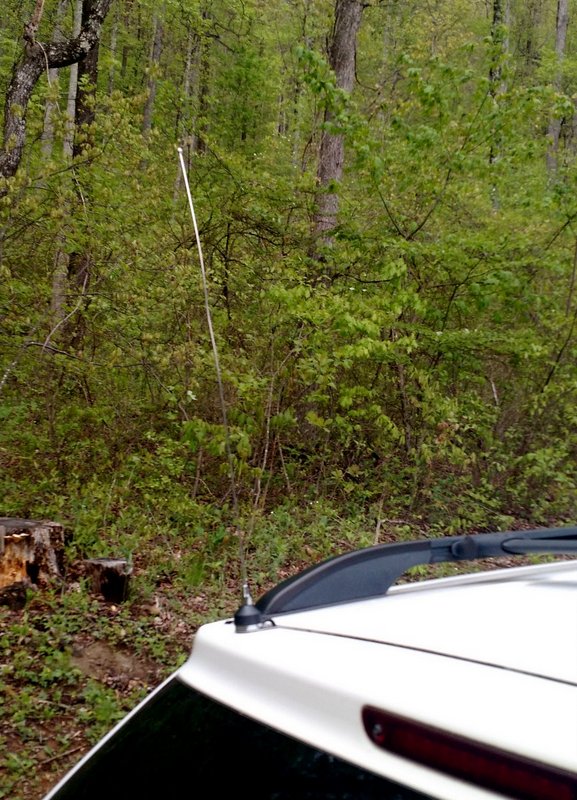
The radio’s proud papa also sent a Model CBST-1 mobile shortwave whip antenna with the BST-1. The antenna came with the steel whip and base, a trunk lip mount, and antenna feed line terminated with the appropriate connector. [Note: this whip is surprisingly short!]
The supplied shortwave radio steel antenna whip is short and effective. It should mount on most vehicles with little problem.
Admittedly, my minivan’s hinged door doesn’t work perfectly with lip-mounted brackets—but after some trial and error, I found just the place to mount it where the door wouldn’t damage the base of the antenna. The feed line was easily long enough to cover the span from the top of the door to the receiver.
As for the receiver, it really was a cinch to install: I simply connected the antenna feed line, plugged in the supplied 12 VDC power cord (note that, alternately, there are also twelve VDC pigtails that can also be used) and placed the BST-1 in the back pocket compartment of the minivan.
I’m sure some vehicles will lend themselves to an easy installation like mine, while some may actually be a bit more difficult. Regardless, I do think the installation process is very easy compared with, for example, installing a mobile ham radio transceiver.
I turned on my car’s power, tuned the radio to the default FM frequency, and after a brief spot of tuning, recognized the unmistakable vociferations of Brother Stair—a sure sign that we’re (a) in North America, and (b) on the shortwaves!
Operating the BST-1
If, like me, you’re the type of person that likes to dive into a new product without referencing a manual, you may need to dial down your impulsivity a little to experiment with the BST-1. While the remote control—a two-button key fob—is extremely simple to use, it’s important to learn how it interacts with the BST-1 receiver.
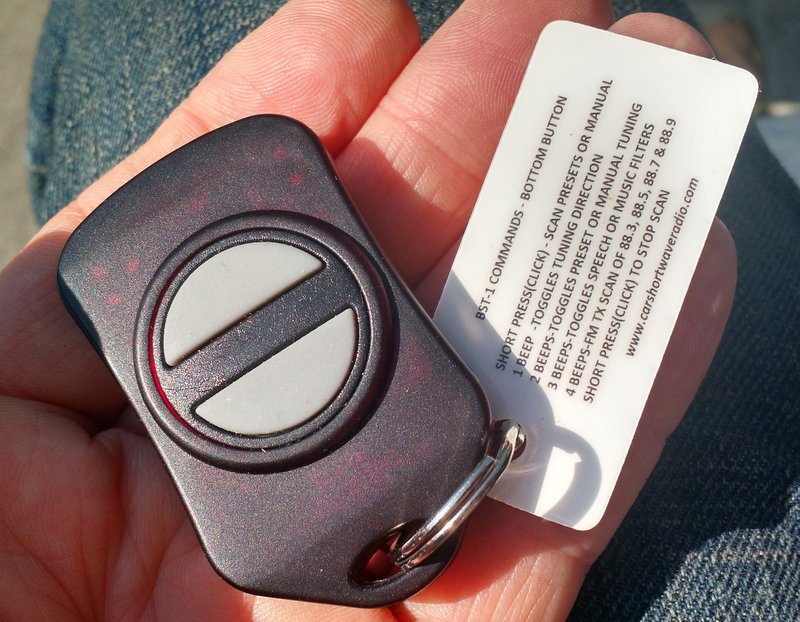
Key fob
Studenberg’s tuning system is amazingly multifunctional, permitting the tuner to keep his/her hands on the wheel––and car on the road!––while simultaneously pursuing the SWL hobby.
Studenberg unlocked a total of twelve functions on a two-button key fob by employing a clever system of short or long presses.
The BST-1 key fob includes a handy quick reference tag
With a short press of the top or bottom button of the key fob—essentially a quick “click,” like you would use to unlock a car door, and which can readily be done while driving—you can single-step tune in 5 kHz steps, or cycle through preset memories.
Long presses, though, are where you unlock the bulk of the BST-1’s functionality. This was a little confusing to me at first, so I’ll explain how the long presses work:
After pressing and holding the top or bottom button, you’ll hear an audible feedback beep. As you hold the button down, you cycle through one, two, three, and four selections, each marked, again, by an audible beep, thus: beep, beep-beep, beep-beep-beep, and finally beep-beep-beep-beep. Each sequence has a slightly different tone to enable you to better distinguish them.
For example, if I want to toggle the AM filter between narrow (voice) or wide (music), I press and hold the bottom button until I hear one beep, then two beeps, then three beeps: as soon at the three-beep sequence is heard, I let go of the button, and the filter will toggle.
As another example, if I want to store a frequency in memory, I’d press and hold the top button until I heard a sequence of four beeps, then let go.
Short press (click) – Single step PRESET channels or tune in 5 KHz steps in TUNE mode
1 Beep Toggles sensitivity between HIGH and LOW sensitivity
2 Beeps Sends frequency in Morse code and toggles S-Meter update on/off and toggles squelch on/off
3 Beeps Quick to tune Preset Channel 50, WWV at 5 MHz.
4 Beeps If in TUNE mode, stores currently tuned frequency (Morse code “S”). If in PRESET mode, it will delete the channel. To prevent accidental deletions, this delete function must be executed twice. The first activation will display the message “R U SURE” and send the Morse code “?”. The second activation will delete the channel and then display the message “DELETED”.
Bottom Button
Short Press (click) – Starts scanning up or down in PRESET and TUNE mode
1 Beep Toggles tuning direction up or down
2 Beeps Toggles between PRESET or TUNE Mode
3 Beeps Toggles receiver bandwidth between SPEECH (3 KHz) and MUSIC (5 KHz)
4 Beeps Starts scanning of FM transmitter among 4 frequencies : 88.3, 88.5, 88.7, 88.9 MHz.
It took a couple of days to get used to the commands I used the most (tuning by steps, scanning, memory scans, and changing the filters/sensitivity) mainly because I was driving while using the BST-1.
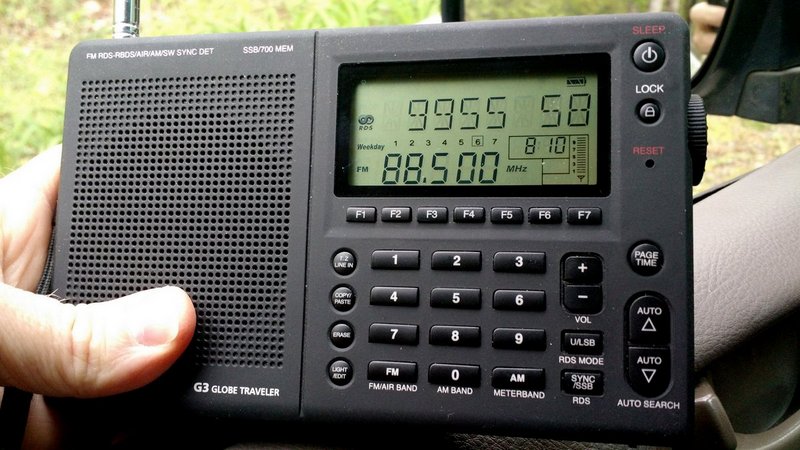
Several models of shortwave portables, like my Grundig G3, have RDS which allows me to easily set BST-1 station memories. Note that RDS is a standard feature on most vehicles sold today–sadly, my 2008 model minivan lacks RDS.
While driving alone, obviously I couldn’t divert my attention from the road to read the included reference guide attached to the key fob, so I had to simply take a bit of time off the road to review the manual.
Performance
Studenberg’s tuning system is amazingly multifunctional, permitting the tuner to keep his/her hands on the wheel––and car on the road!––while simultaneously pursuing the SWL hobby. My very first day on the road with the BST-1, I was pretty impressed with its performance.
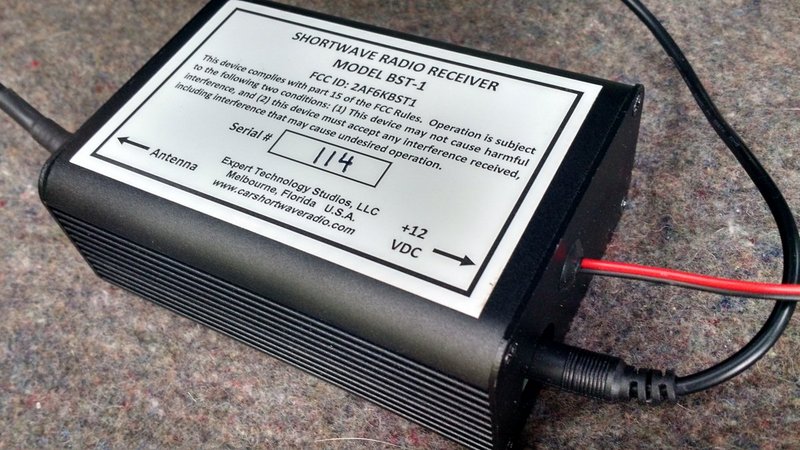
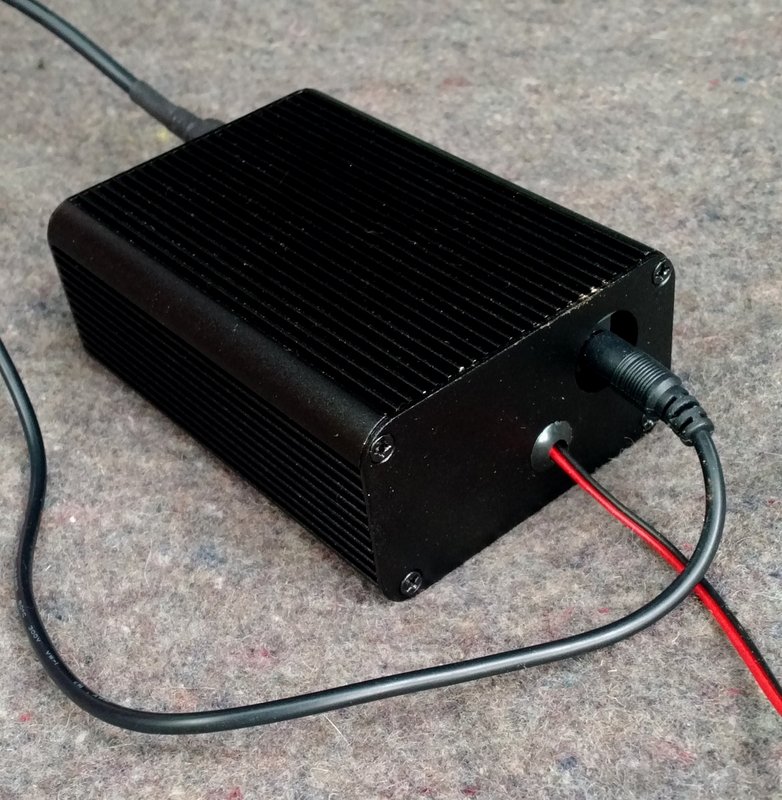
The BST-1 has the same form-factor of most SDRs: a black box. The small size and light weight make it ideal for stashing under a seat or in your vehicle’s trunk.
Of course, “mileage may vary” depending on your particular vehicle and receiver installation, but in my case the BST-1 proved to be a fairly quiet receiver on the road. I heard no significant RF noise due to the car’s ignition or engine, and the FM transmitter audio link worked very effectively. I live in a relatively rural area with only a few broadcasters in the BST-1’s 88.3 – 88.9 MHz transmitter range. There is, however, a fairly strong broadcaster on 88.9, but surprisingly the BST-1’s FM transmitter is strong enough that my car’s FM receiver blocks it. Not bad!
Additionally, the shortwave audio is unexpectedly good through my car’s audio system. The 5 kHz/3kHz bandwidth selections are appropriate for decent audio fidelity; indeed, the 5 kHz filter actually sounds more like a 7 kHz filter to my ears.
In terms of sensitivity, the BST-1 exceeds my expectations. The sensitivity is ample enough to receive almost every domestic shortwave broadcaster, strong international broadcasters, and time stations like WWV and CHU Canada. To be fair, I’m sure the sensitivity is being hampered somewhat by the fact the receiver must operate in a mobile environment with the accompanying local interference, but it’s still quite capable.
In the time I’ve been using the BST-1, I’ve logged the following stations here in eastern North America while mobile:
WRMI
Radio Australia
Radio Havana Cuba
HM01 (Numbers Station)
WWCR
WTWW
China Radio International
All India Radio
WBCQ
Of course, here in North America (during the daytime especially), you’ll hear a lot of the Overcomer Ministries via various private/religious broadcasters. Most of the time, these broadcasts are received as clearly as a local AM broadcaster.
In terms of selectivity, the BST-1 is effective. For about ninety percent of my listening, it rejects adjacent signal interference. In extreme cases—like that of Radio Australia (9,580 kHz), which experiences regular interference from China Radio International (9,570 kHz)—it struggles. But in truth, only the very best of my receivers—typically ones with selectable sync detection—can mitigate most of CRI’s spurious emissions. In other words, I’m pleased I’m able to listen to Radio Australia with the BST-1 despite the noise from CRI.
The BST-1 is unlike any other receiver I’ve reviewed here on the SWLing Post. So let’s get to the point: is it worth the purchase?
What the BST-1 isn’t
If you’re looking for a receiver to snag rare and weak DX while mobile, you will be disappointed. Expectations should be kept in line on this point. Especially while your car is running, the BST-1 simply doesn’t have the characteristics of a DX receiver (low noise floor combined with excellent sensitivity and a super stable AGC, for example).
And frankly, the process of band-scanning in 5 kHz steps seeking an elusive weak-signal station would not be fun.
What the BST-1 is
Simply put: the BST-1 is a lot of fun! Without breaking the bank, the BST-1 can bring many of your favorite broadcasters, and the SWL experience, to your vehicle. Once memories are loaded, it’s a simple process to scan them manually or automatically. And at night? You may very well snag serious DX here and there—especially if parked in an area far away from urban radio interference.
In short, the BST-1 is simple to use, unobtrusive, and, frankly, does what it’s designed to do: permit you to SWL in your car.
If your vehicle’s radio has RDS, you’ll have full access to the BST-1 display information.
Summary
Invariably, all radios have strengths and weaknesses; here’s a list of my notes from the moment I put the BST-1 on the air:
Pros:
Simple installation for a mobile radio
Ample sensitivity & selectivity
Little ignition/alternator noise in tested installation
Surprisingly good audio via FM transmitter link
Remote control/key fob (see cons)
Non-distracting while driving
Easily-to-learn common commands
Responsive beeps and “click” sounds to aid tuning
Two ways to connect to a DC source: 12V plug or traditional two-wire
Two AM bandwidths
Two sensitivity settings
Appropriate 5 kHz steps for broadcasting tuning
RDS tags work amazingly well (see con)
Cons:
Remote control/key fob (see pros)
Learning curve for infrequently used functions
Audio feedback only (no visual feedback) if your car’s radio doesn’t have RDS capability
Only two buttons control twelve functions
Limited tuning functionality (5 kHz steps up/down with band scan and memory scan)
No SSB
No sync detection
In conclusion, I’m so glad I finally installed the BST-1. If your vehicle has a RDS capabilities, the BST-1 will feel like a fully-integrated part of your mobile audio system. Even without RDS–like my situation–it still packs a lot of punch and is impressively engineered for distraction-free operation..
I must admit, it’s awfully magical to be driving down the highway here in the States, listening to, for example, Radio Australia, some 15,700 km away… So if you travel or commute regularly, and you love SWL, this little mobile shortwave receiver might be just made-to-order for you, too.
At $179.50 plus shipping, the BST-1 costs about the same as a decent portable shortwave receiver–a good value in my book!