Shortwave listening and everything radio including reviews, broadcasting, ham radio, field operation, DXing, maker kits, travel, emergency gear, events, and more
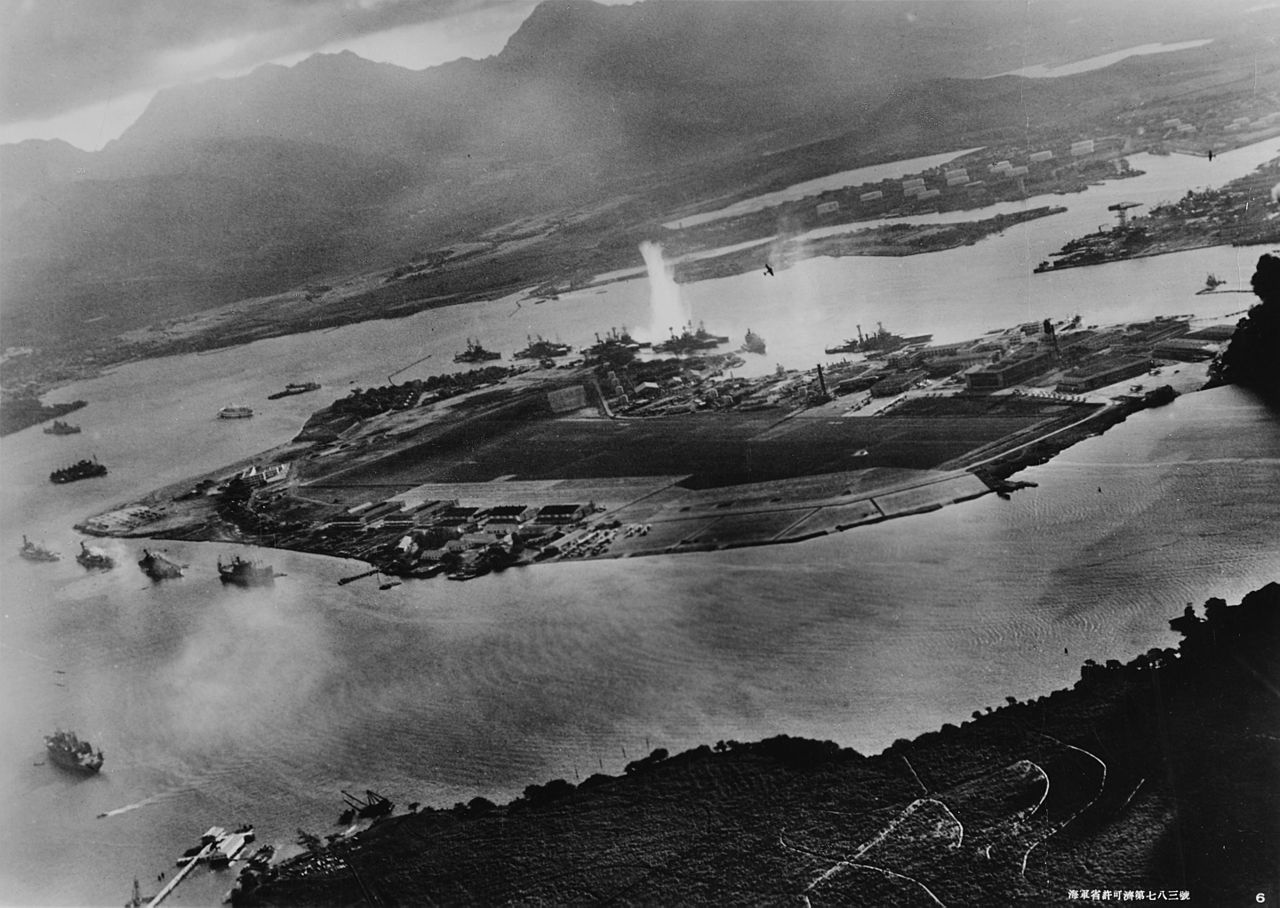
Photograph taken from a Japanese plane during the torpedo attack on ships moored on both sides of Ford Island shortly after the beginning of the Pearl Harbor attack. (Source: WikiMedia Commons, Public Domain)
Many thanks to SWLing Post contributor, Michael Guerin, who writes:
Interesting article from the US Naval Institute on the role of radio intelligence before and during the December 7 attack.
“The key to the success of the Japanese attack on Pearl Harbor-specifically, what enabled the Pearl Harbor Striking Force to reach its launch point undetected (and totally unsuspected) by the Americans-was Tokyo’s radio denial-and-deception actions. Significantly, these activities simply were not just a “bag of tricks” meant to bemuse U.S. naval radio intelligence. Rather, they constituted a function of the change in Japanese strategy and were meant to convince the Americans that there had been no change from defensive to offensive intentions.”
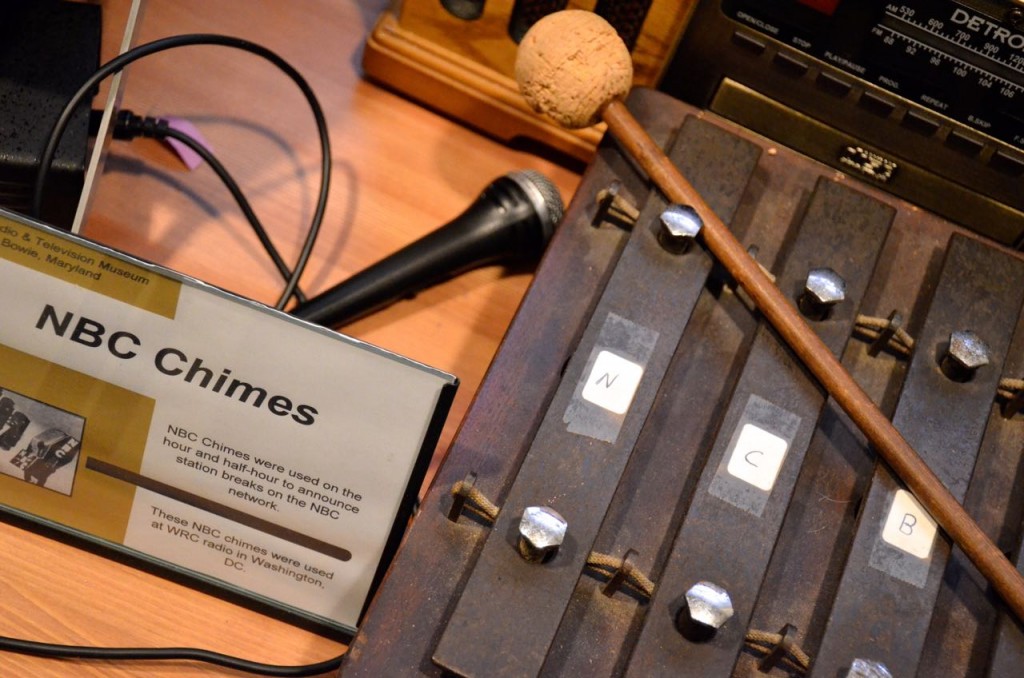
Original NBC Chimes. Photo taken at the National Capital Radio and Television Museum
If you have thirteen minutes today, do yourself a favor and listen to this excellent radio documentary about the NBC chimes from the podcast Twenty Thousand Hertz. It’s fascinating!
NBC’s three little chimes didn’t just define a television network, they defined a generation. Where did they come from and what is the surprising impact they have had on current and future media? Featuring the last person to play the NBC chimes on the NBC radio network, broadcaster Rick Greenhut, and radio historian, John Schneider.
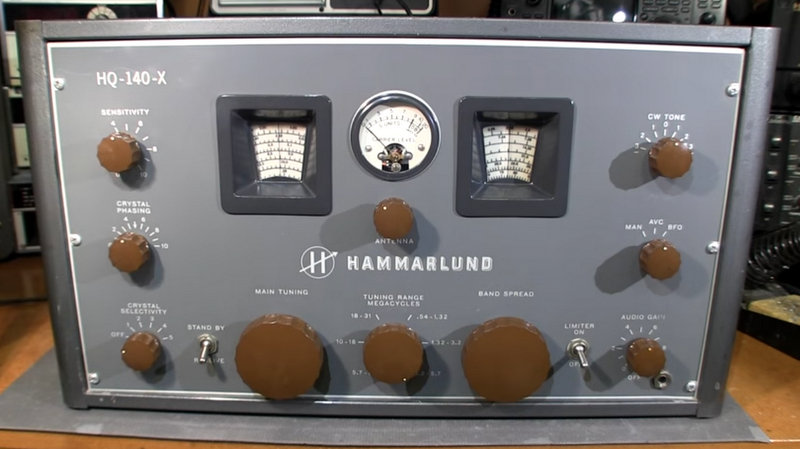
Thank you for sharing this video, Moshe! I truly enjoy watching Paul’s videos–no doubt, any radio turned over to him is in expert hands. I love how he explains, in such detail, each action he takes to restore and repair these vintage radios.
Many thanks to SWLing Post contributor, Lennart Weirell, who writes:
I have not made a scientific research but I dare to say that there are more DX-ers who collect stamps than stamp collectors who are DX-ers. Out of these DX-ers who collect stamps there are several who collect stamps related to DX-ing or radio.
The editor of DX-Filateli in DX-Aktuellt, the Swedish magazine of the Swedish DX Federation, Christer Brunström, made a small catalogue of stamps with radio motive in the beginning of the 80-ies. This catalogue was followed by two supplements a few years later, but after that no update. But he has during the following years presented new radio stamps, first in Eter-Aktuellt and later DX-Aktuellt. You can find various web pages on internet with this subject, but I have not found a complete listing of stamps with DX and radio related motives.
In 2011 I made, based on Christer’s catalogue, articles and with his approval and with the help of various web pages, a list in Word (.doc) named ”DX-Philately – Stamps of Radio Stations by Continents and Countries”. It is one of the most complete listing of radio and DX related stamps available. The size of the file is about 1.1 MB and it lists about 400 radio stamps from 122 countries, and list the stamps per continent and country with date and Michel No. and motive. You can also mark which stamp you have in your collection, unused or used and it is easy to modify with new editions.
Now is the 3rd edition available for those who are interested. Please contact me via e-mail at
Hi there, after conducting a total of 14 reception tests comparing these two vintage – but excellent portable shortwave radios, there was a clear winner – the ICF-2001D. Interestingly, the second half of the testing identified yet another example of synchronous detection lock dropping out on the ICF-SW77 (during reception of Radio CANDIP, Democratic Republic of the Congo on 5066.4 kHz). Generally, however, and despite a fairly narrow performance margin, the ICF-2001D managed to deliver clearer audio across 5 of the remaining 6 reception tests, giving a final score of 9 to 3 in it’s favour. However, despite the clear win, there is no doubt in my mind at all that the ICF-SW77 is still a great portable receiver and in my humble opinion, remains one of the best ever made.
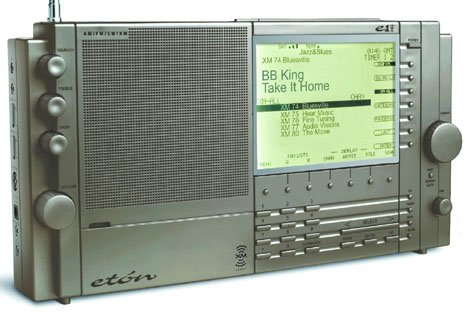
I believe this comparison test reveals the only likely remaining contender to the top-spot in portable shortwave receivers to be the Eton E1/E1XM. Originally to be marketed as the ‘Satellit 900’ (that never happened) and following a decade of development, involving RL Drake, it was finally introduced in 1995 – and then out of production within a few years. Fortunately, a couple of months ago, I managed to snag one in excellent condition on eBay, for a reasonable price. Now, these radios are not without issues, including, but not limited to; sticky rubber exterior casing, malfunctioning display, failing function keys and general all-round fragility. Not exactly what I would be looking for in a rugged, well-performing portable for my DXpeditions. However, as someone who is always exploring ways to ‘push the performance envelope’ and the obvious potential benefits of passband tuning, an allegedly superior synchronous detection circuit, 4 audio bandwidth filters and tuning resolution down to 10 Hz, the E1 was impossible for me to ignore. Thus, at some point in the near future, I will perform a similar comparison test with the Sony ICF-2001D and the Eton E1. Whichever camp you might be in, I hope you’ll enjoy the reception videos and find the results/conclusions informative.
For now, wishing you all excellent DX.
The Eton E1; possibly the best portable shortwave receiver of all time?
Clint Gouveia is the author of this post and a regular contributor to the SWLing Post. Clint actively publishes videos of his shortwave radio excursions on his YouTube channel: Oxford Shortwave Log. Clint is based in Oxfordshire, England.
Canada’s public broadcaster, the CBC, is 80 years old
Modelled somewhat on the BBC, the Canadian Broadcasting Corporation came into being on November 2, 1936.
Surprisingly many of the issues that led to the creation of the CBC, are still around today.
In 1936, there were 74 radio stations across the country; three were CBC stations and four more were leased. All however were dwarfed by signals sweeping across the border into Canada from more powerful US stations. Concerns of US domination of Canadian airspace, is still a concern 80 years later.
The BBC’s first British television service launched 80 years ago today, on 2 November 1936. To mark the occasion our colleages at BBC History have launched a new website celebrating the landmark anniversary combining archive material from the early days of television.
The site is packed full of video and audio footage telling the story of television including its invention, the opening night at Alexandra Palace in 1936, TV closure during the war and its resurrection in 1946, as well as TV’s milestone moments such the Olympics and the Coronations of 1937 and 1953. We’ve selected some choice clips below to whet your appetite[…]
Unfortunately due to various geo restrictions the one hour long programme from BBC4 last night is not viewable on iPlayer (catch up TV) outside the UK, sorry about that.
Fantastic! Thank you Kris. I’ve really enjoyed viewing the archived footage on the BBC Blog.
Please support this website by adding us to your whitelist in your ad blocker. Ads are what helps us bring you premium content! Thank you!

 Many thanks to SWLing Post contributor, Moshe, who writes: