 Mark Connelly’s radio story is the latest in a new series called Listener Posts, where I will place all of your personal radio histories. If you would like to add your story to the mix, simply send your story by email!
In the meantime, many thanks to Mark for sharing his personal radio history:
Mark Connelly, WA1ION
In the Beginning
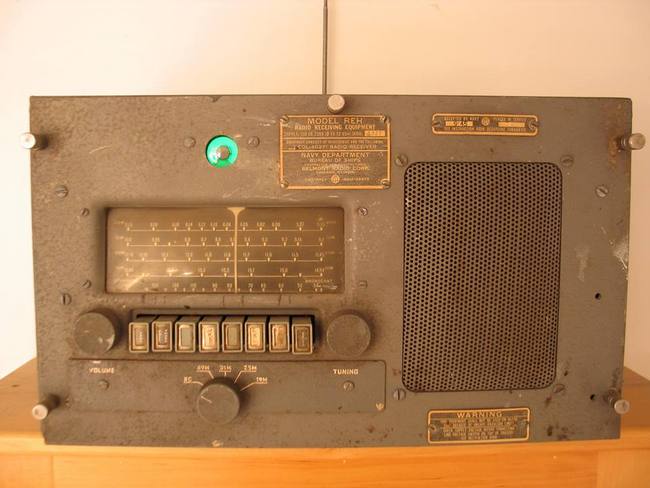
(Source: h-wolff.de)
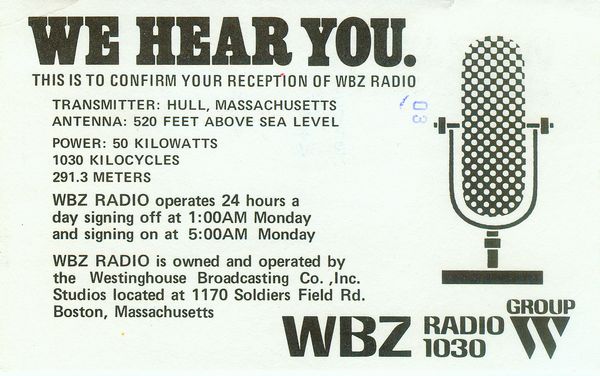
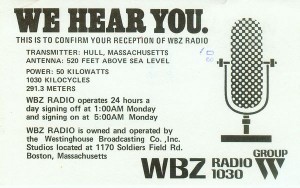
Originally I lived in the Allston section of Boston. At an early age I had numerous scientific interests and enjoyed mechanical and electrical toys and projects. An early radio memory was listening to WBZ-1030 during the big hurricanes (Carol and Edna) and hearing of how the WBZ-TV mast had toppled. This tower was about a mile from where I was living. The first time my family took a trip to Cape Cod was in 1957. The only radio-related memory from that initial trip was some of the music (“Whispering Bells” by the Dell-Vikings, etc.) that I heard in stores, at the beach, and blasting out of convertibles. In 1958, my family moved from the urban Allston location to single-family-house “suburbia” in Arlington, MA. Numerous interests could flourish in this new setting. The back of the High Haith Road property abutted Menotomy Rocks Park, a 35-acre partially-wooded town-owned recreational area. Aside from being a great play area, it would prove beneficial later when antennas became an interest.
In 1959, I received a tenth birthday gift of a 5-tube AM table radio. Initially I just used it listen to the Red Sox games (with Curt Gowdy announcing) on WHDH-850 and to the classical music my parents liked on WCRB-1330. It didn’t take too long to discover rock ‘n’ roll on WCOP-1150, WHIL-1430, and WMEX-1510. There were also “middle of the road” pop stations WBZ and WHDH. Soon I became familiar with the local Boston on-air personalities such as Carl DeSuze, Dave Maynard, Bruce Bradley, Dick Summer, Jay Dunn, Jefferson Kaye, Arnie Ginsberg, Dan Donovan, Don Parker, Melvin X, Ed Mitchell, Dex Card, Bob Wilson, Bob Clayton, Fred B. Cole, Jess Cain, Bill Marlowe, Alan Dary, and others. Beside Top 40 rock there were talk shows (Jerry Williams was the best known; Larry Glick came along a little later) and a few of the left-over old network radio dramas such as “Johnny Dollar”: relics of an earlier era. Kenny Mayer had a great comedy show on old WBOS-1600 (I think on Sunday night) with recordings of famous Las Vegas and Hollywood nightclub performers. Though I watched a fair amount of TV (sci-fi, spy, and detective shows / movies mostly), radio became my main entertainment medium.
Skip Discovered, and the first DX Lab
By early 1960, I was noting other sources of rock ‘n’ roll: the “stations between the stations”, the nighttime skip signals. Many were from New York City (WMCA, WABC, WINS, and WMGM come to mind); others included WPTR-1540 Albany, WKBW-1520 Buffalo, and WLS-890 Chicago. I was intrigued not only by the distances involved (and the “weird” fading) but also by mixes of music that sometimes differed considerably from what the Boston locals were playing. NYC stations, in particular, played a lot more black R&B. These tunes were only available here a few hours a day between assorted foreign-language and religious shows on WILD-1090, a 1 kW daytimer. By summer 1960, I set up a workshop in the basement in a room directly below my bedroom at the back of the house facing the woods. This was my first “DX Lab” where I tried various tricks to increase the sensitivity of the 5-tube radio. Moving the radio’s rear-mounted oval loop a certain distance (frequency dependent I guess) from a metal window screen jacked up the levels of marginal daytime signals from Providence, Worcester, et al. I could now comfortably enjoy the zany Chuck Stevens show on WPAW-550, Salty Brine on WPRO-630, and Bob Garcia on WORC-1310. I got a kit consisting of a pegboard and components you could clip together to make a 1-tube radio, among other things. This was my first introduction to shortwave since, besides the AM coil, there was one that allowed tuning of about 6-12 MHz. Getting BBC, Radio Moscow, etc. (with a short wire running from the “Lab” window to a tree) seemed like true magic. It was music listening coupled with a general scientific inclination that got me started in DXing, unlike sports that hooked some others. Still I enjoyed the Red Sox games and the Celtics basketball announced by “crazy man” Johnny Most.
Old Cape Cod (Summer 1960)
I took the 5-tube radio to Dennisport, Cape Cod on our annual 2-week family summer vacation. I was “blown away” by the stuff I was hearing ! There were booming daytime signals from Maine, NYC, Long Island, and the NJ coast. These stations could only be heard in Arlington at night if at all. Maritime station WCC (Chatham) operated near the radio’s 455 kHz IF and my program listening was sometimes interrupted by Morse code. “Wicked bizarre” I thought. Night receptions on the Cape were even wilder: foreign languages and heterodynes from “splits” were very apparent. Initially I had no clue as to what most of it was. Some time later, I figured that 908 was BBC, UK. This ID was assisted by the fact that my Uncle Dan, an aficionado of anything British, gave me a subscription to a kids-oriented London newspaper with a radio section that listed stations like the “Light” and the “Home” services. There was a station on “330 metres”. After some long-division (no calculators back then), 908 kHz (or should I be saying kc/s) was computed. Within 6 years I’d be sending reception reports to the Transatlantic DX stations and papering the bedroom wall with QSL cards.
Going Portable
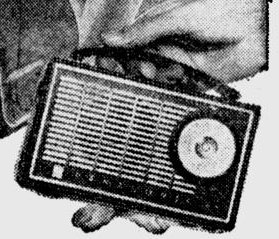
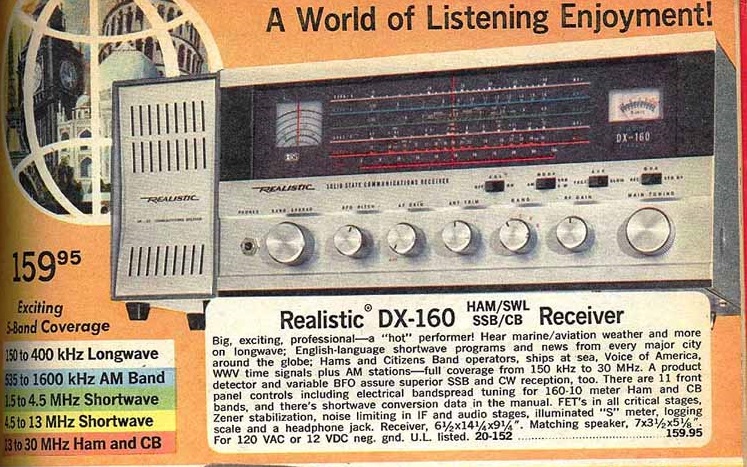
 As Christmas 1960 approached, I had (surreptitiously) discovered one of my gifts, a pocket portable transistor radio. For a couple of weeks before Christmas, I played the radio when my parents were out of the house and then put it back in its “hiding place”. By Christmas morning, the “official opening”, the battery was almost drained ! When I went out on family rides various places, the portable went with me, along with earphones. It was interesting to note where certain stations got stronger. Soon I’d figured out where many of the transmitter sites were. I had my mother drive me to the nearby WCOP transmitter site in Lexington. The crew there gave me a mini-tour and some Top 40 survey charts to take home. Roadtrips brought some other radio perspectives as well. My mother had a friend in Warwick, RI who was married to a “ham”. In the spring of ’61, I got to see the basement shack and I went away thinking that it was awesome beyond belief. The summer of 1961 gave me some opportunities to try the portable radio out at the shore, both at local beaches like Revere (where most of the Boston stations had bone-crushing signals) and on Cape Cod. I graduated from that first pocket portable to an excellent Realistic 8-transistor TRF with a leather case. It was the first of the Realistic TRF’s, on the market more than 10 years before the famous 12-655 model. This was a real DX machine by itself and, if I held it near a water pipe or an electrical conduit, its sensitivity increased even more. Long before my parents actually bought property on Cape Cod, they went on weekend house-hunting rides in the Dennis-Yarmouth area. Some of the new houses had not been fully connected to the electrical system, but had conduits and outdoor meters that enhanced the TRF’s reception immensely. I could get “in your face” daytime signals from the likes of CBA-1070 NB, CHNS-960 NS, and the Virginia coast stations on 790, 1350, and 1550.
Tech Talk Session Gets Me Interested in Engineering Profession
I had an uncle who was the pastor of a rural North Carver, MA church. Besides legendary outdoor summer barbecues featuring great country and rock music on the turntable, there was also a big parish Thanksgiving dinner. In the church basement at one of these dinners in 1961, I talked extensively with someone who was a hi-fi enthusiast and (probably) in some sort of electrical engineering job. Topics such as DX came up and this guy mentioned “FM stereo multiplex: It’s the next big thing.” This was followed by a little theory on how it worked. It all sounded very cool to me: learning how to understand all the math and science behind it.
DXing the 1962 Cuban Missile Crisis
I started the eighth grade in September, 1962 and the world situation was becoming very precarious. The goofy songs on regular AM radio (like the “Monster Mash”) wouldn’t give you much of an idea of what a mess the world was in, though down in New York a young folksinger named Bob Dylan certainly did have an idea. Nuclear missiles installed in Cuba by the USSR had a very real potential of annihilating much of North America. The US government began a war of words via radio. I tuned in many nights to hear several domestic broadcasters that were enlisted to beam Spanish-language programming to Cuba to present the US side of the issue to their people and government. Stations that put big signals to the south were used: I remember WWL-870 and WCKY-1530, perhaps also WSB-750 and WBT-1110. I think it was around this time that the VOA put rigs on 1040 and 1180 from the Florida Keys. Swan Island on approximately 1160 also came on the scene. This station’s location, purpose, and ownership became a subject of much controversy in the hobby throughout the ‘60s.
Things calmed down and most of the special broadcasts ended when Kennedy got Khrushchev to back down and have the missiles removed from Cuba. By late 1962 I had bought some of the ARRL books to learn about ham radio. Some friends of mine in school also had interests in radio. Steve McLean, a science genius and a “new kid in town” (having moved from North Adams, MA near the NY state line) found it interesting that I knew of his old low-power hometown station WMNB as well as Albany, NY area rockers WPTR and WTRY. He was glad to find out that WPTR was easy to hear in metro-Boston at night via skip. A number of people tuned in skip signals to get additional sources of music. It wasn’t that unusual then among the general population. My dad listened to WQXR-1560 NYC both for classical music and for New York Times produced news. My brother listened to the New York rockers like WINS and he showed some initial interest in ham radio. He eventually gravitated towards literature and chess as hobbies. About this time he was reading two or more sci-fi books a week (Heinlein, Azimov, Bradbury, et al.). Both of us spent a lot of our spare money on our music collections. Besides that, he’d hit the bookstores in Harvard Square and I was frequently seen at the Radio Shack and Lafayette stores near Boston University.
1963: Shortwave Gives British Invasion Preview; Radio After JFK Assassination
 Armed with a “Realtone” multiband portable and my first copy of the World Radio-TV Handbook, I became more seriously involved in shortwave listening. Soon I kicked it up a further notch with the acquisition of a Hallicrafters S-119 Sky Buddy. The Radio Netherlands DX Jukebox program and a Top 10 countdown show on the BBC were among my favorites. Around May of 1963, I heard Beatles tunes on the BBC as well as a cover version of “Do You Want to Know a Secret” by Billy J. Kramer. Cliff Richard and most excellent singer Helen Shapiro got a lot of airplay too. The Jet Harris – Tony Meehan surf-style instrumental “Scarlett O’Hara” was a big hit. I later learned that it became an offshore pirate-station “anthem” of sorts. My BBC hit parade listening experience was a good 6 or 7 months before the influx of British music became widely known to American audiences. Among US stations, WORC-1310 in Worcester had a very early jump on the British Invasion. One staff member brought back records from trips in the spring of 1963.
Shortwave (and foreign medium wave) listening promoted interest in world music, international politics, and learning about languages (how they developed and how they’re related).
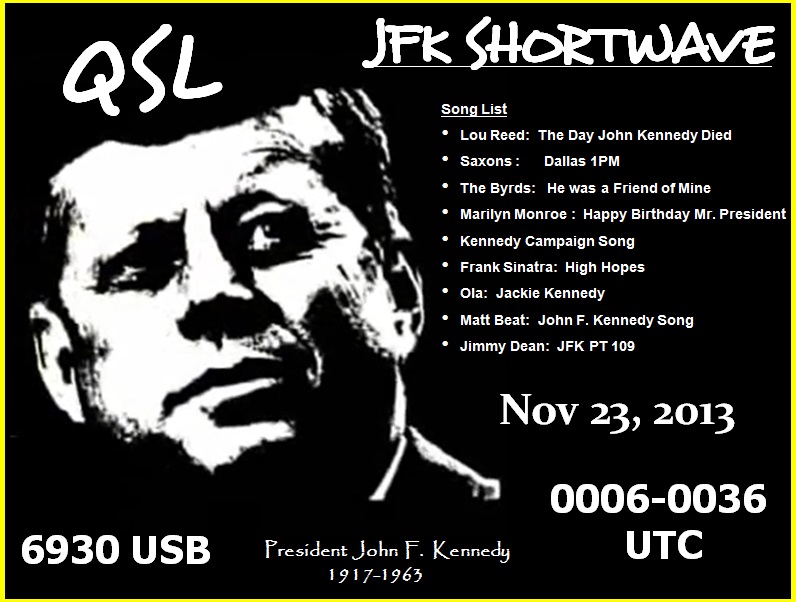
The assassination of President Kennedy on the 22nd of November shocked the world. All US stations that I could hear suspended their regular formats for the next 2 or 3 days. Most of them carried news broadcasts and a few played solemn classical music. This was even true of most Canadian stations. A glaring “sore thumb” was French-language rocker CKLM-1570 in Montreal. They carried on as if nothing had happened. Their barn-burner signal was very obvious at night here in the Boston area.
New York Trips
In early December 1963, I took a portable radio on a Christmas-shopping train trip to New York City with my father and brother. It was interesting to log various Top 40 locals (WICE-1290 Providence, WAVZ-1300 New Haven, etc.) along the way. In New York, I listened to top jocks like Murray-the-K (WINS) and to the black “soul” stations such as WLIB (“Where Listening Is Boss”), WNJR, and WWRL. It was certainly great to hear all the Marvin Gaye, Solomon Burke, Chuck Jackson, and Rufus Thomas music that was largely being ignored by the Boston stations. On the train ride home, interesting skip was noted: WMEX-1510 creaming WNLC right outside New London, Bahamas-1540 over WPTR, and – for the entire ride – WKBW Buffalo in like a local with great Top 40 with Joey Reynolds, Dan Neaverth, etc. There were four more of these trips during 1964 and 1965, sometimes by train and sometimes by bus. Besides the Christmas-season trips, there were summer trips each year to the World’s Fair. I became familiar with the NYC area in general, and its radio scene in particular. A few years later when I was at Northeastern University with a student population comprised of many New Yorkers, all that “information gathering” helped out.
Magazines and Friends Expand DX Hobby Awareness
Though I had previously been aware of the listening hobbies and ham radio, I wanted to know about other people who were involved, how they got started, and their specific technological interests. As 1964 wound down, I started buying communications-related magazines such as the Radio-TV Experimenter, Popular Electronics, and Electronics Illustrated. My magazine subscriptions brought me the White’s Radio Log in RTVE and the Tom Kneitel – C.M. Stanbury Radio Americas / Radio Swan debate in EI. The air of intrigue in radio of the Cold War era included such things as numbers stations and clandestine / pirate broadcasters having many different reasons to be on the air. James Bond movies and popular TV shows such as “The Avengers”, “Man from U.N.C.L.E.”, and “Secret Agent” fed into the whole experience. Interest in space travel and things scientific in general was also at a peak among people my age at the time. This made “Star Trek” and “The Invaders” top TV shows during my later high school years.
One of my best school friends, Philip Schoenheiter (later N1PZU), had a Popular Electronics WPE call (WPE1ETB) and soon I got mine, WPE1HGI. Across the street from Phil’s house and about a half mile from mine was a ham, Dick Groves, WA1FAE. The three of us, all about 15 years old at the time, got CB walkie-talkies and, on some afternoons between doing homework, we had on-air conversations about shortwave, medium wave, and ham radio. This went on through much of 1965.
The November 1965 “Great Northeast Blackout” provided some interesting portable-radio listening: quite a few AM stations were off the air and those that were on to cover the news sometimes limped along on auxiliary-power equipment inferior to their normal set-ups.
I noted that the electronics magazines had sections where people reported their loggings. After I expanded my antenna systems in Menotomy Rocks Park, I started sending some logs in to these publications. During August 1966, when at West Dennis, Cape Cod, I heard and ID’ed medium wave Transatlantics such as Senegal-764, Andorra-818, West Germany-1586, and many others. The 8-transistor Radio Shack TRF had been replaced by a 10-transistor version by this time. I tinkered with it to achieve a degree of regeneration capability to tighten the selectivity and boost sensitivity. That autumn from Arlington, I found some more MW Europeans along with shortwave DX, hams, and domestic MW. I sent out an unprecedented number of reception reports. I was popping out 5 to 10 a day for a while. Overseas reports were “aerogrammes” with an International Reply Coupon usually tucked inside. Gratification came every time a new QSL card or letter showed up in the mail. A December 1966 reception of UK – 1214 at 5 a.m. local (1000 UTC) stood as my latest morning reception of a Transatlantic medium wave station until early 2001 when I heard Ireland-567 at 1005 UTC from E. Harwich, MA. I built a pi-network tuner from a magazine article and managed a crude sort of antenna phasing by combining a tuned wire with an untuned one.
The Push to Get a Ham Ticket
I had a desire for some time to obtain an amateur radio license. In 1966, I heard several loud 75-m band AM hams such as Wally (W1HE) right in Arlington, Chuck (WA1EKV, now K1KW) in nearby Acton, and a good sized group of others throughout the northeastern states. Some were old-timers, but many were high-school kids like me. This gave me added impetus to learn the code and theory. I used both the ARRL’s W1AW and coast station WCC for code practice and, by the time I was a senior in high school in 1967, I passed my novice examination at K1VMT’s house in Arlington. Besides being the period of time known for producing the highest quantity and quality of outstanding rock music, the summer of 1967 was also when “WN1ION” hit the air. I called up Dick WA1FAE and he was my first novice QSO. My best novice DX was VQ8CC Mauritius who answered my CQ on 21132 kHz one afternoon. Ham radio took over from broadcast DX as the main hobby interest. Muscle cars (GTO’s, etc.) were big at the time. Ham radio had final amplifiers with 4-1000A’s and 833A’s as a similar “power trip”. After a while, I visited some of these stations and thought about having this kind of gear and a seaside antenna farm if I ever got rich. When I started studies at Northeastern University in Boston (Electrical Engineering, of course), I joined their ham club, W1KBN. They had a full Collins S-Line set-up in a penthouse atop Hayden Hall. The station was less than a mile inland: its signal often blew through the ARRL DX contest pile-ups into Europe. MIT’s club (W1MX), a mile away across the Charles River, was (usually) friendly competition for us. The CW guru of the Northeastern club, John K1FVS, routinely QSO’ed 40-m band Russians at blazing speeds around 60 words per minute. The club had Hammarlund SP600-JX and HQ-129 receivers that I used for WMEX and WRKO Top 40 listening and for some DX.
Late ‘60s
Since I didn’t have a car during my first couple of college years, I commuted back and forth from Arlington to Boston on public transportation. A transfer point was in Harvard Square, Cambridge. History shows that this was a very interesting place to be during this time period. I did most of my music and book shopping at the “Harvard Coop” and often went to the “hi-fi” stores to drool over high-end sound systems I couldn’t afford yet. A real treat was hearing stuff like “Seven Steps to Heaven” by Miles Davis cranking out of AR-3A speakers powered by a big McIntosh rack-mounted tube amp. Besides tunes on the turntable, I got to hear proper FM stereo for the first time: classical music on WCRB and WXHR, and then progressive rock on WBCN, which changed to this format from classical in early 1968. Northeastern was a “cooperative education” school, which meant part-time study / part-time work. After a while, this allowed me to build up some cash to indulge both my ham radio and audio system desires. Before I started to drive, I satisfied some of my radio curiosities by taking bus trips to look at (and photograph) the WRUL/WNYW Scituate shortwave site, the W1EVT multiple-dipoles array in Acton, and the W1FH top-gun contest antenna farm next to Stony Brook Reservation in West Roxbury. Tim, WA1HLR, moved to Rockport, MA in 1968 and I took several train trips out there. The site “totally rocked” both for ham radio and medium wave DX. I soon had voice license privileges and was a regular on 75 meters. There were numerous nets and informal groups including the Green Mountain Net, the NAAAM (National Association for the Advancement of Amplitude Modulation), the New England Teenage Net, the Alligators (from the South, of course), and a group out in Indiana called NAFSAC (which allegedly stood for something nasty). Local hams were obvious by loud signals. Arlington had a well-educated workforce and many hams on the air at the time. Some of the calls I remember: WA1FAE, WA1FHM, K1VMT, W1HE, W1QXX, W1CRE, W1LR, W1TIV, WA1EFN, WA1KYW, WA1HLJ, W1DBH, W1GNE, WA1LGC, W1KLZ, and WA1IDU. Some of them worked at General Radio in West Concord and got on the “GR Net” on 3910 kHz or thereabouts. I also knew quite a few hams in nearby Belmont. Mark (WA1FAF), Bob (WA1FPL), and Bob (WA1DOL, now KN1A) were quite active in those days; they were also “kids” at the time. I met a lot of the college-age hams first at the ARRL convention in Swampscott. Several of the students had apartments in Allston, the Back Bay, and Fort Hill (Roxbury). Over the years I’ve kept in contact with many of these people. I even met Mary Lou, the girl I married, at a party hosted by one of the hams. In the summers of 1969, 1970, and 1971 several guys had jobs at the WMEX North Quincy, MA transmitter site during their seasonal breaks from college studies. This turned into “party central” on several occasions. It was a lot of fun being at a real Boston broadcasting institution having pizza and beer (and occasionally going out on the wooden “catwalks” to the towers in the middle of the tidal salt-marsh at the mouth of the Neponset River). Mark WA1FAF and I went on numerous roadtrips including visits to the famous W3DUQ trailer in Icedale, PA, Warren WA1GUD’s residences in CT and VA, Scott WA1MYQ’s place in NH, and the western MA crew including WA1GOS and others.
My first Northeastern “co-op job” with electronics involvement was at Doble Engineering Company in Belmont starting in December, 1969. Doble made specialized test equipment for the electric power industry. The inside of the company’s High Voltage Lab building on Locust Street looked like something from a Frankenstein movie. There were massive oil-filled transformers, Variacs turned by something like a ship’s wheel instead of a knob, oversized panel meters and switches, and huge spark gaps with insulators the size of a person; these were topped with spherical electrodes from which arcs of blinding brilliance and deafening crackling issued. Most of the time I was at the more-normal looking production facility on Concord Avenue. As I got immersed in the technician assignments, I felt a special feeling of accomplishment. A number of my co-workers were accomplished design engineers and some were hams as well. There was always a lot of interesting conversation. Even today if I hear music from that period (such as the Led Zeppelin II album), or smell the odd combination of coffee and solder smoke, I’ll think of that first real electronics job, especially if it’s a snowy day as so many of them were for my first 3 months at Doble.
Early ‘70s: R-390A and Gordon Nelson Visit Revive Medium Wave DX
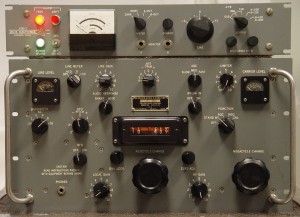
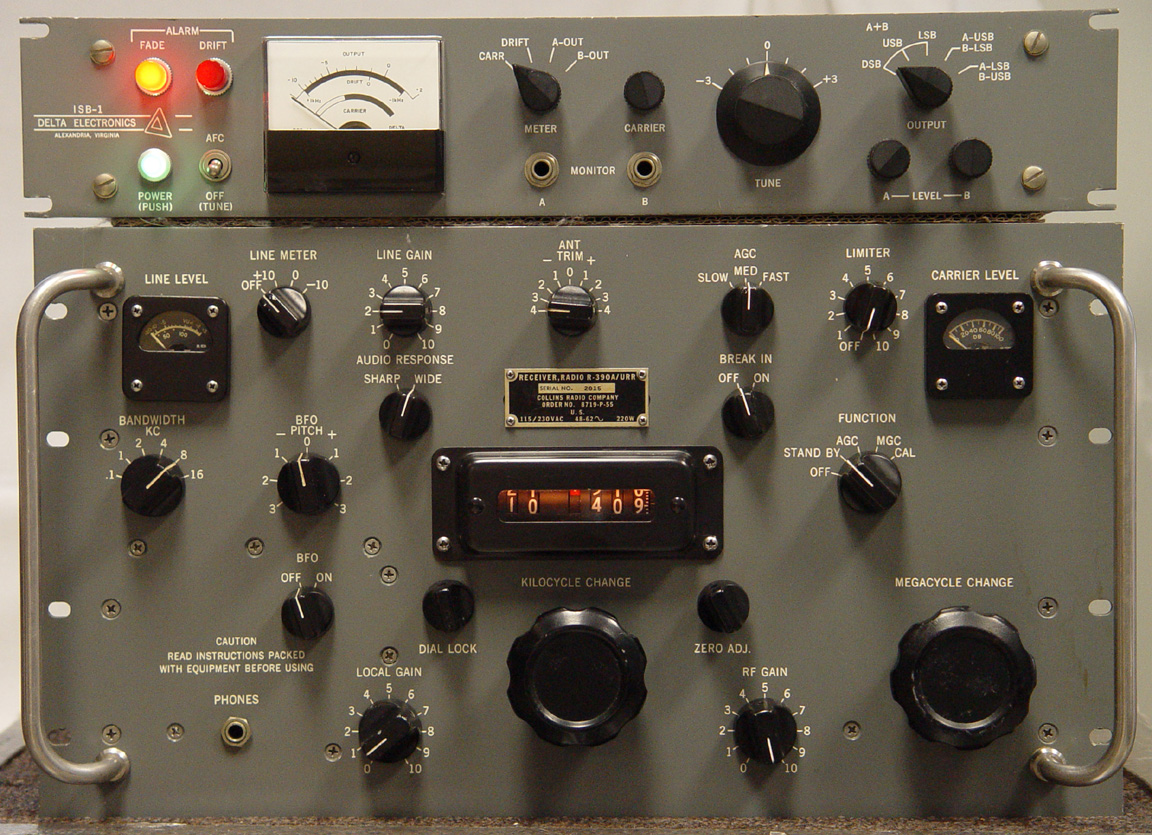
The Collins R390A (Photo: Universal Radio)
In 1971 or 1972, I purchased a Collins R-390A from Chuck WA1EKV. This receiver was a quantum leap in DXing capability and read-out accuracy from anything I’d used before. At sunset it could really haul in the European and African DX when connected to a swamp-terminated northeast-aimed mini-Beverage in Menotomy Rocks Park. Langenberg, W. Germany on 1586 was often the “ten ton gorilla” of the bunch. One night in late ’72 or early ’73, I heard an unusual signal on 1200 kHz. It was pirate station “WOJX” playing an LP about the offshore British pirate broadcasters of the ’60s. The announcer gave a local telephone number. I called the number and wound up talking to none other than Gordon Nelson (later WA1UXQ). He and I chatted DX for quite a while and he insisted that I should join the National Radio Club. I visited his attic “shack” on Hardy Avenue in Watertown. It had a complement of equipment worthy of a medium-sized electronics company. There were several R-390A and HQ-180A receivers along with a Rycom LF receiver / “frequency selective voltmeter”. Test gear included a Hewlett Packard frequency counter, Rustrak stripchart recorders (used in propagation studies), oscilloscopes, RF generators, spectrum analyzers, and broadcast-studio tape machines. I soon learned about DX News magazine as I joined the NRC. Nelson’s house was the headquarters for periodic Boston Publishing Committee meetings where DX News was collated, stapled, and stickered for mailing. Others I remember being there at various times were Randy Kane, Bill Bailey, Ray Moore, Tom Farmerie, Bill Grant, (the infamous) Big George Kelley, and Frank Stiles (a kid from Winchester who shared my appreciation of Celtic folk-rock a la Steeleye Span). Gordon gave me a phasing unit which I used a bit on my antennas at Menotomy Rocks Park and then to a much greater extent when I moved out to Sudbury, MA in 1975 and strung out Beverages. The phaser also came in handy on visits to the West Yarmouth (Cape Cod) house where my parents had moved in 1974. Since Gordon’s QTH was only a few miles inland and all downhill to the mouth of the Charles River, Transatlantic medium wave stations slammed in at impressive levels many evenings. Farther inland (about 40 miles), Bill Bailey in Holden needed phased Beverages on a hilltop even to come close to the kind of DX that Nelson got routinely with his NRC FET Altazimuth indoor loop. Besides the DXing I did on my own from Cape Cod and elsewhere, I sat in on many a good session at Gordon Nelson’s attic for both live DX (I remember Israel-737 beating up usual Spain) and goodies on tape like a stunning predawn reception of ZCO Tonga-1020. He had a tape of Tarawa-844 being heterodyned by Italy-845 (sunset at Tarawa, sunrise at Rome). Also there was a Peru over/under Spain – 854 recording (with Boston-850 off, of course). Pretty amazing stuff from an urban QTH with just an indoor loop, but 100% genuine I assure you. Gordon mentioned that his job consisted of computer simulation of physical phenomena including ionospheric skip and microwave satellite propagation. This was done at MIT in Cambridge with funding from the National Security Agency and the Air Force. I attended my first NRC Convention at the Sheraton Commander in Cambridge, MA in 1973. There were several good antenna, propagation, and receiver talks. A highlight of the convention was the hidden transmitter hunt featuring a mobile WOJX-1200 transmitter in a Volkswagen parked under trackless-trolley wires about a half mile from the hotel. It took me 45 minutes to direction-find it. The standing waves along the trolley wires gave a lot of false peaks and nulls. I think my prize was 1 year of free NRC membership.
 Local NRC meetings were also held at Bill Bailey’s place. Bill (W1YPK) had quite a Beverage farm out between the woodlots and cow pastures in the rolling hills of Holden, MA. Before retirement he was some kind of “big wig” in the US Army, I think. Bill’s house was a most impressive half-timbered English Tudor that looked like it dropped in right out of Oxford or Kent. Suffice it to say that a group of blue-jeaned DXers eating pizza and drinking beer in the formal (almost church-like) dining room with its walnut panelling and diamond-paned windows looked more than slightly incongruous ! Bill’s shack sported one of Nelson’s Beverage phasing boxes and two R-390A’s: THE serious DXer’s receiver of that day. I think he also had a Hammarlund HQ-180A, the #2 receiver among the practitioners of international medium wave DXing circa 1974. The antenna system did particularly well to southern Russia, the Ukraine, Turkey, and the countries along the Persian Gulf. I remember the NRC crew listening to a blockbuster signal from United Arab Emirates on 1481 kHz early one evening.
Cape Cod Adventures (Mid-1970’s)
Soon after I graduated from Northeastern University, my parents – who were at retirement age – decided to shop for a full-time home on Cape Cod. Finally, in 1974, they made the move from Arlington to West Yarmouth. Of course I saw the value of having a “ham shack” and listening post in the basement of their house. Initially, on my weekend visits, I would drag my R-390A down there, all 100 or so pounds of it, and then bring it back home. This got to be a bit tedious after a while, so I bought a second R-390A, this time from Roger (K1CZH, later W1OJ). This radio was left there at West Yarmouth. The location, about 2 miles from the mouth of the Bass River, performed especially well for DX from Africa, South America, the Caribbean, and Florida. I tried several antennas: an eastward-sloping wire off the top of one of their pitch pines was the overall winner. Surinam-725 and Senegal-764 were local-like most evenings right after sunset. Rarer catches included things like Paraguay-645, Greenland-1425, and China-1525. When I was on the Cape, I visited other hams and MW DXers including Marc DeLorenzo, who lived a few streets away, and Skip Wolsieffer (WA1CML) over in Osterville. Skip and I had a “duke out” of his National HRO-500 versus my Collins R-390A on some sunset African medium wave splits. After that, high frequency sensitivity was tested on, of all things, CB skip from Brazil ! When all was said and done, both receivers did equally well. Over the years I progressed to more portable receivers so I could do more DXing from the car right at the beach rather than at the house where electrical noise could sometimes be a problem. On the first roadtrips, I used a homebrew regenerative FET preselector between the car whip and car radio to enhance foreign reception. More sophisticated set-ups came later.
Settling Down (Late ’70s)
I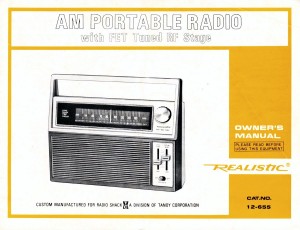 spent a year renting a house in Sudbury, MA before getting married in 1976 and moving to an East Arlington apartment. The Sudbury location near Willis Pond adjoined conservation land where I could install two Beverage antennas. I heard quite a bit of DX by phasing these antennas ahead of my R-390A. Still sometimes I could hear more from West Yarmouth with a lot less wire.
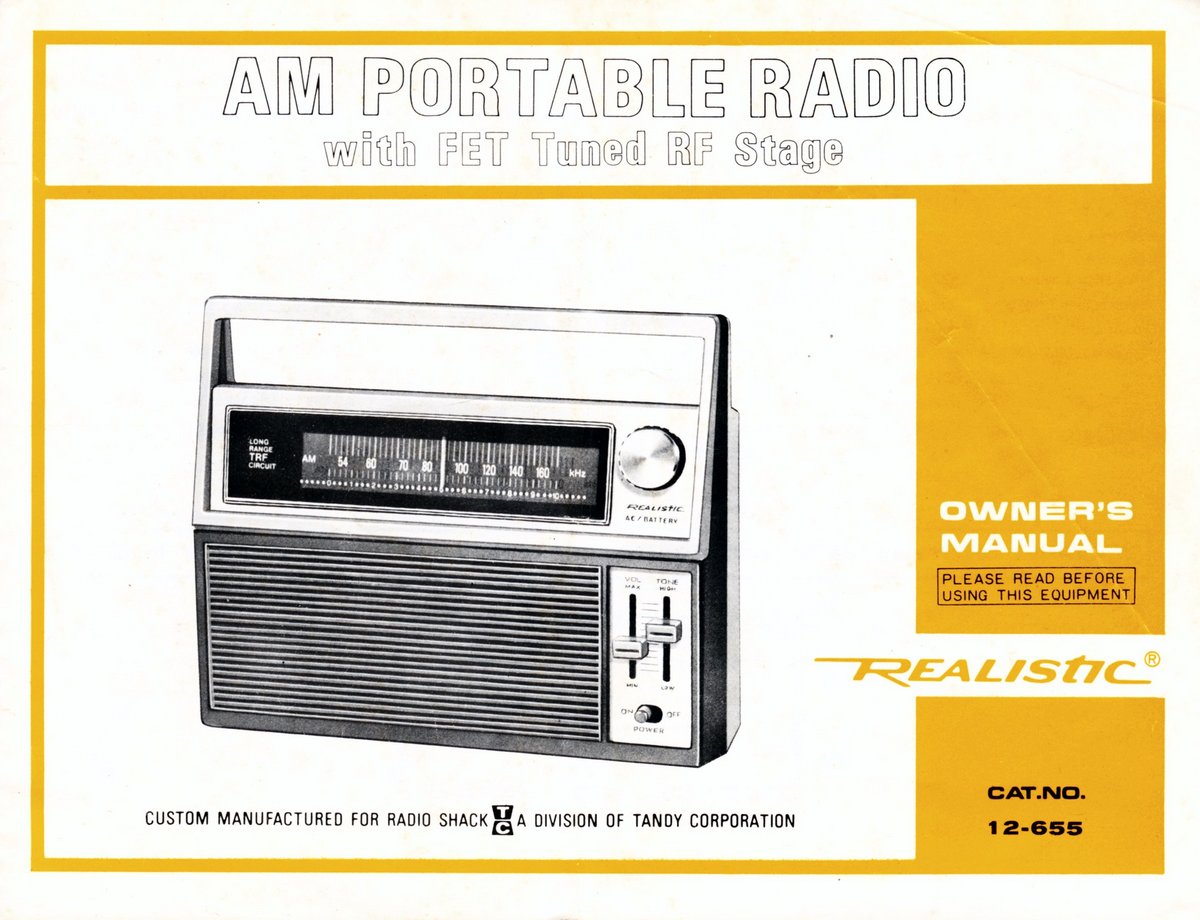
After moving to East Arlington, Mary Lou and I had a little get-together attended by several DXers (including Mike Dunn all the way down from Nova Scotia). In 1977, we took a trip to Ireland on which I did a little listening on a Realistic 12-655 TRF. Many US stations could be heard just before dawn. We enjoyed a visit with Medium Wave Circle member Mike McGovern and his family in Dublin.
In 1979, we moved to our own house in Billerica. That year I went on a short DXpedition in RI with Neil Kazaross. Twelve years later, in ’91, I’d be on my first of several DX adventures to Cappahayden, Newfoundland. Career-wise I was well-established in the ATE (automatic test equipment) industry; I’ve kept with this field, through several companies, since.
I guess that pretty well sums up the 20 years from when I got that first 5-tube radio.
Many thanks, Mark, for sharing your detailed story with so many familiar station calls!
Mark mentions the National Radio Club (NRC) in his story; if you are into medium wave DXing, you should consider becoming a member of the NRC.
Mark’s radio history and much more is available on his website–check it out by clicking here!
Click here to read our growing collection of Listener Posts, and consider submitting your own!

 John C’s radio story is the latest in a new series called Listener Posts, where I will place all of your personal radio histories. If you would like to add your story to the mix, simply send your story by email!
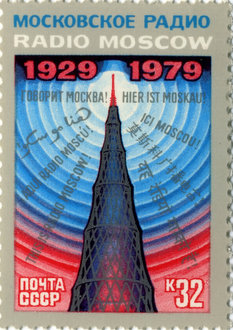 My story started when I was about 7-8 years old. My Father was in the USAF and was stationed in Germany. I remember my parents had this big Telefunkun Console that had a radio and record player. The radio had shortwave bands on it. I used to listen to the Armed Forces Network on the radio. I remember one day checking through the shortwave stations, I came upon an English language program that gave the station ID as “This is Radio Moscow speaking.” I was also able to tune in to BBC World Service which I really liked. After this initial contact with Shortwave Radio, I really never got involved again until after a car accident I had two years ago.
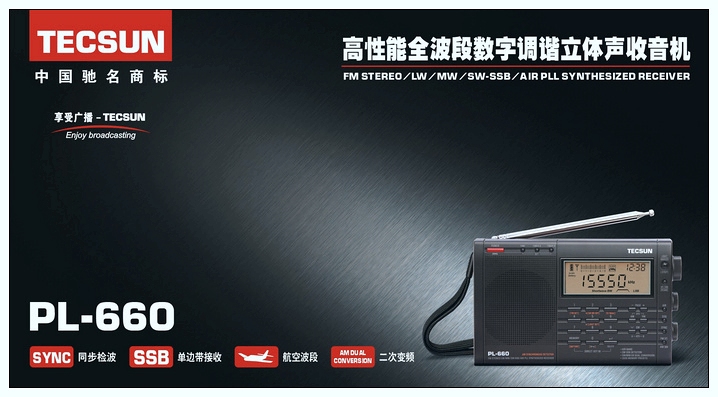 My mobility became limited after the accident. I started looking at low impact hobbies that I could become involved in that did not require a lot of physical activity. I already collected stamps and coins but I wanted something more engaging. In November, 2012, I saw an ad for a radio the Tecsun PL-660 and I ordered one. I really liked it because I had Air Band along with Shortwave and SSB/LSB. I remember the first overseas station I picked up in English which was Radio Romania International. I was very excited even though I was 60 years old at that time. I had studied about submitting reception reports and I immediately completed one and sent it out. After this I was hooked really bad. I read about other radios and decided to purchase a Grundig Satellit 750. What a difference that made along with a better antenna I started receiving stations the PL-660 could not get in. About two -three weeks after I sent out my first reception report I received a letter and QSL card from Radio Romania International. What a treat that was for me. My first confirmation.
 This is a great hobby. I have come in contact with many knowledgeable and interesting people who have and continue to help me on my journey through the shortwave hobby. There is more to this hobby than just putting on headphones and trying to listen in to a far away station. I have had to do research, I have to read a lot to keep on top of the hobby, plus it has opened my eyes and mind to other cultures and their interesting histories. and it really keeps me busy. I also joined the NASWA and highly recommend that club to all newcomers.
 John, many thanks for sharing your radio story!