Category Archives: Nostalgia

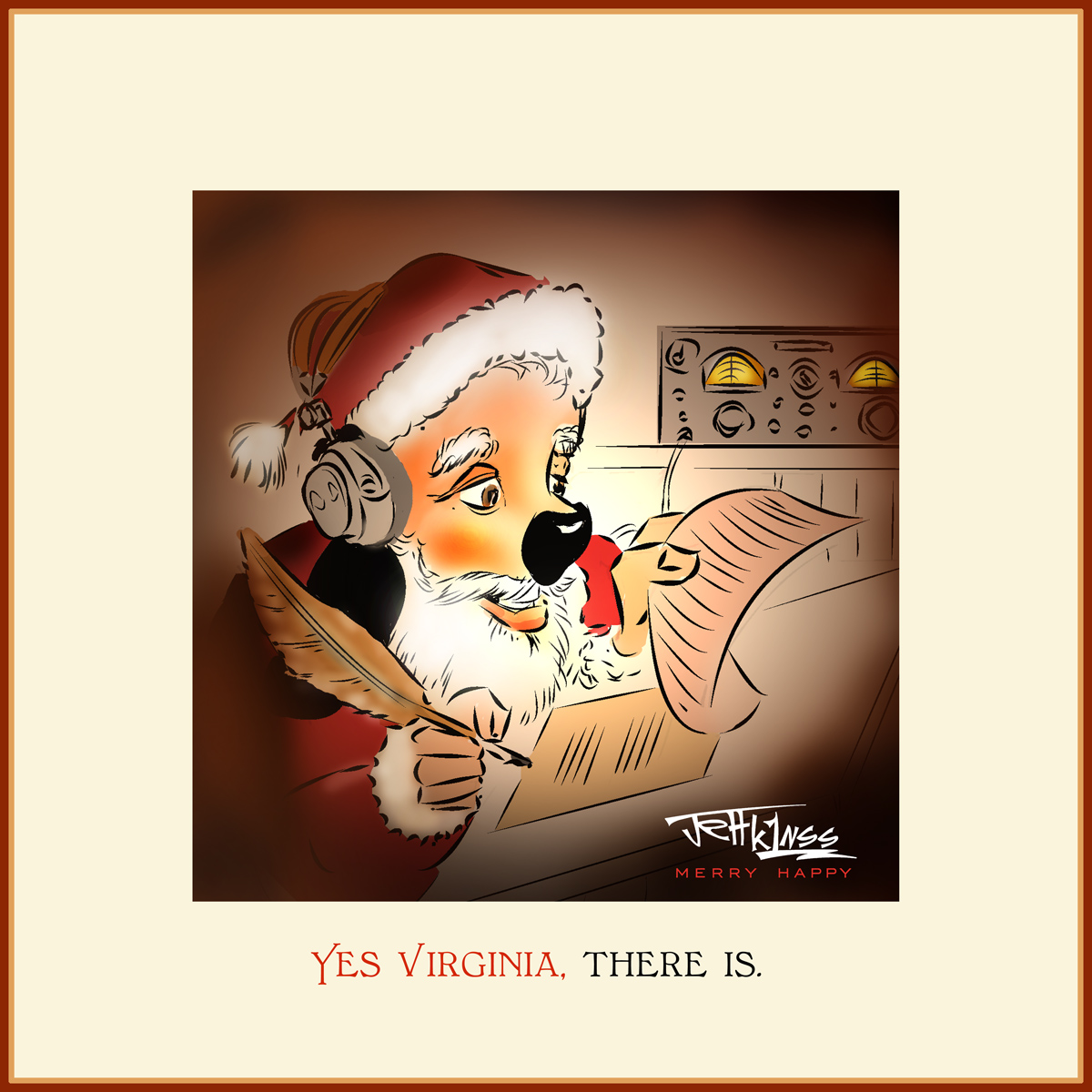
From the Archives: Yes, there is a shortwave…!

Note: Jeff Murray and I posted at Christmas in 2014–I thought it would be fun to dig it out of the archives once again.  Enjoy!


Virginia letter Dash

Dear Editor—

I am 8 years old. Some of my little friends say there is no shortwave. Uncle DX Dash! says, “If you see it on the SWLing Post, it’s so.” Please tell me the truth, is there a shortwave?

Virginia E. Layer
330 Independence Ave., S.W.

Virginia, your little friends are wrong. They have been affected by the skepticism of a digital age. They do not believe what can’t be heard or seen on their smart phone. They think that nothing can be which is not comprehensible by Google. They seek credit cards, not QSL cards.

Yes, Virginia, there is a shortwave. It exists as certainly as sound and circuits and tubes exist, and you know that these abound and give to your life its highest beauty and joy. Alas! how dreary would be the world if there were no shortwave! It would be as dreary as if there were no Virginias. There would be no heterodynes, no band openings, no propagation to make tolerable this existence. It would be a world without London Calling.

Not believe in shortwave! You might as well not believe in the ionosphere. You might get your papa to hire men to listen to all of the wi-fi radios of the world, but even if you did not hear shortwave, what would that prove? The most real things in the world are those that neither children nor men can see. Did you ever see ground waves dancing on the lawn? Of course not, but that’s no proof that they are not there. Nobody can casually conceive or imagine all the wonders there are heard and unheard in the listening world. For that, you must wear headphones.

No shortwave! Thank goodness! It lives, and lives forever. A thousand years from now, Virginia, nay 10 times 10,000 years from now, shortwave will continue to make glad the hearts of listeners.


Happy Holidays from your friends at Dashtoons and the SWLing Post!

With apologies to The New York Sun.  Our tongue-in-cheek editorial borrows from the timeless classic, “Is There a Santa Claus?” printed in the September 21, 1897, issue of The New York SunClick here to read the original

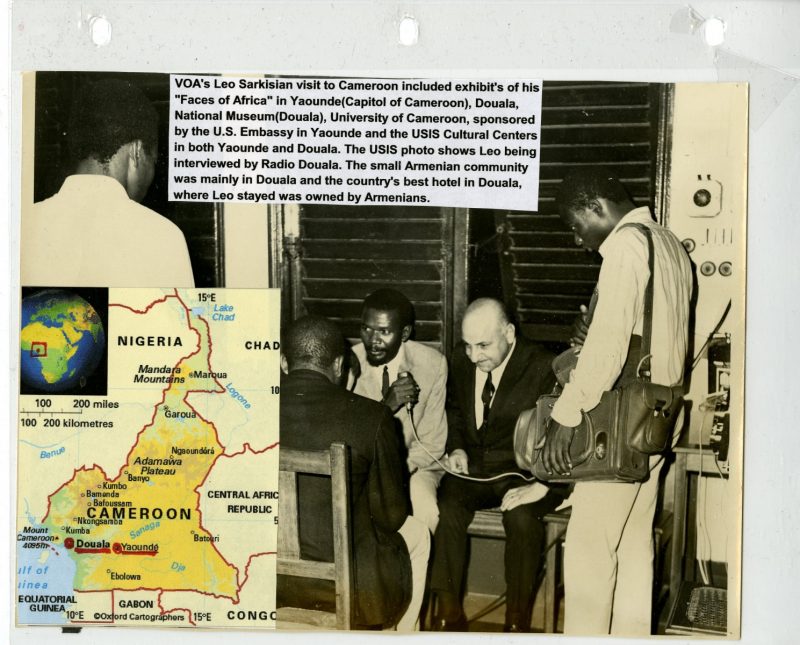
The Music Time in Africa Archive at the University of Michigan

(Source: Music Time in Africa Archive)

Many thanks to SWLing Post contributor, Zack Schindler (N8FNR), who writes:

If anyone wants to listen to archives of VOA’s Music Time in Africa many are now available. I received this email from the archivist at the University of Michigan

“At the present time we have roughly 600 shows online here: http://mtia.sites.uofmhosting.net/

Click on the “Listen” link to get to the streaming platform. The shows we have up now are those for which we also have printed scripts, so you can read the script and listen to the show. The dates of the shows are 1968 to 1998. There are five hosts represented in this group. Sometime in January 2021, we are planning to upload 109 more shows. These are the ones that are missing scripts so all that is there is the full show. Then, in February, we are planning to add about 400 more shows from the period between 2007 and 2017. These are programs where Matthew Lavoie or Heather Maxwell are hosts. The website contains some background information on the project.”

Here is more information about the archive project;
https://news.umich.edu/leo-sarkisians-music-time-in-africa-u-m-archivist-anthropologist-revive-popular-voice-of-america-show/

Wow! What a treasure trove of one of my favorite VOA programs! Thank you for sharing, Zack!

Click here to check out archived episodes of VOA’s Music Time in Africa.

Radio Waves: Ted Lipien Named Head of RFE/RL, The American Radio Archives, Drive-Thru Ham Tests, and VOA Broadcasts to Displaced Communities in Africa

Radio Waves:  Stories Making Waves in the World of Radio

Because I keep my ear to the waves, as well as receive many tips from others who do the same, I find myself privy to radio-related stories that might interest SWLing Post readers.  To that end: Welcome to the SWLing Post’s Radio Waves, a collection of links to interesting stories making waves in the world of radio. Enjoy!

Many thanks to SWLing Post contributors Ted Lipien, Josh Shepperd, Ronnie Smith, and Gary Butterworth,  for the following tips:


Ted Lipien returns to U.S. international broadcasting as head of RFE/RL December 18, 2020 (USAGM)

WASHINGTON, D.C. — Michael Pack, CEO of the U.S. Agency for Global Media (USAGM), announced today that veteran civil servant Ted Lipien is returning to U.S. international broadcasting as CEO and President of Radio Free Europe/Radio Liberty (RFE/RL).

“Few people have a greater understanding than Ted of the multifaceted operation and mission of U.S. international broadcasting,” said CEO Pack. “Ted is an ardent and captivating advocate of democracy who will excel at sharing America’s founding principles and ideals with the world.”

“When I was a teenager in Communist Poland, I would listen to Radio Free Europe to find out what the government was not telling me,” said Mr. Lipien. “It had an enormous impact on my life, and on the lives of millions of others. I’m honored, and humbled, to be entrusted with helping this storied organization continue to break the hold of censorship and give voice to the silenced.”

Mr. Lipien has dedicated virtually his entire career to U.S. international broadcasting. He joined Voice of America (VOA) in 1973 and served as the network’s Polish Service Chief for 12 years, from 1981 to 1993, including the Solidarity labor union’s struggle for human rights and democracy in Soviet-communist-ruled Poland. From 1993 to 2003, he served as the Broadcasting Board of Governors’ Eurasia Marketing Specialist and Director, first in Munich and, later, in Prague. Mr. Lipien then rejoined VOA, serving as Eurasia Division Director from 2003 to 2005 and Acting Associate Director from 2005 to 2006. He has interviewed a number of eminent public figures, including Cardinal Karol Wojty?a (Pope John Paul II), Lech Wa??sa, George H.W. Bush, Zbigniew Brzezinski, and Czes?aw Mi?osz.

In 2008, after leaving the federal service, Mr. Lipien founded Free Media Online, a non-governmental organization committed to supporting free media worldwide. His pro-media freedom work has been noted in a variety of national publications, including the New York Times, Wall Street Journal, and Washington Post. His articles have appeared in National Review, Washington Times, and Washington Examiner. Mr. Lipien earned his bachelor’s degree in international relations with distinction from George Washington University.

RFE/RL, headquartered in Prague, is a non-federal network funded by the United States Congress through USAGM. Daisy Sindelar, who had been serving as Acting President of RFE/RL since June 2020, is returning to her former role as the network’s Vice President and Editor-in-Chief.[]

On the Radio: The Library’s Special Research Collections to become home to the American Radio Archives (UC Santa Barbara)

The American Radio Archives, one of the world’s largest and most valuable collections of radio broadcasting will soon become part of the UC Santa Barbara Library’s Department of Special Collections.

Established by the Thousand Oaks Library Foundation (TOLF) in 1984, the archive is one of the first in the state and includes original recordings of Winston Churchill, as well as broadcast photographs, radio and television scripts, books and film dated as early as 1922.

“It is critical that such a wonderfully curated collection documenting the golden age of radio is preserved and accessible, said Thousand Oaks Mayor Claudia Bill-de la Peña. “UCSB has one of the largest collections of performing arts records, sound recordings and broadcast recordings on the West Coast as well as a state-of-the-art audio laboratory, making it our first choice and a natural fit for the American Radio Archives.”

The collection was established in 1984 and grew significantly with the purchase in 1987 of radio memorabilia from the estate of Rudy Valleé, one of the nation’s most popular singing bandleaders and personalities. Valleé documented his career, which took off in the1920s, through an extensive array of journals, photographs and original pieces of advertising.

The prominence of the Valleé collection attracted numerous celebrities and radio historians from around the world who gravitated toward the American Radio Archives. Among them were such luminaries as Norman Lear, Carl Reiner, Ron Howard, Ray Bradbury, Norman Corwin, Edward Asner, Walter Cronkite, Janet Waldo, Candice Bergen and William Shatner.

When Norman Corwin — dubbed America’s poet laureate of radio — donated his career files in 1990, it further increased esteem for the archives and generated significant interest among radio aficionados. As a result, many noteworthy collections were donated to TOLF, including, among others, those of radio station KNX-CBS; radio actor and radio historian Frank Bresee, who hosted “The Golden Days of Radio”; comedian Red Skelton; Carlton Morse, the creator of the long-running radio soap opera “One Man’s Family”; radio and television writers Milton and Barbara Merlin; and Allin Slate, a pioneer of the sports talk show format on KABC radio in Los Angeles.[]

Oregon ARRL VEC Testing Group Offers Testing from the Comfort of Your Car (ARRL News)

The coronavirus pandemic has made life difficult for everyone. On the plus side, however, it’s prompted creative solutions to work around the various roadblocks the pandemic has imposed. Volunteer Examiners in Grant County, Oregon, affiliated with the ARRL Volunteer Examiner Coordinator (VEC) put their heads together to overcome the adversity and hold a safe and secure exam session. Current health regulations in Oregon precluded both indoor and outdoor gatherings. Nonetheless, the Grant County Amateur Radio Club, the local ARES Group, and the Grant County Emergency Radio Infrastructure Coalition (ERIC) combined forces to offer five candidates the chance to obtain their first license or to upgrade their existing license, all from the comfort of their vehicles.

“Many amateur radio clubs have experimented with exams via the internet,” said Steve Fletcher, K7AA, who is the ARES Emergency Coordinator for Grant County. “In eastern Oregon, with the cooperation of the County Roads Department, we chose to hold a ‘drive-up’ exam session on Saturday, December 12. Under the circumstances, we used four ARRL VEs for the exam instead of the required three.” Wheeler County ARES loaned Stuart Bottom, K7FG, to help as the third required Amateur Extra-class Volunteer Examiner.

Fletcher reports three new Technician licensees and two new General-class radio amateurs resulted from the session.

Required ARRL VEC forms contained pre-printed data — including the FCC Registration Number (FRN) — were given to the candidates on a clipboard. Each candidate took the exam in the front seat of their own vehicle. Cell phones, papers, and anything not required for the exam were removed.

“Everyone dressed warmly, and most candidates had their heaters running,” Fletcher reported. A camper owned by Ronda Metler, KB5LAX, and a communications van owned by Fletcher served as sites to check results and sign forms.

The Grant County Roads Department loaned its parking area for the exam session.[]

On International Migrants Day, VOA Expands Broadcasts to Displaced Communities in Africa (VOA Press Release)

As the world observes International Migrants Day on December 18, Voice of America continues to enhance its operations to serve the growing refugee populations in Africa. UNHCR, the UN Refugee Agency, reports that, in just the past few weeks, 50,000 Ethiopian refugees have joined the world’s 80 million forcibly displaced people, including more than 18 million in sub-Saharan Africa.

Recognizing the deteriorating conditions in northern Ethiopia’s Tigray region in recent weeks, VOA rapidly added existing Tigrigna-language radio broadcasts to existing VOA FM radio stations in the Libyan cities of Tripoli and Misrata. These newscasts reach not only the newly displaced civilians, but also Eritreans in both cities who arrived prior to the current exodus and still have ties to the crisis-affected area. Newly created “micro sites” deliver digital content in TigrignaAmharic, Afan Oromo and English from VOA regional reporting teams.

In Kakuma, Kenya, site of one of the world’s oldest refugee camps, VOA launched a new FM station to provide both refugees and the local community with news, music, and educational content in English, Swahili, and Somali. For the Dadaab refugee complex near Kenya’s border with Somalia, a new VOA station offers local residents and refugees a mix of VOA English and Somali language content that airs in Somalia and Djibouti.

“VOA is committed to providing vital news and information to underserved populations worldwide, including refugees and other forcibly displaced persons,” said VOA Director Robert Reilly. “In particular, as the only international broadcaster with a presence in Kakuma, VOA serves as a critical lifeline for individuals in this region with access to few other reliable media resources.”

VOA’s efforts to reach at-risk refugee populations expanded exponentially in 2017 in south Asia and Latin America. VOA’s Bangla language service began broadcasting in Rohingya to reach refugees in Kutupalong, the world’s largest refugee camp. Nearly one million ethnic Rohingya, who fled persecution in neighboring Myanmar, inhabit the site. When Venezuelans began to flee President Nicolás Maduro’s regime, the VOA Spanish language service significantly increased its coverage of this unfolding crisis for audiences all across the region.

VOA FM Frequencies

Existing in Libya: Tripoli (106.6 MHz); Misrata (99.1 MHz)

New in Kenya: Kakuma (99.9 MHz); Dadaab (106.7 MHz)


Do you enjoy the SWLing Post?

Please consider supporting us via Patreon or our Coffee Fund!

Your support makes articles like this one possible. Thank you!

Yet another “Wacky Wake-Up Crew” recording

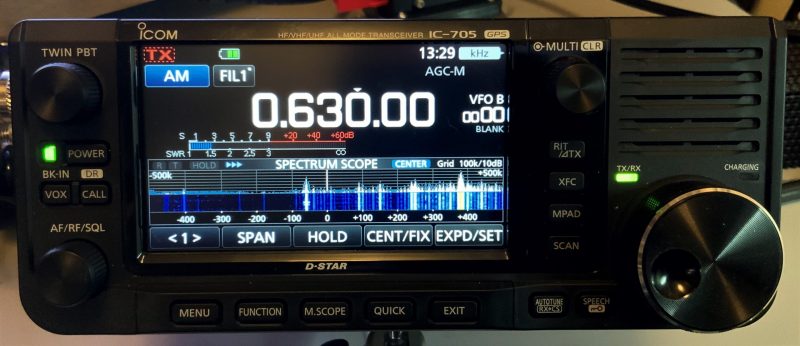
After posting recordings of 630 AM WAIZ’s “Wacky Wake-Up Crew” recently, a few readers asked for yet another recording, so here you go!

I made this recording yesterday morning (December, 16, 2020), starting around 5:30 EST with the Icom IC-705 connected to my homebrew NCPL antenna:

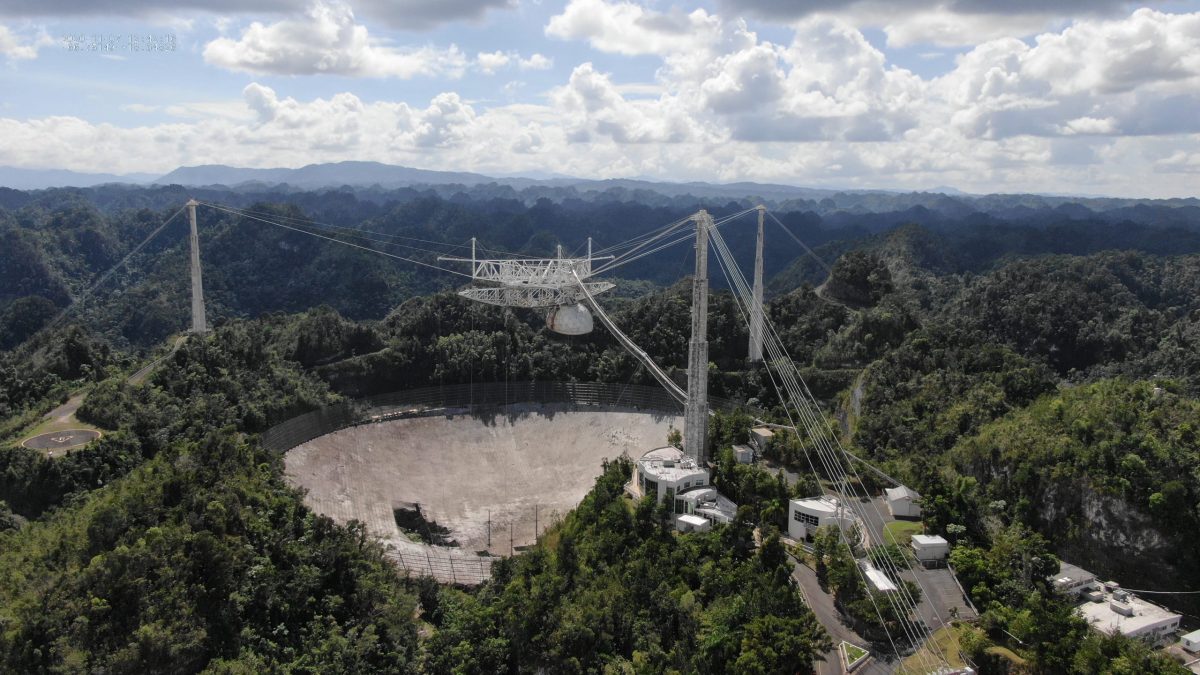
Video: Physicist reminisces about Arecibo Radio Telescope

Arecibo Observatory’s 305-meter telescope in November 2020 (Credit: University of Central Florida)

Many thanks to SWLing Post contributor, TomL, who shares the following:

I came across this youtube video about a physicist who worked there in his early years and gives this tribute to his time there. Maybe some others would like to see it too:

Amazing! Thank you, Tom!

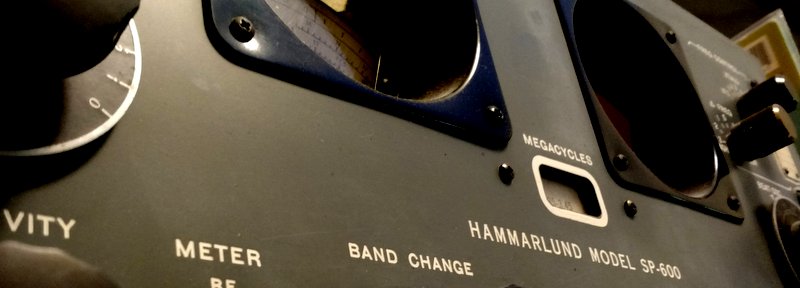
Dan’s respect for Hammarlund and the SP-600 series

Many thanks to SWLing Post contributor, DanH, who shares the following comment in response to this news article from the Citizen Times featured in Radio Waves yesterday:

Here are my thanks to members of the Amateur Radio community and The News-Record & Sentinel for remembering the legacy of Hammarlund Manufacturing Company Incorporated. It is good to know that this part of our radio history is valued and preserved. I loved the newspaper article!

I have a few vintage Hammarlund radios including two Super-Pro models. The SP-600-JX-21 is one of my daily drivers. This relatively late production SP-600 is in stock condition with the exception of a half dozen electrolytic capacitors that I replaced mostly in the power supply. By the time this SP-600 was built in 1957 Hammarlund had replaced the short-lived black beauty electrolytes with ceramic disc capacitors. Like military and industrial users I upgraded the original nickel plated tube shields with IERC heat dissipating tube shields where possible. I also installed vintage GE No. 1847 long-life incandescent bulbs as direct replacements for the brighter (too bright, for me) No. 47 dial lamps.

Here are my two most recent reception videos of the SP-600. The first features reception of Radio National da Amazonia and the second is a brief operating demo of the SP-600. The loudspeaker used in both videos is a full-range vintage Jensen 10? with matching transformer from the 1950’s instead of a communications range speaker typically used with these radios. This makes a big difference when listening to broadcasts.

This old Hammarlund is still working pretty well.

RN da Amazonia

SP-600 operating demo

Wow! Thank you for sharing this, Dan!

I used to own an SP-600 myself and I do miss it. The only reason I sold it is I was struggling to find a spot in my very compact shack where I could keep it on the air as a daily driver, yet still have enough room to bring new radios and accessories into the shack for evaluation. Moving it around all of the time (especially higher on my radio shelves) was incredibly difficult as she’s a hefty girl indeed! I ended up selling the ‘600 to a good friend for a song. That’s okay because like you, I know he’ll keep her in prime operating condition and I can even pop by to visit when I wish! I do miss having the ‘600 in the shack, though. It was truly a champion MW receiver as well!

Radio Waves: RIP Phil Erwin, Federal Watchdog Targets Pack, Eclipse Festival of Frequency Measurement, and VOA testing DRM

Radio Waves:  Stories Making Waves in the World of Radio

Because I keep my ear to the waves, as well as receive many tips from others who do the same, I find myself privy to radio-related stories that might interest SWLing Post readers.  To that end: Welcome to the SWLing Post’s Radio Waves, a collection of links to interesting stories making waves in the world of radio. Enjoy!

Many thanks to SWLing Post contributors Dave Zantow, Michael Guerin, Eric McFadden, and Dan Robinson for the following tips:


The voice of Phil Irwin will be greatly missed (Rappahannock News)

Where wasn’t the presence of Phil Irwin felt in Rappahannock County?

A constant of virtually all proceedings of the Rappahannock County community and government, cherished innkeeper of Caledonia Farm – 1812, founding member of the Rappahannock League for Environmental Protection, regional director of the Virginia Farm Bureau, committee member for both Rappahannock County Farmland Preservation and the Agricultural Forestal District, Rappahannock tourism advisory member — for 25 years chief of morning broadcasts for Voice of America (VOA) — Irwin was found dead Thursday at his working cattle farm north of Washington.

“What a contribution Phil made to our county over his many years here,” Huntly friend Ralph Bates reacted upon learning of Irwin’s death. “He will live in our memories as we drive and see how well our viewshed and environment has been protected because of his commitment and work.”

Former Washington Mayor John Fox Sullivan recalled “a good man and such a part of the Rappahannock fabric. His love for this county, and commitment to it, was unmatched.”[]

Federal watchdog finds ‘substantial likelihood of wrongdoing’ by Trump appointees overseeing Voice of America (NBC News)

The federal watchdog’s findings mark the latest rebuke of the Trump-appointed CEO of the U.S. Agency for Global Media, Michael Pack.

WASHINGTON — A federal watchdog agency has found “a substantial likelihood of wrongdoing” by Trump administration appointees who oversee the Voice of America and other U.S.-funded media outlets.

The finding from the U.S. Office of Special Counsel, an independent government agency charged with safeguarding federal employees’ rights, marks the latest rebuke of Michael Pack, who President Donald Trump appointed to run the U.S. Agency for Global Media, the parent agency to VOA and other broadcasters.

A federal judge last month ordered Pack to stop interfering in the newsrooms of VOA and other media outlets and found that he had jeopardized the First Amendment rights of journalists that his office had targeted for investigation. Lawmakers from both sides of the aisle and press freedom groups have blasted Pack over his actions since he took over in June, accusing him of undermining the broadcasters’ editorial independence and defying congressional authority.

After reviewing allegations from current and recent employees, the Office of Special Counsel wrote to the whistleblowers Wednesday saying it had demanded Pack and the U.S. Agency for Global Media conduct an investigation into the allegations.[]

The December 2020 Eclipse Festival of Frequency Measurement (HamSCI)

Changes in ionospheric electron density caused by space weather and diurnal solar changes are known to cause Doppler shifts on HF ray paths. For example, see Figure 7 in Boitman et al., 1999. HamSCI’s first attempt at a measurement of these Doppler shifts was during the August 2017 total solar eclipse. We plan a careful measurement during the 2024 eclipse. As part of the WWV centennial, 50 stations collected Doppler shift data for the original Festival of Frequency Measurement, demonstrating the value of volunteer participation in collecting this data. During the June 2020 Eclipse Festival, we enlisted participants around the globe and experimented with different data collection protocols. This winter, we request that all amateur radio stations, shortwave listeners, and others capable of making high-quality HF frequency measurements help us collect frequency data for the December 14 total eclipse.[]

USAGM, VOA Testing Innovative Digital Radio Platform (Inside VOA)

A few weeks before the COVID-19 pandemic shut down much of the world, broadcast engineers in Greenville, North Carolina, launched a test of digital radio signals. The U.S. Agency for Global Media began aiming a digital broadcast at Cuba and Latin America, which included Office of Cuba Broadcasting and Voice of America content.

With this 2020 test, VOA embarked on a new phase of global innovation on a platform called Digital Radio Mondiale (DRM), a versatile digital signal not well known in the U.S., but the only one that can cover the entire spectrum: shortwave, mediumwave and longwave, as well as VHF (FM). As digital radio emerged in the 1990s, VOA was among the first broadcasters testing a signal that promised to even out shortwave radio signals that often faded in and out and were marred by static.

VOA tested the DRM signal in the 1990s at the agency’s Morocco transmitter site, one of five facilities opened in a period of expansion in the previous decade. However, other digital signals became the standard in various markets around the world. The U.S. standard audio digital platform is called HD.

Around the world, as other digital radio platforms were adopted, DRM was held back by the marketplace. Nobody was making commercially available receivers.

By the end of the 1990s, VOA innovation focused more on television, the platform that promised larger audiences, even in some places in the world where shortwave dominated. By the early 2010s, the rallying cry became “Digital First,” as VOA strived to attract readers for its language service websites and began tapping into the growing audiences on new social media sites like Facebook, Twitter, Instagram and YouTube.

By 2020, however, DRM had come full circle.

“You’re no longer limited to just reading the news or playing music,” says Gerhard Straub, supervisory director of the USAGM Broadcast Technologies Division.

Straub, along with Gary Koster, Broadcast Radio Technician and transmitter expert and Macon Dail, Chief Engineer at the Greenville Transmitting Station, set up the test broadcast in February of this year, not long before the COVID-19 pandemic grounded global travel. The trio put up a DRM signal with Radio Marti and VOA audio along with scrolling text messages and rotating images.

Engineers have received reports of a clear signal as far south as Brazil.

The USAGM test, says Straub, is “coasting along” in the pandemic, but additional content will be added when technicians can travel again. Straub says the VOA signal was taken off in the initial test to concentrate on the OCB digital content and to keep the signal robust. Now that there is good reception data, he noted, the digital bit rate can be increased and VOA content added back into the test in 2021.

Because DRM operates at lower power, more radio stations and digital signals can be broadcast on a single transmitter. The platform is starting to grow in countries of interest to Western international broadcasters. DRM signals will soon cover all of China, though its government is expected to attempt to control the stations accessed by its citizens. India built 39 transmitters and, more importantly, 2.5 million vehicles already are equipped with DRM radios. Indonesia, Pakistan, Brazil and North Korea all have nascent DRM operations.

Religious broadcasters, who sometimes target audiences similar to those sought by Western governments, are experimenting with the technology. For example, a missionary group, TWR.org, sent the Bible’s Gospel of Mark from Guam to Cambodia via DRM shortwave.

“You have to stop thinking of it as radio, because it’s not,” says USAGM’s Straub. “We are now broadcasting digital data. Just like we broadcast digital data on the internet, we can broadcast digital data over shortwave without being hampered by an internet firewall that maybe limits what we can send to a particular country.”

Reason enough, Straub believes, for VOA to continue leading innovation in a new-again technology.[]


Do you enjoy the SWLing Post?

Please consider supporting us via Patreon or our Coffee Fund!

Your support makes articles like this one possible. Thank you!