Shortwave listening and everything radio including reviews, broadcasting, ham radio, field operation, DXing, maker kits, travel, emergency gear, events, and more
Many thanks to SWLing Post contributor, NT, who writes:
Hi Thomas,
I know you’ve shared info about the great World Radio History site before. Have you ever linked to the webpage for their entire Short Wave and DXing Collection?
Many thanks to SWLing Post contributor, Bob Zanotti (HB9ASQ), who has, at my request, shared a video recording of a presentation he gave to the Fairlawn ARC last year.
This is part one. Part two will soon be released and we’ll post it on the SWLing Post as well! Thank you, Bob! Enjoy:
Many thanks to SWLing Post contributor, JP, who shares a link to the FCC Pirate Radio database:
Pirate Database
In accordance with section 511(g) of the PIRATE Act, the following databases are provided to identify (i) each entity against whom an enforcement action for pirate radio broadcasting has been issued, and (ii) licensed radio stations.
Pirate Radio Database
Licensed AM and FM Radio Station Database
As far as islands go, Manhattan is one of the most famous and instantly recognisable. But if you were to charter a boat and sail around its coastline and through New York’s natural harbour you’d come across many more islands so small that hardly anyone knows are there. There are around thirty or so of these odd little islands, all mostly uninhabited or privately owned and strictly off limits, but filled with strange tales and peculiar histories.
Many of these islands are tantalisingly close to New York City, but remain out of reach. As travel writer Robert Sullivan put it “the islands are our silent neighbours. It is easy to live here and never notice them.”
[…]This story however, is about one such tiny island, just 150 feet square, and so small you can barely spot it on Google Maps unless you knew where to look. Once known as Little Pea Island, it is located about a mile off shore from Pelham Bay Park in the Bronx, and has room enough for just one building. It has been home to a Jazz Age era swanky yacht club, a radio station and for a while, the home to a glitzy Hollywood showbiz couple who ran a morning radio show from their home on the island. The last owner recently renovated the island into a self-sufficient, five thousand square feet luxury home, which today lies empty. [Continue reading the full story…]
A new ultra-low-power method of communication at first glance seems to violate the laws of physics. It is possible to wirelessly transmit information simply by opening and closing a switch that connects a resistor to an antenna. No need to send power to the antenna.
Our system, combined with techniques for harvesting energy from the environment, could lead to all manner of devices that transmit data, including tiny sensors and implanted medical devices, without needing batteries or other power sources. These include sensors for smart agriculture, electronics implanted in the body that never need battery changes, better contactless credit cards and maybe even new ways for satellites to communicate.
Apart from the energy needed to flip the switch, no other energy is needed to transmit the information. In our case, the switch is a transistor, an electrically controlled switch with no moving parts that consumes a minuscule amount of power.
In the simplest form of ordinary radio, a switch connects and disconnects a strong electrical signal source – perhaps an oscillator that produces a sine wave fluctuating 2 billion times per second – to the transmit antenna. When the signal source is connected, the antenna produces a radio wave, denoting a 1. When the switch is disconnected, there is no radio wave, indicating a 0. [Continue reading…]
Don Moore’s Photo Album: Cuenca, Ecuador (Part One)
by Don Moore
For me travel is all about seeing new places and having new experiences. When I retired in 2017 my plan was to spend the next fifteen years visiting new countries and new places in countries I already knew. Is that a viable goal? Three years ago while crossing the border from Ecuador to Colombia I shared a taxi with Dutch man who, like me, was traveling overland by bus with just a knapsack and a suitcase. And two weeks earlier he had celebrated his eightieth birthday. I don’t remember his name but he’s my hero.
The pandemic put a pause on travel but I’m happy to be back on the road. I’m currently in Ecuador, the country where I’ve spent more time than anywhere except the United States and Honduras. After landing in Quito at the beginning of December I visited four provinces I hadn’t been to before, including spending three nights at the bohemian beach town of Montañita where I had some good DX. I like seeing new places but there is also something to be said for returning to a familiar place that holds a special meaning. For me that place is where I am now – Cuenca, Ecuador.
My ex-wife and I finished our Peace Corps service in 1984, flew home to get married, and then in January 1985 flew to Quito, Ecuador to begin a long journey that would take us overland all the way to Buenos Aires and back. On our way to Peru in late February we stopped for a few days in Cuenca and fell in love with the little city. We visited Cuenca again in July at the end of our travels. When we left I knew we would be back but I never could have imagined the circumstances that would lead to that next visit. In 1997 we returned with our seven-year-old daughter to adopt a six-year-old son. We spent almost three weeks in Cuenca doing all the required paperwork but we had no complaints as we enjoyed being there so much. I clearly remember sitting in a park one day and commenting that Cuenca would be a perfect place to retire in someday. I was only ten years ahead of my time.
La Voz del Río Tarqui
Cuenca was home to several shortwave broadcasters over the decades but La Voz del Río Tarqui was probably the best known to my generation of DXers. The station was founded in 1960 by Manuel Pulla but didn’t begin its shortwave service on 3285 kHz until 1982. My loggings of the station run from July 1982 through 1997 but I believe they were on shortwave for a few more years after that. (Don’t confuse La Voz del Río Tarqui with Radio Tarqui, a sometimes broadcaster from Quito on 4970 kHz.)
La Voz del Río Tarqui in 1985. The facilities inside were no more impressive than the outside of the building was.
La Voz del Río Tarqui takes its name from the famous Battle of the River Tarqui. After the new countries of South America gained their independence from Spain there was often disagreement over just where the boundaries were that they had inherited from Spanish rule. Ecuador was in a union with present-day Colombia and Venezuela until 1830 and during this time Peru claimed much of present-day southern Ecuador, including Cuenca and Guayaquil. In 1828 a large Peruvian army occupied Loja, to the south, and a few months later marched north to complete their conquest. In February 1829 General Antonio de Sucre, a hero of the war of independence, met the Peruvians on the banks of the Tarqui, twenty-five kilometers south of Cuenca. Both sides suffered heavy losses but Sucre’s army routed the Peruvians. Cuenca, Guayaquil, and Loja remained a part of Ecuador. Continue reading →
It was 1913, the year of the Binghamton Clothing Company Fire, and the year after the Triangle Shirtwaist Fire and the sinking of the Titanic.
Several major disasters that had left the region and the nation reeling from the loss of human life amidst a growing industrial base in the country. Thousands of immigrants were arriving to find new lives and work among the huddling masses. Many of those would make their way to the Binghamton area to find employment in the many cigar and shoe factories scattered on the landscape.
It was important to find a feel-good moment in the ever-rapidly increasing technology world that was changing the way we performed our work and lived our lives. Communication growth was one aspect of those changes. The number of newspapers and their influence was important, but so was the development of what we today call radio – originally known as wireless telegraphy, using radio waves to transmit telegraphic signals from point to point.
The first practical incarnation of wireless telegraphy was created by Guglielmo Marconi of Italy. The discovery of those waves had been made only about two decades prior to his use of those to transmit telegraph signals. In 1897, he formed the Wireless Telegraph & Signal Company in the United Kingdom. The company would later be called the Marconi Wireless Company, and continued to work on the ability to send these wireless signals farther and farther. Eventually, he also worked to see if these signals could be transmitted and received by moving objects, such as ships at sea and railroad trains. [Continue reading…]
Orson Welles’ contrived The War of the Worlds news bulletin “interrupted” a radio broadcast in 1938 to advise terrified listeners that aliens had invaded the Earth. As many as 12 million people were tuned in, according to NPR – and perhaps a million of them apparently worried that it was actually happening.
We’ve gained historical perspective on the stunt, even while the way we consume media has vastly changed over the decades that followed. Critics would later downplay the impact of The War of the Worlds, with some arguing that newspapers purposely over-sensationalized the broadcast to cast doubts on the trustworthiness of then-new technology that was siphoning off ad revenue.
What’s clear is that signal intrusions – including unauthorized hijacking of radio, television or satellite feeds – have continued ever since. They’ve served a variety of purposes, as you’ll see on the following list. Many were a form of political protest, while others were just looking to have a little fun. All of them trace back in some way to Welles’ fateful “interruption.”
Southern Television Broadcast
Nov. 26, 1977, England
Viewers of an early evening Southern Television broadcast in England were alarmed when an electronic voice purported to represent the “Ashtar Galactic Command” overtook the audio of a news segment for a full six minutes. The message, which was accompanied by a pulsating sound and eerie distortions, said: “For many years, you have seen us as lights in the sky. We speak to you now in peace and wisdom as we have done to your brothers and sisters all over this, your planet Earth.” This strange voice went on to advise humanity to “abandon its weapons” in order to participate in a “future awakening” and “achieve a higher state of evolution.” It also warned viewers that government officials weren’t who they claimed to be, and that they were leading the unwitting public into a New World Order. The hack ended with a final message: “Have no fear, seek only to know yourselves, and live in harmony with the ways of your planet Earth. We hear at the Ashtar Galactic Command thank you for your attention. We are now leaving the planes of your existence. May you be blessed by the supreme love and truth of the cosmos.” The interruption prompted a flood of phone calls from an understandably concerned audience then living under the threat of Cold War. A local newspaper said “thousands” of viewers were horrified; one man described the experience as “very eerie indeed” and said it “sounded very authentic.” A woman said she had to call her friends to make sure she wasn’t “hearing things,” adding that “it sounded like a genuine voice from outer space and was quite frightening.” An investigation revealed the Independent Broadcasting Authority’s Hannington transmitter had rebroadcast the signal from a nearby, unauthorized transmitter. The mastermind behind it all was never identified.
Researchers in Drexel University’s College of Engineering have developed a thin film device, fabricated by spray coating, that can block electromagnetic radiation with the flip of a switch. The breakthrough, enabled by versatile two-dimensional materials called MXenes, could adjust the performance of electronic devices, strengthen wireless connections and secure mobile communications against intrusion.
The team, led by Yury Gogotsi, Ph.D., Distinguished University and Bach professor in Drexel’s College of Engineering, previously demonstrated that the two-dimensional layered MXene materials, discovered just over a decade ago, when combined with an electrolyte solution, can be turned into a potent active shield against electromagnetic waves.
This latest MXene discovery, reported in Nature Nanotechnology, shows how this shielding can be tuned when a small voltage—less than that produced by an alkaline battery—is applied.
“Dynamic control of electromagnetic wave jamming has been a significant technological challenge for protecting electronic devices working at gigahertz frequencies and a variety of other communications technologies,” Gogotsi said.
“As the number of wireless devices being used in industrial and private sectors has increased by orders of magnitude over the past decade, the urgency of this challenge has grown accordingly. This is why our discovery—which would dynamically mitigate the effect of electromagnetic interference on these devices—could have a broad impact.”
The United States has begun work on the deployment of a new long-range over-the-horizon radar system for the United States Air Force, which will be placed on the Pacific island of Palau.
The sensor station, known as the Tactical Mobile Over-the-Horizon Radar, or TACMOR, will be set up on the highly strategic island of Palau. The sensor station intends to improve the situational awareness of US and allied forces operating in the region in the air and maritime domain.
The Department of Defense announced on December 28 that it had granted Gilbane’s Federal business a $118.4 million contract to develop the structural foundation of a new US Air Force radar station to be built in the Republic of Palau.
Gilbane Federal will build reinforced concrete pads and other foundational components as part of the firm-fixed-price contract to set up the Tactical Mobile Over-the-Horizon Radar system, the Department of Defense said.
The Naval Facilities Engineering Systems Command Pacific acts as the contracting activity for what is known as the TACMOR infrastructure project. The work is anticipated to be finished by June 2026. [Continue reading…]
Radio receiver is one such gadget that people have been using for many generations. After the invention of radio communication by Guglielmo Marconi in 1895, the first radio receiver was also invented by Marconi. A radio receiver is an electronic device that can only receive radio signals and can convert the radio signals to audio and sound. A radio receiver can receive radio signals of various frequencies by tuning to a particular frequency. These frequencies are of two types – Amplitude Modulation (AM) and Frequency Modulation (FM). A radio receiver capable of receiving any analog audio on AM/FM frequency is called analog radio receiver and for many years people were using analog radio receivers.
Since the invention of analog radio by Marconi in 1895, many companies started manufacturing radio receivers. First came the De Forest RJ6 in 1916, and later many analog radio receivers like Sony TR-63 (1957), and H.H. Scott 350 (1961) came in the market, and they were the first analog radio receivers of that kind. After the emergence of digital electronics and digital radio transmission, digital radio receivers started to capture the market – receivers capable of receiving Digital Audio Broadcasting (DAB) – digital radio transmission. In 2003, Pure launched the PocketDAB 1000 and It was the world’s first pocket digital radio capable of playing DAB radio stations. However, radio receivers became diversifying when internet technology was implemented in them, which made it possible for the companies to introduce internet radio receivers. An internet radio receiver can be either an app of a computer or can be a standalone receiver, connected to the internet to receive internet radio stations. Kerbango internet radio receiver from 3com was the first standalone internet radio receiver of 21th century. This change in the technology of radio receivers even went beyond internet radio – after the arrival of Software Defined Radio (SDR).
Whether it’s World of Warcraft, Uncharted or the upcoming Super Mario movie – games characters have been all over our cinemas in recent years.
The Last of Us is coming to television screens, where shows based on Resident Evil and Halo have found audiences.
Now, BBC Radio 4 is getting in on the act.
Sam Fisher, leading man from the Splinter Cell game series, can call the radio station home, thanks to a first-of-its-kind adaptation that producers say no-one had thought possible.
Radio 1 film critic Ali Plumb says that with so much competition for audiences these days it’s no surprise that commissioners are giving the green-light to projects with a “built-in audience”.
He argues that we live in a world that is dominated by content: “From podcasts to music, TV, movies, games and audiobooks – frankly its tricky for anyone to cut through the noise.
“The art of finding intellectual property, using the built-in fan base of that property and engaging with them in something you want to say about the world is the trick that many creative people are trying to do.”
Splinter Cell: Firewall is an eight part dramatisation of a novel based on the famous video game franchise. Sam Fisher, the series’ main protagonist, is a covert special agent who excels at sneaking around military bases at night, silently killing terrorist guards and generally saving the world.
Bringing the gaming revolution to audio drama makes perfect sense to actor Andonis Anthony, who plays Sam in the Radio 4 drama, which is also available on BBC Sounds. He argues that with more people turning to “non-music audio”, it’s a good time for BBC radio to tell stories that offer a “cinematic experience”.
“Given the rise in podcasts, and audiobooks being so popular – more and more people are getting used to listening to audio as a story experience. Everyone’s going out and about with their air pods on these days and listening in a different way to before.” [Continue reading…]
Software-defined radio is all the rage these days, and for good reason. It eliminates or drastically reduces the amount of otherwise pricey equipment needed to transmit or even just receive, and can pack many more features than most affordable radio setups otherwise would have. It also makes it possible to go mobile much more easily. [Rostislav Persion] uses a laptop for on-the-go SDR activities, and designed this 3D printed antenna mount to make his radio adventures much easier.
The antenna mount is a small 3D printed enclosure for his NESDR Smart Dongle with a wide base to attach to the back of his laptop lid with Velcro so it can easily be removed or attached. This allows him to run a single USB cable to the dongle and have it oriented properly for maximum antenna effectiveness without something cumbersome like a dedicated antenna stand. [Rostislav] even modeled the entire assembly so that he could run a stress analysis on it, and from that data ended up filling it with epoxy to ensure maximum lifespan with minimal wear on the components. [Continue reading…]
An experiment to bounce a radio signal off an asteroid on Dec. 27 will serve as a test for probing a larger asteroid that in 2029 will pass closer to Earth than the many geostationary satellites that orbit our planet.
The High-frequency Active Auroral Research Program research site in Gakona will transmit radio signals to asteroid 2010 XC15, which could be about 500 feet across. The University of New Mexico Long Wavelength Array near Socorro, New Mexico, and the Owens Valley Radio Observatory Long Wavelength Array near Bishop, California, will receive the signal.
This will be the first use of HAARP to probe an asteroid.
“What’s new and what we are trying to do is probe asteroid interiors with long wavelength radars and radio telescopes from the ground,” said Mark Haynes, lead investigator on the project and a radar systems engineer at NASA’s Jet Propulsion Laboratory in Southern California. “Longer wavelengths can penetrate the interior of an object much better than the radio wavelengths used for communication.”
Knowing more about an asteroid’s interior, especially of an asteroid large enough to cause major damage on Earth, is important for determining how to defend against it.
“If you know the distribution of mass, you can make an impactor more effective, because you’ll know where to hit the asteroid a little better,” Haynes said.
Many programs exist to quickly detect asteroids, determine their orbit and shape and image their surface, either with optical telescopes or the planetary radar of the Deep Space Network, NASA’s network of large and highly senstive radio antennas in California, Spain and Australia.
Those radar-imaging programs use signals of short wavelengths, which bounce off the surface and provide high-quality external images but don’t penetrate an object.
HAARP will transmit a continually chirping signal to asteroid 2010 XC15 at slightly above and below 9.6 megahertz (9.6 million times per second). The chirp will repeat at two-second intervals. Distance will be a challenge, Haynes said, because the asteroid will be twice as far from Earth as the moon is.
The University of Alaska Fairbanks operates HAARP under an agreement with the Air Force, which developed and owned HAARP but transferred the research instruments to UAF in August 2015.
The test on 2010 XC15 is yet another step toward the globally anticipated 2029 encounter with asteroid Apophis. It follows tests in January and October in which the moon was the target of a HAARP signal bounce.
Apophis was discovered in 2004 and will make its closest approach to Earth on April 13, 2029, when it comes within 20,000 miles. Geostationary satellites orbit Earth at about 23,000 miles. The asteroid, which NASA estimated to be about 1,100 feet across, was initially thought to pose a risk to Earth in 2068, but its orbit has since been better projected by researchers.
The test on 2010 XC15 and the 2029 Apophis encounter are of general interest to scientists who study near-Earth objects. But planetary defense is also a key research driver.
“The more time there is before a potential impact, the more options there are to try to deflect it,” Haynes said.
NASA says an automobile-sized asteroid hits Earth’s atmosphere about once a year, creating a fireball and burning up before reaching the surface.
About every 2,000 years a meteoroid the size of a football field hits Earth. Those can cause a lot of damage. And as for wiping out civilization, NASA says an object large enough to do that strikes the planet once every few million years.
NASA first successfully redirected an asteroid on Sept. 26, when its Double Asteroid Redirection Test mission, or DART, collided with Dimorphos. That asteroid is an orbiting moonlet of the larger Didymos asteroid.
The DART collision altered the moonlet’s orbit time by 32 minutes.
The Dec. 27 test could reveal great potential for the use of asteroid sensing by long wavelength radio signals. Approximately 80 known near-Earth asteroids passed between the moon and Earth in 2019, most of them small and discovered near closest approach.
“If we can get the ground-based systems up and running, then that will give us a lot of chances to try to do interior sensing of these objects,” Haynes said.
The National Science Foundation is funding the work through its award to the Geophysical Institute for establishing the Subauroral Geophysical Observatory for Space Physics and Radio Science in Gakona
“HAARP is excited to partner with NASA and JPL to advance our knowledge of near-Earth objects,” said Jessica Matthews, HAARP’s program manager.

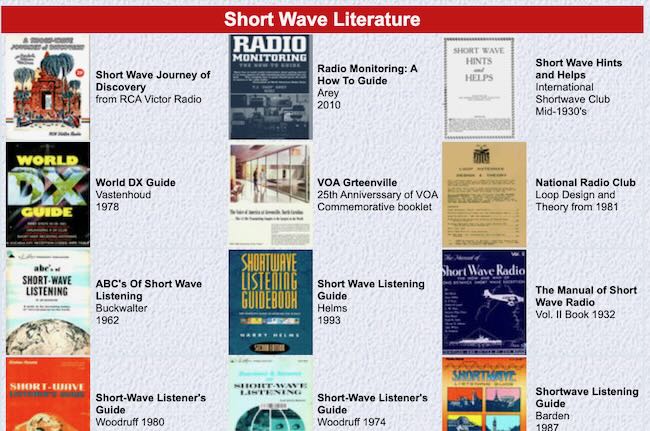 Many thanks to SWLing Post contributor, NT, who writes: