Category Archives: Radio History

Radio Waves: Clandestines, FCC’s New Logo, WNYC Vision, and RAC Membership Renewal Procedures

Radio Waves:  Stories Making Waves in the World of Radio

Because I keep my ear to the waves, as well as receive many tips from others who do the same, I find myself privy to radio-related stories that might interest SWLing Post readers.  To that end: Welcome to the SWLing Post’s Radio Waves, a collection of links to interesting stories making waves in the world of radio. Enjoy!

Many thanks to SWLing Post contributors Ron, Andrea Borgnino, and Tracy Wood for the following tips:


Clandestine: Under false flags (Nils Schiffhauer – DK8OK)

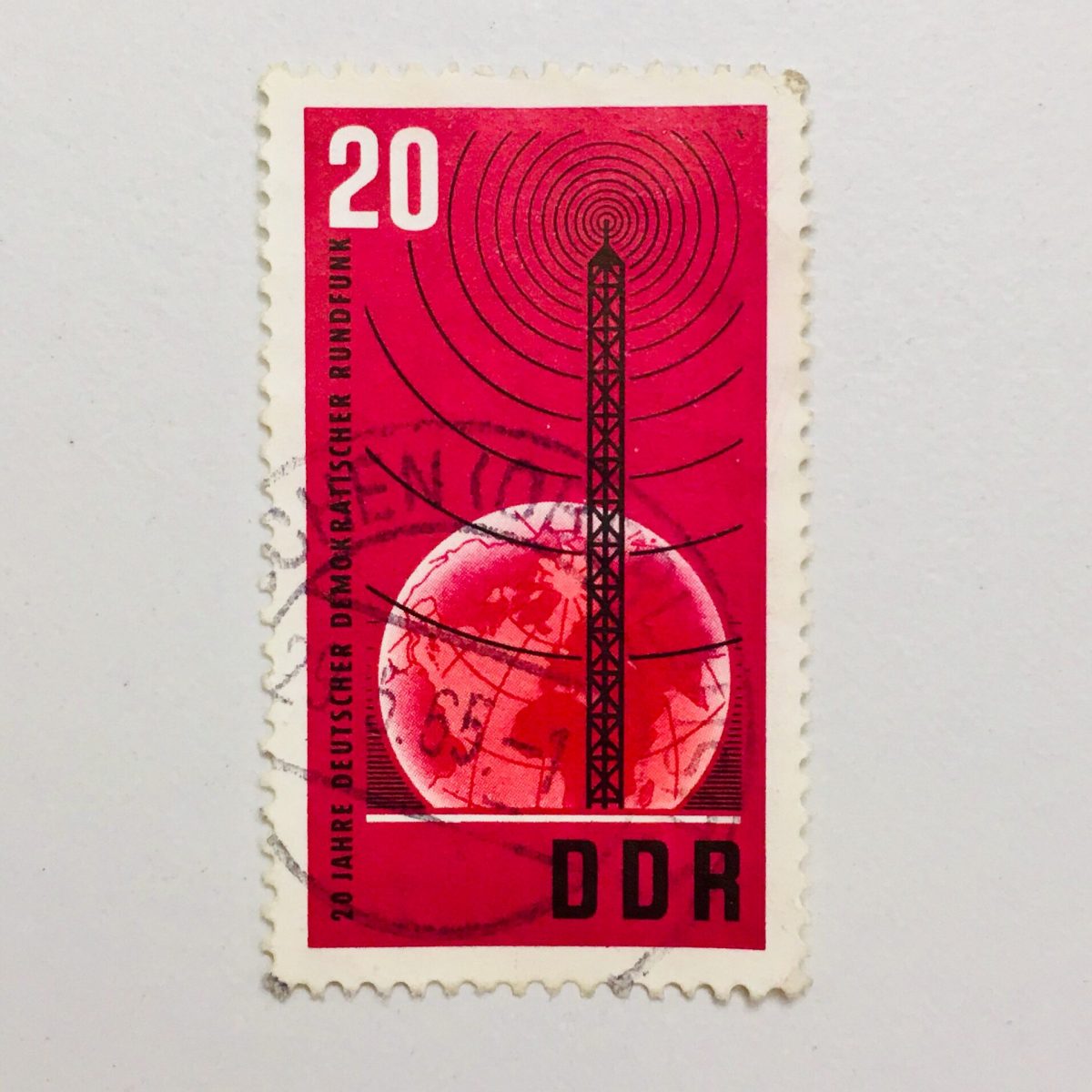
Non-official radio stations always attracted shortwave listeners who call them “clandestines”, follwing a mixture of mis-understanding and romanticism. The range of this class of stations is remarkably wide. Nowadays, the majority of them is renting time from major transmission centres like Nauen/Germany, Issoudun/France or Toshkent/Uzbekistan.

As all media, they are put into service to influence people and to sell something by propaganda. The difference between an official broadcaster, like Voice of America, and a “clandestine” like North Korea Reform Radio is not palpable – both are financed by the U.S. Congress.

With most broadcasters transmitting on a scale between facts (“white” – nearly only the BBC) and sheer disinformation (“black”), clandestines are placed on the darker third of this range. The separation between “clandestine” and “official” is rather artificial. There simply is no difference between e.g. the official World Harvest Radio and the clandestine Voice of Wilderness, both religious brodcasters, funded by Cornerstone Ministries International/USA – to take just two religious stations.

Today’s activity of clandestines is concentrated on Africa and Asia with especially taking countries like North Korea, China, Eritrea and Sudan into focus.[]

FCC Adopts a New Official Seal in Anticipation of Relocation (ARRL News)

In anticipation of its upcoming move, the FCC has adopted a new FCC seal. The redesigned seal is the product of an agency-wide contest that solicited proposals from employees and contractors. The winning design, submitted by Umasankar Arumugam, was selected by a vote of the agency’s employees and contractors.

The revised design incorporates several elements: communications technologies currently transforming our world; four stars on the outer seal border, drawing from the legacy of the predecessor Federal Radio Commission seal; 18 stars on the shield, recognizing the current number of bureaus and offices; and the eagle and shield, identifying the FCC as a federal government agency.[]

1937 Vision: WNYC, The Flagship Station of a Non-Commercial Cultural Network (WNYC)

The notion of WNYC becoming the flagship station of a non-commercial network of cultural stations was first publicly articulated by Mayor La Guardia at the launching of the station’s new WPA-built transmitter facility in Greenpoint, Brooklyn on October 31, 1937. La Guardia envisioned a non-commercial/educational radio network connected via shortwave rather than expensive landlines leased by AT&T, but the FCC prohibited interstation communication by means other than wire when wire is available. At the ceremony La Guardia sharply criticized the FCC prohibition: “That is just as nonsensical and as unreasonable as to say that one isn’t permitted to fly from here to Chicago because there are railroads going from here to Chicago. Of course, all this is very good for the New York Telephone Company, but it is not so hot for us.”[]

New RAC membership renewal procedures (RAC via Southgate ARC)

On behalf of Radio Amateurs of Canada, I would like to thank you for your continued support of Amateur Radio in Canada and internationally.

Your membership has helped RAC in its two primary objectives: to support and promote Amateur Radio in Canada and internationally; and to provide valuable programs and services to RAC members (see below).

As a result of the COVID-19 global pandemic, the RAC Head Office in Ottawa has been closed temporarily and we are no longer able to send out membership renewal notices by mail and we will be sending out email notices instead.

We would appreciate it if you would please watch for these messages in your inbox and also in your junk folders – this is especially true if you have Outlook or Hotmail email addresses.

In addition, you can assist us by checking to see when your membership will expire by logging on to the RAC website and going to the “My Membership” webpage (https://www.rac.ca/my-membership/). You can also find it on the mailing label of the paper version of The Canadian Amateur magazine or by calling the RAC office as described below.

If you need to renew your membership you can do so by using one of the following options:

  • Online:  by completing the online renewal form (or by clicking on the “Join Radio Amateurs of Canada” logo on the top right of the RAC website). Payments must be made by credit card or by PayPal.
  • By phone:  by calling 877-273-8304 from 10 am to 4 pm EST/EDT, Monday through Friday (except statutory holidays). You may pay by credit card or you may send a cheque for the appropriate amount to the RAC head office.
  • By mail:  if you prefer to have your renewal form processed via standard mail, you can download an application for your region from the Membership Renewals webpage and mail it to the RAC Office.

73, Glenn MacDonell, VE3XRA
RAC President


Do you enjoy the SWLing Post?

Please consider supporting us via Patreon or our Coffee Fund!

Your support makes articles like this one possible. Thank you!

NBC Logos throughout the years

A member of the Old Time Radio Lovers group recently shared the image above that includes all of NBC’s logos dating back to 1926. Some of these are truly iconic.

Of course, versions of the rainbow peacock have been used most of my lifetime, so they’re immediately identifiable. I also like the NBC “snake” logo used between 1959-1975.

But if I had to pick my favorite, it would be the 1942 logo.

How about you? What is your favorite logo?  Please comment!

Ted inherits two vintage receivers and a 1959 UK Receiving License

Many thanks to SWLing Post contributor, Ted Lampert, who writes:

I was given some old radios belonging to a family member who passed a few years back.

A couple of them really sweet, a Philco 46-420, and a Philips B3X82U (see photo above).

Included was an envelope with some papers in it. One was the instruction booklet for the Phillips B3X82U, in multiple languages:

Another was a receiving license.

Without outing him too much, the original owner did government work and was stationed overseas quite a bit. The license looks like it was good for 1960, and I’m guessing you went to the post office to get it. It references the wireless telegraphy laws 1952 & 1955. Have you seen one of these before and do you know much about these receiving licenses?

The Philips is the radio I believe would have been probably what he got this license for since it says Philips at the top of it.

[…]Anyway, going through stuff recently, saw the license and started wondering about it.

Keep up the good work, seeing almost daily new articles on your site played a big part in keeping me inspired to get my own license, not a receiving one, but an amateur. Got general on the first try back in the fall of last year!

First of all, congratulations on snagging your General license last year!  Well done!

Both the Philips and Philco are gorgeous receivers! What treasures! Ted, you had mentioned elsewhere in your message that you plan to recap them and I’m very pleased to hear this.

Like you, I was not aware of that receiving licenses were issued in the UK at the time. Perhaps this was implemented during or after WWII and was simply a requirement during the Cold War?

My hope is that a knowledgeable SWLing Post reader can shed some light on the Receiving License. Please comment with details!


Do you enjoy the SWLing Post?

Please consider supporting us via Patreon or our Coffee Fund!

Your support makes articles like this one possible. Thank you!
Archivist seeks copy of “A Brief Statement of Shortwave Programs to Target Areas”

Many thanks to UNT Archivist, Maristella Feustle, who writes with the following inquiry :

I’m in search of some historical literature cited in a 1970 dissertation.

Might anyone have access to a copy of the OWI’s “A Brief Statement of Shortwave Programs to Target Areas,” dated November 1, 1942? Thanks!

Post readers: If you happen to have a copy of this document or know its location, could you please comment with details? Many thanks!

The story of a 1970s CB Radio QSL card print house

Many thanks to SWLing Post contributor, Ulis (K3LU), who shares the following story of a popular CB Radio QSL Card design and print house:

73s and 88s :: The Ballad of Runnin Bare and Lil White Dove

We set a custom screensaver on Our AppleTV. Told it to pull images from Flickr tagged with “British Columbia.” After my wife and kids and I spent a few weeks in Vancouver and in various places on Vancouver Island, it had become one of our favorite places. We missed it.

And so, at night, after a show or movie ended and the AppleTV sat idle for a few minutes, a slideshow would automatically begin. The Parliamentary Buildings in Victoria, the Inner Harbor, the wild, rocky, tidepool-rich shores of Tofino, the murals of Chemainus.

Then, every once in a while, an illustration of some sort. I couldn’t tell what. A one-panel comic? Some kind of advertisement or flyer? It would be gone from the screen before I could really get a good look. Weeks would go by and I wouldn’t see it until, once again, there it was. It looked old, like something from the 60s or 70s. And it had numbers on it, like a code or a message: 73s and 88s.

It was the numbers that got me. Like the park rangers in The Shining calling for Wendy Torrance on the radio: “This is KDK-1 calling KDK-12. KDK-1 calling KDK-12. Are you receiving me?” They seemed to be saying something. But what? I had to find out. So, I took to Google, and began my search.[…]

Click here to continue reading the full article.

FYI: Although the CB Radio landscape is quite different than it was in the 70s, most modern shortwave radio receivers can tune to CB channels. Here’s a quick tutorial from our archives.

Radio Emma Toc World Service to start monthly shortwave broadcasts

Many thanks to SWLing Post contributor, Jim Salmon, who writes:

With some extra time on my hands at the moment I’ve been able to forward one of my projects & start producing a monthly programme – ‘Radio Emma Toc World Service’. This is tied in with my website – www.emmatoc.com – & is to raise awareness of the UK’s first licenced radio service in 1922 – 2MT – & also to celebrate our hobby of radio listening & transmitting today!

I am pleased to say I have relays coming up on WRMI & Unique Radio Australia, & am looking at further relays in Europe. I will let you know times & frequencies when finalised. In the meantime, the first programme can be heard on the website – just click on the World Service link. Also – if any stations wish to relay this programme I am happy for this – just get in touch with me via the website.

Excellent news, Jim! Readers, check out Radio Emma Toc online and read all about the project and history of 2MT. For your convenience, I’ve embedded the first broadcast below, but also check out the Emma Toc World Service page for more information and links!

Radio Waves: Dave Moves, IC-705 delay, High Speed Telegraphy Meet, and WWI Biplane Wireless

Radio Waves:  Stories Making Waves in the World of Radio

Because I keep my ear to the waves, as well as receive many tips from others who do the same, I find myself privy to radio-related stories that might interest SWLing Post readers.  To that end: Welcome to the SWLing Post’s Radio Waves, a collection of links to interesting stories making waves in the world of radio. Enjoy!

Many thanks to SWLing Post contributors Dave Zantow (N9EWO), Paul Evans (W4/VP9KF), and Mike Hangen (K8RAT) for the following tips:


Dave’s Radio Receiver Page Moves Again (N9EWO)

With all of the strange happenings and excessive “Pop-Up” issues on Angelfire (even more so of late), we have finally decided to move off of that web host and made the move to QSL.NET.

So “Dave’s Radio Receiver Page” new URL is :

https://www.qsl.net/n9ewo/

Please, for anyone who have web pages that have my web page linked (with the now old URL), I would appreciate the correction. Hopefully this will be the last time I will need to move the page.[…]

Please Note : Are still a few pages that still need to be transferred, but I expect to have that completed over the weekend. This has been quite a bit of work recoding all (again).

Icom IC-705 availability delayed due to Coronavirus

Paul Evans notes that Martin Lynch and Sons  (ML&S) has just updated the product page for the IC-705 with the following note: “RRP £1199.95 incl 20% VAT. Estimated delivery now July 2020 due to major component shortage.”

Icom America retailers (Universal Radio, Ham Radio Outlet, Gigaparts, etc.) have not published an estimate for availability.

QRQPoint – The meeting place for high speed telegraphy enthusiasts in Europe (Southgate ARC)

Dear OM and all CW lovers,
I will you proudly inform, that our website http://www.qrqpoint.com is now online.

The idea of this meeting place for CW enthusiasts was born by me and the webmaster, Fabian, DJ1YFK, brought it very nice to the web. Thank you Fabian!

Everybody is very kindly invited to be there QRV.

The frequency is 3567 khz. To make a sked or just to say Hello we have a little Shoutbox on the site.

I hope to see you there!

Kindest regards,

Olaf, DL1OP

In World War I, British Biplanes Had Wireless Phones in the Cockpit (IEEE Spectrum)

Pilots on reconnaissance missions could immediately call in their findings

As soon as the first humans went up in hot air balloons in the late 1700s, military strategists saw the tantalizing possibilities of aerial reconnaissance. Imagine being able to spot enemy movements and artillery from on high—even better if you could instantly communicate those findings to colleagues on the ground. But the technology of the day didn’t offer an elegant way to do that.

By the early 20th century, all of the necessary elements were in place to finally make aerial reconnaissance a reality: the telegraph, the telephone, and the airplane. The challenge was bringing them together. Wireless enthusiasts faced reluctant government bureaucrats, who were parsimonious in funding an unproven technology.

[…]One early attempt involved wireless telegraphy—sending telegraph signals by radio. Its main drawback was size. The battery pack and transmitter weighed up to 45 kilograms and took up an entire seat on a plane, sometimes overflowing into the pilot’s area. The wire antenna trailed behind the plane and had to be reeled in before landing. There was no room for a dedicated radio operator, and so the pilot would have to do everything: observe the enemy, consult the map, and tap out coordinates in Morse code, all while flying the plane under enemy fire.

Despite the complicated setup, some pioneers managed to make it work.[]


Do you enjoy the SWLing Post?

Please consider supporting us via Patreon or our Coffee Fund!

Your support makes articles like this one possible. Thank you!