Category Archives: Radio History

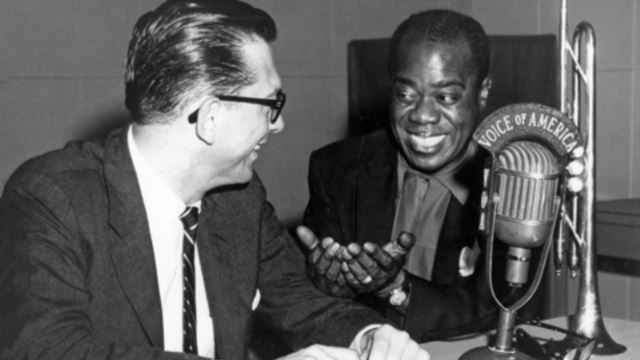
UNT Archives publish Willis Conover interview with Louis Armstrong

(Photo source: Inside VOA)

(Photo source: Inside VOA)

Thanks to the endeavors of Maristella Feustle at the UNT Music Library, five hours of recently-restored Louis Armstrong interviews with Willis Conover are now online and free to download/listen.

Kudos to the UNT archives for making these amazing recordings so accessible! What a treasure trove.

Click here to view links to all five hours of recordings at the UNT Archives’ website.

KCUR Interview: US Amateur Radio during The Great War

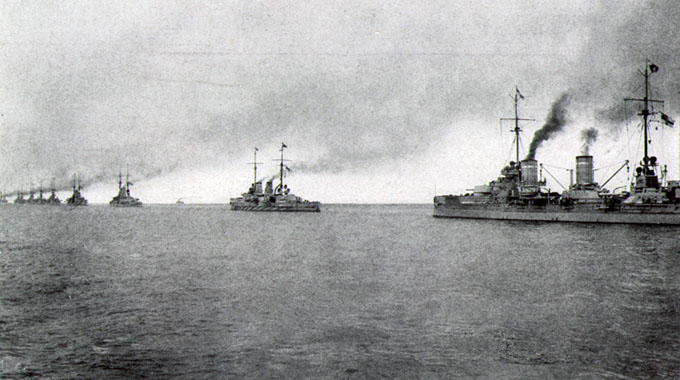
WWI-Battleships-Hochseeflotte_2

Battleships of the Hochseeflotte, 1917. (Source: Wikimedia Commons)

(Source: KCUR via the Southgate ARC)

When America declared war on Germany in 1917, most radio stations came under government control, reserved for war efforts. On this edition of Up To Date,  we learn why HAM radio operators were prevented from broadcasting during The Great War.

Guests:

  • Jonathan Casey is the Edward Jones Research Center Manager at the National World War I Museum.
  • Herb Fiddick is the amateur radio voice of the National World War I Museum.

This weekend, the National WWI Museum will host special event station WW1USA. The station will be manned by amateur radio operators for 31 consecutive hours, beginning Saturday, December 12 at 10 a.m. through Sunday at 5 p.m. The event is free. For more information go to theworldwar.org.

Click here to listen to the interview on KCUR.

History of Gerald Marcuse G2NM, founder of Empire Broadcasting

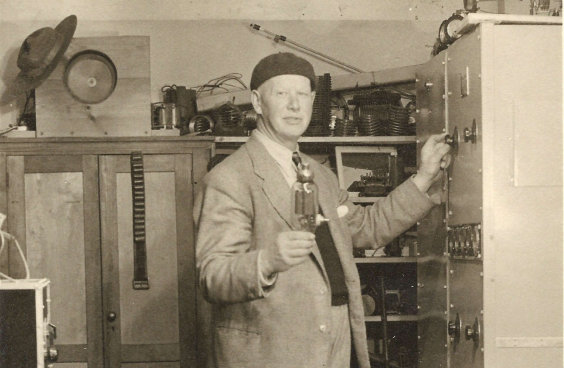
Eugen Gerald Marcuse (1886 - 1961) Source:

Eugen Gerald Marcuse (1886 – 1961) Source: The Reading and District Amateur Radio Club

Many thanks to SWLing Post contributor, Mike Barraclough, who writes:

The Reading and District Amateur Radio Club has released as a free pdf the history of Gerald Marcuse G2NM the founder of Empire Broadcasting who was granted a licence in June 1927 for a regular shortwave service of speech and music to the British Empire. These continued until August 1928. A statement from the BBC shortly after the licence had been granted “deplored them as an unfortunate publicity stunt.”

Click here to visit the Reading and District Amateur Radio Club page.

Click here to download this (brilliant!) history as a PDF.

How Far We’ve Come: Looking Back at Radiotelegraphy, 1939 Style

It’s often insightful to look to the past to fully appreciate the current technology we take for granted.

When we tap a favorite contact’s name in our mobile phone–even for someone on the other side of the world–we can be talking to them within seconds, with clarity that’s often the equal of visiting face-to-face. Perhaps Skype or FaceTime is more your style? Yawn… just another two-way, real-time video session. The fact that the other person is thousands of miles away no longer makes you pause at the wonder of it all.  Continue reading →

Hackaday recounts an “An Unlikely Radio Story”

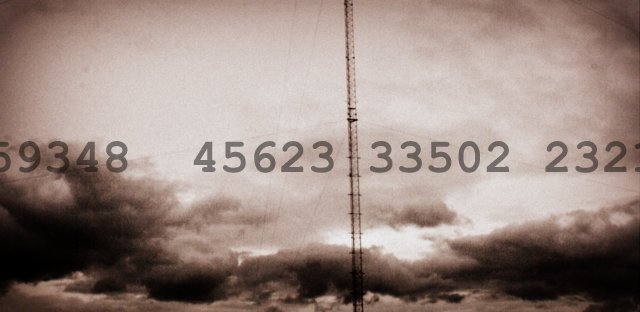
SWLingPost-Spy-Numbers-Station

Many thanks to SWLing Post reader, Michael Letterle, who shares this story from the excellent website Hackaday.

The following is an excerpt from Swans, Pigs, and the CIA: An Ulikey Radio Story:

Shortwave radio is boring, right? Maybe not. You never know what intrigue and excitement you might intercept. We recently covered secret number stations, and while no one knows for sure exactly what their purpose is, it is almost surely involving cloaks and daggers. However, there’s been some more obvious espionage radio, like Radio Swan.

The swan didn’t refer to the animal, but rather an island just off of Honduras that, until 1972, was disputed between Honduras and the United States. The island got its name–reportedly–because it was used as a base for a pirate named Swan in the 17th century. This island also had a long history of use by the United States government. The Department of Agriculture used it to quarantine imported beef and a variety of government departments had weather stations there.

…[T]he most famous occupant of Swan Island was Radio Swan which broadcast on the AM radio band and shortwave. The station was owned by the Gibraltar Steamship Company with offices on Fifth Avenue in New York. Oddly, though, the company didn’t actually have any steamships. What it did have was some radio transmitters that had been used by Radio Free Europe and brought to the island by the United States Navy. Did I mention that the Gibraltar Steamship Company was actually a front for the Central Intelligence Agency (CIA)?

Read the full story on HackADay…

Guest post: Trip Down Shortwave Memory Lane via Vintage RadioShack Catalogs

RadioShack-CatalogMany thanks to SWLing Post contributor, Mario Filippi (N2HUN), for the following guest post:


Trip Down Shortwave Memory Lane via Vintage RS Catalogs

-Mario Filippi (N2HUN)

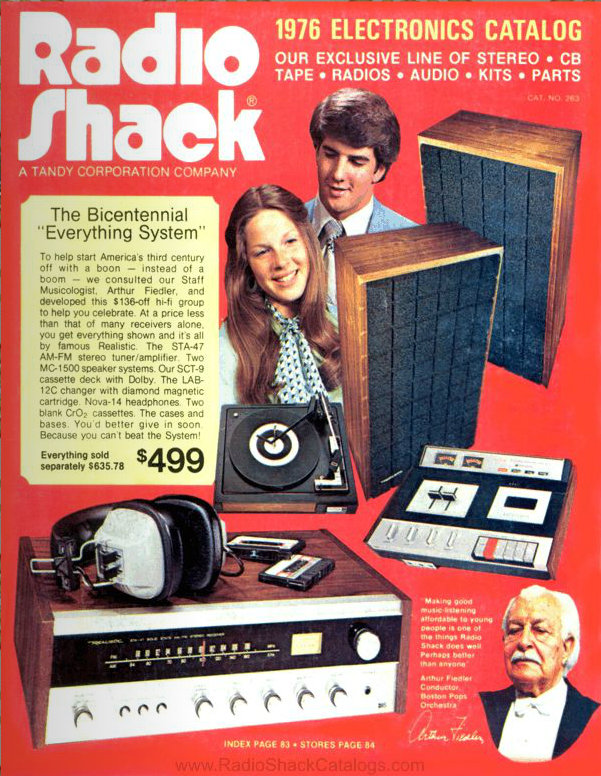
Attached is a wonderful website containing archived Radio Shack catalogs and sales flyers going back to 1939, surely of interest to SWLs, hams, and other electronics hobbyists. Most of us have fond memories growing up and visiting our local Radio Shack when it was the place to go for ham, shortwave, and scanner radios. My hometown Radio Shack was located on North Avenue in New Rochelle, NY and I purchased an electric guitar (could not afford a Fender) from them in the late 60’s which had three pickups and included a case for $29.95!

Radio Shack Catalogs

You see, back then Radio Shack had a much more diversified line of products, including musical instruments, power tools and even scientific stuff like microscopes and slide rules. These archived catalogs are a treasure trove of information not only from a historical perspective, but for anyone who is interested or who is contemplating purchasing vintage equipment such as shortwave radios, because you can look up the original sales info in the RS catalog which contains the original price, photo, description, and accessories available at that time.

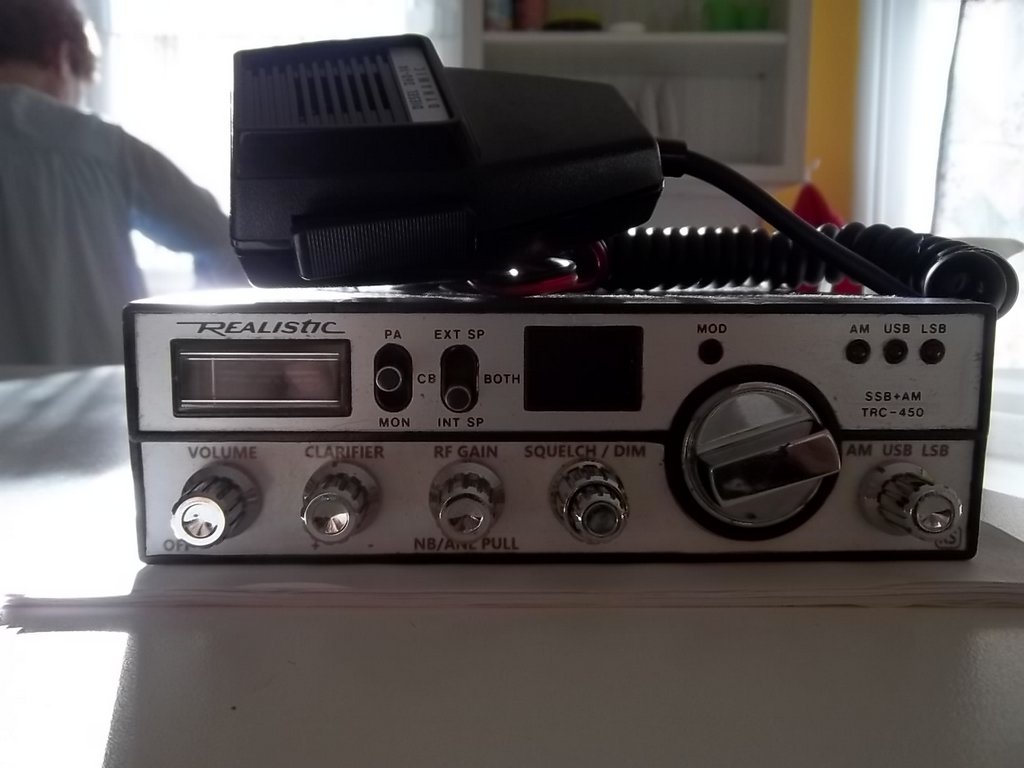
For example, last year I purchased a “tech special” Realistic TRC-450 AM/SSB CB radio on Ebay that needed LED repair, so I looked up the original sales ad and got the price, photo (this helps to see original condition), and product description. Below is a picture of my restored Realistic which originally sold in 1980 for $269.95!
RadioShack-TRC-450

The classic Realistic TRC-450 AM/SSB CB radio. (Photo: Mario Filippi)

Nowadays most people don’t realize how expensive electronics were a few decades ago. A comparable new AM/SSB CB radio sells for about half that price nowadays!

Lastly, as one progresses chronologically through the catalogs, you can see technology (and even fashion) trends – the large 8 track tape decks of the 60’s and 70’s progressed to smaller cassette players of the 80’s and 90’s, then DVD/CD players made their entrance, ultimately giving way to higher tech forms of entertainment such as satellite radio and Internet-based entertainment. Well I hope you enjoy this totally entertaining and informative website and I thank the individual who took the time and effort to preserve for perpetuity these priceless annual time capsules for everyone to enjoy.


Mario, many thanks for this trip down memory lane!

As you state, these catalogs are actually an excellent reference source when trying to determine pricing and features of RS radios found on the used market.

I think they’re also so much fun to flip through as they’re chock-full of nostalgic value. When I was a kid, I could care less about toy store catalogs–the RadioShack catalog was my toy store!

Indeed, when I open the online catalog copies at Radio Shack Catalogs, I can almost smell the ink on the pages! Am I the only one?
WWV History: Richard’s QSL cards

WWV-First-Sign-SM

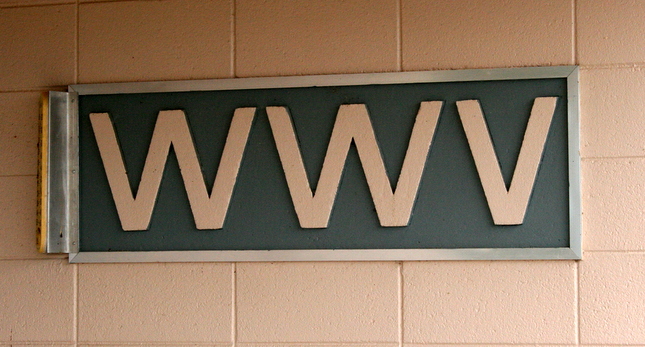
Sign from the original WWV tranmitter site in Maryland, currently posted outside of the Fort Collins, Colorado transmitter building. (Photo: Thomas Witherspoon)

Commenting on our post about Myke’s new release of At The Tone, SWLing Post contributor Richard Langley writes:

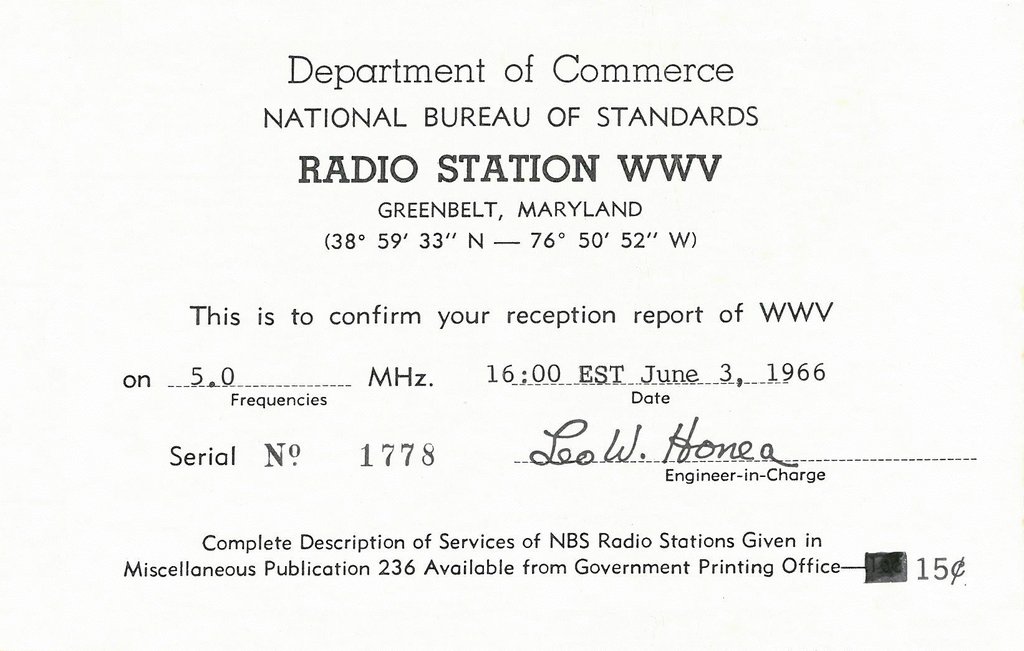
I must have first heard WWV shortly after putting together the Knight-Kit Span Master I received for Christmas 1963. I still have my log books from my high school days, which include an entry for Radio Habana on 29 December 1963 for which I subsequently received a QSL card. But I guess I didn’t log all my receptions. The first entry for WWV is dated 3 June 1966 in the last year of WWV’s operation from Greenbelt, Maryland (on government land that subsequently became the site of NASA’s Goddard Space Flight Center).

WWV_QSL_frontWWV_QSL_back

I have a QSL card for the reception of the 5 MHz signal featuring a drawing (in pink) of the Jefferson Memorial [see above].

The next entry is dated 1 December 1966, the first day of WWV’s operation from Fort Collins, Colorado.

WWV_firstday_QSL_frontWWV_firstday_QSL_back

I have one of the special QSL cards issued for confirmation of first-day reception for my report on the 20 and 25 MHz signals [see above].

I’m sure I heard WWVH early on too but my first log entry is dated 29 March 1967. I never did QSL them.

Richard: Thanks so much for sharing these special QSL cards. Wow! I had never seen the first day card from WWV Fort Collins before–what a treasure you have there!