Category Archives: Radios

Sangean DT-500W: a new AM / FM / Weather Alert Pocket Radio

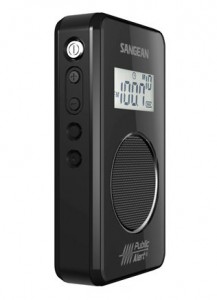
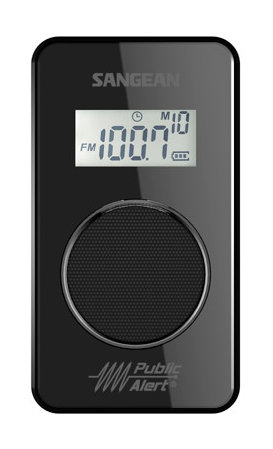
Sangean-DT-500W-Front

Many thanks to my pal, Jeff McMahon from The Herculodge, who has just apprised me of a new Sangean AM/FM/WX portable: the DT-500W. Jeff learned about the new pocket radio via a comment on his blog.

DT-500W-SideIt appears the DT-500W is powered by a rechargeable Li-ion Polymer 3.7V (1850mAh) battery. I would expect good longevity from a full charge.

Based on the specifications, the receiver covers all NOAA weather radio frequencies, the FM broadcast band (87.5 – 108 MHz) and the full AM broadcast band (520 – 1710 kHz). I also noted on the spec sheet, however, that the AM broadcast (mediumwave) band is limited to 10 kHz tuning steps. Not a great contender for the ultralight DXer or someone who travels outside North America if so!

Click here to view the Sangean DT-500W on Sangean’s website.

As of posting, I can’t find the DT-500W listed with any online retailers.

Thanks again for the tip, Jeff!

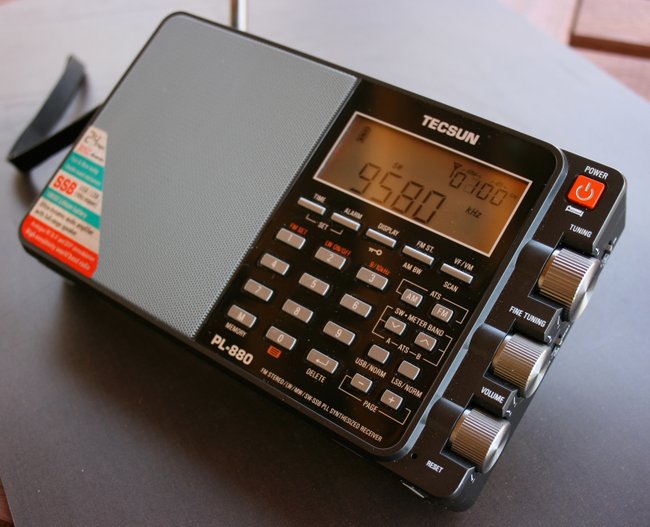
Pawel discovers a tuning bug in his Tecsun PL-880

PL-880 (1)

[19 January 2016: Please read this updated post.]

Many thanks to SWLing Post reader, Pawel (SQ9ZAV), who writes from Poland:

Hello Thomas,

On November 4, 2015, I bought a Tecsun PL-880 from ErcomeR company.

I found an error: the last two digits of hundreds and tens Hz in SSB mode correctly change the direction of rotation of the knob fine tuning, however, the actual frequency varies in the opposite direction.

I reported a bug in the company ErcomeR, and they sent an e-mail to the Tecsun company.

ErcomeR received information from Tecsun that one of the PL-880 integrated circuits had been changed to the one used in Tecsun PL-365; no one checked whether the program was working properly.

The previous version of the radio made in May 2015 does not have this error.

Best regards – Pawel Kita, SQ9ZAV

Pawel also noted that communicating with Tecsun’s Engineering/R&D department is quite difficult since all communications are first passed through the Tecsun Sales department.

I hope that Pawel can keep us apprised of the situation. My Tecsun PL-880 is one of the earliest production runs, so doesn’t have the PL-365 IC Pawel describes.

If you purchased a Tecsun PL-880 recently, you might verify this as well–please comment.

New improved API for the SDRplay RSP

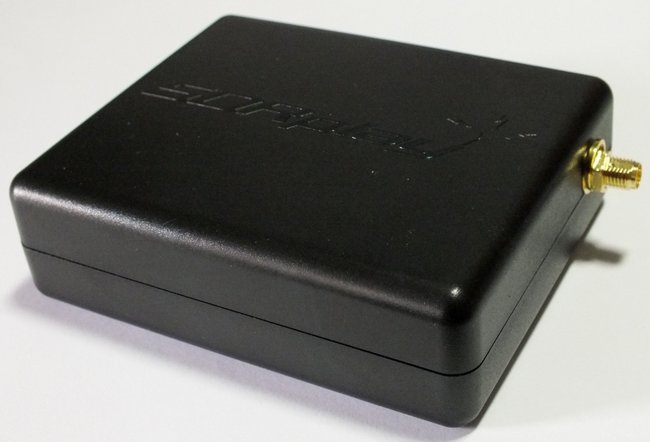
The SDRplay RSP software defined radio

The SDRplay RSP software defined radio

Many thanks to Jon Hudson with SDRplay, who shares the following announcement:

We are pleased to announce release 1.8.0 of the API for the RSP. This is a major upgrade to the API with new features and an improved gain map which should result in improved performance over a key portion of the gain control range. Currently this API is available for Windows only, but versions for Linux and Mac OS and Android will follow shortly.

The API now incorporates automatic post tuner DC offset correction and I/Q compensation. This will almost completely eliminate the DC centre spike that was previously present in zero IF mode and also correct for amplitude and phase errors in the I/Q signal paths that can lead to in-band images when strong signals are present.

There is a new gain map for the RSP which should help improve the receiver noise floor for gain reduction settings in the range of 59-78 dB. To achieve this, the IF gain control range has been increased from 59 to 78 dB. In addition, the user can now turn the LNA on or off at any point within the IF gain control range. This means that the LNA can remain on for gain reduction settings of up to 78 dB, whereas previously the maximum gain reduction that could be attained whilst the LNA was on was only 59 dB. Being able to leave the LNA on will result in improvements in the receiver noise performance for gain reductions in the range of 59 to 78 dB. The upper 19 dB of the IF gain control range have now been disabled. In practice this part of the gain control range was useless as trying to operate within this region always lead to receiver overload even when signals were very weak.

To fully exploit the features of this new API release, we have also issued release 3.5 of the ExtIO plugin. This plugin will work with HDSDR, SDR sharp (releases 1361 or earlier) and Studio 1. Automatic I/Q compensation and DC offset correction will work with later versions of SDR sharp, but we will need to update the native plugin for users of these later versions to be access the new gain map.

Similarly, users of SDR Console will gain the benefit of automatic DC offset compensation and I/Q correction, but will not yet be able to access the new gain map. We hope that a version of SDR console that unlocks this feature will become available in the near future.

Until a new release of SDR-Console is available, you can copy the API into the SDR-Console installation directory…

from C:\Program Files\MiricsSDR\API\x64\mir_sdr_api.dll to C:\Program Files\SDR-RADIO-PRO.com\mir_sdr_api.dll

The API installer has also contains an extra certificate to be more user friendly for Windows XP, Vista and Windows 7 users.

The new API and ExtIO plugin can be downloaded from our website at: www.sdrplay.com/windows.html

Many thanks for sharing this, John!  I’ll update my RSP today.

Click here to read the SWLing Post review of the SDRplay RSP.

Avo’s review of the Digitech AR1946 shortwave portable

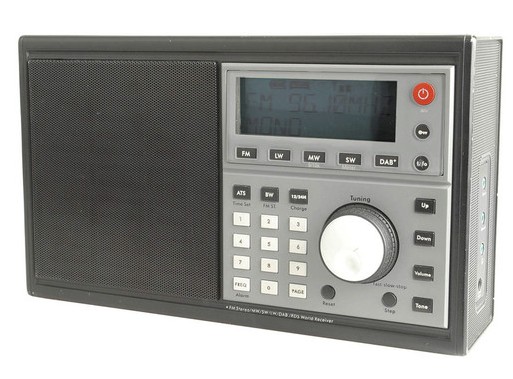
digitech-AR1946-front

The Digitech AR1946

Digitech has released their latest shortwave portable: the Digitech AR1946.

If you live in Australia or New Zealand, you’re probably familiar with the Digitech brand which is sold at JayCar Electronics. If you live in other parts of the world, you may never run across a Digitech (branded) portable.

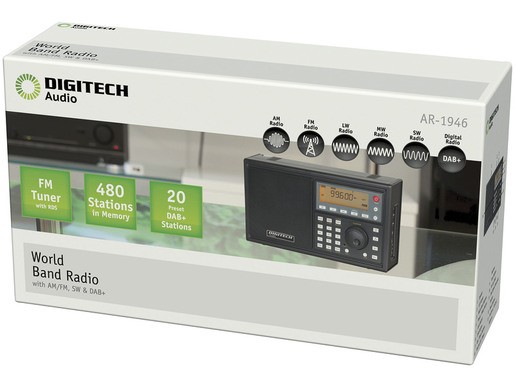
Digitech-AR1946-box

SWLing Post reader, Avo, purchased the new AR1946. He commented with the following brief review (I inserted a few product photos from JayCar):

[The] AR1946 is now out. Had one for a day but ended returning it as shortwave was full of garbage. Fully DSP based according to the box.

Digitech-AR1946-Front-Handle

I do have to say that FM performance is superb. Sensitivity and selectivity is better than any previous radio I have used and RDS is very usable even on weak signals. 10 kHz steps with a very smooth non muting dial make it a pure DX machine in my books for FM.

Digitech-AR1946-R-sdie

Digital [DAB+] is ok but kept cutting out even with good signal strengths. AM modes have 7 bandwidths that work very well. MW is a bit dull but no images.

Digitech-AR1946-Left-s

If only SW was good I would recommend it as a good all rounder but at $219 for just a great FM tuner I think it’s expensive.

Digitech-AR1946-Back-S

Saying all this, the unit feels good quality wise and in my opinion is a better attempt than the [Digitech] AR1945.

Digitech-AR1946-Front-1

I think a revision can sort out SW and if so, I am definitely repurchasing….

Many thanks for your assessment, Avo!

It sounds like your unit suffers from the same problems many recent DSP portables have experienced: a high noise floor. This was the issue affecting the recently released Degen DE1103 DSP.  I’m not sure why this is happening more in some of the most recently released receivers, but I assume it has to do with poor engineering and internal shielding.

I bet that the noise level may vary unit to unit. Avo, you might ask for another to test before getting the full refund (if Jaycar’s return policy allows).

Have any other readers put the Digitech AR1946 on the air? Please comment!  Click here to view the AR1946 at JayCar Electronics.

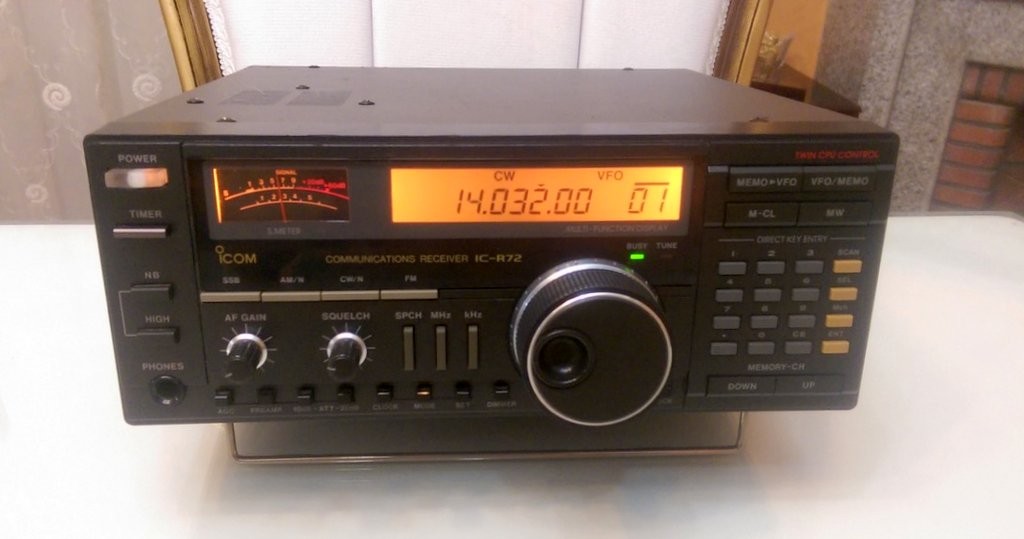
Icom IC-R72: a repair story

Icom-IC-R72-Front-Mehdi-AsgariIn this post I’m going to tell you how I repaired my Icom IC-R72 receiver. Although it’s about a specific device, the logic and methodology applies to all radios.

I bought an Icom R72 from a friend for about $200. At first, I just checked 7.0MHZ (40 meter band) and 21.0MHZ (15 meter band) and it was OK. After some time, I tried to listen to some ham radio on 20 meters (14.0MHZ) and it was deaf! I checked everything: antenna connectors, balun…everything.

With some trial and error, I found out that it was deaf from 11-15 MHz. With the help of the members of “Icom R72” Yahoo Group, I found one of the usual suspects: bandpass filters’ switching diodes.

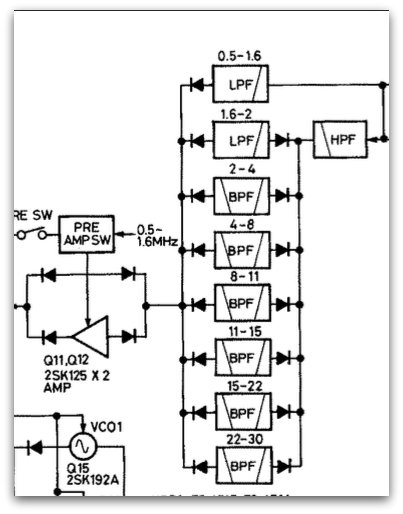
I took a look at the service manual and apparently this radio uses multiple bandpass filters  for different  frequency ranges.
Schematic-Icom-R72-1

As you see in the above picture (grabbed from service manual), one of the bandpass filters is for 11-15 MHz range–that’s the range where my radio was deaf.

Note that there are multiple ways to test that a radio is deaf at a frequency. One of the simplest ways: connect an antenna or even a long wire to the antenna socket of radio. The noise level should increase; if not, there’s a problem.
Schematic-Icom-R72-2

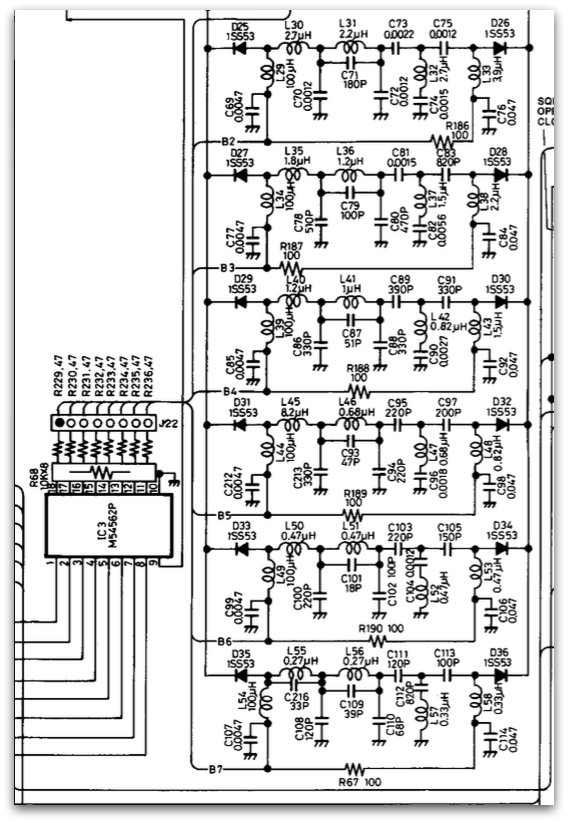
After testing diodes with a multimeter, I found out that D31 is faulty. Almost all multimeters have a diode-test functionality.

I replaced it. The original diode was 1SS53, but I used a 1N4148 which is very common and found everywhere. Now I have a working radio! 🙂

If you have a radio that’s deaf at a frequency range, there is probably a problem in bandpass filters.

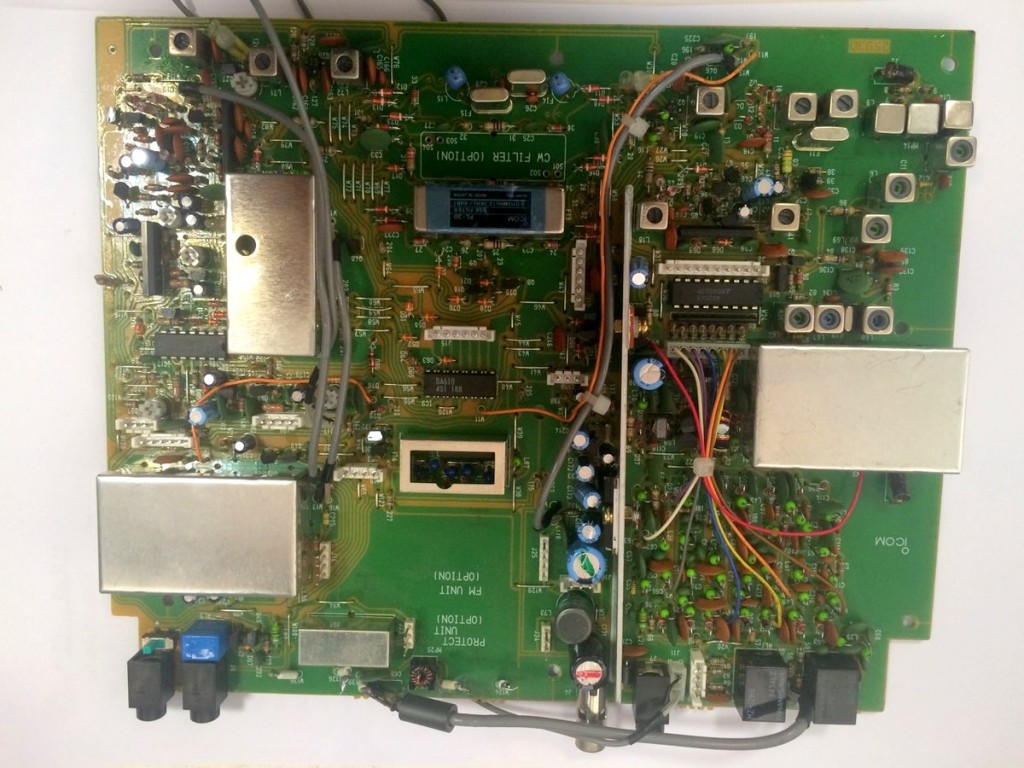
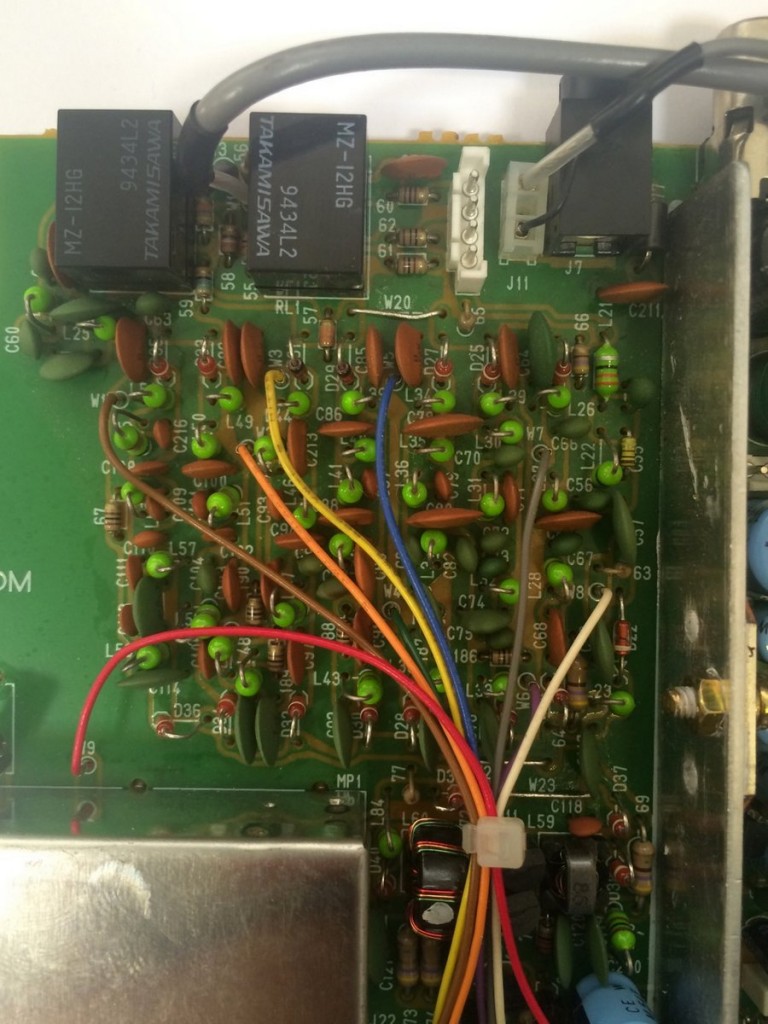
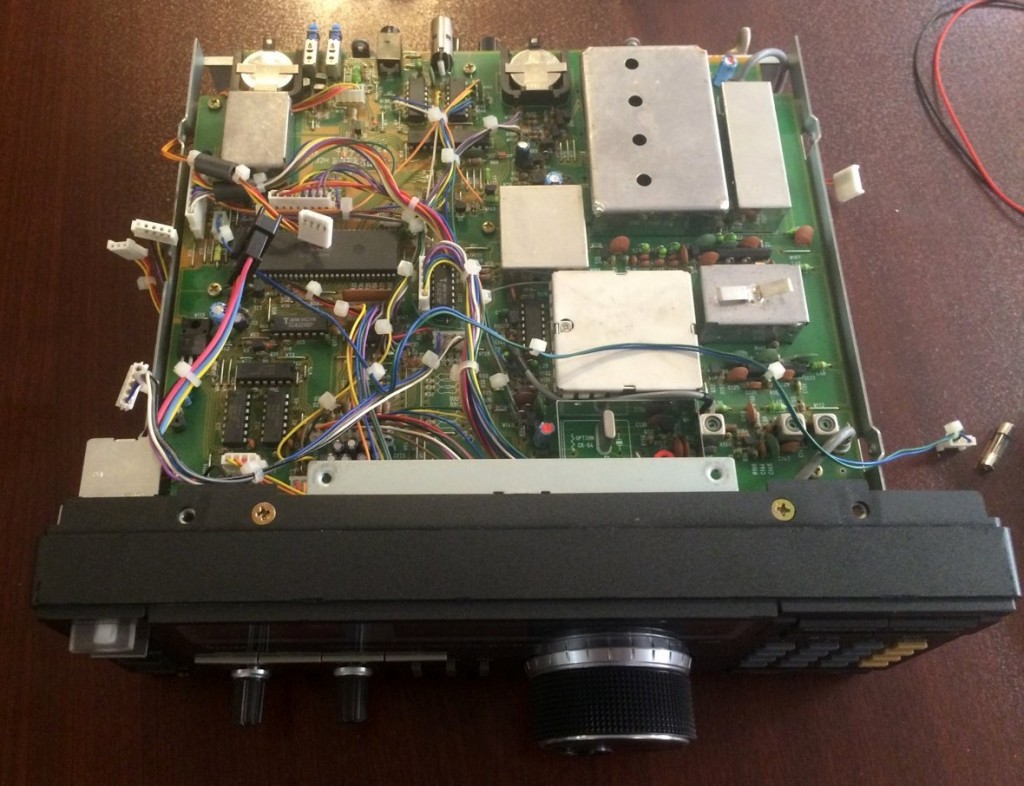
Here are some internal pictures of my Icom IC-R72:
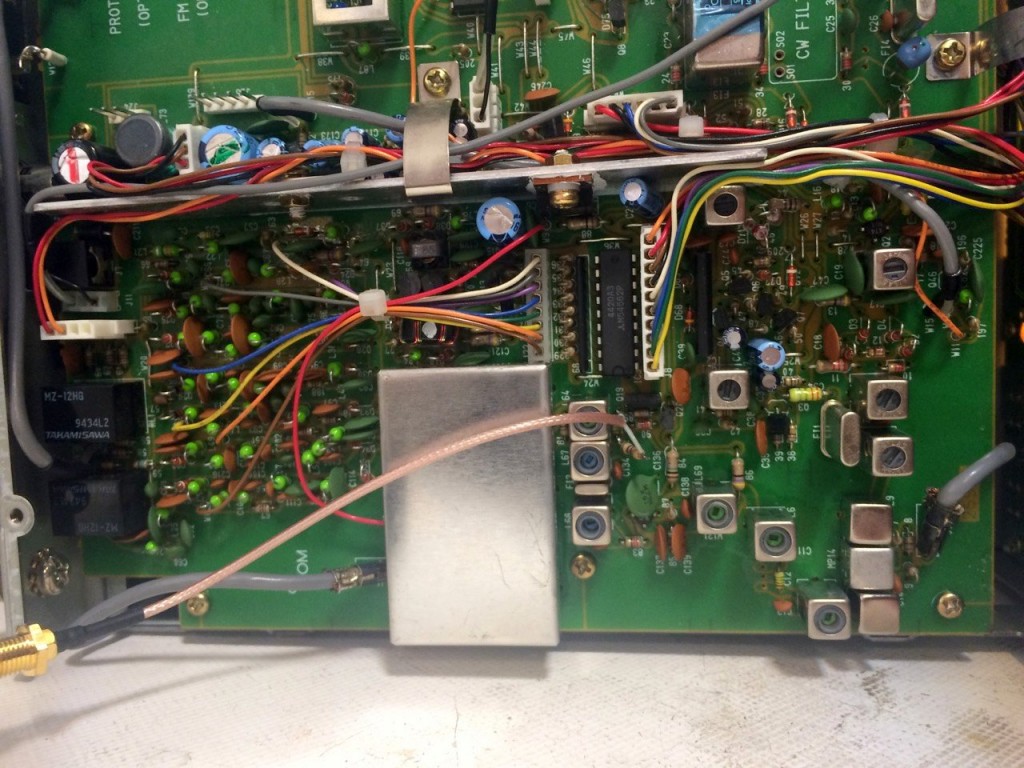
IC-R72-Internal-IF-Stage-Mehdi IC-R72-Board-1 IC-R72-Board-2 Icom-IC-R72-Open

I should thank my friend and electronics mentor, Saeed (EP2LSH) who always helps me in my electronics adventures.

Mehdi Asgari, the author of this post, is a regular contributor to the SWLing Post. Mehdi lives in Tehran and is an active member of the EP2C amateur radio club.

Wired: Inside Bang & Olufsen

Beolit 39 from 1938, B&O's first Radio in Bakelite (Source: Wikipedia, image by Theredmonkey)

Beolit 39 from 1938, B&O’s first Radio in Bakelite (Source: Wikipedia, image by Theredmonkey)

On the topic of beautiful radio design, I just read this Wired Magazine article which features photographer, Alastair Philip Wiper.

Wiper has been researching the Danish consumer electronics company Bang & Olufsen for his upcoming book, The Art of Impossible: The Bang & Olufsen Story. He was granted unprecedented behind-the-scenes access to B&O, where he learned about the company’s design philosophy, process and history. Here’s a short excerpt from the article:

“In the mid-1950s, design greats like Arne Jacobsen began experimenting with new materials and colors, galvanizing a wave of mid-century modern Danish furniture makers. Everything was sleek, teak, and handsome—it still is—but exhibits showing off the new pieces had a curatorial problem: no one was making modern radio cabinets, forcing curators to display decidedly outdated designs alongside the stylish new furniture. The technology definitely needed a major overhaul.

Bang & Olufsen joined a handful of radio manufacturers in rising to the challenge. The two men spent a few years doing research and working with architects and designers to design devices as beautiful as they were functional—an approach widely taken for granted today but novel at the time[..]”

I encourage you to read the full article at Wired.com and view some of the photographs in their online gallery.  If you’re not familiar with B&O design, do a simple image search online.

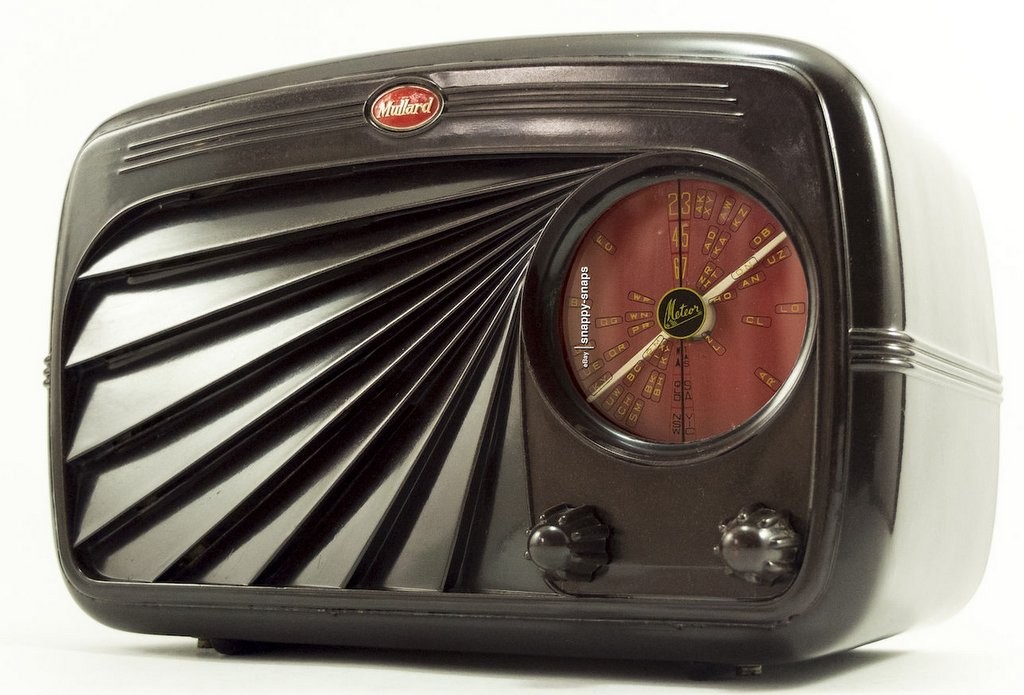
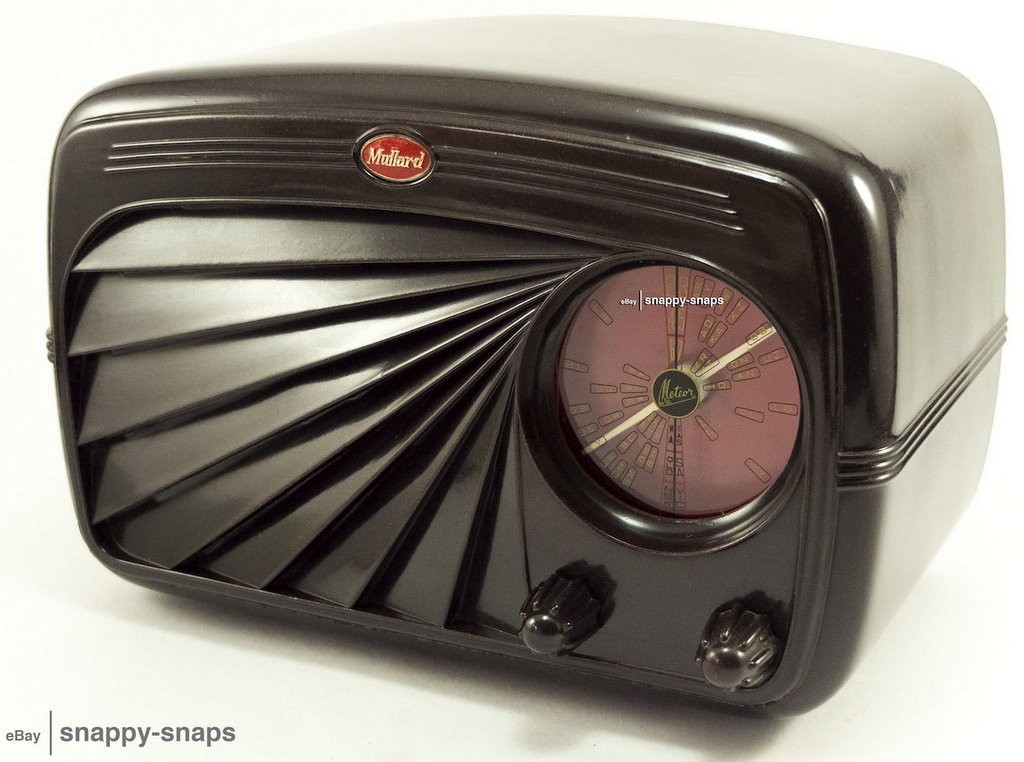
eBay find: Mullard Meteor 600A

Mullard-Tube-Radio-Bakelite-1Many thanks to SWLing Post reader, Monti, who knows that I have a serious affinity for 1940s era receivers. Monti writes from his home in Australia:
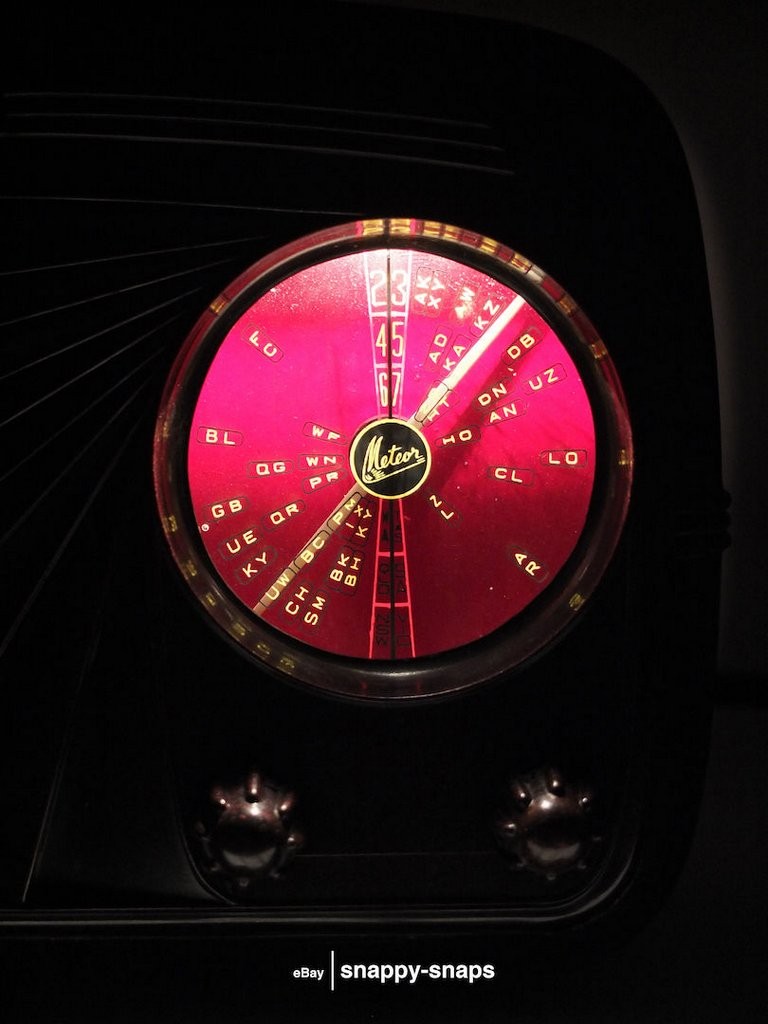
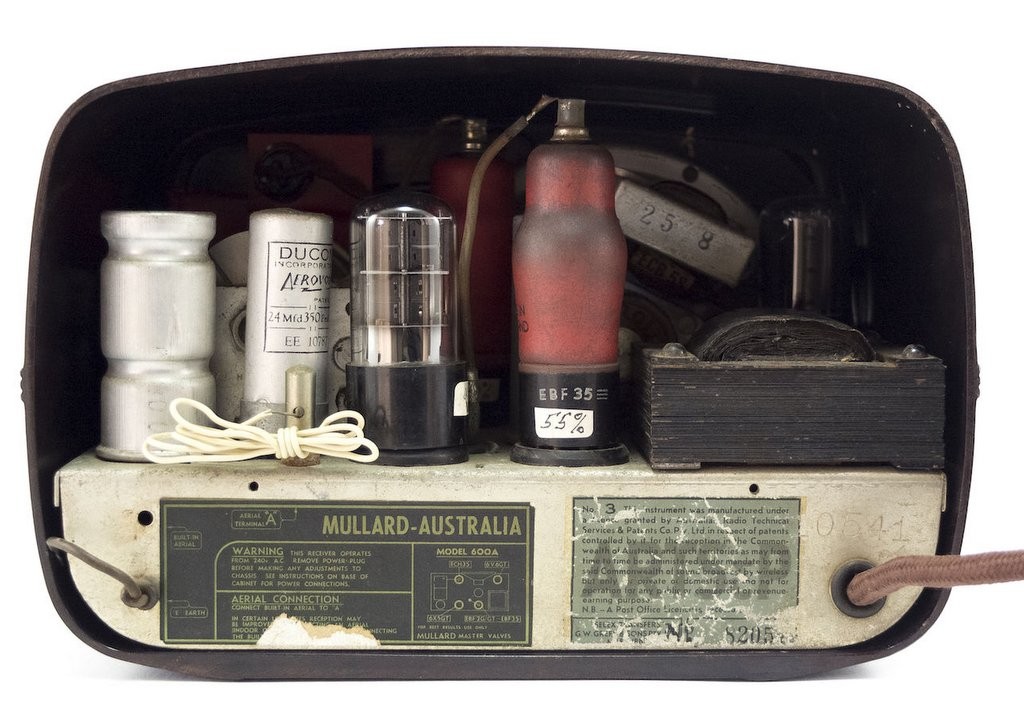
I had to send you this link Thomas. I’ve never seen this model before but what a stunning shape for a 40’s piece.

Look at this on eBay:
Mullard Meteor 600A Vintage Art Deco Bakelite Valve Radio c.1947

Lovely! While I could never pay $485.00 AUD for a non-working radio, I can certainly appreciate this gorgeous and unique design with radiating speaker grill louvres.

Check out this beautiful “meteor” dial:

Mullard-Tube-Radio-Bakelite-2

What a stunning radio!

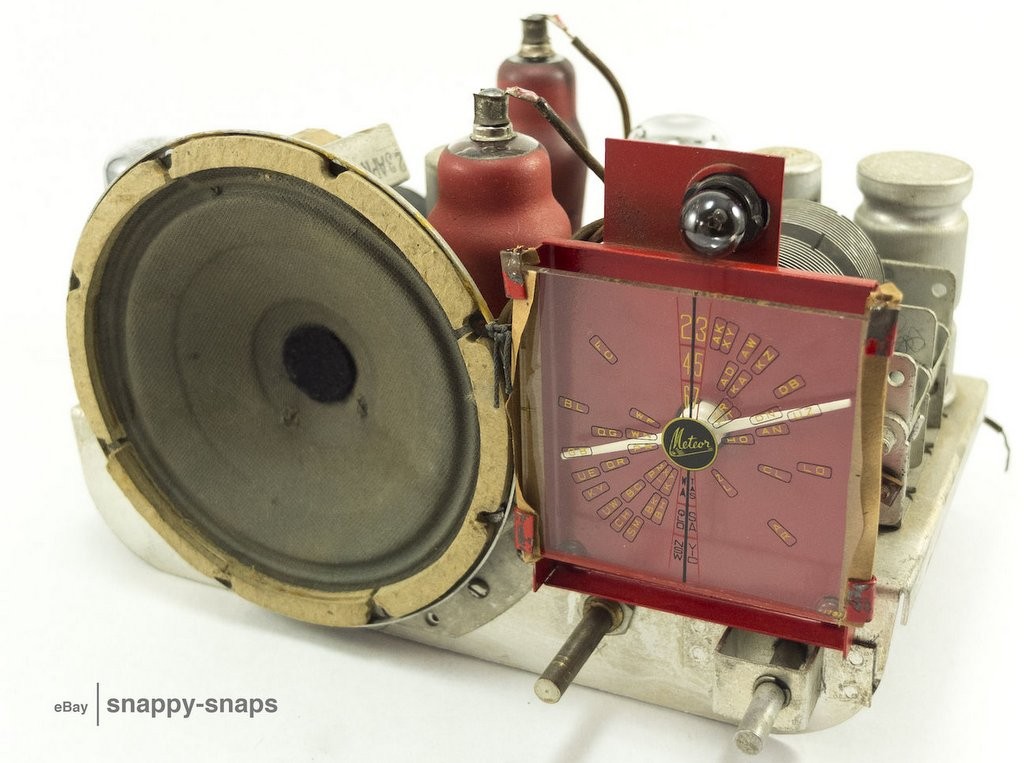
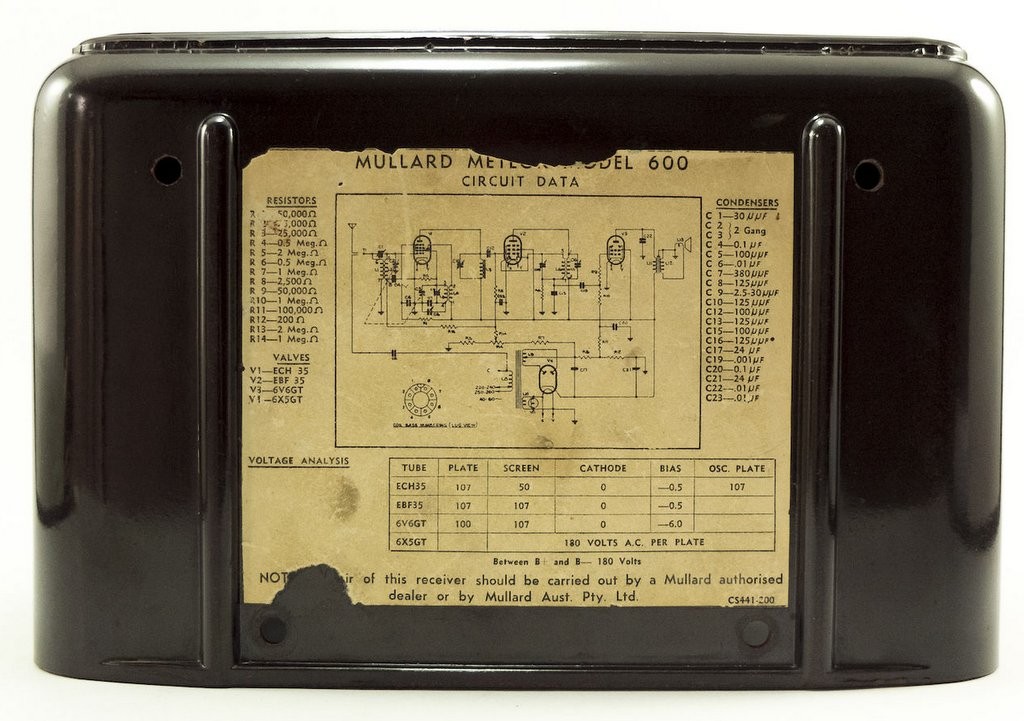
Here are a few more pics I snatched from the eBay listing:

Mullard-Tube-Radio-Bakelite-3Mullard-Tube-Radio-Bakelite-5

Mullard-Tube-Radio-Bakelite-4

Mullard-Tube-Radio-Bakelite-6

Thanks for sharing, Monti!

Any lucky SWLing Post readers in Australia or New Zealand own one of these Mullards?