Category Archives: Reviews

Ultralight shortwave radios now tagged in the Shortwave Radio Index (SWRI)

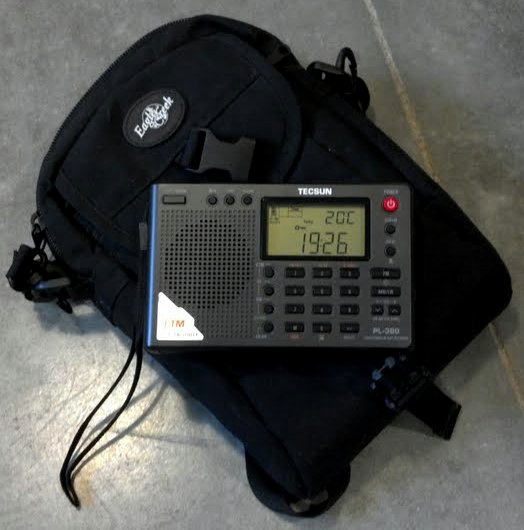
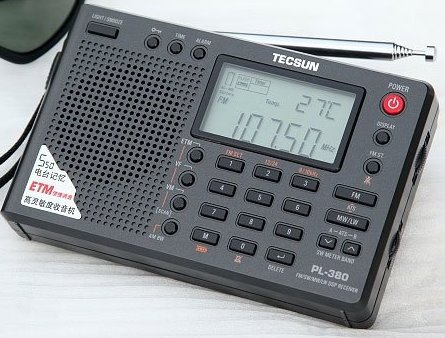
The Tecsun PL-380 is an “ultralight” that has exceptional shortwave sensitivity and selectivity.

I have gone through the SWRI and tagged all portable shortwave radios that are considered “ultralights” by the ultralight “Definitions Committee.” Note that “ultralight dxing” is primarily a Mediumwave hobby, but you will find that many of the best performing ultralights are also capable, if not best-in-class shortwave receivers.

What are the attributes/guidelines for a radio to be considered an “ultralight”? Per the definitions committee:

  1. It is a simple shirt pocket-sized radio of not more than approximately 20 cubic inches.
  2. It is an entertainment-grade radio, as opposed to enthusiast’s radio. As such, it will usually not have AM synchronous detection, SSB clarification or other specialized features.
  3. It is readily available to the hobby in new or used markets at the time of its approval.
  4. It costs no more than $100 retail at the time of approval.
  5. It is primarily a radio. While it may have other features as well (MP3 recorder, etc.), the design and function should have radio reception as its focus.
  6. It is not a “novelty radio” such as Coca Cola Can radio, Mr. Potato Head, etc.
Each radio is individually approved before it is considered an ultralight.

The Tecsun PL-310, PL-380 and C.Crane CCRadio-SWP are three shortwave ultralights that I regularly use and are considered fine examples of ultralights.

Want to know more about ultralight dxing? Check out these resources:

2011 WRTH: A Look Inside

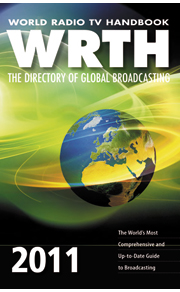
Last week, I received a copy of the 2011 WRTH, and enjoyed a most welcome read over the holiday weekend.

I always look forward to the newest edition of the WRTH. I find that, even in an internet world, and especially now in the absence of the much-mourned Passport To World Band Radio, WRTH’s radio reviews, feature articles, and HF report make for excellent reading.

This year, for example, WRTH reviews several ultralight radios (the Tecsun PL-310/380, Kchibo KK-D6110 and the Kaito/Degen 1103), as well as the AOR AR5001D, the Flex 1500, the Winradio Excalibur (hint: they really like this one), the Medav LR2 and they also take a look a look at several classic pro receivers. They offer their digital update, articles on QSLing, a feature on the worthy radio charity, Ears To Our World, and much more.

But, of course, the reason we all buy WRTH is for their in-depth comprehensive radio schedules for the upcoming year. Personally I can’t do without it–it’s never more than an arm’s length away from my shortwave.

Purchase your copy of WRTH directly from WRTH’s publishers, or from a distributor like Universal Radio (US) or Radio HF (Canada).

If you’re new to WRTH, note that they regularly update changes to their schedules throughout the year:  go to their website to download these updates.

If you would like to know more about using WRTH’s schedules, please see our previous post.

“At The Tone”–A history of WWV in audio

NIST Radio Station WWV Transmitter Building in Fort Collins, Colorado.

If shortwave radio has a pulse, it is the constant beat of the WWV and WWVH time stations.

Some of the first memories I have of hearing shortwave radio are of my father tuning in WWV each Sunday morning (on his RCA 6K3), to set his watch. Had this not been my father’s routine, I’m not so sure I would have known what  shortwave radio was for many years.

Indeed, I’m so fond of WWV, that I have to make a modest confession: I often tune it in simply to listen to its predictably reassuring announcements of the time. Somehow it calms and comforts me that all is right on the airwaves.

Actually, WWV is and has always been much more than simply a time station. It is the most reliable way for us here in North America to check propagation characteristics both by listening to the signal strengths of the transmissions on 5, 10, 15 and 20 MHz, but also by the announcements made at specific times throughout the day.

Lately, WWV has even been announcing test tsunami warnings. It was the search for broadcasts of these warnings that lead me to Myke Dodge Weiskopf’s site, Myke.me. (Regular readers of the SWLing Post will be familiar with Myke’s work.) When I wrote to thank Myke for the audio, he drew my attention to something irresistible to a WWV disciple like me.

“At The Tone: A Little History of NIST Radio Stations WWV & WWVH”

Myke has meticulously and artfully created a CD audio archive of the WWV and WWVH time stations. A description of the project from its “about” section:

At The Tone is the first comprehensive audio survey of NIST Radio Stations WWV and WWVH: two legendary shortwave radio broadcasters whose primary purpose is the dissemination of scientifically precise time and frequency. Comprised of a 74-minute audio CD and a 32-page, full-color booklet, the set represents a huge cross-section of the stations’ “life and times,” including recordings of obsolete formats, original voices and identifications, special announcements, format changes, “leap seconds,” and other aural oddities from 1958 to 2005.

After listening to some of the sample audio from the project, I was hooked: I purchased the CD on Myke’s website and have enjoyed hearing the many tracks of audio history from WWV. The accompanying track notes alone provide a very complete history of the these NIST stations, and are the perfect companion to the audio tracks.

Indeed, I liken this audio journey to learning some untold life experience of a good friend or family member. WWV has been my radio companion all these years, but until I encountered Myke’s archive I had never heard the many voices of the station, leap seconds, experimental formats, etc. It puts the station in perspective, and opens an audio window to the time before “Coordinated Universal Time.”

It may seem foolish to wax enthusiastic about a time station.  But before you judge me for my indulgence in this unlikely source of nostalgia, I encourage you to cruise to Myke’s site, purchase “At The Tone” and see (or rather, hear) for yourself!

2011 WRTH now available

WRTH has announced that their 2011 edition is now available online. Every year, I look forward to searching a new WRTH’s pages for the first time. What is the WRTH (World Radio and TV Handbook)? Click here to read my review of the 2010 edition and interview with the publisher.

To order your copy of WRTH 2011, go to this page on WRTH’s website.

Grundig G8 Traveler II on sale at National Geographic

The National Geographic online store has a few Grundig radios on sale. Most notably, the Grundig G8 for $24.95.

The G8 is a great little shortwave receiver. I’m very impressed with the performance, especially for a $25 radio (normally, these sell at retailers for $50.00 US).

Features include:

  • FM/MW/SW/LW
  • Auto/manual tuning
  • Auto Tuning Storage (ATS) function (on FM, this will auto-populate memory slots with available stations)
  • Digital tuning with digital frequency readout (LCD)
  • Local timer setting + world timer settin
  • Sleep timer & alarm clock (either radio or buzzer
  • Snooze
  • Key lock function
  • 3.5 mm headphone output
  • DC jack – 6V
  • Comes with warranty, manual and a nice travel case

Of course, with a radio in this price class, there are some compromises:

  • No single-side band.
  • There is muting between frequency changes, so while tuning you will notice a slight “chug” sound.
  • No manual gain control.
  • Speaker is small, though audio (as with many Grundig portables) is quite impressive.

At $25 US, this is a no-brainer. Pick up a G8 today as I have no idea how long this sale will last.

If you’re reading this post after the National Geographic sale, check G8 prices at the following places:

G8 documentation:

SWLing.com’s 2010 Radio Gift Buying Guide

(Update: Check out our new 2011 Radio Gift Buying Guide)

Would you like to buy a shortwave radio as a gift for someone, but you don’t know a thing about radios? gift_box_iconOr, are you thinking about buying a radio for yourself (cashing in a gift card, for example) but aren’t sure how much you need to spend to be satisfied with function and performance? Want a little help leaving a hint for Santa or Ms. Santa?  If so, no worries:  you’ve found the right place in this vast world wide web to answer your questions, or help you with that hint–just leave a link to this article somewhere that Santa can find it!

Following you’ll find a few select radios I recommend based on best performance, lowest price, and ease of use. I’ve also included current pricing and made suggestions where these radios may best be purchased. Of course, radios are available at large internet retailers–occasionally for better prices–but I highly recommend you purchase from the manufacturer and/or authorized retailer. Most radio retailers offer much better customer support in case you have a problem or question, or just need a little help getting started.

This quick guide is basic, non-technical, and to the point. For more comprehensive reviews, please consult SWLing.com’s Radio Reviews page. Also, take a look at our new Radio Marketplace page where we have pre-filtered shortwave radio eBay search results.

How current is this information? This guide was last updated on: 6 December 2010


Best performance for price

I start with this category because I believe that if you’re going to the trouble of finding the right radio as a gift, you at least want one that will perform and give years of listening pleasure.  All of the following radios are sure to please those who are new to shortwave radio, and seasoned radio listeners as well. Most of these radios fall between the $100-150 price range.

g4000a1The Grundig G4000A ($99.95 US)

The G4000A is a great portable radio and I include it here first because it is a part of a special promotion continuing through the end of March 2010. The receiver performance is very good, and it has all of the major features one might expect in a radio in its price class. I owned a version of this portable for over ten years and traveled with it extensively–it’s the perfect little travel companion, and it even has an alarm clock. But what’s really amazing about the G4000A is that it’s currently part of an exceptional package promotion by Universal Radio. If you buy the G4000A for $99.99, you also receive a free Grundig FR350 self-powered (emergency) shortwave radio, and a Grundig AN200 indoor antenna. I wrote about this special in a previous post if you want more info. Suffice to say, this is the best advertised deal for a portable shortwave radio I’ve ever encountered. You could, of course, buy the G4000A for someone and give the two extras as gifts to others on your holiday shopping list–or, better yet, keep one for yourself!

The Sony ICF-SW7600GR ($150)

This Sony shortwave radio is a classic, with solid, time-tested performance, and features to please both the beginner and the seasoned radio enthusiast. The instruction manual is comprehensive and easy to read. Read the full review here.

g3_selectorThe Grundig G3 ($150 US)

The Grundig G3 was introduced in August 2009. It’s the latest portable receiver from Grundig and is an upgrade of the popular Grundig G5. I reviewed this radio right after it hit the market and found it to be excellent, save that its sync detection (a new feature for this model) did not perform up to spec, so I simply never use it–but this is no problem, as the receiver has many other outstanding features. The latest models of the Grundig G3 all have good sync detection.  Overall, the G3’s performance is on par with–or in some respects, better than–the Sony (above). Read full review here.

The C. Crane CCRadio-SW ($150 US)

This large portable would be my first pick for someone who wants excellent radio performance, but also wants a radio that is very simple to use (i.e., grandparents, children, your uncle who gets muddled by the TV’s remote control).  It comes with an owner’s manual, but you most likely will not need it.  The CCRadio-SW has robust, room-filling sound, and is a joy to operate. Ergonomics are excellent, and it sports a large tuning knob. Performance is top-notch on all shortwave bands and it’s top of it’s class on Medium Wave (or the AM broadcast band). It’s a little bigger than the previous radios (not really for flight bags), but still fine for car, camper, and fishing trips.  The CCRadio-SW will please both the beginner and seasoned radio listener; speaking for myself, I find I use mine all the time. Read the review here.

rx320controllerThe Ten-Tec RX-320D ($369 US)

This radio is more expensive than the others listed here, and is not a portable, however, I couldn’t help but include it because I recently reviewed this radio and found that it offers high-end performance for a fraction of the cost of a tabletop receiver. The little RX-320 is PC-controlled, meaning, you need to hook it up to a computer to bring it to life. It’s the perfect gift for your favorite ham radio operator or a computer enthusiast who also likes radio. Read the full review here —or, if you prefer, a short review here.

Budget Portables

Let’s face it, these are tough economic times, and it may very well affect your gift budget this year. Below, I’ve put together a small list of radios for $100 or less that would make excellent gifts for a radio enthusiast or for someone who has never used a shortwave radio. Keep in mind, of course, that you pay for what you get; thus these radios do not perform quite as well as the portables above.

Grundig G6 ($100 US)

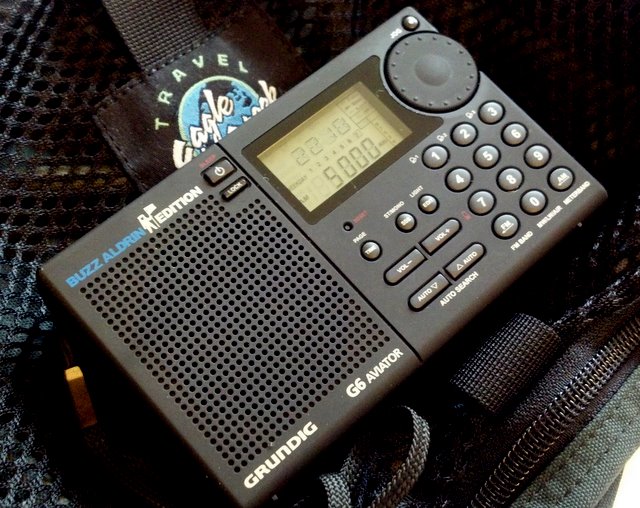
The G6 has many of the features of the portables above and comes at a much better price and in a smaller package. This radio could easily fit in a glove compartment or coat pocket. Its shortwave radio reception is very respectable for such a small radio. Read the full review here.

ka1103newKaito KA1103/Degen 1003 ($80 US)

The Kaito KA1103 (a.k.a. Degen DE1003) offers the best performance I’ve tested under $100. But keep in mind, the ergonomics of this radio (pretty much any Kaito/Degen radio) leave something to be desired:  for example, to turn up the volume, you have to press the volume button and use the tuning knob to adjust. Still, it’s fairly easy to operate, and comes with a one-of-a-kind digital display that imitates an older analog style dial. Another Kaito/Degen Product to consider is the KA1102/DE1102–read a review of this $60 portable here. In general, I’ve found that Kaito offers great performance for price, but their quality control is sometimes sub-par. I have had to return two of their products in the past, and each time was relieved I had purchased from an authorized dealer (see below). Read the KA1103 full review here.

ccradio-swpC. Crane CCRadio-SWP ($50 US)


The CCRadio-SWP has a great receiver, especially in such a tiny package. C.Crane ergonomics are always very good, and you’ll probably never read the manual, it’s so simple to operate. I keep one of these in my car to listen to shortwave radio when I have  few minutes to spare. A few “AA” batteries will run this little radio for 70 hours! Now, the CCRadio-SWP has some limitations, as does any little radio in this price bracket, so read the full review here before purchasing. But this cute radio can make a great stocking stuffer–and will fit in that stocking’s toe just fine!

Grundig G8 Traveller II ($25-50)

The Grundig G8 is a nice pocket radio and the perfect traveling companion. I’m quite impressed with this radio. Shortwave reception is good and FM reception exceptional. The AM broadcast band does suffer from some images, though still quite respectable. The G8’s audio is a little tinny, though quite good for a radio this compact. The customary price for the G8 is $49.95, but occasionally retailers place them on sale for nearly half this price. It’s a grab at $50, it’s a steal at $25!

Grundig M400 ($30)

The M400 is a fun, ultra-portable, ultra-thin shortwave radio. Though its performance isn’t as good as other portables on this page, it is a super simple radio and is quite capable of picking up strong SW broadcasters–at $30, it’s also super affordable. I wouldn’t purchase this radio for someone who is just discovering shortwave radio since they will want a better performer with more features (like the portables at the top of this page). I do think the M400 makes for a nice stocking-stuffer or small gift for the radio enthusiast in your life. I take mine with me on morning walks and overnight travels.