Category Archives: Shortwave Radio Reviews

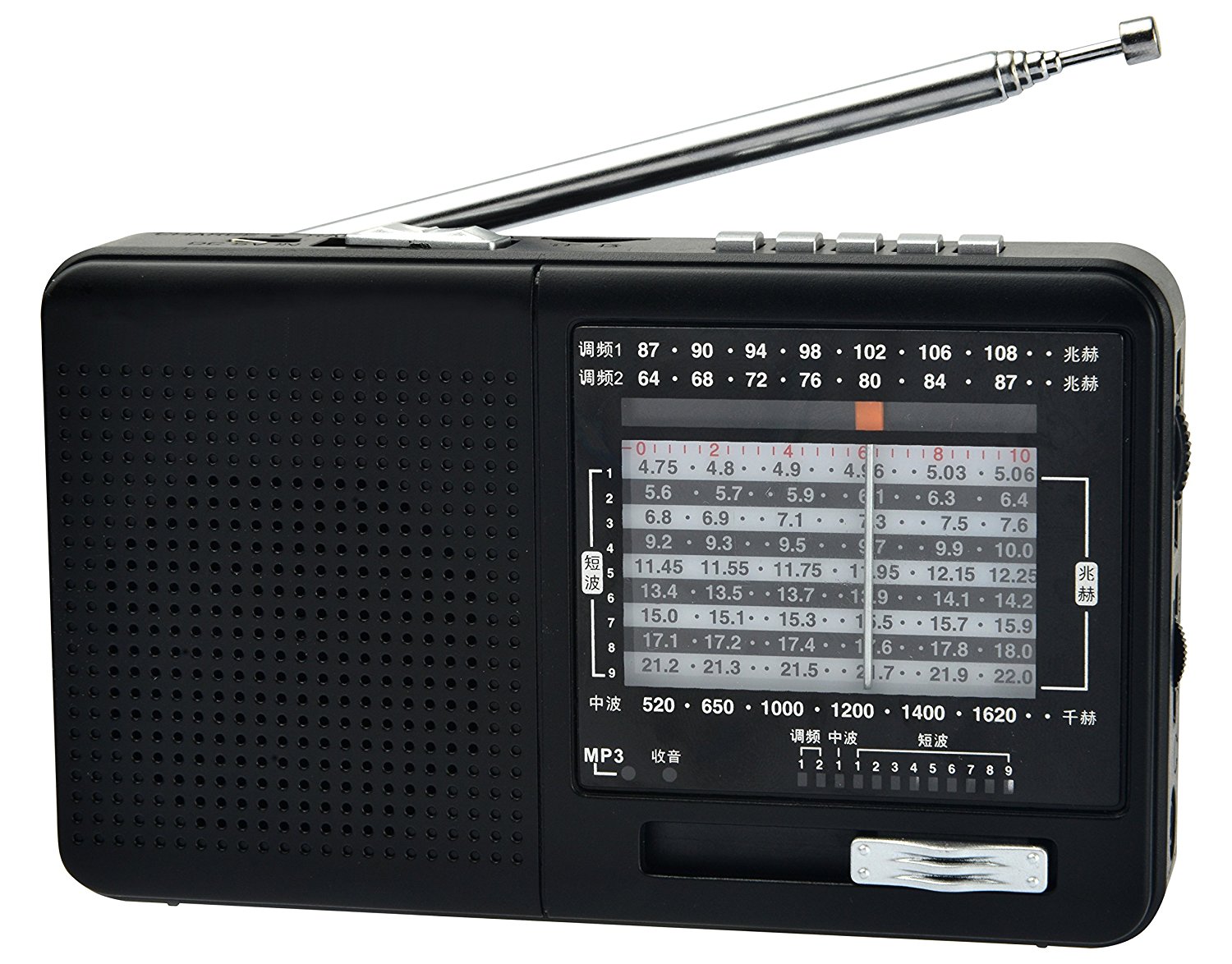
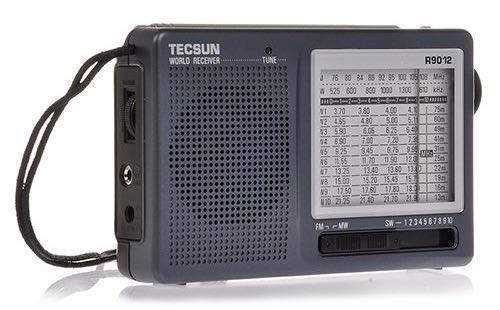
A review of the Tecsun R-9012 shortwave radio


Many thanks to SWLing Post contributor, Laurence Neils, who shares the following guest post:


A review of the Tecsun R-9012

by Laurence Neils

I have cheap radios. I can’t really justify buying more expensive ones given how much time (not all that much) I spend listening to the short wave broadcasters. The consequence of this is that, when I do listen to shortwave stations, I have the rather standard ultraportables to listen on.

My go-to radio is the Tivdio V-115, which has pulled out quite nice reception for me, and offers several functions I like a lot. However, it was missing one that interested me the most: analog or analog-like tuning. If I want to listen to something, I either have to know its frequency and try it, or I have to let the radio do an automatic scan. While it’s quite good at pulling out stations and letting me hear them, it can take a few minutes to do a full scan, and canceling it doesn’t result in the part scanned so far to be stored. Very few stations I am interested in hearing are convenient to jump into several minutes after they start (my interest is in spoken content rather than music, and neither news nor stories make a ton of sense if the introductory information was not heard).

From a recommendation here on the SWLing Post, I chose to purchase a Tecsun R-9012 radio to help me do a convenient scan, which is useful because it allows me to find stations without knowing their frequency, and leaves me to not remember all seventy frequencies a certain broadcaster is using this year.

Physical Description
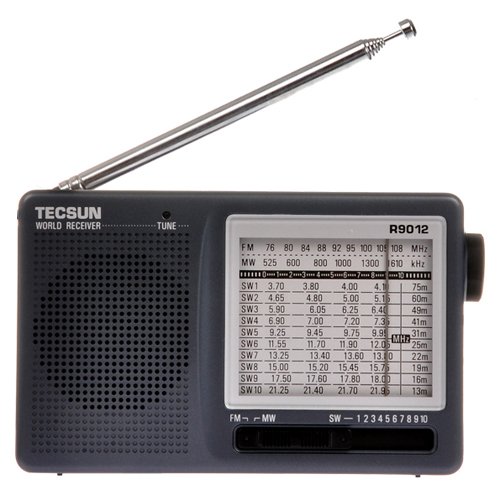
When I bought my Tecsun R9012, it arrived quite quickly from Amazon. It included a short manual, whose contents could be loosely paraphrased as “insert batteries and turn on”. Other than that, the radio is all that’s there.

The R9012 is relatively small, but not as thin or compact as the Tivdio, which will be my main comparison unit for this review. It is your basic rectangle form factor, and about the size of the small tape recorders that were the last to be phased out for portable recorders. It would be easy enough to put this in a backpack, jacket pocket, or glove compartment, but you have no chance comfortably fitting it into a standard pocket. On the back, there is a flip-out kickstand that can hold the radio at about thirty degrees from horizontal and the battery compartment. This radio is powered from two AA batteries.

The right side of the R9012 contains the analog tuning knob, which I will discuss quite a bit later, and the power switch, which is not connected to anything else (not integrated into the volume knob or mode selector).

The left side gives you a 3.5mm audio out jack. This supports all the headphone types I’ve tried. One benefit of this radio is that headphones with integrated microphones, such as the ones that come with the iPhone as well as various sets that are intended for phone use, will work with it. Some other radios won’t work well with that type of headset. The Tivdio, for example, will play through the headphones but forgets to turn off the speaker if there is a microphone on them, making the headphones pretty much pointless.

Next to that jack is a power port, supposedly to recharge the batteries. A connector for this is not included, nor do they seem to sell one. I suppose the theory is that you might already have a suitable one in that box of old cables we all have, but I can’t see this as a particularly useful feature given the RFI you’ll get if you connect a radio directly to the mains to recharge. Above the ports is the volume knob, which is a very basic analog one, and then the wrist strap, which is integrated into the case. There doesn’t seem to be a way to remove or change it, should you desire that.

On the front of the radio, the speaker takes up the left half. This is fine for standard listening, but don’t expect wonders of audio fidelity. On the right half, there is the twelve-position mode switch (from left to right, FM, MW, SW from low to high frequency) and the tuning display.

FM performance
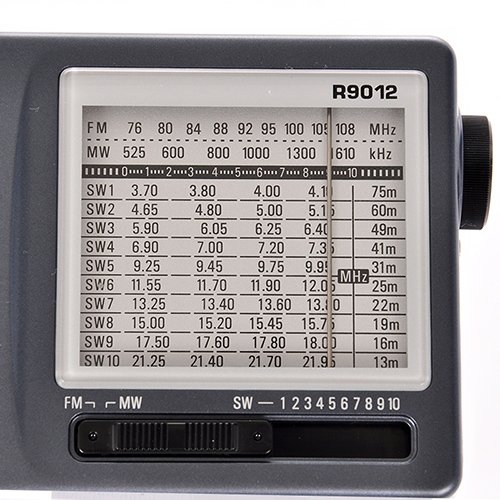
The Tecsun has a standard FM function, with stated coverage from 76 to 108 MHz. This is the leftmost position on the mode selector. The band is not divided into multiple switch positions, meaning that stations will be relatively packed into dialing space when compared to shortwave, which is spread across ten bands.

I didn’t buy this radio to use it for FM. I have very little interest tuning for FM stations. Some people may enjoy the experience of manual tuning for a station they can locate quickly, but I’m not one. I can easily type the frequency I want on my Tivdio, and I intend to keep doing that for FM. I mostly intended to test FM performance on the R9012 because I was curious to see whether there would be anything audible in the 76-87 MHz section. I know that our TV standards have switched off using analog audio, so I assumed there would be nothing, but I’d never formally put that to the test.

FM on the R9012 has problems. In fact, it has a lot of problems. Among other things, the FM process on this radio doesn’t seem to have a very good idea where things are. I’d be tuning through looking for some station and I’d find it…only to see that I was in a completely foreign part of the spectrum where that station had no business being. It seems that, unless you’re very focused in on a station, the R9012 is liable to pick up some other broadcast and layer them on top of each other. Never mind that the broadcasts have nothing to do with each other and aren’t anywhere near each other on the band. If you have a specific station you want, you can tune to it and have no problems. If you want to see what’s there, you’ll have a very fun time listening to stations that you might want to listen to, only to find that that was an image, you’ve lost it now, and you can’t find it again.

Sometimes, I managed to find a part of the spectrum that gave me three different images simultaneously. Ironically, the broadcast I intended to use as my landmark, the local classical music broadcast, which is located very close to the middle of the FM spectrum, was strong enough or at a coincidental frequency that I identified images of it at six different places on the scan, in addition to where it should be. So I got my answer about 76-87 MHZ. According to the R9012, there’s a lot of signal there. It’s just coincidence that it sounds exactly the same as standard FM broadcasts with extra static.

FM performance gets worse: this radio is extremely sensitive to location.

In order to get nice reception, you have to have the radio in a good position. This seems to be completely random. Standing up so the antenna lies flat on the top, but is not extended produces almost silence. Lying down so the antenna is touching the table (not a metal table) or chair (not a metal chair) causes most signals and images to come through quite clearly. Extending the antenna to medium length helps reception. Extending it all the way introduces a lot of interference. On FM, volume also changes a lot. We may reasonably expect for the signal to change if we connect something conductive to the antenna by, say, touching it with our conductive fingers. Maybe reception will get more static, or maybe it will in fact improve. What we don’t expect is for the broadcast to switch from comfortable volume to let’s see if we can get you some tinnitus volume. Unfortunately, that’s sometimes what happens on FM if you touch the R9012’s antenna. Or tilt it a bit in the wrong direction. This doesn’t seem to happen much if it is tuned onto a station, but if it is anywhere in the middle or if there’s some static, the volume change is very noticeable, in that it makes you want to get the radio off as soon as possible.

In summary, this radio just can’t really do FM. If your other radios are broken, you’ll be fine by using this, but don’t buy it if you intend to do FM things.

Mediumwave performance

The MW frequencies are mostly there, with stated specs including from 525 to 1610 kHz. While there are broadcasts between 1610 and 1710 KHZ, that’s not a ton of the spectrum. I don’t have much interest in MW. I tested the radio’s performance, and it seems fine. Strong stations come in loud and clear. Stations that have low broadcast powers are easy to tune in. I was able to get some skywave MW in here as well, but I really don’t have any interest in that. I was able to verify, however, that the terrible effects that plague FM performance don’t appear on MW. I got no images of distant stations, no rapid volume switches, and the position of the radio doesn’t seem to affect MW reception all that much. Perhaps this is due to the different antenna that most radios employ in tuning MW. However, the manual doesn’t say whether this radio has such an alternative antenna and I haven’t gone to the effort of disassembling it to find out.

Shortwave performance

Once again, the crazy stuff seen on the FM band doesn’t appear during shortwave listening. I was able to tune in quite a few stations, although this probably isn’t a DX-capable device unless you’re willing to go out into RFI-free areas. That sounds enjoyable, but it’s not really my thing. When I got signal, it came in quite clearly. I got very little interference from the device itself, although it does seem quite susceptible to RFI from power lines. Of course, so is everything else, but if you put its antenna closer to a line, you’d know it.

Frequency coverage

Shortwave is covered in ten bands that allow access to the more populated areas of the spectrum, but have many gaps. Certain descriptions claim that the radio has coverage from 3.90 to 21.85 MHz. This is so misleading I’d be willing to call it a lie. The actual ranges are as follows:

  • SW1: 3.7 – 4.10Mhz
  • SW2: 4.75 – 5.06Mhz
  • SW3: 5.95 – 6.20Mhz
  • SW4: 7.10 – 7.30Mhz
  • SW5: 9.50 – 9.90Mhz
  • SW6: 11.65 – 12.05Mhz
  • SW7: 13.60 – 13.80Mhz
  • SW8: 15.10 – 15.60Mhz
  • SW9: 17.55 – 17.90Mhz
  • SW10: 21.45 – 21.85Mhz

So what if most signals are in there somewhere? Those gaps are very large. For example, the only broadcast frequency for WWV that would be covered on this set is the 5MHZ one. 10, 15, and 20MHZ are all located in various gaps on the bands.

This turned out to be quite annoying. I know that these are standard areas of the spectrum, in which people place a preponderance of broadcasts, but the fact remains that a lot of broadcasts occur between the bands on this set. I checked the A18 shortwave schedule to identify how crazy I was. Of the 5530 broadcasts that were listed between the limits of 3.90 to 21.85 MHZ, 1870 of them or 33.8% of the total, are outside the range of this set.

It strikes me that the largest band on this radio covers only 500 kHz of space, whereas the smallest gap between bands covers 750 kHz. In many cases, bands cover only 100 kHz of bandwidth. While I guess it’s better that they’re there rather than their being completely absent, perhaps some effort could have been done to open that up a bit more. I quickly analyzed where missing signals were, and if Tecsun could extend the 5.95-6.20 MHz band down to 5.8 MHz, 7.10-7.30 up to 7.60 MHz, expand the 9.5-9.9 band, and give an extra 50 kHz to the 11.65-12.05 band, most of the missing spectrum, nearly a thousand broadcasts, would be brought back into coverage. This could be done and still keep the maximum band width at 500 kHz. Therefore, as they didn’t seem to feel this an important issue, it falls to me to consider it so.

Manual tuning
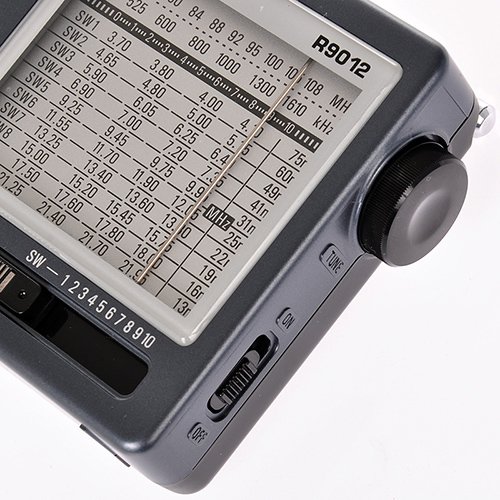
So I bought this to tune manually. It stands to reason that I should review how well it does that.

The analog dial is on the right, and protrudes outward. Once again, the knob does its job, but not all that well. It was very easy to use this to pan through the spectrum and pick up stations, but the wheel doesn’t make it all that easy to do so quickly. You have to turn it by grasping, as the wheel has a fair bit of resistance. I don’t doubt that this feature helps to keep from knocking it off frequency, but you have to use two fingers to rotate freely, and that slows the process down. Meanwhile, the wheel has a rather disconcerting way of stopping, where the wheel seems to have hit an obstruction. However, this essentially increases the resistance, rather than feeling like a barrier. It’s noticeable, but it feels like something’s blocking the turning mechanism, rather than that the mechanism has reached its limit. Actually, it is possible to keep turning the dial, which I assume will eventually damage something, but if you’re not used to how it feels, you may do so without realizing that you’re not actually going anywhere.

The wheel has quite a bit of travel. On my set, it will rotate about three full turns. I believe this is necessary because all of FM, including the standard and Japanese bands, is in one section. Therefore, the wheel needs to be able to turn a lot in order to separate those stations. However, this means that panning over a shortwave band that covers at most 500 kHz of spectrum includes a great deal of panning over static. This works to scan quickly, but there are undoubtedly even faster ways to do so.

Conclusions

It’s a radio. It will pick up stations and make noise. In that, it works. However, this isn’t exactly a great set. The $22 price tag may forgive some of its flaws but not all of them.

Radios like the Tivdio models cost similar amounts and cover the spectrum more fully with some extra features. When I purchased this model, I expected the lack of features to be made up by convenient scanning over shortwave, relatively good sound, and relative disposability. I got enough for me to keep the set, but nothing more.

Pros:

  • Mediumwave is rather sensitive for those who enjoy listening to those signals.
  • Radio has a kickstand and the antenna can be rotated freely.
  • Radio supports headphones with inline microphone.

Cons:

  • FM is plagued by images of other stations that should not be there. This is rather bad.
  • FM is far too sensitive to antenna position.
  • Shortwave coverage, while it includes most of the spectrum in use, has big gaps that are actually being used by a lot of broadcasters.
  • Analog tuning works, but not really well. The knob can turn but does so with effort.

Would I recommend people to purchase this? Probably not.

Those who have higher-priced devices will get nothing from this. Those getting into the hobby aren’t going to get a ton of benefit from this, because tuning on shortwave requires enough familiarity with dial position that they may spend too long figuring it out. It would be useful on FM only if most other radios have been broken. It’s not even that good as an emergency set because of the FM sensitivity problem.

If all you want is analog tuning over the bands that are provided, the radio will do it for you. If you want more, buy something else.


Thanks for sharing your evaluation Laurence. Thanks for focusing on one of the points that is often overlooked with analog radios: the frequency coverage on various shortwave bands. The R-9012 does seem particularly segmented. 

Tecsun R-9012 retailers:

Post readers: Do you own the R-9012? What are your thoughts? Please comment!

Do you like the SWLing Post? Consider supporting us via Patreon or our Coffee Fund! Thank you!
Dave reviews the Icom IC-R30 Handheld Wide Band Receiver

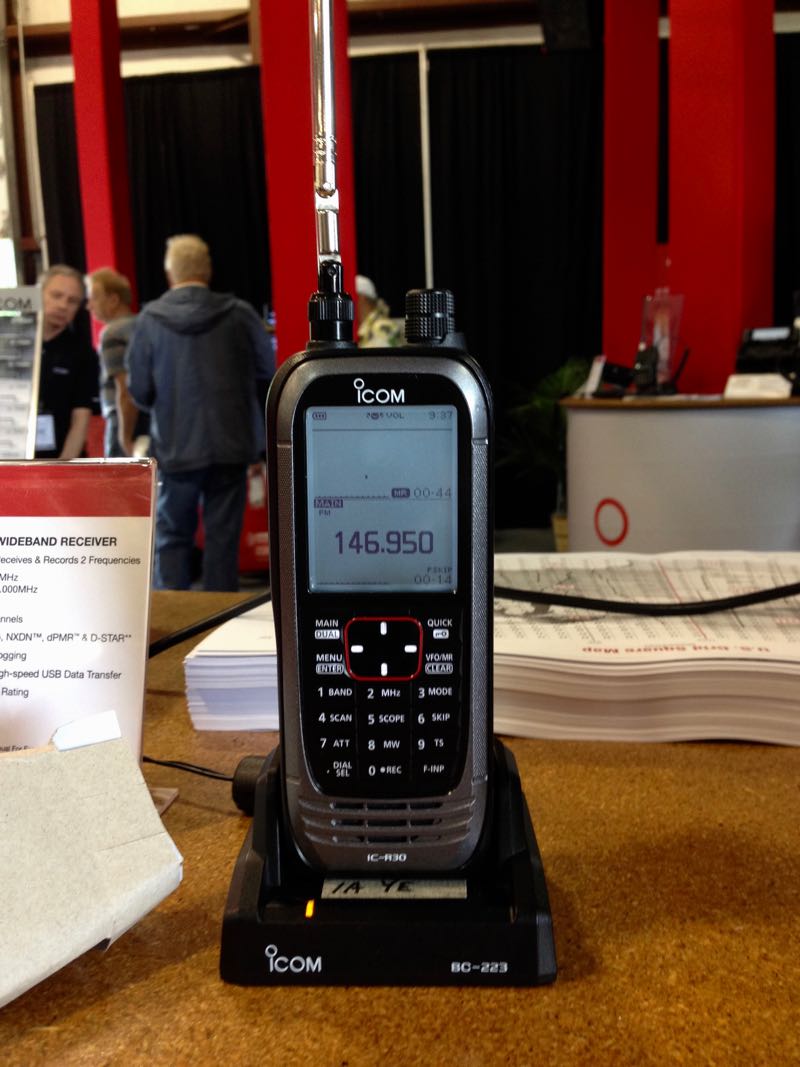
The new Icom IC-R30 handheld wideband receiver at the 2018 Hamvention.

Many thanks to SWLing Post contributor, Dave Zantow (N9EWO), who notes that he has published his comprehensive review of the Icom IC-R30 handheld wideband receiver.

Click here to check out Dave’s review.

Based on Dave’s evaluation, it sounds like this is one of the better wideband radios, although like similar models, its utility in the HF and mediumwave bands is somewhat limited. He gives the R30 good marks for AGC and notes a lack of spurious emissions on MW. Unlike other wideband handhelds, he noted no mediumwave stations overloading the HF bands. With the unit connected to an external HF antenna however, intense overloading occurred on these bands.

As I tell anyone considering a wideband handheld, don’t buy it with the intention of logging weak signal DX on the HF bands–it’s just not a great receiver for this. It shines on those higher frequencies starting in the VHF band and moving up.

Thanks for sharing your review, Dave!

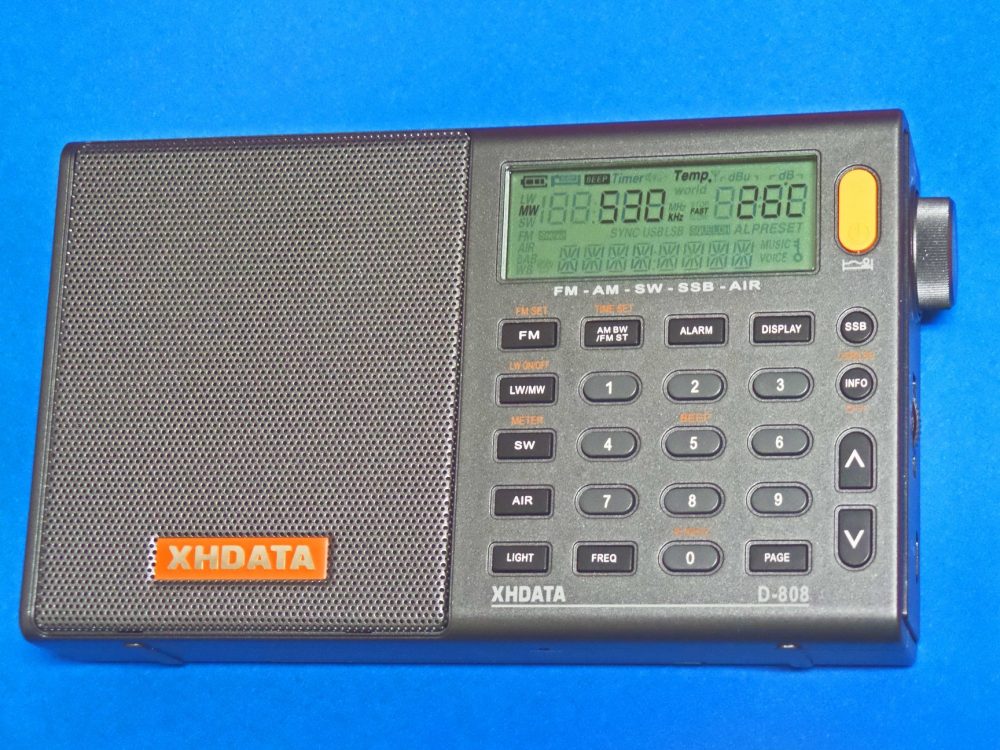
Gary pulls apart and examines the XHDATA D-808


Many thanks to SWLing Post contributor, Gary DeBock, who shares the following report of the XHDATA D-808:


XHDATA D-808 AM-LW-FM-SW-AIR Portable- Tech Report

by Gary DeBock

The XHDATA D-808 portable is an AM-LW-FM-SW-SSB-AIR band model which has already been the subject of many excellent reviews. Until recently the model was not marketed to North American purchasers, but recently a couple of Chinese sellers have started soliciting North American buyers via eBay listings.

My own interest in the model was in comparing its AM Band performance to that of the best performing Ultralight radios– specifically the CC Skywave and Skywave SSB models. Although the D-808 is slightly larger than the 20 cubic inch limit for Ultralight radios, its size and weight make it very convenient to take along as a “travel portable,” specifically as an SSB-enhanced model capable of checking transoceanic station carrier strength on exotic ocean beaches. The Skywave SSB model can also do that– but at a $169.99 list price, compared to the $112.86 (plus $10 shipping) cost of the D-808. In addition, none of the published D-808 reviews seemed to have any information about internal components like the loopstick, or Si4735 DSP chip.

My first test was to compare the stock Skywave SSB model with the D-808 in fringe AM station reception. The Skywave SSB model has a reputation of being one of the most sensitive Ultralight radios, but the D-808 clearly outperformed it on both low band fringe station (550-KARI) and high band fringe station (1700-City of Auburn TIS) reception. The D-808 couldn’t quite hang with a 7.5″ loopstick Skywave model, but that only made me curious about how the same modification could enhance the D-808. So… it was time to disassemble the D-808, and find out why its loopstick was such a superior performer.

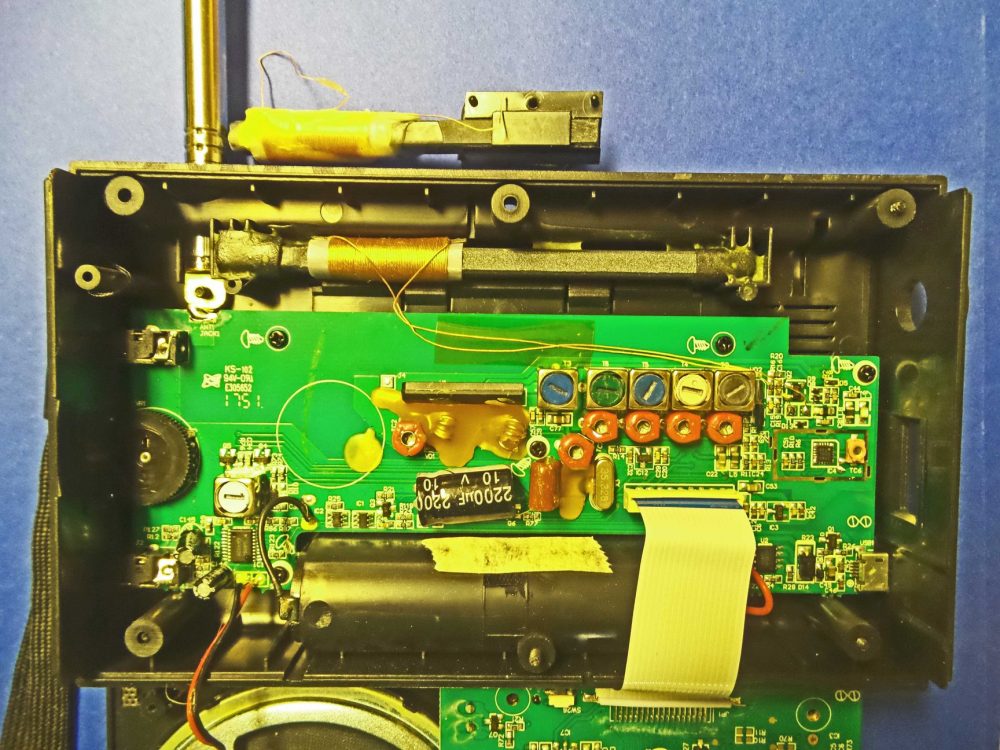
The D-808’s 3 7/8″ (98mm) loopstick is shown adjacent to the 2 3/4″ (70mm) loopstick of the CC Skywave models. The D-808 is much easier to disassemble than the CC Skywave models, though, so enhanced loopstick transplants should prove to be quite popular in the D-808.

The D-808 loopstick is 3.7/8″ (98mm) long, while that of the CC Skywave SSB model is only 2 3/4″ (70mm) long. Other reviewers have noted the excellent performance of the D-808 on the AM band, and this is probably one of the main reasons. The SSB mode operates very similar to that of the Skywave SSB in providing a quick check of carrier strength on weak AM band targets– the LSB mode can be set to +55, and the radio tuned to different frequencies to check fringe station carrier strength. This can provide a real-time check of propagation changes during time-limited propagation openings for live ocean beach DXing with Ultralight radios or other portables (or with the D-808 itself, if desired).

The D-808’s Si4735 DSP chip was initially used in the Eton Traveler III Ultralight radio model, which was fully reviewed in the 2015 Ultralight Radio Shootout (where it won top honors for MW sensitivity). The D-808 augments that capability with a significantly longer loopstick, plus multiple DSP filtering selections. As such, the D-808 in stock form should be a very superb performer.

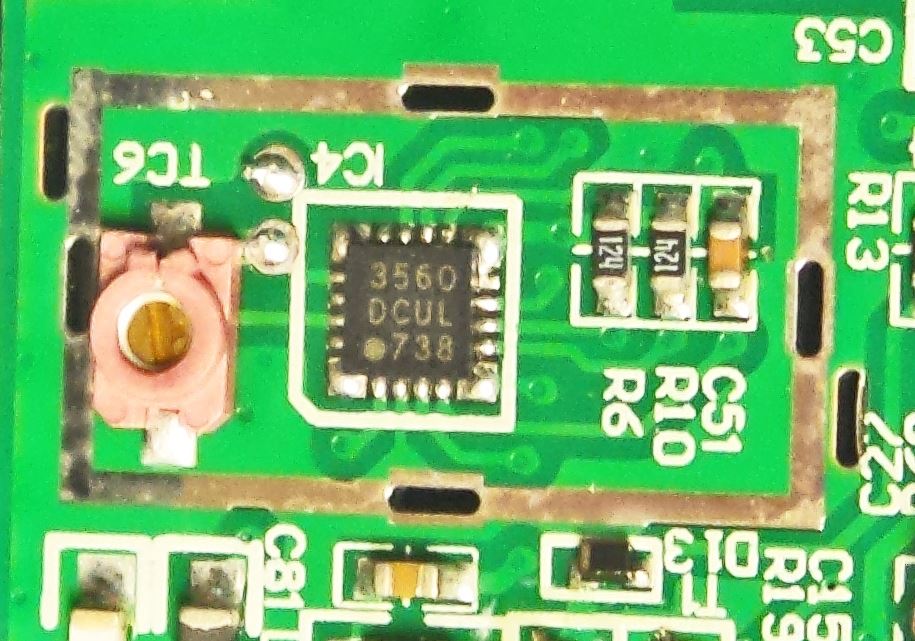
The Si4735 DSP chip has markings of “3560, DCUL, .738” and provides a wide range of AM bandwidth choices for the Medium Wave DXer (6K, 4K, 3K, 2.5K, 2K, 1.8K and 1K). These perform very well, and as with the other DSP-enhanced portables, the narrowest bandwidth (1K) provides the most sensitive AM band reception.

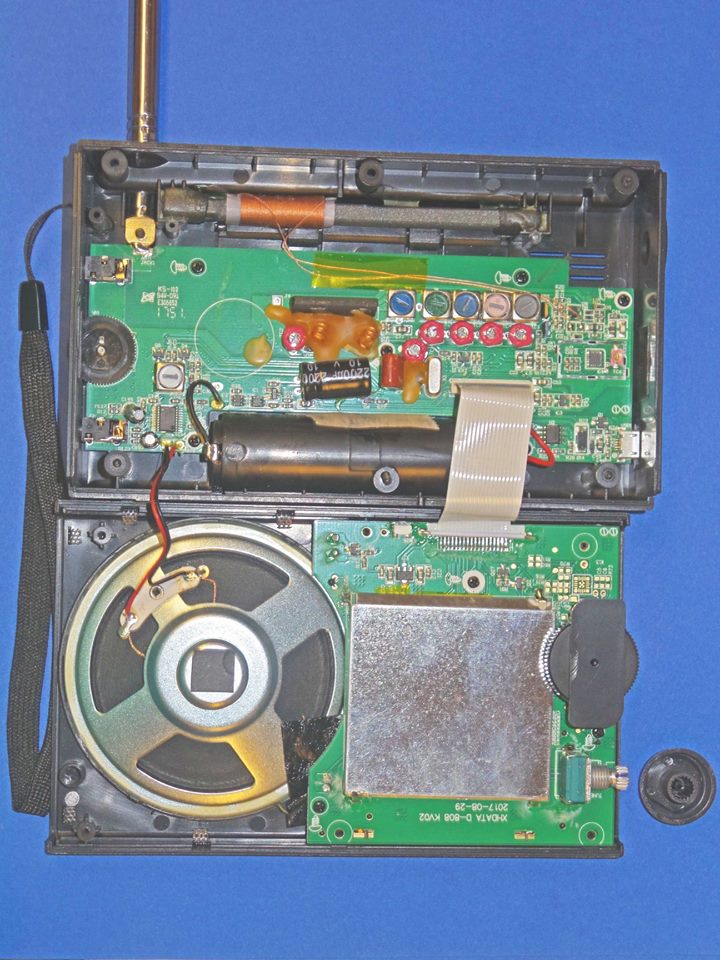
In construction very similar to that of the CC Skywave, the D-808 separates into two main circuit boards, connected together by a plug-in ribbon cable. One strange quirk is that the Si4735 DSP chip is located on the RF board (close to the center right edge). The Si4735 DSP chip is also used in the Eton Traveler III Ultralight radio, and although that model lacks the multiple DSP filter selections of the D-808, is has been the subject of highly successful 7.5″ loopstick transplant modifications– proving that such enhanced Medium Wave and Longwave loopsticks will perform very well in the new, Si4735 chip- powered D-808.

Disassembly of the D-808 model is fairly straightforward in comparison to the CC Skywave models, and the technician doesn’t need to memorize a detailed reassembly protocol in order to perform a routine loopstick transplant operation. Neither C.Crane nor XHDATA are likely to show any sympathy to someone botching up an antenna transplant, so you need to be confident that that your skills are superior to those of the company technicians before taking the plunge. In the CC Skywave and CC Skywave SSB models various parts fit together like a puzzle, but the D-808 isn’t like that. It should prove to be a fairly popular model for enhanced MW and LW loopsticks.

Those considering a purchase of the D-808 should be advised that its type 18650 Li-ion 3.7v battery is not commonly available at most stores, and that Postal regulations supposedly forbid shipping these batteries through the mail. One of the eBay sellers (harelan ecommerce) did manage to ship me two of the standard XHDATA type 18650 batteries through the mail (along with two new D-808 models) but if your seller won’t do this, you can still purchase the batteries on eBay. Some of the 18650 batteries sold on eBay have a flat positive terminal which won’t contact the D-808 cabinet’s positive battery connector terminal, but in such a case you can simply insert a #8 lockwasher in between the two, and the arrangement will be very secure. From that point on you can simply recharge the battery with a USB terminal connector.


Thank you for sharing this technical overview of the XHDATA D-808, Gary! I’m looking forward to the antenna mods you’ll no doubt make to this compact DX machine!

Click here to read other posts about the XHDATA D-808 and here to read posts by Gary DeBock.

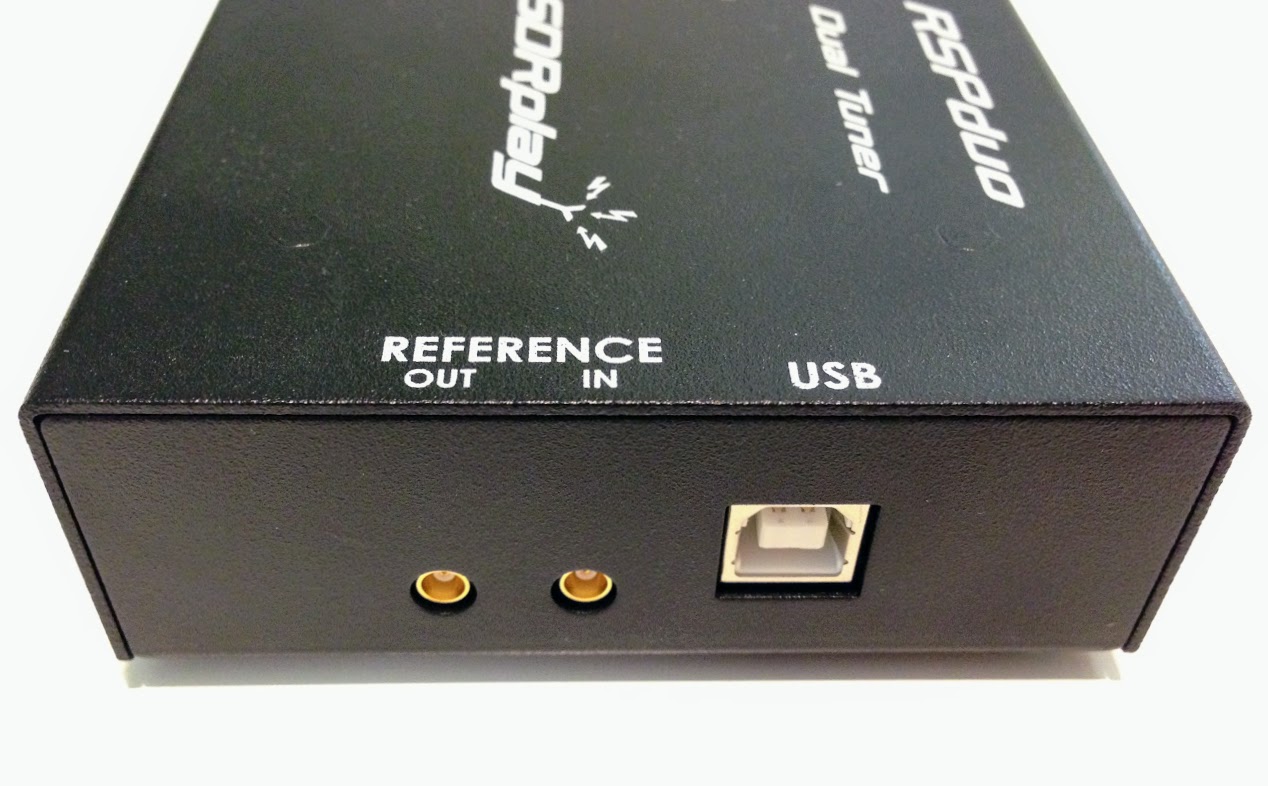
A review of the SDRplay RSPduo 14-bit dual tuner SDR

The new SDRplay RSPduo

Moments ago, I posted a press release from the UK-based software-defined radio manufacturer, SDRplay, announcing their latest product: the RSPduo: a 14-bit Dual Tuner SDR.

I should start with the disclaimer that, not only was I sent an RSPduo to review and evaluate, but SDRplay has been a supporter of the SWLing Post for a few years now.  You’ve no doubt seen their ads in the upper right corner of our site. After I reviewed their first SDR (the RSP1) I discovered that SDRplay––all of their staff and supporters––welcome constructive criticism and even invite frank discussions. They’re a company with integrity.  No doubt, this is why I agreed to alpha- and beta-test their SDRs. Fortunately, I’ve not been disappointed.

As a company, moreover, SDRplay breaks the mold––and in very good ways:

  • SDRplay is a small company that employs actual radio enthusiasts. Their designs and software cater to DXers, SWLs, hams, scanner enthusiasts, amateur astronomers, experimenters, and makers, among others.
  • SDRplay designs and builds their products in the United Kingdom. No doubt they could increase their profit margin by using manufacturing centers in China, but they choose not to do so, to the benefit of their products.
  • The quality of the company’s products is, at least to date, excellent.
  • SDRplay’s product pricing is nonetheless quite affordable

That last item, in particular, is a head-scratcher.  Considering these facts, how does SDRplay still manage to keep their pricing so competitive? I only wish I knew.  When the company released the RSP1A last year, I had already spent a few months with alpha and beta units, mulling over their respective merits (and there were many).  So I was simply gobsmacked when they announced that the price would be just $99 US. I rather figured the company was leaving money on the table, although I was pleased to announce this price to my readers here.

Fast-forward to two weeks ago: I received the new RSPduo to review. And the price this time? $279 US. While this is currently the priciest product in the SDRplay line, let’s go over what makes this SDR special…and why I still think SDRplay may be leaving money on the table.

Introducing the SDRplay RSPduo


The RSPduo is unlike any other SDR in the SDRplay product line, and, indeed, unlike most of the budget SDRs currently on the market.

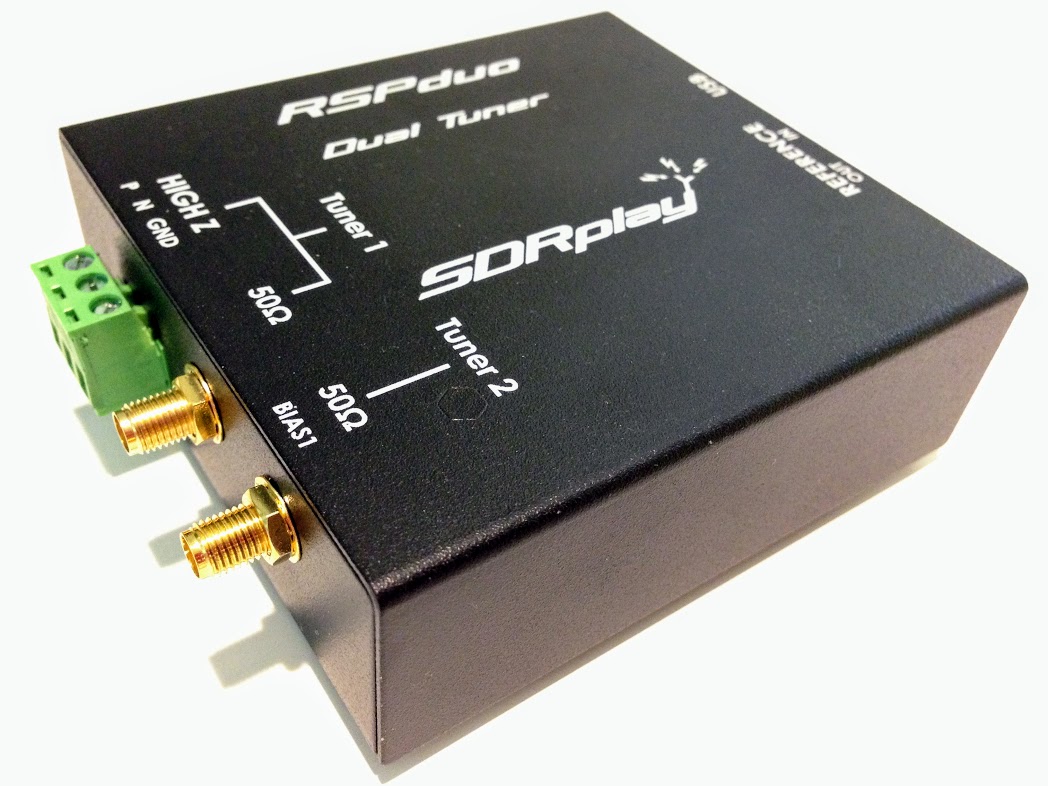
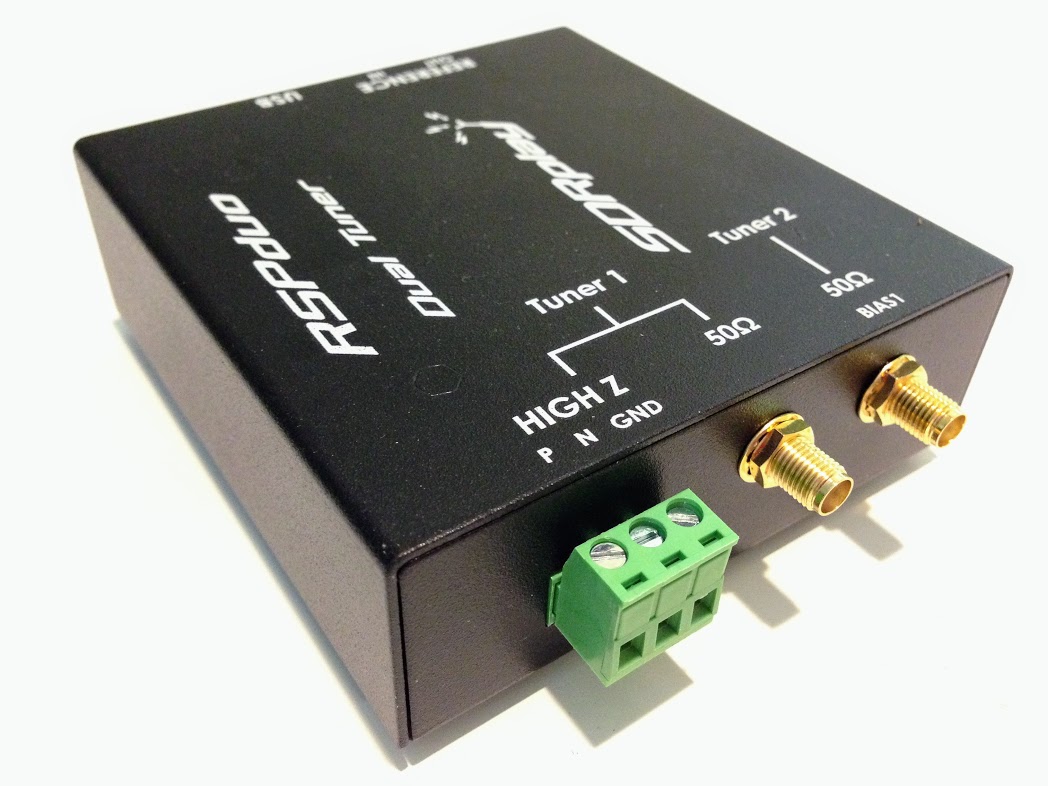
As “duo” implies, this RSP features dual independent tuners, both piped through a single high-speed USB 2.0 interface. With the RSPduo, you can explore two completely separate 2 MHz bands of spectrum anywhere between 1kHz and 2GHz.

SDRplay lays out several use-scenarios in their press release:

  • The ability to simultaneously receive on two totally independent 2 MHz spectrum windows anywhere between 1 kHz and 2 GHz
  • Simultaneous processing from 2 antennas enables direction-finding, diversity, and noise-reduction applications
  • Ideal for cross band full-duplex reception, e.g. HF + VHF, or VHF + UHF
  • Simultaneous Dump1090 and VHF ATC reception
  • Simultaneous monitoring and recording of 2 ISM bands
  • Use SDRuno to seamlessly control and manage the dual tuner in a single environment.

Externally, the RSPduo bears a strong resemblance to the RSP2pro. Internally, however, it’s quite different.

Besides featuring a second independently controlled tuner, the RSPduo also sports 14 bit ADCs and a completely re-designed RF front end, which enhances receiver selectivity and improves dynamic range.

In short, the RSPduo is like having two SDRs in one.

Performance

I received the RSPduo during a very busy time of the year: the build up to the Hamvention in Xenia, OH.

One of the first things I noticed about the RSPduo is its weight. When I picked up the package from SDRplay, I could tell it weighed at least twice that of the RSP1A. One reason for the extra heft is that the RSPduo, like the RSP2 Pro, has a metal enclosure. I’m willing to bet the RSPduo also has more shielding––adding even a little extra weight.

I’ve had the RSPduo on the air for more than a week now, and have checked out all of its major functions and begun to learn the nuances of navigating the dual receivers in the latest version of SDRuno.

SDRplay will, I feel sure, post a primer video on using the various dual tuner functions in the coming weeks.


Installation of the software, even in pre-production, was totally a “plug-and-play” experience. Simply install the SDRuno software package with the RSPduo disconnected from the USB port.  Plug in the RSPduo, and wait for the USB driver to load, then open SDRuno. That’s it. You’re on the air!


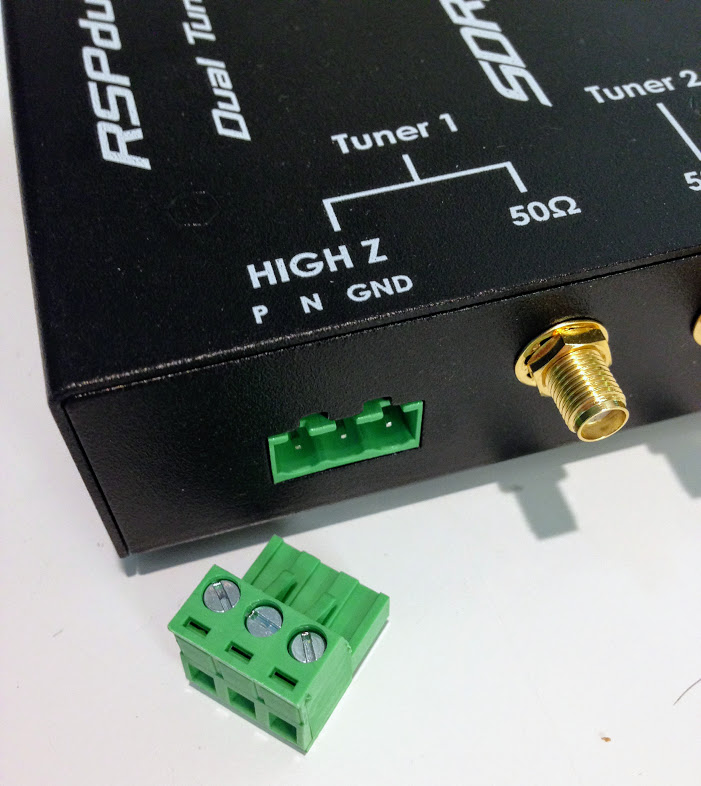
As I’ve indicated, the RSPduo is really like having two RSP1As in a single RSP2 Pro package. One of these dual receivers––the master––can utilize either a standard 50 ohm SMA antenna port, or a Hi-Z port. The second receiver uses one 50 ohm SMA antenna port just like the RSP1A.

I much prefer using the Hi-Z port for everything longwave and mediumwave.  I did hook up both antenna ports on the master receiver, however, and switched back and forth between the two. At least in my antenna setup, I feel like the Hi-Z option lends itself to improved sensitivity on these bands. It’s not a dramatic difference––indeed, looking at the spectrum display one barely notices the difference––but my ears told me the noise floor was lower and signal strength slightly better with the Hi-Z port. Above 2 MHz, the Hi-Z port is not prefered since it lacks the same level of RF pre-selection as the 50 ohm ports provide.

Unlike the Hi-Z port with the RSP2, the RSPduo treats the Hi-Z port more like an auxiliary antenna port. When I employed the Hi-Z port in the HF bands, I did notice small spurious noises, but this might have been due to my antenna port configuration here in the shack (my Hi-Z connector is simply attached to the shield and center conductor of my coax).

Again, however, for anything above 2 MHz, SDRplay suggests using the 50 ohm ports.

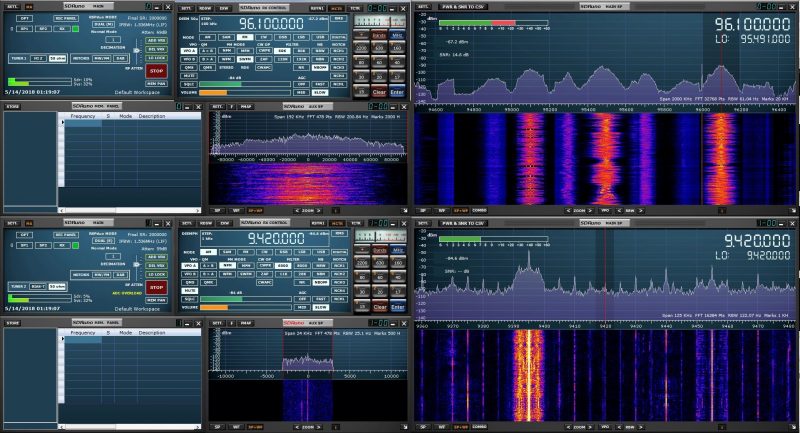
How to set up dual receivers on one screen/monitor

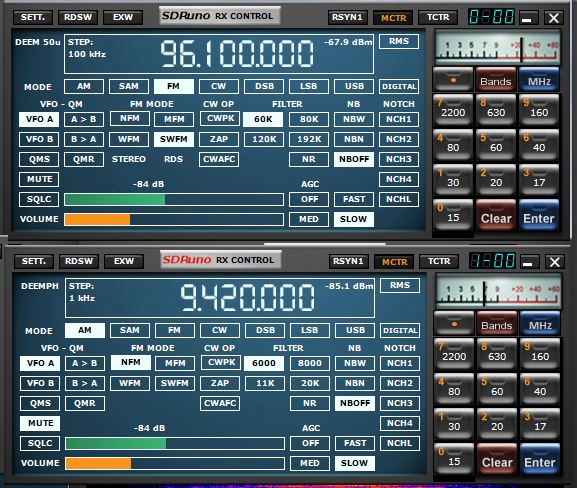
Listening to the FM broadcast band on the main receiver and Voice of Greece shortwave on the second receiver.

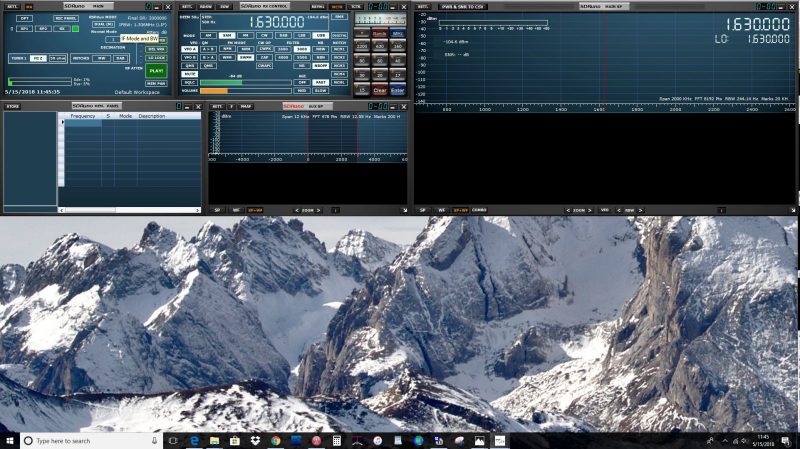
One of the first things I was eager to do was to run the dual receiver functionality on one monitor.  Although SDRplay makes this a pretty simple process in the latest version of SDRuno, I still stumbled a bit as I learned to navigate the controls.

Here’s a quick primer to get both receivers on the air on one monitor/screen:

  • First, open SDRuno in “single receiver mode” (the typical SDRuno default).

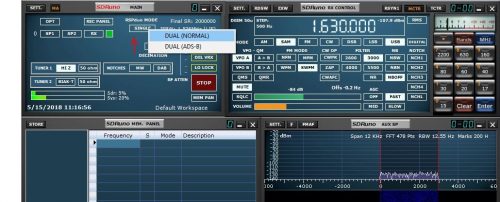
  • Next, click on the “RSPduo mode” button and select one of the modes.  In this case, I’m not running the ADS-B application, so I’ll choose “DUAL (NORMAL)”.

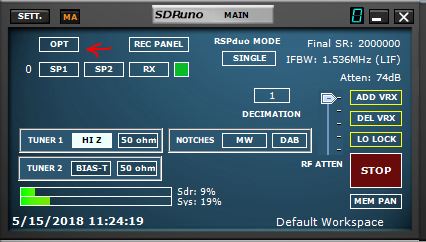
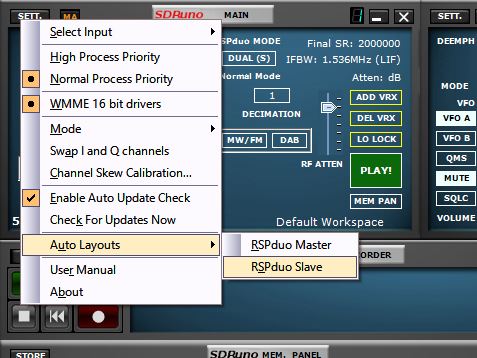
  • Now, to format the “Master” receiver windows so they only use the top half of the monitor, click on the OPT button.

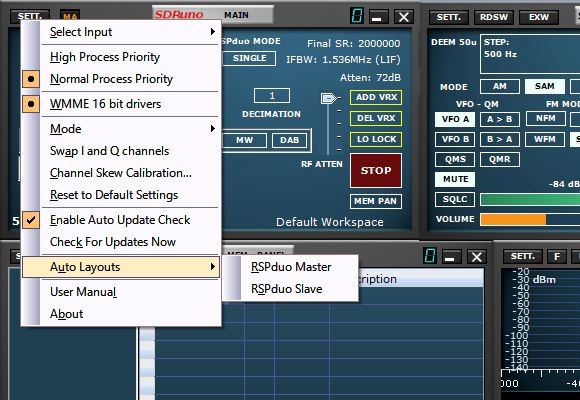
  • Select “Auto Layouts” and “RSPduo Master.”

If you’ve followed these steps with me, your screen should look something like this:

Now you’ll want to start the second receiver. Do this by opening the SDRuno application again (as if you were opening SDRuno for the first time). Make sure you’ve selected your RSPduo if you have more than one RSP connected.

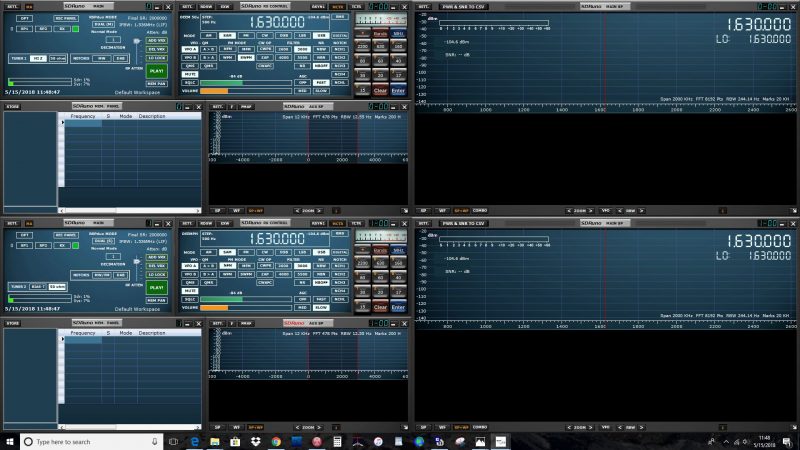
The new instance of SDRuno will fill the entire screen by default, so you’ll need to format it to occupy the lower half of the screen.

Simply click on the OPT button again, select “Auto Layouts,” and “RSPduo Slave.”

Your full screen should now look something like this:

Now you can start using both receivers, but you’ll have to always start the “Master” receiver first. In fact, the “Master” receiver must always be active in order to operate the “Slave” receiver. You can always close the “Slave” receiver without affecting the “Master” receiver; however, if you close the “Master” receiver, you will effectively close both receivers.

Again, I fully expect SDRplay will soon produce a demonstration video showing how you can navigate SDRuno’s new dual-receiver functionality.

Comparisons

As I’ve mentioned in most previous SDR reviews, I do like to take a considerable amount of time to set up SDR comparisons.

Herein lies the difficulty of reviewing an SDR’s performance. Because the user has so much power to control variables and thus shape the receiver’s function, it’s actually quite hard to make an “apples-to-apples” comparison––insuring that all important filters, gain controls, DSP, etc., are as close to identical as possible.

One tool that helps me do this is SDR Console, since it can control a number of SDRs and receiver parameters can be set up identically.  Unfortunately, the RSPduo is so new, SDR Console doesn’t yet support it.

I did use SDRuno to compare the RSPduo with the RSP1A. Fortunately, I could actually run two separate instances of SDRuno simultaneously (and on different monitors, in my case). Both were hooked up to the same antenna via my ELAD ASA15 antenna splitter amplifier.

The RSPduo’s improved dynamic range gives it an advantage in terms of noise floor, sensitivity, and selectivity.

The improved performance is not dramatic––but I understand it might be especially detectable to those who want a receiver with a more robust front end.

In fact, the RSPduo’s 50 ohm coaxial ports have quite an array of automatically configured front end filters:

Low Pass

  • 2 MHz Band Pass
  • 2-12 MHz
  • 12-30 MHz
  • 30-60 MHz
  • 60-120 MHz
  • 120-250 MHz
  • 250-300 MHz
  • 300-380 MHz
  • 380-420 MHz
  • 420-1000 MHz

High Pass

  • 1000 MHz

And an array of notch filters

FM Notch Filter:

  • >30dB 77 – 115MHz
  • >50dB 85 – 107MHz
  • >3dB 144 – 148MHz

MW Notch Filter:

  • >15dB 400 – 1650kHz
  • >30dB 500 – 1530kHz
  • >40dB 540 – 1490kHz

DAB Notch Filter:

  • >20dB 155 – 235MHz
  • >30dB 160 – 230MHz

The thing is, I live in an RF quiet area, so I can’t fully take advantage of the SDRuno’s more robust front end.

In head-to-head comparisons with the RSP1A, the RSPduo’s performance edge is discernible. Again, I suspect it would be a bit more obvious if I lived in an urban setting with blowtorch stations in the neighborhood. Using the Hi-Z antenna port in the mediumwave portions of the band, the RSPduo has a performance edge over the RSP1A, as well.

Should you grab the RSPduo?

The new SDRplay RSPduo

Anytime a new product hits the market, I ask myself if this is the sort of product that would tempt me to reach for my hard-earned cash.

The short answer?  Absolutely! Take my money, please!  There is no other sub-$300 SDR on the market currently that has the dual tuner functionality of the RSPduo. Thing is, I’ve only had the RSPdup a couple of weeks–there’s so much yet I want to explore here–especially diversity reception!

But what if you already have an SDRplay SDR? Afterall, the RSP1A was only released a few months ago, and the RSP2 series only a year before that.

Here’s my opinion:  If you’re an RSP1A or RSP2 owner who is pleased with this SDR’s performance, I wouldn’t necessarily urge you to purchase the RSPduo simply for the modestly enhanced performance characteristics. SDRplay hasn’t retired the RSP2 and RSP1A designs because each model still holds its own, has a purpose, and obviously enjoys a healthy market.

The RSP1A is the affordable yet high performance entry model in the SDRplay product line. It’s really the best value in the radio world, in my humble opinion, at just $99 US.  Som enjoy.

The RSP2 and RSP2pro provide excellent performance, three software-selectable antenna inputs, and clocking features, all of which lend it to amateur radio, industrial, scientific, and educational applications; it is a sweet SDR for $169 or $199 (Pro version). I know of no other SDRs with this set of features at this price point. If I liked the characteristics of the RSPduo, but didn’t really need a dual receiver for my application, I’d probably reach for the RSP2 Pro.

But if you have the original RSP, and like SDRuno and the SDRplay community, then I would certainly consider this an opportunity to upgrade. For $279, you’re getting a dual receiver SDR with excellent performance characteristics that will easily surpass the original RSP––considering that you’re essentially getting two very good SDRs in one.

And if you’re all over the spectrum (aren’t we all a bit––quite literally?) in terms of usage, the RSPduo is a fascinating machine for running, say, an ADS-B receiver while independently using the same SDR box to monitor other parts of the spectrum. Or one can listen for FM DX on one receiver while trying to snag elusive LW DX on the other.

Better yet, the RSPduo only uses one USB port––an important factor if you’re using a laptop or tablet. Of course, having two receivers on two different antennas, while sharing one data port, means syncing them for diversity reception is especially effective. This alone will sway many SDR experimenters in favor of this rig.

I have yet to compare the RSPduo with the brilliant little AirSpy HF+. The AirSpy HF+ is not a wideband receiver like the SDRplay RSP series; it only covers 9 kHz to 31 MHz and 60 to 260 MHz. But if your primary concern is HF performance, the HF+ and its excellent dynamic range will impress you, if you’re anything like me. It’s also a bargain at $199––very hard to beat!

The RSPduo is a good value, in my opinion––and an inexpensive upgrade to a proper dual receiver SDR––so if that’s the sort of thing you’d like to add to your shack, go ahead and bite the bullet!

In fact, I suspect SDRplay will quickly sell out of all of the units they bring to the 2018 Hamvention (SDRplay: pack some extras!). I’m happy to see the company continue to push the price and performance envelope to such exceptional ends. I’m also looking forward to the many applications SDRplay customers (and our readers) find for the RSPduo.

Stay tuned! I plan to post more comparisons in the future.

And if you acquire an RSPduo and find some new and fun applications for it, please share!

Click here to check out the RSPduo at SDRplay.com.

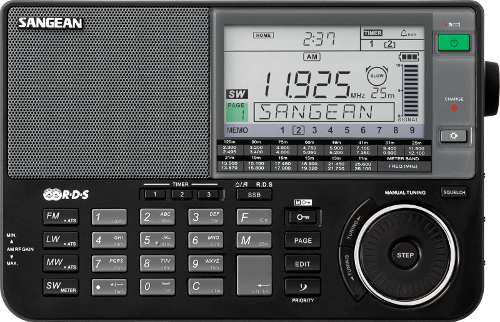
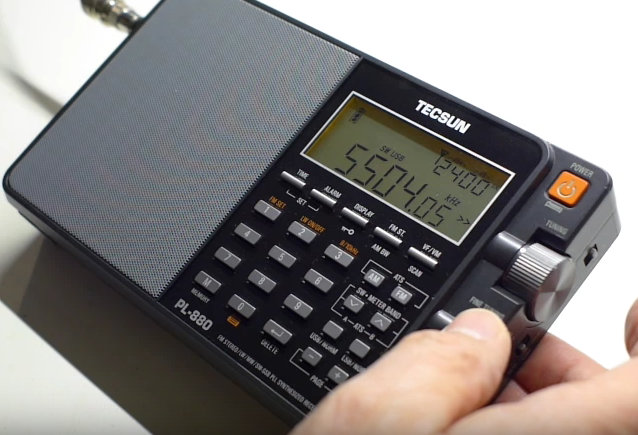
Recommending the Tecsun PL-880 over the Sangean ATS-909X

Many thanks to SWLing Post contributor, Direwolf131, who recently commented on one of the Sangean ATS-909X reviews in the Post archives.

Direwolf131 writes:

I’m a few years after Steve’s comments but I will have a go at it, at least anecdotally speaking. I’ve owned a half dozen Sangean ATS-909’s, which includes two of the 909X’s, and one super-909 from radiolabs. The 909X is the finest looking portable I have ever seen or lain hands upon, and that includes several Sony’s that I still think of as neat looking, I had the white cabinet 909X first and then the much more striking (to my eyes) black cabinet 909X after returning the first one due to rock hard buttons.

They are both extremely attractive, and exceptionally well made, especially by today’s cheap Chinese standards. I must confess that I also still find the original 909’s almost equally neat looking, though not quite sporting the same robustness of build.

The 909x’s sound wonderful on MW & FM, and its a decent performer reaching out to fairly distant FM stations. Unfortunately that is largely the best of the radio, its performance on MW & SW is best described as pathetic, and not just due to being deaf, it has a lot of noise, even when attached to the superb RF systems tuned EMF antenna. The older 909 is also to my experience substantially better then the 909X when matched up to a serious outboard antenna, such as the above EMF, I found this difference especially surprising, its not even close.

The PL-880 from Tecsun blows it away on SW and MW sensitivity, while also offering the superb advantage of genuinely ECSS tuning anything on MW & SW, you cannot decently receive any MW or SW signal via ECSS with the 909X as its SSB can only be fine tuned to 40 Hz, which is terribly disappointing, you can zero beat the little Tecsun easily. serious ECSS capability is to my mind a much more attractive option then a sync circuit, and unfortunately with the beautiful little Sangean 909X you get neither.

I do hope anyone who happens upon this pays attention, because for the money the PL-880 is far and away the better performer, in fact my little 1103 from Degen/Kaito out performs the 909X, as does my Grundig Yacht Boy-400, and my Sangean ATS-803A. Its my great hope that Sangean seriously upgrades these deficiencies in the otherwise gorgeous 909X, its circuitry is noisier than the old 909 and its not nearly not as sterling a performer hooked up to household current and a decent outboard antenna as the old 909, its 40 hz tuning SSB once a great reason to buy a 909, is no longer competitive, especially against the superb PL-880 which again is capable of excellent ECSS even by Icom R75 standards, Sangean would do well to drastically improve the SSB performance of the 909X.

I hope this helps, I liked the original review up top, but again its several years old, and the ATS-909X is now known to be clearly outclassed by the more affordable Tecsun, actually by the PL-660 to boot, I really hope Sangean addresses the issues, its such a beautiful receiver, you just want it to be as good as it looks, unfortunately it’s not!

Thank you for sharing your evaluation and comments!

The Sangean ATS-909X is an interesting radio indeed. Almost everyone loves the design, audio and overall quality of the 909X.  Yet performance reviews are somewhat polarizing: some 909X owners claim the 909X has strong performance characteristics on shortwave, while others believe it’s almost deaf. Your findings coincide with mine from the Mega Review where I pitted the ATS-909X against the Tecsun PL-880, PL-660 and Sony ICF-SW7600GR. In that review, where I relied on a whip antenna, the 909X was noticeably less sensitive than the other three competitors. Based on the premium one pays for the 909X, I was surprised.

I have learned over the years, however, that the 909X can handle larger outdoor antennas and doesn’t easily overload. Additionally, the 909X requires a fresh set of batteries for optimal performance/sensitivity. Some users have even modified the radio with a 4:1 impedance transformer–click here to read a post/comments about this mod.

I would love to see Sangean produce an updated/upgraded version of the 909X, but at this point I’m not exactly holding my breath. I’ve heard that they’re slowly pulling out of the market. Hope I’m proven wrong because I’d love to see a new shortwave set from Sangean.

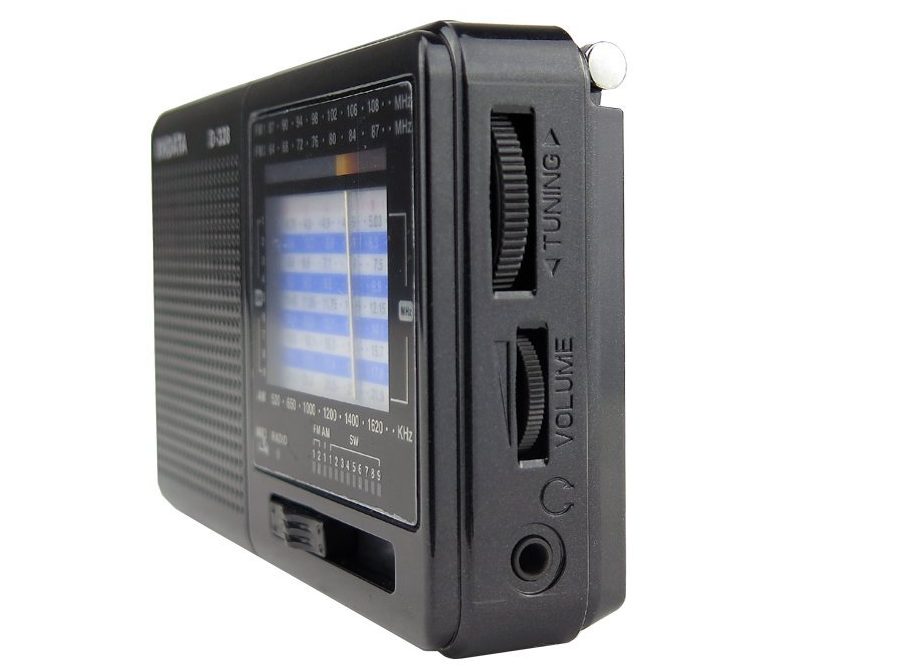
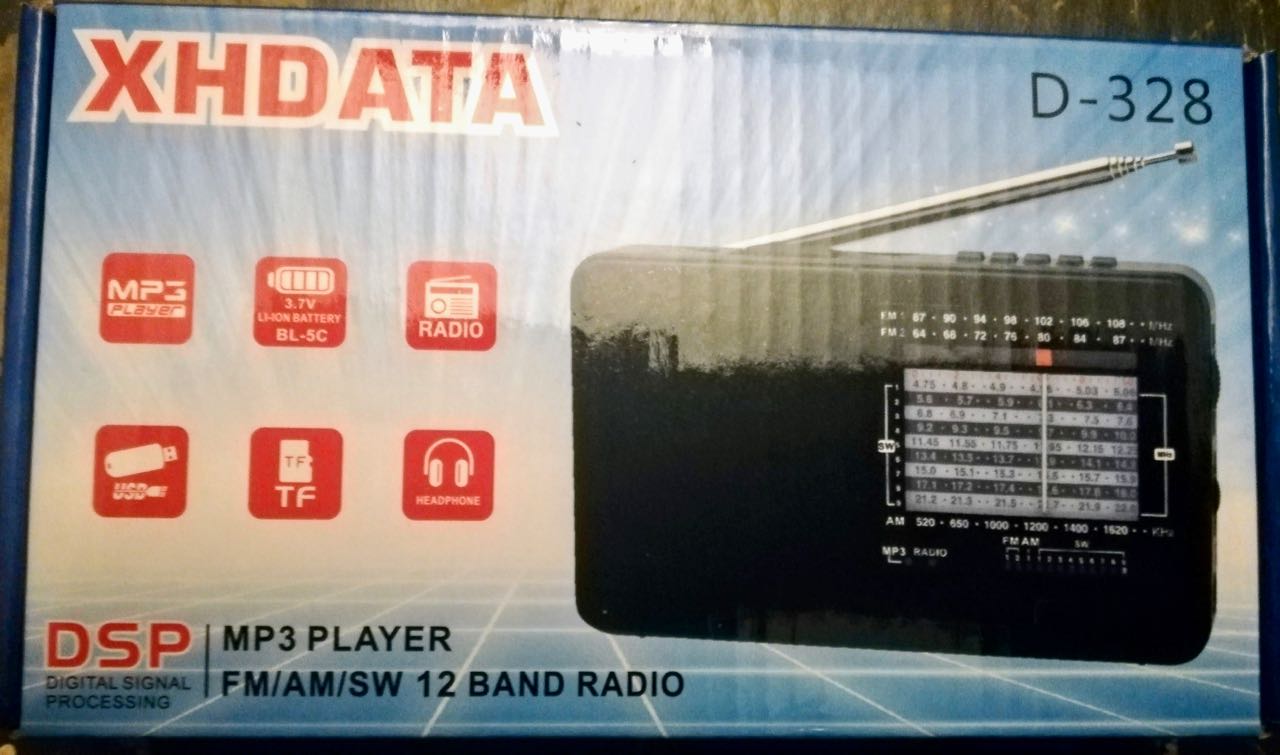
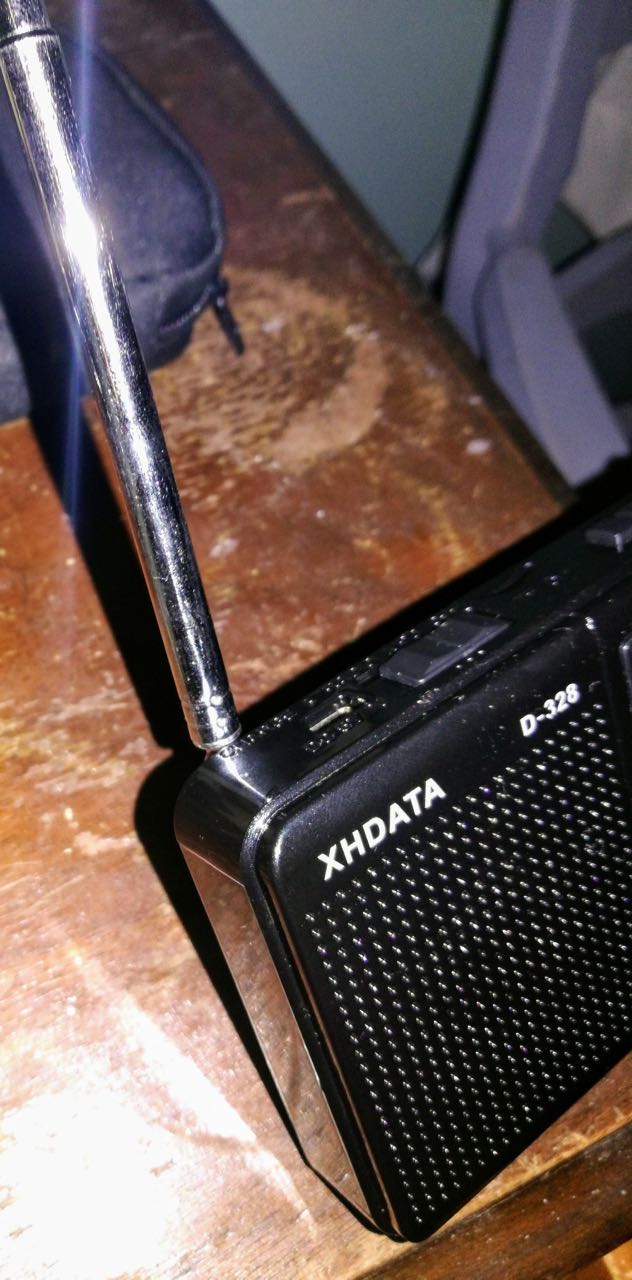
The Professor reviews the XHDATA D-328

Many thanks to SWLing Post contributor, The Professor, who shares the following review of the XHDTA D-328:

First off, this is the best radio I’ve ever operated… that cost me less than ten dollars new. When I saw the promotion on the SWLing Post for free or half price radios, I had to bite, especially because the deal was that the first ten to respond would get a free XHDATA D-328. They told me I was the 15th caller, so I was allowed one for half price. And since they were going for just under fourteen bucks on Amazon, it felt like it was almost free.

Of course, I didn’t expect much. But as they wanted the people who received these free or very inexpensive little radios to leave reviews, I figured the Chinese manufacturers knew there were some good features radio folk might notice. And there are. And I’m not sure if I’ll post part of this brief review on Amazon, but I’ll do so here in this comment.

If you want a radio that will reliably pick up local AM and FM stations and play some MP3 files, this will work, and work pretty well. And it doesn’t sound bad at all for the size. I personally don’t have much love for these new analog-style tuning DSP radios, but I suppose people who aren’t as radio wise as readers of the SWL Listening Post won’t notice the less than poetic effects of moving between stations on these sets. Most probably tune in their desired stations and just listen to it, and this radio does this well enough.

I don’t really listen to FM much, but the XHDATA D-328 seems adequate enough. And with headphones on it sounds quite rich on FM. AM isn’t bad either, but it’s far from selective. I was able to dig out clear channel regional biggies like Zoomer Radio at 740kHz and WHAS at 840kHz in Louisville from here in Brooklyn at night, but in between often easy to find fifty-thousand watt stations like WBBM or CKLW weren’t there. The DSP tuning just defaulted to the next local station like WNYC or WABC when I turned the dial.

Shortwave was worse. Beyond the U.S. powerhouses like WWCR this radio doesn’t seem a very worthy shortwave set for those of us in North America. But I can imagine in that in third world countries where international and local broadcasters still target broadcasts that this radio might be an inexpensive way to access that programming.

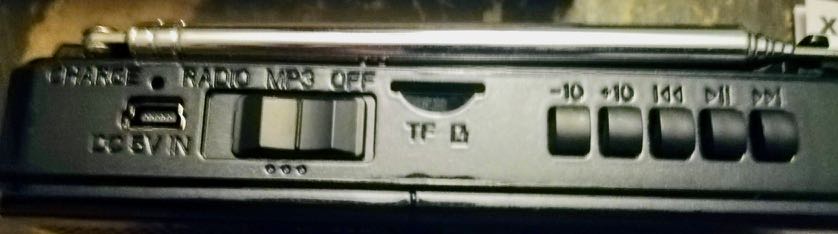
I must admit that listening to MP3 music files was kind of pleasing. Again, the audio is really good for a radio at this price point. However you are listening blind, there’s no screen to tell you what you’re hearing, and no shuffle function to make a folder full of MP3s into unique sequences of songs each time. What you get are the songs in the alphabetical order of the file titles, although you do have the option to jump ahead 10 files before or after the one you are playing. So the best use of an MP3 player like this would be to listen to podcasts or whole radio programs with it. What I would do is copy the files onto the SD card and then perhaps number the filenames in the order I would like to hear the shows.

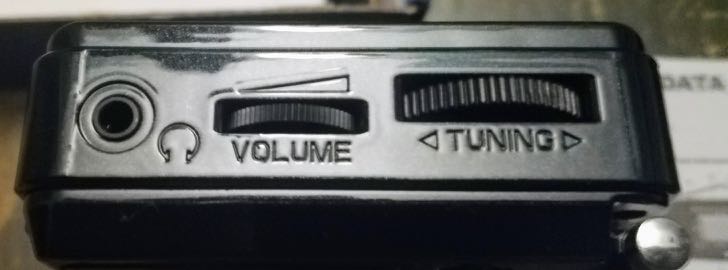
So, for the price there’s not a lot to complain about. People have already mentioned the off-center small kickstand, and that’s a little cheesy. But the tuning thumb wheel moves smoothly thru the imperfect DSP tuning function, and the volume thumb wheel is actually analog which make it much easier to get the exact volume you want out of this radio. But the sliding band selection switch under the tuning scale is a bit worrisome, as I’ve had a few cheap Chinese radios with a switch like this and just normal use eventually rendered them unable to switch bands adequately. This one feels a little bit more stable then they did, but time will tell.

All that said, there are radios that are not too much more expensive than this radio that offer much more in a number of ways. The small and inexpensive analog Tecsun radios from a few years ago are a case in point. Selling for twenty to thirty dollars, those multi-band radios are a little challenging to tune (a stiff thumb wheel on some), and the tuning scale may be a little off and they may drift a little, but the analog tuning is a much better experience. And you can DX with them. I remember listing to All India Radio with a decent signal one afternoon on my Tecsun R-9710.

There’s a lot of similar analog radios which I believe are probably just about the same radio – the Tecsun R-9012, the Tecsun R-911, the Tecsun R-909 and the Kaito WRX-911, among others. Once you get a look at these you’ll recognize other similar radios in this family. I’d say they’re the best really cheap receivers I know of. They generally run between twenty to just over thirty bucks. I believe these radios appeared on the scene in the early 2000s.

I have this fear that they’ll start turning these radios into DSP sets. That would be a real shame, but I’ve heard no mention of that. However I did notice that the marketers of the XHDATA D-328 didn’t even mention that it was based on a DSP chip. And Chinese manufacturers are notoriously not very open about how they are altering radios that they’re putting out, so be aware of that.

As far as MP3 playback, the one radio I would really recommend is the Meloson (or Tesslor) M8 (or the Meloson M7 or S8 if you can find one). It’s simply the best audio you’ll hear in a really small radio, AND you can shuffle the MP3 files in a folder with these. While it only give you the sequential number of the song in the display, it will generate a unique sequence of songs each time you shuffle. Fill a folder on a card full of songs and let it rip. It’s the perfect micro music player if you make a good folder of music. And the DSP radio in these is not bad either. It’s digital, not fake analog tuning, and most AM clear channel targets you can usually find at night in your region will show up on these. They used to go for less than thirty bucks, but right now I see they cost close to fifty dollars.

Two other radios I have that I can recommend for MP3 playback, are the Tecsun ICR-110 and the Tivdio V-115. Neither one offers playback shuffle, but they will play the files in alphanumeric order just fine. But they both have a cool feature in that you can press a button and record the broadcast you’re hearing as an MP3 file. And they both also sound great. The Tivdio has incredible sound for a tiny radio, but the ICR-110 is even more impressive. I believe it has the same speaker setup as the much more expensive Tecsun PL-880 and it also has similar warm and clear audio.

The reception with the V-115 is OK, nothing stellar, but the ICR-110 is kind of a monster on medium wave. I’ve been impressed. The ICR-110 is rather big compared to the other radios I’ve mentioned, closer to the PL-880 in size, but quite a bit lighter. The ICR-110 used to be cheaper, but can be found for around forty bucks. The Tivdio V-115 still goes for just under twenty if you look around. A bargain. Tecsun, Tivdio, Degen and other Chinese manufacturers have all sorts of inexpensive radios for sale out there, and others I haven’t used or mentioned might be quite good as well. If one appeals to you, do a little online research.

Of course, since I’m talking about small and inexpensive radios I should mention that the Tecsun digital DSP sets like the PL-310ET, the PL-360, PL-380, PL-390 and other variations are all amazing inexpensive radios that will run you around 35 to 50 bucks. The ultralight DX community loves these things, and for good reason. And there’s a version of the PL-390 that plays MP3 files from an SD card and another that offers bluetooth playback. No, none are perfect, but they’re solid sets, and all would have been dream radios thirty years ago.

So, that’s my evaluation of the XHDATA D-328, well worth fourteen dollars, but for a few dollars more you can get radios with similar features that do much more. It’s small, it doesn’t sound bad, and it’s fairly well-built. It will pick up all your favorite local stations and play all your MP3 podcasts effortlessly. Not bad. Like I said, it’s the best super cheap radio I’ve ever used.

Excellent review!  I’m impressed that the D-328 has enough AM performance to grab some  night time clear channel stations. It’s disappointing, however, that it lacks performance on the shortwave bands.

Thanks for posting your review–always great to hear from The Professor!

The XHDATA D-328 is available on Amazon.com (affiliate link).

Click here to read other XHDATA D-328 posts.

Guest Post: A review of the XHDATA D-328 portable radio

Many thanks to SWLing Post contributor, Aaron Kuhn, who shares the following guest post:


XHDATA D-328 Radio Review

by Aaron Kuhn

Disclosure: This radio was supplied at a 99% discount by the manufacturer, costing me only $0.15.

About Me

I live in the Philadelphia Suburbs, where there’s ample FM Stations, good AM Coverage, and also a lot of noise when it comes to Shortwave. I’m mostly an AM/FM listener, who occasionally likes to dabble in Shortwave. My idea of a good radio is something I can turn on, put up the antenna, and it just works.

Initial Impressions

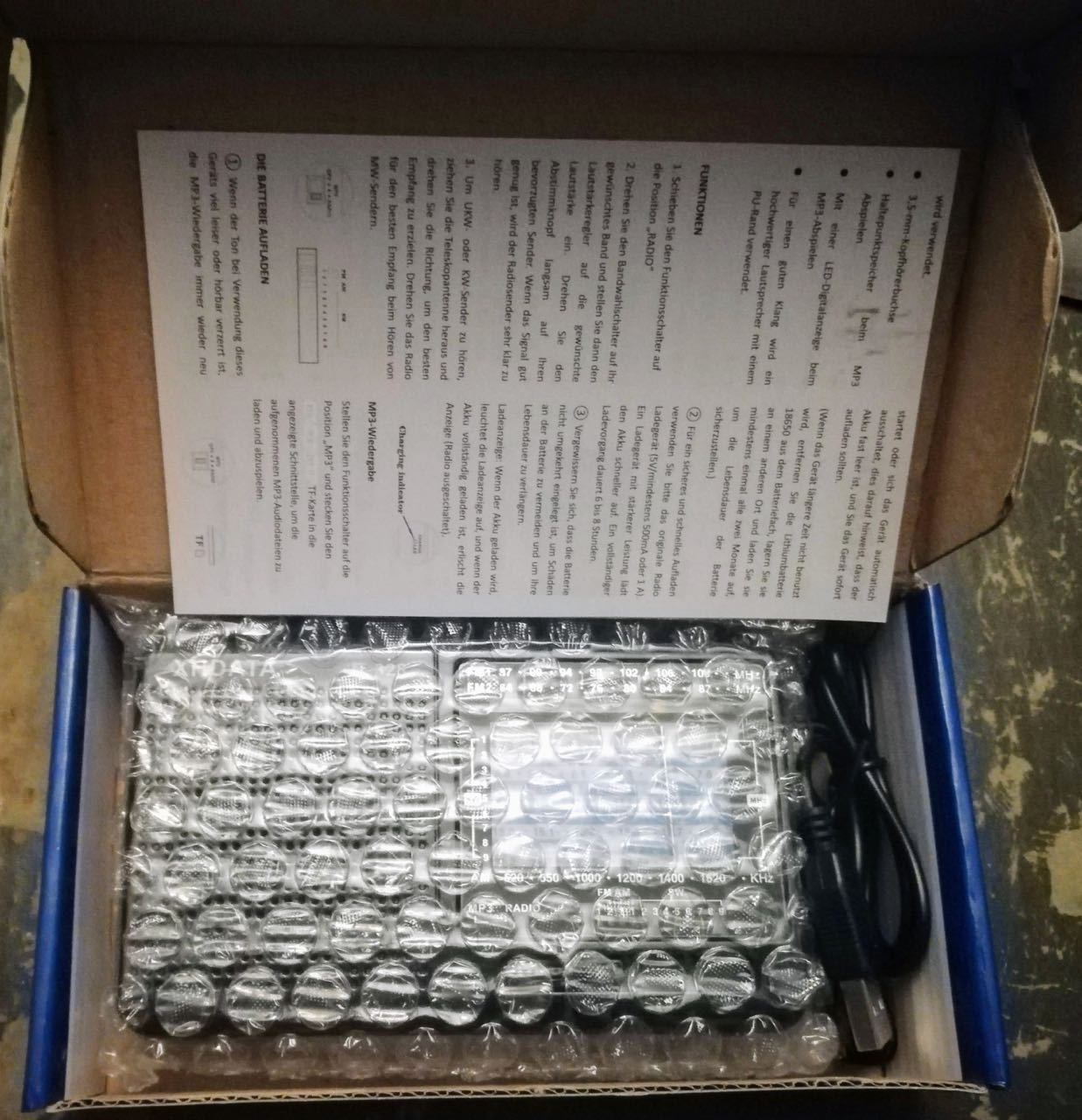
The Radio is boxed simply enough in a cardboard box, with a small amount of bubble wrap inside, manual, Mini-USB Cable. The Lithium-Ion Battery comes pre-installed.

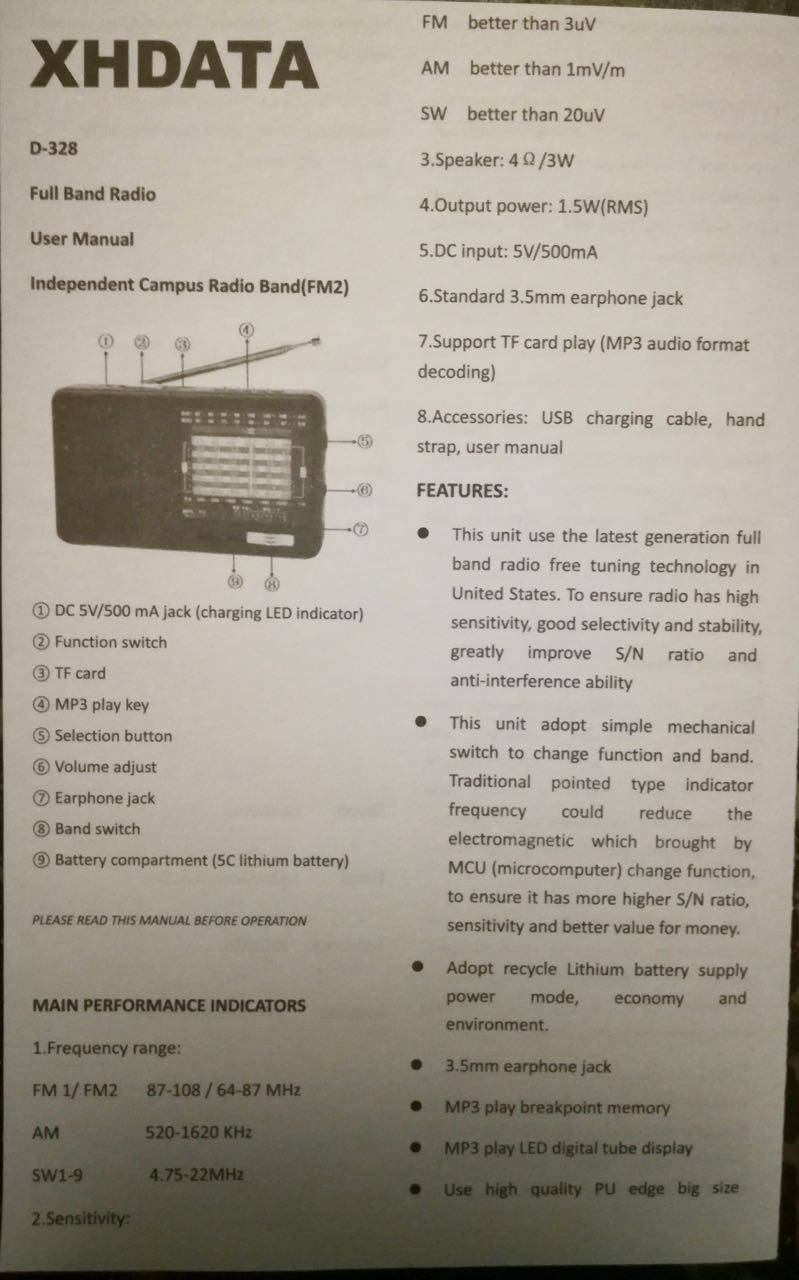
Operation of the radio is mostly straight-forward, and I doubt you’ll need the manual for anything. The manual itself contains your normal badly-translated English phrases and doesn’t make sense in a lot of places (did you know this radio uses high quality PU edge big size?)

Two curious notes about the manual:

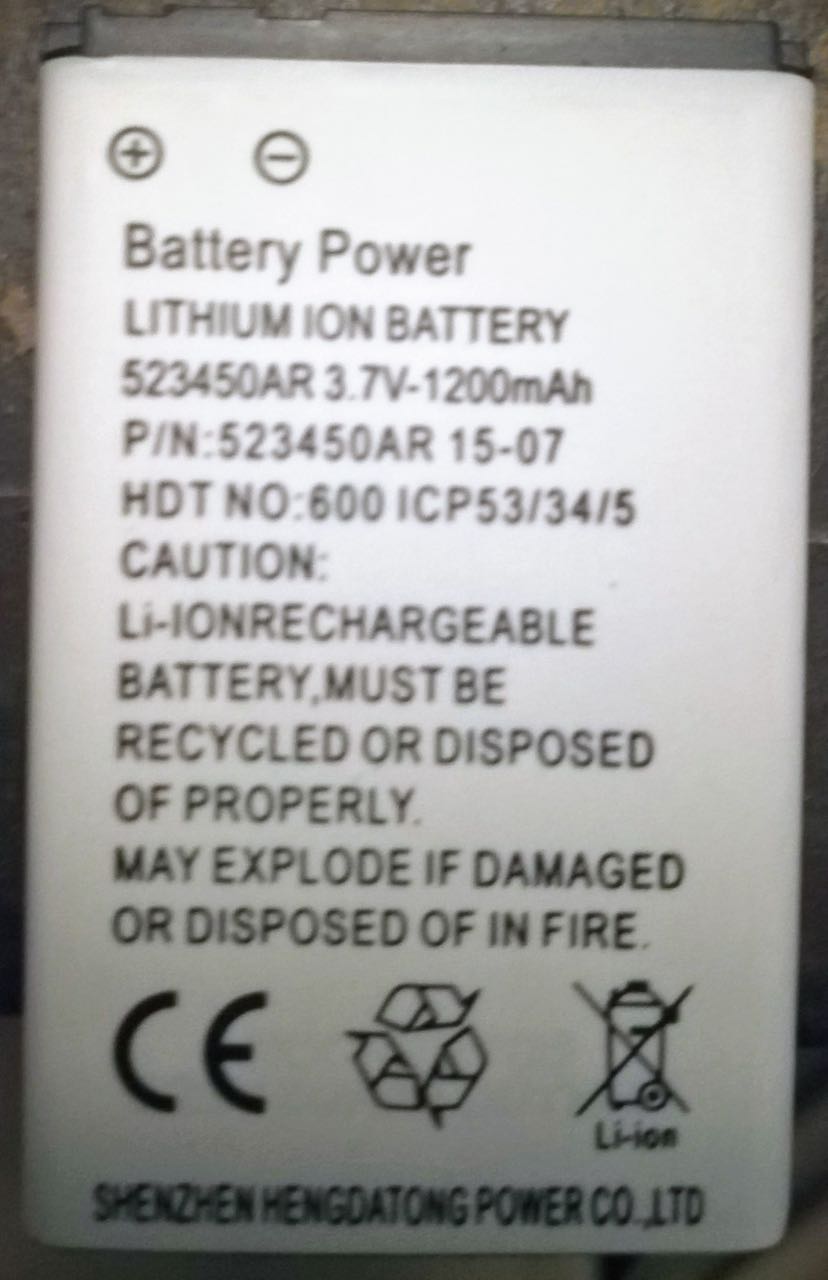
  1. It mentions you should remove the “18650 Lithium Ion Battery”, but this radio doesn’t use an 18650 battery. Instead, this radio uses a “BL-5C” Battery, which based on my research looks like it was pretty common on Nokia phones around 2004.
  2. Someone took white-out to the manual where it says “Set the function switch to the “MP3” position and insert the USB Stick or TF Card, with “USB stick” covered in white out.

The radio itself is made of a slippery, glossy plastic that doesn’t inspire confidence, but also seems to have enough structural stability it doesn’t worry me. I’d guess this radio could take a moderate drop and bounce and be OK, but it’d probably crack if dropped from above waist level.

I ran into a somewhat funny problem trying to insert the included wrist strap into the hole in the back of the radio. Unlike most radios with a wrist strap hole that’s closed off, the wrist strap instead continued down into the radio. That is, the wrist strap “loop” molded in the plastic is actually a hole into the radio. This doesn’t bode well for dirt or other junk getting pushed into the radio accidentally. I was able to eventually get the wrist strap on the loop, but it was far harder than it should have been.

Design

The Lithium Ion battery comes pre-installed in the radio, and the battery door it’s behind seems sturdy enough. Fortunately, there’s really no reason you should ever have to pull the battery out of this radio unless you need to replace it. Running the Battery model # across Google and other sites shows this should be a very cheap battery for you to replace at between $1 and $3.

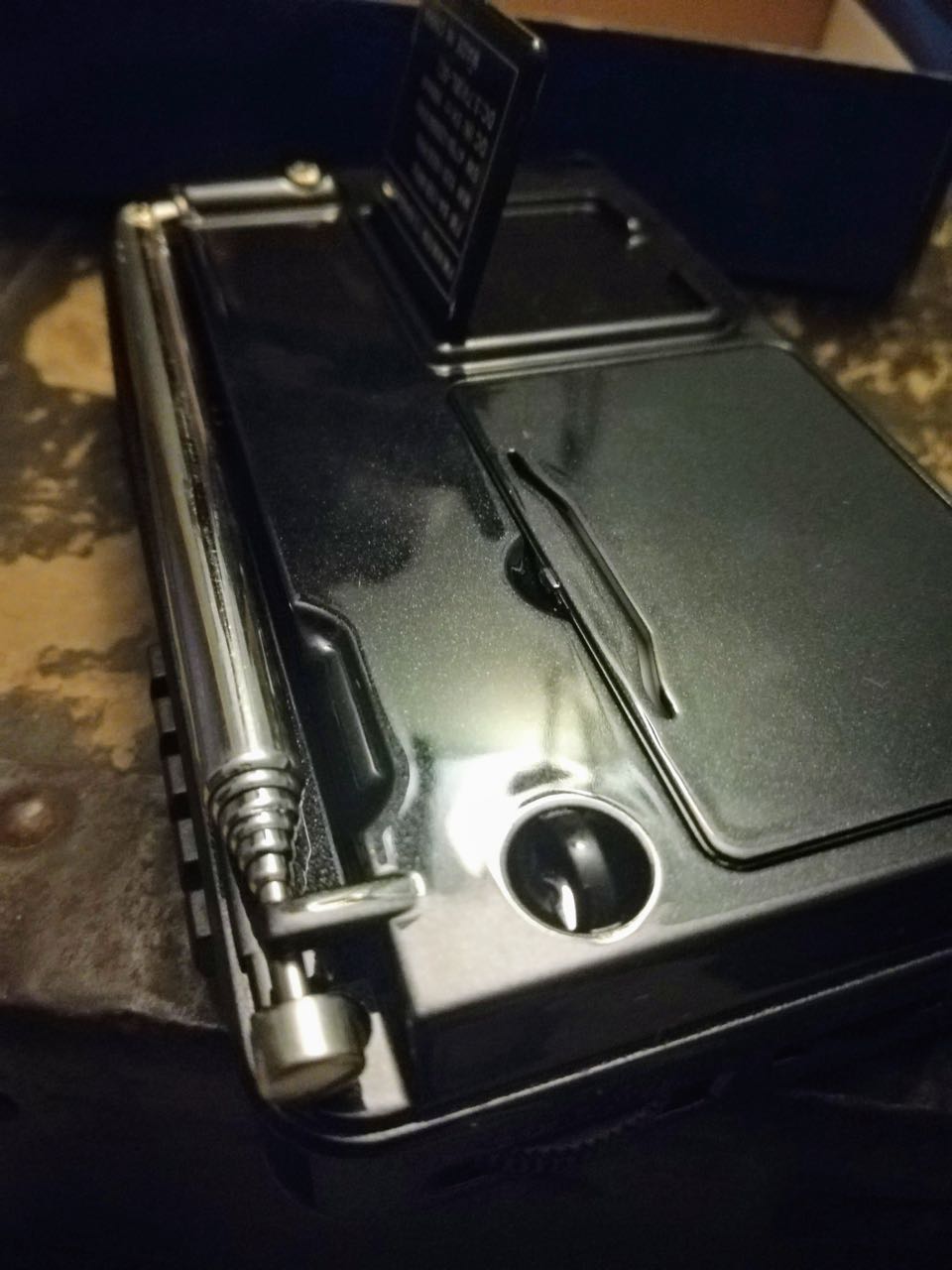
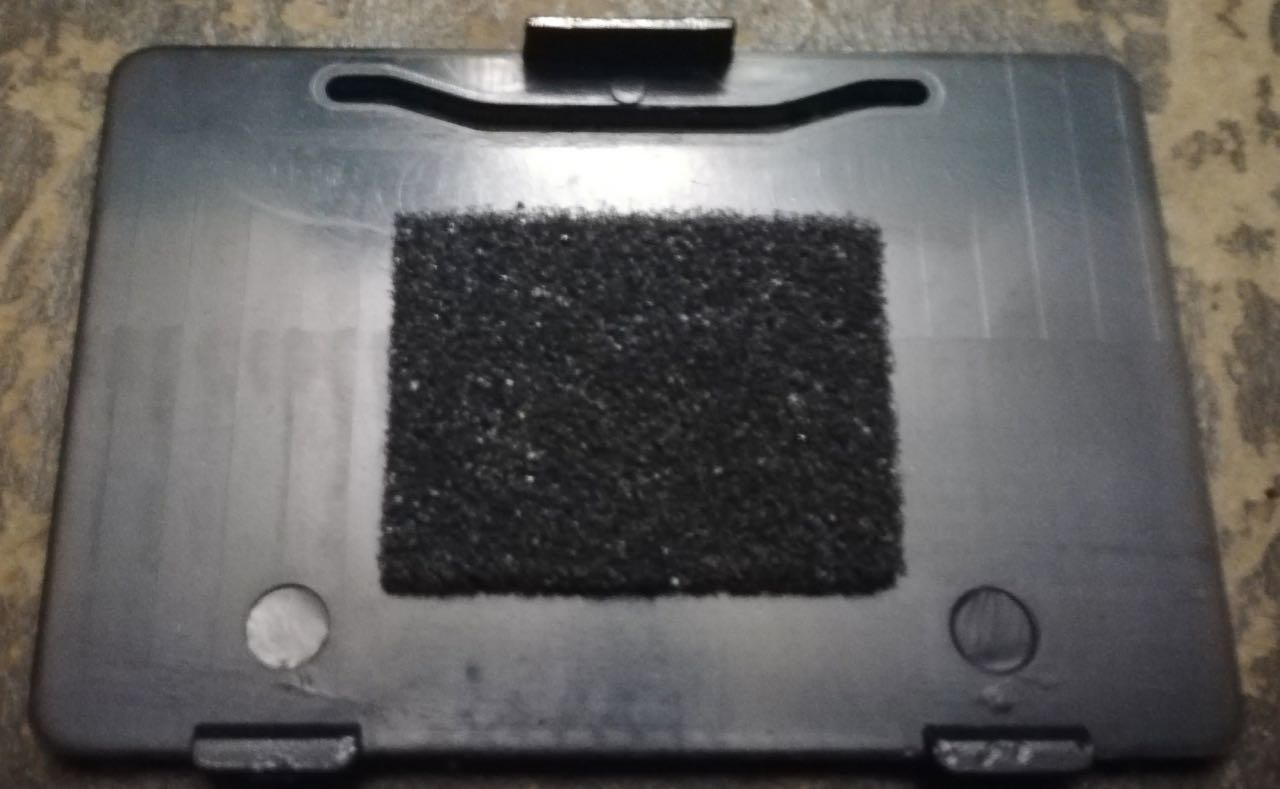
Battery Door

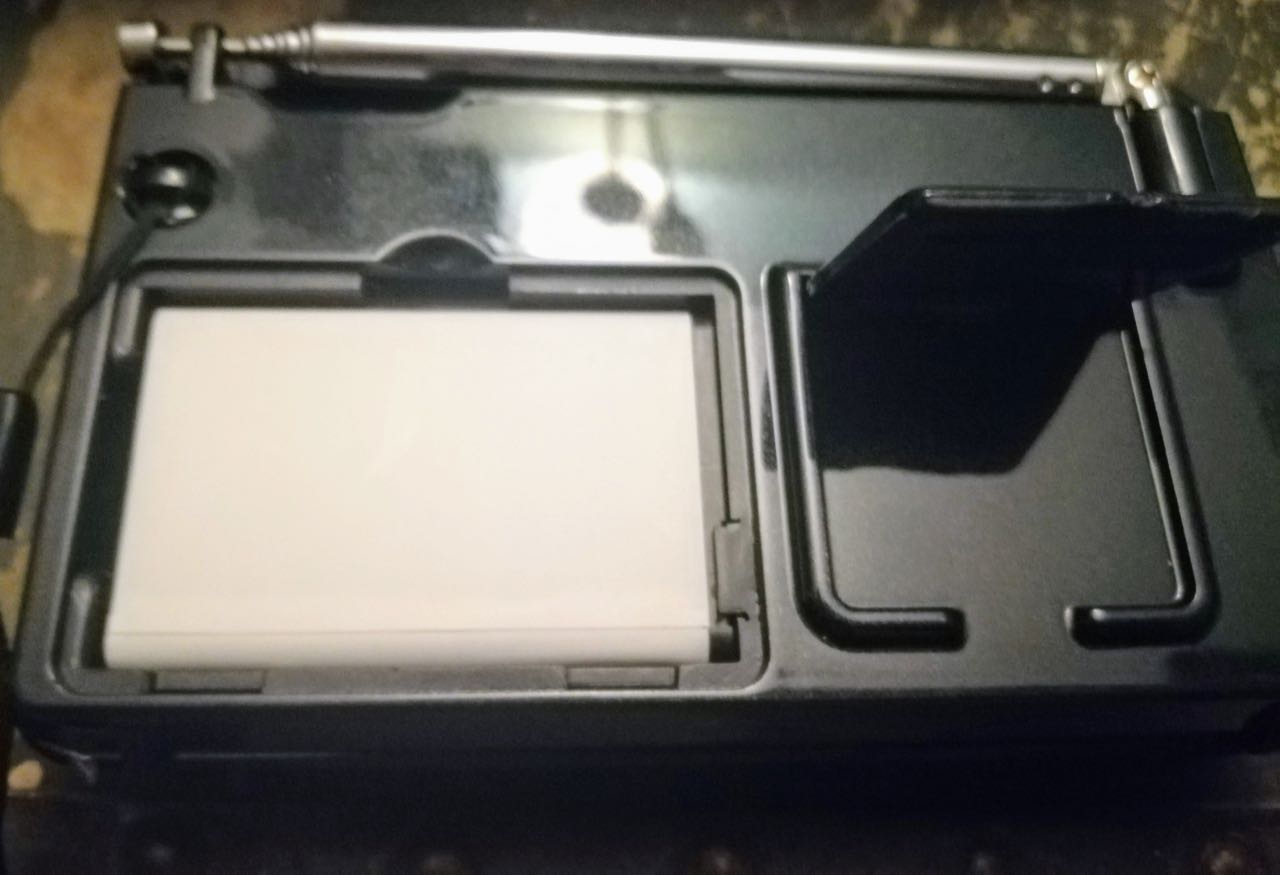
Kickstand deployed with battery door open

Li-Ion “BL-5C” Battery

I very quickly noticed a big glaring design flaw on this radio with the poorly designed, super small kickstand located next to the battery compartment. This small, off to the left  kickstand works fine if the radio is on a perfectly level surface like a nightstand, but causes the radio to tilt over if you try to place it on a soft surface like a bed or a pillow. I would have liked to see just one large combination battery door/kickstand if possible across the back of the entire radio.

Design problem number two with the radio became very apparent when trying to extend the telescoping antenna. The antenna butts up against the plastic molding on the back of the radio, meaning you cannot prop the antenna up “Straight” when using the kickstand. This results in the antenna having to angle off at around 45 degrees, which is a bit annoying. My Tecsun PL-310ET doesn’t have this problem due to having a cut-out notch to allow the antenna to be in a more upright position.

“Upright” Antenna trouble

Tecsun PL-310ET for Comparison

The tuning knob has a satisfying amount of resistance to it, and doesn’t spin too quickly or too slow. The volume knob, while smaller, spins freely and also feels solid.

The band selector selects between FM1-2, AM, and SW 1 through 9. The switch to move between these bands has a satisfying amount of click and feedback to it, and isn’t mushy and you likely won’t pick the wrong band. The small window displayed below each band number fills with a small, mechanical, plastic bar attached to the switch. The window and bar were slightly misaligned, making it difficult to tell at a glance which band I had selected.

The tuning bar itself moves smoothly across the band, but the metal extension piece running down the shortwave part of the spectrum tuning was not vertically straight and had a noticeable bend to the lower right.

Weight – this radio is INCREDIBLY light! The choice of a Li-Ion rechargeable battery pays off here, and when I weighed the radio it came in at exactly 160 Grams / 5.7 Ounces. The compact size of this radio and the weight would cause it to easily disappear into a coat pocket and I’d forget I was carrying it. This definitely qualifies as super-portable in my book.

The choice to use Mini-USB instead of Micro-USB on the charging is a questionable one. Micro-USB is the much more common connector you’ll recognize if you’ve bought a Smartphone in the last 3 years, or any other consumer device with a USB  connector. Based on my short research, Micro-USB despite being smaller than Mini-USB, offers a number of benefits including increased cycle-count on the number of plugs/unplugs before the connector wears out. I don’t know why XHDATA went with Mini-USB on this, and I’d suggest they move to Micro-USB for future revisions. The Mini-USB, other than being slightly easier to plug in, seems to offer no benefit and is obsolete compared to Micro-USB.

Audio Quality

Wow! While I may have had some hesitations about the radio’s design, I was incredibly surprised by both the loudness and fidelity of the speaker on this radio. The volume was incredibly loud, and the audio did not distort even when I turned this to the highest setting. While a mono speaker, voices on AM were quite clear and nice to listen to, and music on FM Sounded way better than it deserved to sound coming out of a $14 radio.

Plugging in a pair of earbuds (not included) also produced crisp, loud audio, with no noticeable whine or hiss. Volume levels should be more than adequate. Audio came in through both Left and Right earbuds, but I was unable to tell if the output was actually Stereo when listening on FM. The word “stereo” is not mentioned anywhere in documentation, so I would not be surprised to learn this radio is mono-only.

Tuning

I don’t normally use analog radios, so tuning the D-328 was a bit of a challenge. The cramped display provided little feedback, and the crooked tuning bar didn’t help either. FM Stations seemed to be needed to be tuned “high” About 1MHz from where I thought they should be, and AM Stations about 50 KH above where I thought they should land. Tuning Shortwave seemed like a total crapshoot, being fairly imprecise.

I’m mostly an FM/AM Radio listener, and all the usual local suspects popped right in and tuned easily for me. Static between stations is kept very low, and when a station locks in on FM it pops in very clearly. Selectivity between close adjacent stations can be challenging due to the small tuning dial and skewed visual feedback, but I was able to tune in every FM Station I tried.

I am located in the Philadelphia Suburbs, so my usual station for tuning in a weak signal is WPRB 103.9 out of Princeton. I’m happy to report it came in just as clear as it did on my Tecsun PL-310ET, with no trouble finding it.

AM was more of a mixed bag with tuning. Stations I did not expect to come in clearly seemed to pop in with strong signal strength, while the “go-to” AM Test station of KYW 1060 proved surprisingly difficult to locate on the dial. Audio levels on AM were noticeably wider in variance of signal, with some stations proving almost too quiet to listen to.

I’m honestly not much of a Shortwave listener most of the time, so I’m sure some other reviewers will go into much more detail on the Shortwave performance of this radio then I will. My experience tuning around on Shortwave with the D-328 was similar to AM, in that I had a lot of unexpected surprises in strong signals between 6900KHz and 9300KHz. My shortwave listening usually takes place on digital tuning with the Tecsun PL-310ET, so it’s hard to compare analog listening for something I don’t do that often. Tuning was surprisingly easy on the shortwave bands, but seemed frustratingly random where stations would show up.

MP3

Let’s get this out of the way immediately – this radio does not record MP3 files. Instead, sliding the mode selector to “MP3” will let you play files off a “TransFlash” (MicroSD) Card.

I’ll be up front here – this radio is a functional, but not fun to use MP3 player.  I tested the MP3 player by loading up a 2GB MicroSD Card I had laying around with some files in a structure similar to the following:

* Root

** File1

** File2

** Folder1

*** Subfolder 1

*** File 3

*** File 4

** Folder2

** File 5

** File 6

** File 7

The first thing you’ll notice when playing MP3s is the “MP3” Light that is Red. And blinks. And blinks. Yes, the red light blinks continuously while playing an MP3 file and you can’t turn it off. This right here would annoy me to no end if I wanted to use this feature

My second problem with using MP3 functionality is that playback without a screen is a throwback to the days of the iPod Shuffle. And if this radio had “shuffle mode”, I’d be OK with that, heck that would even be fun – but there’s no shuffle here, only sequential play.

This radio does seem to follow the expected order of my files in playing them sequentially 1 through 7 across subfolders, but the lack of visual feedback makes it very easy to forget where you’re at and what you’re playing.  Pressing and holding the fast forward button does work to fast forward, and rewind through individual mp3 files.

If you want to load up a MicroSD card with some old time radio episodes and play them back – this might be great. But I’d probably ask you why you’d ever want to play MP3 files on this thing. I mean, the feature is there…. But why? There’s much better devices and experiences out there for MP3 Playback rather than loading files onto a MicroSD card to play on a device with no screen. I imagine this might have some utility usages for playing MP3’s when you don’t want to sacrifice more expensive hardware, but I personally can’t see myself getting much usage out of the feature.

Conclusion

At the end of the day I have to ask myself – who exactly is this radio for? The price point and feature set seems to pit this against the very low-end of the AM/FM/SW Market such as the Analog Tecsun R-9012 at $22, and Tivdio Digital tuning units around $18. The inclusion of Shortwave, Mp3 Playback, and USB rechargeable battery gives this a leg up over budget AM/FM units, as well as the competitors mentioned.

Is the DX/radio hobbyist the target market for this radio? I don’t think so. While cheap (and we Shortwave/HAMs are a cheap bunch!), this radio lacks the sophistication or features a DX’er would want.

Is this a good “throw-away” radio for when you don’t want to risk your “Good” Radio? Absolutely. I would not hesitate to toss this in a coat pocket, keep it out in the garage / workshop, or give it away to a friend. My personal use case for this radio will probably end up being I’ll take it to Baseball games to listen to the game on AM / FM while watching the game. If it breaks, I wouldn’t be too sad and would likely shell out another $14 without hesitation for a replacement.

Is this radio for kids? I don’t think so. Given the poor build quality of this, I can’t imagine this lasting very long in a youngsters hands and surviving more than a drop or two. Analog tuning is likely to prove incredibly frustrating to a youngster, and I can’t see anyone but the geekiest of little geeks making use of the MP3 player function.

Would I use this as an emergency radio, shoved in “go-bag” or kept around for winter storms / hurricanes? Probably not. The build quality and lack of standardized AA-Batteries would give me concerns over my ability to power it (though it did work great from a USB PowerBank when I tested) More concerning is I don’t know if I would trust this to still be working when I need it in a stressful situation.

So who is this for? This radio seems more destined / designed for the low-income international market. The price point on this radio is certainly attractive to North American buyers, but I just don’t think the average American radio buyer really wants or needs MP3 MicroSD Playback or Shortwave functionality.

For $14 XHDATA has made good, but not great, little radio. My future suggestions would be:

  • Ditch the MP3 functionality – it’s of marginal usefulness
  • Seal off the wrist-strap loop hole better
  • Fix the case design so the antenna can sit more “upright”, and swing more freely.
  • Re-design the kickstand to run the entire length of the radio, possibly doubling up as the battery door if somehow possible
  • Switch from Mini-USB, to Micro-USB connector
  • The BL-5C Battery is an …. Interesting choice. It sure seems to help with weight, but I think I’d rather see a single 18650 Cell as hinted by the manual or AA’s.

Many thanks, Aaron, for sharing your fine evaluation of the XHDATA D-328! I couldn’t agree with you more regarding your “future suggestions”–sounds like the MP3 functionality has marginal utility and the chassis design could use some tweaks. I’m very surprised a radio made in 2018 still uses a Mini-USB port. And that kickstand? I don’t think I’ve ever seen one more off-center!

But as you conclude, for $13.80 US (Amazon affiliate link), it is a very inexpensive unit. Not one for the radio enthusiast, but one that could please the casual radio listener. It sounds like the audio is surprisingly robust.

Thanks again for your fine review, Aaron!

Follow Aaron Kuhn via Twitter.